Li Xiang has nurtured a "budget alternative to Li Auto" into a formidable competitor.
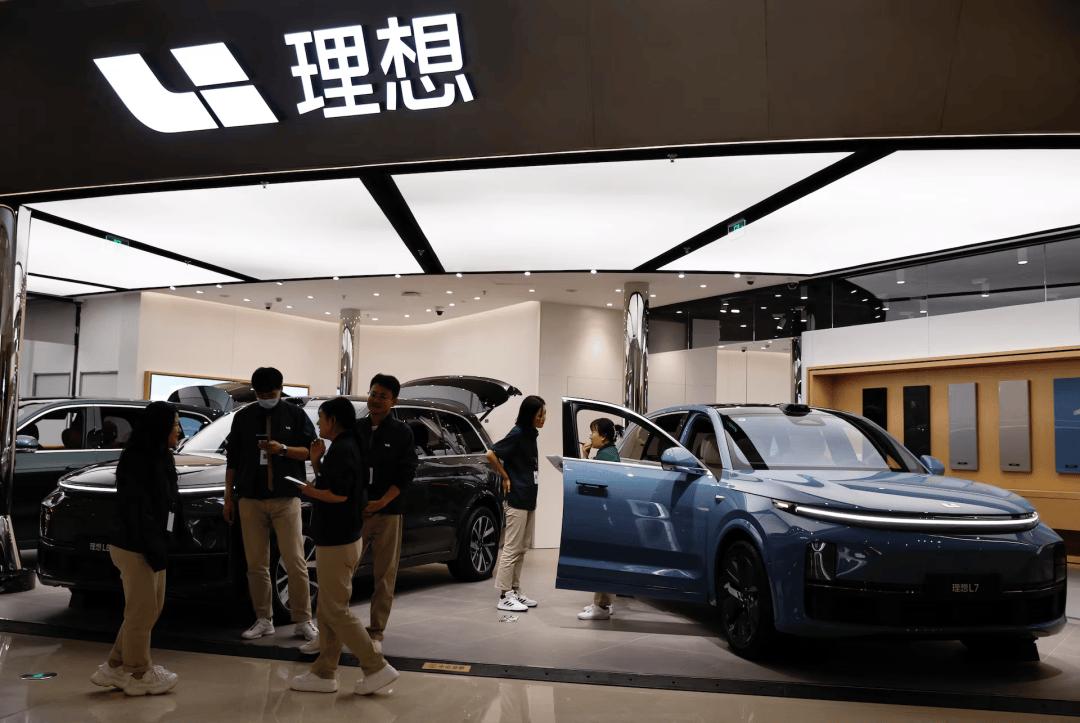
On April 11, Li Xiang flew into a rage on his WeChat Moments.
The cause was the launch of the Dongfeng Nissan NX8. The slogan "A more ideal SUV for the whole family", combined with a large number of press releases on social media belittling the Li Auto Li 6, provoked Li Xiang to personally step in and accuse Dongfeng Nissan of hiring negative online trolls. According to Caixin, the Ministry of Industry and Information Technology has summoned both parties for talks.
The problem of negative online trolls in the automotive market has a long history. However, in 2023, Li Xiang compared it to a "happy little annoyance". Three years later, the situation of Li Auto has changed his mindset.
In the era of fuel vehicles, Li Auto was the master of the alternative logic. It offered the experience of luxury cars like BBA that cost 600,000 yuan at a price of 300,000 yuan. Features like refrigerators, large - screen TVs, and comfortable seats won the love of many Chinese families. However, now the tables have turned, and Li Auto has become the target of substitution.
Leapmotor, which calls itself the "half - price Li Auto", topped the list of new - energy vehicle startups with sales of 596,600 units in 2025, dethroning Li Auto from its long - held sales champion position. In 2026, Nissan once again followed Li Auto's path, hoping to grab a share of the new - energy family SUV market.
Currently, the family SUV segment is becoming increasingly crowded, and product definitions are highly similar. The differential advantages of Li Auto are gradually being diluted. More importantly, Li Auto is in a trough period with pressure on sales and profits. In 2025, Li Auto's revenue was 112.3 billion yuan, a year - on - year decrease of 22.25%. The net profit was 1.139 billion yuan, a year - on - year decrease of 85.8%. The annual delivery volume was 406,300 units, a year - on - year decrease of 18.8%.
According to the latest report, in 2025, front - line sales staff in the middle - level sales platforms in 26 sales provinces across the country at Li Auto did not receive year - end bonuses. The year - end bonuses of R & D employees also decreased significantly compared with the same period last year. The pressure of under - expected sales has been directly transmitted to the company.
At this critical juncture, the Li 6 has become the core volume - driver for Li Auto. Any "smear" against it will be regarded as a threat by Li Auto, leading to a fierce counter - attack.
Facing the wave of substitution, Li Auto's strategy is to bet on physical AI and embodied intelligence. The upcoming new - generation L9 is regarded by Li Auto as the "pioneering work of embodied intelligent robots". However, it is still unclear whether AI can pull Li Auto out of the whirlpool of configuration and price involution.
Did the NX8 Steal the Thunder from the Li 6?
Looking back now, Dongfeng Nissan had been planning the launch of the NX8 for a long time.
Starting the pre - launch promotion at the end of 2025 and only announcing the benefits during the pre - sale on March 20th, Dongfeng Nissan executives only revealed that the price of the NX8 would not be less than 200,000 yuan but did not disclose the specific price, arousing the public's curiosity. It was officially launched on April 8th, with a starting price of 149,900 yuan, about 50,000 yuan lower than the market expectation and nearly 100,000 yuan cheaper than the Li Auto Li 6. This huge price reversal now seems like a well - planned move.
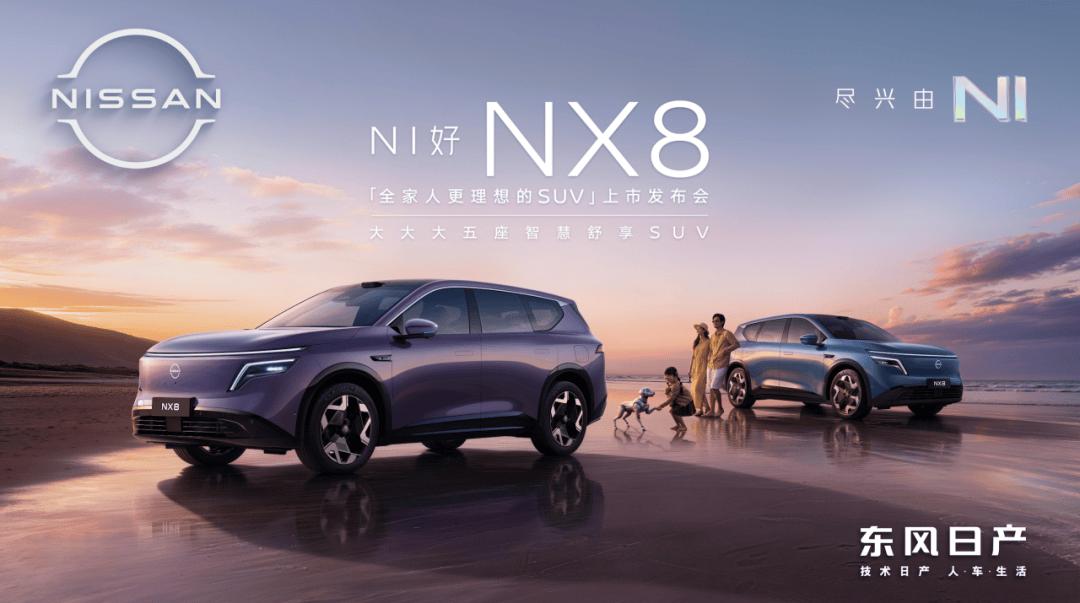
At the press conference, Xin Yu, an executive of Dongfeng Nissan, mentioned in an interview with the media that "Li Auto once followed our e - POWER technology, and now I'm following them back". If it was just a small follow - up, Li Xiang might not have gotten so angry. However, a large number of online posts on social media belittling the Li 6 made Li Xiang scold on his WeChat Moments. After this series of actions, the comparison between the NX8 and the Li 6 became the focus of public opinion.
"Nowadays, few young people look at old - brand electric cars. After this incident, everyone knows about the previously unknown NX8," many netizens said.
Regarding these two cars, some consumers who test - drove them told "Market Insights" that "the experience is about 80% - 90% similar. The NX8 can be summarized as having high cost - performance and strong product strength. The advantages of Li Auto lie in its sound insulation, suspension, large - screen and other configurations, as well as the battery."
This seemingly similar product strength, combined with a nearly 100,000 - yuan price difference, easily makes consumers have the perception of "substitution".
Half an hour after the release of the NX8, Dongfeng Nissan officially announced an order volume of 8,423 units. For new - energy vehicle startups, this number may be ordinary, but in the context where joint - venture new - energy vehicles are generally not favored, it is quite competitive.
For Li Auto, the danger is not the NX8 itself, but the possible chain reaction it may bring. The Li 6 is currently the sales pillar of Li Auto. In March, 24,000 units of the Li 6 were delivered, accounting for nearly 60% of Li Auto's total sales. A regional order - locking champion at Li Auto told "Market Insights" that "4 out of the 5 recent orders are for the Li 6, and most of the customers are young people."
Behind this incident is the involution in the family SUV segment. The high - end new - energy family SUV market pioneered by Li Auto has now seen a large number of players enter. Leapmotor launched the D19 to enter the high - end market, changing from the previous staggered competition to direct face - to - face competition. In addition, Wenjie and BYD are also continuously increasing their sales in the high - end new - energy SUV market. Now, joint - venture brands have also joined the fray.
When product definitions are highly similar and large space, comfort, and intelligence have become standard features, Li Auto's first - mover advantage is gradually disappearing. The emergence of the NX8 has further amplified this anxiety. When the perception of "100,000 yuan cheaper and almost the same" spreads, Li Auto's brand premium and product barriers will continue to be eroded. This is an important background for Li Xiang's strong reaction and a competitive reality that Li Auto must face.
Why Is Li Auto Always the Target of Substitution?
In fact, beyond Li Auto itself, the explosion of the entire new - energy vehicle industry is a substitution movement, and Li Auto was once a beneficiary.
In 2019, the Li Auto ONE was launched. Priced at around 300,000 yuan, it substituted for luxury SUVs like the BMW X5 and Mercedes - Benz GLE, which cost 600,000 - 700,000 yuan. Its "2 + 2+2" six - seat layout and full - configuration strategy made it a phenomenal hit.
In 2022, the Li Auto L9 was launched, priced at 459,800 yuan. It targeted million - yuan full - size SUVs like the Mercedes - Benz GLS and BMW X7, pushing the substitution logic to the extreme. At that time, Li Auto's slogan was "The best family SUV under 5 million yuan".
It's not just Li Auto. From BYD Qin sweeping the A - class fuel - vehicle market with the concept of "electricity is cheaper than gasoline" to Tesla Model 3/Y impacting the mid - size luxury car market of BBA, and then to brands like NIO, Li Auto, and Wenjie launching attacks in higher - price segments, the substitution of new - energy vehicles for fuel vehicles is an inevitable stage in the industry's development.
However, the window of opportunity in the era is not always open. The substitution logic is based on technological gaps, cost advantages, and demand mismatches. After the rapid popularization of technology, the high - level maturity of the supply chain, and the all - round intensification of competition, the once - dominant players may quickly become the targets of substitution. Li Auto's current situation is an example of this cycle.
In the era of electrification, a 200,000 - yuan electric car can compete with a million - yuan fuel sports car in terms of acceleration. Traditional core technologies such as engines and gearboxes are no longer barriers. High - end configurations such as 800V high - voltage platforms, lidars, air suspensions, and Qualcomm 8295 chips, which were once exclusive to high - end models, have now become standard in 200,000 - yuan models. Most technologies cannot build a long - term moat.
Meanwhile, China's complete new - energy vehicle supply chain system allows any automaker to quickly purchase similar components, making it extremely difficult to achieve product differentiation.
From the large - screen and long - wheelbase features in 2020 to the lidar and large - model AI assistants in 2024, the first - mover advantage often only lasts for a few months. Li Auto's previous product positioning focused on "family users", and its so - called "refrigerator, TV, and comfortable seats" is essentially a combination of configurations and an insight into usage scenarios, lacking sufficient technological thresholds and can be quickly imitated by competitors.
Equally important is that for consumers, the brand power of Li Auto has not reached the level of BBA, and the premium they are willing to pay for the Li Auto brand is limited. When the functional configurations of products are highly homogeneous, once a competitor launches a "Li Auto substitute" model with a lower price and similar configuration, it is very easy for users to switch.
Interestingly, it was the new - energy vehicle startups represented by Li Auto that used the substitution logic to dethrone BBA from its pedestal. Now, they themselves are facing challenges from later - comers using the same logic.
Can AI Support a New Narrative?
When the involution of configuration and price reaches its limit, Li Auto is betting its future on AI.
In January 2026, Li Xiang held an all - staff meeting. He hardly talked about cars but only about AI, base models, the implementation of L4 - level autonomous driving, and humanoid robots. His judgment was that 2026 is the last year for all companies aiming to become AI leaders to enter the game. L4 - level autonomous driving will definitely be implemented in 2028, and Li Auto must develop humanoid robots.
Li Xiang's goal is to transform from an automobile company into an embodied intelligence company.
In March 2026, Li Auto released the MindVLA - o1 architecture at the NVIDIA GTC conference. It is Li Auto's self - developed next - generation VLA large - model. MindVLA - o1 aims to solve long - standing problems in the VLA route, such as low efficiency in spatial understanding and behavior alignment and decision - making delays. The solution is to let autonomous driving skip the imitation - learning stage of learning to drive from 2D videos and directly complete the end - to - end closed - loop from physical - space perception to driving - trajectory generation.
More importantly, MindVLA - o1 can also be migrated to embodied intelligent robots. Li Auto's logic is clear. A car is the largest robot, and autonomous driving is the best scenario for physical AI. Starting from cars and extending to robots to build cross - scenario AI capabilities, this is a barrier that cannot be easily substituted in the short term.
To support its AI strategy, Li Auto has carried out organizational restructuring. The R & D system is no longer divided by software and hardware but is split into four major systems modeled after the human body structure. The organ system is responsible for chips, data, and operating systems. The brain system focuses on AI capabilities such as perception, pre - training, and reinforcement learning. The software body builds system - level agents, and the hardware body designs energy, drive, and control for embodied intelligence. Li Xiang revealed that this organizational change has improved efficiency, and the autonomous - driving model is updated daily instead of every two weeks.
In addition, Li Auto has continuously increased its capital investment. In 2025, its R & D investment was 11.3 billion yuan, with more than 50% invested in AI. In 2026, the R & D budget is 12 billion yuan, and the proportion of AI R & D still exceeds half. As of the end of 2025, Li Auto had a cash reserve of 102.1 billion yuan on its books, providing sufficient ammunition for long - term R & D.
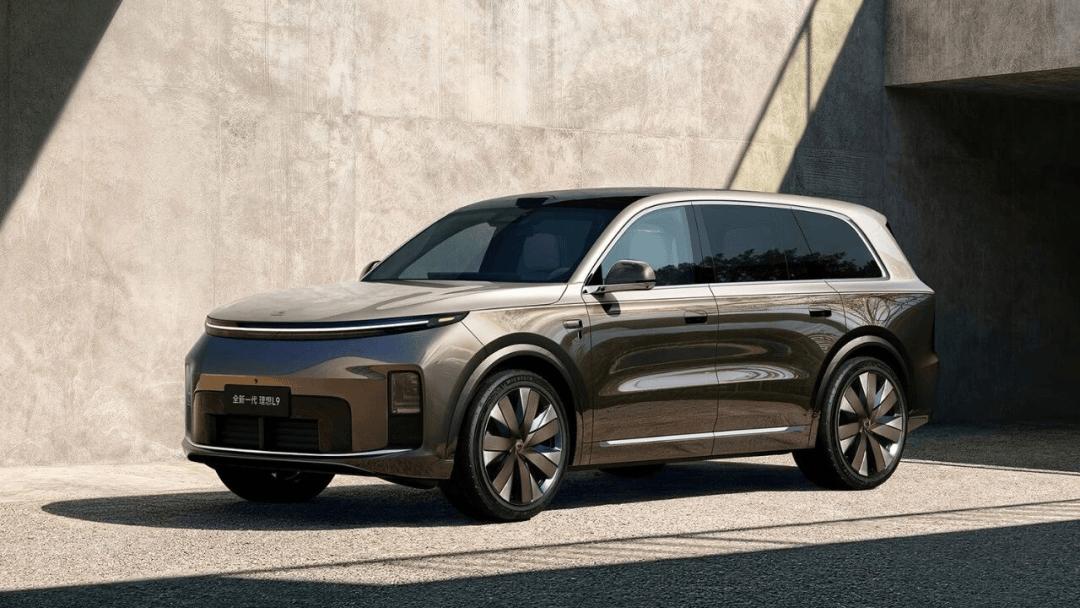
Li Auto's first step in AI implementation is on the new - generation L9. In Li Auto's definition, this is the industry's first embodied intelligent vehicle. This car is equipped with Li Auto's self - developed automotive - grade 5nm "Mach 100" chip, with a total vehicle computing power of 2,560 TOPS. The effective computing power of a single chip is three times that of NVIDIA Thor - U, optimized specifically for the VLA model, and is called the "heart" of the embodied intelligent vehicle.
MindVLA - o1 serves as its "brain", with 3D spatial understanding and reasoning capabilities. The "nervous system" is Li Auto's self - developed Xinghuan OS operating system, and the "body" of the vehicle is an 800V fully active suspension and a full - by - wire steering system, capable of millisecond - level response and "anti - physical" body - attitude control.
In Li Xiang's view, this car will be upgraded from a "mobile home" to an "intelligent partner". The car will no longer passively execute instructions but will actively understand needs, predict risks, and provide services. Li Auto is trying to re - define the car with this generational gap and distance itself from imitators.
Technically, Li Auto has full - stack capabilities, with a complete VLA architecture, self - developed chips, data closed - loop, and training system. However, the challenges are also huge. Firstly, there is a talent drain. Since the second half of 2025, eight core technology executives have left, mostly to start businesses in the field of embodied intelligence. The stability of the R & D team directly affects the progress of technology.
Secondly, AI R & D is extremely costly and has a long pay - back period. Currently, the commercialization path of humanoid robots is not clear, which may continuously drag down the performance. Moreover, competition in this field is intensifying, with Huawei, Tesla, and XPeng all investing heavily. Li Auto has not yet established an absolute advantage. The AI story is appealing, but it still takes time to materialize. For Li Auto, this is a necessary choice.
This article is from the WeChat official account "Market Insights", author: Hua Yinglong. Republished by 36Kr with permission.