The talent war in embodied intelligence: the ones worth betting on have changed
The story of "human" in embodied intelligence continues.
Since the beginning of the year, core executives from several embodied intelligence companies, including Xinghaitu, Magic Atom, Qianxun Intelligence, and Zhujidongli, have "left" to start their own businesses or join new forces. This is the other side of the influx of hot money into this booming industry. The rapid talent flow has magnified the uncertainty of competition.
The changes in personnel are a footnote to the anxiety of entrepreneurship and the differentiation of the industry landscape. More than one investor told "Silicon - based Research Laboratory" that although the hot money in embodied intelligence seems to be surging, the Matthew effect of financing has begun to emerge. According to data from Touzhong Jiachuan, in 2025, the top 10 embodied companies took about 40% of the annual financing amount.
There are more and more players in the camp with a valuation of billions. Star - popular companies can't get enough shares, while new entrepreneurial forces value teams with their own resources more.
This also means that in 2026, a group of embodied intelligence companies will become "cannon fodder" in the competition. The cruel competition has also accelerated the talent flow in reverse. We can clearly see that this wave of embodied intelligence entrepreneurship has experienced three parallel changes -
From the departure of genius scientists, the transfer of engineers' experience to the "second - time entrepreneurship" of core members of current embodied startup companies.
The change in the portrait of entrepreneurs is the beginning of industry change. Today, embodied intelligence may face a more challenging "talent - finding problem" than large - model entrepreneurship.
1. Three Rounds of Changes Faster Than Large - Model Entrepreneurship
The wave of embodied intelligence entrepreneurship is often compared with the previous large - model entrepreneurship because they share similar characteristics: first financing, then product; high concentration of education, capital, and background, and there are also stories of poaching talents at high prices.
Although there is a half - year time lag between the two, the wave of embodied intelligence entrepreneurship, which started later, has more obvious and intense changes.
A robot headhunter felt that "the changes in embodied intelligence are too fast." In the past year, she has seen many examples of co - founders leaving and core talents departing. A large number of talents from the intelligent driving circle and the large - model circle are also rushing to join the field of embodied intelligence.
Reviewing the wave of embodied intelligence entrepreneurship, we can clearly see three rounds of changes -
The first round is the "departure" of scientists. Peng Zhihui of Zhiyuan, Ding Wenchao of Tashizhihang, Huang Qingqiu of Moqi Intelligence, and Zhou Kaiwen of Nuoyin Intelligence, who carry the label of "Huawei's genius teenagers".
In addition, Wang He of Yinhe Tongyong and Chen Jianyu of Xingdong Jiyuan are typical examples of scientist - entrepreneurs, which is the same as the AI scientists in the early wave of large - model entrepreneurship.
The second round involves well - rounded talents in technology and commercialization, typically the overflow of talents from intelligent driving and hardware companies. Among them, entrepreneurs from the Ideal, Horizon, Xiaomi, and Huawei camps are well - known.
There is no need to elaborate on the stories of Huawei's genius teenagers starting businesses. The Ideal and Horizon camps have contributed the "main force of intelligent driving" in embodied intelligence.
Lang Xianpeng, the former president of intelligent driving at Ideal Auto, has founded Kunlunxing, a large - model company for embodied intelligence. Jia Peng, the former head of autonomous driving technology R & D at Ideal, and Wang Kai, the former CTO, founded Zhijian Dongli and completed 5 rounds of financing within half a year. Xia Zhongpu, the former head of end - to - end intelligent driving technology at Ideal, has also joined Wujie Dongli as a co - founder and co - CTO.
There is also Xieyue Intelligence, which targets consumer - grade embodied intelligence products for the C - end. Its founding team and Zhang Xiao are also from Ideal.
Many talents from Horizon, the "first stock of intelligent driving chips", have also joined the wave of entrepreneurship in the field of embodied intelligence.
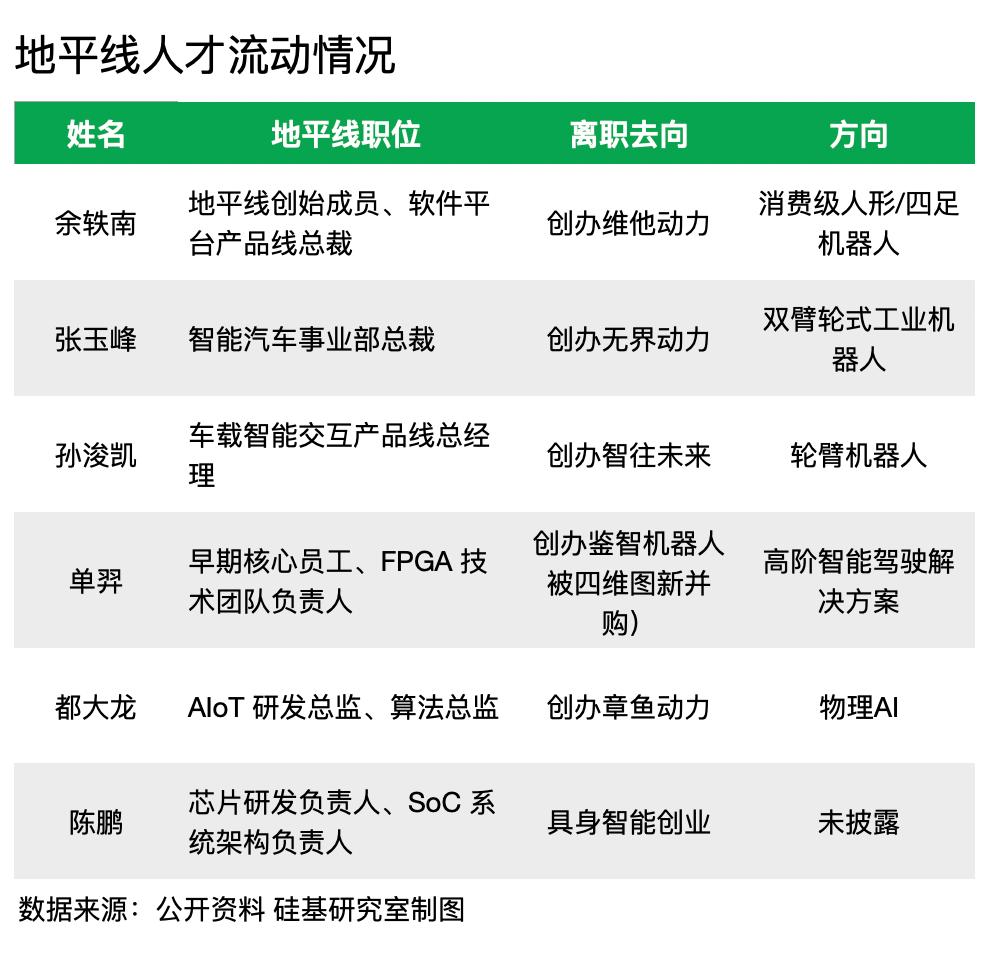
As mentioned above, the founder of Wujie Dongli is Zhang Yufeng, the former vice - president and president of the intelligent vehicle business unit at Horizon. Shan Yi, one of the top ten employees at Horizon, founded Jianzhi Robotics (later acquired by NavInfo). Du Dalong, a core employee, founded Zhangyu Dongli. There are also Vita Dongli and Zhiwang Future, all founded by former Horizon employees.
The influx of executives from the intelligent driving industry into embodied intelligence is an expected inevitability. The high overlap between embodied intelligence and the automotive industry chain and the engineering ability for interactive feedback in the physical environment. Leading automobile companies are also accelerating the layout of embodied intelligence. Some people in the industry believe that autonomous vehicles are "robots with four wheels".
The Xiaomi camp is a rapidly rising but often overlooked force in this wave of embodied intelligence entrepreneurship.
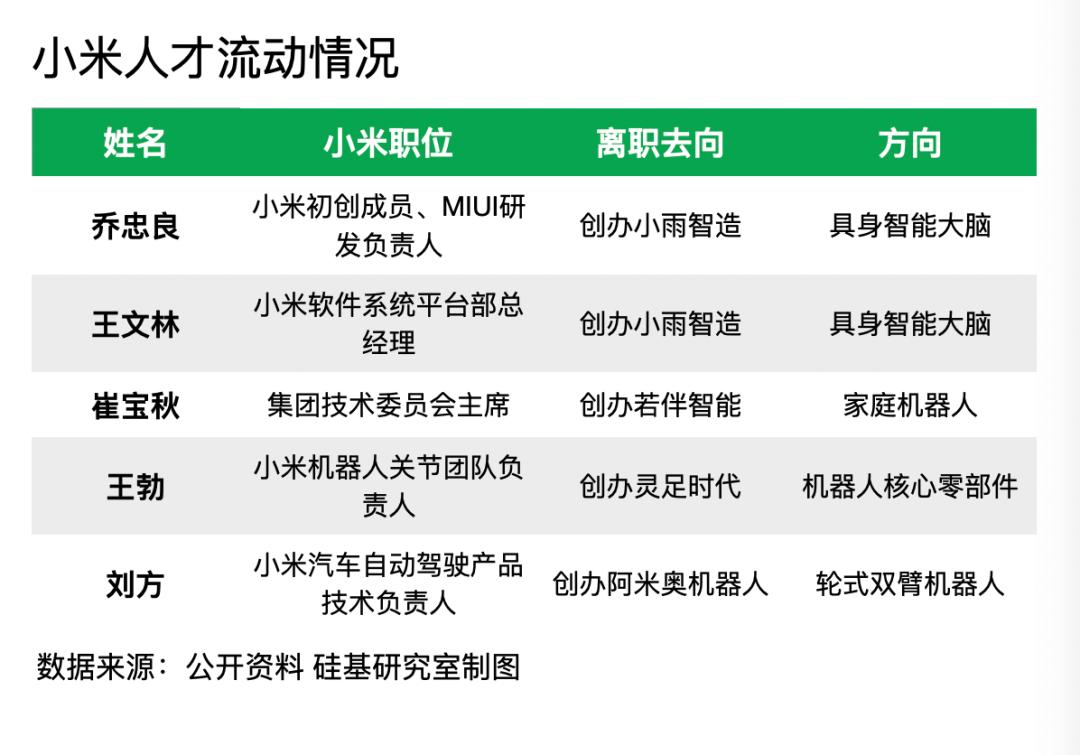
Xiaoyu Zhizao, founded by Qiao Zhongliang, an early member of Xiaomi, and Wang Wenlin, the former general manager of Xiaomi's software system platform department, targets industrial embodied intelligence. Cui Baoqiu, known as the "technical godfather of Xiaomi", has entered the field of household service robots. Liu Fang, the former head of autonomous driving product technology and mass - production delivery at Xiaomi Auto, founded Amiao Robotics.
There are also entrepreneurs distributed in the embodied intelligence industry chain, such as Wang Bo from the Xiaomi camp, who founded Lingzu Shidai, which mainly focuses on integrated joint modules.
The third round is happening now. Core talents from star companies in embodied intelligence are starting their own businesses.
Xu Huazhe, the former chief scientist at Xinghaitu, founded the startup company Poke Robot, targeting household robots, and has received seed - round investment from Xinghaitu. The above - mentioned robot headhunter also told us that core talents from star companies in embodied intelligence are the key targets for their frequent meetings and talent poaching: "As long as there is an intention to start a business, there is no shortage of investors with term sheets."
From the ignition in 2023 to the explosion from 2024 to now, embodied intelligence has presented a more intense entrepreneurial picture than large - model entrepreneurship. It should be noted that the three rounds of changes occur in parallel rather than in a substitution relationship, and the reasons behind this are the multiple drives of technology, capital, and competition.
Although more than one industry practitioner has mentioned the bubbles and noise in current embodied intelligence, considering the ongoing development of the embodied supply chain and the possible listing wave driven by companies like Unitree in the future, the embodied intelligence industry chain is still a hot spot that the market focuses on and hot money bets on.
In addition, embodied intelligence does not have the technical characteristic of "the model is the product" like large models. The embodied model is only part of the product. Embodied intelligence requires millions of hours of data to improve generalization ability, which is why the financing and entrepreneurial cycles of embodied intelligence are longer than those of large models.
2. The Portrait of Worthy Entrepreneurs Has Changed
In the rapid changes of the three waves of entrepreneurship, more and more embodied intelligence entrepreneurs and investors are gradually clarifying a key question:
What do the entrepreneurs worthy of investment look like now?
There is a consensus that the leading players in the industry are paying more and more attention to the matching degree with their own enterprises and businesses when recruiting, rather than single indicators such as papers, experience in well - known enterprises, and resource integration. Investors are not betting on pure academic - oriented teams but on teams with scenario advantages and engineering experience.
Embodied intelligence teams with an emphasis on ontology manufacturing and hardware advantages value two types of talents: young engineers, mainly serving the developer ecosystem of embodied intelligence; and experienced senior engineers, familiar with the supply chains of industries such as 3C and automobiles. A headhunter mentioned that many enterprises want to recruit "factory managers" who understand the supply chain.
Embodied intelligence enterprises focusing on the "brain" are not only targeting core talents such as chief scientists and algorithm experts but also starting to value talents in product development and engineering delivery.
An investor mentioned that when investing in "brain" enterprises, they not only look at the technical team but also value whether the model ability can be implemented in a specific vertical scenario and specific tasks - truly solving the problem of robots being able to work in specific scenarios, which actually tests the enterprise's data ability and delivery ability.
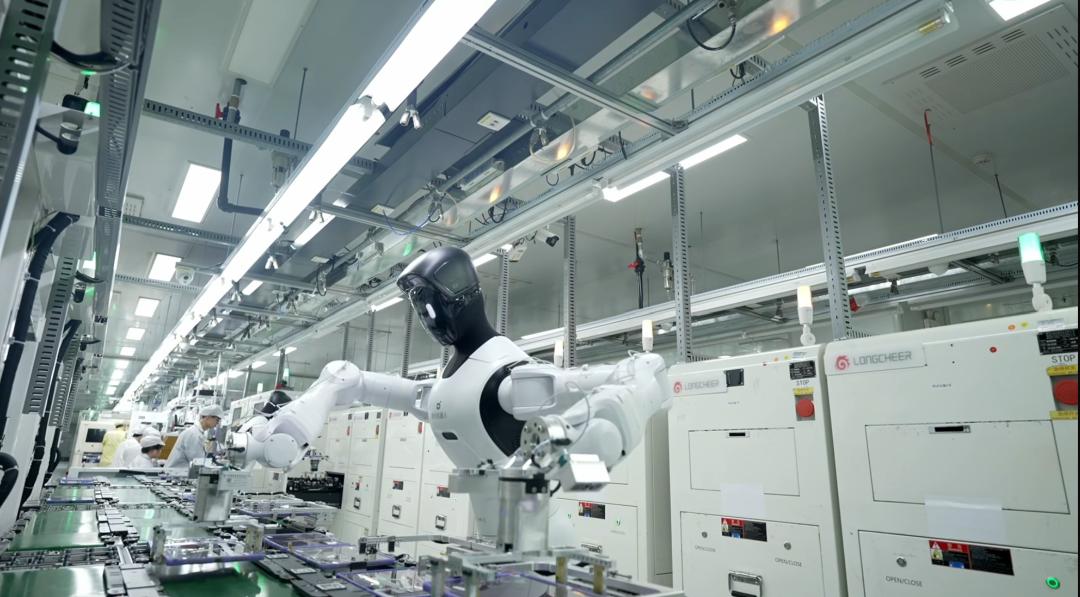
Zhiyuan Robot showcases its products in an 8 - hour live broadcast at the factory. Source: Screenshot of the live broadcast
Engineering ability, data closed - loop, and scenario ecosystem are the reasons why talents from the Ideal, Huawei, Horizon, and Xiaomi camps are highly concerned in this wave of embodied intelligence entrepreneurship.
Take the entrepreneurs who left Horizon as an example. They are deeply influenced by the founder, Yu Kai.
Yu Kai once mentioned in an interview that for technology enterprises to survive the cycle, technology is not the moat. Brand, customer relationships, industry standards, and ecosystems are the real moats. Therefore, most of the talents who start businesses from Horizon pay attention to the closed - loop of technology and business and the establishment of ecological resources, which virtually reduces the cost of trial - and - error.
The Huawei camp is also good at ecological operations. The rapid ecological penetration of Zhiyuan is a typical example.
On the one hand, it separates the dexterous hand, data, leasing, and quadruped robots into independent sub - businesses, which is to occupy a position in the ecosystem and prepare for subsequent financing. On the other hand, it weaves a network of the embodied intelligence industry chain by investing in and establishing joint - venture companies.
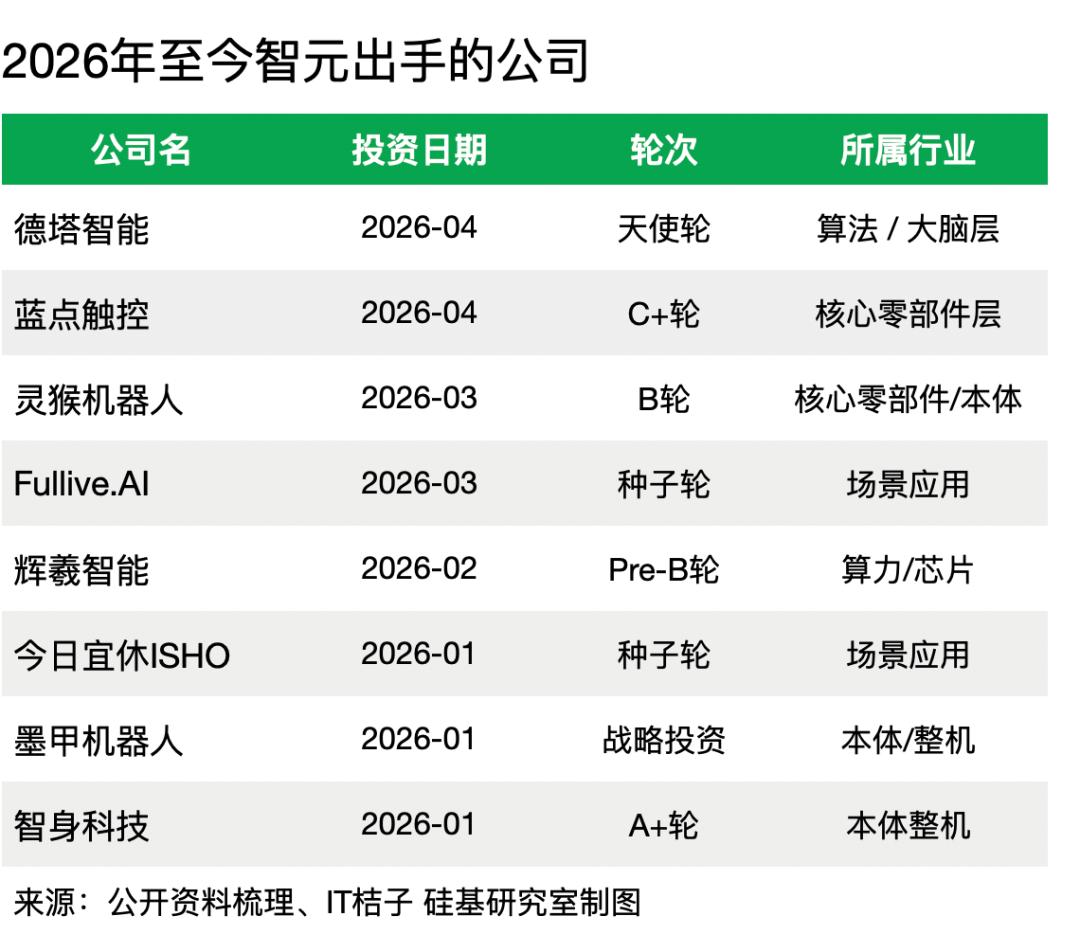
According to our incomplete statistics, since the beginning of the year, Zhiyuan has invested in 8 enterprises, covering basic models, components, and other fields.
The Xiaomi camp continues the gene of cost - effectiveness in hardware manufacturing. Lingzu Shidai, which sells integrated joint modules, once mentioned that the founding team learned from Xiaomi's design habits, optimized the design to the limit, and ensured that each component has no redundant functions, thus reducing the material cost. The cost - effectiveness advantage of the products has impressed many ontology manufacturers.
The change in the portrait of Chinese embodied intelligence entrepreneurs from pure academic - oriented to the current diversified and composite requirements reflects a signal that embodied intelligence is squeezing out bubbles, and industry resources are flowing to the right places at an accelerated pace.
3. The Acceleration of Talent Flow in Embodied Intelligence: Similarities and Differences between China and the United States
The active talent flow is a mirror to measure the development and confidence of an industry. It at least shows that the current embodied intelligence industry is still in a stage of rapid expansion.
Similar phenomena are not only happening in China. The talent flow of key embodied intelligence talents in the United States is also driving structural changes in the industry.
Last year, the talent - poaching war in Silicon Valley led by Meta was regarded as the peak of large - model talent poaching. Compared with the radical talent competition in large - model fields, the talent flow in US embodied intelligence is not very obvious, but it has been ongoing. The supply of embodied intelligence talents is also highly concentrated in several large companies:
Google/Deepmind, NVIDIA, Tesla, Amazon, and OpenAI.
Therefore, talent poaching is also related to these companies. For example, in 2024, 1X Technologies poached several key figures from Tesla and other companies.
US technology giants are better at using platform - based thinking for cooperation and competition. The departure of talents can also obtain platform - ecological investment and resource cooperation, which has accelerated the flow of embodied intelligence experience and talents.
However, since this year, new talent changes have been affecting the new round of US embodied intelligence ecosystem.
The first company that may be overlooked is Boston Dynamics.
This year, Milan Kovac, the former senior vice - president of Tesla and the person in charge of the Optimus project of humanoid robots, joined Boston Dynamics. After that, Robert Playter, a veteran of the company, announced his resignation as CEO. Boston Dynamics also released a new - generation electric - drive Atlas and invited Google DeepMind to help with the model layer.
In addition, backed by its major shareholder, Hyundai Motor, it means that in terms of hardware, software, and scenarios, Boston Dynamics is on the right track. An industry insider believes that Boston Dynamics is accelerating the implementation of its intelligent roadmap for humanoid robots.
The second company is Figure AI, which has the highest valuation.
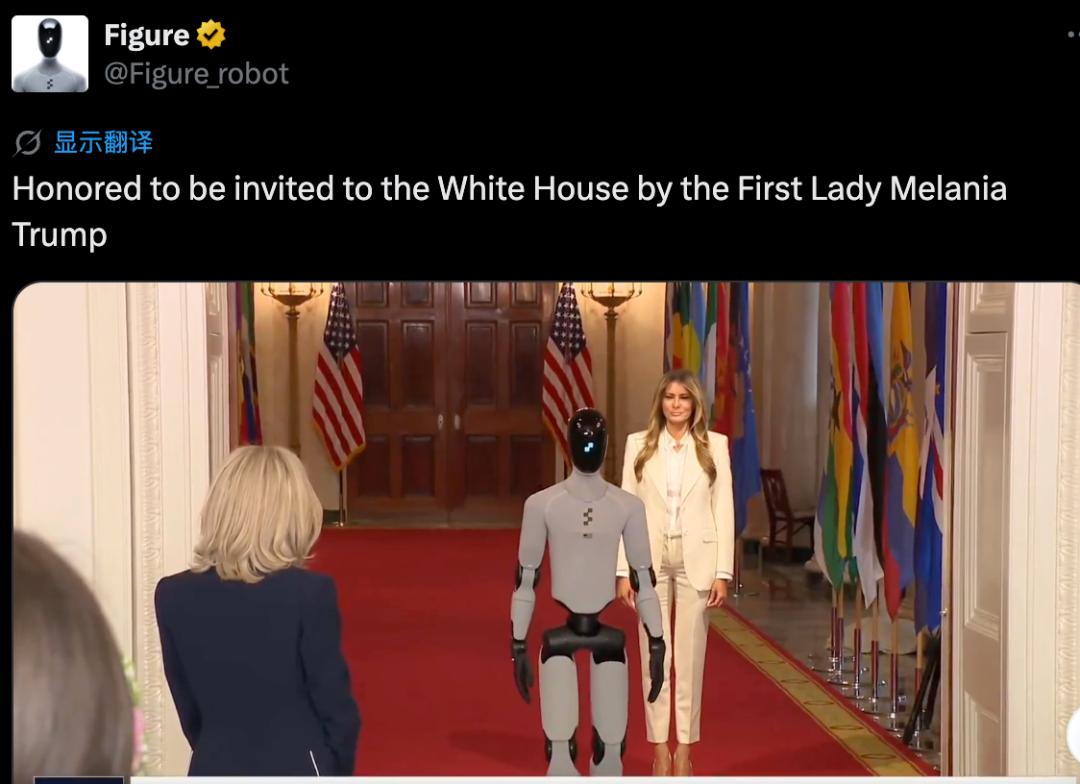
At the end of March this year, it, as a representative of "American robot manufacturing", appeared at the White House and accompanied US First Lady Melania Trump to attend an event.
The reason for paying attention to Figure AI lies in the changes in personnel. After terminating the cooperation with OpenAI, the team recruited senior talents from top AI institutions such as Google DeepMind. The self - developed intelligent model Helix replaced OpenAI's model integration solution. Figure AI is sending a signal of talent centralization, choosing to retain internal AI reasoning ability instead of paying external model suppliers.
Of course, the most influential and most - watched one is still Elon Musk and his Tesla.
Although Musk once said that the average tenure of the current executive team has reached 10 to 12 years, Tesla has also experienced talent poaching. In 2018, Apple hired 46 former Tesla employees for its car project, and Tesla's core talents have always been in high demand in the embodied intelligence circle.
Behind this is the promotion of intelligent driving experience and Musk's practical approach to recruitment. He once mentioned in an interview that when recruiting, don't just look at the resume but trust the on - site communication.
"The resume may look very impressive... but if you don't have an 'amazing' feeling after 20 minutes of conversation, you should trust the conversation rather than what's on paper." Musk said.
What Musk and Tesla are doing is still vertical integration. This year is the year with the largest scope and the most radical actions in vertical integration.
The most intuitive is the production capacity target. Tesla has converted the production line at the Fremont factory (formerly for Model S and Model X) to manufacture Optimus Gen 3, and the ultimate goal of the Optimus super - factory in Texas is to produce 10 million units per year.
Secondly, it is the ecological closed - loop. With its self