Electric motorcycles are eliminating 80% of fuel-powered vehicles. Is Zhang Xue teaming up with CATL to disrupt the market?
"If there is a truly revolutionary change in the battery (for electric two - wheelers), it will eliminate 80% of fuel - powered motorcycles."
When Zhang Xue said this last year, not many people knew him.
When asked if he would venture into electric vehicles at that time, he said, "After I bring all the motorcycles displayed at the Motorcycle Expo to the market, I will allocate some energy to start the electric vehicle project. Maybe around the end of the second half of next year, I'll start building a team."
After that, he continued to focus on fuel - powered racing motorcycles.
Who could have imagined that within less than a year, Zhang Xue would make headlines in major news.
Not long ago, at the Portuguese round of the WSBK, his 820RR - RS racing motorcycle won two consecutive rounds. This was the first time a Chinese brand had topped the world's top - level motorcycle race, and Zhang Xue became an instant sensation.
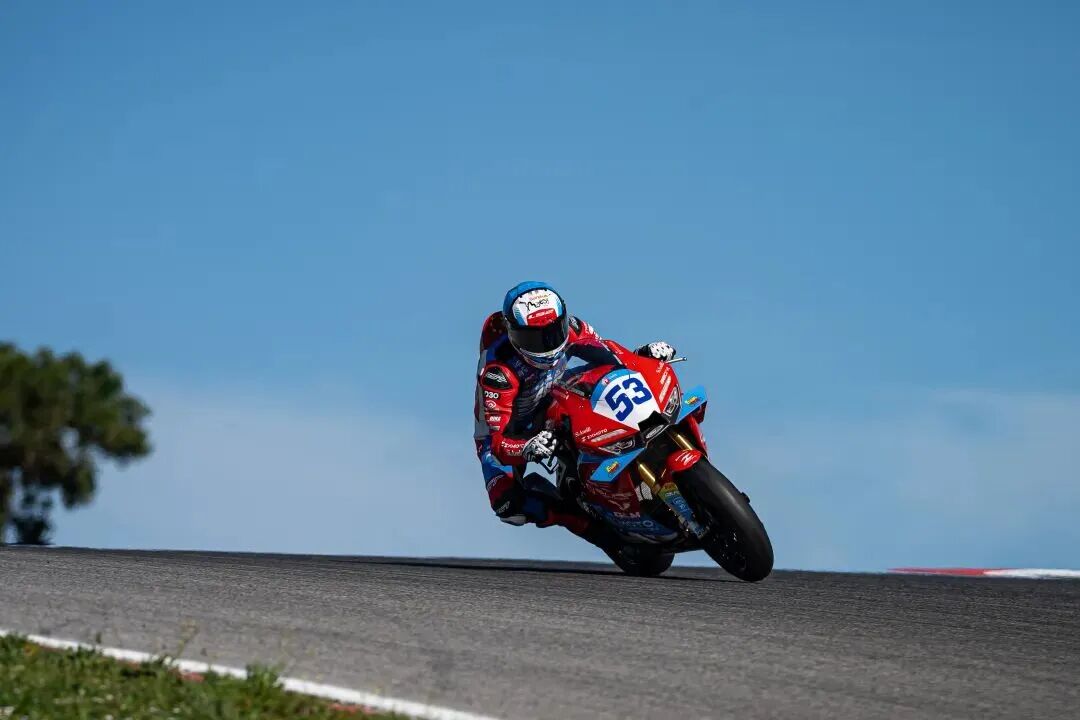
△ "Zhang Xue's motorcycles" won the championship in the double - round main race of the World Superbike Championship held in Portugal. Source: Xinhua News Agency
Before the cheers died down, another piece of news quickly caught the public's attention: He is really going to start making electric motorcycles.
Recently, Xineng'an, a subsidiary of CATL, confirmed that it is in talks with Zhang Xue's side about cooperation on electric motorcycles. This company was established five years ago, and Zeng Yujun once took the lead personally. It ranks first in the global drone battery shipments and first in the global market share of lithium - ion batteries for electric motorcycles. Some media reported that the first product of their cooperation is positioned as a high - end electric motorcycle, which is expected to be unveiled in the second half of 2026 and go into mass production in 2028.
What gives electric motorcycles the edge to eliminate fuel - powered motorcycles? And what can Zhang Xue and CATL change?
1
A man who installs engines blindfolded, betting on a battery revolution
In the motorcycle industry, there are plenty of big talkers.
If someone else said that a battery revolution could eliminate 80% of fuel - powered motorcycles, they would surely face doubts. But Zhang Xue has the confidence to say this.
In 1987, Zhang Xue was born in a borrowed adobe house in a Miao village in Huaihua, Hunan. His parents divorced, and the family was penniless. At the age of 14, he dropped out of school and entered a motorcycle repair shop in the urban area of Huaihua. He spent his days surrounded by oil stains and parts, honing his skills through repetitive and boring work.
In 2009, a CCTV reporter called this 22 - year - old repairman in front of the camera, with hundreds of engine parts scattered on the ground.
In just over an hour, he assembled a complete engine that ran smoothly, with no parts installed incorrectly.
The key is that he did it blindfolded.
This is not a story of a genius but the result of years of practice and muscle memory developed since his apprenticeship in the repair shop.
It is this confidence that allows Zhang Xue to make the prediction that "a battery revolution will eliminate 80% of fuel - powered motorcycles".
Behind his words, there are actually three lines of logic, each hitting the pain points of fuel - powered motorcycles.
First, power. An electric motor reaches its peak power at startup. As soon as you twist the throttle, the maximum torque is instantly released. In a fuel - powered vehicle, you have to wait for the engine speed to increase, while an electric vehicle delivers full power right away. Those who have ridden both know - the difference is like the contrast between a powerful push - back feeling and waiting for the engine speed to rise.
Second, cost. Once sodium batteries are widely used, their cost is expected to be lower than that of lithium - ion batteries. Charging at home costs only a few cents per kilometer, while refueling costs at least 15 to 20 cents per kilometer. Over the course of a year, the difference in energy costs is quite significant.
Third, energy replenishment. In the past, the most fatal flaw of electric vehicles was slow charging, which could take several hours and was extremely frustrating. Now, fast - charging technology has caught up - high - end models can already achieve a 100 - kilometer range after a 10 - minute charge. Although there is still a gap compared to refueling, the efficiency has been greatly improved.
The moat of fuel - powered vehicles is being gradually filled by these three factors.
If a battery revolution is really going to happen, who is most likely to trigger it?
Looking globally, there are only a handful of companies that can meet the requirements of energy density, cost, and large - scale mass production at the same time. CATL is one of them. In 2025, it mass - produced sodium batteries with an energy density of 175Wh/kg, which can still maintain 90% of the battery capacity at - 40°C, and cost is its advantage.
Some people say that CATL is approaching Zhang Xue to ride on the wave of the WSBK championship's popularity.
They are wrong.
A good battery is just ammunition. The performance of an electric motorcycle depends on the overall vehicle integration - electronic control tuning, chassis matching, and thermal management. If any link fails, even the top - notch battery is useless. These tasks cannot be accomplished by simply throwing money at them; they rely on skills honed on the racetrack.
Zhang Xue happens to have these skills. The 820RR - RS on the WSBK track left the second - place rider nearly 4 seconds behind, proving his ultimate ability in power system tuning.
One side has advanced battery technology, and the other side has mature tuning skills. Their goal is to create a competitive high - end electric motorcycle.
Whether they succeed remains to be seen.
But another question has already emerged: What is the current situation of the electric motorcycle market? Why have few brands really targeted the high - end market in recent years?
2
What is the situation of the electric motorcycle market? Why is no one daring to enter the high - end segment?
One of the biggest changes in the electric motorcycle market recently is the new national standard that came into effect at the end of last year.
The new national standard limits the speed of two - wheeled electric bicycles to 25 km/h, and significantly improves anti - tampering and fire - prevention standards. As consumers' needs are not met, they have turned to electric motorcycles. The Gongyan Industry Research Institute predicts that the annual sales of electric motorcycles in China are expected to increase by 8.5% year - on - year in 2026.
However, the embarrassing thing is that while the demand has increased, the products have not kept up.
First, there are quality issues. A food delivery rider spent more than 4,000 yuan on an electric motorcycle. After running 4,000 kilometers in a year, it had to be repaired 11 times - there was an abnormal noise on the second day after purchase, the footrest didn't rebound, the instrument got water - logged, and the screen came off the glue. The scariest thing was that it suddenly lost speed after being fully charged at dawn, and the rear wheel spun at high speed.
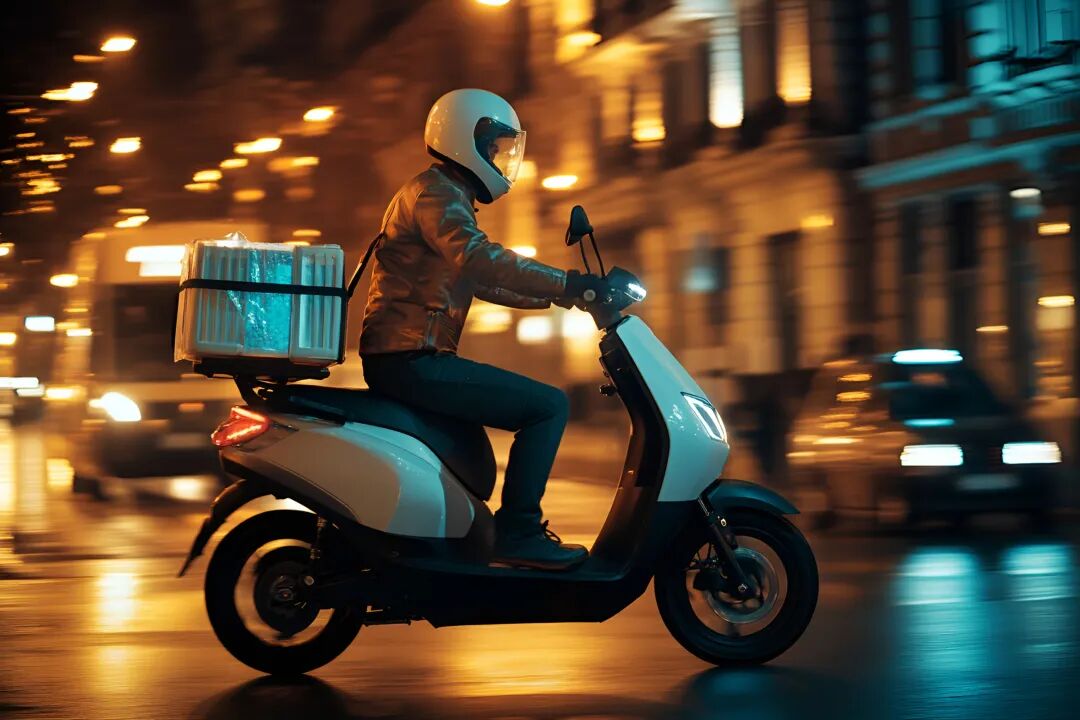
Second, there is the issue of range. A consumer spent 4,700 yuan on an electric motorcycle that was claimed to have a range of 200 kilometers, but it ran out of power after just a couple of laps, and the actual range was less than 100 kilometers. Another person bought a long - range version, which the salesperson claimed could run 80 - 100 kilometers, but in reality, it couldn't even reach 40 kilometers.
A survey by Shangpu Consulting shows that 24% of users are reluctant to recommend electric motorcycles due to false range claims, second only to the 31% who are dissatisfied with quality issues.
There are also many complaints about charging. Some owners complain that the power limit of the charging piles in the community prevents their electric motorcycles from charging, and they have to spend time looking for charging spots every day. Even when they do manage to charge, it takes several hours, and they spend a lot of money but don't get much charge.
The root cause of these problems is that many brands still approach electric motorcycle manufacturing with the mindset of making tools: they only focus on cost - effectiveness and think as long as it can be ridden, that's enough. They don't put much effort into improving range, charging, and after - sales service.
What's even more disheartening is that many domestic two - wheeled electric vehicle brands lack the courage to move upmarket. Many brands are stuck in the mid - to - low - end market, focusing all their energy on the mass commuting market, and the prices of their products rarely exceed 20,000 yuan.
They compete on configuration, range, and intelligence, but the improvement in product experience is minimal. Truly high - performance and high - value high - end electric motorcycles are rare.
However, changes are taking place. The new national standard is like a fuse, forcing major two - wheeled vehicle brands to re - evaluate the electric motorcycle market, especially Yadea, Emma, Niu, and Ninebot, whose actions are the most obvious.
Let's start with Yadea. In 2025, it sold 16.27 million units, with a revenue of 37 billion yuan and a net profit of 2.9 billion yuan, more than doubling its profit. It has been the global leader for many consecutive years. It is also getting serious about electric motorcycles. In March this year, it launched the Guanneng Xingjian II - 200L, which can reach a top speed of 110 km/h, is equipped with a 72V 109Ah semi - solid large - capacity lithium battery, has a range of 120 kilometers, supports fast charging, and is priced at 21,999 yuan.
However, whether it's using semi - solid batteries or increasing the top speed, many people's first reaction when they hear that Yadea's products cost over 10,000 yuan is that it's expensive! That's the problem. Because the market's perception of Yadea is that it offers cheap and durable products. Changing brand perception is one of the most difficult things in the business world.
Next, let's look at Emma. In the first three quarters of 2025, its revenue was 21.09 billion yuan, and its net profit was 1.91 billion yuan, with a growth rate of over 20%. The data is quite good. Its biggest move was to launch the high - end sub - brand Lingji in October 2025, and the first electric motorcycle, the X7, was officially launched in March 2026, priced from 7,990 to 19,990 yuan, targeting the "trendy motorcycle new species" market.
Emma's strategy of using a sub - brand to enter the electric motorcycle market has its merits. Instead of trying to change users' perception, it's better to start from scratch. Lingji has no historical baggage and doesn't have to carry the label of Emma to move upmarket.
However, the positioning of Lingji as a "trendy motorcycle new species" still needs to be tested. High - end electric motorcycle users are looking for technical strength, not just appearance design. The Lingji X7 uses a Bosch motor and externally - purchased electronic control, lacking the right to speak in core technology. A high - end product pieced together from the supply chain doesn't have a deep enough moat.
Then, let's talk about Niu. In 2025, it sold 1.198 million units, with a revenue of 4.3 billion yuan, a year - on - year increase of 31%. It had been in the red for four consecutive years, with a cumulative loss of nearly 500 million yuan, but last year, the loss narrowed from 193 million yuan to 39.4 million yuan, and the gross profit margin reached 19.6%, indicating that the adjustment of the product structure is working.
In March this year, Niu bet on the AI electric motorcycle NX2, which is equipped with its self - developed Lingxi AIOS system. Niu's scale effect and cost - control ability are not on the same level as the previous two leading players, so taking a differentiated route like AI is the right approach. But what electric motorcycle buyers care most about is whether it's the AI voice assistant or the push - back feeling when twisting the throttle. This direction may still need market testing.
Ninebot is currently the fastest - growing among the four. In 2025, it sold 4.09 million two - wheeled vehicles, with a revenue of 21.28 billion yuan and a net profit of 1.76 billion yuan, a year - on - year increase of 62%. Last year, its flagship electric motorcycle, the M5, sold 4,700 units within 16 hours of its launch, with sales exceeding 89 million yuan. Ninebot is the most professional in making electric motorcycles among the four, with strong specifications and a solid foundation in intelligence. However, when Zhang Xue enters the market with track - level tuning and other brands quickly follow, whether Ninebot's proud "performance" can still hold up remains a question mark.
Some people are worried that Zhang Xue's entry into the electric motorcycle market with Xineng'an will take business from other two - wheeled vehicle brands. In fact, in the short term, their price ranges are unlikely to overlap, so there is no possibility of business competition.
If he really succeeds, the impact he brings may be more worthy of attention than directly seizing the market.
First, it will prove that domestic high - end electric motorcycles can be well - made.
In the past, when people thought of high - end electric motorcycles, they only thought of imported brands. If Zhang Xue combines track - level tuning with CATL's batteries to create a truly competitive and convincing motorcycle, it will tell the industry that domestic high - end products are not impossible to make; it's just that no one has seriously tried before.
Second, it will improve users' perception.
Once users experience the track - level driving feeling, they will have a better understanding when looking at those so - called "high - end" products pieced together with specifications. The approach of piling up configurations and telling stories can't stand up to the real driving experience. Once users' expectations are raised, it will be impossible for brands to deceive them with low - level competition.
In addition, it will leave room for a "dimensionality reduction strike".
Once the high - end market is established, the brand and technology will gain momentum. In the future, when entering the mass market, it will come in with top - level tuning experience and supply - chain power. For brands that are still competing on cost - effectiveness, this is a real "dimensionality reduction strike".
3
To make this happen, he still has to overcome three hurdles
However, if Zhang Xue really wants to succeed in making high - end electric motorcycles in cooperation with CATL, he still has to overcome several hurdles.
The first hurdle is quality control and the supply chain.
Zhang Xue's motorcycles were able to win the WSBK championship thanks to an almost obsessive - compulsive quality control system.
However, electric motorcycles operate on a different logic. How to match the three -