From 100,000 units to 50,000 units, are more and more automakers using BYD's methods to defeat BYD?
Another A0-class pure electric small car has successfully caught our attention.
On April 14th, the Wuling Bingo Pro started its pre-sale in Hangzhou, with a starting price of 58,800 yuan. The price is extremely competitive, while the configuration is top-notch. In terms of space, fast charging, range, and outdoor expansion capabilities, it can fully rival 100,000-yuan-class A-class pure electric cars.
The "good looks", "good drivability", and "usefulness" of pure electric small cars have made them a new weapon for many car companies to boost sales.
From the Geely Xingyuan, which sold 600,000 units in 536 days, to the Leapmotor A10, which received over 9,000 orders in its first week on the market, to the Chery New QQ3, which received over 50,000 orders within 2 hours of its launch, and now the Wuling Bingo Pro, which is strongly vying for the bestseller title. The A0-class pure electric small car market has moved from a period of one dominant player and two strong competitors to a stage of "multiple forces competing".
1. Is the A0-class pure electric small car making a comeback?
In fact, the market popularity of A0 pure electric small cars started to heat up significantly in 2025.
Data from the Passenger Car Association shows that in the first seven months of 2025, the sales volume of A0-class new energy sedans doubled year-on-year. It only took seven months to exceed 530,000 units, surpassing the total sales volume of 2024.
Since 2026, in the context of the overall pressure on the domestic new energy vehicle market, although the growth rate of A0-class pure electric small cars has declined, it remains strong.
In February 2026, the wholesale sales volume of A0-class pure electric models reached 122,000 units, accounting for 29% of the pure electric vehicle market, with a year-on-year increase of 3.9%. In addition, A00 + A0-class pure electric vehicles are also the core export models, accounting for 55% of pure electric vehicle exports.
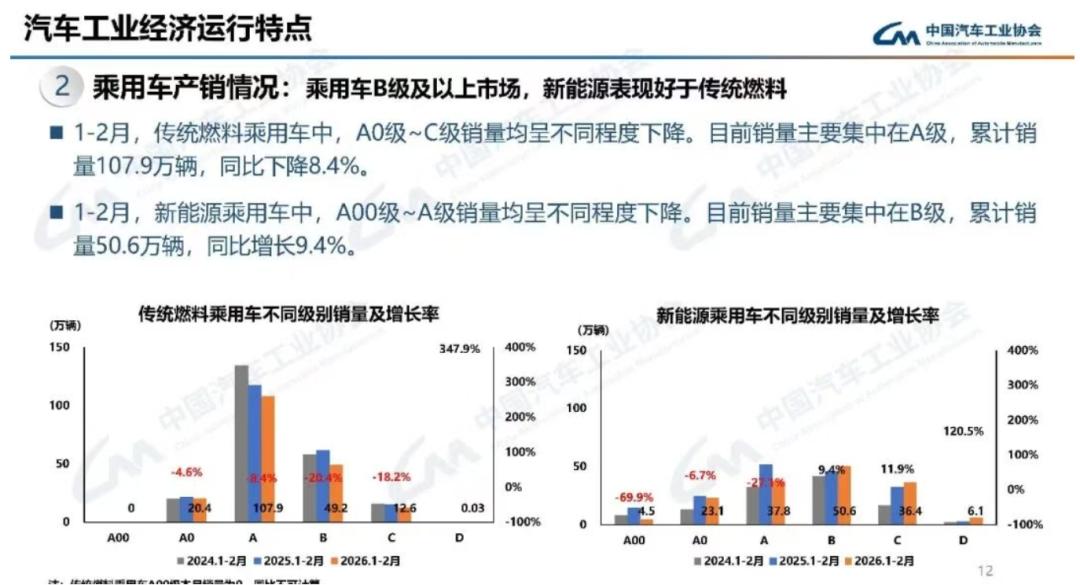
Picture/Production and sales of various passenger cars in February 2026. Source/Screenshot from the Internet, New Energy Outlook
The continuous high popularity of A0-class pure electric small cars is inseparable from the active layout of car companies and the continuous iteration and upgrading of products.
The market appeal of small cars is not unique to the new energy era. Since the Volkswagen Polo and Honda Fit in the fuel vehicle era, these models have become the first commuter cars for many consumers with their compact and flexible bodies and affordable prices.
In the era of new energy vehicles, A0-class pure electric small cars, with their core advantages of low cost, low energy consumption, and easy operation, perfectly meet the mainstream needs of urban commuting and family transportation, and have once again become star products in the automotive circle.
Among them, BYD was the first to sense this market opportunity and successively launched low-end models such as the BYD Dolphin, Seagull, and BYD Yuan. Relying on the rapid growth of sales in the mid - and low - end markets, BYD has become a leading domestic new energy vehicle company.
Data shows that as of November 2025, the cumulative sales volume of the BYD Dolphin exceeded 1 million units in four years, making it the first A0-class small car in China to reach the one - million - sales milestone.
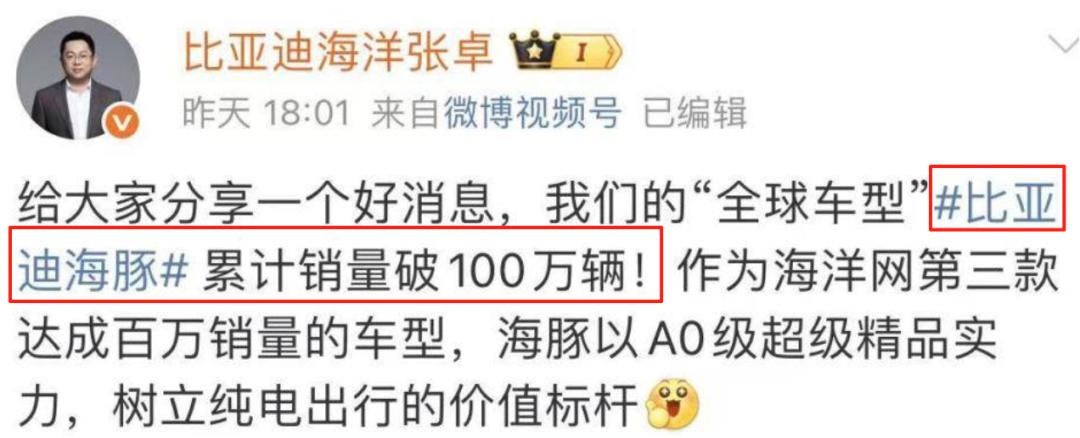
Picture/The sales volume of the Dolphin exceeded 1 million. Source/Screenshot from the Internet, New Energy Outlook
With the intensifying market competition, more and more small cars such as the Geely Xingyuan, Wuling Bingo, and Wuling Mini have emerged, making this niche market more eye - catching and further confirming the market's prospects.
Recently, Geely announced that the Geely Xingyuan had exceeded 600,000 units in cumulative deliveries 536 days after its launch, becoming one of the models to achieve this feat the fastest.

Picture/The sales volume of the Geely Xingyuan exceeded 600,000. Source/Screenshot from the Internet, New Energy Outlook
The market performance of the Geely Xingyuan has, on the one hand, overshadowed the "pioneer" BYD Dolphin, and on the other hand, has made more car companies see the potential of this market.
In March, Leapmotor targeted this niche market and launched the Leapmotor A10. Subsequently, Chery "revived" its classic IP "QQ" and launched the Chery QQ3.
According to the data shared by Zhu Jiangming, the founder of Leapmotor, the Leapmotor A10 received over 9,000 orders in its first weekend on the market. According to official Chery data, the new Chery QQ3 received 56,879 orders within two hours of its launch.
2. Behind the comeback: Who is buying? Why are they buying?
Some industry insiders said that market demand determines supply. "Consumers' consumption attitudes are becoming more rational and cautious. Coupled with the decline of new energy vehicle subsidies and purchase tax, all these factors are driving consumers towards A0-class pure electric small cars, making this niche market 'come back'."
A "2025 New Energy Vehicle Consumer Behavior Research" report released by Jielan Road shows that the age of new energy vehicle owners is getting younger. At the same time, the proportion of first - time buyers has increased to 40%, a 4.5 - percentage - point increase compared to 2024.
The above - mentioned industry insiders added that these trends are all related to the popularity of A0-class pure electric small cars. A0-class pure electric models have low prices and low entry thresholds. Therefore, as more and more young people and first - time buyers choose entry - level electric small cars, the market share of A00 and A0 - class cars will naturally increase.
"Conversely, the expansion of this niche market will be reflected in the data as 'younger consumption age' and 'higher proportion of first - time buyers', showing an obvious positive correlation between the two."
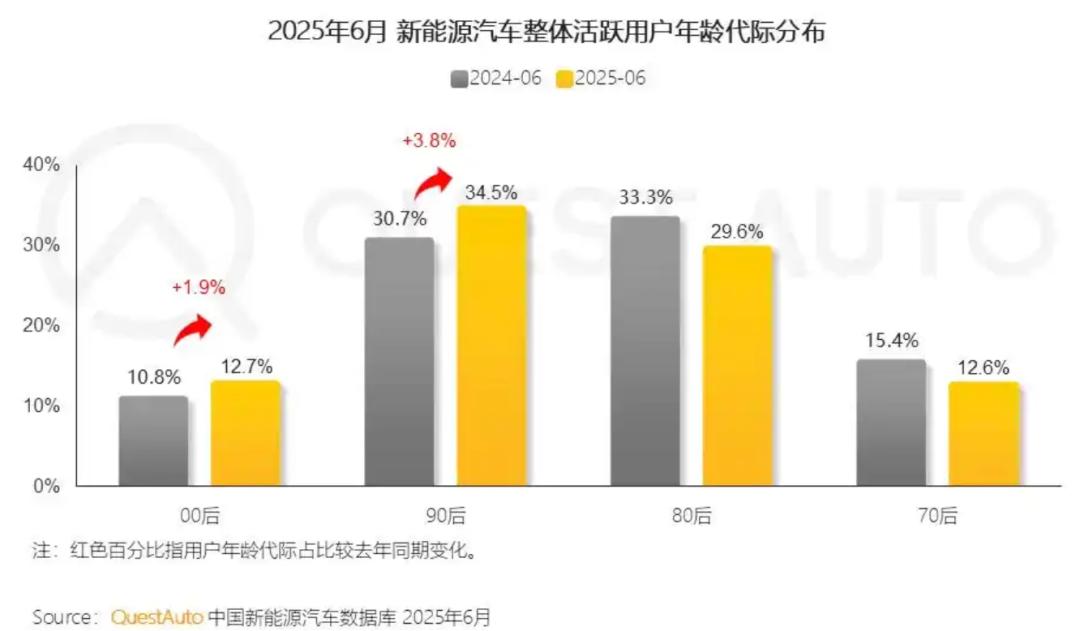
Picture/Age distribution of overall active users of new energy vehicles. Source/Screenshot from the Internet, New Energy Outlook
A 1998 - born office worker said that he has a limited budget and does not have high requirements for the car's space. Therefore, a car with intelligent driving and a range of over 400 km that can be bought for around 80,000 yuan is sufficient to meet daily needs. "It can be said to have extremely high cost - performance."
But not all buyers of small cars are young people. Mr. Wang, a consumer who already has a B - class pure electric SUV at home, said that he bought another small car mainly for the elderly to use for commuting and to pick up and drop off children.
The above - mentioned consumer mentioned that "compared with 'old - people's scooters', A0-class pure electric small cars are more secure in terms of safety and have relatively low prices."
Indeed, in addition to the price attracting consumers, with the continuous iteration of technology, A0-class small cars have maintained or even improved their configurations while reducing prices, which has also become a key factor for consumers' choice.
For example, the entry - level version of the Leapmotor A10, with a starting price of 65,800 yuan, has a range of 403 km. The high - end models are even equipped with lidar and support intelligent driving functions from parking space to parking space. The version with a 505 - km range only costs 86,800 yuan. The re - launched Chery QQ3 has a starting price of just over 50,000 yuan and has an 80% steel structure.
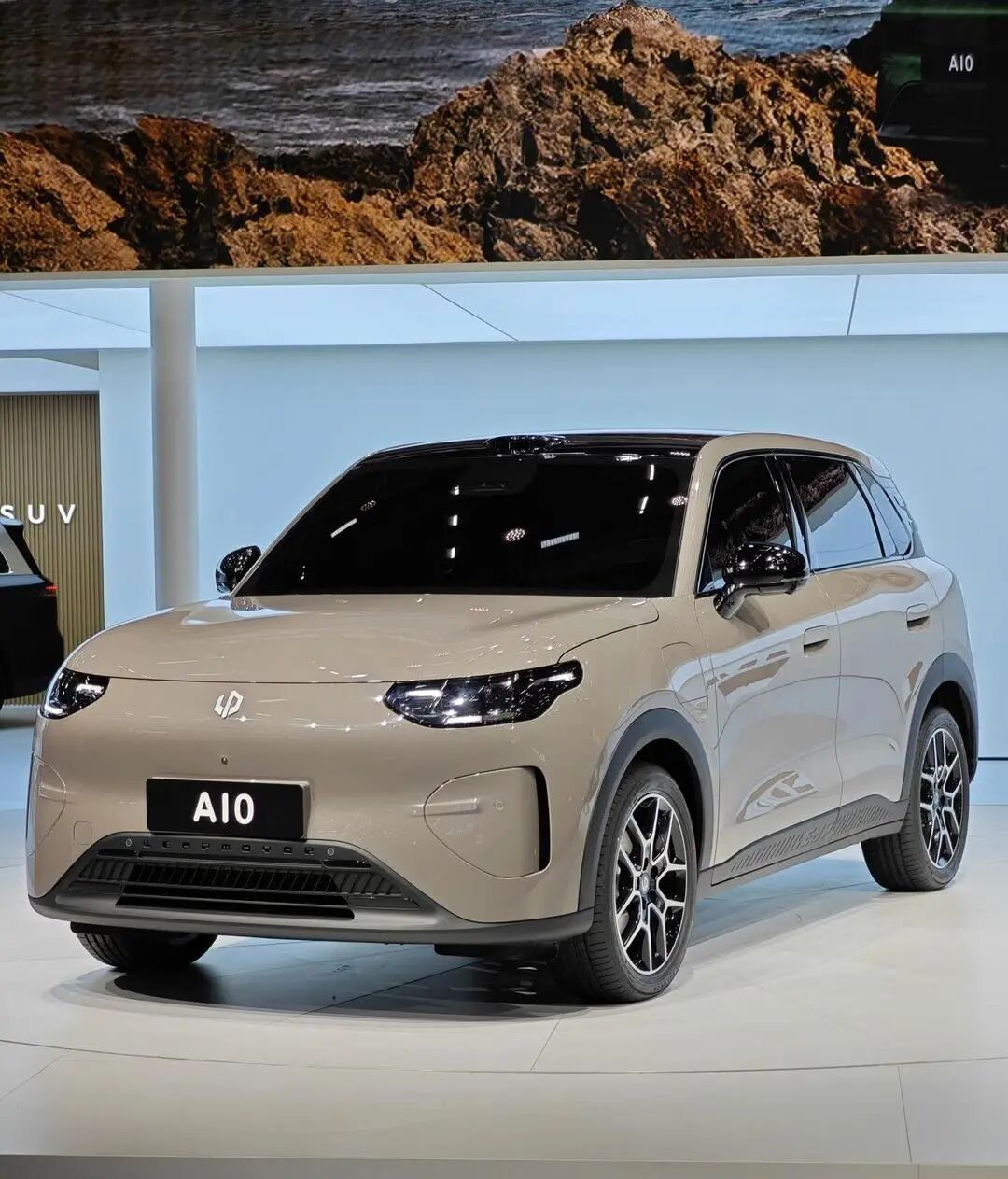
Picture/Leapmotor A10. Source/Screenshot from the Internet, New Energy Outlook
The Geely Xingyuan Exploration Edition, which is 2,000 yuan cheaper than the top - end version of the Leapmotor A10, is equipped with CATL batteries and a front MacPherson + rear multi - link independent suspension, enhancing the driving experience of A0-class small cars to the fullest.
It is not difficult to see that today's A0-class small cars are no longer the "cheap commuter tools" of the past.
3. Can A0-class small cars become the "new hope" for car companies?
The increasing variety of products and the enthusiasm of consumers have made A0-class pure electric small cars a "hot commodity" in the automotive circle.
But behind the excitement, many hidden concerns of A0-class pure electric small cars are constantly emerging.
For consumers, the core reason for liking A0-class small cars is undoubtedly "low prices". However, behind the low prices, although the configurations have improved, when it comes to the driving experience, consumers inevitably have to make a trade - off between price and experience.
On social platforms, "average workmanship", "strong plastic feeling", "too much swaying when driving", and "poor long - term riding comfort" are the most common comments from netizens about A0-class small cars.
On the Heima Complaint Platform, a consumer who bought a Geely Xingyuan in 2024 said bluntly that since the end of 2025, there has been an occasional sour smell when turning on the air - conditioner. The 4S store has not been able to find the cause, and the smell still persists even after replacing the filter.

Picture/A Geely Xingyuan owner's feedback on the air - conditioner odor problem. Source/Screenshot from the Internet, New Energy Outlook
"My colleague also bought a Geely Xingyuan in mid - 2025, and there is also an occasional sour smell when turning on the air - conditioner. Many car owners on the Internet have also reported the same problem. I hope the manufacturer can pay attention to this problem and provide corresponding solutions."
In fact, it is really difficult to achieve both low prices and a comprehensive product experience. When car companies try to cut costs, they inevitably have to compromise on some details. This may also be one of the reasons why He Xiaopeng is reluctant to produce cars under 100,000 yuan.
On the other hand, for car companies, A0-class small cars are a "double - edged sword". That is, it is easy to achieve high sales, but difficult to achieve high profits.
This can be intuitively seen from the financial data of car companies.
In 2025, Geely Automobile achieved double - digit year - on - year growth in both sales volume and revenue. It sold 3.025 million new cars, a year - on - year increase of 39%, and achieved revenue of 345.232 billion yuan, a year - on - year increase of 43.73%.
However, the growth rate of net profit was much slower. In 2025, Geely Automobile's net profit attributable to shareholders was 16.852 billion yuan, with a year - on - year growth rate of only 1.32%.
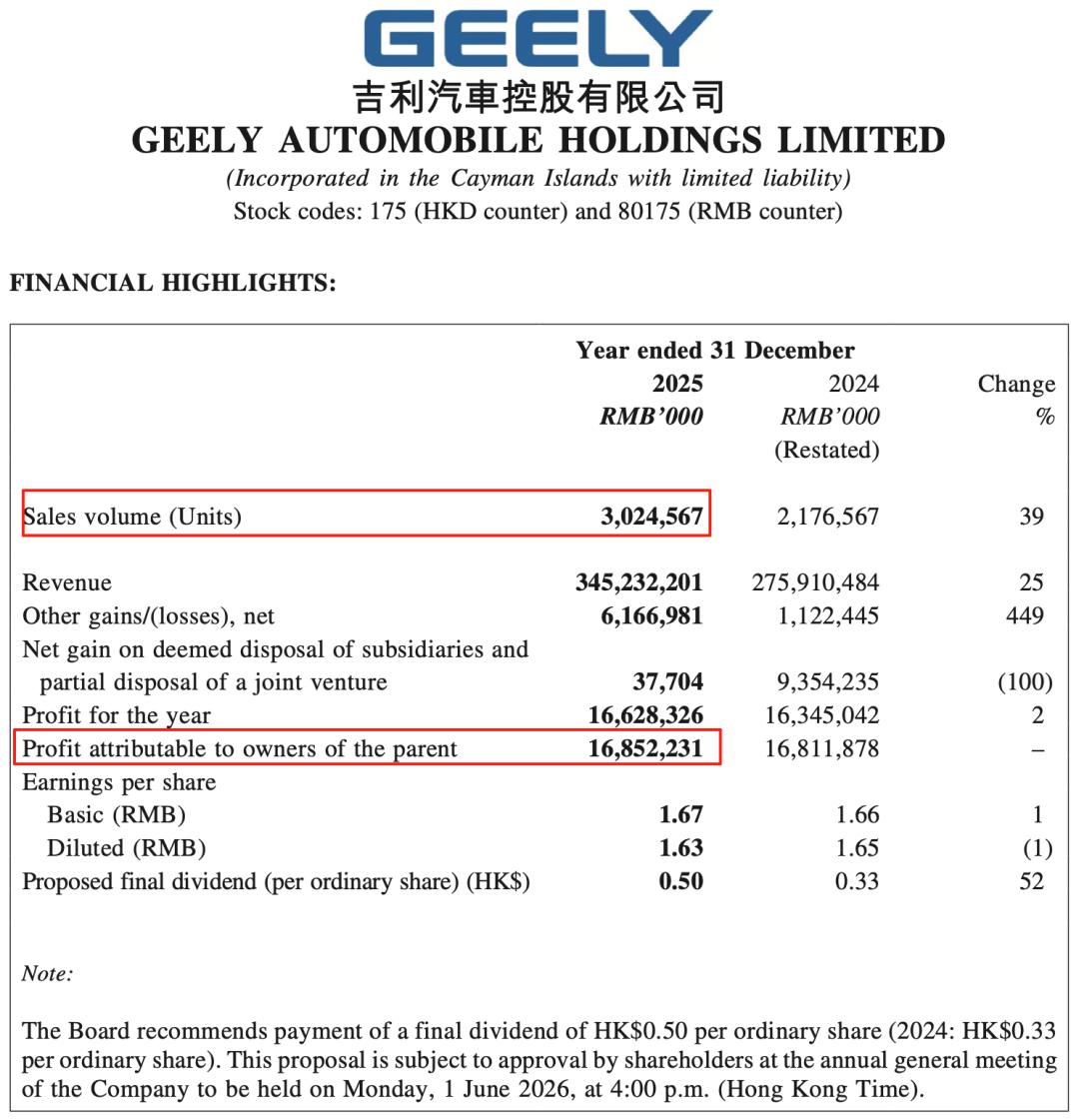
Picture/Partial data from Geely Automobile's 2025 financial report. Source/Screenshot from the Internet, New Energy Outlook
Leapmotor, which focuses on "cost - performance", also "sold a lot of cars but didn't make much money".
In 2025, Leapmotor sold 597,000 cars throughout the year, achieving revenue of 64.73 billion yuan, a year - on - year increase of 101.3%. Its net profit turned positive for the first time, reaching 540 million yuan, completing a key leap from loss to profit.
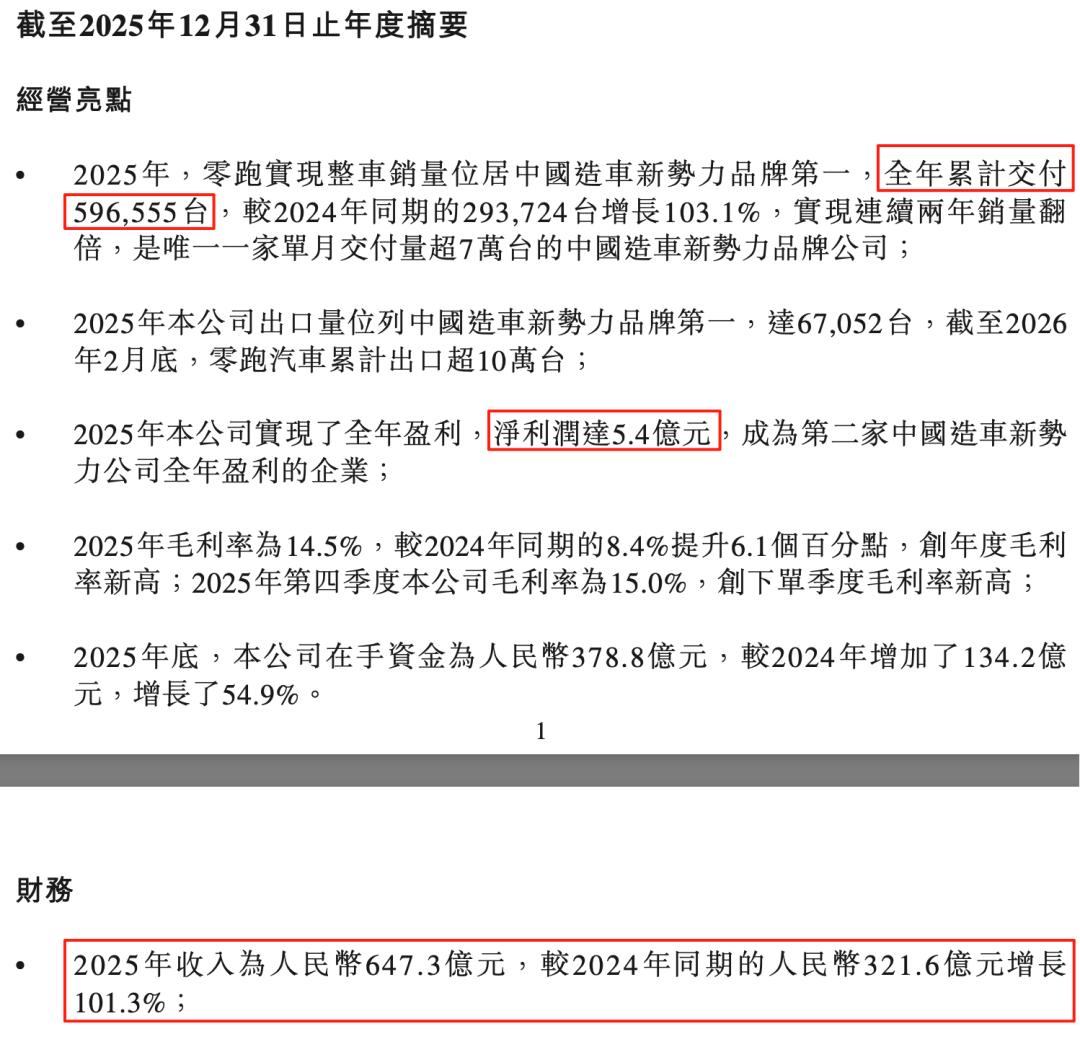
Picture/Partial data from Leapmotor's 2025 financial report. Source/Screenshot from the Internet, New Energy Outlook
In a sharp contrast, Xiaomi Automobile sold 411,100 new cars in 2025, but its revenue reached 103.3 billion yuan, and its annual net profit turned positive for the first time, reaching 900 million yuan.
According to market data calculations, Leapmotor earns about 900 yuan for each car sold, while Xiaomi Automobile earns about 2,189 yuan per car.