Brain-computer Interface: The Critical Point of Human-machine Integration, Ushering in a New Era of the Fusion of Life and Intelligence
As an important technology connecting biological intelligence and artificial intelligence, brain-computer interface (BCI) is accelerating the implementation of "human-machine integration." The BCI industry has been deployed in more than 50 countries around the world, forming a development pattern with China and the United States as the dual cores. With the acceleration of technological autonomy and clinical compliance, the ecosystem of the entire industry chain is becoming increasingly perfect, and the capital enthusiasm continues to rise. Yunxiu Capital has systematically sorted out the development context, technological paths, and cutting-edge trends of BCI, analyzed the industrial ecosystem and competitive advantages in China, and explored investment opportunities in the entire industry chain for you.
As artificial intelligence evolves towards generalization and neuroscience research continues to make breakthroughs, human exploration of information interaction between the brain and machines has entered a new stage. BCI, as an important technology connecting biological intelligence and artificial intelligence, breaks the physical boundary of traditional human-machine interaction, provides a new exploration direction for the development of the next-generation intelligent system, and promotes the gradual progress of human society towards human-machine integration. Globally, more than 50 countries have deployed the BCI industry, forming a development pattern with China and the United States as the dual cores. Technological autonomy, clinical compliance, and industrial scale-up have become the focus of industrial development in various countries and have also received extensive attention from the technology, medical, and capital sectors.
This article aims to analyze the global development history of BCI and cutting-edge technological trends, sort out the core logic and industrial pattern of the rise of the BCI industry in China, discuss investment opportunities in the hardware layer, data algorithm layer, whole-machine scenario layer, and emerging neural technologies, and present a multi-dimensional industrial reference perspective for participants in the field.
BCI Development History and Technological Trends: A Century of Exploration from "Reading the Brain" to "Interaction"
Brain-Computer Interface (BCI) is a direct information interaction and control pathway established between the biological brain and external devices. Its core functions include interpreting neural signals, controlling external devices, and encoding and inputting information into the brain, which can realize the substitution, repair, enhancement, and optimization of brain functions. In terms of information flow, it can not only decode intentions from the brain to the machine but also perform neural regulation from the machine to the brain, forming a real two-way interactive closed-loop.
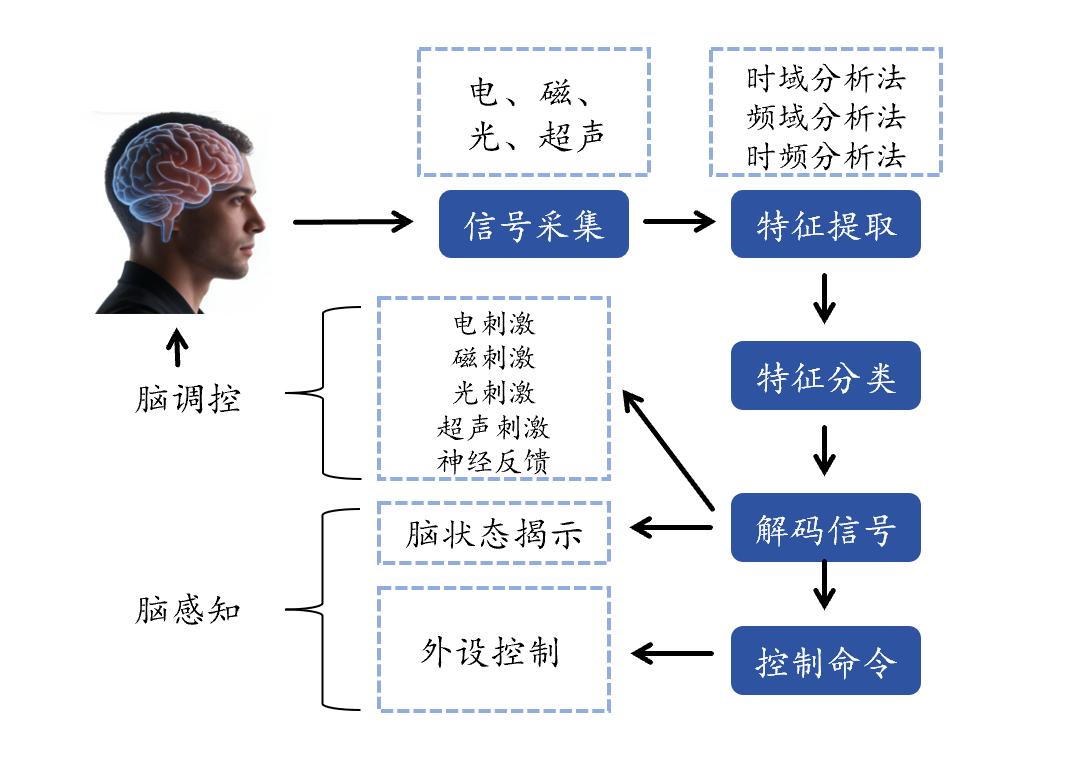
Figure 1: Schematic diagram of BCI (Source: China Academy of Information and Communications Technology)
1. A Century of BCI Development: From the Discovery of Electroencephalogram to the Prominence of Clinical Value
The development of BCI began in 1924 when German psychiatrist Hans Berger first recorded the human electroencephalogram (EEG), laying the foundation for non-invasive technology. Over the past century, it has gone through four key stages, achieving a leap from theory to clinical practice:
Theoretical Foundation (1924 - 1970): In 1969, Eberhard Fetz completed a milestone experiment on monkeys, converting neuron signals into machine instructions, which confirmed that the brain can learn to control external devices and provided theoretical support for practical applications.
Concept Formation (1970 - 1990): In 1973, Jacques Vidal from the University of California, Los Angeles, first proposed the term "brain-computer interface," establishing an independent research direction. In 1988, the P300 speller based on EEG was developed, enabling paralyzed patients to communicate through "thoughts," becoming the first application case.
Clinical Breakthrough (1990 - 2020): In 2004, the BrainGate clinical trial achieved a breakthrough. A quadriplegic patient controlled a robotic arm through implanted electrodes, and the result was published in the journal Nature. In 2014, at the FIFA World Cup in Brazil, a paraplegic teenager kicked off the ball with the help of a brain-controlled exoskeleton, demonstrating the value of two-way interaction with tactile feedback.
Breakthrough and Progress (2020 - Present): In January 2024, Neuralink completed its first human implantation surgery. In March 2026, Borui Kang's "implantable BCI hand motor function compensation system" was approved for market launch by the NMPA, becoming the world's first compliant commercial case of invasive BCI. At this stage, global technology is accelerating its iteration, and China's voice in the field is increasing, forming a pattern of multi-path coordinated development.
2. There is No Superiority or Inferiority Among BCI Technological Paths, and the Choice of Technology Depends on the Application Scenario
According to the hardware access method, BCI can be divided into four categories: invasive, semi-invasive, non-invasive, and interventional. There is no absolute superiority or inferiority, and the differences are mainly concentrated in signal quality, resolution, and application scenarios, forming different technological ecosystems and business models.
Invasive: Microelectrode arrays are implanted through craniotomy, which can directly record single-neuron signals. However, there are surgical risks and rejection problems. Clinically, it is mainly targeted at patients with loss of motor, language, and visual functions, as well as those with epilepsy, Parkinson's disease, etc.
Semi-invasive: Electrodes are placed inside the skull but outside the brain tissue through minimally invasive drilling, balancing signal quality and safety with relatively low trauma. The clinical targets are similar to those of the invasive method.
Non-invasive: Brain electrical signals are collected non-invasively by wearing a head-mounted device. It is non-invasive, convenient, and low-cost, with the highest degree of commercialization. However, affected by the skull volume conduction effect, the signal accuracy is low, and it needs to be combined with high-order noise reduction algorithms. It is mainly used in rehabilitation, sleep assistance, and consumer-level interaction. Nearly 80% of global enterprises focus on this path.
Interventional: The electrode stent is implanted into the cerebral venous sinus through minimally invasive intervention, which does not require craniotomy and has higher safety. However, the differences in the patient's venous structure may affect the performance. At present, it is clinically targeted at patients with severe motor function impairment.
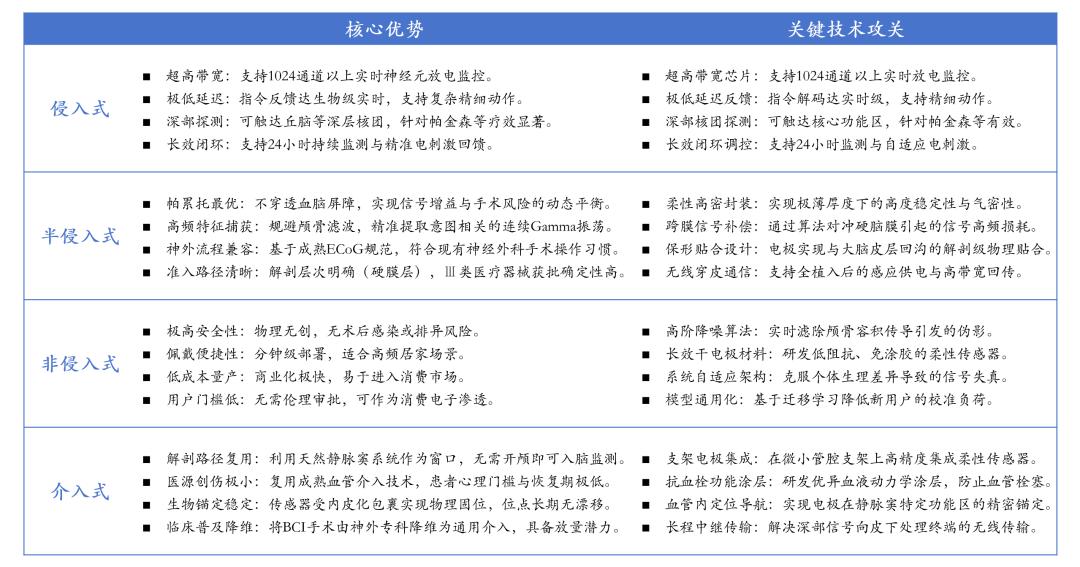
Table 1: Introduction to different technological paths of BCI (Compiled by Yunxiu Capital)
3. Cutting-Edge Technological Trends of BCI: Multi-modal Fusion, Core Hardware Upgrade, and the Leap of Neural Decoding and Interaction Paradigm Have Become the Core, and Emerging Neural Technologies Continue to Make Breakthroughs
(1) Multi-modal Fusion and Closed-loop Control Have Become the Core Trends, and the Scarce Value of Multi-modal Neural Datasets is Remarkable
Multi-modal data fusion and closed-loop control are the core paths to improve the robustness, adaptability, and real-time performance of the BCI system. Among them, multi-modal data fusion is the core research frontier. By fusing multi-dimensional neural signals such as electrical, magnetic, physiological, and optical signals, it can achieve all-round feature extraction and complementary verification of brain activities, significantly improving the decoding accuracy, anti-interference ability, and environmental adaptability in complex scenarios.
BCI products are evolving towards having closed-loop control capabilities. In the neural regulation scenario, closed-loop control can build a two-way interactive system of "perception - decoding - regulation - feedback", relying on real-time feedback of neural signals to dynamically optimize model parameters and achieve system self-adaptation and long-term stable operation. In the scenario of driving external devices for rehabilitation training, the system converts the results of neural decoding into control instructions to drive the device to perform actions. Only by retransmitting feedback signals such as proprioception to the nervous system to form a complete closed-loop of "intention - execution - perception feedback" can it effectively solve industry pain points such as the difficulty in quantifying rehabilitation effects, the boring training process, and the lack of continuous motivation and real-time feedback.
The large-scale and standardized accumulation of multi-modal neural data, especially high-quality long-term data of healthy people in natural behaviors and continuous cognitive states, is the underlying support for the implementation of the above technological paths and a key scarce element for building high-precision decoding models and forming technological gaps and core industry barriers.
(2) The Upgrade of Electrode Materials and Chip Platforms is the Key to Achieving Technological Breakthroughs
The core bottleneck of invasive BCI electrodes is biocompatibility and stability. Flexible electrodes have become the main development direction because they can fit the brain tissue. Non-invasive electrodes need to break through the signal obstruction of the skull, and the core upgrade direction is flexible conductive polymer dry electrodes, which can get rid of the dependence on conductive paste and achieve high-duration and high-fidelity signal recording.
In the chip field, the TI129X series chips are currently the main ones for non-invasive BCI. Domestic enterprises focus on breaking through the hardware-level real-time noise reduction algorithm and synchronously collecting and calibrating electroencephalogram and electromyogram signals to improve the decoding accuracy. In the future, invasive BCI chips will focus on low power consumption, high throughput, and edge computing capabilities to meet the needs of increasing electrode density.
(3) The Dual Upgrade of Neural Decoding Technology and Interaction Paradigm is the Core Pillar for Unlocking Precise BCI Interaction
Physical brain signals are easily affected by noise such as electrooculogram, electromyogram, and power frequency interference, with a low signal-to-noise ratio. Stably decoding the user's real intention from complex noise is the core challenge of BCI. Neural decoding technology relies on signal processing and machine learning algorithms to extract robust neural features by fusing multi-channel low-quality signals, which can significantly improve the accuracy of instruction recognition and the information transmission rate. Algorithms such as common spatial pattern and deep learning models have been maturely applied. For example, in the motor imagery scenario, the algorithm can extract the spatial-frequency domain features of specific rhythms in the brain to recognize motor intentions and control external devices.
For clinical effective decoding, the signal accuracy needs to cross the "practical threshold." If it is lower than the threshold, it is easy to make misjudgments and cannot be used. Only after reaching the standard can it become a reliable auxiliary tool for patients. At the same time, the mainstream encoding and decoding paradigms have problems such as long training time and large individual differences, which limit the user experience and scenario expansion. The industry is exploring new interaction paradigms such as hybrid paradigms and auditory evoked potentials to improve the communication rate and user experience of BCI.
(4) Emerging Neural Technologies are Continuously Emerging
Ultrasonic BCI uses functional ultrasound imaging (FUS) or low-intensity focused ultrasound (LIFU) for regulation to achieve the reading and regulation of neural activities. This technology has the advantages of non-invasiveness and high spatial resolution. It can non-invasively detect and regulate deep brain structures that are difficult to reach by traditional electrophysiological techniques. However, at present, the ultrasonic wave will attenuate and distort when passing through the skull, which puts forward higher requirements for the accurate transmission and focusing of ultrasonic energy.
Brain-Spinal Cord Interface (BSI) integrates BCI and epidural spinal cord stimulation technologies. By establishing a seamless connection between brain signal recording and spinal cord stimulation, it coordinates the neural signal transmission between the brain and the spinal cord, which is expected to help patients with chronic complete paralysis regain motor ability.
Industrial Pattern: Global Policy and Capital Resonate, and Chinese Forces are Rising Rapidly
1. Global Distribution of BCI Enterprises
The global BCI industry ecosystem is characterized by a scarcity of leading enterprises, a low proportion of listed companies, and small and medium-sized enterprises as the main market players. According to data from the China Academy of Information and Communications Technology, the number of core enterprises in the global industrial chain has exceeded 800, widely distributed in more than 50 countries, forming a clustering pattern with the United States and China as the dual cores. About 12 countries such as Canada, Germany, the United Kingdom, and India form the second echelon, and the proportion of their enterprises in the global market is less than 5%, failing to form a large-scale advantage. The number of enterprises in most other countries is only in single digits, belonging to the third echelon.
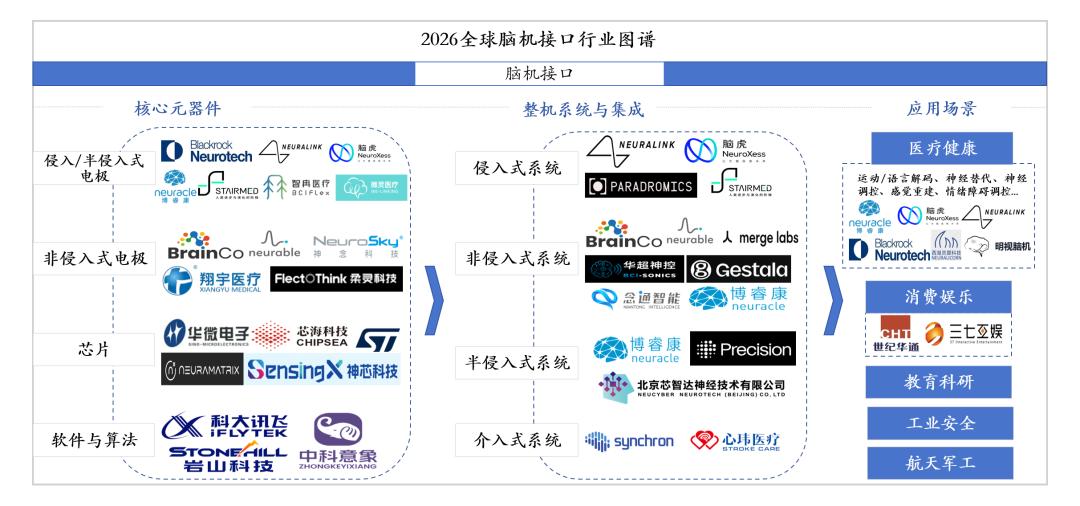
Figure 2: Global BCI industry map (Compiled by Yunxiu Capital)
2. The Global BCI Application Market Scale is Rising Rapidly
BCI technology has broad application potential in both medical and health fields and non-medical fields such as education, entertainment, and industrial safety. According to McKinsey's calculation, the global BCI market scale is expanding rapidly. In the medical field alone, the market scale is expected to reach $145 billion in 2040. After adding non-medical scenarios, the overall market has trillion-level growth potential.
Medical and health is the core track where BCI was first implemented, mainly covering four scenarios: motor, language, and visual function reconstruction, as well as consciousness reconstruction and transplantation. The market scale is expected to reach $85 billion in 2030 and grow to about $145 billion in 2040. Among them, motor function reconstruction is the largest sub-market. According to WHO data, the global stock of relevant patients is nearly 200 million. Calculated based on a unit price of $4,000 in 2030 and a penetration rate of 5% - 15%, the corresponding market scale is about $54.4 billion, and it is expected to reach $69 billion in 2040, mainly serving patients with stroke, epilepsy, spinal cord injury, and Parkinson's disease. Visual and language function reconstruction is targeted at nearly 500 million people with audiovisual disabilities worldwide. Through implantable devices, sensory function repair can be achieved. The combined scale of the two is expected to exceed $15 billion in 2040. Consciousness reconstruction and transplantation are targeted at people with consciousness disorders such as Alzheimer's disease and ordinary people with the need for consciousness transplantation. As the technology matures gradually, the market scale is roughly estimated to reach $60 billion in 2040.
Non-medical scenarios mainly focus on attention monitoring and interactive control of digital devices, emphasizing the large-scale implementation of non-invasive technology in education, entertainment, industry, and other fields. Attention monitoring covers people with ADHD (240 - 270 million according to WHO statistics), K12 students (1.5 billion according to World Bank statistics), college students (240 million), and high-concentration occupational groups such as drivers and high-risk industries (about 800 million). After removing the overlap, the stock population is about 1 billion. Assuming a penetration rate of 8% in 2030 and 20% in 2040, and an average annual unit price of $400 in 2030 and $200 in 2040, the corresponding market scales are expected to be $32 billion and $40 billion respectively. The interactive control of digital devices aims to subvert traditional interaction methods such as keyboards, touchscreens, and gamepads with BCI, supporting new experiences such as typing with thoughts, controlling games with consciousness,