Embodied Intelligence: The Bugle of the Great Voyage Sounds, Trading Space for Time
An intriguing phenomenon is emerging in embodied intelligence.
On the one hand, Chinese embodied intelligence companies are accelerating their expansion overseas. Leading humanoid robot companies are entering the markets in the United States, Europe, and the Middle East to create new revenue streams. Quadruped robots are being rapidly deployed in Singapore, Japan, South Korea, and other places. Dexterous hand manufacturers are also receiving a large number of orders in the global scientific research and industrial fields. According to the disclosures of some companies, the proportion of overseas revenue is rising rapidly.
On the other hand, overseas robot companies are also clearly moving closer to China. Schaeffler, a German precision manufacturing giant, established an embodied intelligence robot company in Taicang. Neura Robotics, a German robot company, set up its Chinese headquarters in Hangzhou and is recruiting a large engineering team. Sunday, a company from the United States, also plans to form a team in China this year...
This is not simply a "going - global wave" or an "entering - China wave." It is a rare two - way flow.
The underlying logic of both sides converges. In essence, it is "trading space for time." Domestic companies are opening up new growth in the global market, validating their general - purpose technology capabilities, and taking the lead in the commercialization of the next - generation intelligent hardware. Overseas companies are leveraging China's complete supply chain system, a large number of implementation scenarios, and the engineer dividend to speed up mass production and optimize costs, thus gaining a competitive edge over their peers in their original regions.
This industrial logic has been repeated in previous manufacturing upgrades. However, on the main track of the next - generation technology of embodied intelligence, it is evolving into a far - reaching reshaping of the global industrial pattern.
If in the era of consumer electronics, the global industry formed a fixed division of labor chain of "design - manufacturing - distribution," then in the era of embodied intelligence, this solidified geographical boundary is being completely broken, and an industrial capacity rearrangement based on all dimensions of technology, supply chain, scenarios, and capital is being initiated.
This two - way flow is just the prologue of this global industrial restructuring. Ultimately, there will be no distinction between "Chinese companies" and "overseas companies," only global players who can integrate the world's best resources and build core competitiveness. This two - way pursuit that starts now has already laid the most crucial foreshadowing for the future industrial outcome.
Break away from the red - ocean market and explore broader horizons
There is a prejudice in the industry: companies going overseas are deserters in the domestic business war.
They simplify a complex business behavior with a simple zero - sum game framework. This kind of attribution is too rough and one - sided.
Perhaps a more appropriate metaphor is that embodied intelligence is experiencing a great navigation. These companies going overseas are the navigators of this era, discovering new continents and opening up new business spaces.
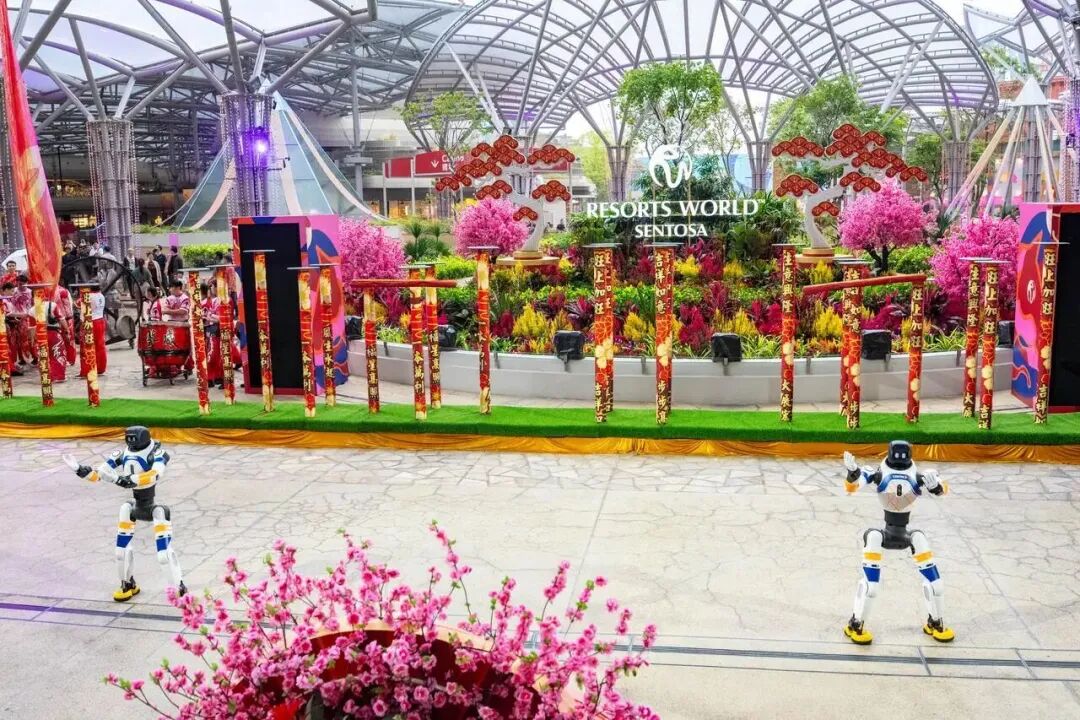
China is one of the regions with the most intensive entrepreneurship in embodied intelligence globally. The rapid concentration of technology teams, capital, supply chain networks, and manufacturing capabilities in a short period has brought about an unprecedented speed of project advancement in this field. However, density not only brings efficiency but also means that competition is compressed into an immature market in advance. In other words, the domestic market shows a typical characteristic: the intensity of competition far exceeds the degree of business maturity.
Currently, the domestic demand for robots is mainly in scenarios such as scientific research, education, demonstration projects, and data collection. These demands are significantly driven by policies and customer inertia, with long procurement cycles and limited scales. Although they form a continuously expanding business closed - loop, the imagination is ultimately limited. Companies can prove their technological capabilities in these scenarios, but it is difficult to verify the long - term value of products as production tools. At the same time, the scale competition driven by capital, the pre - investment of enterprises for ecological positioning, and the entry of immature products into the commercialization stage have led the industry to enter a fierce competition ahead of time before the orders are fully released.
As a result, price wars often occur within the industry, profit margins are continuously compressed, and the market is starting to turn red.
Therefore, a high - quality scenario with a large supply gap and a strong willingness to pay becomes a prerequisite for the healthy development of enterprises. Against this background, going overseas has gradually changed from an optional strategy to a realistic choice.
It is worth noting that the key to the overseas market lies not in scale but in clear economic logic.
In regions such as Europe, the United States, Japan, and Singapore, the labor cost is high, the population structure is aging, and there is a long - term labor shortage. Whether a robot is worth deploying can be clearly translated into a calculation of cost and efficiency. Customers are no longer buying "technology demonstrations" but production tools that can replace human labor.
More importantly, while the demand side overseas is mature, there is an obvious gap on the supply side. The mass - production capabilities, supply chain density, and engineering efficiency of overseas robot manufacturers have not formed a system. This enables Chinese companies not only to enter the overseas market but also to supplement the supply capacity.

Customers are no longer buying "technology demonstrations" but measurable productivity tools. Many Chinese companies have completed business verification in such environments. Deep Robotics' quadruped robots are undertaking all - weather inspections in the North American warehousing system, operating in large - scale infrastructure projects in the Middle East for a long time, and taking on security and operation and maintenance tasks in Southeast Asian parks. The humanoid robots of Zhipu AI and the dexterous hand products of Aoyi Technology have entered industrial production lines or service systems through cooperation with local system integrators. These deployments are often not short - term pilots but are directly embedded in the customer's operation process and become an indispensable part.
The deeper motivation is that the overseas market provides a relatively "burden - free" competitive environment. Before forming a global brand advantage, companies can first occupy application scenarios in niche fields, establish service networks and data accumulation, and generate positive cash flow. This path is closer to the "external verification - feedback development" model commonly seen in the early stage of the technology industry.
Roborock can be regarded as a successful case. Currently, Roborock has achieved an astonishing result of a compound growth rate of over 100% for six consecutive years in revenue and has occupied the first place in the market share in many countries. Yu Hao frankly said in an interview, "These countries are not China and the United States. We found through experiments that China and the United States are the most competitive because they are strategic battlegrounds. It is often those countries that we have ignored where it is easy to become the number one, and it will quickly generate cash flow."
Therefore, Chinese companies going overseas is not simply an expansion behavior but a search for an environment where robots can truly operate as productive forces. In this environment, robots are truly circulated, evaluated, and deployed based on a business logic and generate good economic returns.
Leverage advantages and dig deep. Play in the Champions League
"If you haven't been to Shenzhen, you can't be considered a robot expert." This has become the gospel in the Silicon Valley investment circle in the past two years. Of course, it's not just Shenzhen. Robot hubs such as Beijing, Shanghai, and Hangzhou have attracted batches of foreign investors. Only by understanding this fertile ground for robots in China can one see the real picture of this track.
On March 23, Ola Källenius, the CEO of Mercedes - Benz, said a sentence that can represent the epitome of the entire automotive industry competition: "If you want to play football, you have to play in the Champions League. In terms of the intensity of competition in the automotive industry, the current Champions League is in China."
This sentence also applies to the embodied intelligence track.
If Chinese companies going overseas are looking for demand, then overseas companies entering China are more like coming to this "Champions League of embodied intelligence" to learn.
For a long time, "entering China" has often been understood as sales - oriented. However, in the field of embodied intelligence, this logic is changing. Here, "entering China" is no longer a sales logic but a capacity layout, regarding China as a comprehensive platform for R & D, manufacturing, and application verification.
The robot industry is essentially a highly complex systems engineering. From the laboratory prototype to a mass - producible commodity, it is necessary to solve problems in structural design, control systems, electronic hardware, software architecture, and supply chain management simultaneously. Any lag in one link will slow down the overall progress, and these capabilities often cannot be built within a single enterprise.
China has unique advantages in this regard. The Pearl River Delta and the Yangtze River Delta have formed the densest manufacturing and supporting networks in the world. A large number of component suppliers, processing factories, and testing institutions are concentrated in a limited area, enabling R & D teams to complete design modifications, sample production, and iterative verification in a very short time. This high - frequency cycle significantly shortens the path from concept to mass production, which is an engineering efficiency that many countries find difficult to replicate.
There are two interesting cases. One is Hillbot founded by an overseas Chinese in the United States. Han Zheng, the founder and CEO, once confided at the 2025 RMB Fund Partners' Annual Meeting of BlueRun Ventures: "I used to envy domestic robot companies for being close to the supply chain and having fast iteration. So this year, we also started to bring part of our core R & D team back to China." Recently, it was reported on the Internet that Su Hao, the co - founder and CTO, will return to China to teach as a professor and doctoral supervisor in the School of Electronic Information at Fudan University.
Another representative case is that Schaeffler established a robot company in Taicang, Jiangsu. It is not accidental to choose Taicang. As an important node in the Yangtze River Delta manufacturing system, a large number of German - funded enterprises have long been concentrated here, which is regarded as "a microcosm of German industry in China." The precision manufacturing, automotive parts, and automation equipment industrial chains are highly concentrated here, giving it a complete industrial base from components to system integration. Schaeffler's entry is an attempt to complete the transformation from technology to products in such a highly mature industrial ecosystem.
Meanwhile, China has a huge engineering talent pool. Engineers in fields such as automation, embedded development, mechanical structure design, and production management are not only sufficient in number but also generally have experience in large - scale manufacturing. This talent structure enables enterprises to quickly form interdisciplinary teams and integrate complex systems into producible products instead of remaining at the laboratory stage.
More importantly, China provides a high - intensity real - world application environment. High - density cities, a large - scale logistics network, and strict cost constraints require any deployed robot to have long - term stable operation capabilities. If a product can survive in such an environment, its reliability often meets the threshold for global promotion. This is similar to self - driving cars deployed in Chongqing and Wuhan. Once they can pass through the "mountain city" and "river city" scenarios, other scenarios will be a piece of cake.
In addition, the Chinese market itself contains huge potential demand. The aging population and the pressure of industrial upgrading make automation an irreversible trend. Many enterprises are looking for solutions to reduce their dependence on human labor. For overseas companies, establishing a local team in China not only allows them to get closer to the supply chain but also means they can directly participate in this round of industrial upgrading.
Therefore, for many overseas robot companies, China is not just a sales destination but more like a productivity infrastructure. It provides R & D support, manufacturing capabilities, testing scenarios, and future customers simultaneously, enabling enterprises to accelerate the entire process from technology verification to industrial implementation.
The ideal jigsaw: Global system - collaborative competition
If we observe Chinese companies going overseas and overseas companies entering China from the same perspective, we will find a deeper change: the global competition in embodied intelligence is not a direct confrontation between enterprises but a competition between different production systems.
Different from the Internet or pure software industries, embodied intelligence is a productivity tool that must be embedded in the real physical world to operate. A robot system that can be deployed on a large scale requires not only algorithmic capabilities but also mechanical and control technologies, a stable supply chain, a mature mass - production system, long - term operation scenarios, and continuous service capabilities. The absence of any link may keep the product at the demonstration stage and make it difficult to truly enter social operation.
The problem is that these elements are highly dispersed globally. The United States has leading basic models and software ecosystems, but its manufacturing cost and engineering conversion efficiency are not advantageous. Europe has a profound industrial tradition and systems engineering experience but lacks a flexible and high - density supply chain network. Japan has long been leading in precision manufacturing, but its domestic market scale is limited, making it difficult to support large - scale trials. China has the most complete manufacturing system and engineering talent reserve in the world but is still looking for high - value and sustainable application scenarios.
Therefore, it is difficult for a single country to independently complete the industrialization process of embodied intelligence. Enterprises' cross - border resource allocation is not simply a business expansion but an inevitable choice under realistic constraints. They must obtain the missing key capabilities in different regions to piece together a complete and operable system.
In this sense, the current two - way flow is not internationalization in the traditional sense but a re - arrangement of the global production system around the new - generation general - purpose hardware. The one who can integrate more key elements is more likely to be the first to complete the leap from technology to productivity.
In this process, different regions actually play different roles. Enterprises no longer simply outsource production to the region with the lowest cost but place R & D, manufacturing, deployment, and operation in the most suitable ecosystems respectively to build a complete value chain.
Therefore, the embodied intelligence industry is forming a global division of labor model oriented by capabilities. The focus of competition is no longer who has the most advanced single technology but who can more efficiently integrate cross - border resources and establish a sustainable production and service system. In other words, the ultimate winners of this competition are likely not the enterprises with the most advanced technology but those who complete the global productivity jigsaw puzzle first.
In the future, the embodied intelligence enterprises that want to grow into giants will mostly be those deeply involved in globalization.
This article is from the WeChat official account "Embodied Intelligence Research Society", author: Peng Kunfang. It is published by 36Kr with authorization.