Early-stage project | Former DJI engineers start a business on a companion robot. LI Zexiang has invested in three consecutive rounds, and the product is about to be launched on crowdfunding.
Author | Qiao Yujie
Editor | Yuan Silai
In an era when companion robots are becoming increasingly homogeneous, what kind of products can attract people?
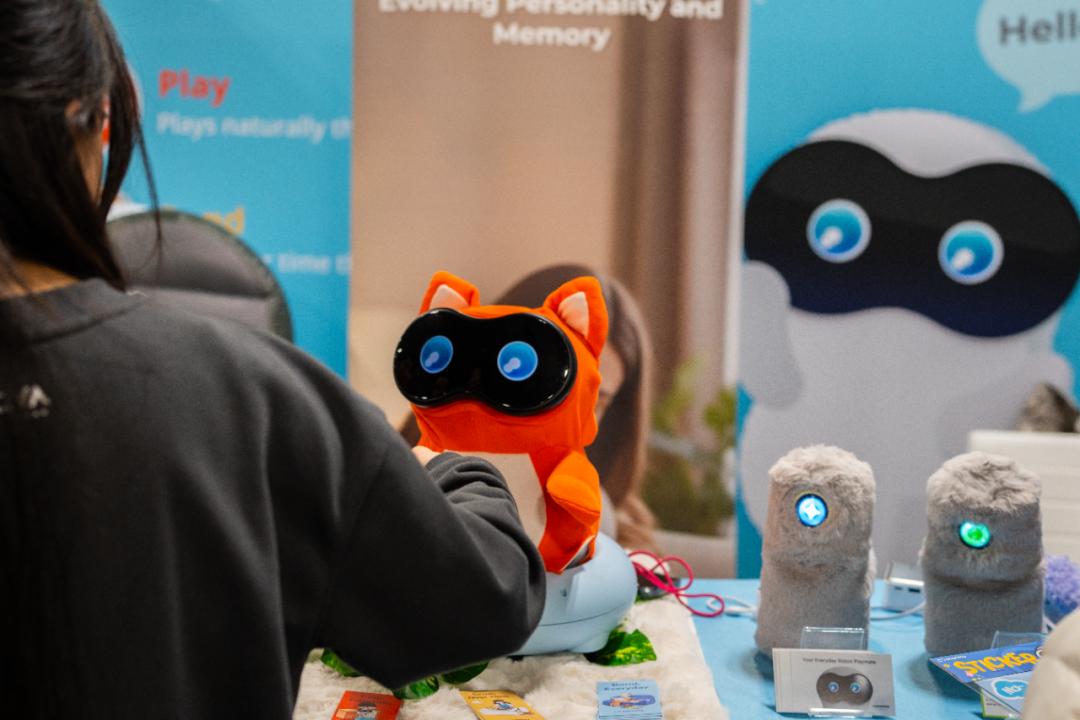
At the beginning of this year's CES 2026, a small robot named COCOMO, wearing an orange jumpsuit, unexpectedly became the focus of frequent captures by foreign media cameras.
With a slightly "otherworldly" extraterrestrial pet charm, a temperature of 37 degrees close to that of the human body, and an innovative split design that allows it to be picked up and actively follow, it attracted many on - site audiences to try and experience it in front of the booth.
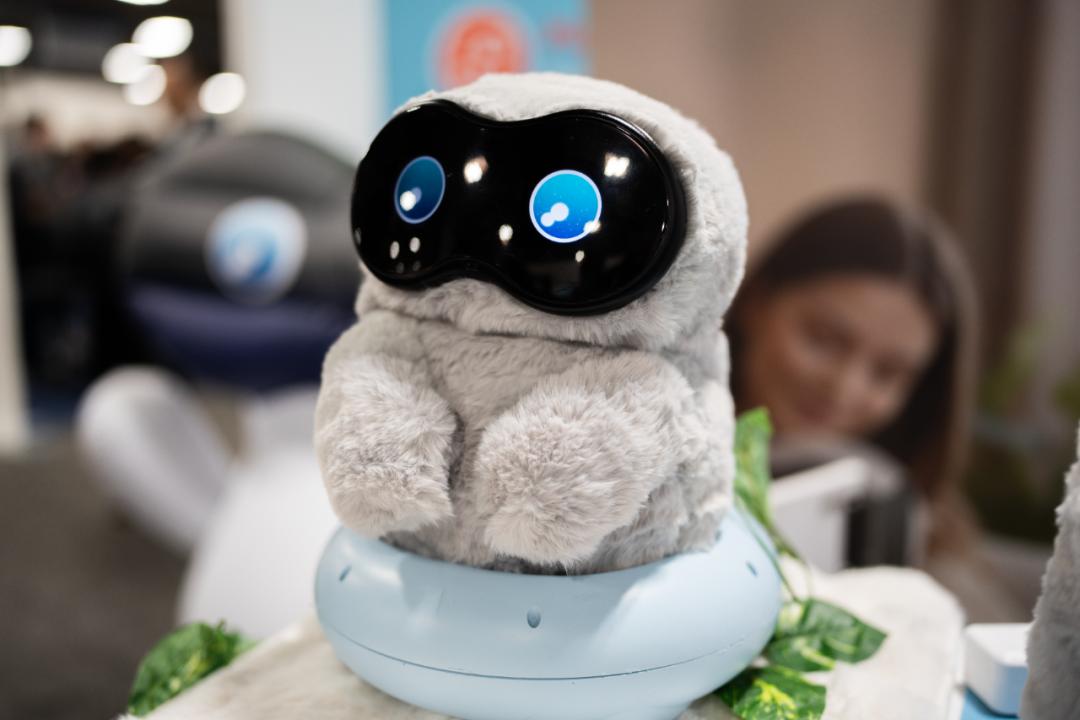
On the same booth, the team also brought another lighter desktop companion robot, INU. INU is defined as a "desktop extraterrestrial puppy". It provides feedback through tail wagging and body twisting and is a smaller and more stationary desktop companion designed for the work environment.
Both of these products are from the companion robot company, Ludens AI.
Xue Lijun, the founder of Ludens AI, used to be an engineer at Tesla and DJI. Later, he joined the founding team of FITURE and was in charge of building the AI system. "But robots have always been my area of interest," Xue Lijun said in an interview with Yingke.
Yingke learned that currently, Ludens AI has completed two rounds of financing. The angel round was led by Linear Capital with Qingshuiwan Fund participating, and the angel + round was jointly invested by Japan's PKSHA Algorithm Fund and Qingshuiwan Fund. The total amount of the two - round financing reached tens of millions of yuan.
At the CES site, many audiences intuitively felt the change of robots from "functional" to "relational" through COCOMO and INU. As foreign media commented in their reports, "It is not an AI assistant trying to complete tasks, but a robot partner that establishes an emotional connection through temperature, actions, and non - verbal expressions."
For the category of family companion robots, Ludens AI does not focus on stacking functions. Instead, it tries to re - understand the needs from the perspective of "space" - a family is not a unified scenario but a space composed of different locations and different attention densities. Therefore, robots should not be a single product but form a product matrix that can cover different spatial nodes.
Under this logic, COCOMO and INU have a clear division of labor.
COCOMO is defined as a "daily robot playmate" and is an independently mobile individual designed for the open space in a family. It has 10 degrees of freedom and a 200 - degree wide - angle field of view, can move around in the space, follow users, and still maintain a certain degree of "presence behavior" when there is no interaction.
"We don't want the robot to be a tool with a lot of functions, but a living individual," Xue Lijun introduced. "For example, COCOMO also has its own life. It will walk around in the space by itself, observe the world, and its interaction is not completely centered around humans."
In contrast, INU is deliberately designed for the fixed scenario of the desktop. It will not actively enter every corner of the user's life but provides just - right light companionship in scenarios such as work and study - it is present but not intrusive.
(Image source/Enterprise)
In terms of interaction methods, Ludens AI also follows the logic of "emphasizing companionship and de - emphasizing functions". COCOMO does not speak human languages. It has its own AI language system and expresses emotions through humming sounds and actions rather than communicating through clear semantics.
"Many current companion robots are essentially just chatbots. When a robot directly says 'I love you' to you, there is actually a strong sense of incongruity," Xue Lijun believes. "But when one day you suddenly realize that a certain sound it makes represents 'I love you', the emotion at that moment is 'discovered'. This kind of touching moment can make the connection between humans and robots more real and deeper. This is the interaction philosophy of our product design."
Ludens AI hopes that people can gradually establish a deeper connection with the robot during long - term use, and this concept is also reflected in the appearance design.
Whether it is the "extraterrestrial pet charm" of COCOMO or the single - eye styling with a sense of strangeness of INU, they do not choose the traditional "cute" or "anthropomorphic" design but emphasize a more aesthetically durable expression.
"The robot is first and foremost an object that exists in the user's living space for a long time. To some extent, its aesthetic durability is more important than its functions," Xue Lijun said. "The design of INU is a kind of 'strangely cute'. It doesn't please you at first sight but can keep you interested and prevent you from getting tired of it quickly."
(Image source/Enterprise)
Beyond the products, what supports all this is a complete set of technical systems built by Ludens AI.
Different from AI hardware that relies heavily on cloud models, Ludens AI chooses to deploy complex perception and decision - making capabilities on the edge - side AI. This not only ensures real - time response to interactions but also solves the privacy problem at the root - the robot can complete most emotional interactions without being connected to the Internet.
In terms of the specific technical architecture, the team has built a complete set of multi - modal ability systems around "non - verbal emotional interaction".
At the sound level, through phoneme - level emotional speech generation, the robot can convey delicate emotions through humming sounds and rhythm changes without relying on specific semantics; at the cognitive level, through the multi - modal memory mechanism, the interaction fragments, preference understanding, and behavior patterns between humans and the robot can be integrated, and the robot can remember the relationship and gradually form a relatively stable "multi - modal personality"; at the tactile level, through the multi - layer composite material structure, the robot's shell can maintain a temperature range close to that of the human body and change dynamically during high - frequency contact, thus eliminating the "cold feeling" of traditional machines at the physical level.
More fundamentally, it is a self - developed edge - native AI system for companion robots, Klara OS, by Ludens AI. This system can complete the unified scheduling of perception, cognition, and behavior generation on the device side, enabling the robot to understand multi - modal information such as the environment, sound, and actions in real - time under low - latency conditions.
It is precisely based on this system's capabilities that a product like INU, which originally originated from inspiration, was able to evolve rapidly from a prototype to a display within two weeks. In the future, Ludens AI will also continue to launch more forms of robot products based on the Klara OS capability platform.
It is understood that COCOMO and INU are planned to be launched on the crowdfunding platform this year and officially enter the overseas market.
In an era when companion robots are highly homogeneous, what Ludens AI really wants to answer is not what robots can do but what kind of relationship they can establish with humans. From edge - side AI to self - developed operating systems, from non - verbal emotional interaction to multi - scenario product matrices, the end - goal of this technical system is not functions but to make robots truly become a presence in the living space.
Whether it can truly become a member of the family remains to be verified by time, but compared with "toy - like" companion devices, this is a further attempt to bring robots into the real - life environment.