Li Bin: What is the final battle in the automotive industry?
After achieving quarterly profitability, NIO played its first "ace card" in 2026.
On April 9th, the NIO ES9 was launched. In the eyes of the outside world, with a price range of 528,000 to 658,000 yuan, the ES9 represents NIO's proactive move to compete for the highest - profit segment with its most substantial technological investment. It is regarded as a new product fulcrum for NIO's profitability. According to Li Bin's plan, starting from the second quarter, the delivery of the ES9 will make a more obvious contribution to NIO's operating profit.
In 2026, NIO aims to achieve a 40% - 50% growth in deliveries and strive for annual profitability under the Non - GAAP standard. In the first quarter, NIO's sales volume increased by 98.3% year - on - year, setting a good start for the whole year. However, this is based on the relatively low sales volume in the same period last year.
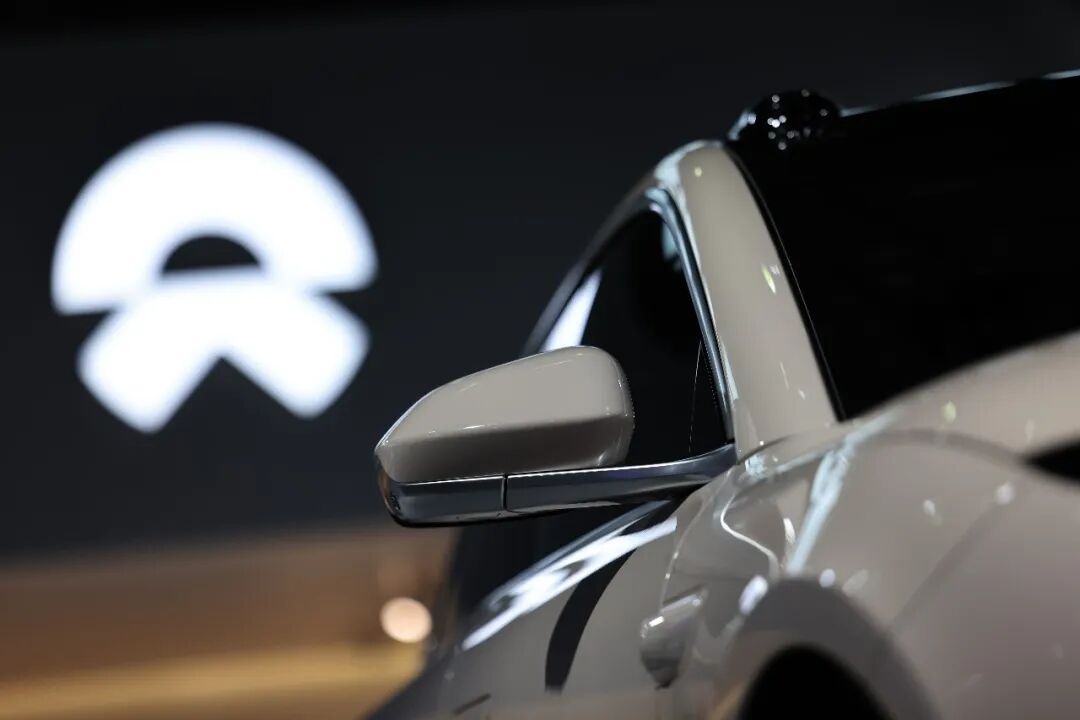
Source: Visual China
To achieve the annual goal, NIO still needs to face multiple challenges: the pressure of ramping up the production capacity of the ES9, the complexity of the coordinated operation of multiple brands, the capital consumption of the continuous construction of battery swap stations, and the competition in technological routes such as flash charging are all testing NIO's system capabilities.
Li Bin believes that system competition will be the ultimate battle in the automotive industry.
The following is a summary of Li Bin's interview content (with deletions):
01
"Forget about MPVs"
Li Bin: MPVs do have their advantages. For example, they have a higher ceiling, sliding doors for convenient entry and exit, and a lower step. Compared with traditional SUVs, they also have stronger loading capacity. But now, let's look at the facts. When the ES8 was launched, it was said that it could replace MPVs. We had many top - ranked space parameters. This time, the ES9 ranks first in 7 out of 8 indicators and second in 1.
"There was no path in the world, and then a path was created." MPVs became a popular vehicle type because more people bought them. Now, pure - electric executive SUVs have most of the advantages of MPVs, except for the sliding doors. I drove the Firefly to send my kids to school this morning and saw many people driving MPVs. The doors of SUVs are like a foyer, which is indeed not as convenient, but each has its pros and cons. The ES9 has a huge storage space of 816 liters, which is much better than many MPVs. You can even place 4 golf bags vertically. Friends who are considering buying an MPV in the 400,000 - 1,000,000 yuan range are recommended to have an experience and consume rationally.
Over the years, people have always asked me when we would launch an MPV. It's not that I don't listen to advice; it's just that it doesn't make economic sense. We already have such large executive SUVs, and their indicators are superior to those of the best MPVs. The company attaches great importance to ROI. After repeated calculations, producing an MPV is not cost - effective. Our sales ability and the company's bandwidth are limited. If the product line is too complex, the efficiency of front - line sales will be affected. This is a comprehensive decision, not stubbornness.
I conducted a survey at an industry conference. I asked if NIO launched an MPV, would people buy it? 300 out of 400 CEOs said they would. I majored in sociology, so I pay great attention to user data. But sometimes, you can't just look at the surface data. You need to think deeply: what are the deep - seated needs of users when they buy an MPV? What they buy is not the form of an MPV, but the ability of an MPV to meet their needs. You need to truly understand their needs. Moreover, the best - selling vehicles above 400,000 and 500,000 yuan are not MPVs, and the MPV market has not grown in recent years. Its popularity has specific regional and scenario - based logics. Making products based on just the appearance is just following the trend.
We value the unity of functional experience and emotional value more. This is just our understanding, and ultimately, the market will have the final say.
02
Hope to achieve 40% - 50% growth in deliveries in 2026
Li Bin: Our profitability in the fourth quarter of last year mainly came from two aspects: First, more than a decade of technological accumulation has brought advantages in product and user experience. The rechargeable and swappable pure - electric architecture and the battery - swapping network have created clear user value, and good vehicle sales are the foundation of profitability. Second, we started to improve internal operational efficiency two years ago, and our cost - control ability has been significantly enhanced, which has greatly contributed to profitability.
The industry faced great pressure in the first quarter of this year, but we achieved a 98.3% year - on - year growth, with the delivery volume exceeding 83,000 vehicles, almost doubling. The overall performance was good. The first - quarter financial report data has not been officially released yet. I believe that starting from the second quarter, the delivery of the ES9 will make a more obvious and positive contribution to the company's operating profit.
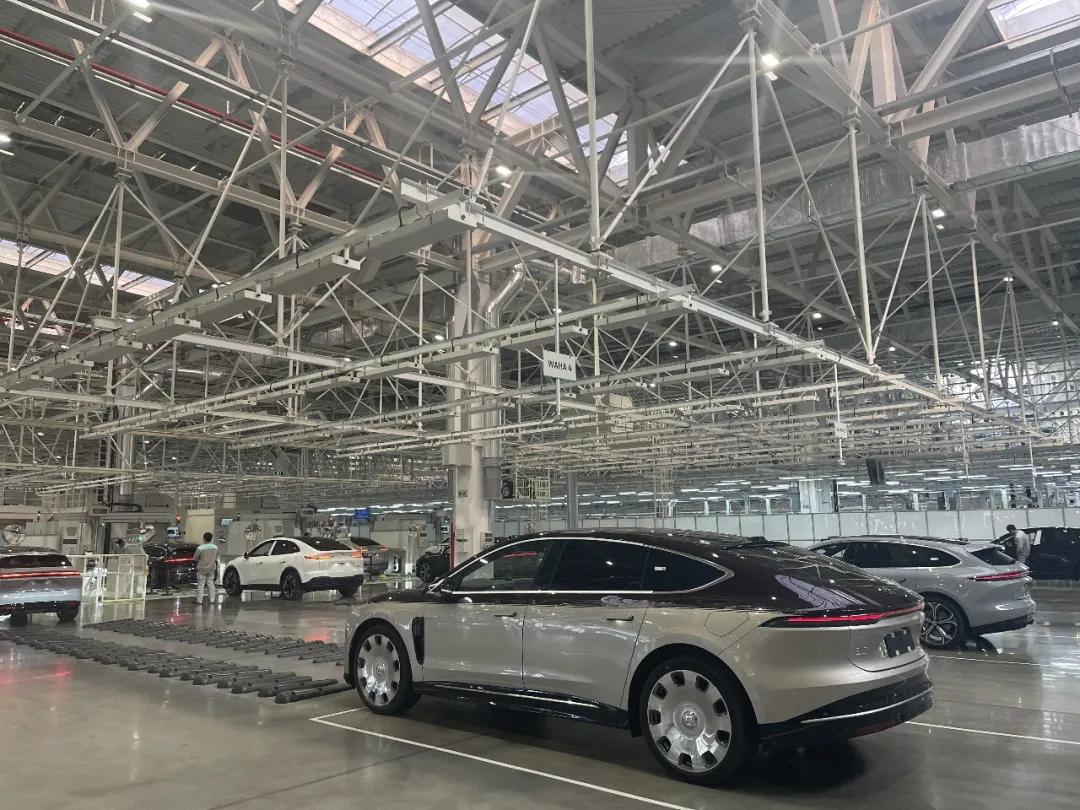
Source: China Pictorial Library
The orders for the ES9 have met our expectations. Although they are just deposit orders, one data point is very reference - worthy: from the press conference to the next morning's breakfast, the number of new user orders outside the NIO community was more than 1.5 times that of the same period during last year's ES8 product technology press conference. Most existing users who are upgrading also choose the ES9. The ES9 has the best gross profit among NIO's SUVs, and its gross profit margin is also at a healthy level.
The ES9 is equipped with a large number of high - tech components, and there is pressure to ramp up production capacity. We are working with the supply chain to promote it with all our efforts. There are already more than 600 exhibition vehicles in the showrooms. We will produce in - stock vehicles in advance to achieve "delivery upon launch". If the market enthusiasm exceeds expectations, there may be the "happy trouble" of waiting for the vehicle, but we are fully prepared.
This year, we hope to achieve a 40% - 50% growth in deliveries. We achieved a growth of over 98% in the first quarter, but the base in the subsequent quarters last year was higher. Especially in the fourth quarter, the delivery volume exceeded 120,000 vehicles, so the challenge of maintaining the growth rate will increase. However, we are confident in achieving the goal.
03
What is the greatest benefit of battery - swapping stations?
Li Bin: The choice of technological route is crucial in the automotive industry, and its effectiveness should be evaluated over a decade - long period. In the past two years, range - extended electric vehicles did have a time - window advantage because users had range anxiety, and the charging and swapping infrastructure was not well - developed. I fully understand this. But the situation is completely different now. The total number of NIO's battery - swapping services has exceeded 107 million times, and the battery - swapping network even covers Mount Everest. This year, we will build more than 1,000 new battery - swapping stations, and the scale will only continue to grow. The experience gap is at the system level.
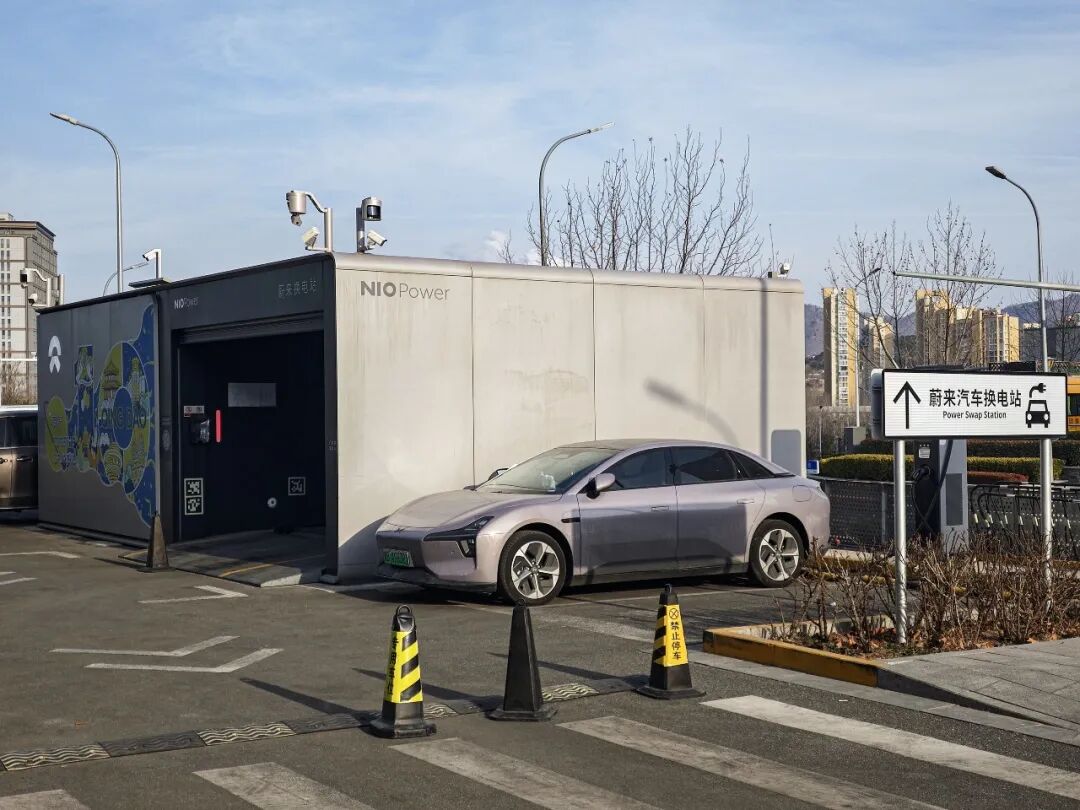
Qingdao: NIO battery - swapping station. Source: Visual China
Last year, we said that the golden age of pure - electric three - row SUVs was coming. Now, we can clearly say that it "has arrived". In the past six months, the market share of pure - electric three - row SUVs has been continuously rising, ranking first in terms of growth rate among different power types, while range - extended electric vehicles have fallen to the bottom. Now, many manufacturers of range - extended three - row SUVs are promoting pure - electric vehicles, but they will face some embarrassing realities: it is difficult to decide on the battery size and the chemical system. Without a battery - swapping system, they can only rely on ultra - fast charging, which will cost a huge price in terms of the vehicle's overall architecture and cost.
Battery swapping also has its drawbacks. The drawback is that we need to build a large number of battery - swapping stations. We have already invested more than 20 billion yuan, but once they are built, it becomes an advantage. Without the support of more than 3,800 battery - swapping stations, NIO's more than 600 - kilometer range would seem insufficient.
Regarding flash charging, I think there have been significant technological breakthroughs, and it is a good thing for the entire industry that car companies are actively building charging piles. But I still want to say that even the fastest flash charging is still much slower than our battery - swapping, and there is still a multiple - fold gap. We will continue to build battery - swapping stations. Don't forget, battery swapping not only solves the problem of speed and improves the user experience, but most importantly, it solves the problem of the different lifespans of the vehicle and the battery. In the long run, its greatest benefit is that as part of the new energy Internet and the new power system, as a distributed energy storage, its efficiency is very high.
04
How to control the boundary between innovation and risk - taking?
Controlling the boundary between progress and business risk is the most difficult thing for all entrepreneurs. It's definitely not okay to just stick to the status quo, but it's also very dangerous to take risks beyond the company's risk - bearing capacity. The two need to be balanced. I can't say that we are doing it very well, but anyway, ensuring the company's continuous and stable operation is our responsibility to users and to those who buy NIO vehicles. This is something we must achieve.
For example, we hope to calculate the return on investment (ROI) for everything, no matter how far into the future it is. We use the same standard to evaluate things. Even for things three years from now, we will discount them to the present to calculate the ROI.
Our decision - making system is as follows: First, the company has an overall boundary. Within this boundary, we look for the highest - return options.
It doesn't mean that we won't do long - term things. Many brand - related investments must be made resolutely. Can't we calculate the ROI for brand - related investments? Brand - building is a long - term thing. Those who think it can't be calculated just don't want to calculate it. If you want to, you can always figure it out. We hope to use a similar evaluation system for both long - term and short - term things to determine the priority of resource allocation.
05
Automobile companies that don't use AI will be eliminated
Li Bin: Regarding AI, the company has been firmly promoting it and increasing its application across the entire business system and the whole business chain. A company like NIO is essentially an AI company. Our chips have very powerful inference computing power. Our intelligent driving system, including NOMI Intelligence, represents the most cutting - edge AI applications.
Automobile companies that don't use AI will definitely be eliminated. This includes AI coding and using AI to improve internal efficiency, such as AI - based quality inspection, using AI to improve product quality and manufacturing efficiency, and enhancing the user service experience. We are doing all these things. Our company's AGI community, that is, the AGI committee, holds meetings very frequently.
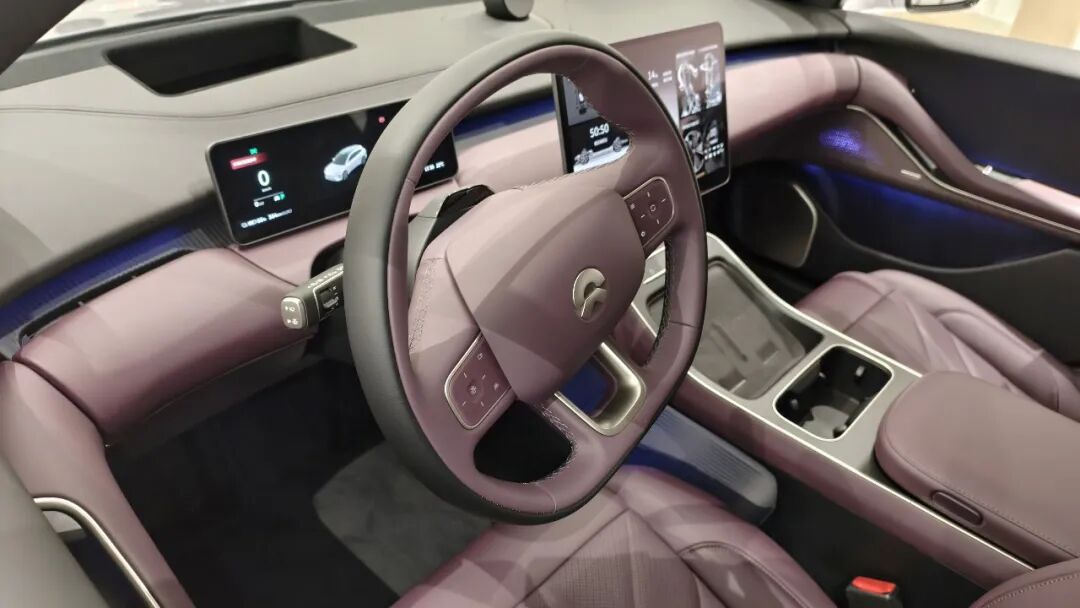
Source: Visual China
Of course, we are not just shouting slogans. We want users to truly experience AI. In fact, every car we sell is a robot, although it can't be as human - like as we imagine. In fact, the ES9 has 3 degrees of freedom, can jump, and can adjust its height up and down. When it sees a 1.8 - meter height limit, it can figure out how to lower itself. I think these are very specific AI capabilities. It doesn't mean that only developing a large - scale language model at the base level is considered AI. Our world model combined with reinforcement learning represents the most cutting - edge exploration and application in the field of AI.
Of course, the topic of very realistic, human - like robots is another matter. In the short term, our company will focus on improving the automotive robot, which is still our short - term strategic focus.
06
The ultimate battle in the automotive industry
Li Bin: Competition in the automotive industry has never been a single - point competition but a full - system competition. The entire automotive industry chain is very wide and long. Moreover, buying a car is not a one - time consumption for users. For a family, a car may be the largest consumer product after a house, and the safety of the whole family is closely related to the car. So people are very cautious when buying a car.
Choosing a car actually reflects a person's aesthetics, consumption concept, and even ultimate values. It can show a person's inner qualities more than clothing. This is a very important and serious matter. And a car will be used for many years, usually at least five or six years, and some even for more than a decade. In such an industry, what ultimately matters is not a single - point advantage.
For example, quality and service are both part of the core system. If there are quality problems with a car purchased three or four years ago, you have to take care of it. If there are problems with a car after ten, twelve, or fifteen years, you can't just ignore it. So I always believe that system competition is the real ultimate competition in the automotive industry.
Today, the world's largest automotive company is Toyota. There are many things we can learn from Toyota. At first glance, some other brands may seem better in some aspects. But when looking at the residual value and reliability over a long - term period of ten or twelve years, the gap is very large. To evaluate a company's system capabilities, we need to look at its long - term performance. Since its establishment, we have believed that system capabilities are the key to ultimate competition.
In recent years, the technological transformation of intelligent electric vehicles has given Chinese startups a very good opportunity. In many fields such as intelligent driving, Chinese companies' technologies are very excellent. It is a very practical and correct strategy for foreign brands to cooperate with them. But I want to emphasize that this is only "point" - based innovation, not system innovation. You can get a leading intelligent driving solution through cooperation, which is fine, and we are happy to see it. But the system innovation around intelligent electric vehicles is comprehensive. Technological innovation is just one of the six branches, and a single technology is just a small part of it. The final competition is three - dimensional and all - dimensional, not a single - point comparison.
In fact, not only NIO, but also Chinese startups like Huawei, Xiaomi, as well as companies like BYD, Geely, and Chery all have their unique system advantages. NIO is just continuously progressing in the direction of