Ten Years of Wang Tao: A Silent "Molting"
Genius Entrepreneurs and Mature Business Leaders
Looking at the global business history, there are many genius entrepreneurs. Relying on their innate interests, talents, and serendipitous opportunities, they demonstrated unique abilities in a certain field at an early age and founded companies that caught the market's attention when they were very young. However, among these genius entrepreneurs, only a few can eventually evolve into outstanding business leaders. Most of them fall far short of the public's initial expectations and even gradually disappear from people's sight, which is really a pity.
Behind this is that genius entrepreneurs are often overly self - confident due to their talents and have a strong tendency towards individual heroism. They are strict with their employees and lack empathy, which has become the biggest obstacle preventing them from evolving into outstanding business leaders. The essence of an outstanding business leader lies in leadership, and the core of leadership lies in one's humility, sincerity, and integrity, as well as respect, trust, and empowerment towards subordinates. These are exactly what those conceited genius entrepreneurs lack.
However, there are also some cases in the global business community where genius entrepreneurs have advanced to become outstanding business leaders. The most typical one is Steve Jobs, the founder of Apple. In the early days of Apple's development, he had a bad temper and was rude to his employees, which led to low morale within the company. Eventually, he was ousted from the company by the CEO he invited and the board of directors. After leaving Apple, Jobs founded NeXT, but the company got into trouble because of his autocratic style. It was not until he acquired Pixar that he got out of trouble with a series of amazing animation works and finally returned to Apple. After experiencing a series of setbacks and self - reflections, Jobs gradually grew into a mature leader, which helped him successfully launch a series of great products after returning to Apple.
To the author's relief, there is also a genius entrepreneur in the Chinese technology circle who is experiencing a transformation similar to that of Jobs. He is Frank Wang, the founder of DJI, who was once considered by the outside world to be conceited, autocratic, and strict. Recently, nearly ten years after his last interview, Frank Wang was interviewed in - depth by the media again. In the interview, Frank Wang shared a lot of his latest thoughts in detail. From these thoughts, we can see a Frank Wang who has undergone a ten - year transformation and is very different from the public's previous perception.
The Conceit of a Genius
Frank Wang was born in Shenzhen, a technological city. He showed his love and talent for airplane models from a young age, and his parents understood and supported him. This planted the seed in his mind to build a remote - controlled helicopter at an early age.
Although the process of realizing his dream was full of twists and turns, Frank Wang was always guided by his original intention. He gradually entered the Hong Kong University of Science and Technology and studied under Professor Li Zexiang, a famous technology leader. During his time at school, he participated in two consecutive National College Student Robot Competitions, which made his dream of building a remote - controlled helicopter come true and laid the foundation for the establishment of DJI in 2006 and the exploration of the flight business.
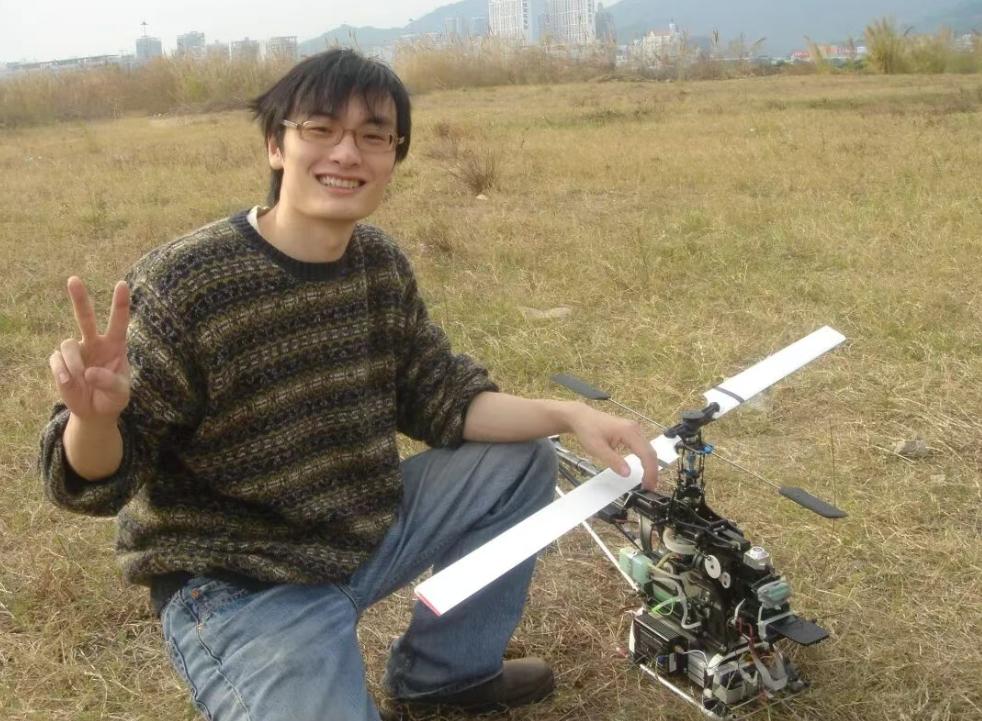
College student Frank Wang and his helicopter
Since airplanes are both Frank Wang's hobby and talent, as well as his major, it was natural for him to become the most outstanding talent in this field. Frank Wang also admitted in the interview that "product ability was something I naturally acquired in my twenties, and I basically reached the peak as soon as I started." After founding DJI, Frank Wang first entered the market with flight controllers, and then successively developed products such as gimbals, GPS, and cameras. When these elements were combined, they became the earliest drones. The emergence of drones just met the long - standing but poorly - satisfied rigid demand for aerial photography. Subsequently, the scale of the drone industry expanded rapidly, and DJI became one of the most eye - catching star startup companies in China. Judging from the above experience, Frank Wang is definitely a typical example of a genius entrepreneur.
DJI's commercial success in the drone field has also gradually revealed the common characteristics of genius entrepreneurs in Frank Wang, such as extreme self - confidence, which is even misinterpreted as conceit by the outside world. He has an extreme result - oriented mindset and often simplifies the relationship between people into "if you can do things well, I'll think you're great." Due to Frank Wang's outstanding talent in technology and products, he is also quite strict with his team. There are some words of his criticizing employees circulating on the Internet, such as "You don't even have basic common sense and principles" and "How can you not do such a simple thing?" Regarding competitors, Frank Wang said, "Don't let the competitors make money." He also once said bluntly in a public interview that "the world is incredibly stupid."
At this time, Frank Wang was somewhat similar to Jobs in the early days of Apple. In the early days of his entrepreneurship, Frank Wang was also happy to imitate Jobs' self - centered style, thinking that entrepreneurship should be like this, and to some extent, he ignored the negative impact of this style on Jobs himself in the early days of Apple and at NeXT.
Due to his long - term focus on the product field and relatively less attention to organization, management, and culture, DJI's team cohesion and cultural values declined in 2017 - 2018. Many departments began to show phenomena of "feudal separatism" and "factions." A large number of employees were involved in corruption, and some core employees who knew the truth chose to remain silent. No one was willing to speak up for the overall interests of the company, and Frank Wang himself was kept in the dark for a long time. Frank Wang called the company's situation at this stage "the collapse of social order and moral values."
The Transformation of Letting Go of the Ego
When there are serious problems with the cohesion and values of a startup, if the entrepreneur cannot evolve himself in time to solve the problems, the company will inevitably decline. On the contrary, if the entrepreneur can successfully evolve, avoid risks in advance, and resolve the crisis, the company is expected to break through the bottleneck and enter a new realm.
Different from most genius entrepreneurs who fall midway, Frank Wang is lucky that after profound self - reflection and difficult reforms, he finally solved the problems and achieved personal self - evolution. From the recent media interview, we can see that Frank Wang has undergone qualitative changes in his attitude towards employees, competition, himself, management, and culture.
For example, when it comes to employees, Frank Wang is no longer overly strict. Instead, he realizes that "you can't be picky about others just because God gave you a certain talent." He begins to accept the weaknesses and fragility of human nature, the gray areas of management, and the fact that some people leave, make mistakes, or have different goals from him. Even regarding employee corruption, from initially hating it deeply to later looking for problems in himself, he said, "If you give others a lot of temptations and opportunities but require them not to be tempted at all, it goes against human nature."
Regarding competition, Frank Wang no longer emphasizes being the world's number one. Instead, he believes that "being smaller, less greedy, and more patient" is more valuable. He also requires the team to focus on their own development and not trip up competitors. Strategically, DJI has not launched new projects in the past three years. Instead, it has appropriately streamlined its business and focused on doing a good job in existing businesses.
Regarding himself, Frank Wang begins to gradually let go of his ego and realizes the limitations of his personal ability and wisdom. He admits that he was driven by the "self" in the first half of his life, but now he realizes that the "self" is actually a poison. Compared with his previous admiration for the saying "I control my own destiny, not the heavens" in the movie Ne Zha, now Frank Wang believes that "my destiny is determined by both myself and the heavens" is closer to the truth. In the future, he will no longer deceive himself, self - package, or self - indulge. He also corrected his previous statement that "the world is incredibly stupid," saying, "It's me who is incredibly stupid. The world can be much better, and I can also be much better." Regarding the company's rapid growth, Frank Wang even feels it's not real, saying, "I'm just an ordinary person with no outstanding abilities. Why should the company make so much money?"
Regarding DJI's highly recognized original innovation, Frank Wang also modestly said, "There's nothing new in the world. Innovation is essentially a form of appropriation, which involves absorbing, transferring, combining, and engineering a large number of mature technologies. No one is a genius who can create out of thin air." For example, DJI once established a chip team and developed the first - generation chips with only tens of millions of yuan in tape - out fees. At that time, Frank Wang was very proud and thought DJI was omnipotent. But later, he gradually realized that DJI was actually benefiting from the dividends of a large number of mature talents cultivated by society. This understanding also makes Frank Wang more tolerant when DJI's employees are poached by competitors. He said, "Talent belongs to society. Talent flow is the norm in the technology industry. DJI cannot build a moat by blocking talent. The flow of some personnel is within our acceptable range."
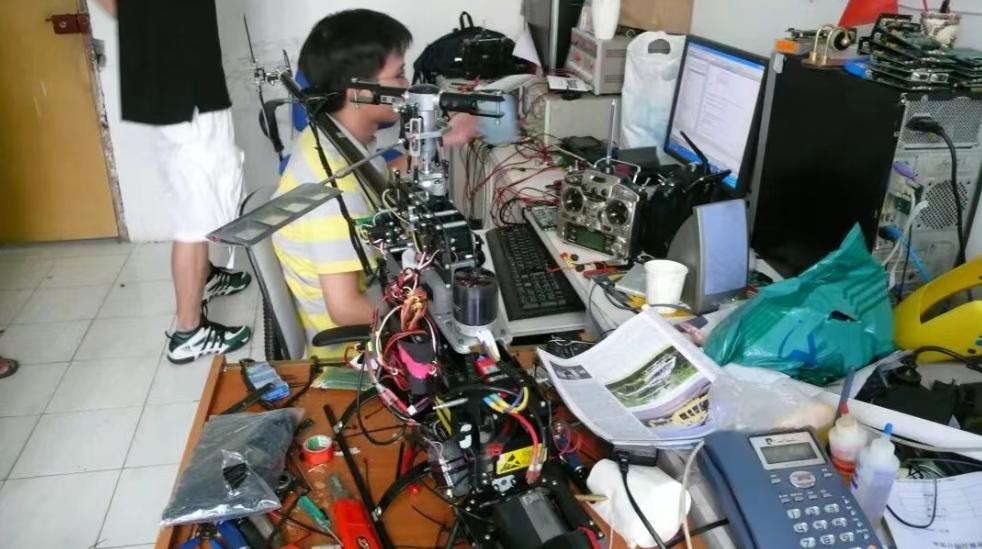
DJI's first office, a residential house in Lianhuabei Village, Shenzhen
Frank Wang's understanding is very similar to Jobs' after his return to Apple. When Jobs talked about his motivation in life, he said, "Most creators want to express their gratitude for the achievements of their predecessors. I didn't invent the language or mathematics I use. Most of my food isn't cooked by myself, and I haven't made a single piece of clothing. Everything I do depends on other members of our human race and their contributions and achievements. Many of us want to give back to society and add a stroke to the long river of history. We can only express ourselves in the way that most people can master - because we can't write Bob Dylan's songs or Tom Stoppard's plays. We try to use our only talents to express our deep feelings, to express our gratitude for all the contributions of our predecessors, and to add something to the long river of history. That's what drives me."
From the above passage, we can see Jobs' humility and warmth, which are different from the media's usual evaluations. This is the state of mind of Jobs after his maturity and return to Apple, and it is also the root cause of his ability to lead Apple to become the world's greatest technology company.
In the past, there have been several entrepreneurs in China who were evaluated by the outside world as "Chinese Jobs," but most of them were unworthy of the title. On the one hand, they lacked Jobs' originality in products and mostly followed and imitated. On the other hand, they lacked Jobs' extreme pursuit of creating the world's best products. Among many Chinese entrepreneurs, the author believes that Frank Wang is the closest to Jobs. On the one hand, he has made truly global - leading and pioneering contributions in the drone field. On the other hand, he also has the extreme pursuit of "no compromise, no settling" in products, which is lacking in other Chinese entrepreneurs. What makes me most relieved is that with Frank Wang's self - evolution, he has also become more humble, inclusive, and warm - hearted, just like the mature Jobs.
All these changes ultimately converge into the transformation of Frank Wang's company management model. Previously, Frank Wang always believed in the value of "dream, talent, and passion." Now he believes that these things are very fragile. He even concludes that "all those who only wave the flag of so - called innovation based on product power may fall into mediocrity in five years." Now, Frank Wang has more respect for management. He believes that if an organization lacks necessary supervision, rules, and good cultural guidance, any genius team will fall apart. Therefore, he has comprehensively made up for his deficiencies in management, carefully polished every management detail around the organizational structure, goals, processes, and systems, and regarded the company as a product to build, aiming to build an ideal organization that is "clear in goals, transparent in processes, measurable in results, and definable in contributions."
Frank Wang also had an epiphany moment in terms of culture. An accidental experience made him realize that he had a huge lack of attention to "the relationship between people." After systematic thinking, he believes that "an equal relationship is the happiest." He gradually began to build an equal partnership of jointly exploring the essence in DJI, simply called "jointly seeking the truth," which goes beyond the usual "rich - poor" and "interest - exchange" relationships.
The so - called "truth" is embodied in the company's values as "striving for excellence and seeking truth and sincerity." "Striving for excellence" represents Frank Wang's consistent pursuit of grand goals and extreme standards, while "seeking truth and sincerity" represents his latest thinking about the relationship between people after his epiphany. It requires "do not do to others what you do not want others to do to you," requires the company to reduce internal politics, not let laymen manage experts, and prevent managers from indulging in self - satisfaction...
"Truth" and "sincerity" are also the two most core concepts in ancient Chinese sage classics, which reflect the essence of the relationship between people. For example, in the Confucian classic The Doctrine of the Mean, it is written that "Sincerity is the way of Heaven; to make oneself sincere is the way of man." In the Taoist classic Zhuangzi, it is written that "The true is the utmost of sincerity." Frank Wang's ability to include "truth" and "sincerity" in the company's core values also reflects that he has insight into the essence of the relationship between people.
On the one hand, he is a star entrepreneur at the forefront of global technological innovation. On the other hand, he is associated with the most core concepts in ancient Chinese classical philosophy. It was unimaginable ten years ago that these two aspects would appear in Frank Wang at the same time. Now, Frank Wang has well integrated the two in DJI, which shows how much he has changed in the past ten years.
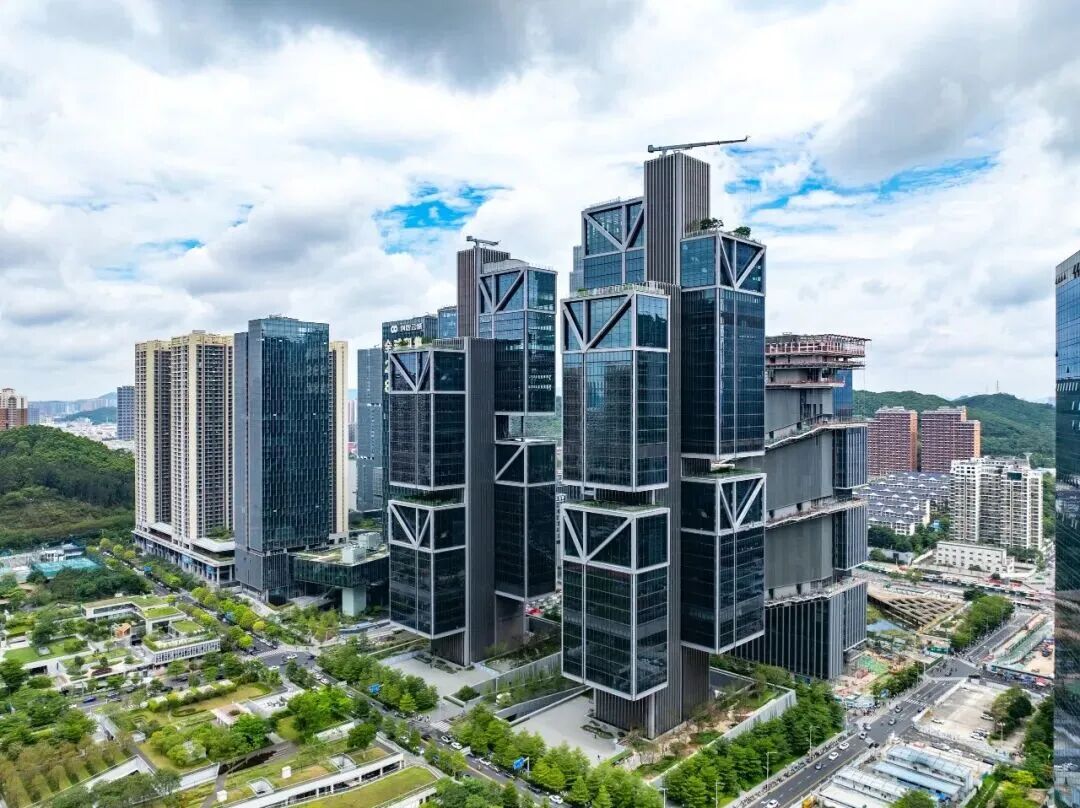
DJI's headquarters, "Sky City"
When one can truly understand the essence of the relationship between people, let go of the ego, and return to sincerity, they will show the great power of "the sincere are invincible." This not only greatly improved the chaotic situation of "the collapse of social order and moral values" in DJI, but also enabled the company to rebuild strong values and centripetal force. Eventually, DJI not only avoided the fate of many startups that fall midway, but also achieved a new leap. For example, currently, DJI is far ahead in the drone field, accounting for more than 70% of the global market share. It has also successfully opened up a second growth curve in the handheld photography equipment market, which has a larger market space, and has essentially created a new DJI in terms of business scale. In addition, DJI has also successfully established a presence in multiple categories such as outdoor power supplies and cleaning robots, showing strong differential competitiveness and growth potential, and is expected to become a new growth driver for DJI after drones and mobile phone photography equipment.
Conclusion
In the Chinese business community, there are several well - recognized outstanding entrepreneurs. They are Ren Zhengfei, the founder of Huawei; Ma Huateng, the founder of Tencent; Jack Ma, the founder of Alibaba; Zhang Ruimin, the founder of Haier; He Xiangjian, the founder of Midea; and Duan Yongping, the founder of the BBK Group (the predecessor of OPPO, vivo, and Xiaotiancai).
On the surface, the common feature of these six entrepreneurs is that the companies they founded have achieved huge commercial success with hundreds of billions in revenue and tens of billions in profit. The reason why they can achieve such a large - scale performance is that the companies they founded all have multiple core businesses to support them. For example, Huawei's carrier, enterprise services, smartphones, smart cars, and cloud computing businesses; Tencent's social, gaming, content, fintech, and cloud computing businesses; Alibaba's e - commerce, cloud computing, fintech, and logistics service businesses...
Even the most genius entrepreneurs have limited professional skills, time, and energy, and it is difficult for them to handle multiple businesses at the