Replace the crayfish. Hermes has gone viral across the entire network, amassing 40,000 stars. Anthropic has dealt a heavy blow to OpenClaw.
Are you struggling with shrimp farming? Claude's Managed Agents are delivering a game - changing blow, and the recently popular Hermes is dominating the entire network. It has already amassed 40,000 stars on GitHub. The era of AI OS has arrived. Who wants to laboriously configure Tokens? The "shrimp" (referring to a certain AI model) is about to be "upgraded" and eliminated by new species.
It's time for the "shrimp" to be upgraded!
Two new AI species that have emerged recently have forced the once - popular OpenClaw to "level up".
Firstly, there's the Managed Agents launched by Anthropic yesterday. With one - click OAuth access, cloud hosting, sandbox isolation, and remote command via Code Channels...
From now on, AI itself becomes the operating system, and tools are its peripherals. For the "shrimp" that grafts AI onto traditional operating systems, this is a game - changing blow!
Secondly, there's the Hermes Agent that has been all over the network recently.
This open - source intelligent agent, launched by Nous Research at the end of February, has already attracted 40,000 stars on GitHub, and its update speed surpasses most commercial Agent products.
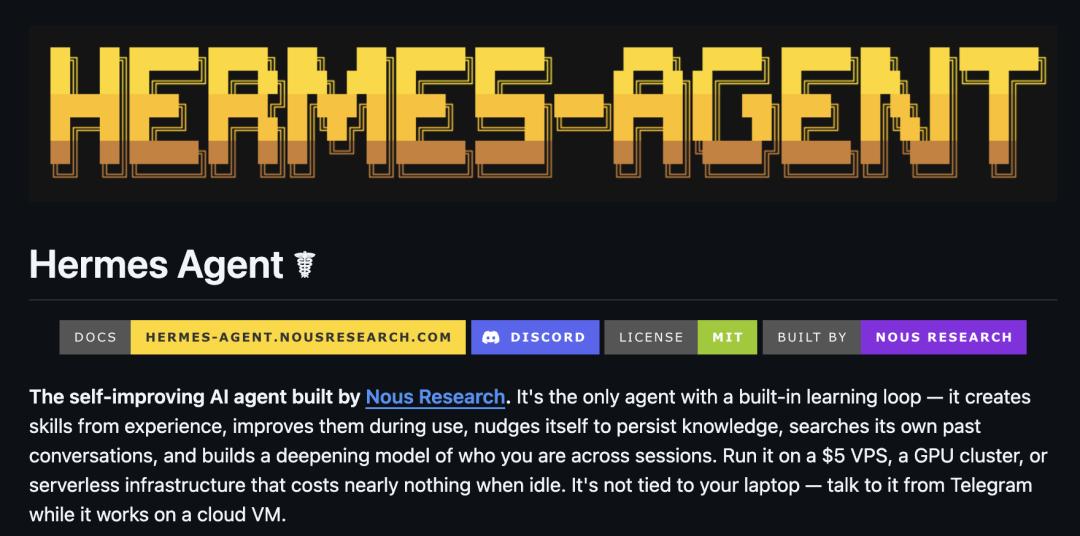
https://github.com/nousresearch/hermes-agent
The whole network is shouting: Switching to Hermes is so great! OpenClaw can be replaced!
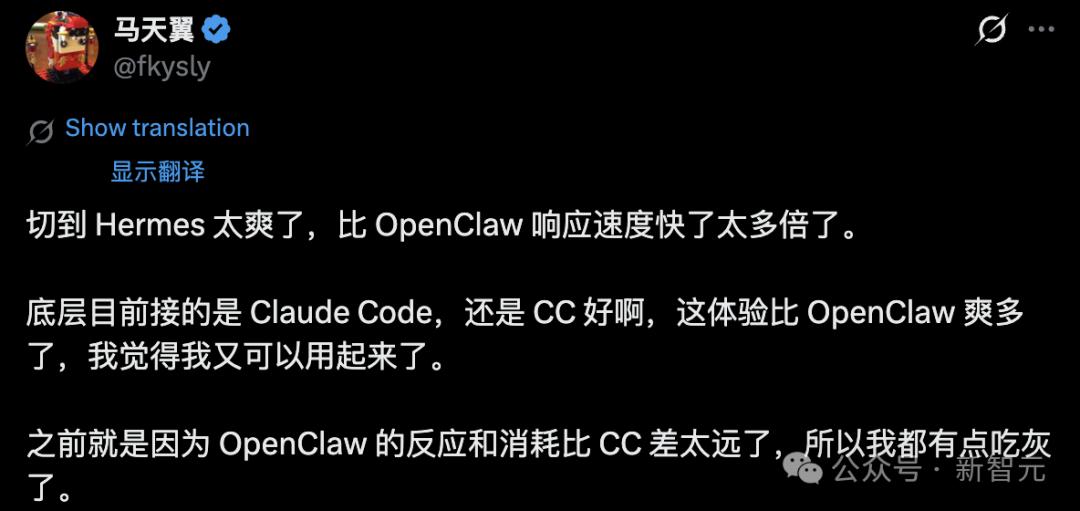
This autonomous Agent running on your server has six core features: being with you, getting stronger with use, scheduled automation, delegation and parallelism, sandbox isolation, and full web - page and browser control.
The slogan of Nous Research is "An Agent that grows with you". Their approach is that an Agent shouldn't just be a one - time call interface. Instead, it should be private, resident, accumulative, and ultimately contribute to training.
Whether it's Managed Agents or Hermes, they are telling us: The "shrimp" might be out of fashion, and the era of AI operating systems is just beginning!
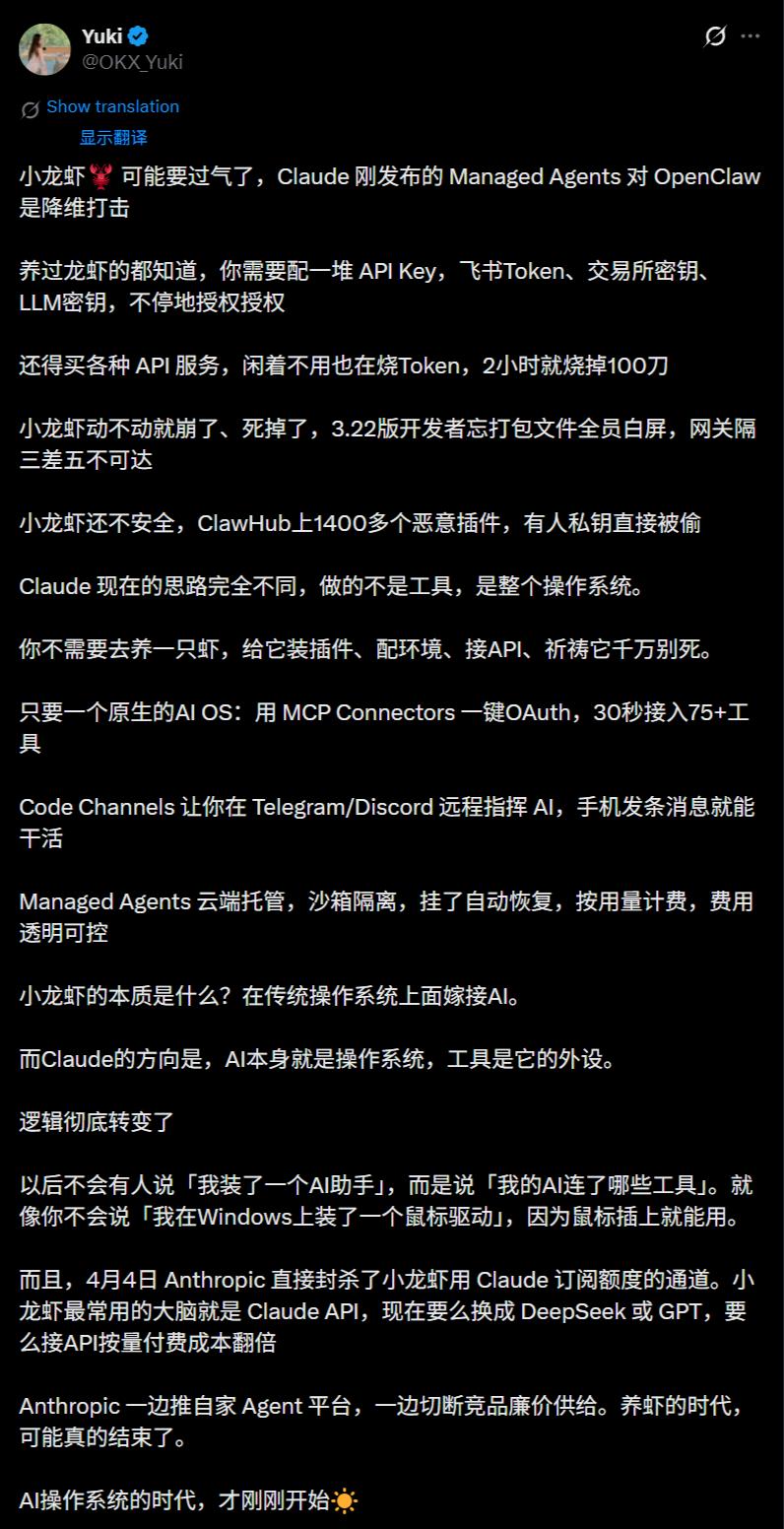
Tired of the "shrimp"!
In the past few months, "shrimp farming" has become a national craze.
However, behind this craze, ordinary users and developers are paying the price for the fragile architecture.
According to the latest reports from several network and information security agencies, up to 36.8% of the plugins on ClawHub have been found to have serious vulnerabilities or be poisoned.
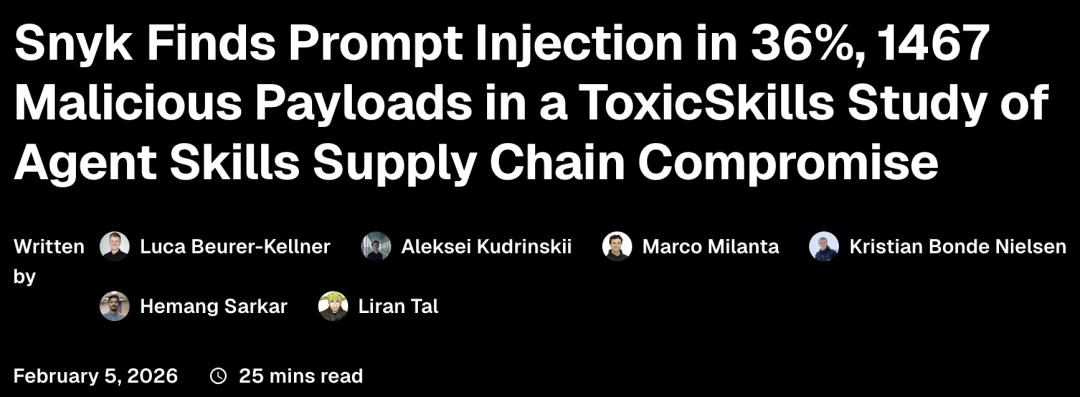
In the notorious "ClawHavoc" attack, hundreds of malicious plugins disguised as office assistants directly ransacked users' local ~/.openclaw directories.
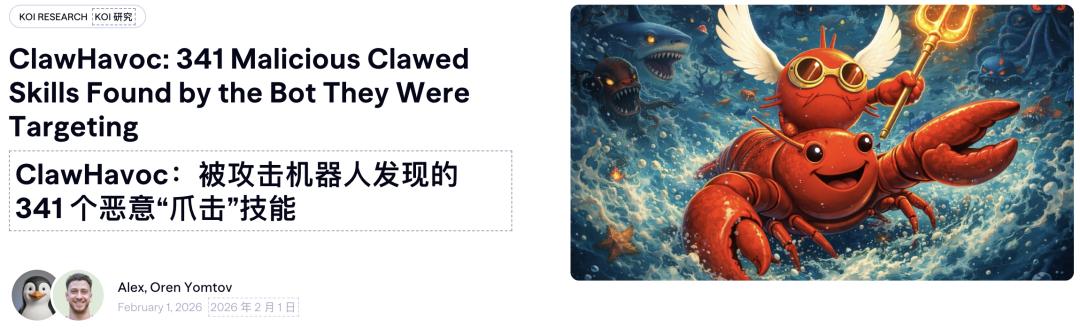
They not only stole chat records from Feishu and email, but also private keys of e - wallets and passwords of exchanges all at once.
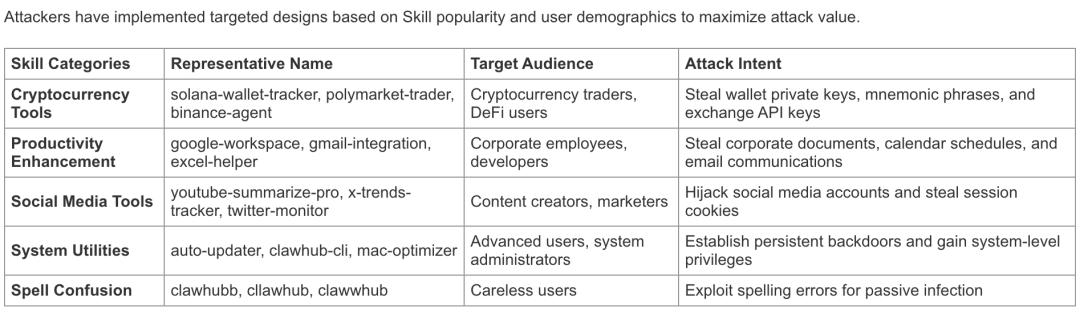
Once the "ClawHavoc" incident breaks out, the consequences will be unimaginable.
This is not an all - powerful assistant at all. It's like throwing your master key into the cyber black market.
Even without security issues, the "Frankenstein" OpenClaw, pieced together with various plugins and keys, burns tokens like crazy, empties your wallet, and drains your energy.
At 2 a.m., you're still debugging a bunch of API Keys and Tokens for Feishu, exchanges, and LLMs for the "shrimp" (OpenClaw). Tokens keep burning money even when it's idle. A single version update can cause a white - screen crash, and there are malicious plugins in the market stealing private keys...
This is the real complaint of countless "shrimp farmers" in the past few months.
Anthropic took advantage of the situation, tightened its policies, and restricted the practice of using package quotas to support various external Agents, targeting OpenClaw.
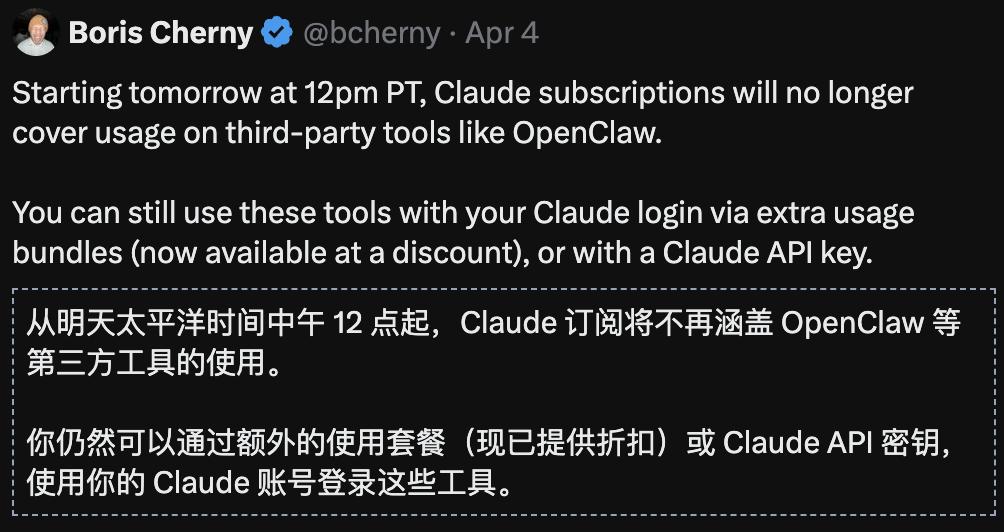
Want to use Claude as the core brain? You must use the pay - per - use API, forcing users to choose between cost and performance.
Managed Agents are here. Is the "shrimp" still appealing?
Just when everyone was on the verge of collapse from "shrimp farming", on April 9, 2026, Anthropic suddenly launched a powerful move: Managed Agents.
In April 2026, this brand - new product made the once - glorious OpenClaw pale in comparison because it delivers a complete game - changing blow to the AI architecture logic of the "shrimp".
On its official blog, Anthropic released an engineering report with a classic beauty of computer science.
This report announces that the AI architecture has entered the era of operating - systemization!
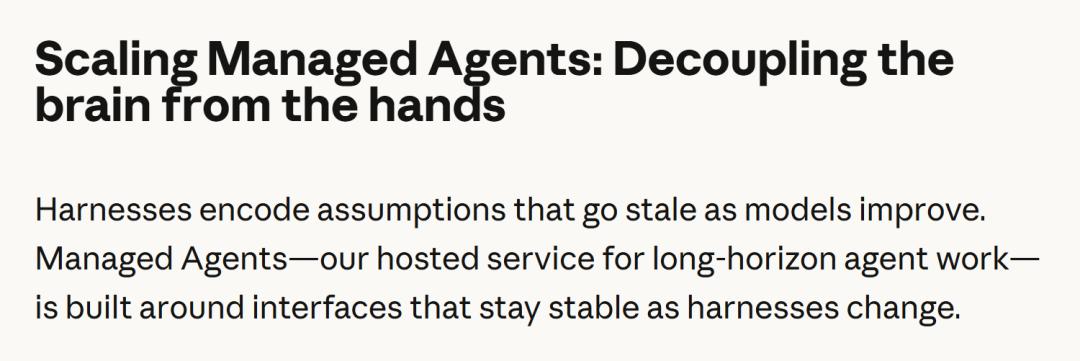
The core of this report is to completely separate the "brain" (model logic) from the "hands" (execution environment).
The core pain point of OpenClaw is the deep coupling between the Harness and the model capabilities. The Harness often encodes certain technical assumptions, and as the model progresses, these assumptions will gradually become obsolete.
When Claude evolved from Sonnet to Opus, the originally precise "context anxiety reset" logic instantly became redundant code garbage. This is the biggest risk faced by all AI developers!
However, Managed Agents are built around a set of stable interfaces. Even if the Harness logic changes, these interfaces can remain stable.
Three standard components, paying tribute to Unix
Managed Agents break down the Agent into three standard components. This design concept directly pays tribute to the Unix operating system in the 1970s.
Session (Session layer): A "append - only" log. It records everything that happens and exists independently of the model. Even if the system restarts, the memory won't be lost.
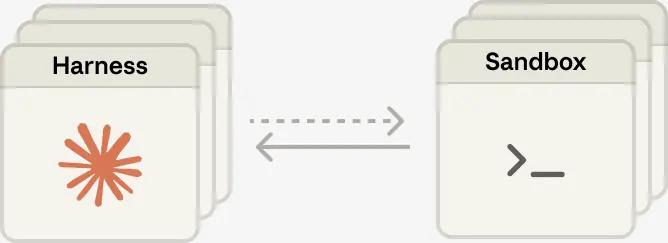
Harness (Framework layer): This is the "loop logic" of the Agent. It is responsible for calling Claude and distributing instructions to tools.
Sandbox (Sandbox layer): An absolutely isolated computing environment. Claude runs code and modifies files here.
This decoupling means that the "brain" (model) doesn't need to know where the "hands" (sandbox) are running.
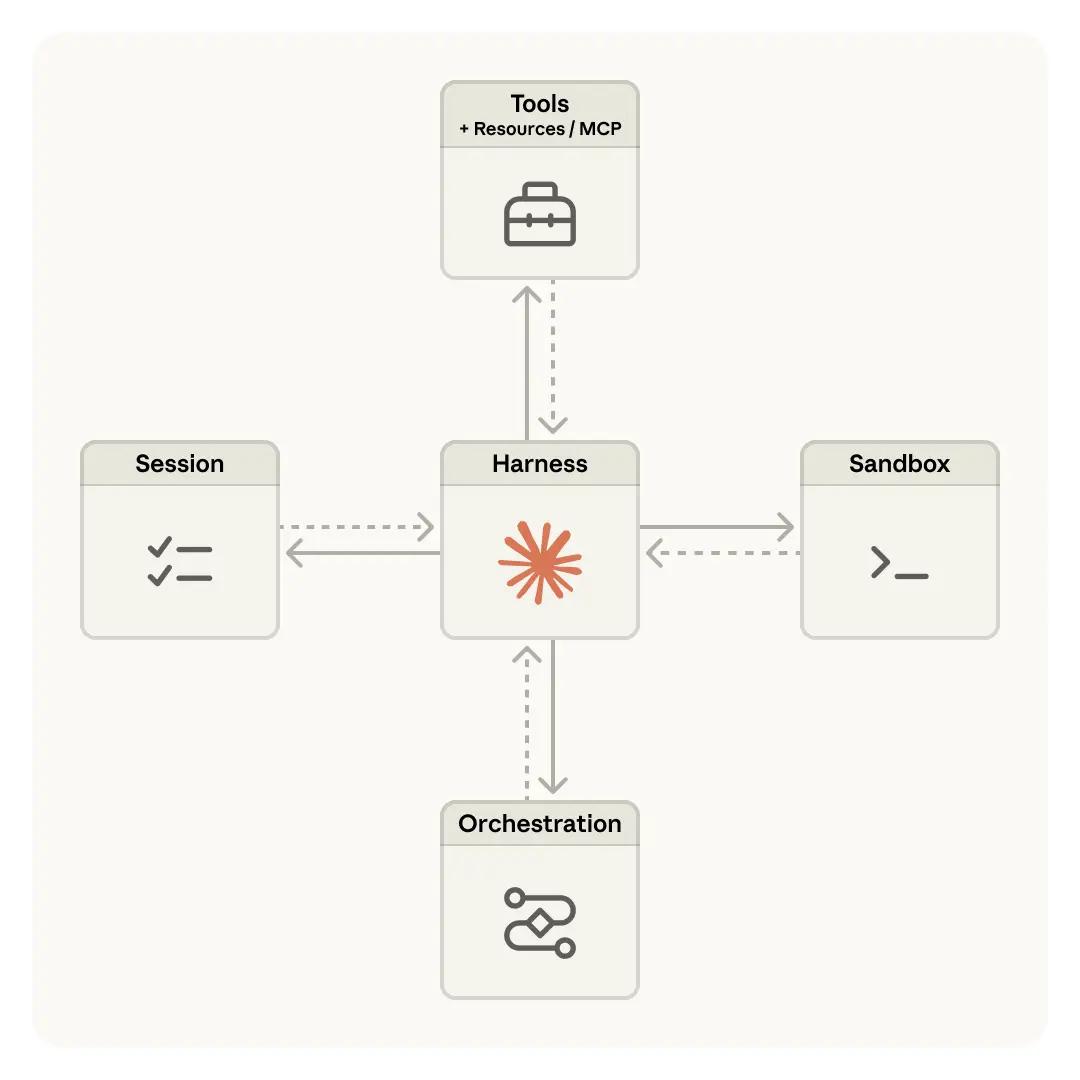
Logical mutation: From "tool grafting" to "AI native system"
Next, here is the core argument of this article: Managed Agents change the topological structure of computing.
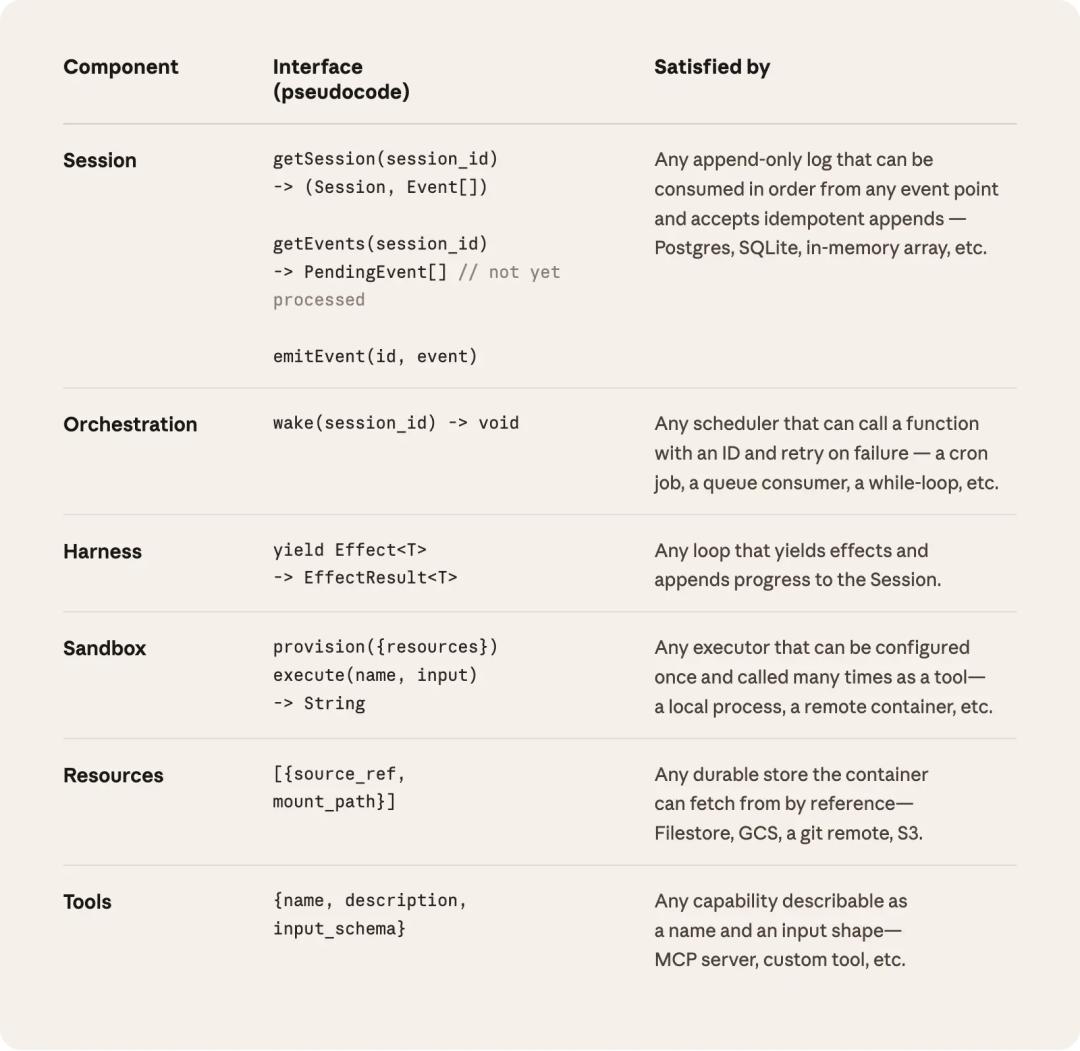
Don't keep pets. First of all, it makes us stop keeping pets.
Early solutions tended to encapsulate the session, Harness, and sandbox in a single container, resulting in the expensive "pet effect": the server becomes irreplaceable and extremely delicate.
In addition, this "all - in - one" model also assumes that all data processed by AI must be in the same environment as the brain, which causes costs for enterprises when accessing private clouds.
The emergence of Managed Agents can make the components "livestock - like".
Decoupling revolution: Let the "brain" return to the brain, and the "hands" return to the tools
To solve the above problems, Managed Agents introduce the decoupling logic. It completely separates the "brain" (Claude and its framework) from the "hands" (the sandbox for executing operations) and the "memory" (session log).
Now, the Harness no longer resides in the container. It calls the container just like calling any tool: execute(name, input) → string.
From now on, the container becomes "livestock", and even the Harness itself becomes "livestock".
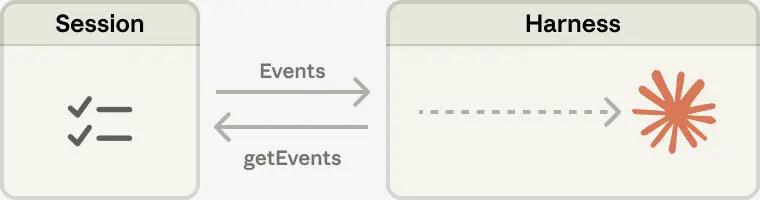
Session as a log: Breaking the shackles of the context window
Long - cycle tasks often exceed the AI's context window. Managed Agents propose a brilliant solution: The session is not a window but a log.
Through external storage, on - demand interrogation, and framework conversion, they successfully break through the context limit.
Resourceful: The cluster effect of multiple brains and multiple hands
The ultimate benefit of this decoupling is scalability. Now, since the brain and hands are separated, the execute() function is only called to allocate containers when the AI really needs to perform an action.
The result is amazing: the p50 TTFT drops by about 60%, and the p95 drops by more than 90%.
In addition, Claude can now perform inferences on multiple execution environments simultaneously and decide which "hand" to send the task to.
Security isolation, completely solving the private key leakage problem
Managed Agents completely solve the problem of private key leakage. In the coupled design, the code runs next to sensitive information.
However, in Managed Agents, Tokens are always stored in a secure vault outside the sandbox. The AI only needs to initiate a call through the agent and doesn't even see those keys.
This structural isolation makes Prompt Injection attacks lose their physical targets.
Hermes is booming, upgrading itself while working
If most AI agents are like "forget - after - work" employees, Hermes Agent is more like an experienced employee who can review, take notes, and get stronger with use.
