A new species was born in Shenzhen.
Xia Jiangnan still remembers this scene: During the more than ten hours flying back from London to Shenzhen, he hardly slept.
It was 2025. He was invited to serve as an international judge for the UK's D&AD Awards. It was during this time that this designer, who had won numerous international awards, truly felt that it was time for a reshuffle in the design industry.
By the River Thames, he saw that the world's top institutions' use of AI was no longer just an attempt at the auxiliary level but had begun to penetrate deep into the creative process itself. Almost everyone on - site was discussing the same thing: how AI agents could enter the design process.
A sense of anxiety hit him.
In the following six months, Xia Jiangnan spent more time thinking and talked more and more with Zhou Hongyang, the founder of Zhihe Fund. The two were old friends who had known each other in Shenzhen for many years. One was a big name in the design circle, and the other was a senior VC investor. At that time, Zhou Hongyang judged that in the AI era, OPC (One - Person Company) was about to boom. The idea of starting a business together began to germinate.
This judgment was quickly confirmed. Just like the latest situation, Guangdong issued a new AI policy, encouraging and supporting the development of artificial intelligence OPCs. A little earlier, Xia Jiangnan and Zhou Hongyang jointly founded Jianian Zhihe in Shenzhen.
This is a microcosm of the AI wave.
A new species unveils its veil
The AI era is giving birth to countless possibilities.
Just as one came from a design background and the other from an investment background, they came together in the AI era. In March this year, Jianian Zhihe was officially established in Shenzhen, and Zhou Hongyang became the CEO. It seems to be an AI design consulting company, but upon closer inspection, what it wants to do is obviously more than that.
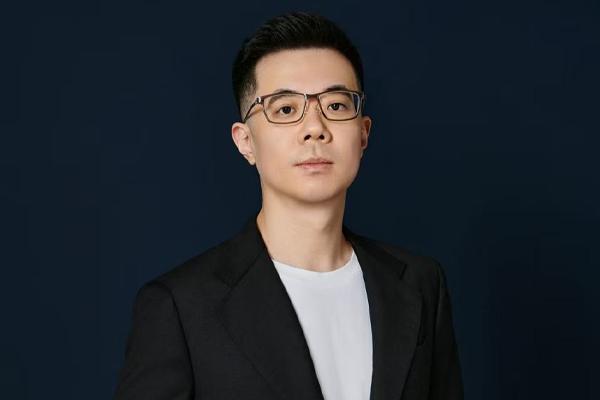
Let's start with the most core part. Xia Jiangnan gradually disassembled, organized, and precipitated his aesthetic judgment, creative methods, and project experience accumulated over more than twenty years into a set of digital exclusive data sets. Relying on the AI system architecture customized and built for Jianian Zhihe by Xindan Intelligence, a Shenzhen - based AI startup, these abilities that originally highly relied on personal experience, through continuous training and learning, were finally precipitated into a workflow that could participate in real - world delivery. The company internally calls it JN Agent, that is, "Xia Jiangnan's digital doppelganger".
To put it simply, the digital doppelganger is not mysterious. It doesn't make decisions for designers, nor is it responsible for generating inspiration. It's more like a long - trained partner that first completes those basic and repetitive tasks, such as competitor research, direction deduction, preliminary plans, and feedback iteration. The designer is at the forefront, focusing on creative decision - making and aesthetic balance, making judgments and choices, and deciding what to keep and where to be more incisive. In this way, the originally long and arduous process is greatly compressed, the results are still solid, and the complete designer style is retained.
"Humans and machines work in sync, each performing their own duties." Xia Jiangnan summarized it like this. The warmth of design is not taken away. Instead, it is magnified because of efficiency, and the service radius is also extended.
On one end, it faces OPC startups. Such teams often have difficulty obtaining in - depth creative support at the start - up stage and also have difficulty synchronously sorting out brand expression and development rhythm. However, with the support of the AI workflow, top - level creative services begin to extend to smaller front - end teams. On the other end, it also continues to undertake mature enterprises, listed companies, and large - brand customers.
In this way, an extremely imaginative path is opened: When creative ability is magnified by AI, it can cover more OPC startups; Zhou Hongyang supplements strategic judgment from an investor's perspective. At the same time, Jianian Zhihe can directly participate in seed - round and angel - round financing. After the project develops further, Zhihe Fund will undertake subsequent financing.
Therefore, it's hard to summarize this company in one sentence. It deals with visuals, discusses strategies, provides delivery, and tries to solve more front - end problems. Design, consulting, AI, and even seed incubation are "grafted" into the same lightweight organization. In other words, what Jianian Zhihe wants to do is to accompany founders from their earliest ideas and grow all the way.
As OPCs suddenly became popular this year, Jianian Zhihe seems to have caught the trend. However, in their view, they just took a step along the wave, just a little earlier than the trend.
Two people, starting in Shenzhen
Behind Jianian Zhihe are two young people who grew up in Shenzhen.
Zhou Hongyang, a post - 80s "second - generation Shenzhener", is an alumnus of Shenzhen Middle School. His first job was at Shenzhen High - tech Investment Group, and then he entered Shenzhen Capital Group. Later, he participated in the establishment of the Shenzhen office of Morgan Stanley PE. In the past nearly twenty years, he has always been deeply involved in Shenzhen, watching batch after batch of enterprises start from here and become miracles in the industry.
This also forms the background of Zhihe Fund: It emphasizes "investing early and in small - scale projects" and also attaches more importance to in - depth post - investment companionship. The core team has 20 years of VC/PE experience, with both local and international top - level institutional backgrounds. They have invested in more than 10 listed companies in the past, and now they focus on key industries in Shenzhen such as artificial intelligence, the general consumer electronics industry chain, semiconductors, and cultural content creativity. To some extent, this laid the groundwork for the establishment of Jianian Zhihe.
After experiencing rounds of industrial cycles, Zhou Hongyang thought he was no longer unfamiliar with the rhythm of technological waves. It wasn't until the AI wave came that he felt that long - lost sense of weightlessness again.
"A project that was leading three months ago may not exist next month. The speed of industry development far exceeds our learning speed." This is a sentence he mentioned repeatedly. For front - line investors, this feeling is not easy. Excitement and anxiety occur almost simultaneously: the excitement lies in the unprecedented opportunities, and the anxiety lies in the rapid invalidation of old experience.
It was not until he was inspired by Xia Jiangnan that everything fell into place.
In the design circle, Xia Jiangnan has long been famous. Around 2006, he started his business in Shenzhen. In the following more than 20 years, while winning design awards, he also took on projects and served top - tier clients such as Huawei, Disney, and CATL. Different from many designers who only talk about expression but not results, he has long been dealing with creative problems in a business context: how a brand can be seen, how a product can be understood, and how a set of visual language can truly be implemented in the market.
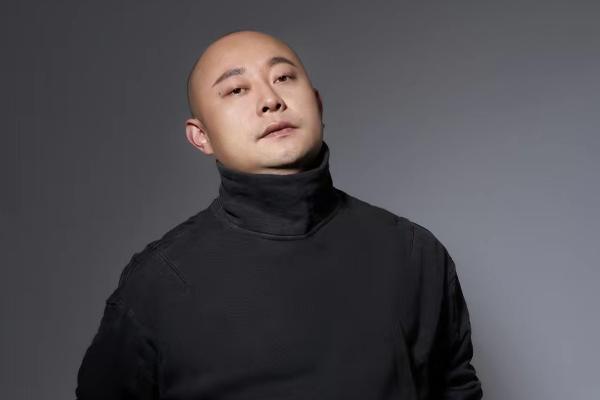
Even so, in Xia Jiangnan's view, there is no ready - made model for this entrepreneurship. "The market demand is large and clear. We must get involved." In his eyes, AI is rewriting the way of working. Instead of staying in observation and judgment, it's better to embrace it actively.
After knowing each other for many years, Zhou Hongyang's judgment of him is that he is "the most business - savvy artist". Conversely, in Xia Jiangnan's eyes, Zhou Hongyang is not an ordinary financial investor. The strategic perspective and investment thinking that the latter brings, as well as his in - depth understanding of the market, are exactly what traditional design companies lack. Many problems that used to stay at the design delivery level are now pushed one step forward here.
When talking about this partnership, they repeatedly mentioned a sentence: Within their ability, help those who really want to achieve something move forward. This is a typical Shenzhen - style value: talk about ideals but not in an empty way; emphasize companionship, and ultimately, it must lead to getting things done.
In Xia Jiangnan's view, the most valuable thing about Shenzhen is that it always leaves enough space for new things. It allows for trial and error and encourages starting over. "Doing is better than talking" is his life creed and also the most prominent urban temperament of Shenzhen.
"This era actually needs more dreams." Zhou Hongyang sighed. "Maybe in the future, the difference between people will lie in how eager they are for their dreams, because the barriers to technology and execution will definitely become lower and lower."
When OPCs become popular, why is it Shenzhen?
It is almost logical that a new species like Jianian Zhihe appears in Shenzhen.
Over the past few decades, Shenzhen's most stable ability is not limited to what the outside world interprets as hardware, supply chain, or efficiency, but lies in an extremely sensitive business closed - loop ability, where technology, industry, capital, and the market collide in the shortest path. When a new technological wave surges in, this city may not be the first to name it, but it is often the first to push it to the market.
In the AI era, this narrative has not lost its effectiveness.
Let's look at a more intuitive set of data: In 2025, the revenue of Shenzhen's core artificial intelligence industry reached 220 billion yuan, and there were more than 2,600 enterprises above a designated size. The "city + AI" application scenarios are also constantly expanding. The report card provides a cross - section. Technology is not staying in the laboratory or on PPTs but is quickly penetrating into the capillaries of terminals, factories, and urban governance.
It is precisely in such a soil that OPCs are quickly being noticed. The innovation ecological vitality of a city comes not only from towering trees but also from those budding new shoots.
The warm policy breeze gives clear guidance. At the beginning of this year, Shenzhen took the lead in releasing the "Action Plan for Shenzhen to Build a Leading Area for the Entrepreneurship Ecosystem of Artificial Intelligence OPCs (2026 - 2027)", proposing to build more than 10 high - quality OPC communities by the end of 2027 and gather more than 10,000 artificial intelligence innovation and entrepreneurship talents. Soon, the first batch of 10 OPC communities have covered districts such as Nanshan and Longgang, forming a huge innovation network.
In Zhou Hongyang's view, what supports all this is Shenzhen's real - economy foundation of about 5 trillion yuan in scale and a highly concentrated supply - chain network. In this system, AI compresses the execution link, makes the organization lighter, and reduces the trial - and - error cost. In the past, starting a business meant first assembling a large team and bearing labor and office costs. But in today's Shenzhen, "as long as a person has a dream, they can start running."
This change is reshaping the innovation density of the city. When tens of thousands or even more individual entrepreneurs innovate in parallel, the speed of technological trial and error increases. At the same time, Shenzhen's ultimate manufacturing system - design, prototyping, and mass production - these capabilities can be flexibly called like plugins, enabling creativity to enter the industrialization stage in a shorter path.
This agglomeration effect is exactly the chemical reaction that Zhou Hongyang values the most.
"In the past, when starting a business, you had to find money first and then recruit people." In his observation, the concentration of "small - team operations" in Shenzhen's cafes and office buildings is increasing at an unprecedented speed. What attracts entrepreneurs is the city's ability to quickly turn creativity into products and business. In the AI era, this ability is still being magnified.
When excellent OPCs are concentrated together, the people at the next workstation are no longer ordinary colleagues but peers who can collaborate at any time. Zhou Hongyang sighed that the increase in single - person output value brought about by this "siphon effect" is unimaginable in the past.
Shenzhen has long proven this.
In 2006, Wang Tao started his business with two people in a residential house in Shenzhen. Ten years later, DJI captured about 70% of the global drone market share. This story is told repeatedly because it witnesses Shenzhen's entrepreneurial gene: as long as you have an idea, you can build a dream in a rental house.
History often rhymes. Today, it's the turn of another group of people. In a sense, Jianian Zhihe is not an isolated case. It's more like a signal: In the AI era, Shenzhen is giving birth to a new batch of entrepreneurial species.
This article is from the WeChat official account "Investment World" (ID: pedaily2012), author: Wang Lu, published by 36Kr with authorization.