SpaceX's challengers: Can Bezos and the Chinese teams catch up?
In the previous report, we mainly started from the listing of SpaceX and sorted out the main context of this wave of commercial space opportunities. In this article, we focus on the main market participants in reusable rocket launches and satellite operations. At the same time, we break down the industrial chain links to analyze potential investment opportunities from the perspectives of the competitive landscape and industrial chain links.
Main Text:
01 Competitive Landscape of Reusable Rockets
We sort out the main participants in the field of reusable rockets and mainly analyze two questions based on this: First, what is the industry's competitive landscape? Second, by comparing the different technical routes and models of different participants, we analyze the main competitive factors of the industry and the industrial chain links that may be involved.
Bezos' Layout
In the field of reusable rockets, the current biggest competitor of SpaceX is Bezos, the founder of Amazon.
Blue Origin, founded by Bezos, is earlier than SpaceX. It is also positioned to reduce the cost of space access, with a similar technical route. Currently, it has partially mastered rocket reusable technology. The New Glenn rocket successfully achieved its first flight and first - stage recovery in 2025, and will start commercial missions in April 2026.
Here, we make a comparison between the two:
Differences in Concepts
SpaceX's concept is to make humans a multi - planetary species, such as migrating to Mars. While Blue Origin's concept is to relieve the burden on the Earth by moving heavy industries to space, making the Earth's environment more livable. Although the narratives are different, the essence is similar, both extended from the fragility of the Earth and the limited resources. Of course, these are all large - scale projects and cannot be profitable in the short term.
Therefore, although Blue Origin has Bezos selling $1 billion worth of Amazon stocks annually to provide patient capital, it still needs to explore a sustainable and profitable business model. So, it is natural for it to undertake government and military projects, commercial projects, and develop its own "Starlink" (such as Project Kuiper). Therefore, there must be all - around direct competition between Blue Origin and SpaceX.
Differences in Modes
Although the business goals and layouts of the two companies are similar, there are significant differences in the actual implementation of business promotion. SpaceX is a typical example of "rapid trial - and - error" and "agile development", while Blue Origin's approach is more traditional and more inclined to long - termism, progressing step by step. Although the pace is relatively slow, it has also made certain progress:
The New Glenn rocket successfully achieved the recovery of the first - stage booster in 2025. It is currently the second orbital - class rocket in the world to achieve vertical recovery and directly landed on an unmanned barge at sea. The low - Earth - orbit carrying capacity of the New Glenn rocket reaches 45 tons, much higher than that of the Falcon 9 and close to that of the Falcon Heavy.
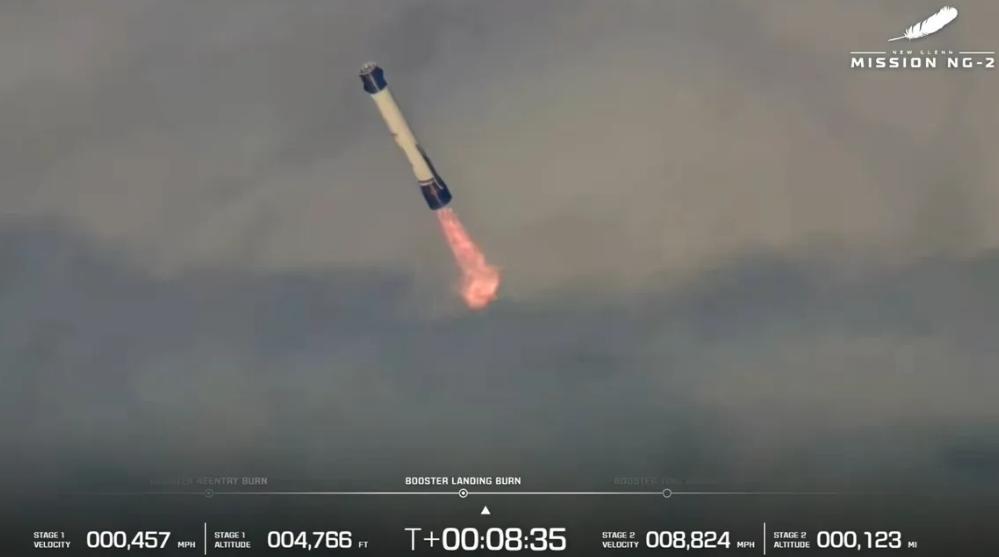
Figure: New Glenn achieves in - air reignition and recovery of the first stage
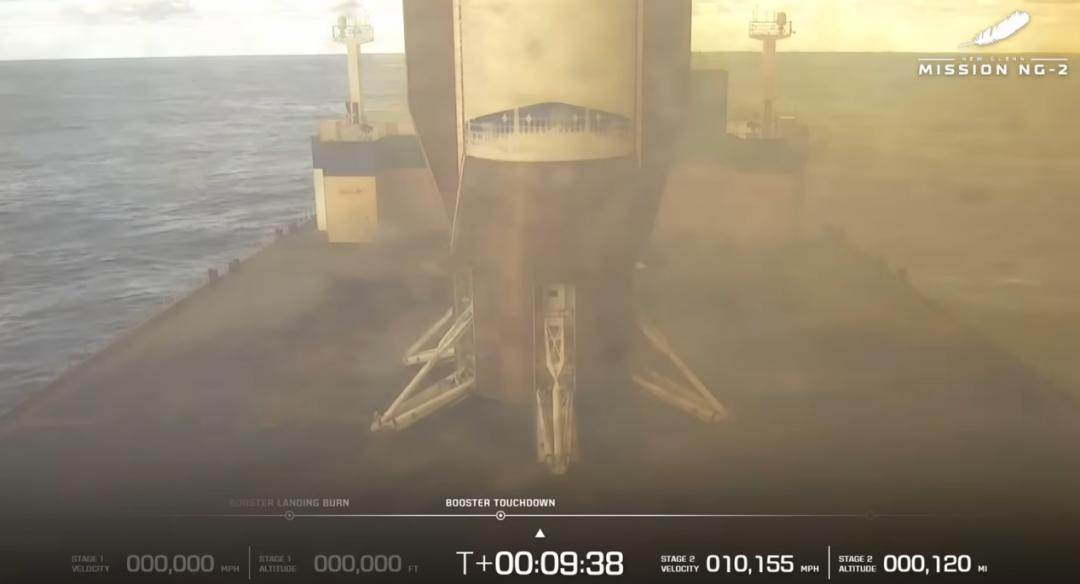
Source: Blue Origin, Dolphin Research
Due to the differences in concepts and modes, there are differences in the technical routes adopted by the two
(1) Engine technology: It directly determines whether the rocket can be recovered and reused at low cost
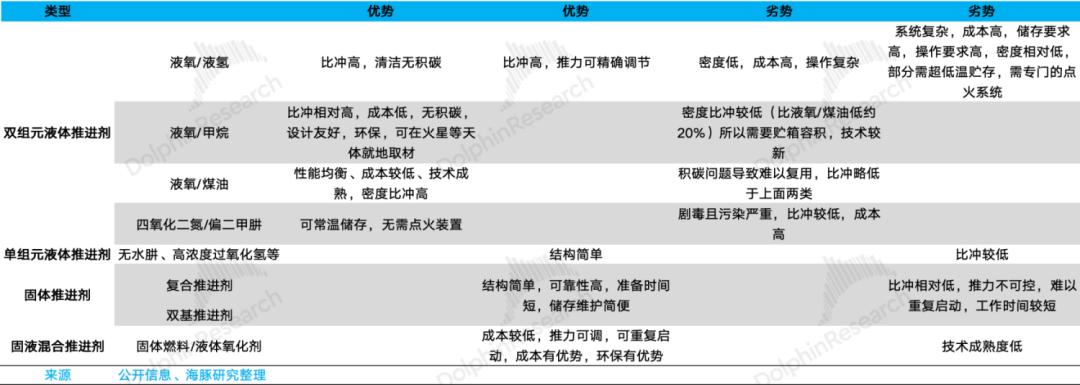
1) Fuel
Fuel, also known as propellant, currently the mainstream uses bipropellant liquid. That is to say, the fuel is liquid and divided into two parts. One part is used as a combustant, and the other part is used as an oxidizer (there is a lack of oxygen in space, so an oxidizer is needed).
From the perspective of fuel, Blue Origin's steady R & D idea of aiming for the best at once can be reflected. SpaceX uses liquid oxygen/kerosene in the Falcon series and liquid oxygen/methane in the Starship series. Liquid oxygen/kerosene technology is mature, relatively reliable, and has a lower cost. Liquid oxygen/methane has no carbon deposition (carbon deposition will block the pipeline), has a higher reuse efficiency, and theoretically can obtain materials locally on Mars, which is more suitable for deep - space exploration, but the technology is still immature. While Blue Origin directly uses liquid oxygen/methane, the same as Starship.
2) Cycle mode
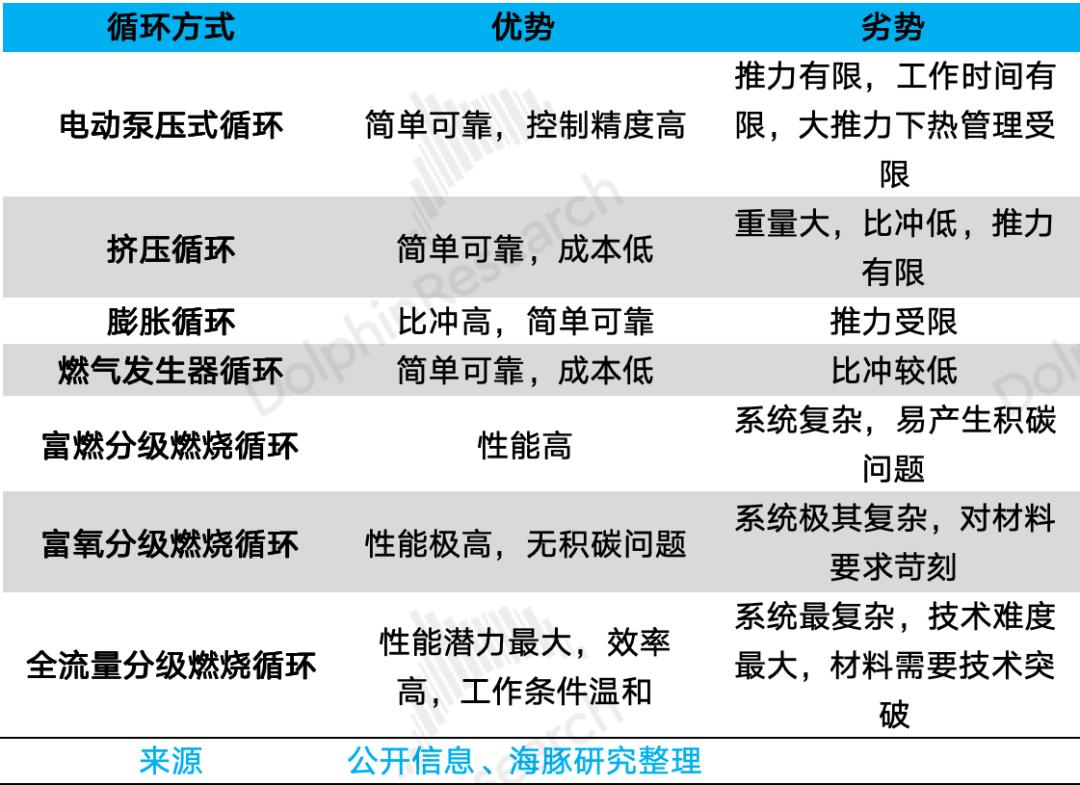
Blue Origin uses the oxygen - rich staged combustion cycle. SpaceX's Merlin engine (used for Falcon) uses the gas - generator cycle, and the Raptor engine (used for Starship) uses the full - flow staged combustion cycle.
Here, the engine cycle mode refers to the entire set of work processes of delivering the propellant to the combustion chamber for combustion to generate thrust. The difference between different cycle modes mainly lies in how to drive the turbopump. The function of the turbopump is to pump the propellant into the combustion chamber, and it is equivalent to the heart of the rocket.
Here, we won't go into the specific principles in detail. Simply put, the oxygen - rich staged combustion cycle adopted by Blue Origin is highly efficient on the one hand and has no carbon - deposition problem. On the other hand, the design and manufacturing have a certain degree of maturity, which is a balanced solution.
The gas - generator cycle adopted by Merlin has a simple structure and low cost, and the technology is relatively mature, but the efficiency is relatively low, and it is not conducive to reuse. While the full - flow staged combustion cycle has the most ideal efficiency, safety, and service life, but the design and manufacturing are extremely difficult. This also reflects the mode differences between the two companies.
3) Application of 3D printing technology
The structure of rocket engines is complex, and the technology is continuously and rapidly iterating. And from the perspective of the order of magnitude of mass production, the quantity is relatively small. 3D printing technology just matches the above - mentioned needs, but currently, this technology is not mature, and there are still many limitations in terms of reliability and performance.
SpaceX is very radical in the application of 3D printing technology, especially using a large amount of 3D printing technology in the Raptor engine. Blue Origin currently mainly focuses on using 3D printing for some key components in the engine.
In short, Blue Origin aimed at an advanced but steady solution from the beginning. Although it spent more time and upfront R & D costs, it also achieved phased success, which indeed poses competitive pressure on SpaceX.
(2) The rocket body accounts for the second - highest proportion in the rocket cost, and material selection is a key consideration
Without considering the amortization and depreciation of R & D and ground facilities, in the rocket cost, the engine cost accounts for the highest proportion, reaching 40 - 50%, followed by the rocket body, accounting for about 25%, then the GNC system, accounting for about 15%, and the fuel accounts for less than 3%.
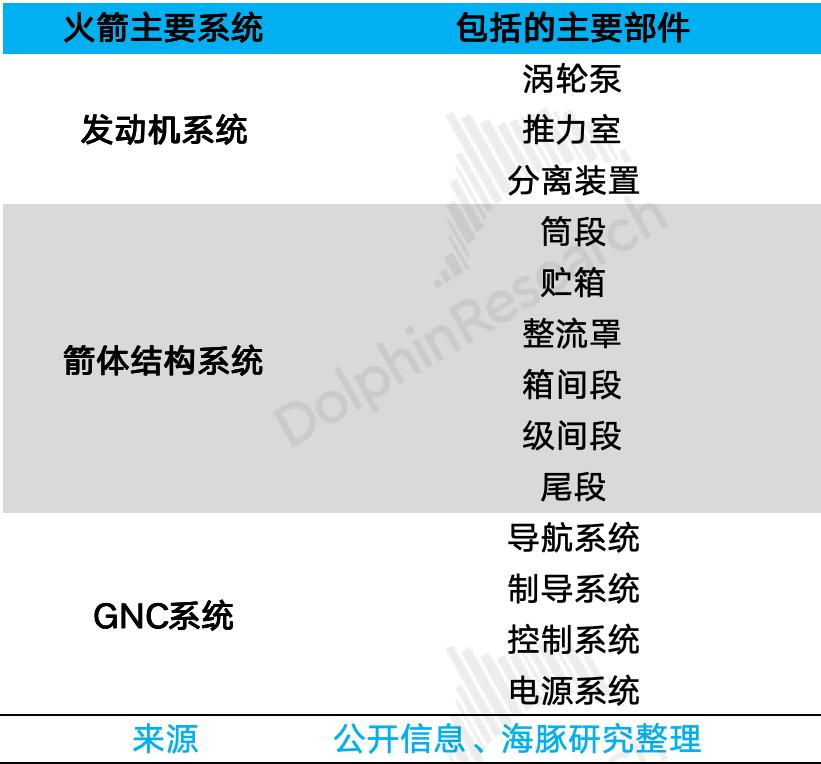
Figure: Structure of the Falcon 9 rocket
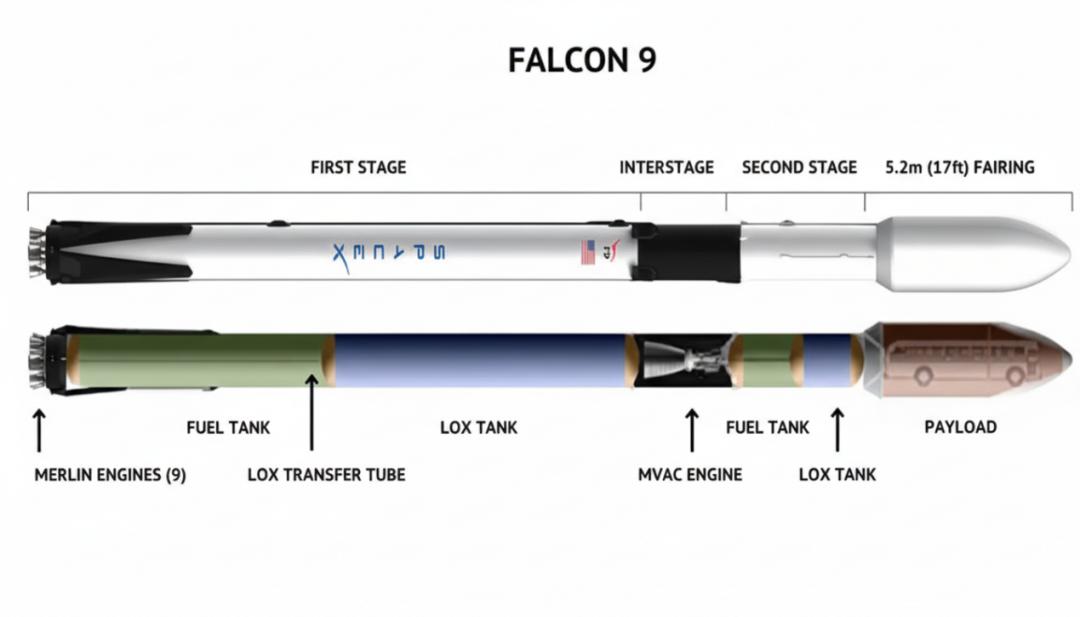
Source: Orbital Today, Dolphin Research
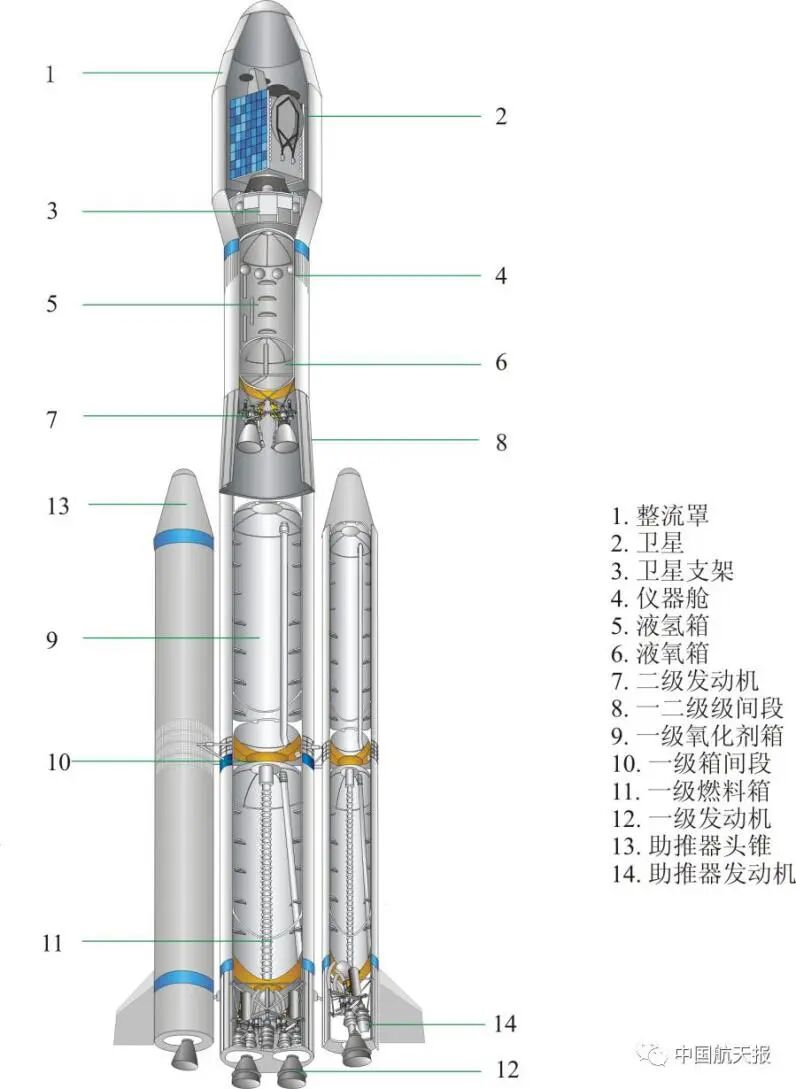
Figure: Basic structure of a rocket. Source: China Aerospace News, Dolphin Research
The rocket body includes the fairing, barrel section, propellant tank (used to store propellant), inter - stage section, inter - tank section, and tail section. For the rocket body, there are also differences in material selection.
Blue Origin's Glenn mainly uses aluminum alloy and carbon fiber, while the Falcon 9 uses a large amount of aluminum - lithium alloy, and the Starship almost entirely uses stainless steel.
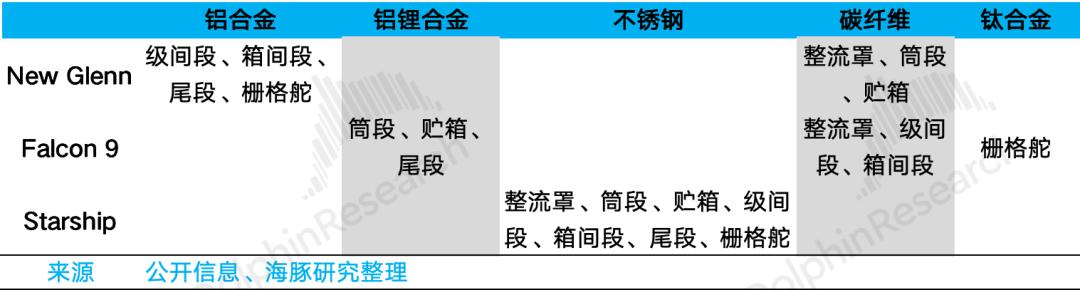
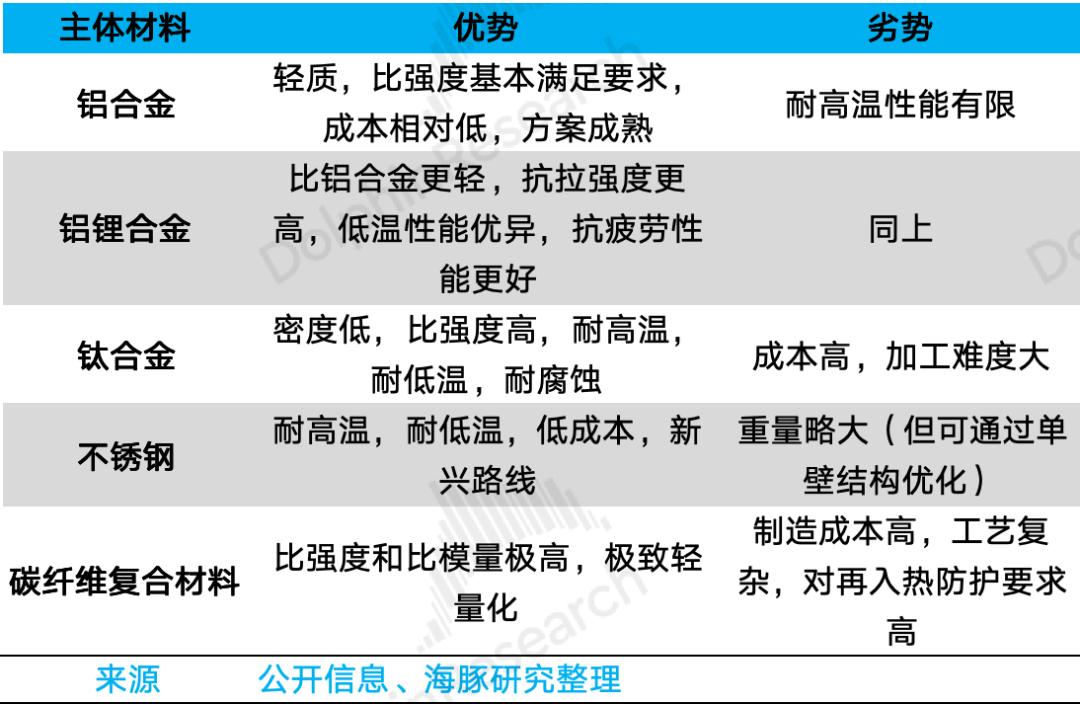
Here, we can still see that Blue Origin's design idea is more inclined to balance performance and cost and optimize on the basis of a mature solution as much as possible. While the Starship tries to achieve extreme cost reduction.
(3) GNC system
The GNC system refers to the rocket's guidance, navigation, and control systems.
Here, we focus on the landing method: SpaceX's landing method is the "hovering system", that is, the rocket directly aims at the landing point during the landing process and makes fine adjustments to the angle and position during the process, which is the most efficient and fuel - saving. While Blue Origin uses the "drift method", first aiming at a safe point outside the platform, and then laterally translating to the center of the platform after confirming normal operation, which can ensure the maximum safety redundancy.
Progress of Chinese Companies
Currently, the industry participants are mainly concentrated in the United States and China. There are also a few participants in other countries and regions such as Europe, but the progress is relatively slow, so we won't discuss them here.
In the first article, we simply compared the costs of different rocket launches. We can see that although China has not achieved rocket reusability, its rocket launch cost has no significant difference in magnitude compared with SpaceX's Falcon 9. So, if China achieves reusability, it may have an advantage in cost:
Based on China's manufacturing capabilities and cost advantages, Musk has experienced the following with Tesla cars and Optimus humanoid robots: trying full vertical integration, self - researching and producing, and then giving up. Finally, he had to choose to hand over the manufacturing link to the Chinese supply chain.
SpaceX is one of the few industries where Musk can achieve local manufacturing in the United States, but this relies on the subversion of the rocket launch mode. If China masters reusable technology, the impact on SpaceX may be significant.
Currently, China is still in a follow - up state in rocket reusable technology. Although this way of imitation is not very eye - catching, it indeed fits China's engineering capabilities and scale advantages.
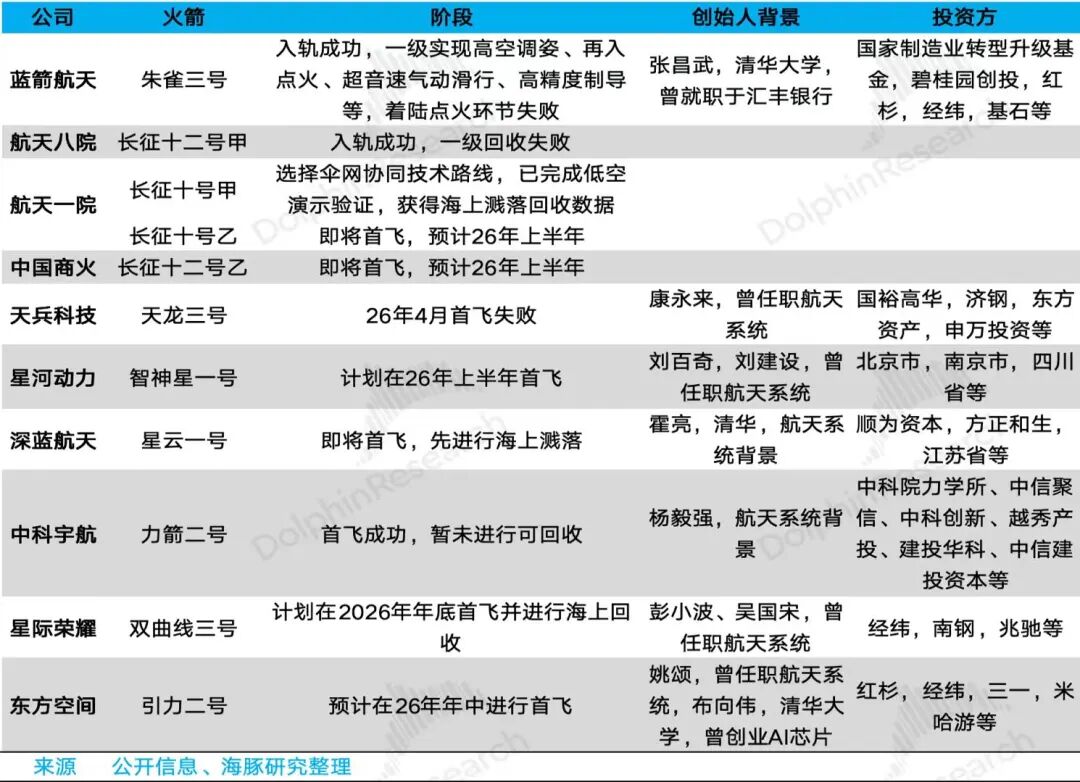
Here, we simply sort out several Chinese companies with relatively fast progress:
1. Landspace
Landspace was founded in 2015. Its founder, Zhang Changwu, has a financial background and has worked at HSBC Bank. The co - founder, Wang Jianmeng, has a background in the aerospace system and has worked at the China Satellite Launch and Tracking Control System Department. He is also Zhang Changwu's father - in - law.
From the perspective of the rocket R & D cycle, Landspace's progress is relatively fast compared with SpaceX.
Landspace's reusable rocket, Zhuque - 3, was launched in 2023 and successfully launched into orbit in December 2025, only taking a little over two years. While SpaceX's Falcon 9 took five years from project establishment (2005) to successful first flight (2010).
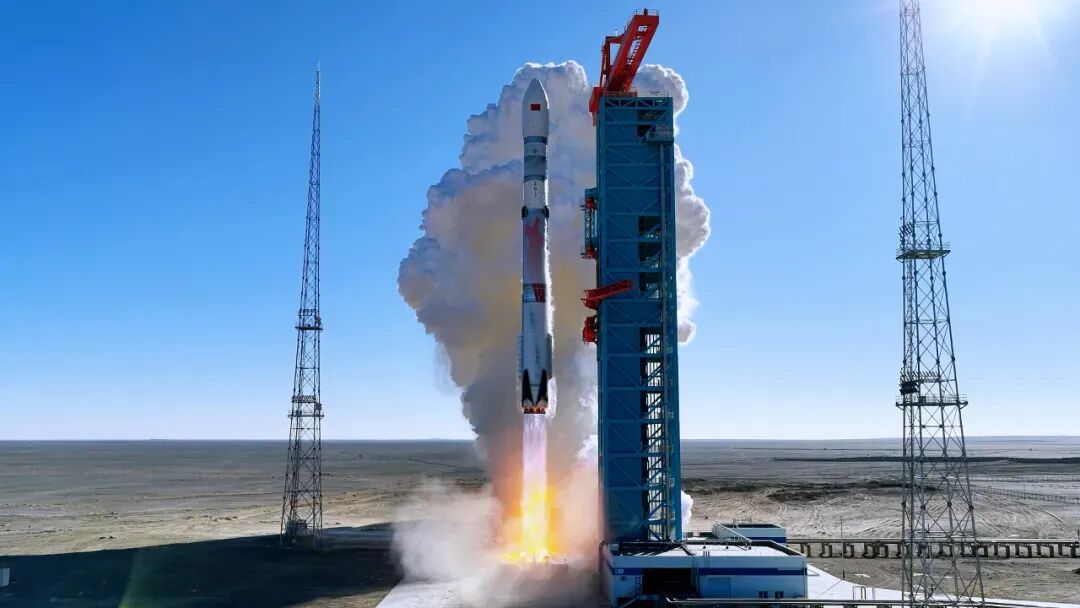
Figure: Zhuque - 3. Source: Landspace, Dolphin Research
In addition, during the recovery process after the launch of Zhuque - 3 in December 2025, it successfully achieved high - altitude attitude adjustment, re - entry ignition, supersonic aerodynamic gliding, high - precision guidance, etc. Although it crashed due to brake failure in the final stage, the landing point deviation was only about 40 meters. While the Falcon 9 achieved the above - mentioned progress basically between 2012 - 2014, seven to nine years after the project establishment.
2. Shanghai Academy of Spaceflight Technology
The Long March 12A rocket of