Artemis 2: The Story of Tortillas, Cameras, Toilets, and Human Lunar Exploration
At 12:56 PM Central Standard Time on April 6th, which is 1:56 AM Beijing Time on April 7th, the Artemis II mission team conducting the lunar orbit mission sent back an exciting piece of news:
As of 12:56 PM Central Standard Time, the Artemis II manned lunar orbit test mission team reached a point 248,655 miles (approximately 400,200 kilometers) away from Earth, officially surpassing the record for the farthest human spaceflight set by the Apollo 13 mission in 1970.
Before returning to Earth, the Artemis II mission team can theoretically reach a maximum distance of about 252,756 miles (approximately 406,800 kilometers) from Earth.
As the beginning of NASA's "Return to the Moon" project after 57 years, the Artemis Program has finally made a breakthrough.
Four years after the unmanned lunar orbit test in 2022, the proven new SLS (Space Launch System) and Orion spacecraft, carrying four astronauts, followed in the footsteps of the Apollo Program and restarted the exploration.
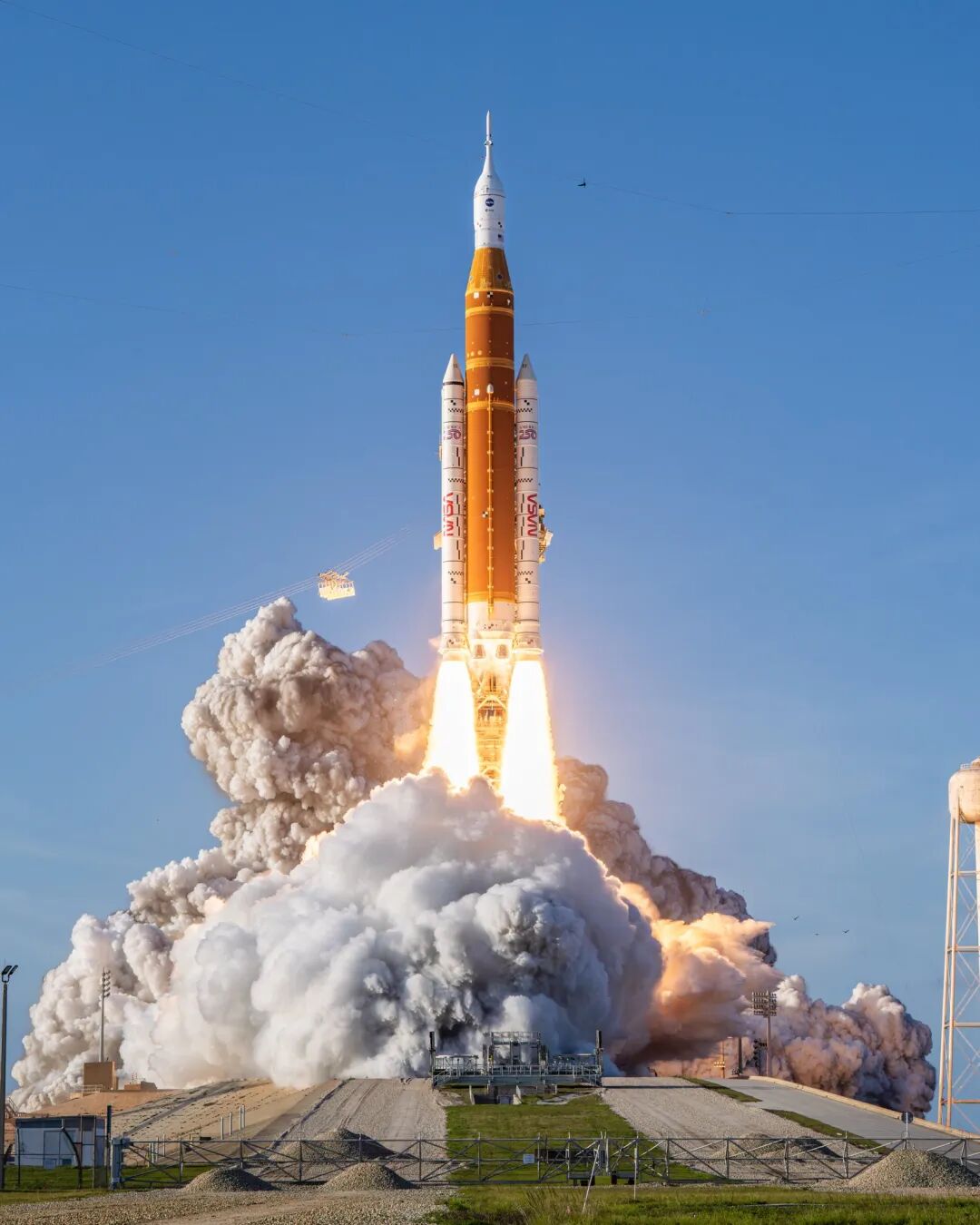
Image | Interstellar Gateway
Looking back at 57 years ago, Neil Armstrong's words "That's one small step for a man, one giant leap for mankind" during the Apollo 11 moon landing mission now shine with a different light.
248,655: The Farthest Human Voyage
However, although the four astronauts on Artemis II have set the record for the farthest human spaceflight to date, it is only the second step in the entire Artemis Program.
It is expected that by Artemis IV in 2028, we will have the opportunity to see human footprints on the moon again:
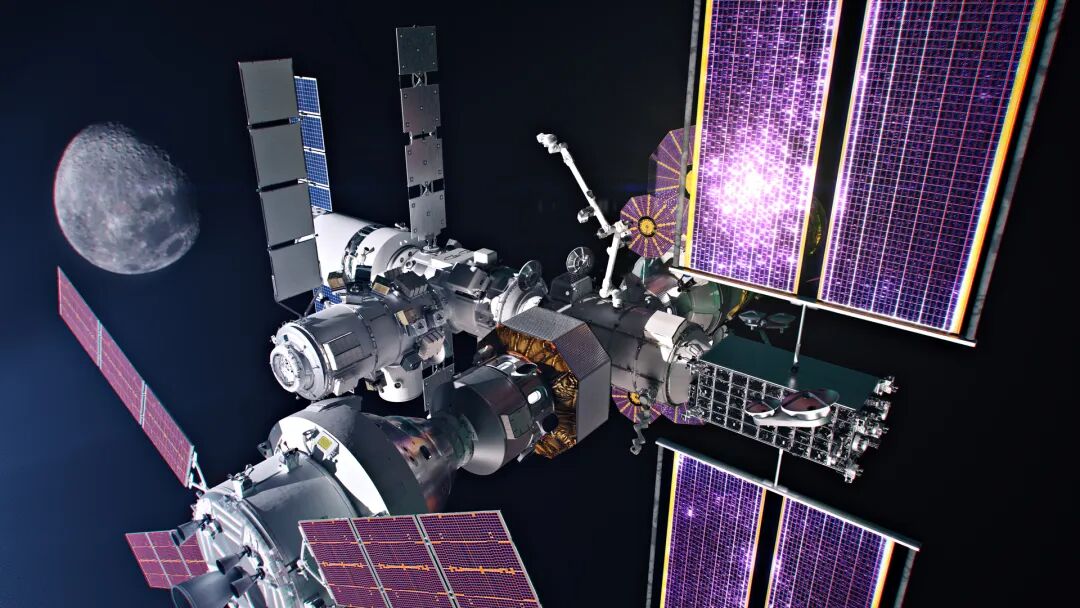
Simulation of Artemis IV | ESA (European Space Agency)
But as the latest global manned deep - space flight mission, Artemis II still has a lot of interesting information and details.
Especially compared with the Apollo 8 lunar orbit mission and the Apollo 11 moon landing mission, the scientific progress over the past half - century has been remarkable.
The Artemis II mission team consists of three men and one woman, namely Commander Reid Wiseman, Pilot Victor Glover, Mission Specialist Christina Koch, and Jeremy Hansen:
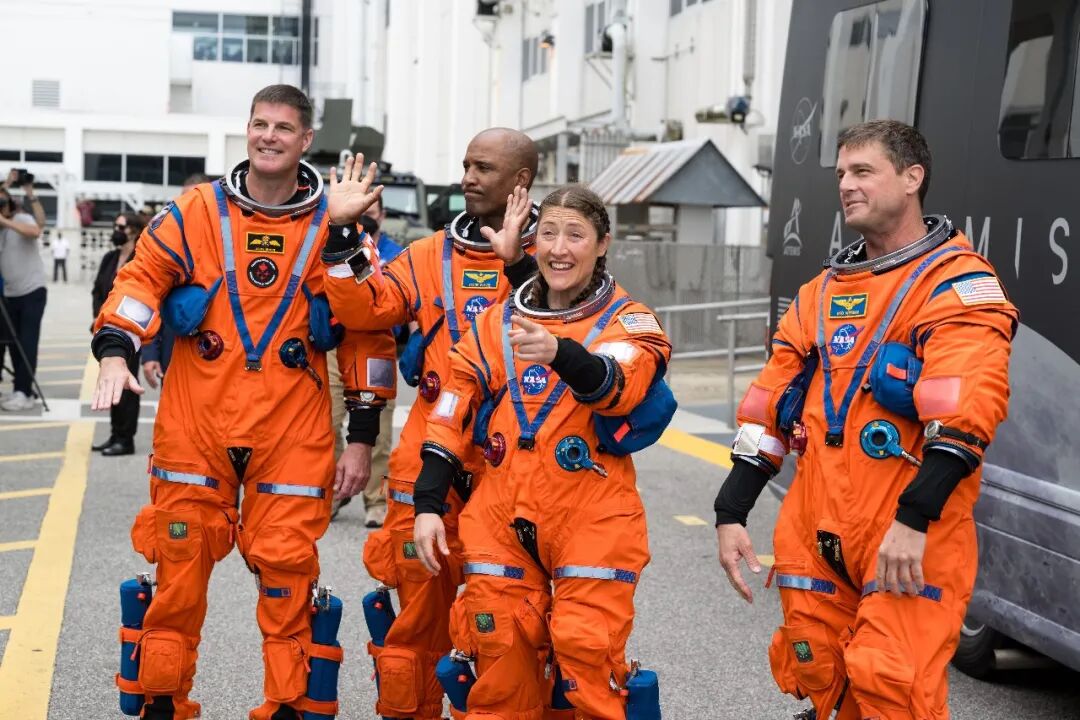
From left: Reid, Victor, Christina, Jeremy | NASA
This very diverse mission team not only breaks the regret of "no female astronauts" in the Apollo Program but is also the first lunar exploration mission involving people of color and foreign astronauts:
In addition to Christina being the first female astronaut to fly to the moon, Victor becomes the first person of color to fly to the moon, and Jeremy, who belongs to the Canadian Space Agency (CSA), is the first non - American lunar exploration astronaut.
On the other hand, the SLS Space Launch System that the four astronauts took into space is also very different from that of half a century ago.
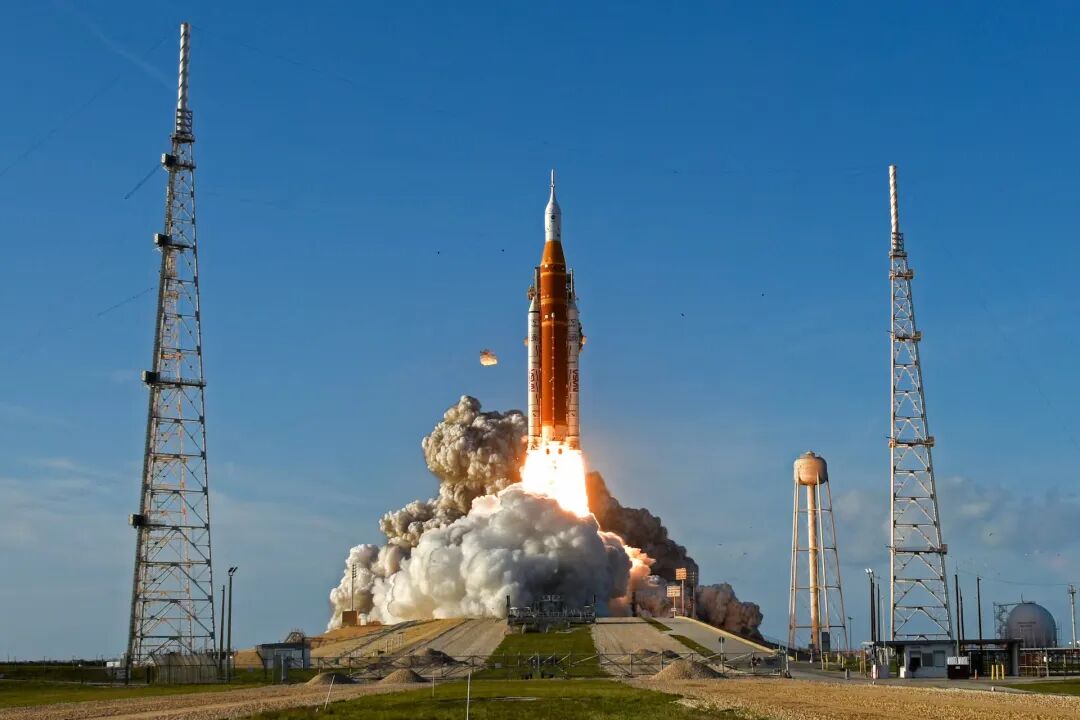
Image | Reuters
Although the current SLS Block 1 is not the final version for the moon landing, it still surpasses the Saturn V heavy - lift launch vehicle that carried Apollo 11 into space, with a take - off thrust of about 8.8 million pounds (approximately 39.5 meganewtons):
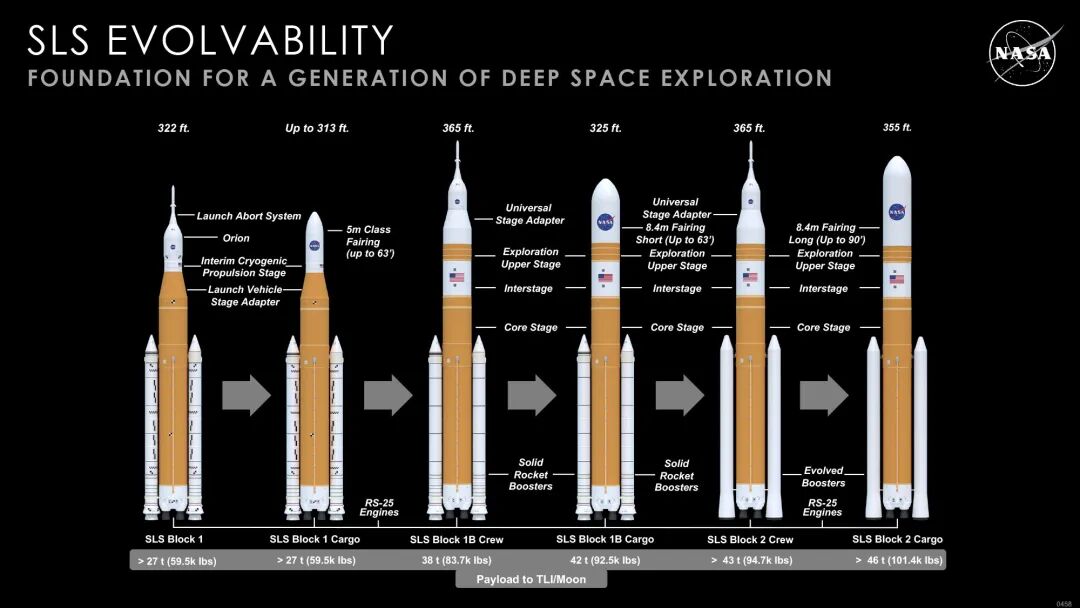
Image | NASA
This data surpasses the 7.6 million pounds (34.5 meganewtons) of the Saturn V and the 34.8 meganewtons of the Soviet Energia rocket, making it the most powerful single - use launch vehicle with successful orbital insertion in human history.
From SUV to Minivan
The Orion spacecraft used in the Artemis II mission has also made significant progress compared to the command module of the Apollo missions half a century ago.
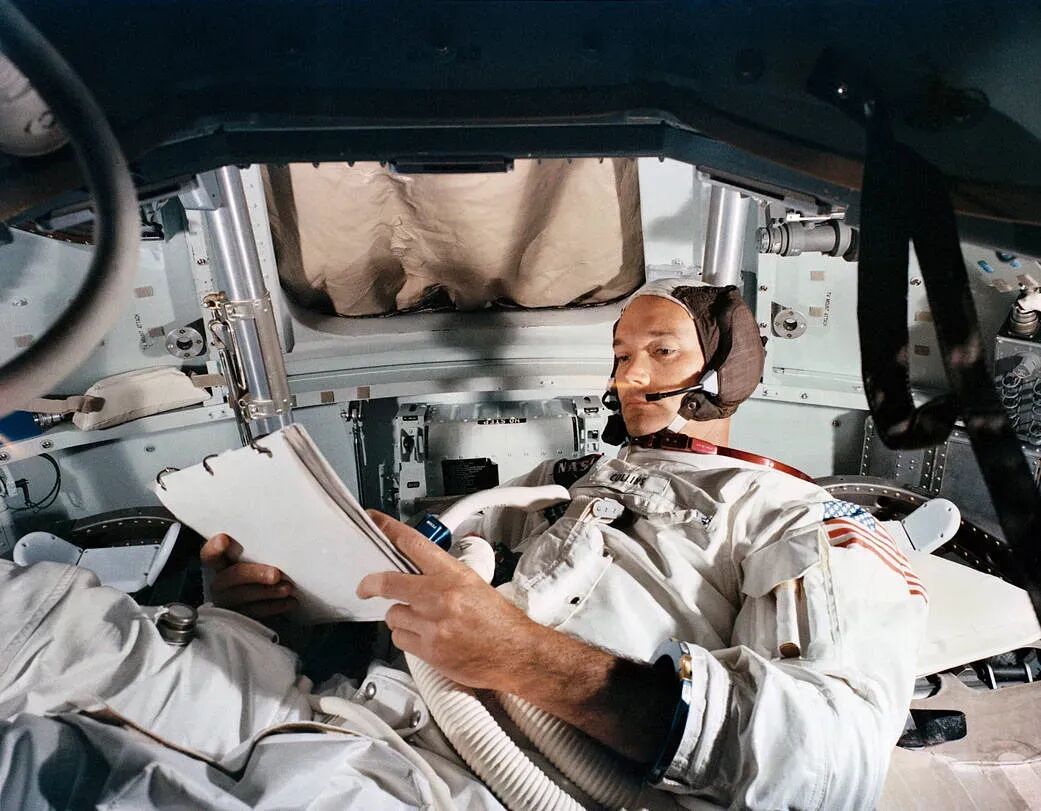
Michael Collins training in the Apollo 11 simulator | NASA
In terms of crew space, the Orion spacecraft has been enlarged both in terms of external structure and internal space size compared to the command module of Apollo 11 -
Not only to accommodate more instruments and daily necessities but also to provide a more comfortable living environment for the astronauts.
Just considering the "habitable volume" for astronauts' living and activities, the volume of the Orion spacecraft is about 9.3 cubic meters, which is approximately equivalent to the rear compartment of a medium - sized minivan or the space of two passenger elevator cars:
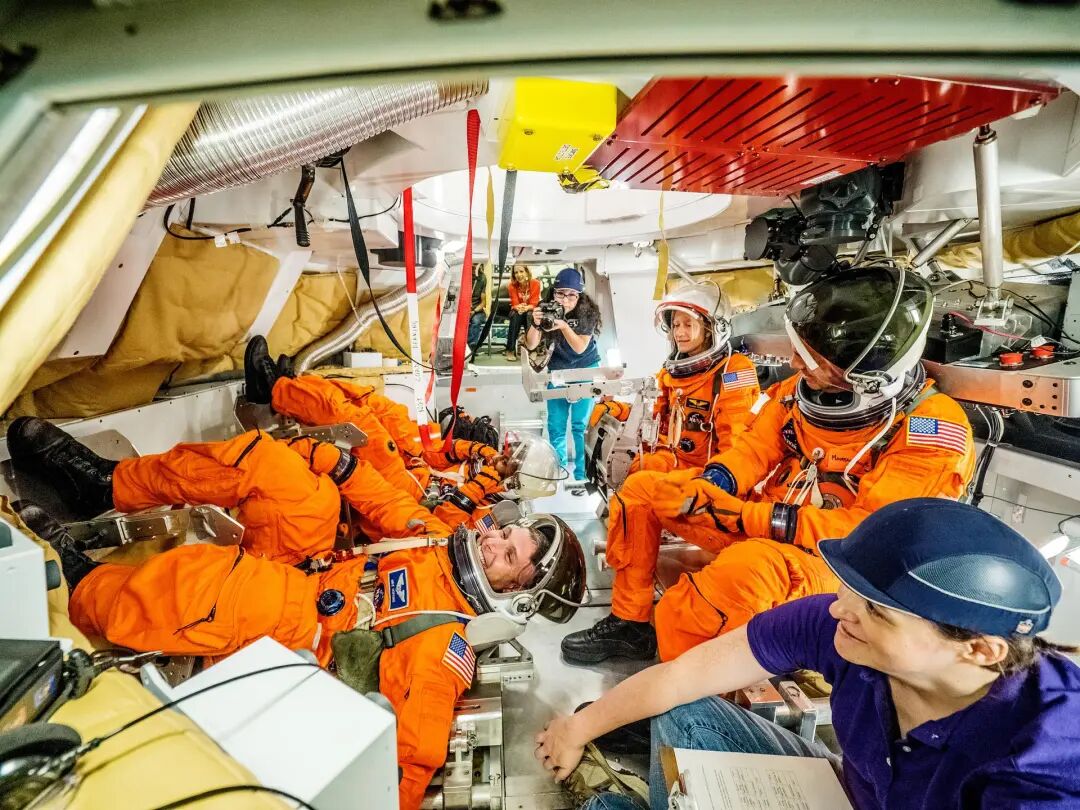
Image | NASA
Compared to the living space of about 6.2 cubic meters in the Apollo 11 command module, this is a significant improvement, equivalent to upgrading from "three people crowded in an SUV" to "four people crowded in the back of a minivan".
Along with Artemis II, space food technology has also advanced.
Of course, limited by the space of the Orion spacecraft, the Artemis II mission team definitely can't enjoy "space fried chicken" like Chinese astronauts in the Tiangong Space Station, but the food is still quite abundant.
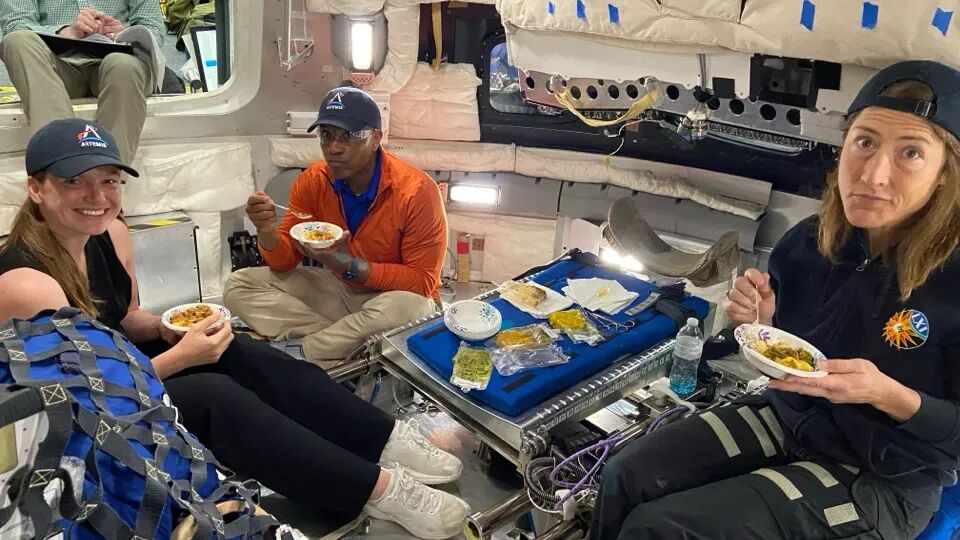
The Artemis II mission team conducting food tests | NASA
From the menu, the space food of the Artemis II mission team is basically similar to the long - tested space recipes on the International Space Station -
For example, 58 non - crumbly tortillas, 43 cups of concentrated coffee, 5 kinds of sauces with different spiciness levels, and a variety of desserts. The total number of food and beverage types reaches 189:
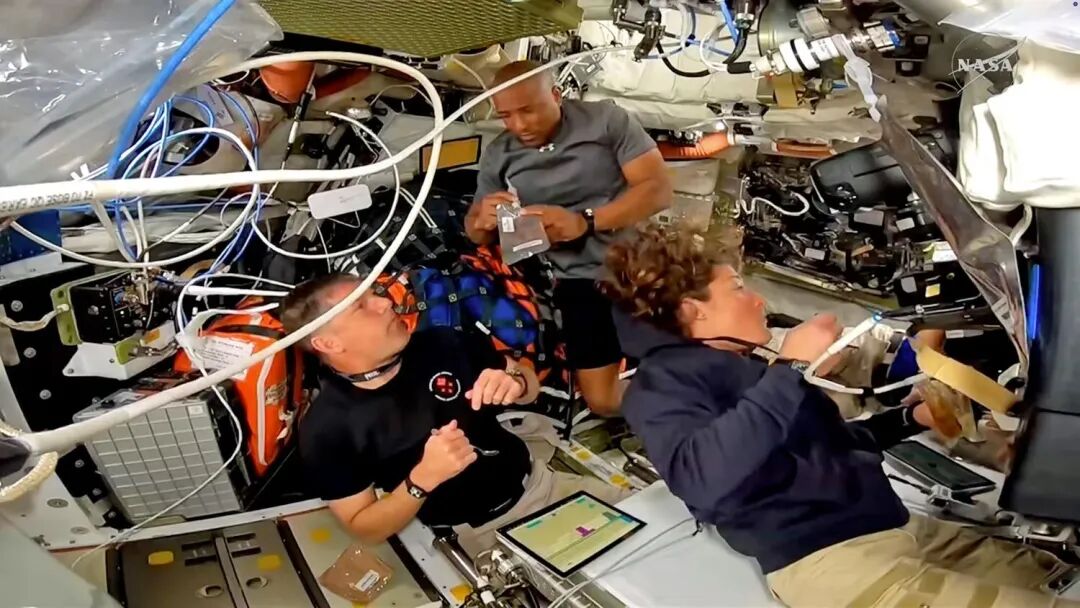
The Artemis II mission team having a meal | NASA
More importantly, it's the way of having meals.
The Artemis II mission team doesn't have to endure the "toothpaste tube" food paste that the Apollo mission team had to eat. Instead, they mainly have rehydrated foods in soft packaging and thermally stable foods, which are far superior in taste and flavor to those of the past.
Of course, the mission type of Artemis II is not suitable for carrying large - scale catering equipment. If we look at the level of space stations or future lunar bases, undoubtedly on - site cooking foods are more suitable:
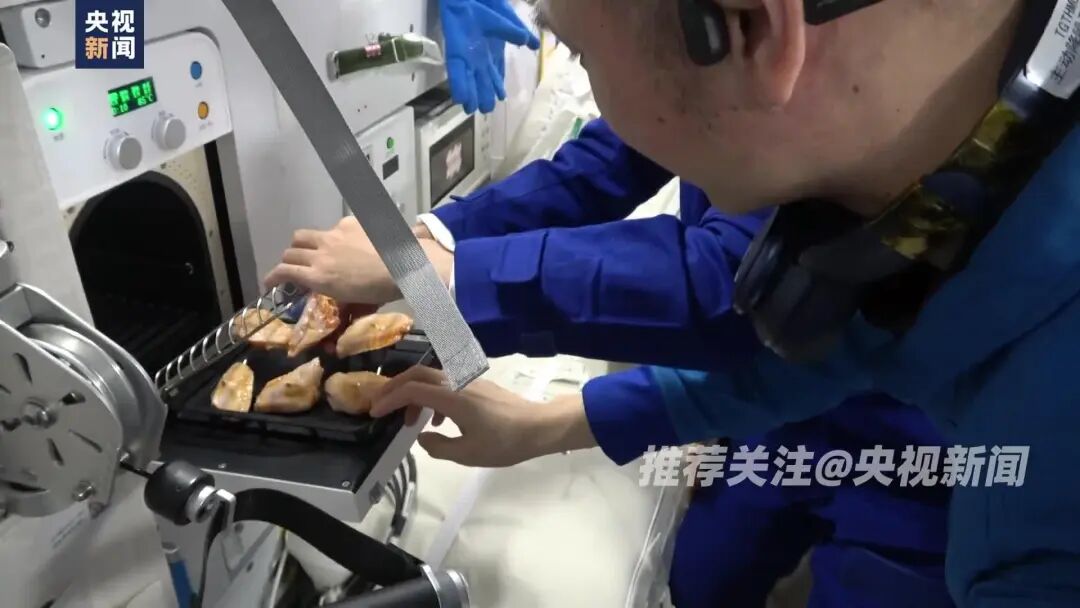
Specialty of the Tiangong Space Station: "Space Fried Chicken" | CCTV News
An Advertisement Apple Dreams Of
In addition to daily life, what has gone viral around the world in the past 24 hours is the full - view photo of the Earth taken by the Artemis II mission team with a customized iPhone 17 Pro Max:
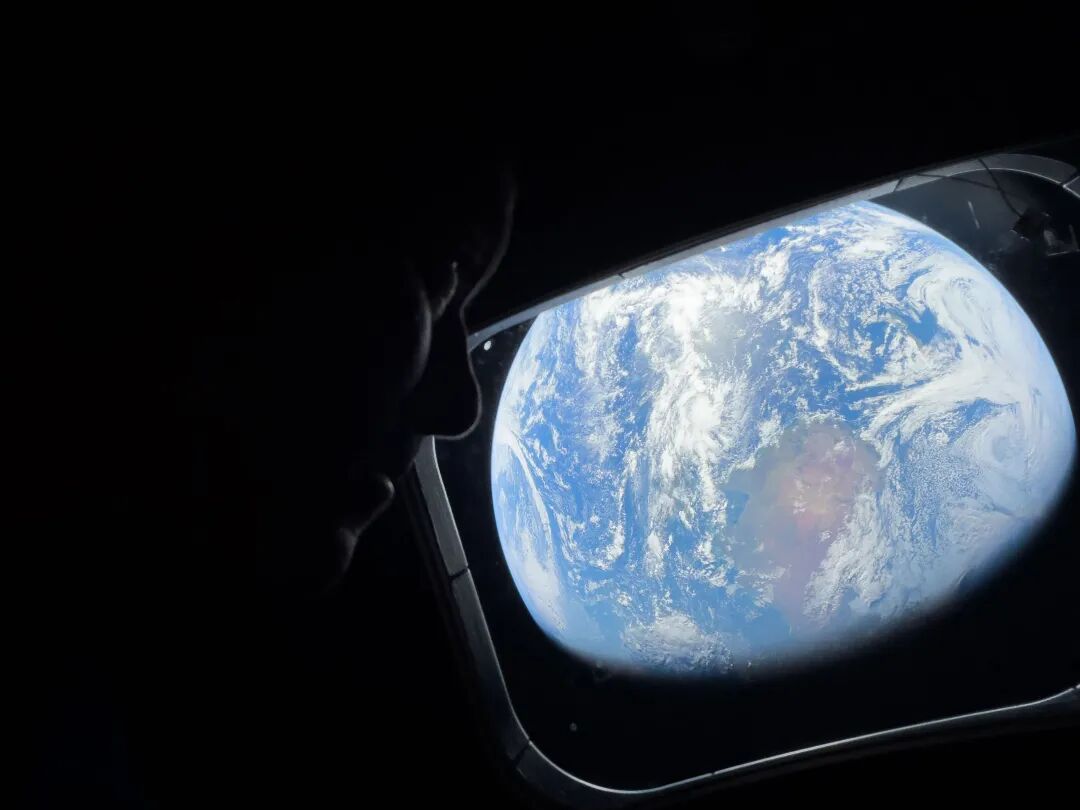
Image | NASA
Interestingly, the relationship between smartphones and space is actually closer than we think.
As early as in the STS - 135 mission of the Space Shuttle Atlantis in 2011, NASA sent two iPhone 4s to the International Space Station to participate in some measurement tasks. This was the first time an iPhone was sent into space as a "scientific research device":
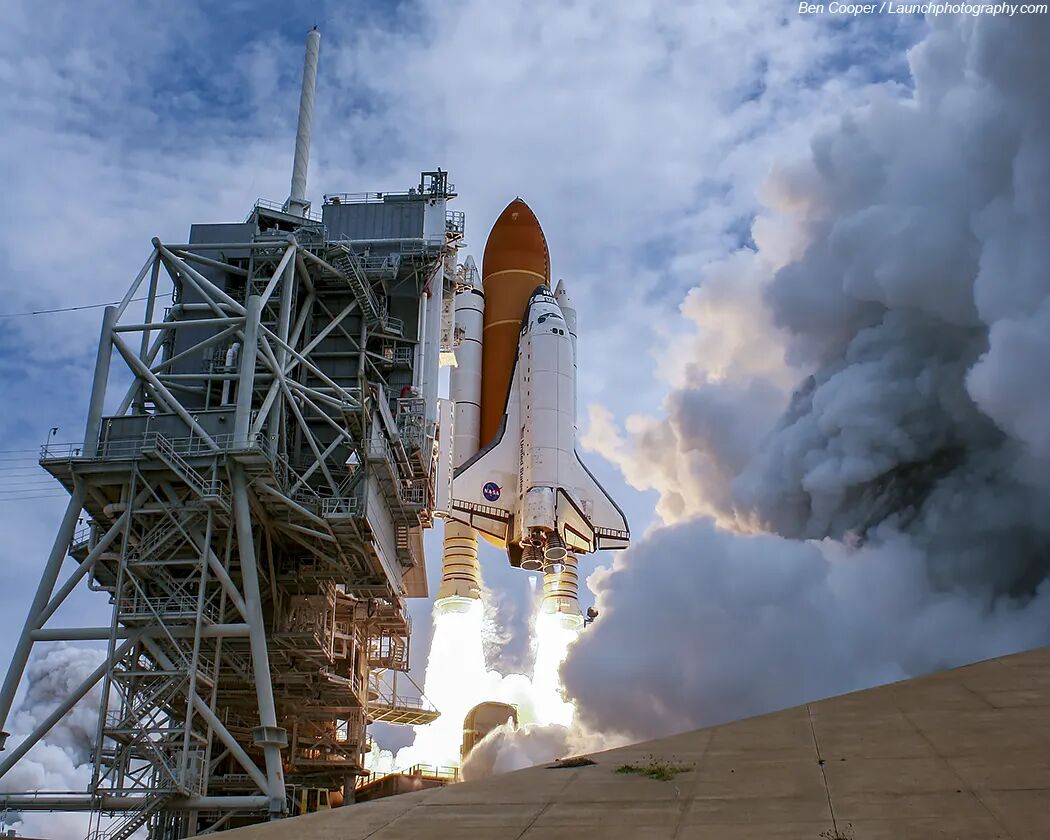
The last launch of the Space Shuttle Atlantis in the STS - 135 mission | launch photography
In the SpaceX Inspiration4 mission in 2021, not only an iPhone 12 Pro was involved in the flight, but also an Apple Watch Series 6 for detecting health status and an iPad mini 4 used as a mission computer:
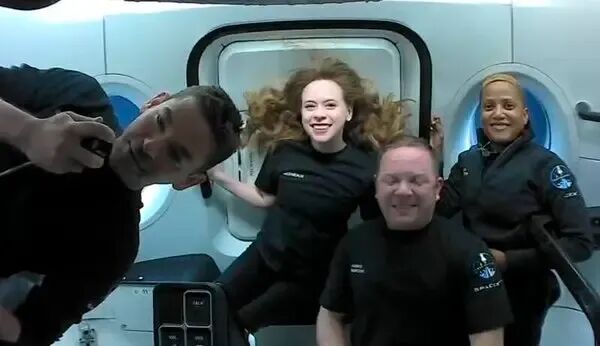
The Inspiration4 mission team | The New York Times
The Artemis II mission team was not only allowed to carry iPhones. It is reported that Commander Reid "successfully added an item" at the last moment before the launch and also brought a Nikon Z9 mirrorless camera:
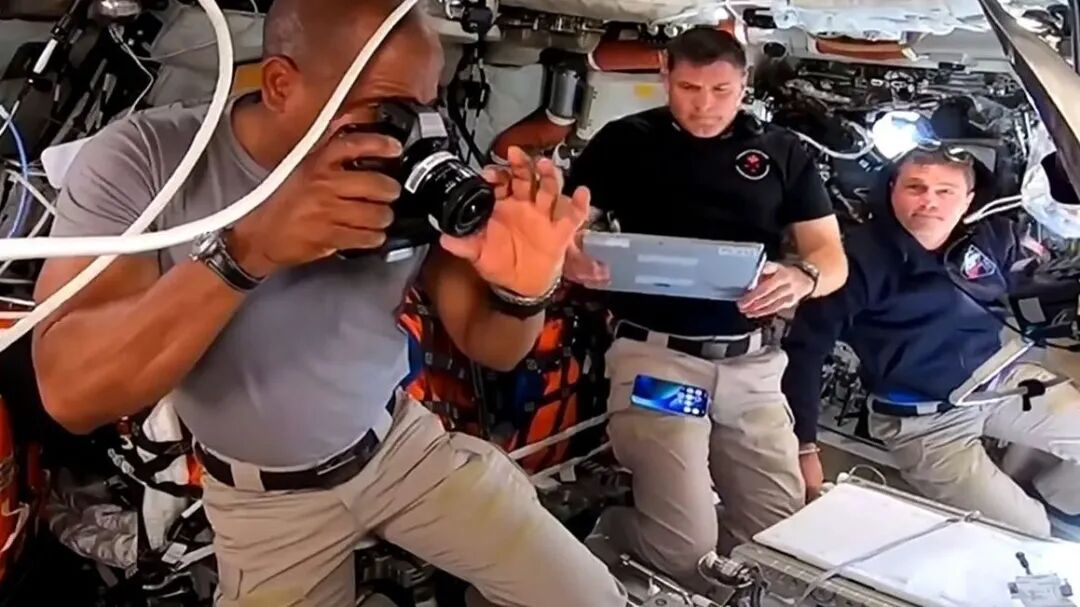
Image | SlashCAM
It should be noted that before this, the cameras frequently appearing in various space missions were not the latest models but the Nikon D5 DSLR from a decade ago -
For no other reason than the D5 still has the best high - sensitivity performance among Nikon cameras to date, which is very beneficial for space photography.
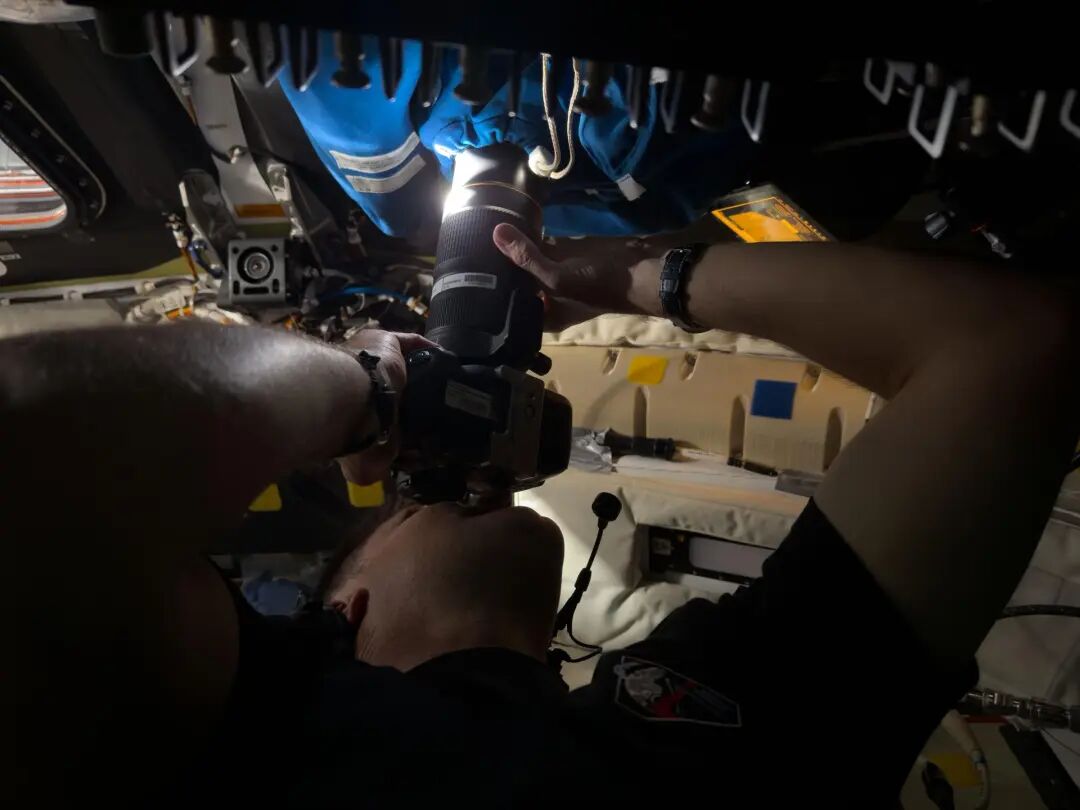
Although they brought the Z9, the D5 is still the main camera of the Artemis II mission team | NASA
Without any surprises, the Nikon D5 will continue to appear in the International Space Station and subsequent missions of the Artemis Program. It may even accompany Artemis IV to the moon and become the second camera to land on the moon in human history.
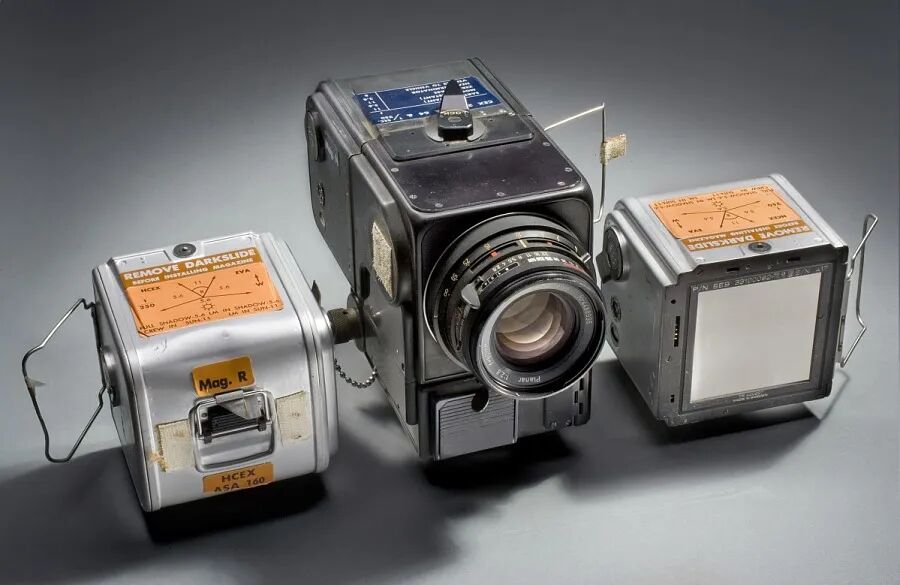
Image | NASM (National Air and Space Museum)
Another interesting fact: Although we now think of the Hasselblad 500EL as the "lunar camera" that accompanied Apollo 11 to the moon, the camera used by the mission team at that time was more like a Frankenstein.
Although it used the shell and film - winding structure of the Hasselblad 500EL, the Apollo lunar camera almost removed all the internal mirrors, focusing screens, and view