Robots pay taxes to support workers. Altman's new AI policy is exposed. Will the 4-day workweek become a reality?
Just now, Altman personally presented a "Survival Guide for the Superintelligence Era" to workers. Distributing money, implementing a 4-day workweek, having robots pay taxes to support social security... This 13-page policy document has directly set off a storm in Silicon Valley. When those who create AI start teaching you a survival guide, it means this storm is closer than anyone imagined.
Has the giant that created ChatGPT suddenly started to worry about workers' jobs?
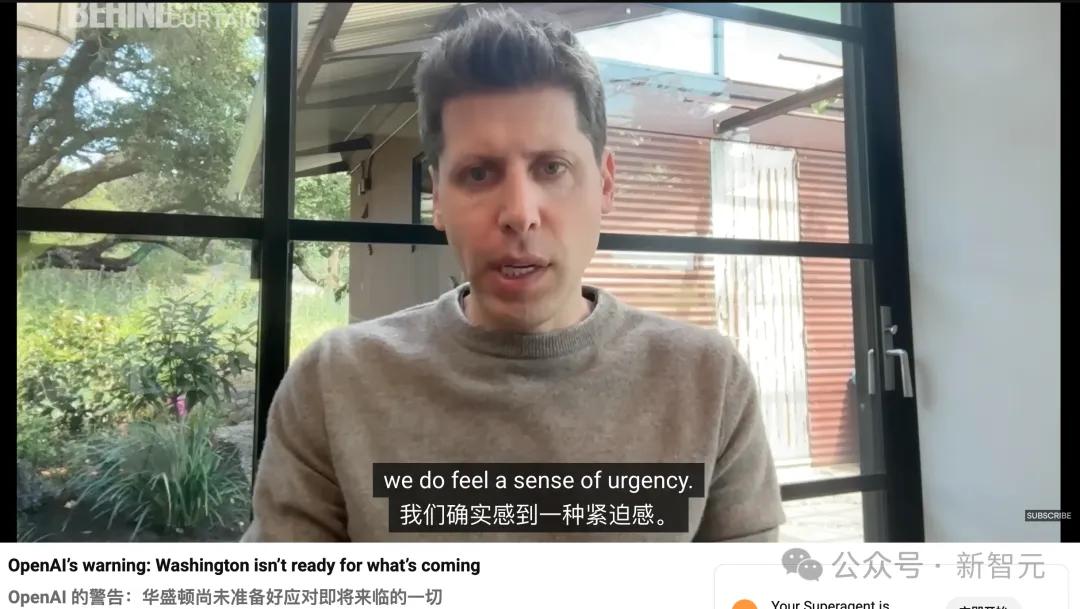
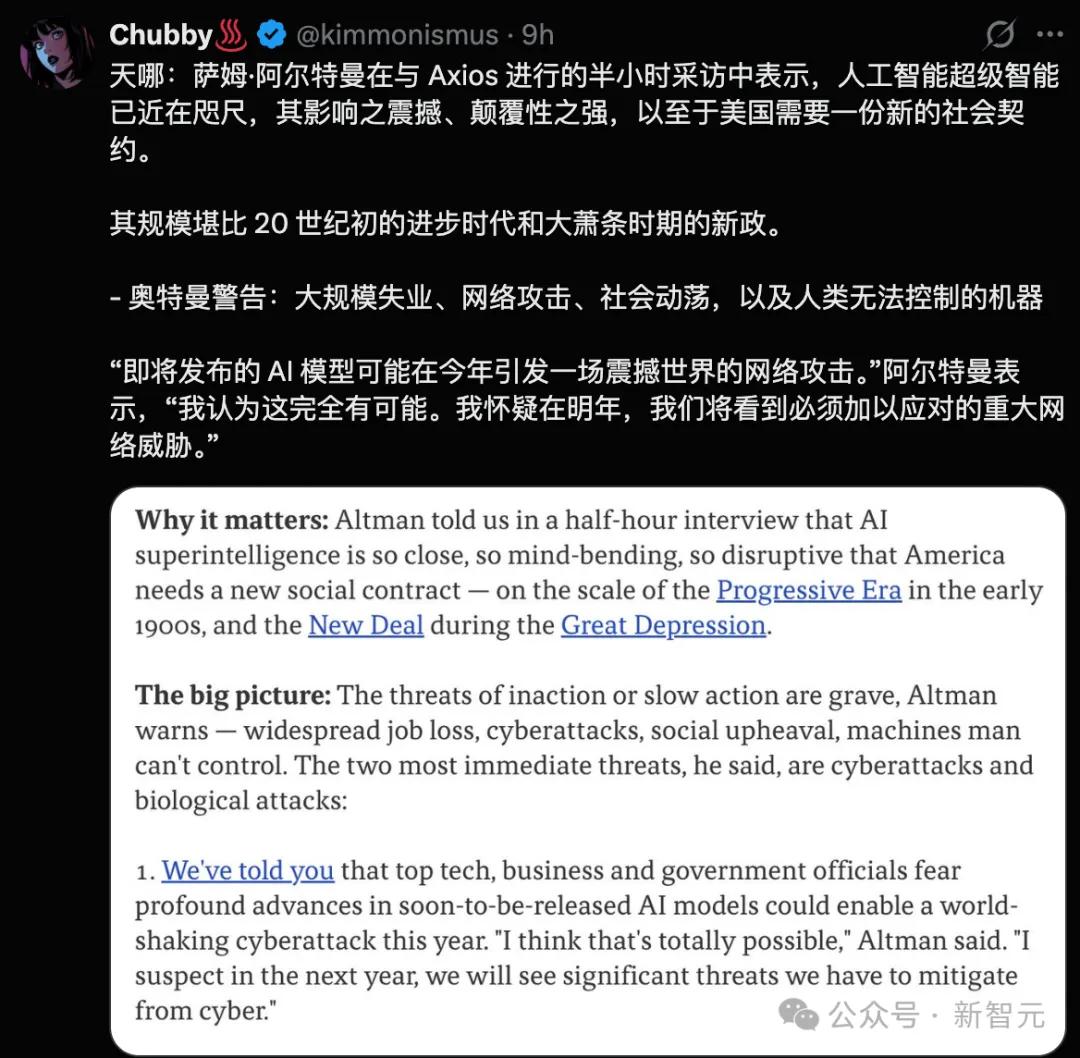
On April 6th, during an exclusive interview with Axios, Altman issued a strong warning, stating that superintelligence is extremely close and will bring unprecedented and disruptive impacts:
Superintelligence in AI is so close, so mind - boggling, and so disruptive that the United States needs a new social contract, on a scale comparable to the Progressive Era in the early 20th century and the New Deal during the Great Depression.
The Progressive Era mentioned by Altman mainly addressed the wealth gap and labor exploitation brought about by the Industrial Revolution, while the New Deal tackled the nationwide unemployment crisis after the economic collapse.
He believes that the superintelligence era may bring similar or even more intense impacts: a large number of jobs will disappear, wealth will be further concentrated, cyber and biological risks will increase, and social structures will be reshaped.
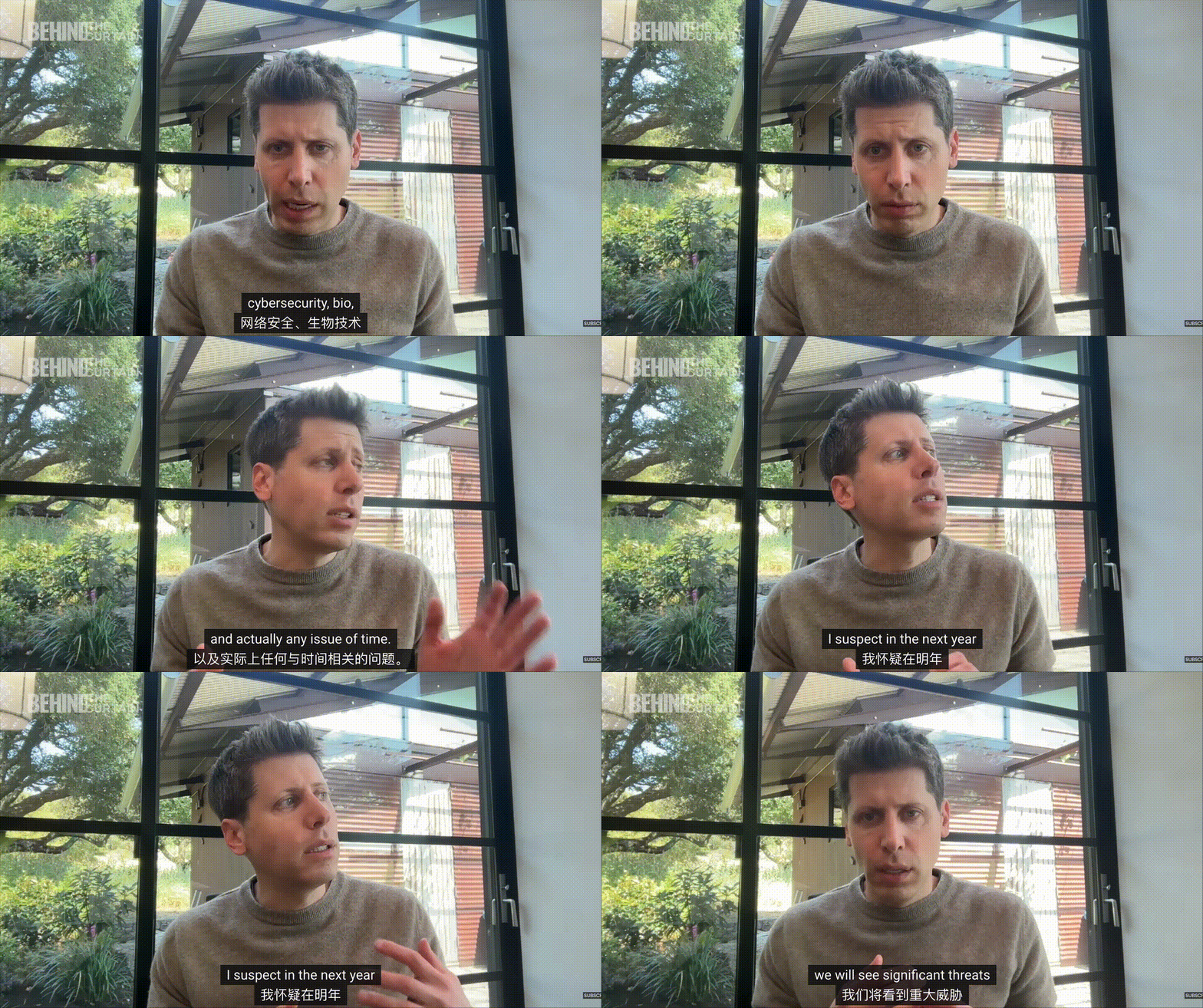
Therefore, the United States needs a "New Social Contract" of the same scale to buffer the crisis.
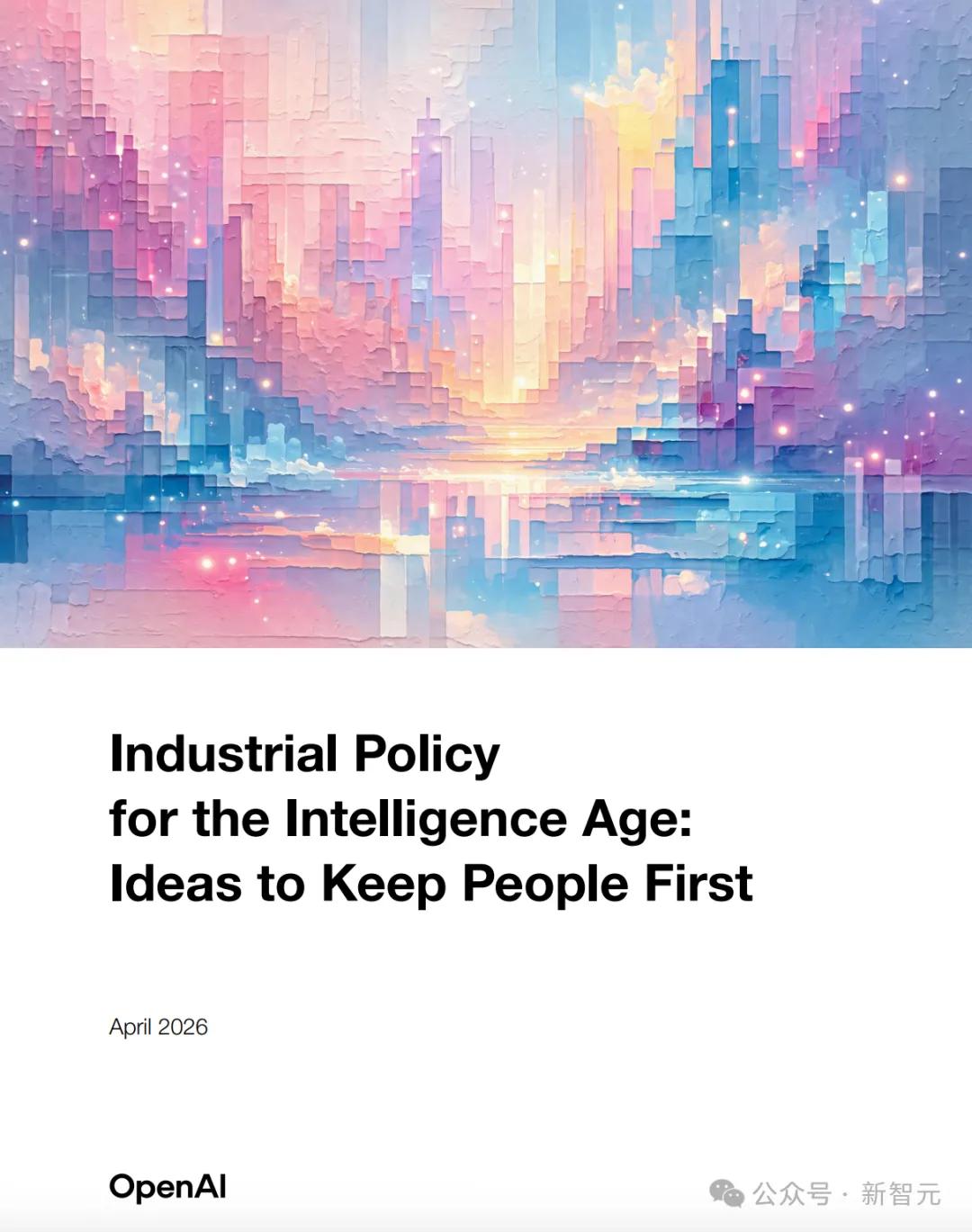
To cope with this change, OpenAI released a 13 - page policy document yesterday: "Industrial Policy for the Intelligence Age: Ideas to Keep People First."
The core proposals in this document can be condensed into the "Four - Piece Set" that workers care most about:
Establish an AI Public Wealth Fund: Distribute the dividends of AI growth directly to each citizen, so that ordinary people can also share the wealth increase brought by AI.
Pilot a 32 - hour (4 - day) workweek: Without any reduction in salary, through the improvement of AI efficiency, return the saved time to workers.
Tax robots/automated labor: Fill the gap in social security funds caused by human unemployment and maintain the social security system.
Increase the salaries of "human - exclusive" jobs such as nursing and childcare: Encourage more people to switch to these positions that require emotional connection and enhance their economic value at the same time.
According to The Wall Street Journal, "many ideas in the document focus on benefiting workers." Therefore, it is more like a survival guide for workers in the superintelligence era.
How exactly will the "government distribute AI dividends to you"?
Let's start with the most eye - catching one in the Four - Piece Set: the Public Wealth Fund.
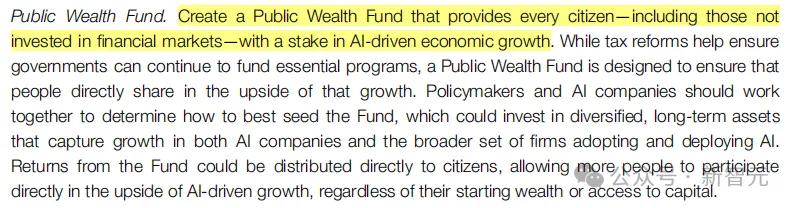
OpenAI clearly proposed in the document that a publicly managed wealth fund should be established to invest in long - term AI - driven assets, and then the proceeds should be directly distributed to each citizen.
This is equivalent to giving each American citizen a "direct stake" in the growth of the AI economy. Whether you have money to buy stocks of NVIDIA or OpenAI or not, as long as you are a legal citizen, you are eligible.
Where does the money come from?
OpenAI has set its sights on those bosses who use AI to replace humans.
The document suggests funding this fund by taxing automated labor, the so - called robot tax, and increasing the top capital gains tax.
For example, if you use AI to replace 10 employees, the saved labor cost cannot all go into your pocket. You have to pay a part of it into the national dividend pool.
You are forced to share in the money earned by AI.
The logic behind this is that the giants know very well that if AI concentrates all the wealth in a few companies and most people lose their sources of income, the entire social system will completely collapse.
The dividends in this exploratory proposal are essentially a form of social security for the superintelligence era.
This also shows that OpenAI has realized that it is already too late to just let the unemployed "learn new skills and find new jobs."
The speed at which AI replaces jobs may be faster than any retraining program. Therefore, there must be a safety - net mechanism.
This concept sounds very nice, but currently it is only an exploratory proposal. There is no specific amount, no timeline, and no legislative progress.
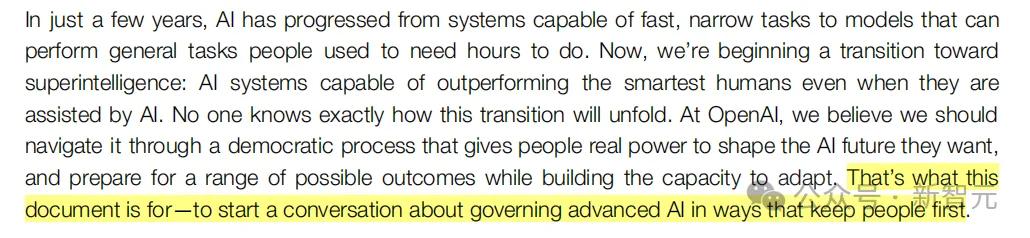
In OpenAI's own words, this is "the starting point for discussion."
Will your boss agree to a 4 - day workweek without a pay cut?
Perhaps the most appealing item in the Four - Piece Set to workers is this one:
A 32 - hour, 4 - day workweek with the same salary.
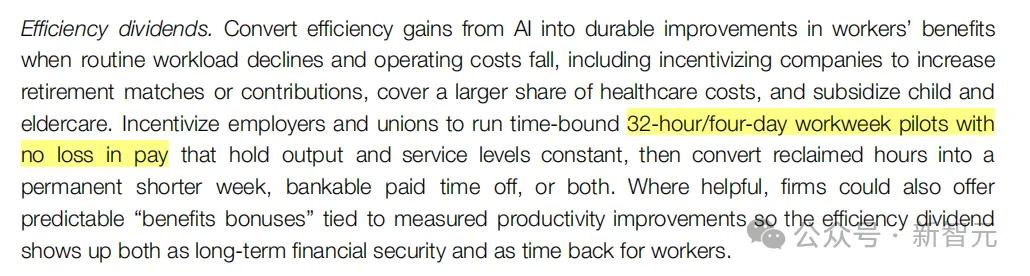
OpenAI clearly suggested in the document to encourage companies and unions to pilot a 4 - day workweek with "no loss in pay."
The logic is as follows: AI has significantly improved production efficiency. The same work that used to take 5 days to complete now only takes 4 days.
The extra day saved should be returned to workers.
Why should the boss's profit double when the efficiency doubles, but your weekends not double?
It sounds very reasonable, but the challenge is whether companies will agree?
With the increased profits from improved efficiency, the boss can choose to have you work more to earn more money or lay off some employees and let the remaining ones work 5 days.
"Returning the saved time to employees" is the least favorable option for capital among all the choices.
Therefore, for this proposal to be implemented, it requires not technological breakthroughs but a game between human nature and social systems.
OpenAI has directly thrown the ball to companies and legislators.
Robots don't pay social security, but they are taking your jobs
The above two proposals, one for distributing money and the other for distributing time, are both very appealing.
But there is a real - world problem that no one can avoid: where does the money come from?
The section on the social safety net in the document explores this issue.
Currently, the social security systems of most countries rely on the payroll taxes paid by employed workers.
People go to work, receive salaries, and pay personal income taxes and social security. With this money, the government can maintain medical care, pensions, and unemployment benefits.
After AI replaces a large number of jobs on a large scale, the number of taxpayers decreases, and the number of people receiving unemployment benefits increases. As a result, there will be an increasingly large hole in the social security fund pool.
OpenAI has noticed this problem and proposed in the document to explore taxing "automated labor," which is what the outside world calls the "robot tax."
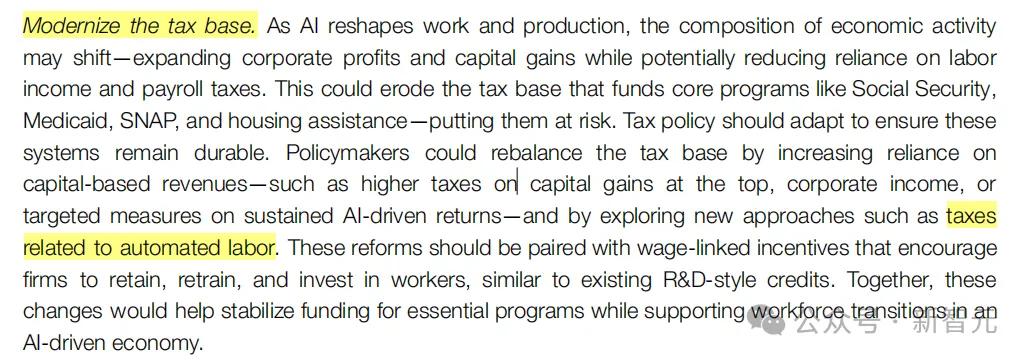
At the same time, it suggests shifting the tax base from payroll taxes to capital gains taxes, expanding the coverage of unemployment insurance, and establishing a rapid cash assistance mechanism.
The essence of the robot tax is clear: if you use a robot to replace a worker, and this worker used to pay social security but the robot doesn't, then you have to pay.
Although the logic makes sense, it is extremely difficult to implement.
Because this is equivalent to requiring companies to pay a price for "not hiring people," which directly conflicts with the nature of capital to pursue maximum efficiency.
But Altman warns that if no action is taken, the consequence will be "mass unemployment."
Therefore, although these proposals are radical, if nothing is done, the consequences will be even worse.
Will "human - exclusive jobs" like nursing, childcare, and teaching make a comeback?
Before superintelligence takes over the world, do ordinary people still have a way out?
Yes, the answer given by OpenAI is "human touch."
In the past, white - collar workers who knew how to code and make PPTs were regarded as elites, while nannies and caregivers were often at the bottom of the pay scale.
But in the AI era, writing code and making PPTs are exactly what machines are best at. Holding an old person's hand and comforting a crying child are things that cold - hearted silicon - based life can never replace.
The more capable AI becomes, the more valuable jobs related to taking care of people are.
OpenAI dedicated a section in the document to the "Economy of Care and Connection": childcare, elderly care, education, and community service.
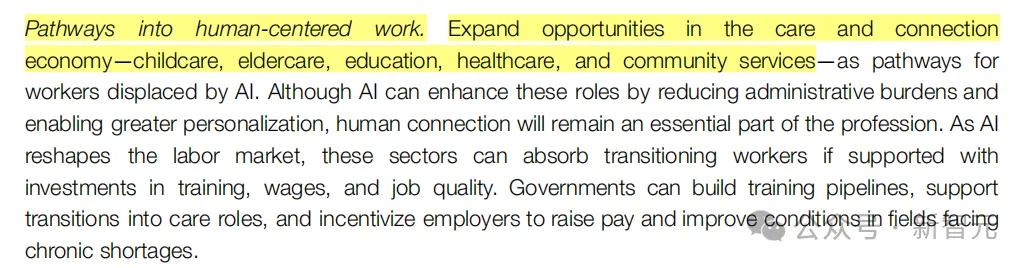
The document suggests expanding employment opportunities in these fields and encouraging employers to increase salaries and improve working conditions.
These jobs were previously undervalued, with low salaries, low status, and high turnover. But in the superintelligence era, they may instead become the most stable employment directions.
Because their core competitiveness is the "human touch," which is precisely what AI cannot provide.
When those creating the waves start distributing life jackets
When those creating the waves start distributing life jackets, the tsunami is really on its way.
Altman said in the exclusive interview that superintelligence is "so close and so disruptive."
Although the document claims to be "the starting point for discussion."
It has no timeline, no budget, no legal draft, and is mainly targeted at the United States.
But the signal it sends is enough to wake up workers around the world:
If those who have created superintelligence themselves feel that they must draw a survival map for ordinary people in advance, the urgency of this era's reshuffle definitely exceeds our imagination.
A 32 - hour workweek, an AI dividend fund, a robot tax, and a significant salary increase for nursing jobs.
Whether this "Four - Piece Set for Survival" is just a pie in the sky or can really become a reality, no one can say for sure now.
But one thing is inevitable: the old rules are completely invalid.
And are you ready to face this wave?
Reference Materials
https://x.com/kimmonismus/status/2041151011289735573%20
https://www.axios.com/2026/04/06/behind-the-curtain-sams-superintelligence-new-deal%20
https://www.wsj.com/tech/ai/what-to-know-about-openais-ideas-for-a-world-with-superintelligence-e97d6e7b?st=ECoSh6
https://cdn.openai.com/pdf/561e7512-253e-424b-9734-ef4098440601/Industrial%20Policy%20for%20the%20Intelligence%20Age.pdf
This article is from the WeChat official account "New Intelligence Yuan". Author: Yuan Yu.