Interview with Fabrizio Freda, President and CEO of The Estée Lauder Companies: His First Year of Making a "Slow" Company Faster | Exclusive Interview by New Look
Text by | He Zhexin
Edited by | Qiao Qian
Judging from his appearance, Stéphane de La Faverie is not the kind of "reformist" who shows off his edge.
Most of the time, he wears a gentle smile, and his pace and speaking speed are relatively slow - perhaps with a bit of the unique relaxation of the French. It's also hard to imagine that before becoming a father, Stéphane was a "passionate windsurfing and skydiving enthusiast."
The current consumer environment may be as thrilling as any adventure sport. But in a recent exclusive interview with 36Kr, Stéphane showed a kind of calmness: "We are a company with 80 years of history and entered the Chinese market more than 30 years ago. Fluctuations are nothing new to us. Our response strategy has always been one - to get as close to consumers as possible."
"And you know what," he continued, "Estée Lauder was the first foreign beauty brand to use a Chinese person as an advertising model." The implication of this statement is that this company has always been at the forefront in terms of market intuition and actions.
All of Stéphane's work experiences are related to beauty. After joining the Estée Lauder Companies in 2011, he worked his way up from brand general manager to global executive president. In January 2025, he succeeded Fabrizio Freda and officially became the president and CEO of the Estée Lauder Companies.
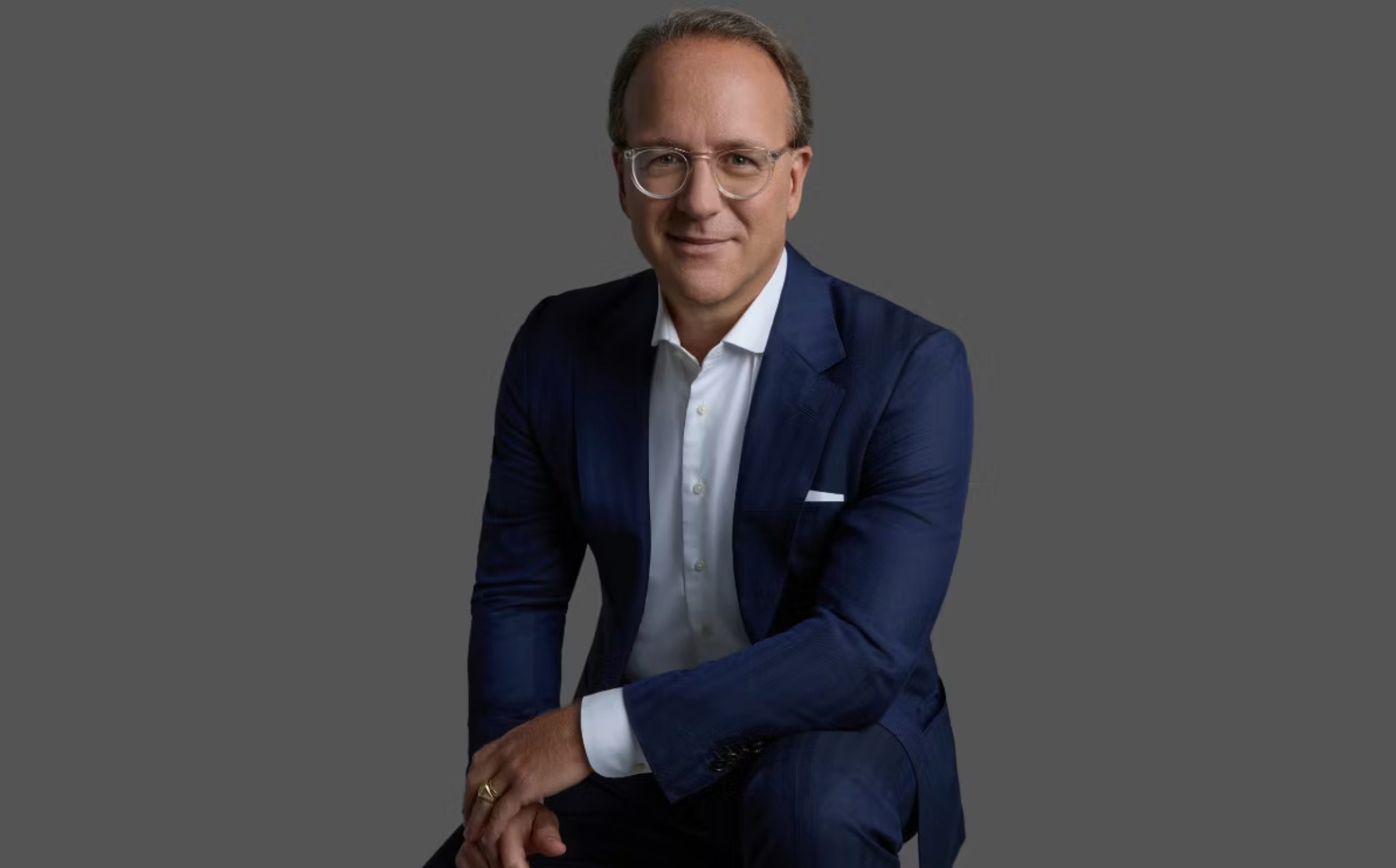
Stéphane de La Faverie, President and CEO of the Estée Lauder Companies
There was almost no transition period for this new position. Just one month after taking office, Stéphane proposed a major reform: The Estée Lauder Companies will consolidate the number of regions into four and decentralize the responsibility for the profit and loss statement from the global brand department to each region.
This reform has made the company's daily operations more "lean and fast" and can also maximize the advantages of the brand portfolio in different regions. Before this, the model of the Estée Lauder Companies was that "one brand department determined global sales," which restricted the flexible response to regional markets.
Before Stéphane took office, this group was almost a classic example of a traditional family - owned business - it had many classic products that have been passed down to the present and a proven successful path, but everything was just average. "We are better at retaining customers than acquiring new ones," even Stéphane himself admitted. "But today's consumers need to see more new things."
At the beginning of his tenure, he promised to triple the number of new products launched by the company in the market within a year and ultimately increase the proportion of innovative products "from 10% to 30%." Now, this proportion has increased to 19%. The Estée Lauder Revitalizing Supreme+ Advanced Night Repair Concentrate, launched last year, has become an example he often cites. "Our R & D team in China took only 15 months to turn it from a concept into a product. This is a very rare speed from both the company and industry perspectives."
Along with the change in product rhythm, the channel structure has also changed. In 2024, the Estée Lauder brand landed on the Amazon official website for the first time. In the following year, more than 10 brands of the group have settled on this platform. At the same time, the proportion of the US department store channel has dropped to about 30%, which is already lower than that of many peers. The weight of online channels has been systematically increased and further extended to emerging e - commerce ecosystems such as Shopify and TikTok Shop. Especially the latter, which has shown a very high growth rate in the North American market, is regarded as an important variable in the next stage of the beauty market.
Agility, innovation, and consumer - centricity can most concisely summarize the series of changes promoted by Stéphane since he took office. Behind these three words is a systematic logical reconstruction: From brand - driven to market - driven, from global directives to regional decision - making, from safeguarding classics to active creation.
Since the fiscal year 2026, the Estée Lauder Companies has separately disclosed the performance of the Chinese mainland market. In Q2, the net sales in the Chinese mainland market reached $928 million, a year - on - year increase of 13%. The growth rate ranked first among the group's four major regional markets, and its contribution to the group's revenue exceeded 20%.
The Chinese mainland market, with a faster pace and a more complete e - commerce environment, has naturally become the front - line test field for the new operating system.
On March 26, the Estée Lauder China Supply Chain Intelligent Operation Center in Minhang, Shanghai was officially launched. At the event site, a drone suspended a ribbon - decorated carton and landed beside the viewing platform, symbolizing the first package packed by the center.
In the past, after receiving an order, enterprises had to pick and pack the package first. After the express delivery company picked it up, it was centrally transferred to its transfer station for sorting according to the destination or route. Now, the center has connected the two major links of order fulfillment and express package sorting. After the order is sorted and packed, it is directly shipped to the destination or route, improving the overall circulation efficiency, and consumers can receive the purchased products faster.
For the Estée Lauder Companies, which is in an adjustment period, the changes in such infrastructure may not be obvious, but they are directly related to efficiency, cost, and the response speed to market changes.
"I can repair the plane while flying," Stéphane once described this job. "At the speed at which today's consumers change, you must be able to take certain risks, and this is exactly what I'm trying to teach this company."
The following is the content of the exclusive interview between 36Kr and Stéphane, which has been abridged while retaining the original meaning.
On Transformation: A Structural Change
36Kr: You have been the president and CEO of the Estée Lauder Companies for a full year. How would you summarize your work in the past year?
Stéphane: When I became the CEO a year ago, I realized that to remain competitive in the current high - end beauty industry, we must act faster and operate in a more differentiated way. The industry is changing - consumers are more connected, the market rhythm has significantly accelerated, and we must adjust accordingly.
My top priority is to optimize the way of working, refocus on consumers, and build an operating system to support the next stage of growth on the basis of the group's long - term accumulation.
Based on this thinking, we proposed "Beauty Reimagined" in the hope of getting the company back on the track of sustainable growth and truly implementing the concept of "consumer - centricity." This strategy focuses on five key points: expanding consumer reach, promoting innovation, increasing consumer investment, achieving sustainable growth, and reshaping the way of working.
After a year of implementation, we have seen some positive changes in terms of work style, innovation ability, and performance. Of course, this is still in progress, and the transformation will not happen overnight.
36Kr: The performance of the Estée Lauder Companies resumed growth in the fiscal year 2026. What happened behind this?
Stéphane: We got back on track in the first half of this fiscal year - with a 3% growth in the first quarter and a 4% growth in the second quarter. This resumption of growth is actually a very deep - seated and structural change. I define it as the largest - scale operation and leadership transformation in the company's history.
Firstly, we made the organizational structure more streamlined. We made a lot of leadership adjustments in the past year, all of which were carried out under the framework of our "Beauty Reimagined" strategy. Secondly, we made it clear to everyone in the company what kind of company we want to be - the world's best consumer - centric beauty enterprise.
We also made a very important adjustment - we transferred the profit and loss responsibility from the brand level to the regional level. In this way, we can seize growth opportunities in any market more quickly. China is a good example. In the past year, we have seen an obvious recovery in China, and the beauty industry is booming. The Chinese team can also respond more quickly.
36Kr: The PRGP (Profit Recovery and Growth Plan) includes a lot of cost - cutting content. Can we say that cost - cutting is also a key reason for the recovery?
Stéphane: The PRGP is not simply about cost - cutting. The core is to make the organization more streamlined and flexible, so as to invest more money and energy in areas directly facing consumers. This is an important reason why we can accelerate - while restoring profitability, we have increased our investment in consumers.
We are also promoting something I call the "one operating model" - one team, one culture, and one set of practices. At the same time, we have established in - depth cooperation with many global partners, such as Shopify, Accenture, Google, etc. These have helped us become more agile and fast, and focus more on creativity and innovation - ultimately, to drive growth and restore profitability.
Specifically in China - from a macro perspective, we have seen an obvious accelerated recovery. In the last quarter of the previous calendar year, we achieved a 13% growth in China, and we have been increasing our market share for two consecutive quarters.
On China: Agility is the Key Word in the "Second Home Market"
36Kr: You once said that "consumer confidence in China is still low," but at the same time, the Chinese business has achieved double - digit growth. How do you understand this contradiction?
Stéphane: We have indeed seen a gradual improvement in consumer confidence in China. At the same time, our performance is better than the overall high - end beauty industry. The growth mainly comes from several aspects: firstly, continuously launching innovative products that meet consumer needs; secondly, reaching the target population more precisely; thirdly, increasing investment in consumers to drive new customer acquisition.
At the brand level, from skincare brands like La Mer and Estée Lauder to perfume brands like Tom Ford and Le Labo, the growth is closely related to product innovation. The local innovation ability is becoming an important advantage. The Chinese R & D team can respond more quickly to local needs, accelerate product launch, and achieve the combination of global brands and the local market.
On the operational side, our Estée Lauder China Supply Chain Intelligent Operation Center has been put into use, improving the overall response ability, including faster delivery, a wider range of product choices, and higher service standards. In terms of channels, we continue to increase our investment in high - growth platforms such as Tmall and Douyin, and at the same time optimize the offline retail experience. In China, omnichannel capabilities are crucial.
Overall, through brand building, innovation, and efficient execution, we have grasped key points and achieved a simultaneous increase in performance and market share.
36Kr: Could you briefly introduce this intelligent operation center and what its ultimate goal is?
Stéphane: The core goal of this center is to provide omnichannel distribution. We have made a large investment in Shanghai and made a clear commitment. We need to ensure that we can keep up with the needs of Chinese consumers - they want faster speed, more product choices, and a perfect delivery experience.
Behind this is the support of AI technology, which allows us to continuously improve within the center. Another thing I'm very proud of is that it operates 24/7. We call it a "lights - out factory," which can directly deliver goods to consumers around the clock, and the peak daily processing volume can exceed 400,000 orders. This means that no matter where consumers are, we can quickly respond to their needs.
You can think of this center as the "brain" of our entire Chinese fulfillment network - it makes our operations more precise and reliable, and also lays a solid foundation for our future growth in China.
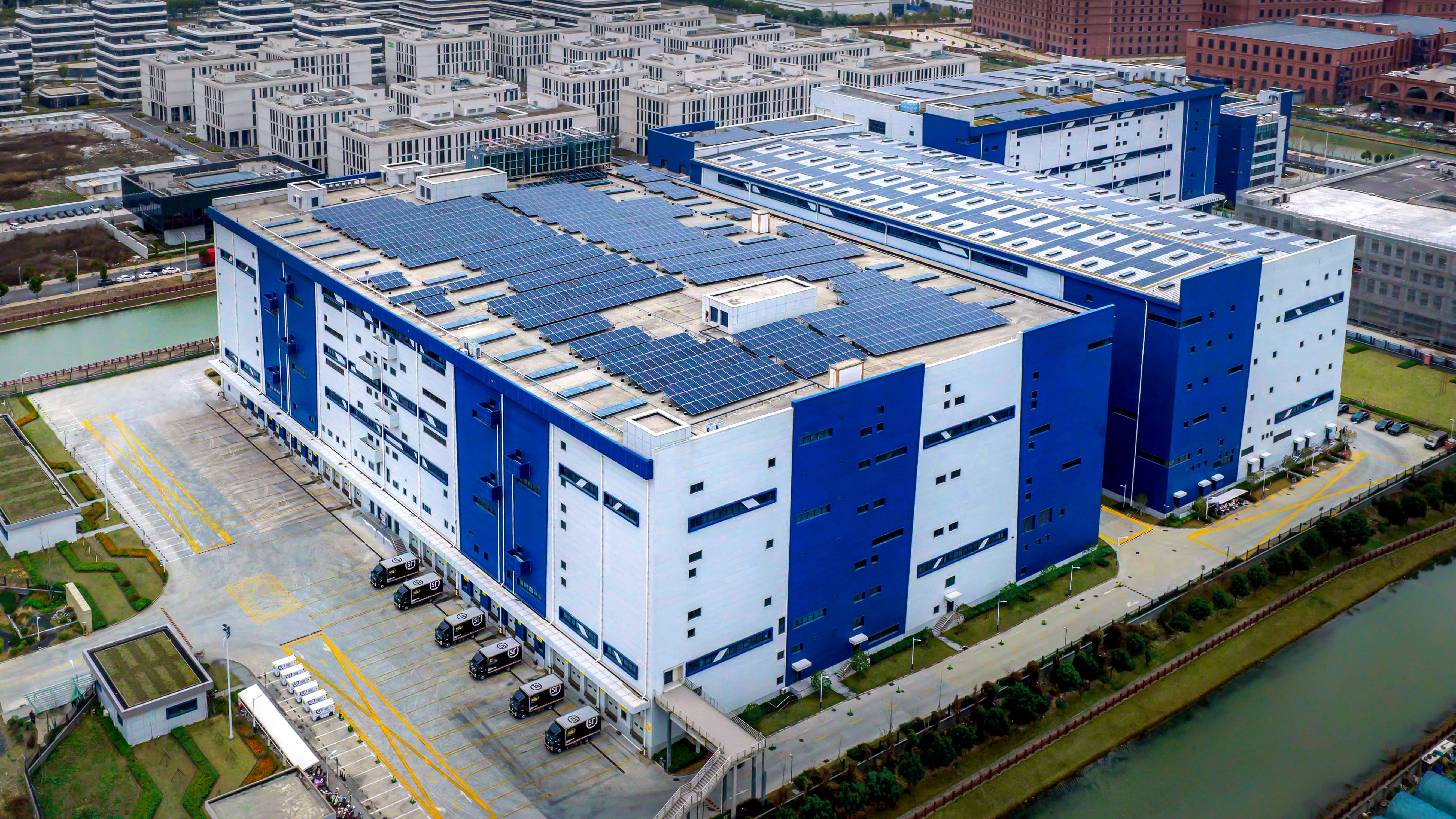
Estée Lauder China Supply Chain Intelligent Operation Center
36Kr: I'd like to talk more about the topic of "agility." You mentioned that a new product - the Estée Lauder Revitalizing Supreme+ Advanced Night Repair Concentrate - only took 15 months from R & D to launch. Is 15 months fast in the entire industry?
Stéphane: Yes, 15 months is a very fast speed in the entire industry. Because from insight to creativity, then to product development in the nearby China Innovation R & D Center, and finally to market it through such an intelligent operation center - every step in the whole process has to be taken.
But there is one thing we will never compromise on throughout the process - quality. Quality is the core of everything we do. We can speed up the process, but we must never sacrifice product quality and consumer experience.
36Kr: How is the market feedback? Has it met your expectations?
Stéphane: We are very satisfied. Innovative products have largely driven the growth of many brands - achieving double - digit growth in the last quarter, and the market share has also been continuously increasing. But I have to say that innovation is not just about product innovation; the process itself is also innovating.
For example, we are one of the first enterprises in Minhang District, Shanghai, to be selected for the large - enterprise open innovation center. This model combines our group's internal resources with external high - quality talents to achieve "1 + 1 = 3" and create better innovation for the Chinese market.
This intelligent operation center itself is also a kind of innovation - it uses a new way to deliver products to every consumer in the country with faster speed and higher precision. For us, innovation starts with products but does not end there - the supply chain, distribution network, and manufacturing capabilities are all innovating.
36Kr: I heard that the proportion of new products launched within a year has increased from 10% to 19%, and the target is to reach 30%.
Stéphane: I can tell you that we have been keeping up with the market speed. Especially in the Chinese market, every time I come to China, what impresses me most is the speed here - the speed of this market and consumers' expectations for speed really leave a deep impression on me.
We have also learned a lot from China: how to break down departmental barriers and how to quickly transform an insight from China into a product. And this is not just "in China, for China," but also "in China, for the world" - bringing the speed and efficiency of China, as well as the emotional and quality inheritance of our brands, to global consumers.
36Kr: Where do you think the current growth opportunities in the Chinese market lie, in mass - market affordable products or high - end products? Among skincare, makeup, perfume, and haircare, which category has more potential? Although the perfume business has strong growth, how sustainable is it?
Stéphane: The trend of cost - effectiveness is indeed strengthening, but the long - term potential of high - end beauty products remains significant. Our brand portfolio is mainly in the high - end and luxury segments, which is still our advantage.
Specifically, skincare is undoubtedly the most core. Chinese consumers are among the most knowledgeable in the world in terms of skincare. Makeup is resilient, perfume is growing rapidly in the luxury segment, and haircare is also emerging. In the latest quarterly report, we have achieved share growth in all four categories in the Chinese high - end beauty market - La Mer, Tom Ford, and Le Labo have all performed outstandingly.
The growth rate of luxury perfume is obvious, but we will not bet on a single category - consumer preferences change rapidly, and our diversified brand portfolio exists precisely to cope with market changes.
On the Future: Betting in Greater Uncertainty
36Kr: The suspension of duty - free shops at DFS and the handover of airport retailers in Beijing and Shanghai were described as a "transitional disturbance" in the Q2 financial report. But from a longer - term perspective, is the reshuffle of the Chinese travel retail channel a threat or an opportunity for you?
Stéphane: The Chinese travel retail market is undergoing a structural change, which is a natural process