Early-stage project | A former Apple employee created an AI "shoulder pet", incubated by MiraclePlus, aiming to enter the trendy toy market for young people.
Author | Qiao Yujie
Editor | Yuan Silai
Most of the AI companion toys on the market are designed for children and the elderly, while Blinkko has targeted young people from the very beginning.
Instead of building a companionship relationship through language communication, founder Shen Tongxin told Yingke: "We don't believe that AI can really accompany people."
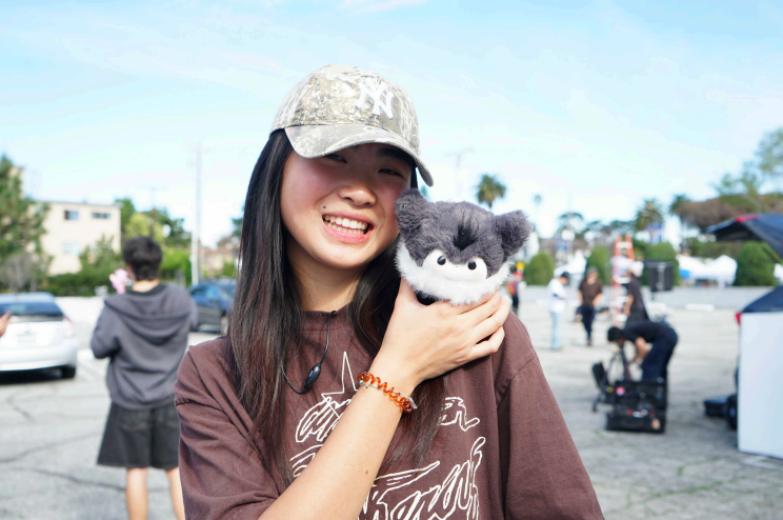
Based on this judgment, this early - stage team, which has received investment from Miracle Plus, created a "pet that lies on the shoulder".
If it is only regarded as an AI companion toy, this project is easily misunderstood - its core is not to fill the void when alone, but to become a "social signal" that can be brought into real - life scenarios.
This attempt comes from a young team: Founder Shen Tongxin was responsible for employee experience at Apple and is good at connecting people with scenarios through design; the hardware lead graduated from the Harvard Graduate School of Design and focuses on the field of human - computer interaction; the software lead graduated from the University of California, Berkeley, and was an AI engineer at a leading Silicon Valley technology company.
The design inspiration for Blinkko came from the team's early attempt to develop a pet mourning app. After a large amount of user research, the founding team found that users needed a physical companion that could be "touched and carried around" more than a digital memorial in the phone. This insight led the team from software to AI hardware.
"In the early validation stage, we filmed concept videos of four scenarios with a plush toy, namely a plush toy accompanying a person at work, during meals, on the commute, and connecting with strangers in the park because of the same plush toy. We found that users resonated most with the last social scenario, because in this scenario, you meet others through a plush toy." Shen Tongxin introduced to Yingke.
The founding team members of Blinkko have long studied and moved in many overseas places. Their experience of loneliness and the desire to rebuild a social network in an unfamiliar environment make them believe that AI should not replace people, but strengthen the connection between people. Generation Z is not short of ways to socialize. What they really lack is the courage to approach each other and an unembarrassing 'permission signal'.
And Blinkko tries to be this signal.
This plush pet, which is fixed on the shoulder by magnetism, is deliberately placed at a position level with people's line of sight. When the user communicates with others, it is naturally "present" but will not grab attention. This design is both an aesthetic choice and an interaction logic: it doesn't require you to look down and take care of it, but can enter social scenarios with you and become a visible part.
Technically, the pet has a lightweight AI model built - in, which can sense the user's emotional state, recognize emotions by learning information such as the user's tone of voice and speaking rhythm, and respond through body movements.
(Image source/Enterprise)
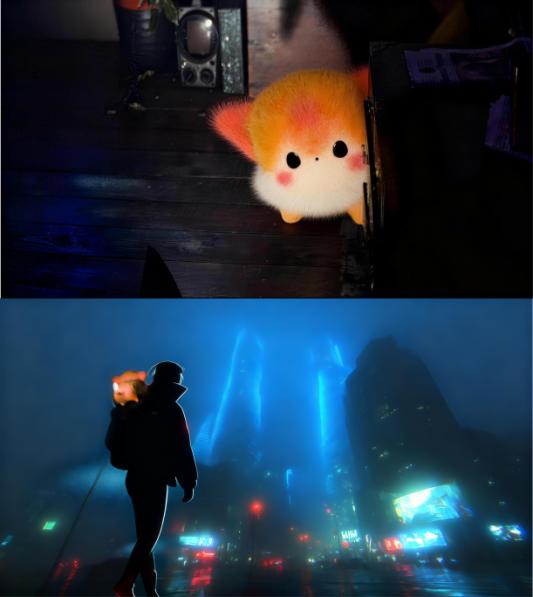
In the mobile app, Blinkko has developed a complete set of digital social mechanisms around the core feature of "social entry". Users can see others who also own this pet and connect with them; the system will also recommend potential social partners and offline activities through large - scale models based on interests and life trajectories.
At the same time, the city map and exploration mechanism built into the app transform the urban space into a perceptible social network. When users go out with Blinkko, they can unlock rewards or events at different locations, making every trip have the possibility of a real encounter.
These mechanisms are designed with light - weight gamification features. Blinkko hopes to use this to bring people from indoors to the city and then to each other.
(Image source/Enterprise)
In addition, Blinkko's appearance and customizable design also give it a "trendy toy attribute". Users can change the pet's clothes and accessories and incorporate it into their own dressing system, making it a recognizable external label.
"Generation Z is very willing to express their personality and social circle through accessories and prefers novel social labels," Shen Tongxin introduced to Yingke. "When you take it out, it is a kind of social language in itself."
It is understood that Blinkko plans to make its debut in the North American market in the first half of this year and will meet users through an independent website. In the founder's view, the openness of North American young people to stranger socializing is more in line with the usage scenario of this product.
In terms of the commercialization path, Blinkko will adopt a "hardware + software subscription" model. At the same time, it will expand around the IP and cooperate with offline spaces such as cafes, live houses, and art exhibitions to design exclusive activities and interaction mechanisms, further strengthening its attribute as a "social entry".
The Blinkko team believes that for young people, the problem is not "whether there is companionship", but "how to approach each other more naturally". This is the original design intention of this social pet: to reduce the presence of AI and leave more space for the connection between people.
Behind this choice is a more fundamental judgment - AI doesn't have to replace people; it can also bring people back to each other. A pet lying on the shoulder is the beginning of this attempt.