Apple at 50: Everything's Been Copied, Except This One Thing
In 2002, Apple applied for a patent.
It has nothing to do with “core components” like chips, screens, and systems. Instead, it focuses on a single light - the small LED light at the front of the MacBook when it's closed.

The patent number is US 6658577 B2, describing a “breathing status LED indicator”. Apple engineers studied the breathing rate of adults at rest, which is roughly between 12 - 20 times per minute. They chose the lower limit, making the status indicator blink 12 times per minute. The lighting - up process is slightly shorter than the dimming - out process, simulating a real inhalation and exhalation.
The patent also specifically states: According to the present invention, the blinking effect of the sleep mode indicator mimics the rhythm of breathing, which is psychologically appealing to people.
No user will use a stopwatch to calculate the frequency of this light, and no review will mention this detail. However, Apple conducted research on it and finally selected a frequency that won't cause anxiety when seen late at night.
How this light blinks hardly affects its function, but it clearly defines a boundary about “taste”.
1
When talking about the origin of Apple's taste, it's naturally impossible to ignore its founder, Steve Jobs. His almost obsessive pursuit of “taste” has completely shaped this company.
Although this matter is relatively personal, and everyone has their own views on so - called “good taste”, it's undeniable that Jobs, who has a natural and strong interest in design, art, and Zen, indeed has good taste in a universal sense.

In 1973, Jobs dropped out of Reed College.
But he didn't leave the school immediately. Instead, he continued to audit some courses, one of which was a calligraphy course. The teacher was Robert Palladino, a former Trappist monk. His writing carried the tranquility and meticulousness of a monastery.
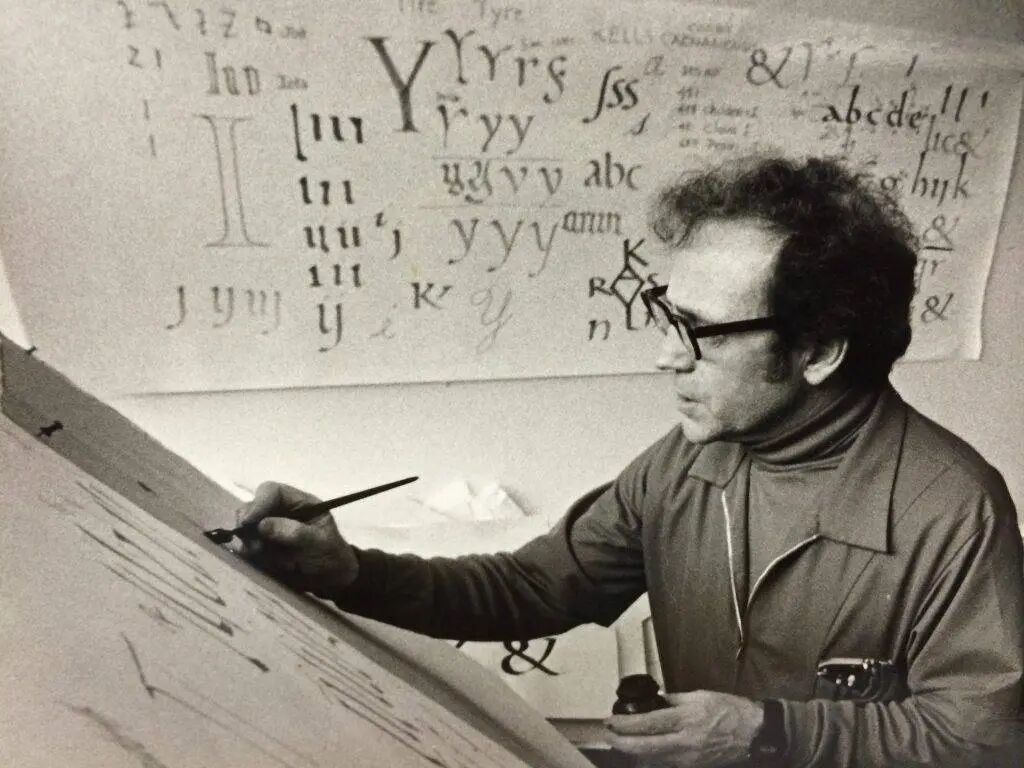
▲ Robert Palladino
Jobs learned about serif and sans - serif fonts there, as well as the subtle spacing adjustment between letters and the tricks of layout design.
Ten years later, when Jobs was building the first Mac computer, this “useless” knowledge in most people's eyes popped up in his mind again.
Therefore, the Mac computer adopted bitmap display, which could support countless fonts. Apple also hired a special person to design a large number of fonts with Jobs.
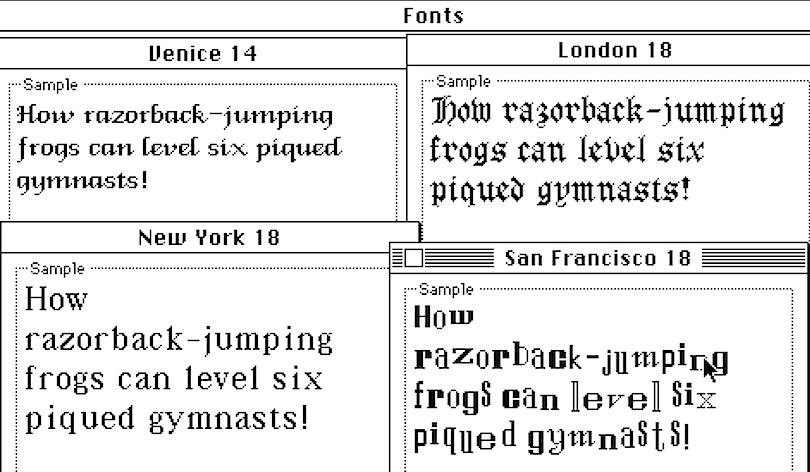
▲ Fonts on the Macintosh
At that time, other senior executives at Apple couldn't understand Jobs' obsession with Mac fonts and thought it was “a waste of time”. As a result, these beautiful fonts, combined with laser printers and graphic functions, gave birth to the desktop publishing industry and brought huge profits to Apple.
This is a typical case of “Jobs' taste”. Jobs was quite satisfied with it and believed that if he hadn't taken that calligraphy course, personal computers might not have had beautiful fonts to this day, because the Windows interface was greatly influenced by the Mac.
Before the Mac, no one thought that the words on the computer screen needed to be beautiful.
The calligraphy aesthetics that a dropout learned from a monk ultimately changed the appearance of text on every screen in the world. Jobs called this “connecting the dots”.
But the prerequisite for connecting these dots is that you have to have these dots first. A person who only lives in codes and data can't connect this line.
During his growing - up era, Silicon Valley was also rising. In most technology companies, engineers had an unchallenged status, designers were just a cost item, and technical decisions were driven by efficiency and data.
This is pure instrumental rationality. What runs faster, what has a higher conversion rate, and what can save more costs are the first criteria for making products.
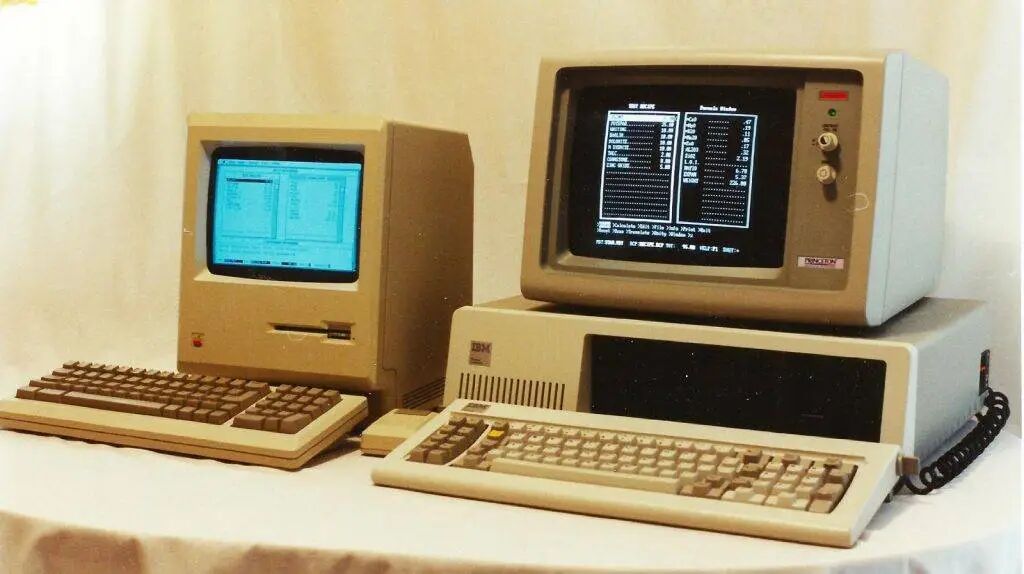
▲ Left: Macintosh, Right: IBM PC, Image source: Digitalfire
But in Jobs' eyes, designers, artists, and engineers were treated equally. In many cases at Apple, the product design came first, and then Jobs and Ive promoted the engineering implementation.
Sometimes, these decisions are quite “against common sense”.
There is an embedded handle on the top of the iMac G3's shell. It has almost no practical meaning because it's a desktop computer, and no one will carry it around.
Ive explained that the meaning of adding the handle is to make this computer “approachable” and make the public more willing to interact with the computer. Jobs strongly supported this design, even though it was costly.
Ultimately, the world will always remember this handle.
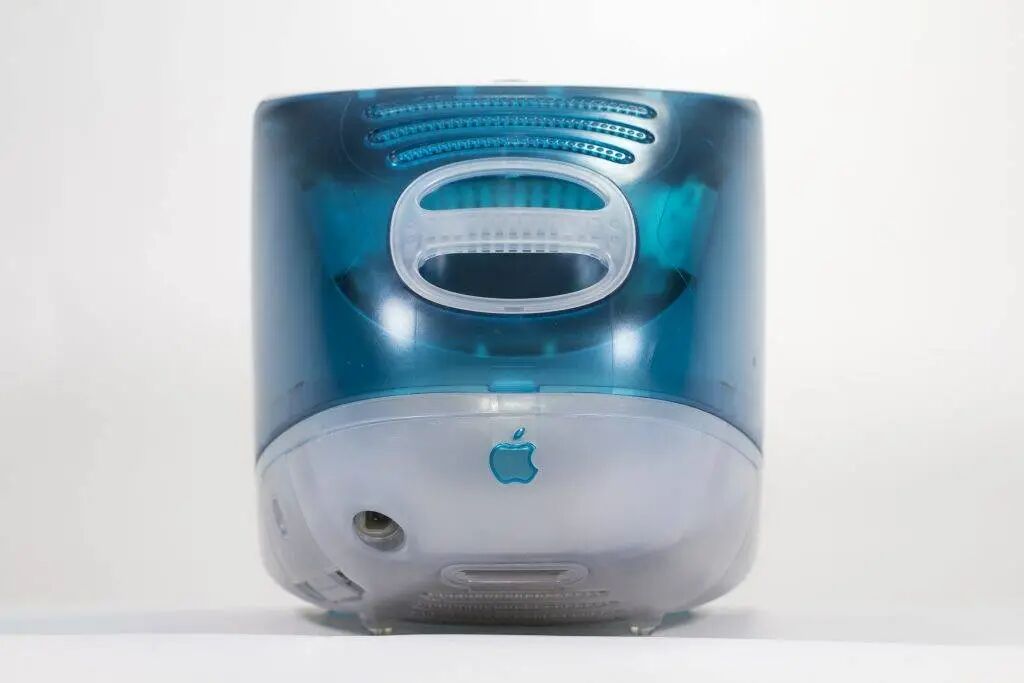
This shows that Apple follows “value rationality”. It first asks “Is it worth doing?”, and then “Can it be done?”
This is an ability of independent thinking, rather than copying the ready - made answers in the industry. When the world is full of uniform choices, Apple will break out of the framework and give a different answer, even if it's often not understood by the world at the beginning.
A company that follows instrumental rationality will choose the most power - saving solution for the sleep indicator light. A company that follows value rationality will study the human breathing rate and then apply for a patent for a single light.
Jobs didn't see himself as just an entrepreneur, nor did he think his team was just a group of engineers.
Inside the casing of the first - generation Macintosh computer, there are the signatures of these forty - five people, because “real artists sign their works”.
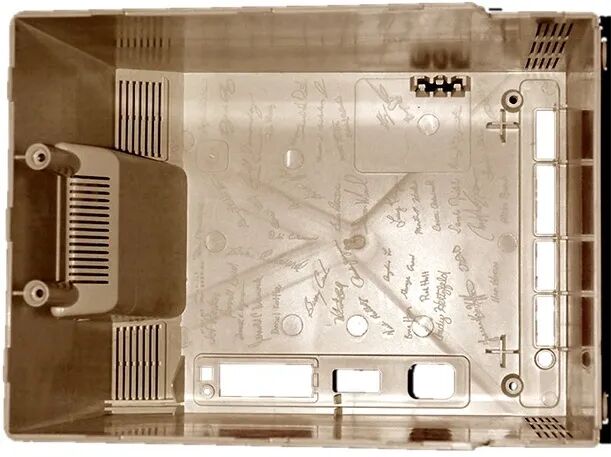
From Pixar to the iPad 2 press conference, Jobs liked to mention a slogan: “The intersection of technology and humanities.”
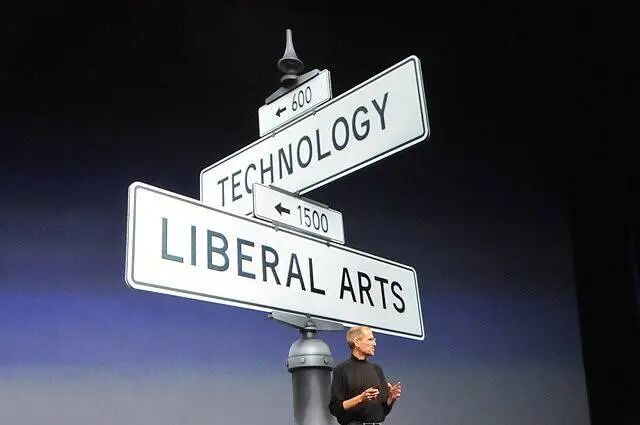
Many people think this is just a public - relations catchphrase. But what a product person believes in will be reflected in the product.
2
Taste is not just about “what to do”, but more about knowing “what not to do”.
This ability of choice has been written into Apple's cultural gene since the era of Steve Jobs and has become the core expression of “minimalism”.
This is also a result that can only be obtained through independent thinking. Minimalism is not “reducing for the sake of reduction”. It requires examining those established practices to see if they are truly necessary or just redundant.
After Jobs left and Sculley took over, Apple once went through a trough of “losing taste”.
At that time, Apple launched the Newton MessagePad. In a sense, its concept was similar to that of the iPhone 15 years later. It was a touch - controlled handheld device that used a stylus for interaction and was almost the only “innovative” product Apple could offer at that time.
However, the Newton over - pursued functionality, had an extremely bulky appearance, and was more like the IBM products that Apple despised at that time. Even worse, there were countless bugs when the product was released, and the input effect of the stylus was very poor, obviously not well - polished. No one in the market liked this device at that time.
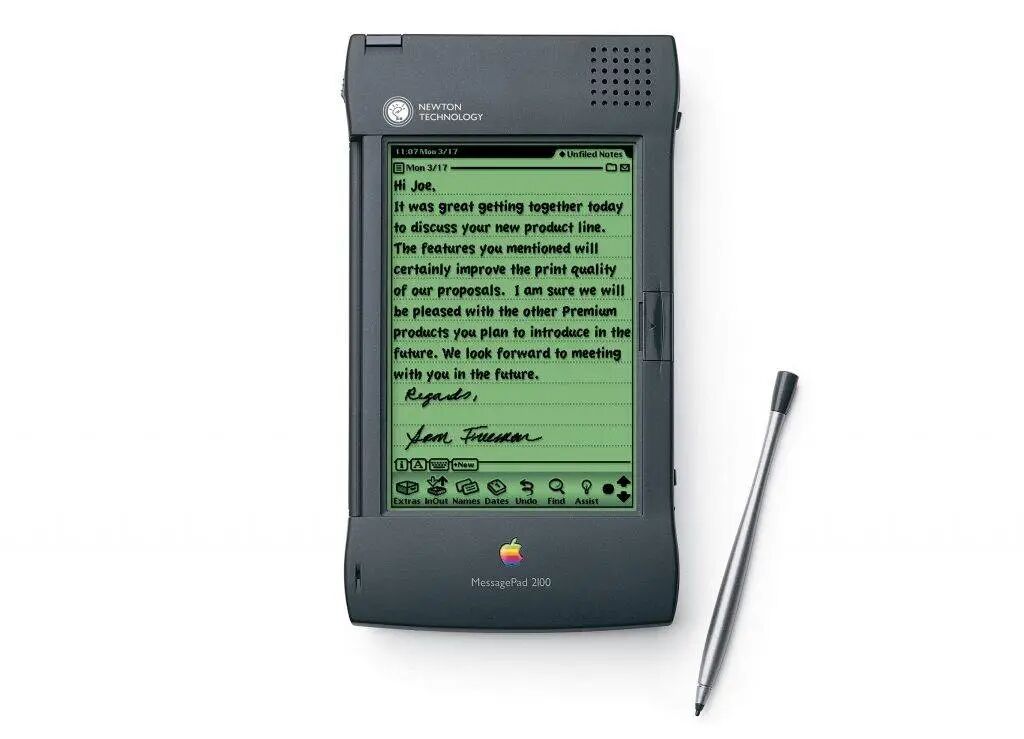
Not surprisingly, when Jobs came back to take control, he immediately cut off the entire Newton product line without hesitation and regardless of the cost.
Jobs hated the “stylus” on the Newton even more. “God gave us ten styluses (fingers), so why do we need to invent another one?”
The problem of “bulkiness” was not limited to the design of a single product. At that time, Apple computers were selling product lines such as Apple II, Macintosh, Lisa, and Performa simultaneously. Their positioning was repetitive, they lacked highlights, and their sales were low.
So, Jobs directly overhauled the entire product line. 70% of the product categories were removed, and then he drew a four - square grid to minimize the number of computer categories they needed to produce.
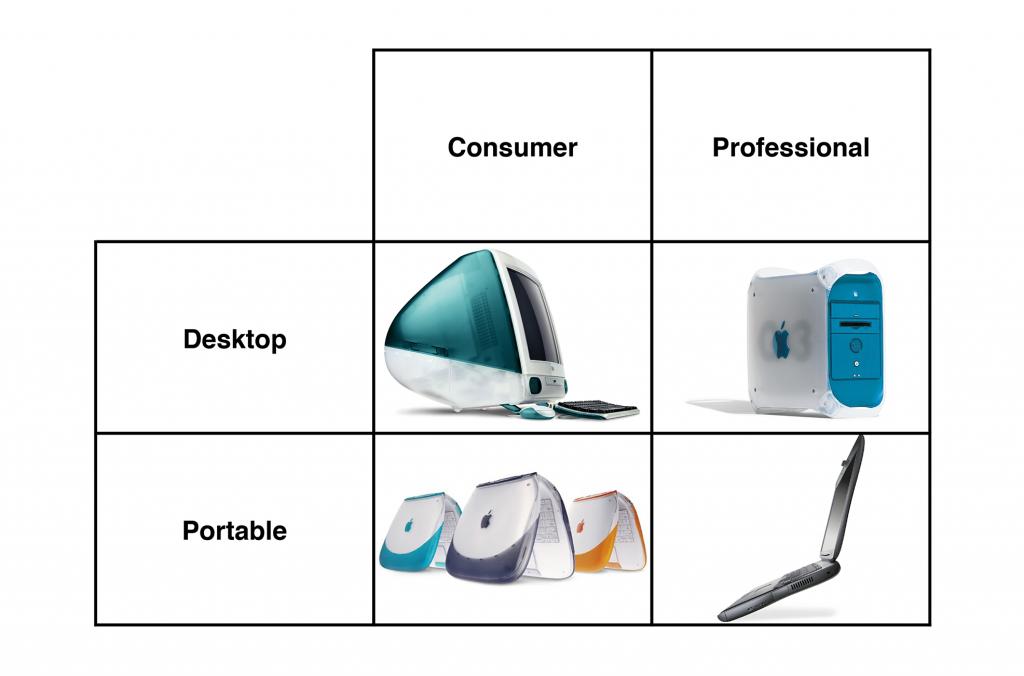
This move has become a classic case in business school classrooms, but the explanations are all about “focus” and “strategic contraction” which are more “professional”.
Actually, Jobs didn't think that much. He just thought these products didn't deserve to exist.
Everyone can do addition. But knowing what to delete and having the courage to delete requires judgment.
Before the birth of the iPod, there were already many MP3 players on the market. They had more functions, more buttons, and more flexible file management, but no one thought they were easy to use - they could only hold 16 songs, and their functions were dazzling.
The iPod did the opposite. Its interaction was reduced to a click wheel, and all functions unrelated to listening to music were removed. These functions had to be completed on the Mac.
As a result, the iPod almost only served the act of “listening”. It couldn't create playlists or delete songs, but it could hold 1000 songs.
This was also because Jobs set a rule: all functions on the iPod could be used with no more than three button presses.
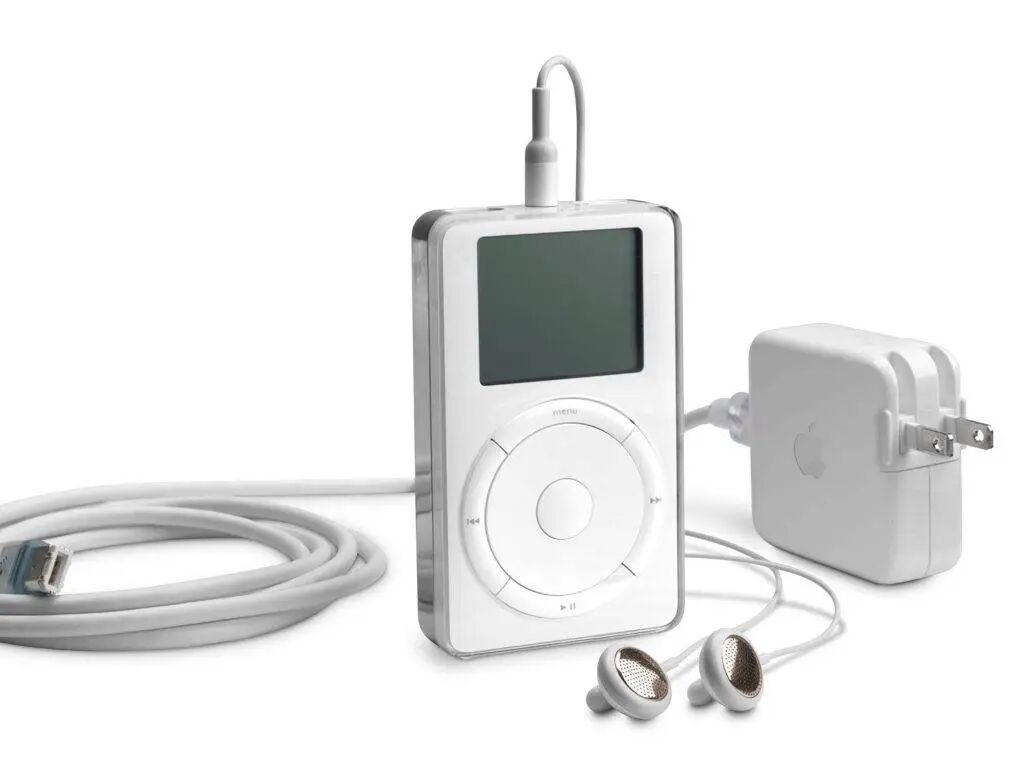
To this day, people still love the “click wheel” of the iPod. It uses simple and intuitive actions to replace the cumbersome operations of constantly pressing buttons in the past.
In essence, this is a rebellion against convention. Interaction doesn't necessarily have to be done through buttons. Breaking out of the framework may lead to a more reasonable solution.
A similar decision appeared in another Apple audio product nearly 15 years later.
Since the birth of electrical appliances, the “power button” has always been there. People never question why it exists. Instead, when it disappears, the doubts come in waves.
But after the AirPods removed the power button, users found that the experience became so smooth and comfortable without the restriction of “turning off”, and it was almost effortless.

▲ AirPods Pro
So, if you look at today's TWS wireless earphones, there are no more switches. Everyone is used to the action of opening the case and directly putting the earphones into their ears.
Most companies' product decisions are data - driven. They need to conduct a lot of market research to understand what users want, what competitors are doing, and what trends are emerging.
Apple's product decisions are driven by a more pointed question: Is there a need for this thing to exist in the world?
The former is responding to the market, while the latter is directly defining the market.
The minimalism we see is just the final result of this process, and the judgment that drives it is “taste”.
3
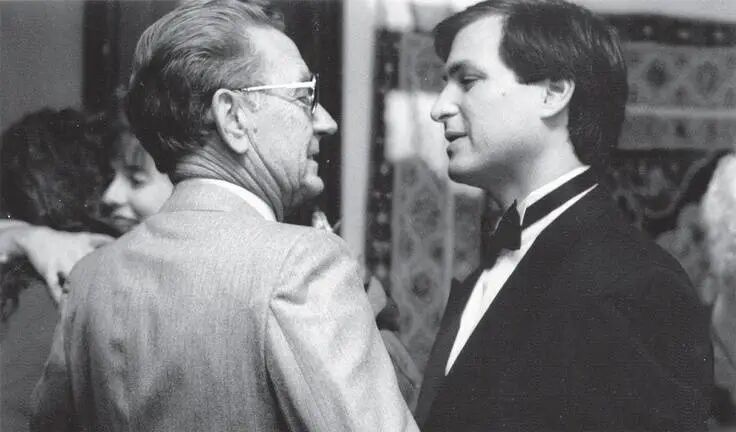
When Jobs was a child, his adoptive father, Paul Jobs, taught him that when making a wardrobe, even the back side that is against the wall and not visible should not be made of plywood perfunctorily. Instead, a beautiful piece of wood should be used because you know it's always there.