Global fertilizer is in short supply. Why is China so stable?
According to the latest market quotes:
For the same ton of urea, the domestic spot price is less than 2,000 yuan, while on the international market, the spot price is already close to 5,000 yuan.
Last year, the lowest price of urea was only a little over 300 US dollars, equivalent to less than 2,400 yuan in RMB.
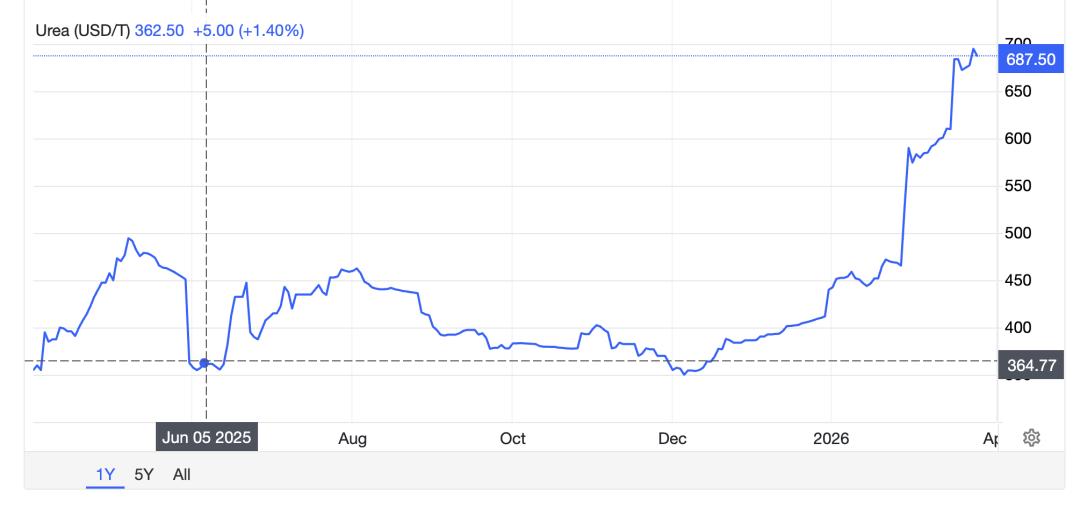
That is to say: In just a few months, the price of urea on the international market has doubled. Meanwhile, the price of urea on the Chinese market has hardly shown any significant fluctuations.
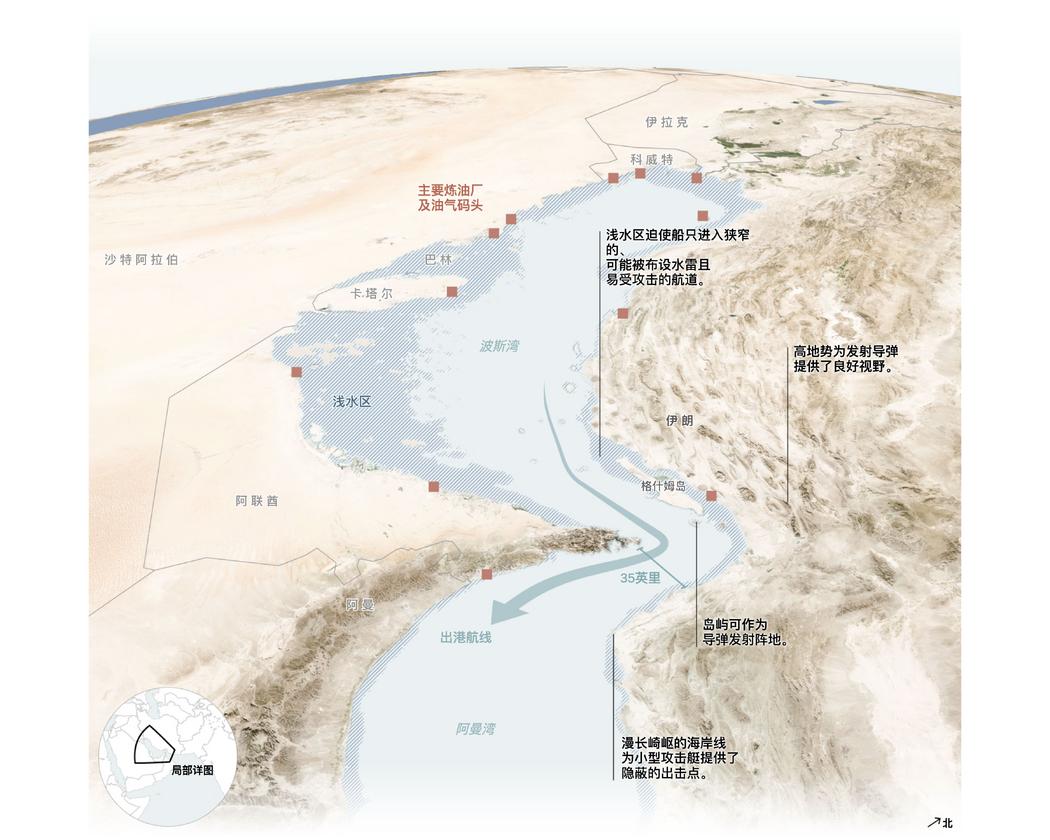
Everyone knows the reason for the increase in urea price: After the conflict in the Strait of Hormuz started, it's not just the supply of oil and natural gas that has been affected. The supply of important chemical raw materials such as urea and sulfur has also been severely impacted. In fact, Iran is not just an oil - exporting country. It is also the world's second - largest exporter of nitrogen fertilizers, the second - largest exporter of phosphate fertilizers, and the largest exporter of sulfur.
However, what I, the old expert, am more concerned about are the problems brought about by the increase in urea price.
As we all know, urea is an extremely important chemical product. In agriculture, it is an important fertilizer. Whether it's wheat, corn, rice, fruit trees, cotton, or vegetables, to increase yields, they all rely on urea. In industry, it is an important raw material. It is also needed in fields such as plastics, explosives, anti - dyeing, and industrial exhaust gas treatment.
Now that the price of urea has increased, other costs will naturally rise as well. This is an inevitable thing. Even, judging from the current situation, leaving aside whether you can afford it or not, even if you can, the transport ships may not be able to pass through the Strait of Hormuz.
If we also consider this year's strong El Niño climate and the imbalance of the Earth's energy, under the influence of extreme weather, sky - rocketing fertilizer prices and other factors, in 2026, we are very likely to see the extreme situation of "global agricultural production reduction".
But in China, the situation is completely different. It can truly be said that "the scenery here is uniquely charming".
While the international urea price is skyrocketing, the price of Chinese urea has always remained at a low level of less than 2,000 yuan per ton.
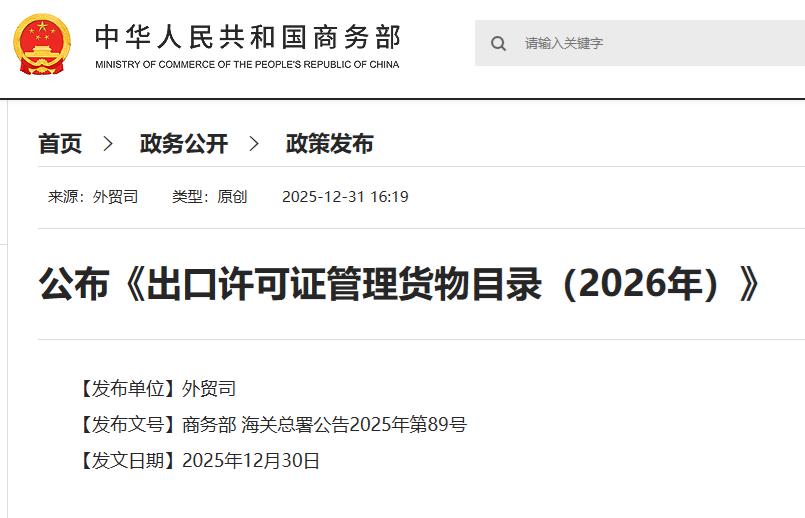
In fact, since 2024, we have started to impose export controls on urea. By the end of 2025, the Ministry of Commerce and the General Administration of Customs jointly issued an announcement, listing urea in the catalog of goods subject to export license management in 2026 and implementing strict quota management.
We have to admit that the Chinese people have a talent for "being prepared for danger in times of peace".
Why doesn't China worry about the fertilizer problem?
Speaking of which, why doesn't China need to worry about the fertilizer problem?
There are two reasons: One is that China's industry has the strength to support agriculture, and the other is that China has its own resource endowment.
Let's start with nitrogen fertilizers.
Take urea for example. The mainstream international process is to use natural gas to produce it. First, natural gas reacts with water vapor to obtain hydrogen. Then, a cryogenic air separation unit is used to separate nitrogen from the air. Then, the two are synthesized into ammonia under high temperature and high pressure. Finally, ammonia reacts with carbon dioxide to obtain urea.
This process has become the international mainstream because it is highly efficient and has extremely low costs, making it very suitable for industrial production. But don't forget, this process is completely dependent on natural gas.
In peaceful times, everything is fine for everyone. But as long as there are problems in the Middle East and the supply of natural gas is disrupted, the price of urea will skyrocket. Therefore, on the international market, the price of urea is significantly positively correlated with the prices of oil and natural gas.
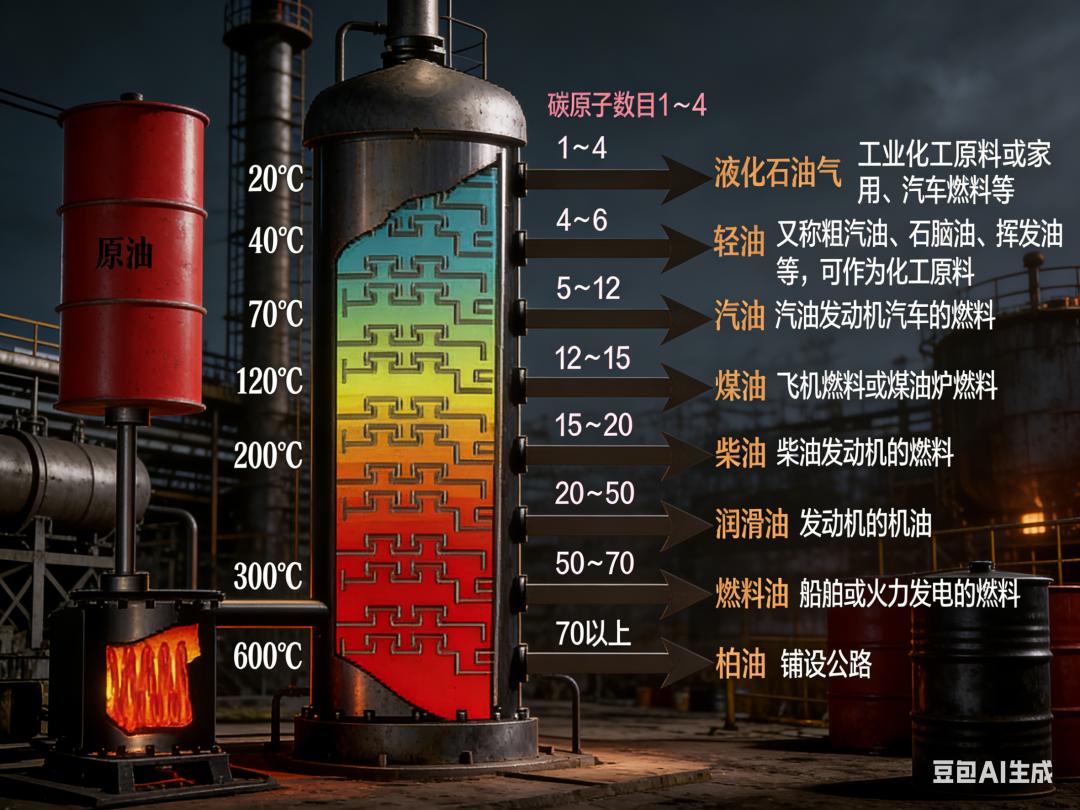
China has a situation of "lacking oil and gas", and at the same time, it is a large agricultural country. If we were completely dependent on natural gas to produce urea, we would face a huge threat when special situations occur.
Therefore, China's choice is to take a two - pronged approach. We can not only use traditional oil and natural gas to synthesize urea, but we have also specifically developed the "coal - chemical industry" technology tree and can use China's extremely rich coal resources to produce urea.
As of now, the proportion of coal - based urea in China has reached 73%. We can be completely self - sufficient and even have a small amount for export. The annual output is as high as more than 50 million tons. We can basically ensure the production of urea without relying on natural gas and oil.
This is the fundamental reason why while the international urea price is soaring, the Chinese urea price remains very stable. China's urea production relies on our deep accumulation in the "coal - chemical industry" field. The industrial route of Chinese urea is completely different from that of other countries, and it is naturally immune to the oil crisis.
Especially since the coal price has not increased much for many years, the cost of coal - based urea can be said to be quite low.
After talking about nitrogen fertilizers, let's talk about phosphate fertilizers.
If in the field of urea, China relies on industrial strength, then in the field of phosphate fertilizers, we rely on the blessings of nature.
China has extremely rich phosphate rock reserves. The proven reserves are 3.7 billion tons, ranking second in the world, second only to Morocco. However, Morocco obviously does not have our industrial strength, so China has far outperformed it in terms of phosphate fertilizer production capacity. China's phosphate fertilizer production capacity has accounted for 30% of the world's total and has ranked first in the world for many consecutive years.
Domestic supply is not a problem at all, and there is even the ability to export a part.
Finally, let's talk about the problem of potash fertilizers.
Potash fertilizer is the only short - board in China's fertilizer system because when it comes to potash ore, nature doesn't seem to be kind to us.
China's potash ore reserves are only about 5% of the world's total. The supply mainly comes from the potash salt lakes in Xinjiang, Qinghai, and Gansu, which can't fill the domestic gap at all. Therefore, we have to import a large amount of potash fertilizers from Canada, Russia, and Belarus every year. The foreign dependence has been hovering in the range of 50% - 60% all year round.
However, we don't have to worry about being restricted by the above - mentioned countries in the field of potash fertilizers because in the south, our neighbor Laos happens to be a country that produces potash ore. Laos has the second - largest potash ore reserves in the world, with an estimated 13.3 billion tons. It not only has large reserves but also high grades.
More importantly, Laos is a land - locked country with very backward infrastructure. The only large - scale channel for material transportation is the China - Laos Railway that was opened to traffic a few years ago.
In fact, Chinese - funded enterprises have long gone to Laos in groups to do business in potash fertilizers.
As early as 2023, we built the largest potash fertilizer plant in Southeast Asia in Laos, with an annual production capacity of 2 million tons. It is expected that the annual production capacity will reach 5 million tons in 2025. Not only focusing on the main business of potash fertilizers, but also using the associated resources of potash ore, a non - potash industrial park has been established. A series of fine chemical enterprises such as bromine production enterprises, chlor - alkali production enterprises, and flame retardant production enterprises have been introduced to help the local government attract investment and promote the industrialization of Laos.
Relying on the technical strength accumulated in the coal - chemical industry, we have solved the problem of nitrogen fertilizers. Relying on resource endowment, we have solved the problem of phosphate fertilizers. Relying on infrastructure construction capabilities and cross - border operation capabilities, we have solved the problem of potash fertilizers.
For the three major fertilizers, nitrogen, phosphorus, and potassium, we can now achieve a considerable degree of self - sufficiency.
There is absolutely no need to panic because of the fluctuations in the international fertilizer market.
The "Energy - Chemical - Agriculture" complex has taken shape
Originally, I just wanted to write about China's fertilizer supply problem. But in the process of researching, I suddenly found an interesting point. Whether it is intentional construction or an inevitable result of development, China seems to have formed an "Energy - Chemical - Agriculture" complex, and there may be more science - fiction - like things in the future.
How to understand this? Let's continue with the topic of fertilizers.
After reading the previous content, you should know that whether it is the natural gas route or the coal - chemical route, the production of urea requires the participation of hydrogen.
After all, whether it is natural gas or water - gas, they are just means to obtain hydrogen ("grey hydrogen"). The key is not what fossil fuels are used, but how to produce hydrogen.
But as we all know, besides these means, there is a simpler and more direct way to produce hydrogen - electrolyzing water. However, the power consumption of "electrolyzing water" is extremely high. To obtain one ton of hydrogen by electrolyzing water, it usually takes about 50,000 kWh of electricity. In the traditional energy system, hydrogen produced at such a cost has no competitiveness in the market. So, we have to use natural gas, oil, and coal to produce "grey hydrogen".
But the problem is that China's energy system is not a traditional energy system. The proportion of green electricity has already exceeded 50%. China's energy system has already stepped into the future to some extent. The green hydrogen obtained by "electrolyzing water" is a very expensive experimental product and luxury for other countries still in the traditional energy system, but for China, it has long been an industrial product.
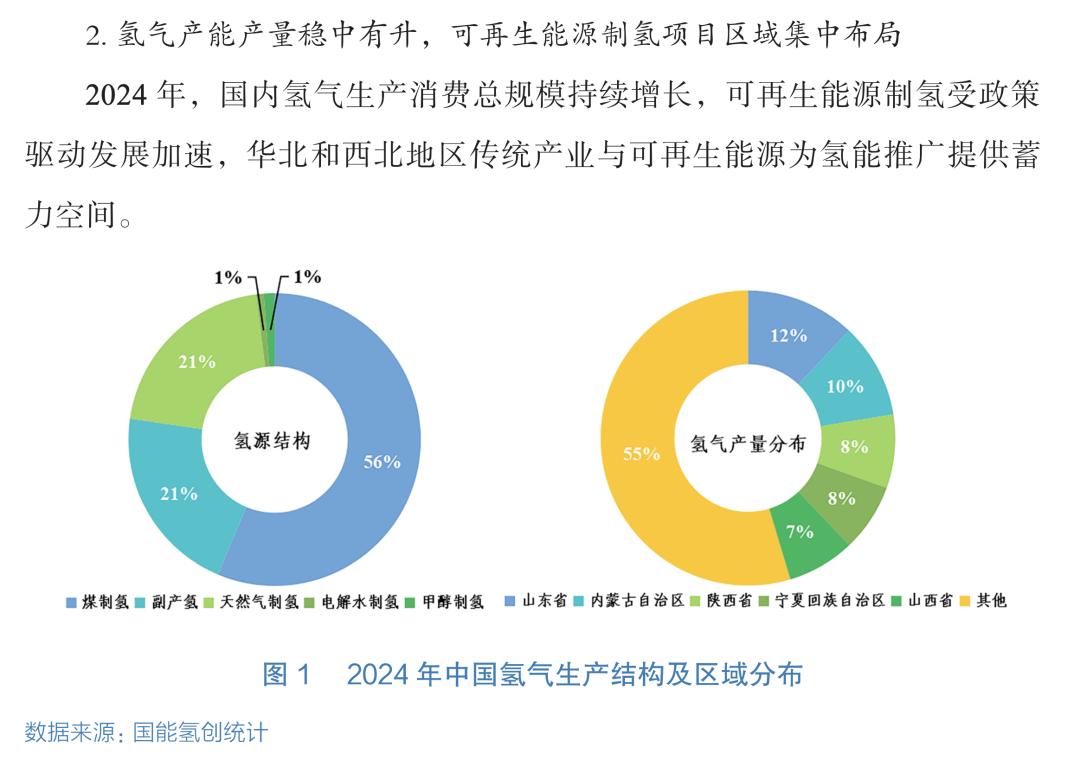
As of the end of 2025, China's annual production capacity of green hydrogen has exceeded 500,000 tons per year, and the actual output is 320,000 tons per year, accounting for 50% of the global production capacity. Not only is the commissioned production capacity growing rapidly, but the scale of green hydrogen projects that have started construction and are planned is also expanding rapidly. These projects are mainly concentrated in the northwest and other regions rich in new energy. China has become the world's largest hydrogen - producing country and the leader in green hydrogen development.
Since we have green hydrogen, the problem becomes simple. Because nitrogen can be extracted from the air, the transition from green hydrogen to green ammonia is just one step away.
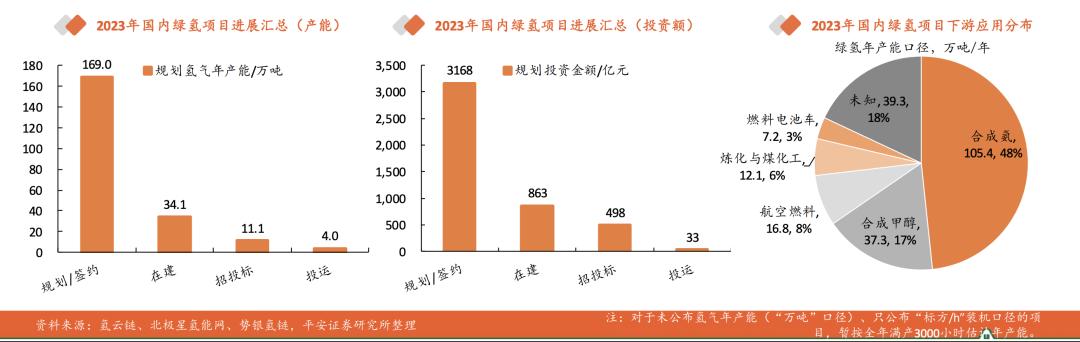
As early as 2024, China already had nearly a hundred green ammonia projects, with a total production capacity of up to 20 million tons per year. The combined production capacity of the publicly announced projects exceeded 10 million tons, and the annual output of the commissioned projects was also 200,000 tons.
Guys, have you noticed the problem?
We started talking about the production of urea, but now the topic has suddenly turned to wind power and photovoltaics. What does this mean?
This means that in China, the production cost of urea is not only not linked to oil and natural gas, but in the future, it may not even be linked to coal. Instead, it will be linked to the electricity price, and to the blazing sun and howling wind.
No matter how severe the oil crisis is, can you make the sun disappear? Do you think you're Hou Yi?
Furthermore, if we also consider the "carbon dioxide - to - starch synthesis" technology that emerged suddenly in the past few years and has now broken through the "ton - scale pilot test" and started exploring industrial production...
This is what I call the "Energy - Chemical - Agriculture" complex. Through technological revolution, we have broken the traditional "oil - urea - agriculture" system and replaced it with the "green electricity - green hydrogen/green ammonia - agriculture" system. Most importantly, for us, this new system is more independent and self - reliant in terms of technology (China has the strongest photovoltaic and wind power technologies), and is naturally reliable in terms of safety (the sun and wind are not affected by humans).
Therefore, if we take a long - term view, we can understand why we are still continuously building photovoltaic power stations, wind power stations, and energy storage stations.
Take green hydrogen for example. The current annual production capacity of 220,000 tons of green hydrogen corresponds to a power generation of 12 billion kWh (12,000 GWh). Without affecting the electricity consumption in other fields, it accounts for about one - thousandth of the country's total power generation, which can almost be ignored. In the future, our goal for green hydrogen production capacity is 2 million tons per year, which corresponds to 110 billion kWh of electricity. At this time, it will account for 1% of the country's electricity consumption, which we have to take seriously.
Finally, we still have to face the reality. Although the "Energy - Chemical - Agriculture" complex is very powerful and China has the highest production capacity of green hydrogen and green ammonia in the world, compared with the future vision, it is still just in its infancy. The bottleneck lies in the low - cost supply of renewable energy.
From this perspective, what we are doing now is still far from enough. This is a very long - term business, and we still need to step up our efforts.