In the chaotic pet market worth hundreds of billions, who can step forward to complete the "trust" puzzle?
During the rapid expansion of the current pet market, issues such as false ingredients in pet food and opaque charging in pet medical services have been exposed. There are even frequent cases where pet owners spend a high price to buy sick "week pets" that only last a short time...
To further standardize the industry's development, recently, JD Pet took the lead in releasing the first Internet trading standard for pet dogs and cats - the "Companion Animal (Dog and Cat) Trading Standard" in Anshan, Liaoning, the largest pet breeding base in China.
This standard will provide each pet with a unique "electronic ID" through the "one - pet - one - chip" system, strict health checks, and professional transportation. It will make the pet's health status and vaccination records clearly traceable. At the same time, the entire process from the source to the new home will be safe and transparent, enabling every pet owner to bring back a truly healthy "family member".

Trust is the "underlying infrastructure" for the industry's development. Currently, in this life - related field, not only in pet trading but also in every aspect, the "uncertainties" are eroding the trust of pet owners. Therefore, only by truly addressing these pain points and reconstructing the trust system can the pet industry develop more steadily and sustainably in the process of rapid growth. This is also what JD is currently doing. Through a systematic "trust infrastructure" project, it is building a reliable safety net for pets and pet owners, covering pet food, live - animal trading, shipping, health, insurance, and life services.
01
The Unignorable Pain Points Behind the Hundred - Billion "Furry Kids" Economy
The quality issues in the pet food market are extremely shocking.
Lin Lin, a pet owner in Shenzhen, will always remember that after her beloved cat "Ju Ju" ate a low - priced pet food bought online, it vomited, had diarrhea, and even had blood in its stool. After being rushed to the hospital, it was diagnosed with acute renal failure. Despite three days of rescue, it still passed away.
Subsequently, she used a self - testing method and found that the cat food had a very pungent fishy smell after being heated. When soaked in water, thick oil slicks could be seen, and the cat food swelled significantly.
Research shows that some unscrupulous small pet food workshops use chicken feathers, feather powder, and bentonite as raw materials, adding a large amount of animal fat and flavoring agents. After high - temperature extrusion, it becomes granular "pet food". However, the outer packaging claims "high - protein" and "natural formula" because relevant qualified test reports can be bought with money.
Facing such shocking chaos, the key to producing pet food that truly reassures consumers lies in quality control. Cui Jia, the founder of Jijia Pet Group (which owns well - known pet brands such as Lanshi and Crazy Puppy), pointed out sharply: "Good quality is achieved through management. From pet food raw materials to finished products, the capacity building of this system is fundamental. However, from the perspective of the entire industry at present, this capacity is partially lacking."
What is even more distressing than problematic pet food is the "week pet" problem in pet trading.
In the pet industry, there is a well - established gray industrial chain behind these "week pets". Some unscrupulous merchants inject serum and stimulants into pets suffering from fatal diseases such as canine distemper and feline distemper to make them look energetic in the short term. These pets usually get sick within three to five days after being sold, and by then, the unscrupulous merchants have disappeared.
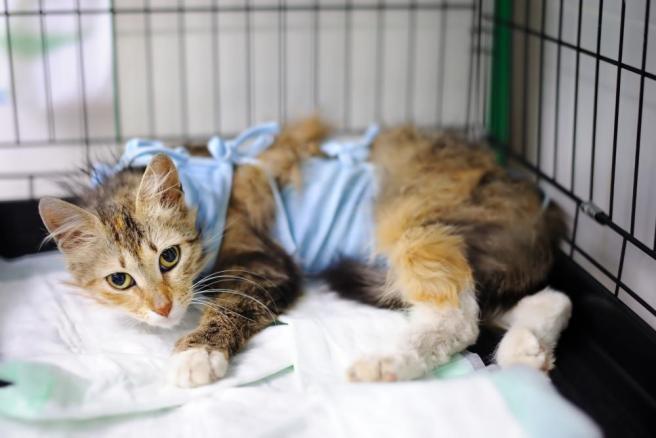
The pet medical field is another "headache account" for pet owners. For example, a simple pet physical examination can cost thousands of yuan. Information asymmetry forces pet owners to pay passively. The problems of over - treatment and the prevalence of fake drugs make "expensive and chaotic pet medical services" a common feeling among many pet owners.
The non - standard phenomena in the pet drug market are even more serious than expected. The ingredient list does not match the actual product at all. Human drugs are sold as veterinary drugs with inaccurate dosages and unknown side effects. Some individual merchants even put industrial raw materials in bottles, label them as "pet - specific", and sell them online openly.
The person in charge of JD Health's Pet Internet Hospital analyzed the underlying reasons behind the "chaotic pet medical services":
First of all, the pet medical industry has not yet formed a unified diagnosis and treatment standard. Treatment plans mainly rely on the personal clinical experience of doctors, and different doctors may have different judgments, which makes it easy for pet owners to feel confused when making choices.
Secondly, pet medical care is highly professional, and there is information asymmetry. Pet owners generally know little about the necessity of examination items, the pricing of drugs and medical treatments. Therefore, they may occasionally misunderstand the cost as "sky - high", which in turn affects their trust in the industry.
Finally, there are differences in the payment system. Human medical care is supported by medical insurance, while pet medical care is a completely commercial model. The relevant costs need to be borne by pet owners personally or covered by commercial insurance. This difference in payment methods also makes people more sensitive to the cost of pet medical care.
The quality risks of pet food, the integrity problems in pet trading, and the lack of standards in medical services, although seemingly independent issues, reflect the urgent need to reconstruct the trust system in the entire industry.
To truly solve these problems, what is needed is not piecemeal repair but a top - down, systematic trust reconstruction. This is not only the inevitable path for the pet industry to develop from a rough stage to a mature and standardized one but also the direction that platforms and enterprises like JD are exploring.
02
100 - fold Compensation for Pet Food and "ID Cards" for Pets: JD Uses Strict Rules to Guarantee the Well - being of Lives
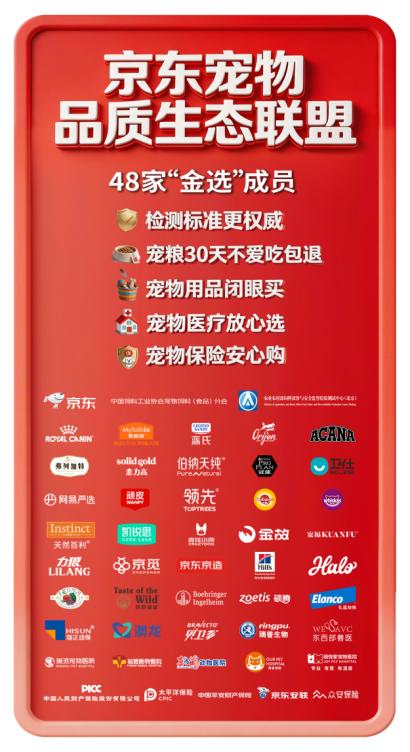
Facing the many pain points in the development of the pet industry, on March 18th, JD joined hands with 48 members including PICC, Royal Canin, Zhongchong Wanchi, Zoetis, and Ruipai Pet Hospital to jointly establish the largest "Pet Industry Quality Ecosystem Alliance" in China. At the same time, it launched a systematic "trust infrastructure" project covering six major fields: pet food, pet trading, shipping, health, insurance, and life services.
Each of JD's series of measures hits the points that consumers care about most and targets the areas in the industry that most need to be regulated. Its core goal is to provide reliable and reassuring protection for pets and pet owners.
JD dares to take the lead in doing this at this time because of the ecological capabilities formed by its retail, logistics, health, technology, and other sectors over the years. It joins hands with industry partners through innovation and reform to solve industry chaos and fill the long - standing pitfalls one by one.
In response to the hard - to - distinguish ingredient list in the pet food market, JD has pioneered a "100 - fold compensation" policy: If the ingredient list of the "Selected Pet Food" sold by JD's self - operated stores is fake or the quality does not meet the standard, the platform will compensate you 100 times the actual payment amount.
In pet consumption, consumers are most afraid of "no one taking responsibility when problems occur and high rights - protection costs". JD's "100 - fold compensation" policy aims to resolve the rights - protection difficulties in advance. With a commitment of sufficient weight, it forces itself and brands to strictly control quality from the source.
Behind this is also JD's absolute control over its supply chain. Only when the entire process from the source, warehousing, to logistics and distribution is controllable can such a guarantee be given. This also makes the "100 - fold compensation" policy not only a reassurance for consumers but also a screening mechanism.
Brands that dare to put their pet food into the "Selected Pet Food" pool either have full confidence in their quality or simply dare not enter. Those brands that have long relied on low - price, poor - quality, and fake products to increase sales will naturally be excluded.
"This measure enables enterprises that adhere to high standards to get out of the low - price competition dilemma and obtain a fair competition environment," said Cui Jia, the founder of Jijia Pet.
As a brand that has long established internal standards higher than the national standard, Jijia Pet invests more than 10 million yuan in testing fees every year to conduct quality inspections on its products and simultaneously builds a full - link traceability system from the farm to the pet bowl. Now, JD's policy is like putting a "reliable" label on these hidden costs, making them more visible to consumers.
Pet trading is one of the areas that consumers are most worried about and also a field with relatively high regulatory difficulty.
Consumers particularly hope that clear trading standards can be issued. Chen Yue, a post - 2000 pet owner in Shanghai, mentioned: "For example, sellers should have formal qualifications, the vaccination and physical examination status of pets should be truthfully informed, the transportation process should have basic guarantees, and there should be a reasonable health observation period after receiving the pet. With these basic standards, I can buy a pet without worry and don't have to worry about being deceived."
JD Pet's approach is to release the "Companion Animal (Dog and Cat) Trading Standard" in Anshan, Liaoning, the largest pet breeding base in China. This marks the implementation of the first Internet trading standard for pet dogs and cats in the country.
The core of this system is to establish a full - link standard from breeding, transportation to after - sales. For example, JD will record key information such as the breed, coat color, vaccination information, and deworming records of each pet dog and cat. It requires dogs and cats to be implanted with electronic chips that meet national standards, achieving the "one - pet - one - chip" system, so that each pet has its own "electronic ID".
This is not just a management process but also a commitment to life. It means that the entire life cycle of pets from breeding, trading to feeding can be traced, making the health status of each "furry kid" traceable and allowing consumers to buy with more peace of mind.
This is actually an extremely cumbersome and time - consuming "detailed task" that requires continuous investment. However, it must be done. Only when there are data and traceability throughout the process can issues such as wrong products, sick pets being passed off as healthy ones, and after - sales service providers disappearing be less likely to occur.
Behind this is JD's strategic foresight as a platform. Only by bringing the "non - standard" pet trading into the "standardized" track, recording vaccination, testing, and pedigree information through a unique number, and cooperating with JD Logistics' dedicated transportation tools can pet trading become a service experience that is traceable and guaranteed.
"Pets are not ordinary commodities but lives. We must use the strictest standards to safeguard every expectation," emphasized the person in charge of JD Pet's business.
The main pain points in pet medical care are twofold: First, pet owners don't know which hospital to go to; second, they don't know how much it will cost.
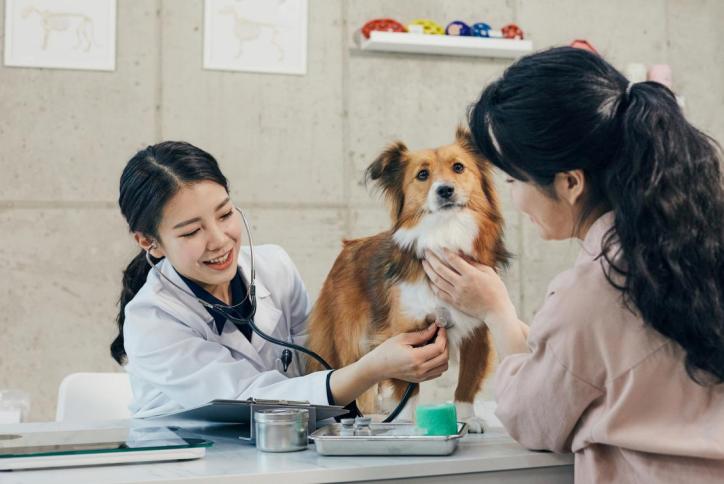
JD Health has innovatively built a one - stop closed - loop system of "medical consultation, testing, drugs, and insurance", so that pet owners will no longer be at a loss when their pets are sick. If a pet gets sick, the pet owner can first conduct an online consultation. JD Health has professional licensed veterinarians online 24/7.
In this way, minor problems don't require a trip to the pet hospital. The electronic prescriptions issued by veterinarians online can be used to directly purchase corresponding drugs on JD. Currently, all pet drugs sold by JD's self - operated stores have obtained product approval numbers from the Ministry of Agriculture and meet the national standards for veterinary drugs. Moreover, if consumers buy pet drugs and prescription foods with the "Selected Pet Food" label from JD's self - operated stores and find that the ingredient list is false or the quality does not meet the standard, JD will provide 100 - fold compensation for the actual payment amount. If the drug's effectiveness is not as expected, it also supports "refund if ineffective".
If a pet is seriously ill, JD also cooperates with more than 10,000 regular pet hospitals across the country. The platform will recommend the most suitable hospital near the pet owner according to the pet's condition and the hospital's specialty.
The key to this pet medical system is to use online consultation as the "first gateway" rather than a substitute for offline treatment. Minor illnesses can be solved directly online, saving unnecessary travel and examination fees; for serious illnesses, it can accurately direct pet owners to the right place, avoiding "hasty medical treatment" and buying the best treatment time for pets.
In the pet insurance field, JD's innovation also directly addresses the core concerns of pet owners.
Currently, most pet medical insurance policies on the market usually have a 30 - day waiting period. However, the first month after a pet arrives home is actually the most worrying time - whether there are latent diseases and whether the vaccinations mentioned by the seller have been given are all uncertain. This one - month period has become a "vacuum period" for insurance.
In response to this pain point, JD Insurance has innovatively launched a 365 - day new - pet medical insurance policy, significantly reducing the effective time to 7 days. This means that the validity period starts to be calculated from the day when consumers purchase a dog or cat. By the time the new pet arrives home, the insurance can almost seamlessly connect, providing an extra layer of protection for the "furry kid" from the moment it arrives.
More importantly, this product not only takes effect quickly but also extends the protection period to a full year, allowing this protection to accompany the pet continuously.
In addition to the above measures, JD Logistics has integrated air and railway resources and is building a dedicated pet shipping network to make the transportation of "furry kids" safer. JD Housekeeping has provided on - door pet feeding and in - depth pet - living - environment hair - removal cleaning services in many cities such as Beijing, Shanghai, Guangzhou, and Shenzhen to meet the on - door service needs of pet - owning families.
Looking back, JD's approach is not a revolutionary innovation. What really makes JD different is its willingness to systematically carry out these "arduous tasks". The improvement of each detail can meet the love and expectations of more families for their "furry kids".
Sometimes, the confidence of a platform does not lie in what it says but in what it is willing to "guarantee". When pet owners are still hesitant about which pet food to buy and which hospital to go to, someone has to stand up and resolve those hidden worries one by one.
When high - quality brands obtain a fair competition environment, consumers obtain definite value guarantees, and every "furry kid" is treated gently, the pet industry can truly move towards a warm, transparent, and trustworthy future.
03
Why Can JD Successfully Reshape the Pet Industry Ecosystem?
The challenges faced by the pet industry are not concentrated in one area but are distributed in multiple fields such as food, trading, medical care, and logistics, which are intertwined and influence each other. To fundamentally restore trust, what is needed is not a single - point breakthrough but a systematic ability that can cover the entire value chain.
Looking at the entire market, there are few enterprises that meet these conditions. JD, however, is one of the platforms with the ability to reshape the entire value chain and has unique advantages that other platforms cannot replace.
Regarding basic pet food, simply labeling it as "self -