"New Pinmu" Lands in Shanghai: Pinduoduo Bets 15 Billion on Brand Self-Operation
The financial report is like a mirror, reflecting that Pinduoduo is no longer satisfied with being just a product - selling platform, but is ready to enter the market to create its own brands.
On March 25th, Pinduoduo released its 2025 report card. Its revenue reached 431.8 billion yuan, a year - on - year increase of 10%, and its net profit was 99.4 billion yuan, a year - on - year decrease of 12%. On the surface, it "increased revenue but not profit", but the underlying logic has quietly changed: the performance is no longer simply driven by user growth, but by supporting merchants and continuously making heavy investments in the supply chain.
Exchanging short - term performance for ecological resilience, the temporary sacrifice of profit can be regarded as the upfront cost for this strategic transformation.
Similarly, at the earnings conference call, the most significant news from the management was not the performance figures, but "New Pinduoduo Mall". On the day of releasing the financial report, Pinduoduo established a new company in Shanghai and officially launched its brand - self - operated business, with an initial investment of 15 billion yuan.
Entering the market to create brands means that this re - entrepreneurship of Pinduoduo is no longer about replicating the product - selling platform to the global market as in the Temu era. Instead, it is about putting its own brand labels on Chinese - made products and pushing them to the global market.
01
Why is it necessary to recreate a "Pinduoduo"?
It is the strategic confluence formed by both internal and external pressures that drives Pinduoduo to take this crucial step.
Internally, the traditional growth path of e - commerce platforms is approaching a bottleneck. The scale of domestic Internet users has reached its peak, and the dividend of user growth is drying up. The marginal benefit of attracting new users through marketing and subsidies is decreasing.
At the 2025 earnings conference call, Zhao Jiazhen, the co - chairman and co - CEO of Pinduoduo, also clearly stated that in the future, Pinduoduo will "more firmly invest in the high - quality development of the supply chain". This positioning itself indicates that the growth engine must shift from the demand side to the supply side.
The external environment points to the real - world dilemma of Chinese manufacturing. In the past year, Pinduoduo's team visited industrial belts in places like Yiwu, Zhongshan, and Pinghu, and gained an intuitive and profound understanding: We have the world's leading manufacturing capabilities and a complete industrial supporting system, but we have long been trapped in the quagmire of homogeneous competition and price wars in the value chain.
Take the small household appliance industrial belt in Zhongshan as an example. Its products are comparable to international brands in terms of function and design, and even have a faster iteration speed. However, the majority of factories still remain at the OEM stage and cannot obtain brand premiums, resulting in meager profits.
The dilemma in Zhongshan is a microcosm of the value depression of China's "world factory" model. The goal of "New Pinduoduo Mall" is to fill this value depression. To a certain extent, shifting from a product - selling platform to a participant in "brand - building" is also the inevitable path for Pinduoduo to break through the growth ceiling and gain the core pricing power of the industrial chain.
Looking back at Temu's journey to the global market, we can more clearly understand the inevitability of this step.
A few years ago, Temu emerged with an ultimate efficiency revolution, precisely hitting the node of the release of China's supply - chain production capacity. Through the "small - order, quick - response" flexible supply - chain model and the "full - trusteeship" strategy that extremely compresses the intermediate links, it delivered "Made in China" products to global consumers with extremely high cost - performance, achieving amazing scale expansion.
However, this model also exposed its inherent limitations after rapid development. Factories have long played a passive production role, and brand and user data are accumulated on the platform. They lack the motivation to actively iterate products and increase added value. The platform highly depends on price advantages. Once facing changes in cost structure, such as rising logistics and tariffs, or the rapid follow - up of competitors, its moat is not stable enough.
Therefore, Temu has successfully achieved the leap from 0 to 1, proving the feasibility of the model. To achieve the value leap from 1 to 100 and solve the core shortcoming of branding has become a lesson that "New Pinduoduo Mall" must learn.
02
The year with the largest investment in high - quality development
"The past year was the year when we made the largest investment in high - quality development," Zhao Jiazhen admitted at the earnings conference call.
The real - money investment went to the "100 - billion support" strategy. This plan was launched in April last year and has left clear practical footprints in industrial belts in places like Zhongshan and Pinghu. Now, it provides a solid foundation and methodology for the brand - self - operated model of "New Pinduoduo Mall".
The story of the small household appliance industrial belt in Zhongshan is a typical one. This industrial cluster, which started with OEM, has long been troubled by product homogeneity and low - profit competition. Pinduoduo's "new - quality supply" team went deep into this area and brought a new logic: The platform uses the massive consumer data and demand insights accumulated over the long term to guide factories in R & D in a reverse way.
For example, platform data may show that consumers' attention to the extraction quality of coffee machines has increased, or they need a more intuitive operation experience for air fryers. This information is directly fed back to the manufacturing end. This "data - feeding - back - to - manufacturing" model has promoted a group of Zhongshan enterprises to transform from simple OEM (Original Equipment Manufacturer) to ODM (Original Design Manufacturer) and even incubate their own brands.
This process is precisely a preview of the self - operated model of "New Pinduoduo Mall" - the platform is no longer just a traffic - distribution channel, but is deeply involved in the process of product definition, standard setting, and value creation.
The transformation of the down - jacket industrial belt in Pinghu provides another perspective. In the past, this place, which accounts for half of the national down - jacket production, has long faced the seasonal dilemma of "working for one season and living on it for a year" and huge inventory pressure. In response to this pain point, the solution promoted by Pinduoduo is the dual - wheel drive of "flexible supply chain + branding".
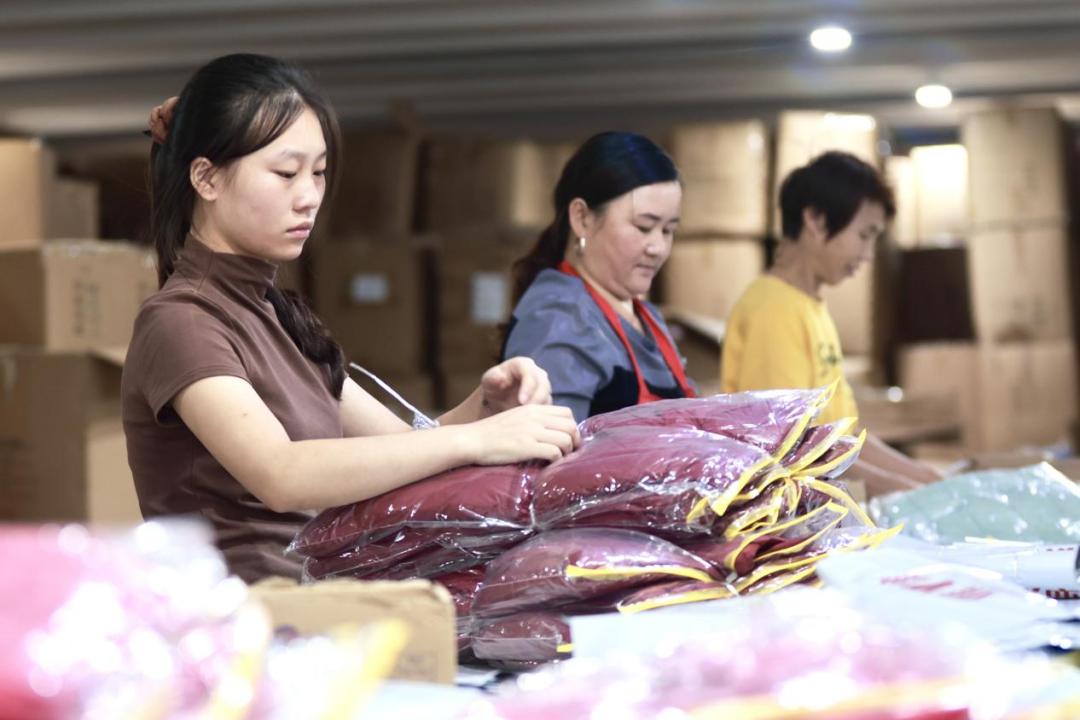
On the one hand, through the pre - sale mechanism and sales data analysis, factories are guided to achieve flexible production with small batches and multiple batches, significantly reducing inventory risks. On the other hand, industrial upgrading is promoted, such as establishing higher standards for down - filling power, introducing anti - down - leakage technology, and strengthening the quality - control system, guiding enterprises to shift from producing "warm - keeping products" to creating "fashionable products" with a sense of design and quality.
Reflected in merchants' operations, the average customer price and consumer repurchase rate of the industry have been effectively improved.
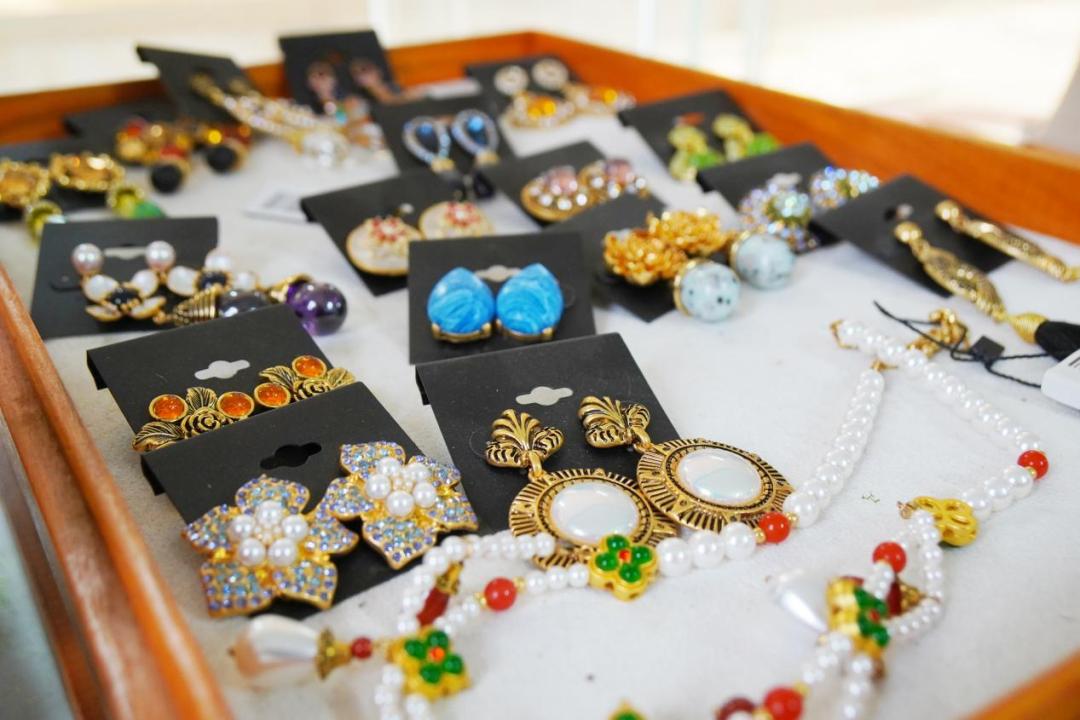
The changes in places like Zhongshan and Pinghu are a microcosm of Pinduoduo's participation in industrial - belt support. In the past year, similar situations have occurred in multiple manufacturing clusters across the country, such as the jewelry industry in Yiwu, the spicy - strip industry in Hunan, the roasted - nuts industry in Anhui, the potato - chip industry in Tianjin, and the chocolate industry in Shanghai. These practices prove that Chinese manufacturing does not lack good products. What it lacks is the systematic ability to convert product value into brand premium and break through from cost competition.
The well - known investor Duan Yongping once commented on Pinduoduo's branding path: "I think it is a natural thing for Pinduoduo to build online brands. They know very well what products have volume. They can optimize the products with volume to the extreme, with good quality and low prices for users (eliminating all intermediate channels). They just need to select some representative products to build their own brands, not all products. This is actually what Costco is like. If Pinduoduo has about 4,000 SKUs for its online brands, it will be quite powerful in 10 years."
This analysis reveals the commercial essence of "New Pinduoduo Mall": It does not aim to become an online department - store supermarket like Walmart, but to create an online, curated, membership - based warehouse - retailer model driven by its own brands. The core is to achieve consumers' trust in "good products at low prices" through ultimate supply - chain efficiency and ultimate SKU management.
03
"New Pinduoduo Mall": From the traffic dividend to the arduous journey of branding
From the management's determination to the initial investment of 15 billion yuan, it can be seen that "New Pinduoduo Mall" is not simply an upgrade of Temu. Instead, it is a fundamental transformation of the business model by integrating the supply - chain resources, data capabilities, and global channels accumulated by Pinduoduo's main platform and Temu over the years.
This means that Pinduoduo is moving from a relatively asset - light platform model to a brand - merchant model that needs to assume more responsibilities and risks.
This is undoubtedly an arduous journey of branding full of challenges.
The primary challenge it faces is inventory risk. Self - operated brands mean that the company needs to predict demand by itself and stock up in advance. The huge inventory is both an asset and a huge risk exposure. A considerable part of the capital cost will be tied up in commodity inventory.
Secondly, it is the reshaping of the supply - chain relationship. In the past, the relationship between the platform and factories was relatively loose and transaction - based. Self - operated brands require a deep binding with core factories in terms of equity, technology, management, and even exclusivity, which tests the platform's supply - chain management ability and synergy depth.
Finally, and most difficult of all, is the reshaping of brand perception. How to make global consumers, especially those in the mid - to - high - end markets, accept and trust "New Pinduoduo Mall" as a high - quality brand image is a long - term process that requires long - term investment and careful cultivation and cannot be achieved overnight.
Although there are many challenges ahead, if "New Pinduoduo Mall" succeeds, its promotion effect on the overall upgrading of China's supply chain will be substantial.
On the one hand, Pinduoduo can systematically replicate and export the digital quality - control and flexible - production standards verified in industrial belts such as Zhongshan and Pinghu to a wider range of partner factories, promoting the standardization and digitalization level of the entire Chinese manufacturing industry.
On the other hand, it is expected to reshape the industrial profit distribution. Factories will shift from earning meager fixed processing fees to participating in the brand - profit sharing, which can fundamentally stimulate their internal motivation to continuously invest in R & D, improve processes, and enhance quality, forming a virtuous cycle of "good products - good brands - good profits - better products".
In addition, more importantly, in the current environment of continuous international trade frictions, brand - based operation can enhance the risk - resistance ability of China's supply chain. Having its own brands and direct channels to consumers can effectively buffer the external shocks caused by simple price wars, tariff changes, etc., and enhance the resilience and voice of the industrial chain.
04
Conclusion
Recreating a "Pinduoduo" in three years is essentially a coming - of - age ceremony for Pinduoduo's supply chain facing the future. It marks that China's leading e - commerce platforms are collectively moving from the traffic - grabbing war in the consumer - Internet era to the deep - water area of brand value in the industrial - Internet era.
The short - term slowdown in profit is the tuition fee that must be paid for this profound transformation. And investing real money to reshape "New Pinduoduo Mall" is the future ticket that Pinduoduo has bought for itself to reach the high ground of brands.
This road is doomed not to be smooth. There is competition from global giants such as Amazon's private - label brands ahead, as well as many uncertainties in the market environment. However, for Chinese manufacturing aiming at high - quality development, this is a necessary value leap. Only when more and more Chinese enterprises and Chinese platforms can successfully transform their manufacturing advantages into brand advantages and sell products with brand premiums rather than just cost advantages can "Made in China" truly occupy an unshakable position in the global value chain.