The endgame of the robotics industry is not oligopoly but ecosystem.
In the future, there may only be three to five robot manufacturers left.
This is the embodied future that many industry insiders have mentioned, and the result can be attributed to the "Matthew Effect".
Currently, leading companies are constantly breaking financing records, and their valuations are rising steadily. Capital, talent, and data are all tilting towards a small number of leading players. From a certain perspective, large companies will gradually squeeze out the survival space of small companies, and general-purpose humanoid robots may take over most of human life scenarios.
However, if we look at it from another perspective, this question itself may be misleading.
Will the robot industry really move towards oligopoly? Or are we mistakenly equating the competition among giant companies with the final outcome of the entire industry?
Under the shadow of large companies, small manufacturers are under the double squeeze of capital and data. But this doesn't mean they will be completely eliminated. Instead, they are more likely to be embedded in the industry in another way, forming a dislocation and cooperation with large companies in specific scenarios.
It should be clear that embodied intelligence is like a tropical rainforest. There are towering trees, intertwined vines, secretly growing fungi, living creatures shuttling among them, and countless unnamed ecological wonders, which together form a complex, self - consistent, and ever - evolving intelligent ecosystem.
The embedding direction of small manufacturers lies not only in the under - explored vertical scenarios and upstream general - purpose components but also in bridging the gap between large companies and real - world implementation. As Wu Chenyao, a managing partner of GGV Capital, once said, embodied intelligence startups can choose to penetrate a specific field and build barriers through in - depth participation and high - level integration in operations and the entire chain. That is to say, as a hardware - oriented company, its focus can be on the product level, but also on the service level.
As this pattern deepens, it may reshape the final structure of the industry. From this perspective, the industrial pattern or industrial ecosystem of embodied intelligence is far from mature.
01
The Future Market Form
From Unification to Ecological Differentiation
Since the beginning of this year, the financing in the embodied intelligence track has been heating up continuously, and leading robot manufacturers have received the vast majority of resources. These companies generally have several common characteristics: they emphasize full - stack capabilities, aim mainly for a humanoid form, layout multiple product lines, and attempt to build a general - purpose intelligent platform.
This is a very attractive narrative, where one robot can complete all tasks.
However, the problem is that the premise for this narrative to hold is that technology, cost, and scenarios are all mature at the same time. Currently, none of these three points has truly reached the critical point. General - purpose intelligence still remains in the stage of capability demonstration rather than large - scale application.
In contrast, there is another more practical path: specialized robots emerging from specific scenarios. Most of them only focus on doing one thing to the extreme. This will effectively fill the gap in real - world applications before the arrival of general - purpose robots.
Even if general - purpose intelligence makes a breakthrough in the future and enables robots to have cross - scenario capabilities, it doesn't mean that a single form will dominate all scenarios. Because in real commercial scenarios, cost, efficiency, and reliability are often highly valued.
Although general - purpose intelligence can adapt to more scenarios, it also means that the ROI may not be very cost - effective in specific situations. A robot used for handling in a factory usually doesn't need complex dialogue capabilities; a home care robot doesn't need industrial - level load - bearing capacity either.
In the past, the monopoly in the Internet industry was because the marginal cost of the network approached zero, while the robot industry naturally needs to interact with the real environment. All scenarios need to be redeployed and debugged, and covering all scenarios means a sharp increase in complexity.
Therefore, this determines a trend that the final outcome of the robot industry may not be unification but differentiation.
If we borrow a metaphor from nature, just as an ecosystem is naturally diverse, with different species occupying their unique ecological niches. In the future market, it is more likely to present a structure similar to a natural ecosystem, where different types of robots occupy different scenarios, and different companies form advantages in their respective fields, competing with and complementing each other.
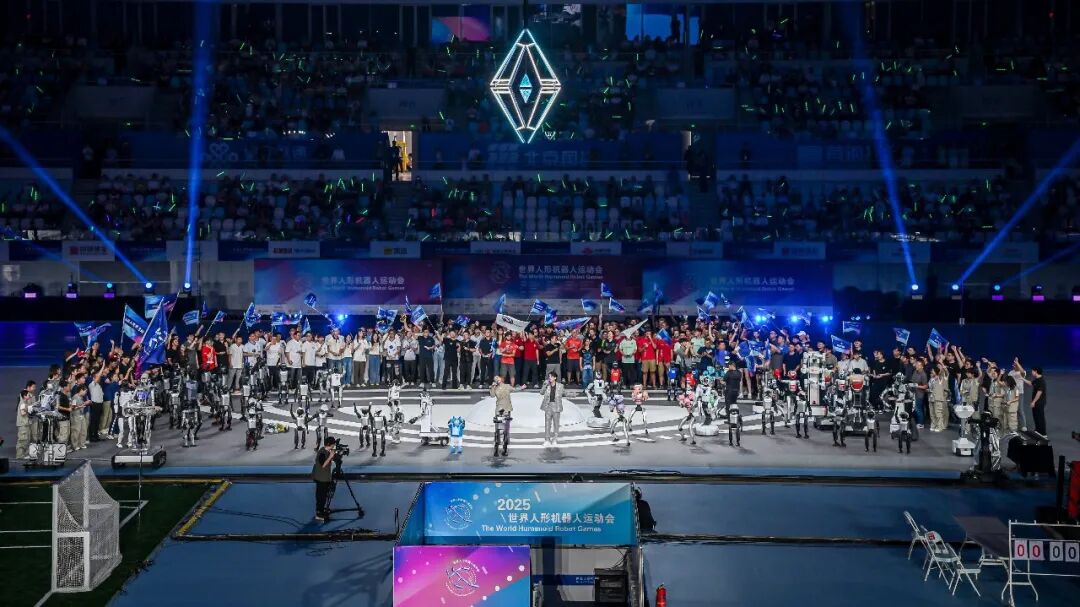
In such a pattern, similarity brings danger. If everyone rushes in the same direction, it will surely lead to fierce resource competition. Only by having differences can a truly resilient industrial ecosystem be built.
For small manufacturers entering the market later, instead of trying to copy the path of large companies, they should look for those scenario gaps that have not been fully defined. In the corners that large companies disdain or don't have time to explore, there is often a small blue ocean waiting to be discovered.
02
From the Change of Capital Flow
To See the Development Direction of Small Companies
If the robot financing market in 2025 still had an obvious "story - telling" flavor, then this year it has entered a more calm and practical stage.
Currently, the investment direction of capital has begun to avoid grand narratives and instead screen out the most likely survivors from the start, paying more attention to evaluating real - world certainty. Capital is increasingly concerned about whether a company has real - world usage scenarios, mass - production capabilities, and can really make money.
But this may not be a bad thing for small companies. By observing the capital's betting direction in the early rounds, we may find that three types of opportunities for small companies are emerging.
One type is the deep - ploughers in vertical scenarios. These companies choose a specific scenario and polish it repeatedly, such as agricultural picking, cleaning services, and elderly care. For example, Zhiyou Wujie, which focuses on logistics handling and ship painting scenarios, and Hexin Power, which focuses on agricultural robots.
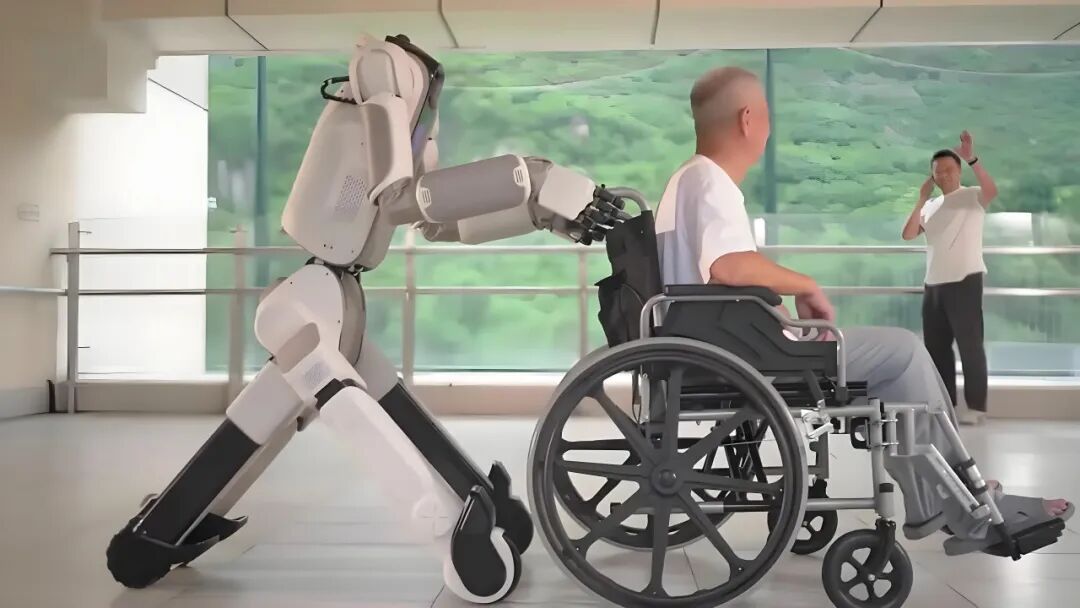
Their common characteristics are: they all belong to real and urgent needs, operations are highly dependent on manual labor, and automation substitution has a clear ROI.
For a long time, the development of these companies has been limited by a key variable: labor supply. However, with the change in the population structure, this constraint has become more prominent, and the explosion of robots provides a new possibility for solving this problem.
Take pool cleaning robots and lawn mowing robots as examples. The reason why they have boomed overseas is that they have seized real demand gaps, and combined with the high local labor costs, these gaps have been further magnified. According to relevant personnel from the lidar company RoboSense, lawn mowing robots have become an important source of their orders. For example, Ninebot, a leading company in lawn mowing robots, had a shipment volume of 140,000 units in 2024, with a cumulative sales volume of over 240,000 units, fully demonstrating the huge potential of the segmented market.
Another type is the "shovel sellers" in the industrial chain, that is, the manufacturers of core components.
In an uncertain industry, the most certain thing is often the infrastructure. No matter which company wins in the end, robots cannot do without core components, such as actuators, sensors, and control systems.
For example, the dexterous hand, one of the most important components of robots, has seen several domestic and foreign companies receive large - scale financing at the beginning of this year, including Lingxin Qiaoshou, the Critical Point under ZHIYUAN, and the Hungarian company Allonic, which has revolutionized the robot dexterous hand with bionic weaving technology.
Investing in these areas is essentially betting on the overall development of the industry rather than the success or failure of a single company, which can be regarded as an "anti - fragile" strategy.
In addition, software companies developing embodied brains have also been an important investment direction since the beginning of the year. These companies have won the favor of capital when the capabilities of embodied bodies are reaching their peak and the brains need to be solved urgently. However, once these small companies truly build an embodied large - scale model, they will obtain cooperation from many body manufacturers and quickly become giants, so they are not within the scope of discussion for small companies.
The last type of company, often ignored by people, plays a key role in commercial implementation - robot service providers. The development of the robot industry not only depends on innovation in hardware and software but also on the in - depth cooperation of various service links.
These service providers are responsible for links such as data collection and annotation, scenario deployment and debugging, system integration and operation and maintenance, ensuring that the robot system can operate stably in a complex real - world environment and achieve commercial application, and accelerating the process of robot technology from the laboratory to the market.
Recently, companies in this category that have received financing include Mifeng Technology, which focuses on embodied intelligence data services, Tianxingyuan, a general - purpose industrial embodied intelligence platform, and Annu Intelligence, which serves the engineering implementation of humanoid robots.
They are helping robots truly enter the real world. Especially in the industrial scenario where robots are being implemented the fastest at present, there is a huge engineering gap between the laboratory and the factory, and between the prototype and large - scale deployment.
It usually takes 6 - 8 months to deploy a humanoid robot in a factory, going through a running - in process such as action strategy debugging, stability and safety verification.
In the traditional industrial robot field, there is often the role of an integrator, which is not only responsible for connecting products with real - world scenarios but also undertakes a series of service work in the implementation process. In today's robot field, robot service providers are trying to bridge these gaps, crossing the "last mile" for robots to become productive forces and transforming robots from products into solutions.
03
The Way for Small Companies to Break Through under the Shadow of Big Companies
As can be seen from the above, for small companies to achieve overtaking on curves in certain fields, there are some prerequisites.
First of all, choosing a suitable scenario is a key part of success. Small companies should find markets that large manufacturers have not fully covered. These markets need to have clear replaceable demands and present a clear ROI. Especially those scenarios that do not require high - intensity operations and have low safety requirements can often be implemented faster and start to generate benefits.
Secondly, in many vertical industries, there is still no general consensus on the technical path, the market competition pattern is not fully solidified, and industry standards are not clearly defined. This technical uncertainty provides valuable trial - and - error space for small companies. Small companies still have the opportunity to win a position with depth rather than scale.
Small manufacturers can conduct independent research and development based on scenarios and cooperate with leading university laboratories or research institutions to accumulate patented technologies. This can not only build a technical barrier for the company but also gradually reduce R & D costs in the future and create sustainable competitive advantages.
Facing the pressure from large manufacturers, small companies can establish their own ecosystem through an open - platform strategy. By cooperating with other robot companies, software developers, and system integrators, they can leverage resources and channels to quickly expand the market.
At the same time, don't underestimate the power of services. Small manufacturers can provide one - stop solutions through flexible service strategies and differentiated operations to enhance customer stickiness and even solve the cold - start problem to a certain extent.
However, it should be noted that robot R & D is a long - distance race. From technology R & D to the verification of safety and reliability, time and capital are challenges that cannot be bypassed. For small companies with limited resources, finding a balance between R & D investment and operating costs and choosing a feasible technical path is the key to winning this race.
As the industry develops further, a new trend is taking shape, that is, the robot market is likely to evolve into a "dumbbell - shaped structure".
One end is a small number of leading platform - type companies that promote the evolution of general - purpose capabilities and master core technologies and data. The other end is a large number of players and service providers in vertical fields. They deeply cultivate specific scenarios, build local barriers, and can also achieve stable commercial returns.
The most dangerous are the middle - layer companies. These companies often have overly homogeneous products, unfocused scenarios, and un - specialized technologies. They have neither scale advantages nor clear positioning. Such companies will face severe elimination pressure in an environment of tightened capital and intensified competition.
The robot industry is moving towards the reshaping of the industrial structure. The statement that "only three to five companies will be left" is essentially an exaggeration of the fear of platform competition, ignoring that robots are not just a product but more likely an ecosystem.
In this ecosystem, there will be giants and countless small and beautiful species; there will be unified platforms and highly differentiated solutions. As long as they find their own positions, they can gain a foothold in a competitive market.
Just like in a forest, the goal of tall trees is to keep growing upwards and spreading their branches, naturally getting more sunlight and rain. And the low shrubs at the foot of the trees can only keep rooting underground and absorbing nutrients, but they can still have their own territory.
This article is from the WeChat official account "Embodied Learning Club". Author: Aruna, Editor: Lv Xinyi. Reposted with permission from 36Kr.