Das Endspiel der Robotikbranche ist kein Oligopol, sondern eine Ökosystem.
In the future, perhaps only three to five robot manufacturers will remain.
This is the physical future mentioned by several industry experts, the result of which can be attributed to the "Matthew Effect."
Currently, leading companies are continuously breaking financing records, company values are rising steadily, and capital, talent, and data all tend to a few top - tier companies. From a certain perspective, large companies are gradually squeezing out the living space of smaller companies, and general humanoid robots may take over most of people's life situations.
But if we look at the matter from another perspective, the question itself might be misleading.
Will the robot industry really lead to an oligopoly situation? Or are we wrong in equating the competition among large corporations with the final state of the entire industry?
Under the shadow of large companies, small manufacturers are under the double pressure of capital and data. However, this does not mean that they will be completely eliminated. On the contrary, it is more likely that they will be integrated into the industry in other ways and form an entanglement with large companies in specific scenarios.
It is important to understand that physical intelligence is like a rainforest, where there are both giant trees, rooted vines, hidden - growing mushrooms, creatures shuttling between them, and countless yet - unnamed ecological wonders, which together form a complex, self - regulating, and ever - living intelligence ecosystem.
The embedding direction of small manufacturers lies not only in the not - yet - fully - developed vertical scenarios and upstream general components but also in bridging the gap between large companies and practical implementation. As Wu Chenyao, the Managing Partner of GGV Capital, once said, startups in physical intelligence can choose a local area, explore it thoroughly, and build barriers in business operations and the in - depth involvement and high - level integration of the entire chain. That is, as a hardware - oriented company, the focus can naturally be on the product side but also on the service side.
With the continuous deepening of this structure, the final structure of the industry may be reshaped. And from this perspective, the industry structure or the industry ecosystem of physical intelligence is still far from mature.
01
The future market form
From unity to ecological differentiation
Since the beginning of this year, financing in the field of physical intelligence has been continuously increasing, and leading robot manufacturers have taken over most of the resources. These companies generally have several common characteristics: They emphasize full - stack capabilities, set the human appearance as the main goal, develop multiple product lines, and try to build a general intelligence platform.
This is an extremely attractive narrative that a robot can do all tasks.
The problem, however, is that the prerequisite for the validity of this narrative is the simultaneous maturity of technology, cost, and scenario. And currently, none of these three points has reached the critical point. General intelligence is still in the phase of capability demonstration, not in the phase of mass application.
In contrast, there is another, simpler way: Specialized robots emerging from specific scenarios. Most of them only focus on doing one thing perfectly. This will effectively fill the gap in practical application as long as general robots are not yet available.
Even if general intelligence makes a breakthrough in the future and endows robots with the ability to cross scenarios, it does not mean that a single form will cover all scenarios. Because in commercial practice, cost, efficiency, and reliability are often highly regarded.
Although general intelligence can cover more scenarios, in certain situations, it may mean that the ROI is not so profitable. A robot used for transportation in a factory usually does not need complex conversation skills; a household care robot also does not need industrial carrying capacity.
In the past, the monopoly in the Internet industry was due to the fact that the marginal cost of the network was almost zero, while the robot industry must naturally interact with the real environment. All scenarios need to be newly set up and tested, and covering all scenarios means a significant increase in complexity.
Therefore, this determines a trend: The end - game of the robot industry may not be unity but differentiation.
If we use the metaphor from nature, the ecosystem is inherently diverse, and different species occupy their own unique ecological niches. The future market is more likely to have a structure similar to a natural ecosystem, in which different types of robots occupy different scenarios, different companies form advantages in their respective fields, and compete and complement each other.
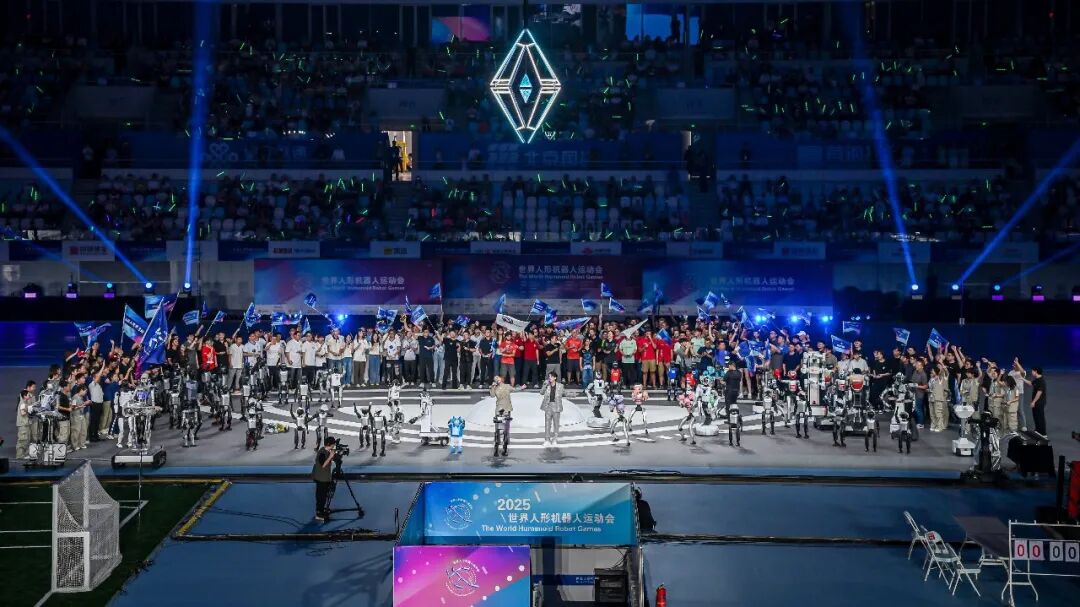
In such a structure, similarity brings more danger. If everyone dives in the same direction, it will inevitably lead to a fierce resource competition. Only when there are differences between companies can a truly resilient industry ecosystem be built.
For late - entering small manufacturers, instead of copying the path of large companies, it is better to look for scenario gaps that are not yet well - defined. In the corners that large companies are not interested in or cannot process in time, there is often an untapped small blue ocean.
02
From the changes in capital flows
The development possibilities of small companies
If we say that the robot financing market still felt the influence of "grand narratives" in 2025, this year it has entered a cold and realistic phase.
The investment direction of capital has begun to avoid grand narratives and instead select the most likely - to - survive types from the start, and pays more attention to the evaluation of real - world security. Capital is increasingly interested in whether a company has real application cases, whether it has mass - production capabilities, and whether it can really make money.
However, this may not necessarily be bad for small companies. If we observe the investment direction of capital in the early rounds, we may notice that three types of opportunities emerge for small companies.
One type are the experts in vertical scenarios. These companies select a specific scenario and process it repeatedly, such as agricultural harvesting, cleaning services, elderly care, etc. For example, Zhi You Wu Jie, which has entered the scenarios of logistics transportation and ship coating, and He Xin Dong Li, which focuses on agricultural robots.
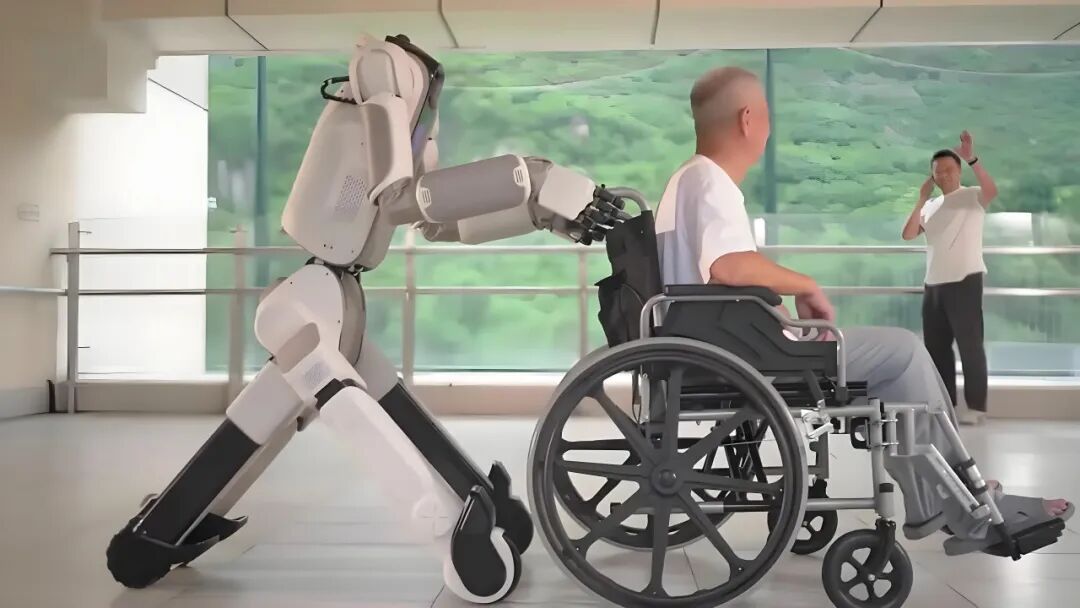
Their common characteristics are: They all belong to real and urgent needs, the work is highly dependent on human labor, and the automation replacement has a clear ROI.
For a long time, the development of these companies has been restricted by a key variable: the labor supply. But with the change in the population structure, this restriction is gradually becoming more obvious, and the emergence of robots just offers a new way to solve the problem.
Take the pool - cleaning robot and the lawn - mowing robot as examples. The reason why they have developed rapidly abroad is that they have recognized the real demand gaps, and these gaps are further enlarged by the high local labor costs. According to an employee of the Lidar company RoboSense, the lawn - mowing robot has already become an important client for them. For example, Ninebot, a leading company in the field of lawn - mowing robots, delivered 140,000 devices in 2024, and the cumulative sales volume exceeded 240,000, fully showing the huge potential of the niche market.
Another type are the "shovel sellers" in the industrial chain, that is, the manufacturers of core components.
In a less certain industry, what is the safest is often the infrastructure. Regardless of which company wins in the end, robots need core components such as actuators, sensors, control systems, etc.
For example, the dexterous hand, one of the most important components of robots, was supported by several national and international companies with large - scale financing at the beginning of this year, including Ling Xin Qiao Shou, the Critical Point of ZHIYUAN, and the Hungarian company Allonic, which has revolutionized the dexterous hand of robots with bionic web technology.
Investment in these areas is essentially a bet on the overall growth of the industry, not just on the success or failure of a single company. It can be regarded as an "antifragile" strategy.
In addition, software companies focusing on physical intelligence have also been an important investment direction since the beginning of the year. These companies have won the favor of capital when the physical capabilities of robots are gradually reaching their limits and the "brain" problem needs to be urgently solved. But if these small companies actually build a large physical model, they will be included in partnerships by many physical - body manufacturers and quickly rise to the ranks of large corporations, so they are not included in the discussion of small companies.
The last type of company, which is often ignored by people, plays a key role in commercial implementation - the robot service providers. The development of the robot industry depends not only on innovation in hardware and software but also on in - depth cooperation in all service areas.
These service providers are responsible for areas such as data collection and labeling, scenario setup and testing, system integration and maintenance, to ensure that the robot system functions stably in the complex real - world environment and can be commercially applied, and to accelerate the step of robot technology from the laboratory to market introduction.
Recently, companies that have received financing include Mi Feng Technology, which focuses on physical - intelligence data services, Tian Xing Yuan, a general industrial physical - intelligence platform, and An Nu Intelligence, which focuses on the implementation of humanoid robot projects, etc.
They help robots truly enter the real world. Especially in the industrial scenario, where robots are currently being used the fastest, there is a huge technical gap between the laboratory and the factory, between the prototype and mass equipment.
The use of humanoid robots in the factory usually takes 6 to 8 months to go through processes such as the adjustment of movement strategies, the verification of stability and safety, etc.
In the traditional industrial - robot industry, there is often the role of an integrator, who is not only responsible for connecting the product to the real scenario but also undertakes a series of services during the implementation process. In today's robot industry, robot service providers are trying to close these gaps and overcome the "last mile" of the implementation of robots as productive forces, to turn robots from products into solutions.
03
The way for small companies to break free from the shadow of large companies
From the above text, it can be seen that small companies can make a leap - forward in certain areas, but there are limitations.
First of all, choosing a suitable scenario is a crucial step to success. Small companies should find markets that are not fully covered by large manufacturers. These markets must have clear replacement needs and show a clear ROI. Especially scenarios that do not require intensive labor and have lower safety requirements can often be implemented more quickly and start to make profits.
Secondly, in many vertical industries, there is still no general consensus on technical paths, the market competition situation is not fully established, and industry standards are not clearly defined. This technical uncertainty provides small companies with a valuable space for trial - and - error. Small companies also have the opportunity to gain a foothold through depth rather than scale.
Small manufacturers can focus on their own R & D regarding the scenario and also cooperate with leading university laboratories or research institutions to collect patents and technologies. This can not only build a technical barrier for the company but also reduce R & D costs over time and create a sustainable competitive advantage.
In the face of the pressure from large companies, small companies can build their own ecosystem through an open - platform strategy. By cooperating with other robot companies, software developers, and system integrators, they can utilize resources and channels and thus quickly expand the market.
Moreover, one should not underestimate the power of services. Small manufacturers can offer a comprehensive solution through flexible service strategies and differentiated business models to strengthen customer loyalty and even solve the cold - start problem to a certain extent.
However, it should be noted that robot R & D is a long - distance race. From technical R & D to the verification of safety and reliability, time and capital are inevitable challenges. For small companies with limited resources, the key to winning this race is to find a balance between R & D investment and operating costs and choose a practical technical path.
With further development