36Kr Exclusive Interview | After Secretly Submitting IPO Application, Subscription Exceeded 5000 Times. CEO of Huayan Robotics Says Wants to Keep a Lower Profile
Author: Ou Xue
Editor: Yuan Silai
In daily life, Wang Guangneng, the CEO of Huayan Robotics, is a somewhat boring person. He doesn't smoke, drink, or play mahjong. He just learned to play Guandan recently. He has a house in Nanshan District, but he usually eats in the company canteen and lives in an urban village near the company.
Wang Guangneng doesn't seem to be an aggressive person. He speaks at a slow pace and in a low voice, retaining a rare sense of authenticity. More importantly, although Wang Guangneng has a technical background, he doesn't have the sharp edge that many geniuses have. He is confident but not arrogant.
Like Wang Guangneng, Huayan Robotics is not well - known to the outside world most of the time. They are not good at telling touching stories. In an era when the valuation of embodied intelligence companies can easily reach tens of billions, they seem too plain.
In May last year, Huayan Robotics secretly submitted its prospectus to the Hong Kong Stock Exchange. After passing the hearing, it listed on the Hong Kong stock market at an issue price of HK$17 per share and a market value of HK$9 billion. The pre - greenshoe financing scale of this listing was US$201 million, and the post - greenshoe financing scale was US$232 million (assuming full exercise of the greenshoe option). The company received nearly US$100 million in cornerstone investments from many leading institutions such as Hillhouse Capital, GF Fund, and Morgan Stanley, and introduced many sovereign and long - term funds and industrial investors at home and abroad. The public offering part recorded an over - subscription of more than 5,000 times, making it the most sought - after target in the Hong Kong stock robot IPO this year.
On March 30, Huayan Robotics (1021.HK) officially rang the bell to list on the Hong Kong stock market. As of press time, Huayan was trading at HK$18.4 per share, up 8.24% from the issue price, with a market value of HK$9.779 billion.
Behind the boom in the capital market, Huayan's entrepreneurial story is quite unique. Instead of choosing the more mainstream end - user route at that time, it took a route that seemed to have little imagination - insisting on self - research of underlying technologies and becoming the core supplier of standard equipment manufacturers.
The starting point of this choice can be traced back to a "prediction" made by founder Wang Guangneng within Han's Laser in 2014. At that time, as the deputy general manager of Han's Motor, he judged at the year - end conference that AI would be the next explosive point, and intelligent robots empowered by AI would be everywhere. Subsequently, he established a robot research institute within Han's Motor and appointed himself as the dean, gradually building up Huayan's technical foundation.
However, Wang Guangneng was not good at financing at that time and missed the robot investment boom in 2018 and 2019. In 2020, at the worst time, there was only 60,000 yuan left in Huayan's account. At that time, Wang Guangneng wouldn't throw away the unfinished mineral water but would pour the remaining water back into his kettle.
Also in that year, Wang Guangneng made a crucial decision: to buy back the controlling stake from Han's Laser and complete the management buy - out. He used his own money and the unsecured and interest - free loans from three investors to survive on the verge of bankruptcy.
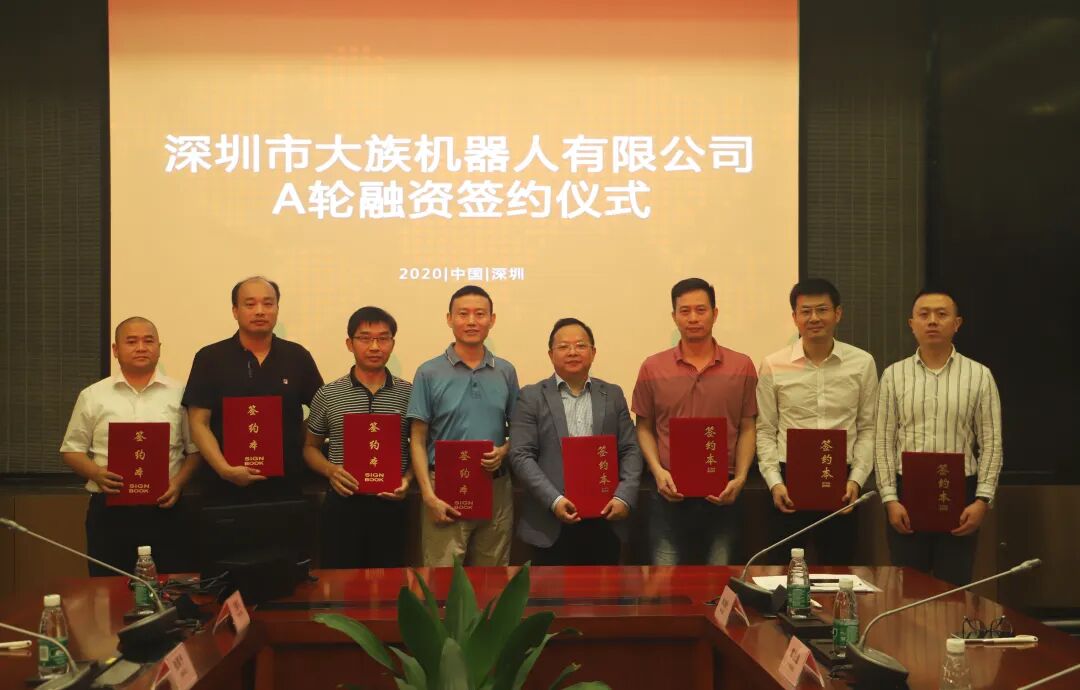
"He is a very pure person." Liu Anmin, the general manager of Huihe Asset and the A - round investor of Huayan, evaluated Wang Guangneng, the founder and chairman of Huayan Robotics. In August 2020, Liu Anmin invested in Huayan's A - round at the most difficult time of the company, and this investment has now achieved relatively considerable returns. "His persistence and love for technology in his eyes make me continue to be optimistic about the company's long - term development."
(Source: Company)
In Liu Anmin's view, Huayan's differential advantages are reflected in three aspects:
First, the technical barrier of full - stack self - research. Wang Guangneng studied electrical engineering and control during his undergraduate and postgraduate years. He worked on motion control in Singapore and established a motor team at Han's after returning to China. Huayan is one of the few collaborative robot companies in the industry that can self - research core components such as motors, servo drives, motion control, and joint modules. "When the volume is small, self - research is a disadvantage because there is no cost advantage; but once the volume increases, your technology iteration, stability, and reaction speed are stronger than others," Liu Anmin said.
Second, a unique business model. Huayan doesn't target end - users directly but chooses to cooperate with standard equipment manufacturers and become the core component of their products. "He doesn't choose a one - time deal but standardizes by industry and empowers each industry," Liu Anmin analyzed. This model allows Huayan to avoid competing with downstream customers. The marketing expenses are much lower than those of its peers. Although the gross profit margin is not the highest, the net profit margin is healthier.
Third, the innate gene of internationalization. From setting up a R & D team in Germany in the early days to establishing in - depth cooperation with leading European robot companies later, Huayan started its overseas layout earlier. Now, Huayan has reached strategic cooperation with many international giants, and the overseas revenue once accounted for more than that of the domestic market.
In Wang Guangneng, Liu Anmin saw not only technical ability but also a "sober self - confidence." He is not stubborn and can accept different opinions. Liu Anmin recalled that he was always the one who "played the devil's advocate" in the board meetings, specifically pointing out problems, and Wang Guangneng not only listened but also took action quickly. He replaced three production management directors and hired people from outside at a high price to make up for the shortcomings.
This open - minded attitude is also reflected in the equity incentive. Wang Guangneng once distributed his shares to core employees at zero cost. "Among all the projects I've seen, he is the only one who is so generous with equity incentives for employees," Liu Anmin said.
The explosion of Huayan Robotics in the secondary market is actually inevitable. "There will definitely be companies worth 50 billion or 100 billion in this field. It depends on who is ready," Liu Anmin said.
Behind Wang Guangneng is a passionate story spanning two decades. He is an example of entrepreneurs of that era. He was born into a poor family and changed his fate through the college entrance examination. At the turn of the century, after China's accession to the WTO, Wang Guangneng keenly saw that the most opportune period in China had arrived. He resolutely returned to Shenzhen from Singapore to participate in the entrepreneurial wave.
Compared with the wealth - creating myths of AI start - ups, Huayan Robotics' pace is slow but steady. It represents another side of Chinese enterprises: not romantic but equally magnificent.

Over 5,000 - fold Subscription in the Hong Kong Stock Market
Yingke: Huayan's public offering recorded an over - subscription of more than 5,000 times, far exceeding most technology stocks. How do you feel? What do you think investors value most about Huayan?
Wang Guangneng: I didn't expect it to be so high. I originally thought 10 or 20 times would be enough. Because we used to be very low - key and didn't do much promotion. I think investors may value the fact that we are a down - to - earth company with solid underlying technologies. Due to the confidential submission, we met few investors during the IPO process, but the success rate after the meetings was very high, including both domestic and foreign investors. Many national sovereign funds and international long - term funds recognized and invested in us because we focus on underlying technologies, and both our performance indicators and business models have been recognized.
Yingke: What are your expectations for the performance on the listing day?
Wang Guangneng: To be honest, I think it's better to be low - key. The current high popularity may lead to speculation, which I don't want.
Yingke: What do you want to say most to the investors who bought Huayan's stocks on March 30?
Wang Guangneng: I hope investors are long - term optimistic about us. We will honestly improve our technology and achieve good performance.

Huayan and Han's Laser
Yingke: When did you start thinking about making robots?
Wang Guangneng: I started thinking about this in 2012. My first job after graduation was in Singapore, working in the fields of motors, servo drives, and motion control. Later, I wanted to do something more interesting. I started researching in 2012 and thought it was time to start in 2014. But at that time, I thought I didn't have an advantage in making traditional industrial robots, while collaborative robots use frameless motors and servo drives, which are exactly the technologies we are good at, and it was a new species at that time.
Yingke: Was it smooth to promote this project within Han's at that time?
Wang Guangneng: Although I always got the support of the leaders of Han's Group, it was actually not very smooth. Han's Motor was profitable, but the robot business would definitely incur losses at the beginning. People in the profitable departments would think, why do you, the loss - making department, have better treatment than us? And robot R & D is about creating something from scratch, which requires a high density of talents and high work intensity. Finally, I thought it would be better to separate from Han's Motor and set up a new company and hold the controlling stake myself.
In 2017, we re - registered Han's Robotics. Han's Laser invested more than 40 million yuan, and my junior fellow apprentice Zhang Guoping and I invested more than 3 million yuan. But at that time, Han's held the majority stake, and we held a minority stake, so it was difficult for social capital to come in. Later, on the advice of the financing advisor, we spent 80 million yuan to buy back the controlling stake, and then the financing became smooth. However, this progress was two years behind that of domestic peers.
Yingke: How did you specifically get the equity back later?
Wang Guangneng: I took a big gamble. In 2020, I borrowed money to buy 50% of the equity from Han's Laser, spending a total of 80 million yuan. In 2021, I bought another 10% after dilution. The year 2020 was extremely difficult. There was only 60,000 yuan left in the company's account at the least. And unfortunately, the pandemic hit, and the money was almost used up. Fortunately, several customers were very supportive and prepaid the whole - year orders directly. Also, three investors were willing to lend me money first and then conduct due diligence, so we managed to survive.
Yingke: How difficult was that period?
Wang Guangneng: Let me put it this way. To save money, I wouldn't throw away the half - bottle of mineral water left by guests but would pour it into the kettle and boil it for further use. In 2019, we couldn't even pay the year - end bonus. We didn't get the financing until October 2020, and we were in a cash - strapped state for almost a year. Even now, I still have the "money - shortage syndrome." I either take the subway or ride a shared bike for trips within the city.
Yingke: How did you survive that period?
Wang Guangneng: I think 2020 was also a lucky year for me. Whenever there was no money, there were always good people to help. One was a major national project we cooperated on with Tsinghua University, and we got 5 million yuan from it. We don't participate in many national projects, but this 5 million yuan was a life - saver. The other was BGI - Genomics. They were very supportive and placed a whole - year order with us and prepaid the whole - year payment. This kind of prepayment is rare in the industry. Nowadays, it's more common for customers to delay payment for one or two years. I'm always grateful for that.
And the three investors I mentioned just now. I told them either don't do due diligence and invest in me directly or give me the money first and then do due diligence. They really transferred 5 million yuan each to me without collateral, interest, or a repayment date. They thought I was an honest person and wouldn't play tricks, and they were really helpful.
Yingke: Why did the investors dare to give you money at that time?
Wang Guangneng: Maybe they thought I was an honest person and wouldn't play tricks. They transferred the money to me without collateral, interest, or a repayment date. Looking back now, it was really lucky.
Yingke: Now, what's the relationship between Huayan and Han's Laser?
Wang Guangneng: Han's Laser is still the second - largest shareholder and a financial investor, and our team is the largest shareholder. But now, it's more of a business cooperation relationship. Han's Laser has more than 100,000 end - customers, and our business model doesn't target end - users, so we can cooperate well with various business departments of Han's. Also, in terms of going global, Han's started its global layout early and has a presence in major regions of the world. This indirectly helped us avoid many pitfalls. We don't have to start from scratch in most places we want to go globally because Han's is already there.

Being a Partner of Robot Manufacturers
Yingke: Huayan is both a complete machine manufacturer and a core component supplier. Will this model lead to competition with downstream customers?
Wang Guangneng: There will be such problems, but we have solved them relatively well. We will make it clear to our customers that if they are worried about competition, we can stop targeting end - users. The real competition is actually among my customers because several companies in the same industry may use our products. Later, we will establish a mechanism to ensure fairness.
Yingke: Why did you choose the "partner model" instead of targeting end - users directly?
Wang Guangneng: We actually wasted some time in the early stage. Later, we found that if we took the same route as others, people would only think that there was one more similar company. So we analyzed our advantages: we have deep accumulations in motors, servo drives, and motion control, which others don't have.
So our customers are not end - users but partners - standard equipment manufacturers. They buy our robots or joints and integrate them into