After driving down the price of diamonds to rock-bottom levels, folks from Henan Province have now turned around and gained a stranglehold on the global semiconductor industry.
It may be hard for you to imagine that the most valuable use of a diamond now is not to be worn on the hand, but to be placed inside NVIDIA's GPUs.
In 2026, the latest generation of AI servers from two major chip giants, NVIDIA and AMD, are all equipped with a special heat - dissipation material, the cultivated diamond heat sink. This artificially grown diamond has a thermal conductivity five times that of copper and twenty times that of silicon. It is currently the most effective heat - dissipation material to withstand the heat generated by AI chips.
More than 90% of the world's artificial diamond production capacity is in the hands of a group of people from Henan.
A few years ago, it was these people who drove the diamond price from sky - high to rock - bottom: the wholesale price of a one - carat cultivated diamond rough stone dropped to a minimum of 1,800 yuan, which is one - tenth of the price of a natural diamond.
No one expected that this cut - throat price war would force a new path to the semiconductor industry.
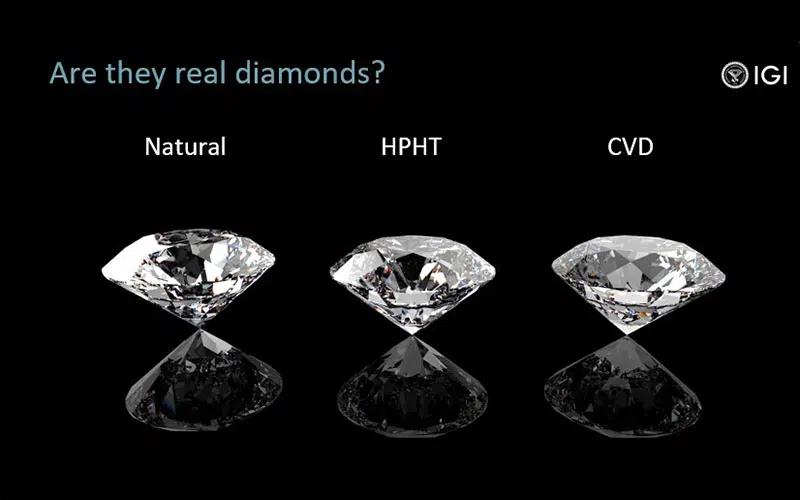
01
How a Diamond Became Worthless
To understand what the people from Henan have done, you first need to know how diamonds became so expensive.
In the second half of the 19th century, a huge diamond mine was discovered in South Africa, with a production capacity measured in tons. According to the normal supply - demand relationship, diamonds should have been sold at the price of ordinary ores. However, a company called De Beers bought the mine and then did two things: controlled the output to artificially create scarcity; spent a lot of money on marketing and came up with the globally famous slogan, "A diamond is forever."
Just like that, a form of carbon that is not scarce on Earth was packaged as the only token of love. At its peak, De Beers alone controlled 90% of the global diamond business.

Cecil John Rhodes, the founder of De Beers, was also the Prime Minister of the British colonies in South Africa and Namibia
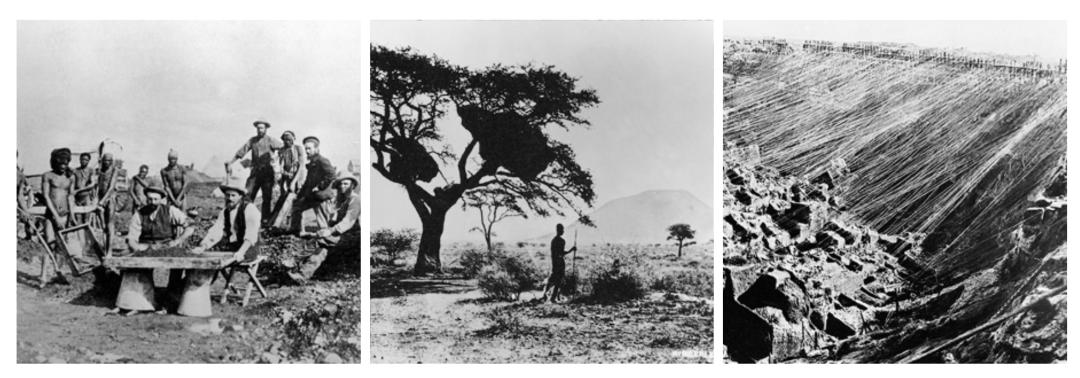
Diamond mine workers in South Africa more than a hundred years ago
But this business model has a premise: diamonds can only be mined from mines.
In 1963, China produced its first artificial diamond. Twenty years later, an engineer named Feng Jinzhang from Zhecheng County, Henan, returned to his hometown and opened a diamond factory. Later on, I don't think it's a legendary story. It's just the simple logic of industrial agglomeration: the first group of people did it and made money, then their relatives and friends followed suit. Technology and talent circulated in the county.
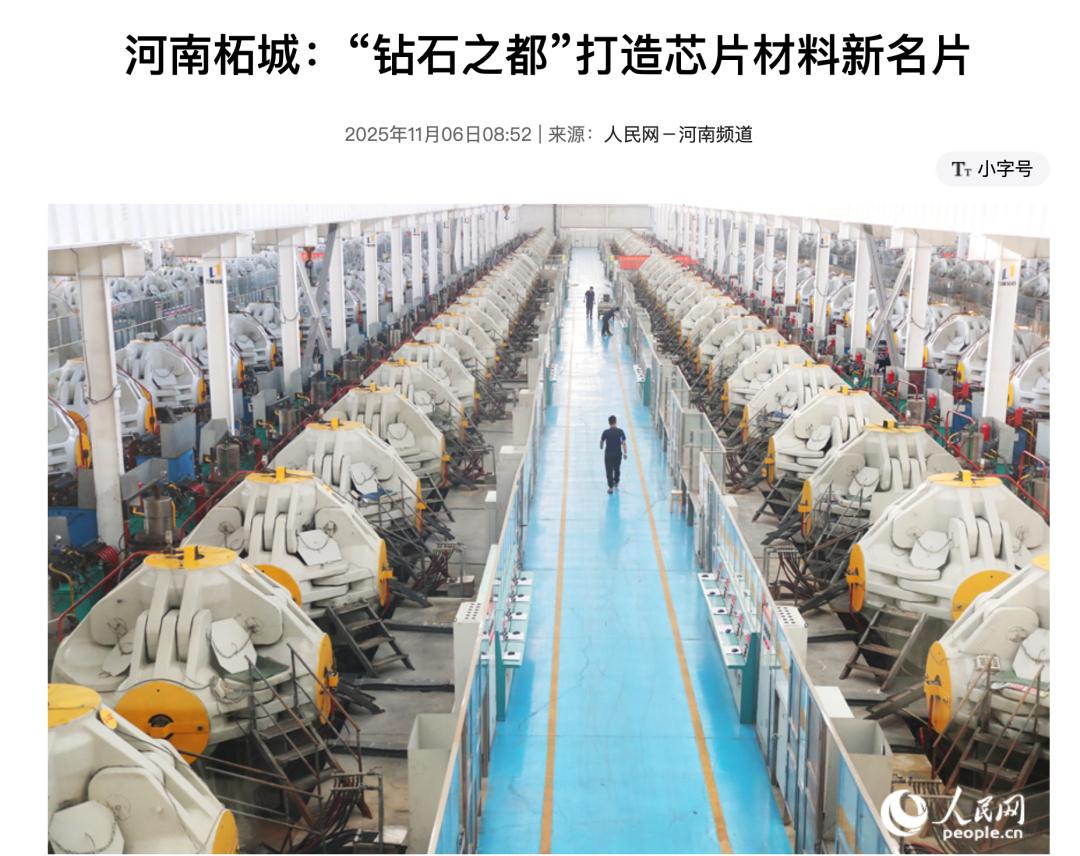
Today in Zhecheng, 223 super - hard material enterprises are clustered together. The production and export volume of diamond micropowder both account for more than 90% of the national total. An ordinary county is called the "Diamond Capital of China." In the entire Henan province, people here control more than 80% of the production capacity of China's cultivated diamond market. Globally, China's artificial diamond production accounts for more than 90% of the world's total, of which about 95% is industrial - grade.
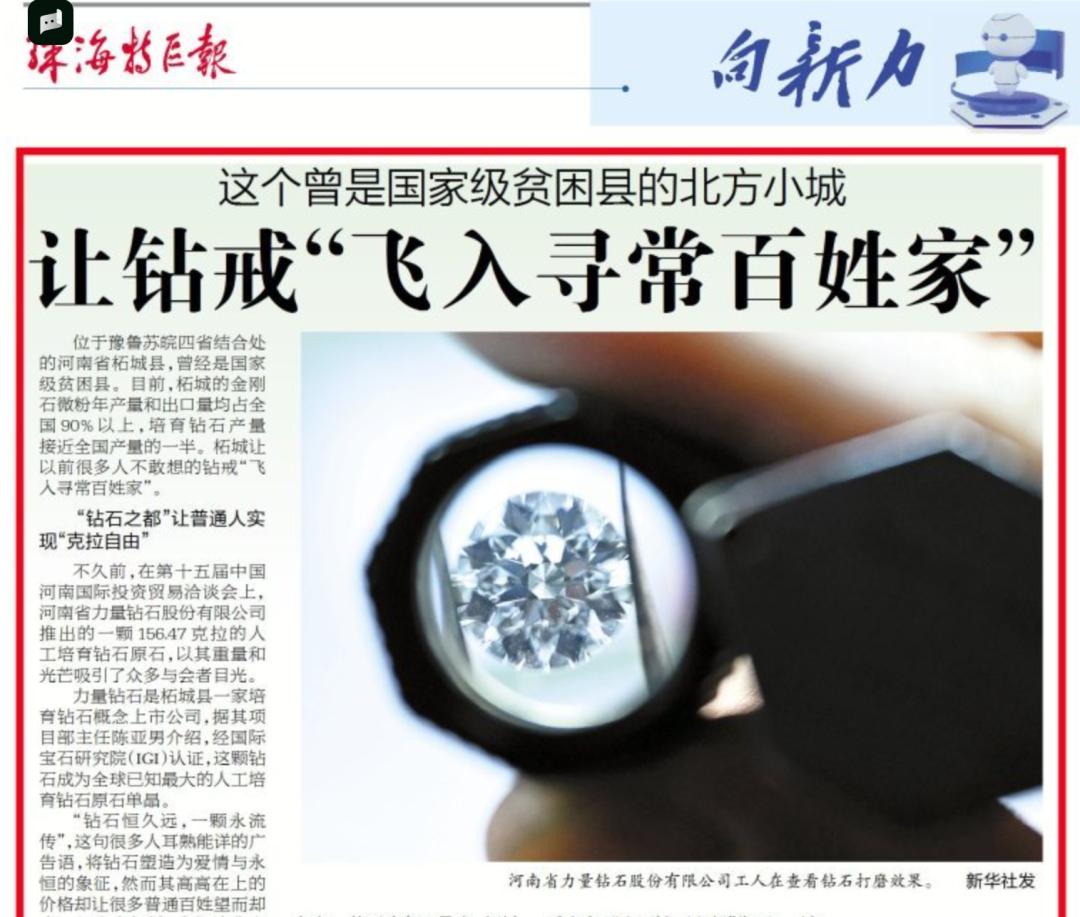
What do they rely on? A technology called HPHT (High - Pressure High - Temperature method). Simply put, it means putting extremely ordinary graphite (yes, the main component of pencil leads) into a domestic device called a six - anvil press. This machine squeezes from six directions simultaneously, creating a high temperature of over 1300 degrees and extreme high pressure in a very small space. It takes only a few days to complete what takes billions of years deep in the Earth.
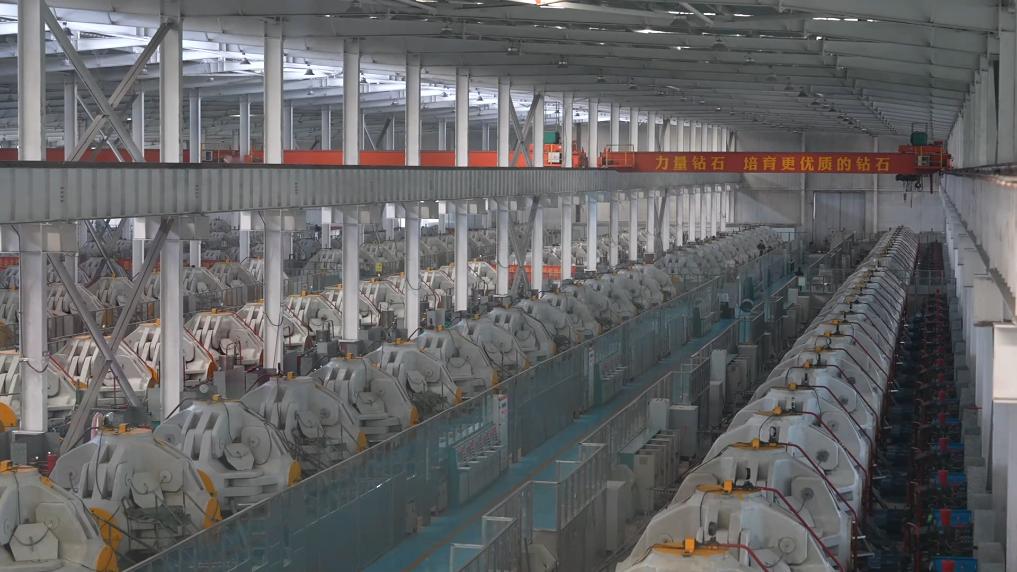
Rows of six - anvil presses. Source: Xinhua News Agency
Pencil leads go in, diamonds come out. Relying on this self - developed equipment, Chinese enterprises have made diamond production extremely cheap and fast.
Then, De Beers, already the world's largest natural diamond merchant, got anxious. In 2018, it spent a lot of money lobbying the US Federal Trade Commission (FTC), asking that all cultivated diamonds must be labeled "synthetic," implying that they are fakes. However, the FTC directly removed the word "natural" from the definition of diamonds: "Whether it comes from underground or above - ground, a carbon crystal is a diamond."
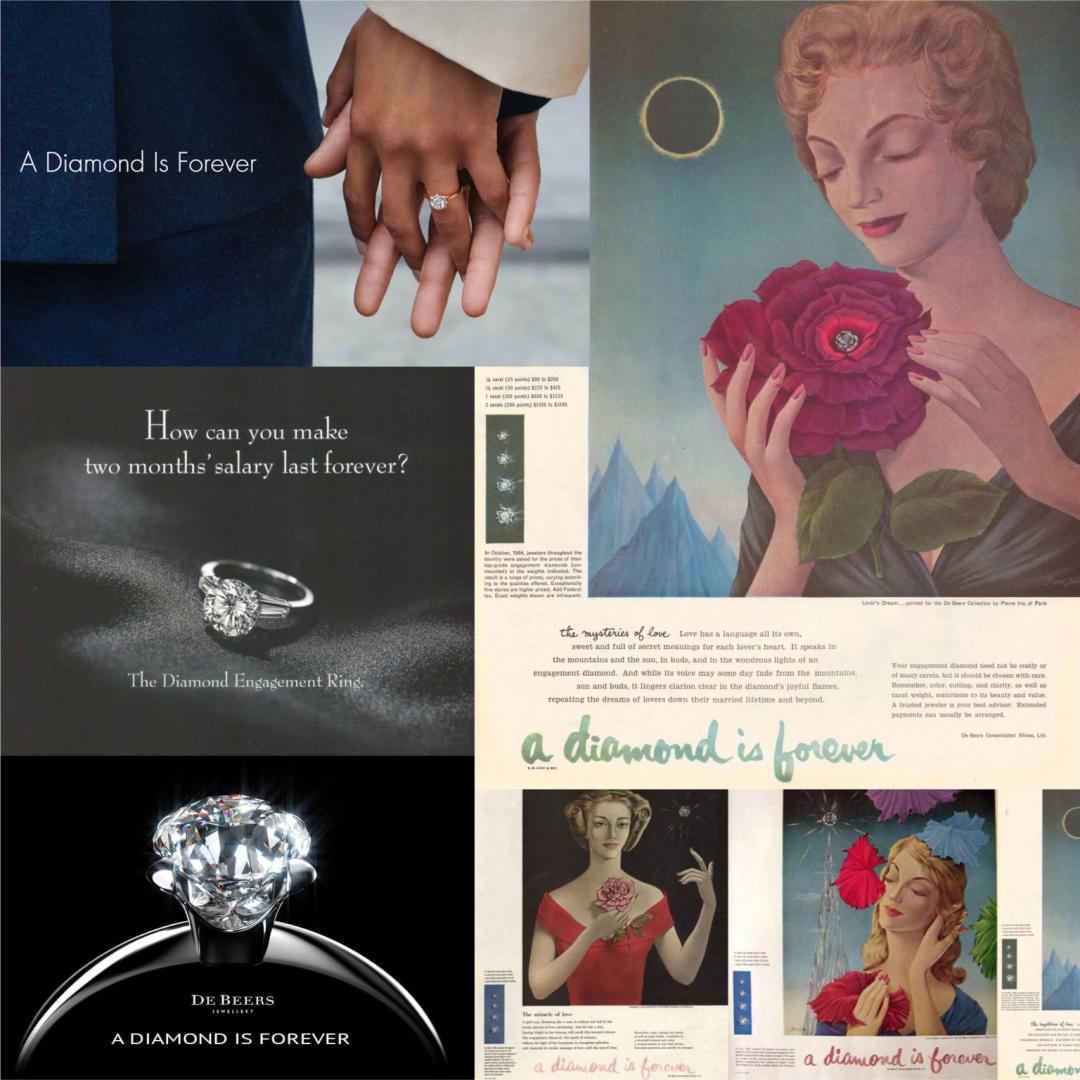
An advertisement made by De Beers
After the lobbying failed, De Beers changed its strategy: if you can't beat them, join them. In the same year, it launched its own cultivated diamond brand, Lightbox, with a unified price of $800 per carat. But the purpose was not to make money, but to firmly implant a perception in consumers' minds: cultivated diamonds are just cheap fashion accessories, only suitable for small occasions like a little girl's birthday. "True love and commitment can't be grown in a laboratory."
However, De Beers seriously underestimated the speed of our production capacity release.
Around 2022, cultivated diamonds became popular for a while. Young people found that they could buy a one - carat cultivated diamond with better quality than a natural diamond for just a few thousand yuan. Why spend fifty or sixty thousand? Leading companies expanded production while the iron was hot. With billions of dollars invested, the production capacity expanded rapidly. But the boom came and went quickly, and the price dropped like an avalanche.
Chinese peers cut prices much faster than Lightbox. As a result, this company accumulated losses of more than $120 million in two years. Meanwhile, De Beers had unsold natural diamond inventories worth $2 billion. In May 2025, the CEO personally announced the full closure of Lightbox.
The myth of diamonds has been crushed by the high - pressure machines in the Henan county for seven years, and the illusion has shattered.

02
After the Overproduction
But when the price collapsed, everyone's life became difficult.
Several leading domestic enterprises, such as Zhongbing Hongjian, Huanghe Whirlwind, and LiLiang Diamond, all experienced a double - decline in revenue and profit. The market penetration rate of cultivated diamonds is indeed rising rapidly. In 2025, the proportion of cultivated diamonds in the global diamond jewelry sales has exceeded 40%. However, Chinese enterprises have not benefited much from this growth.
There is a ridiculous industrial chain structure here: China produces the rough diamonds, India cuts and polishes them, and Europe and the United States put labels on them and sell them at high prices. China controls 60% - 70% of the global rough diamond production capacity. But when the rough diamonds reach India, the cutting can increase the price by 3 - 5 times; after being packaged by European and American brands, the terminal selling price can reach 10 - 15 times the cost of the rough diamonds. The people from Henan produce the most diamonds in the world, but others take the biggest profits.
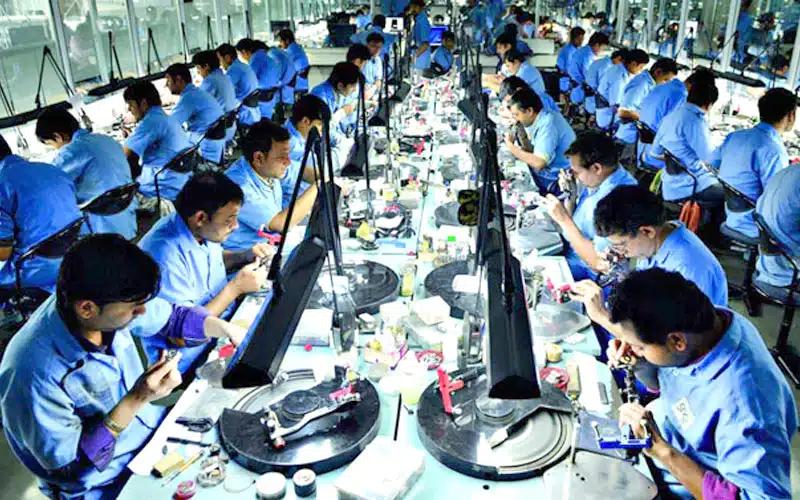
The world's largest diamond cutting and polishing center is located in Surat, the second - largest city in the Indian state of Gujarat
What's even more troublesome is that young people don't believe in diamonds anymore. You can often see similar posts on social media: someone spent 10,000 yuan on a cultivated diamond ring and used the saved 90,000 yuan to buy gold. "The value of gold almost doubled, and the cultivated diamond is just for fun." Look at the DR diamond ring, which is famous for "only one ring can be given to one person in a lifetime." Its stock price has been hovering around 20% of its listing high for a long time. It doesn't rise in a bull market and doesn't fall much in a bear market. It just stays there steadily.
So the question is: with the world's strongest diamond - making ability in hand and the jewelry path seemingly a dead end, what's next?
They really found a way out.
03
The Inconspicuous Carbon Becomes the Key to the Chip
Diamond, chemically composed of carbon, has some amazing physical properties:
It is the most thermally conductive material known, with a thermal conductivity five times that of copper and twenty times that of silicon. As chips are getting smaller and more powerful, heat dissipation has become the number - one bottleneck problem.
Its breakdown voltage is 50 times that of silicon, making it naturally suitable for high - power scenarios such as 5G base stations, AI servers, and new - energy vehicles. It also shows potential in the field of quantum computing, as the nitrogen - vacancy color centers in diamond can be used as quantum bits.
To put it simply, when silicon - based chips are gradually reaching the physical limit, diamond may be the most powerful solution.
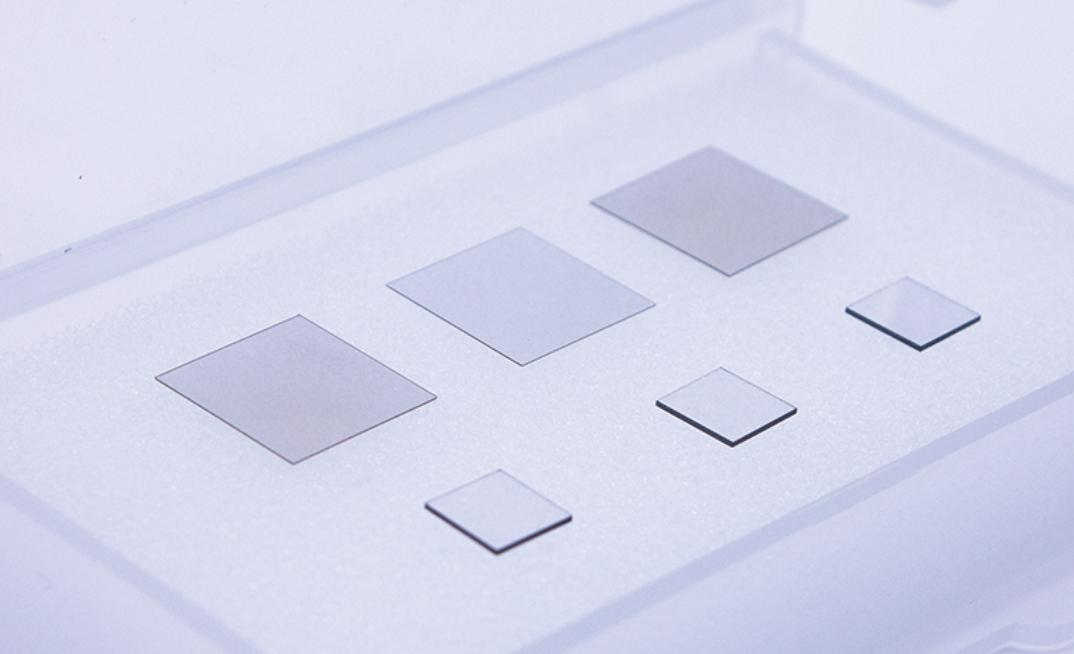
A diamond cooling heat sink
But just looking at the parameters is not enough. It has to be tested in practice.
In 2025, a team from Stanford University conducted an experiment called the "diamond blanket." They covered the surface of a transistor with a layer of diamond. When measured, the chip temperature dropped by 70 degrees.
Looking at the industry, the Silicon Valley startup Akash Systems took an NVIDIA RTX 4070 for testing: with the same fan and the same environment, they just added a thin layer of diamond between the chip and the radiator. As a result, the core hot - spot temperature of the GPU dropped directly from 72.6 degrees to 62.3 degrees. A temperature difference of more than 10 degrees in the chip world means doubling the lifespan and the ability to overclock freely.
From the laboratory to mass production, diamond heat dissipation has officially taken off.
In 2026, it is known in the industry as the "commercialization year of cultivated diamond heat dissipation." NVIDIA's new - generation high - end GPUs directly list cultivated diamond heat sinks as standard. Subsequently, Akash Systems also launched an AI server equipped with AMD GPUs, also using diamond for heat dissipation. With both giants on board, the signal is clear enough: AI chips are getting hotter, and traditional copper and aluminum heat dissipation methods can't keep up.

Price increases are a signal. In March 2026, several cultivated diamond factories in Henan successively issued price - increase notices, raising the price of large single - crystal products by 15%. The reason stated in the notice is not the recovery of jewelry demand, but "a significant increase in the prices of equipment and raw materials," which means the cost of making chip heat sinks is rising.
Is