Elon Musk's "Chip Blueprint" Recruitment Kicks Off: Annual Salary of $330,000, On-Call 24/7
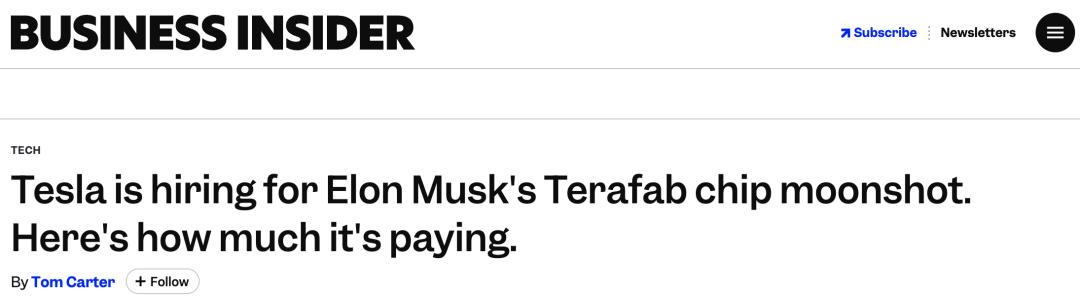
As soon as Elon Musk announced Tesla's Terafab chip plan, job openings quietly appeared on Tesla's official website.
Tesla is looking for lithography engineers in California and silicon engineers in Texas. They also need a technical project manager with experience in managing over a billion - dollar capital project to take charge.
The highest salary offered is up to $338,000 a year, equivalent to about 2.33 million RMB.
However, compared with the ambition of this plan, such a salary level may not be significant -
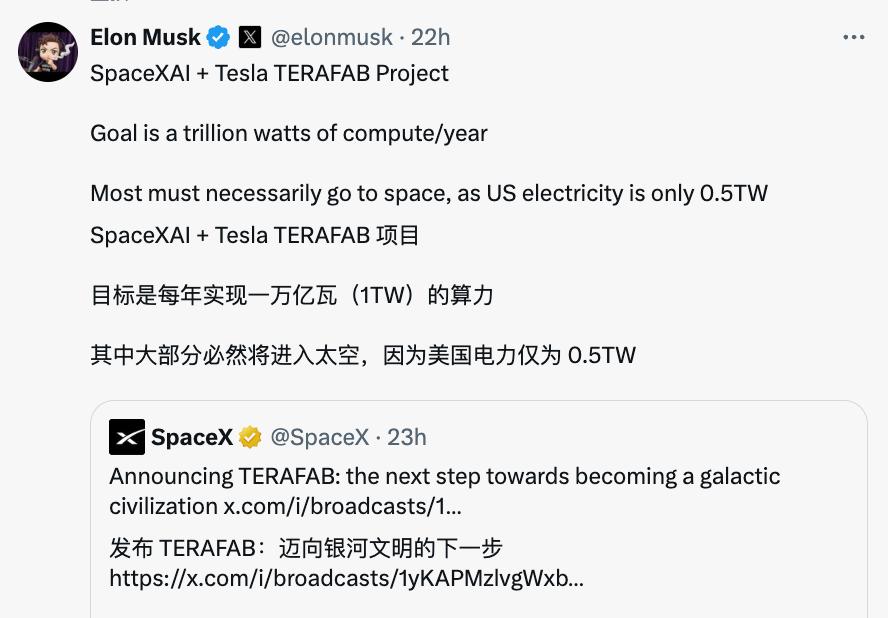
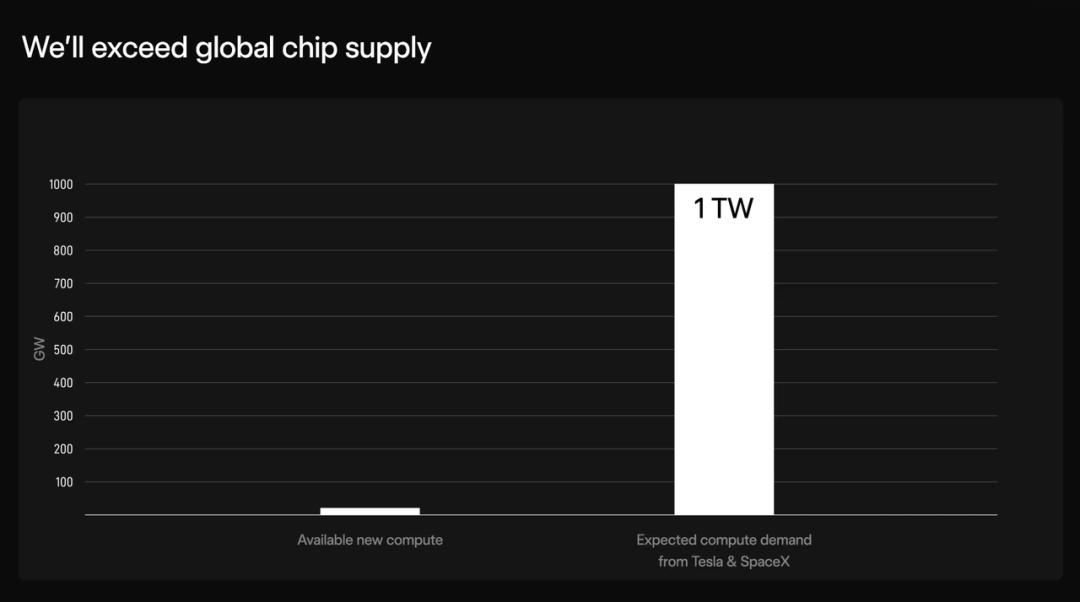
Musk's goal is to produce 1 terawatt of computing power annually, which is 50 times the current global annual output of AI computing power.
SpaceX officially defined it as "the next step towards galactic civilization" in its announcement.
The recruitment requirements, as always, conform to some of the outside world's stereotypes about Musk...
24/7 on - call.
Recruiting Chip Engineers with a Salary of 2.33 Million RMB
Judging from the job distribution, Tesla is recruiting people who are truly involved in chip - making this time.
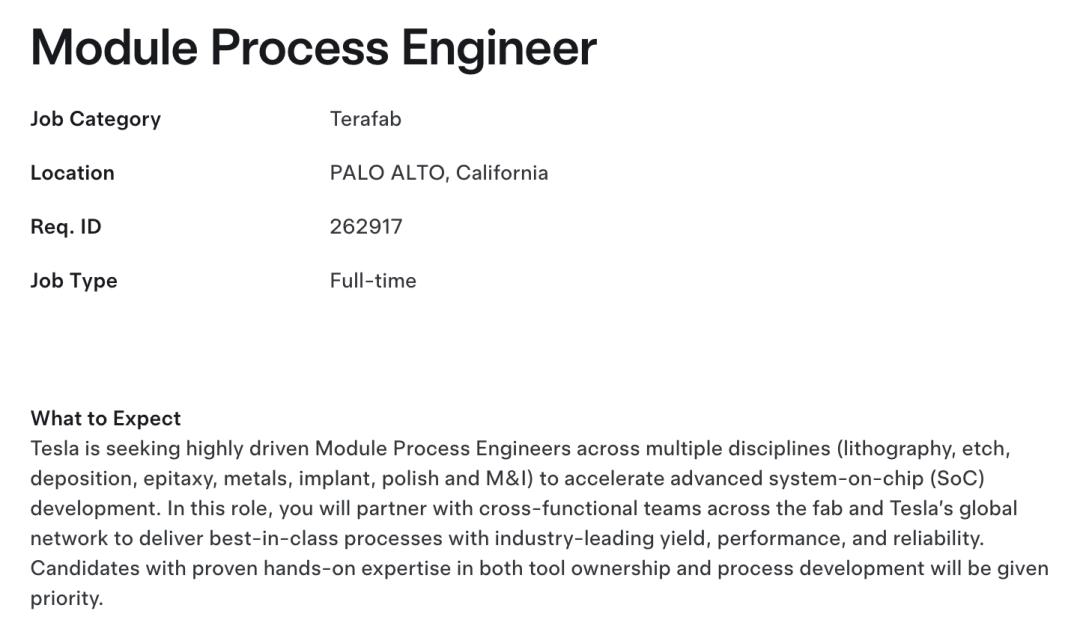
In Palo Alto, there is a job opening for a Module Process Engineer in the lithography direction.
Lithography is one of the most technically challenging steps in chip manufacturing. It uses extreme ultraviolet light to etch the chip design onto a silicon wafer with molecular - scale precision.
Tesla requires candidates to have at least 10 years of experience in top - tier semiconductor development. The base salary range offered is from $88,000 to $240,000 (about 600,000 - 1.52 million RMB).
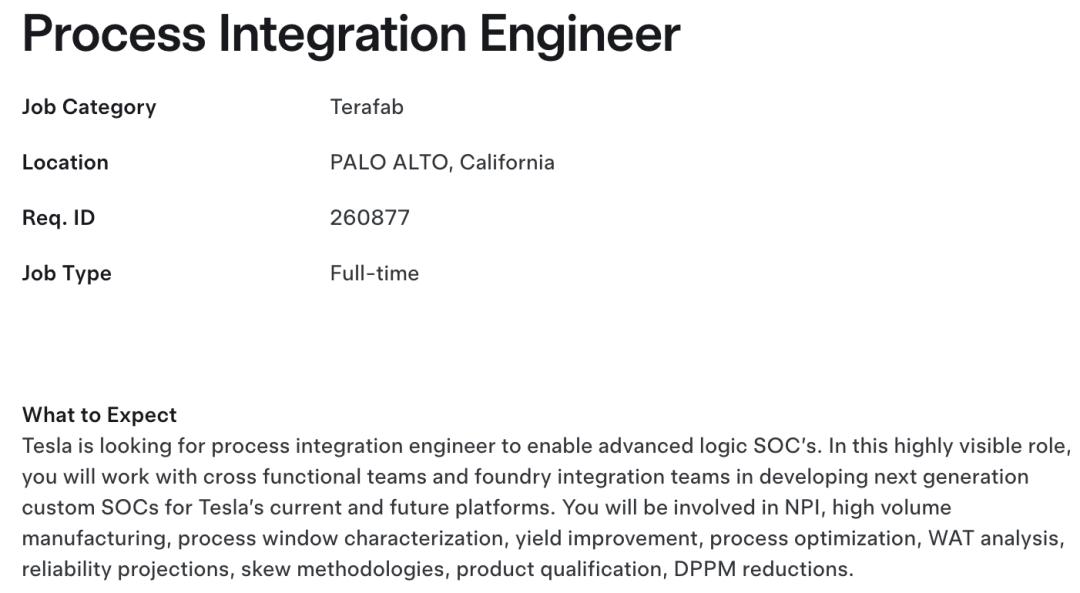
Another position in California is for a Process Integration Engineer, who is responsible for building the manufacturing process for advanced logic chips. The upper limit of the base salary is further raised to $338,280 (about 2.338 million RMB).
In Austin, Texas, Tesla is recruiting a Silicon Engineer and a Technical Program Manager with experience in managing "capital projects worth over $100 million".
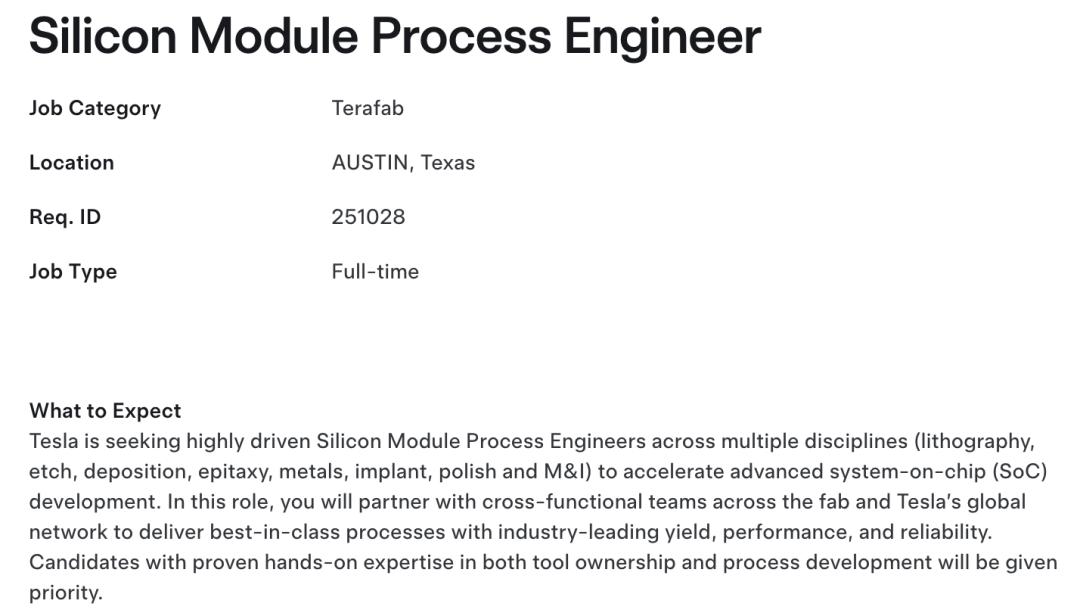
However, it is by no means easy to get such a high - paying job. The requirements for these positions are clearly stated. Candidates need to be on - call 24/7 to support production operations and respond quickly to key production issues.
The salary structure is also very "Tesla - like". The base salary is not the highest among large technology companies, and stock incentives are used to make up the difference. The 24/7 work mode also indicates that candidates may have to choose between this job and a normal work - life schedule.
Besides Tesla, Musk's SpaceX is also busy.
Its "Silicon Department" currently has about 60 open positions, covering areas such as chip packaging and the R & D of space - specific chips. These include packaging and assembly engineers at the Bastrop, Texas factory, as well as chip R & D positions in Washington and California.
Musk's Chip - Making Plan
Tesla is recruiting so many people because Musk wants to do something that the existing chip industry chain cannot keep up with.
The goal of Terafab is to produce 1 terawatt of computing power annually, while the current global annual output of AI computing power is about 20 gigawatts. That is to say, Terafab's goal is 50 times that amount.
Musk's logic is straightforward - if Samsung, TSMC, and Micron expand production at full capacity, he is willing to "buy all the chips". However, the normal expansion pace of these manufacturers cannot meet his demand, so he has to build his own.
The factory is located in Austin, adjacent to Tesla's headquarters and Gigafactory, and is jointly promoted by Tesla, SpaceX, and xAI.
From design to manufacturing, the entire process will be completed under one roof, including the self - development of lithography masks, which are the templates used to print chip circuit patterns onto wafers.
This is equivalent to being both NVIDIA and TSMC. Musk said at the press conference that this integrated design and manufacturing model "has no precedent in the world".
Another rare aspect in the industry is that the Terafab plan integrates the production of logic chips and memory chips under one roof, with a target process of 2nm.
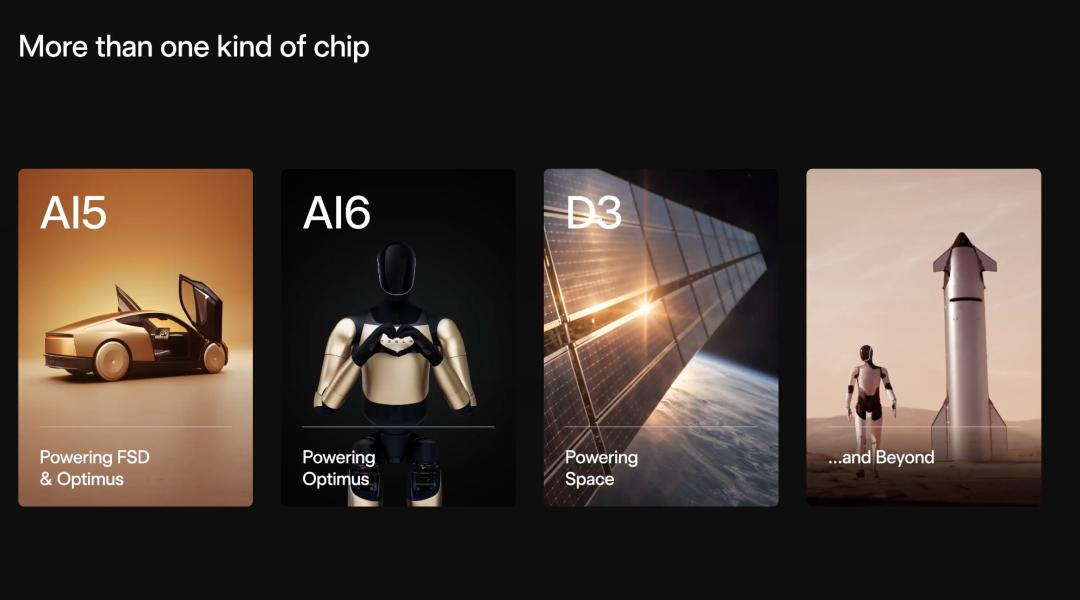
In terms of output, the Terafab plan aims to produce two types of chips -
One type is optimized for edge computing and inference, and is used in Tesla's FSD autonomous driving system and Optimus humanoid robot;
The other type is high - performance chips, specifically designed for space applications and used by SpaceX and xAI.
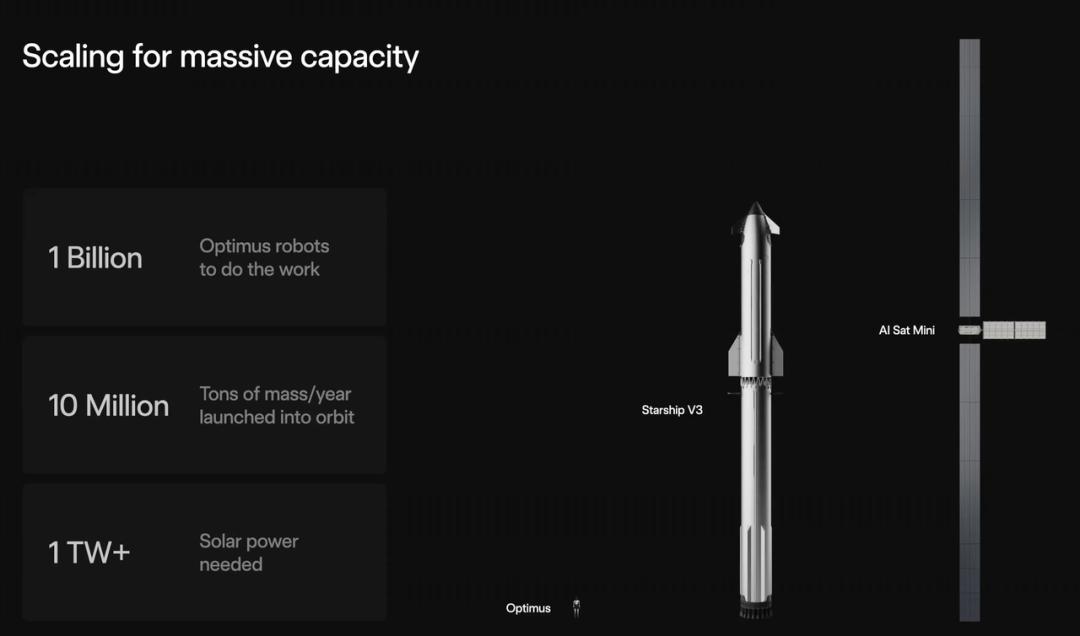
According to the plan, 80% of the computing power will be deployed in space. In Musk's view, the total power generation in the United States is only 0.5 terawatts, and the ground simply cannot accommodate such a large computing power demand.
In his words, "Space - based artificial intelligence is obviously the only way to achieve large - scale development."
As for the funds, UBS analysts estimate that the final cost of Terafab could reach up to $300 billion.
SpaceX plans to conduct an IPO this summer, aiming to raise $50 billion. Its valuation may exceed $1.75 trillion, and raising funds for the space AI data center is one of the important goals.
However, obviously, even if the IPO goes smoothly, this money is just the beginning.
Recruiting Talented People is the Real Challenge
For a $300 - billion project, the problem of funds can be solved gradually, but the problem of finding the right people may be more difficult.
The semiconductor industry highly depends on experience accumulation. The moat of TSMC lies not so much in equipment and funds as in the numerous pitfalls it has encountered in tape - outs, processes, and yield control over the decades.
Such knowledge is difficult to replicate quickly by poaching a few individuals, and what Terafab wants to do is to build a full - chain chip factory from scratch, covering design, lithography, packaging, and testing.
Therefore, compared with raising funds, recruiting talented people is the biggest challenge facing Musk's ambitious plan.
To make matters worse, this talent war is taking place in a market where the supply of skilled workers is already in short supply.
The shortage of skilled workers in the global chip industry is a structural problem that cannot be solved by simply opening a few more job positions.
Terafab has to compete with TSMC, Intel, and Samsung for the same group of people who have worked in top - tier wafer fabs and truly understand mass production.
SpaceX has made some preparations in advance. Last year, it invested $280 million in the Starlink factory in Bastrop, Texas to expand semiconductor R & D and packaging facilities. Currently, about 60 positions posted by the Silicon Department also point to the R & D and packaging of space - specific chips.
Compared with the final scale of Terafab, these arrangements are more like a warm - up.
But this is in line with Musk's consistent style - first announce the goal, and then let the execution catch up.
Even if all the dozens of positions currently posted can be filled, there is still a long way to go to achieve the goal of "1 terawatt of computing power per year".
Reference link: https://www.businessinsider.com/tesla-spacex-terafab-hiring-elon-musk-chip-salaries-texas-california-2026-3
This article is from the WeChat official account "QbitAI", author: Keleixi. Republished by 36Kr with permission.