Elon Musks "Chip-Vision" Rekrutierung startet: Jahresgehalt von 2,33 Millionen Yuan, 7×24-Stunden Bereitschaftsdienst
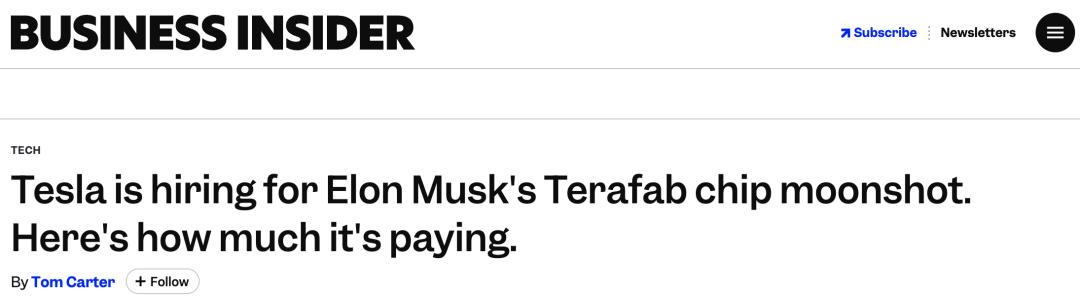
When Elon Musk announced his Terafab chip plan, the job advertisements were already quietly available on the Tesla website.
Lithography engineers are being sought in California, and silicon engineers in Texas. In addition, a technical project manager is needed who has already worked on projects with capital amounts of over one billion dollars to lead the whole thing.
The offered salary goes up to $338,000 per year, which is approximately 2.33 million yuan.
However, compared to the ambitious goals of this plan, this salary level may not be very impressive -
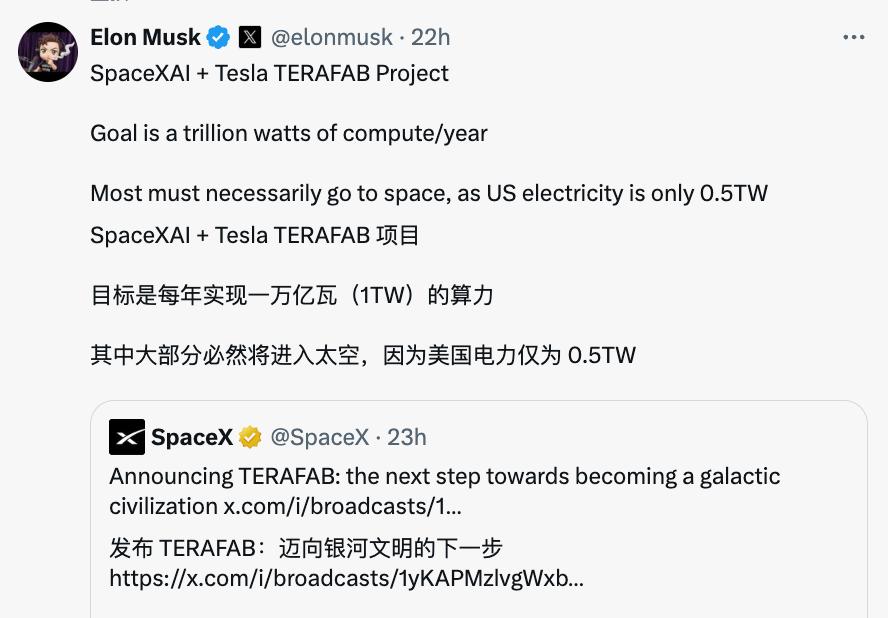
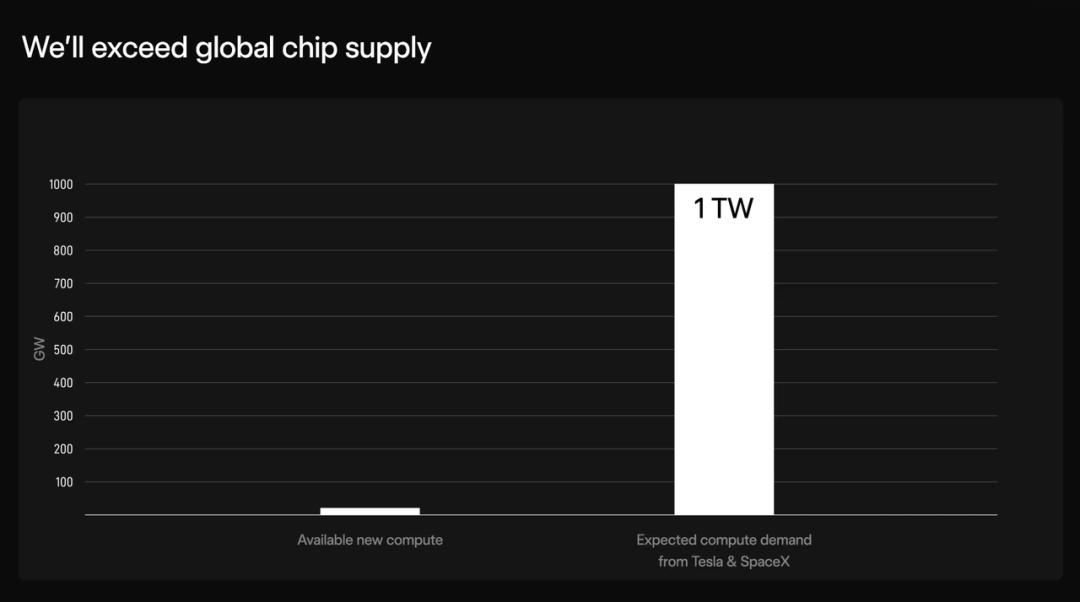
Elon Musk has set the goal of producing a computing power of one terawatt per year, which is approximately 50 times the current annual global AI computing power.
SpaceX has directly defined the project as "the next step on the way to a galactic civilization" in an official announcement.
The job requirements, as usual, correspond to the stereotypical ideas of Musk...
7×24 hours on - call service.
2.33 million yuan for chip engineers
From the distribution of the jobs, it can be seen that Tesla is really looking for people who are involved in chip development this time.
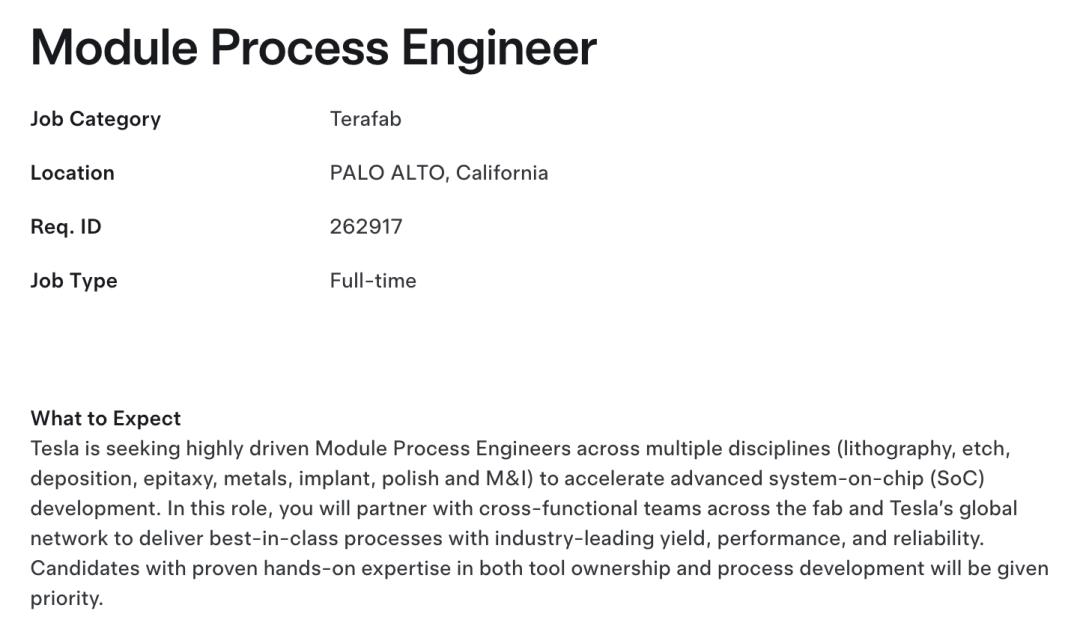
In Palo Alto, a Module Process Engineer for lithography is being sought.
Lithography is one of the most technologically demanding steps in chip manufacturing. In this process, the chip design is etched onto a silicon wafer using extreme ultraviolet light, with an accuracy at the molecular level.
Tesla requires applicants to have at least 10 years of experience in the top - level development of semiconductors. The offered base salary ranges from $88,000 to $240,000 (approximately 600,000 to 1.52 million yuan).
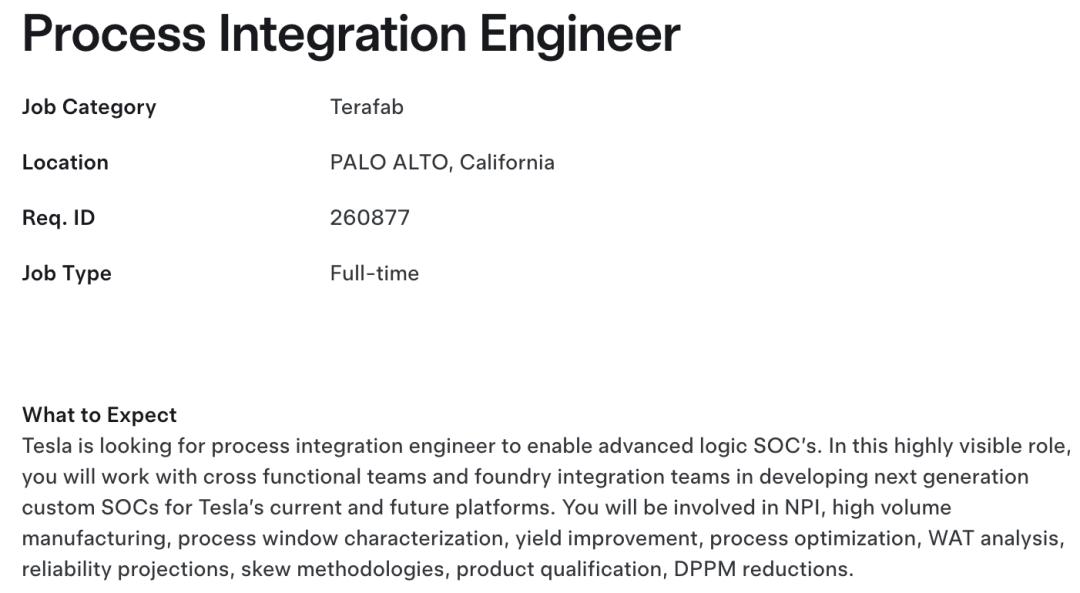
Another job offer in California is for a Process Integration Engineer, who will be responsible for building the manufacturing process of advanced logic chips. The upper limit of the base salary is set at $338,280 (approximately 2.338 million yuan).
In Austin, Texas, silicon engineers and a technical project manager with experience in managing "capital projects over $100 million" are being sought.
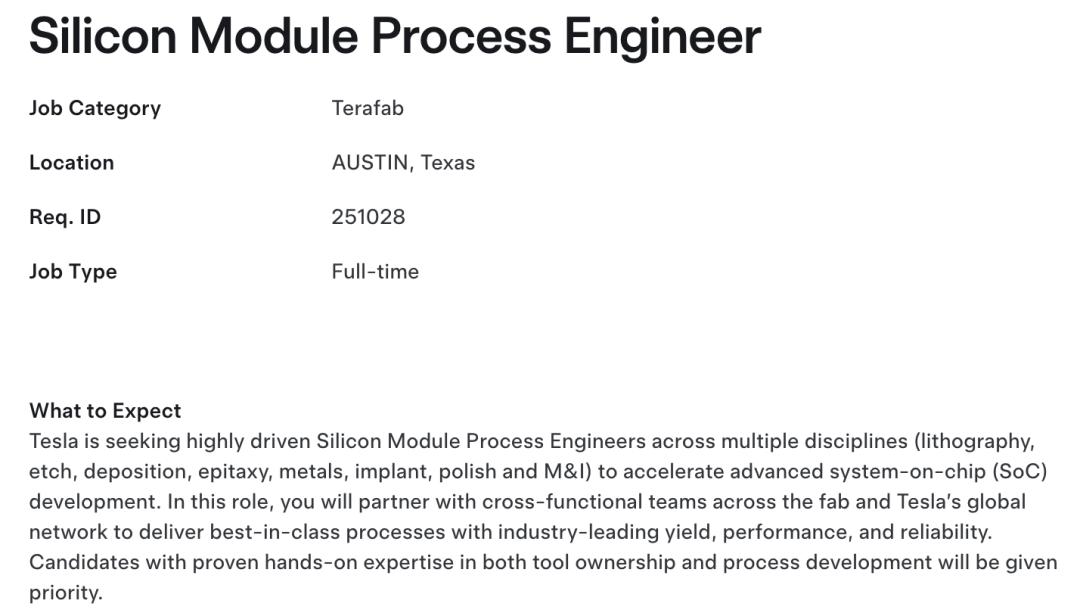
But it's not easy to earn this high salary. The requirements for the jobs are clearly stated: Applicants must be on 7×24 - hour on - call service and be able to react quickly to critical production problems.
The salary structure is typical of Tesla. The base salary is not necessarily top - notch in the tech industry, but it is supplemented by stock bonuses. The 7×24 - hour working mode also indicates that one may have to choose between this job and a normal work rhythm.
Not only Tesla, but also SpaceX under Musk's leadership is not idle.
SpaceX's "silicon area" currently has about 60 open job offers. These range from chip encapsulation to the development of special chips for space, including positions for encapsulation and assembly engineers at the factory in Bastrop, Texas, as well as chip development positions in Washington and California.
Musk's chip project
The reason for this extensive job posting is that Musk has something in mind that the existing chip industry chain cannot currently implement.
The goal of Terafab is to produce a computing power of one terawatt per year. The current annual global AI computing power is about 20 gigawatts. That means the goal of Terafab is 50 times that.
Musk's logic is simple: If Samsung, TSMC, and Micron were to upgrade their production, he would "buy all the chips." The problem, however, is that the normal expansion speed of these manufacturers cannot meet his needs. So he has to build it himself.
The factory will be built in Austin, near the Tesla headquarters and the super factory. The project is jointly promoted by Tesla, SpaceX, and xAI.
From development to production, the entire process is supposed to take place under one roof, including the in - house development of lithography masks, the templates with which the chip circuit patterns are printed onto the wafer.
This is equivalent to both developing like Nvidia and producing like TSMC. Musk said at the press conference that this integrated model of development and production "has no precedent in the world."
Another unusual aspect is that the Terafab project integrates the production of logic and memory chips in one factory, with a target process of 2 nm.
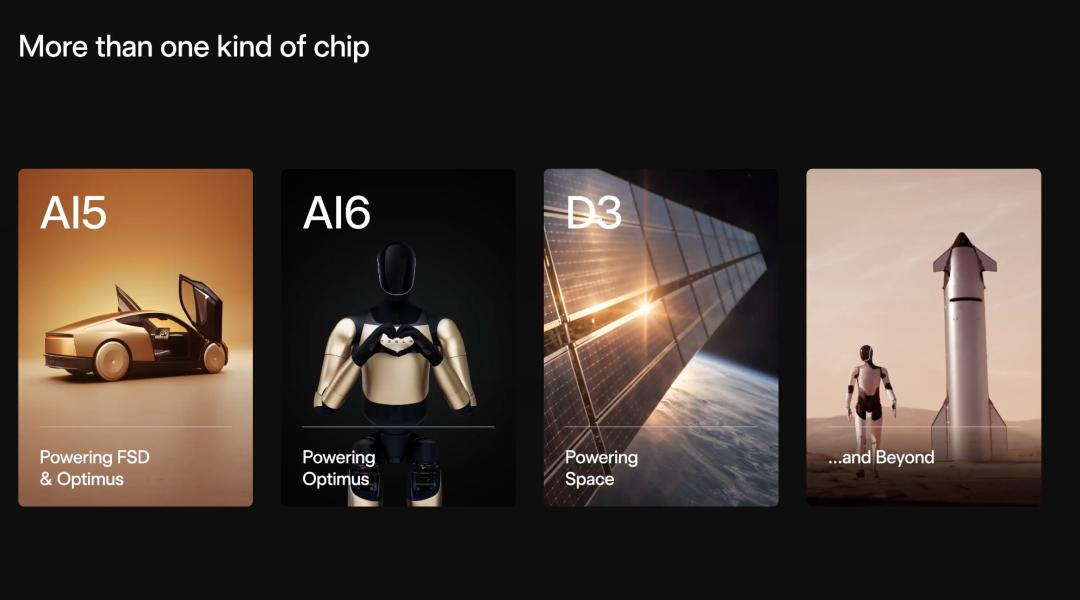
Terafab plans to produce two types of chips -
One type is optimized for edge computing and inference and is used for Tesla's FSD self - driving system and the Optimus humanoid robot.
The other type are high - performance chips, specially developed for space applications and intended for SpaceX and xAI.
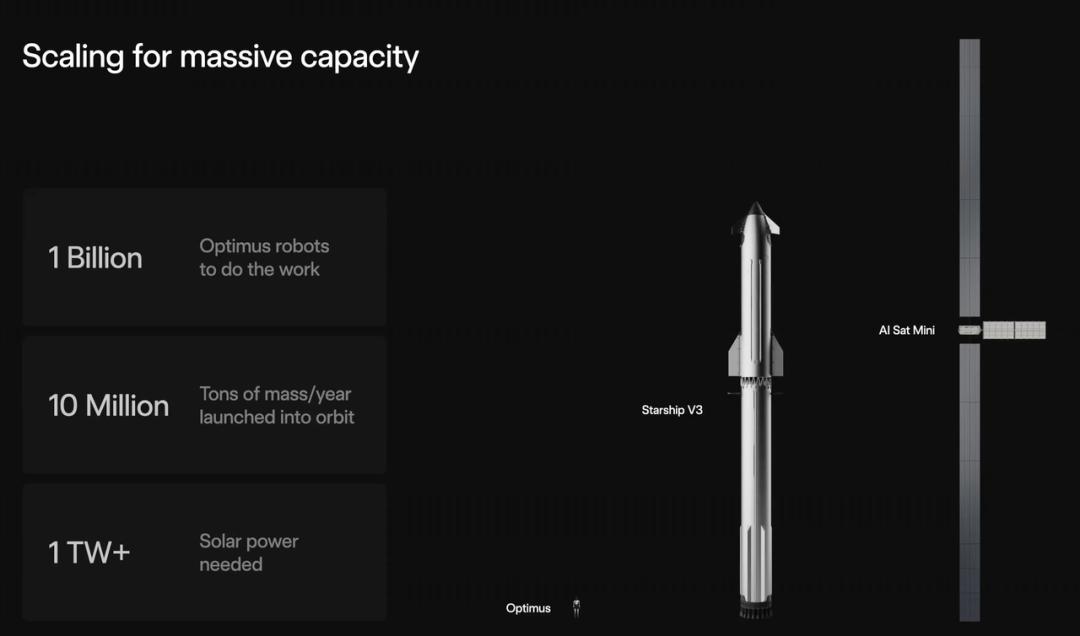
According to the plan, 80% of the computing power is to be used in space. In Musk's view, the total power generation in the United States is only 0.5 terawatts. There simply isn't enough space on Earth for this computing power.
In his own words: "Artificial intelligence in space is obviously the only way to scale."
Regarding financing, analysts from UBS estimate that the final cost of Terafab could be up to $300 billion.
SpaceX plans to go public this summer and raise $50 billion. The company's value could be over $1.75 trillion. One of the important goals is to finance a space AI data center.
But even if the IPO were successful, that would only be the beginning.
Recruiting skilled workers is the real challenge
In a $300 - billion project, the money problem can be solved slowly. The problem with skilled workers could be more difficult to solve.
The semiconductor industry is highly dependent on experienced personnel. TSMC's competitive advantages lie less in the equipment and capital than in the countless pitfalls it has overcome in chip manufacturing, the production process, and yield control over the past decades.
This kind of knowledge is difficult to copy by just recruiting a few people. However, Terafab has to build an entirely new chip factory from the ground up, covering all steps from development, lithography, to encapsulation and testing.
Therefore, recruiting skilled workers is the biggest challenge for Musk's ambitious project, even more difficult than raising capital.
Moreover, this race for skilled workers takes place in a market where there is already a shortage of qualified labor.
The shortage of qualified workers in the global chip industry is a structural problem that cannot be easily solved by posting a few job openings.
Terafab has to compete with TSMC, Intel, and Samsung for the same skilled workers who have worked in top - tier wafer fabs and really have mass - production experience.
SpaceX has already taken some preparations. Last year, it invested $280 million in the Starlink factory in Bastrop, Texas, to expand semiconductor development and encapsulation. A large part of the approximately 60 open positions in the silicon area also relate to the development and encapsulation of special space chips.
Compared to the final scale of Terafab, these measures are more like a warm - up.
But this is in line with Musk's consistent style - first announce the goal and then drive the implementation.
Even if all these positions can be filled, there is still a long way between the current situation and the goal of "one terawatt of computing power per year."
Reference link: https://www.businessinsider.com/tesla-spacex-terafab-hiring-elon-musk-chip-salaries-texas-california-2026-3
This article is from the WeChat account “Quantum Bit”, author: Keleixi. 36Kr has obtained permission for publication.