A Tsinghua-affiliated company has joined the Dreame ecosystem, aiming to integrate AI energy storage into the smart home system | Exclusive interview by Yingke
Author | Huang Nan
Editor | Yuan Silai
Entering the energy storage market in 2024 was a somewhat counter - intuitive decision.
The energy storage industry experienced a crazy growth around 2022. After over - capacity, there was a fierce reshuffle. By the time Cao Zhipeng entered the market, it had become relatively calm. Big companies such as Jackery, Bluetti, Anker, DJI, and Huawei had all occupied a share in the market.
However, Cao Zhipeng found that the market was not stagnant.
Cao Zhipeng has been in the energy industry for nearly 20 years. He has worked in listed companies such as Shenyang Aircraft Corporation, ASUS, and Canadian Solar. He has led and participated in the R & D and design of products from scratch in household energy storage and industrial and commercial energy storage, and has witnessed the whole process of energy storage moving from professional equipment to household scenarios. This also allows him to have a clear judgment on the evolution rhythm of the industry: after the hardware iteration becomes similar, the real opportunity may not lie in the linear competition of parameters.
Since the middle of 2024, government subsidies in mature markets such as Germany have begun to decline. The energy storage market has gradually shed its early policy dependence and concept fanaticism, and entered a period of silent competition.
This means that the hardware parameter competition is giving way to a more complex comprehensive competition. Established companies have not yet awakened, and new startups still have opportunities.
In July 2024, Cao Zhipeng founded Xingkongyuanchu. Its core team is from Tsinghua University, the alma mater of Yu Hao, and has joined the Dreame ecosystem as an ecological partner. Currently, its products cover outdoor portable, household power storage, balcony photovoltaic storage, and urban mobile power - supplementing scenarios.
It can be seen that the biggest difference of Xingkongyuanchu is that it is backed by the Dreame system, skipping the most difficult new - customer acquisition period for startups.
Of course, as Cao Zhipeng said, "Although we are an ecological partner of Dreame, users' trust in cleaning appliances will not directly transfer to this new energy storage field." Even with the support of the Dreame brand, winning the battle still depends on the strength of our own products and channels.
After all, this track is quite cruel. Xingkongyuanchu has a good start but never dares to slack off.
"From professional brands to consumer electronics giants have entered the market, leading to the rapid popularization of technology and more and more intense price wars. At the same time, the cost of raw materials such as battery cells is decreasing, which continuously compresses the overall profit margin of the industry. For us, we must achieve the best in cost and operational efficiency," Cao Zhipeng told Yingke.
In the energy storage industry, the "micro - innovation" at the hardware level has lost its luster. The decisive point of the industry has shifted to the implicit competition of software depth and operation systems. The core demand of users has evolved into an expectation for a full - cycle "energy service".
We had a conversation with Cao Zhipeng, the executive director and general manager of Xingkongyuanchu, to discuss how they can quickly establish a brand image in users' minds within a limited time window.
The following is the transcript of the conversation between Yingke and Cao Zhipeng, the executive director and general manager of Xingkongyuanchu, with the content edited:
Differentiated solutions for different scenarios
Yingke: In recent years, what factors have been driving the growing market demand for convenient power storage?
Cao Zhipeng: Driven by both environmental protection policies and the development of the new energy industry, the cost of lithium - ion batteries has significantly decreased, and their performance has continuously improved. Portable energy storage devices have entered households from professional fields and become practical commodities that more and more users can afford.
Behind this trend are the combined effects of three key driving forces. First, the "upgrade of camping experience" has brought about a scenario revolution; camping itself is not a new thing, and many countries have a long - standing tradition of such activities. In the past, camping supplies were often "special - purpose tools". For example, cooking required gas cylinders and cassette stoves, and barbecuing required grills and charcoal. The emergence of portable power sources has enabled household appliances to be directly used outdoors, bringing a subversive convenience and lowering the threshold for camping.
Second, the general improvement of family emergency and disaster - preparedness awareness in specific regions. Especially in areas prone to natural disasters such as Japan and some states in the United States, as well as in the European market affected by geopolitical conflicts, families' demand for self - sufficient power supply is becoming increasingly urgent. Portable energy storage has become a key part of family emergency reserves.
Third, the energy anxiety has given rise to a new power - consumption logic. Affected by factors such as the continuous rise of overseas electricity prices and the insufficient stability of the power grid, portable energy storage is not just a "big - sized power bank" in users' eyes. It also has the economic value of discharging during peak power - consumption periods, which can save electricity costs and ensure stable power supply.
Yingke: What impacts have these changes brought to the demand side of convenient power storage?
Cao Zhipeng: Generally speaking, several characteristics are presented. On the one hand, high growth and high competition coexist; currently, the global market is expanding rapidly at an annual compound growth rate of over 20%. However, the development of the portable power - storage industry highly depends on the continuous exploration and deepening of specific application scenarios. If the technology cannot be precisely matched with the scenarios, it will be difficult to realize its technological value.
On the other hand, in the fierce market competition with an undetermined pattern, it means that it is difficult for each company to stand out with a single advantage. It is necessary to achieve synergy in brand, channels, and product ecosystem.
Yingke: How does the Xingkongyuanchu team position its products and target users?
Cao Zhipeng: Our target users are mainly divided into two categories, including family users who pursue high - quality outdoor life and emergency disaster - preparedness. They not only need high - power and long - endurance power - supply capabilities but also value the seamless linkage with smart home devices and convenient control experience of the products.
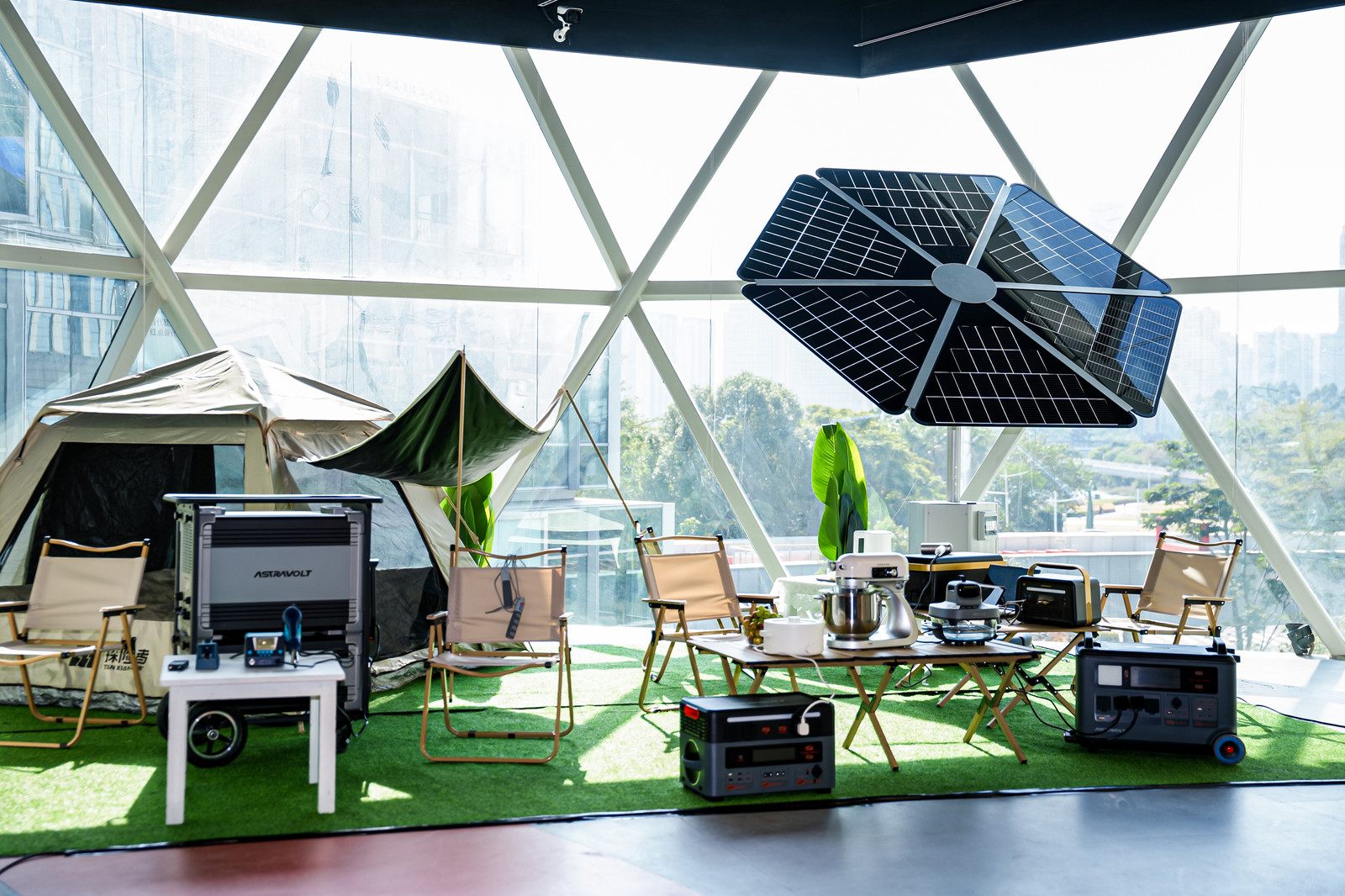
Multi - SKU products targeting differentiated scenarios (Source/Enterprise)
From the perspective of urban users with initial needs for household energy management, they are concerned about saving electricity costs and power - supply stability. They hope to start with lightweight solutions such as balcony photovoltaic energy storage as the starting point for future comprehensive household energy management.
Yingke: In the past few years, giants with brand and scale advantages have emerged in the portable energy storage field. In which dimensions does the competitiveness of Xingkongyuanchu lie?
Cao Zhipeng: It mainly comes from two aspects. First, Xingkongyuanchu is an ecological partner enterprise of Dreame and can be directly integrated into the smart home scenarios that Dreame has built. When users buy our energy - storage products, they can naturally become part of their smart homes. From outdoor power sources, balcony energy - storage systems to household energy storage, they can all be linked with household appliances to achieve intelligent power dispatching.
Second, the R & D background of the team from Tsinghua University enables us to cooperate more closely with laboratories of top universities such as Tsinghua to pre - layout some more cutting - edge technologies, such as next - generation solid - state batteries and smarter battery management algorithms.
Yingke: Facing scenarios with very different demands, what are your primary considerations in technology and product definition respectively? How is user insight reflected?
Cao Zhipeng: First of all, there is a fundamental difference in the design concept. For outdoor portable power sources used in camping and self - driving tours, we adopt the "integrated" design, which can be compared to a high - end "big - sized power bank". The battery cells, inverters, and control systems are all precisely integrated in a single box. The goal is to be extremely compact and easy to carry.
The design concept of household energy - storage products is completely the opposite, which is "modular expansion". The battery packs and inverters are all independent modules. You can combine them flexibly according to the household power - consumption needs and add more later. In terms of performance, more attention is paid to safety and durability.
The technical paths also vary according to scenarios. For example, in outdoor scenarios, users' biggest concern is what to do when the power runs out. Therefore, the focus of technology must be on fast charging and supporting quick charging. However, in the household energy - storage scenario, the product is part of the household energy system and needs to be charged and discharged cyclically every day. So we also pay more attention to the long service life and high stability of the product to ensure that it remains reliable after ten years of use, which is truly worry - free and economical.
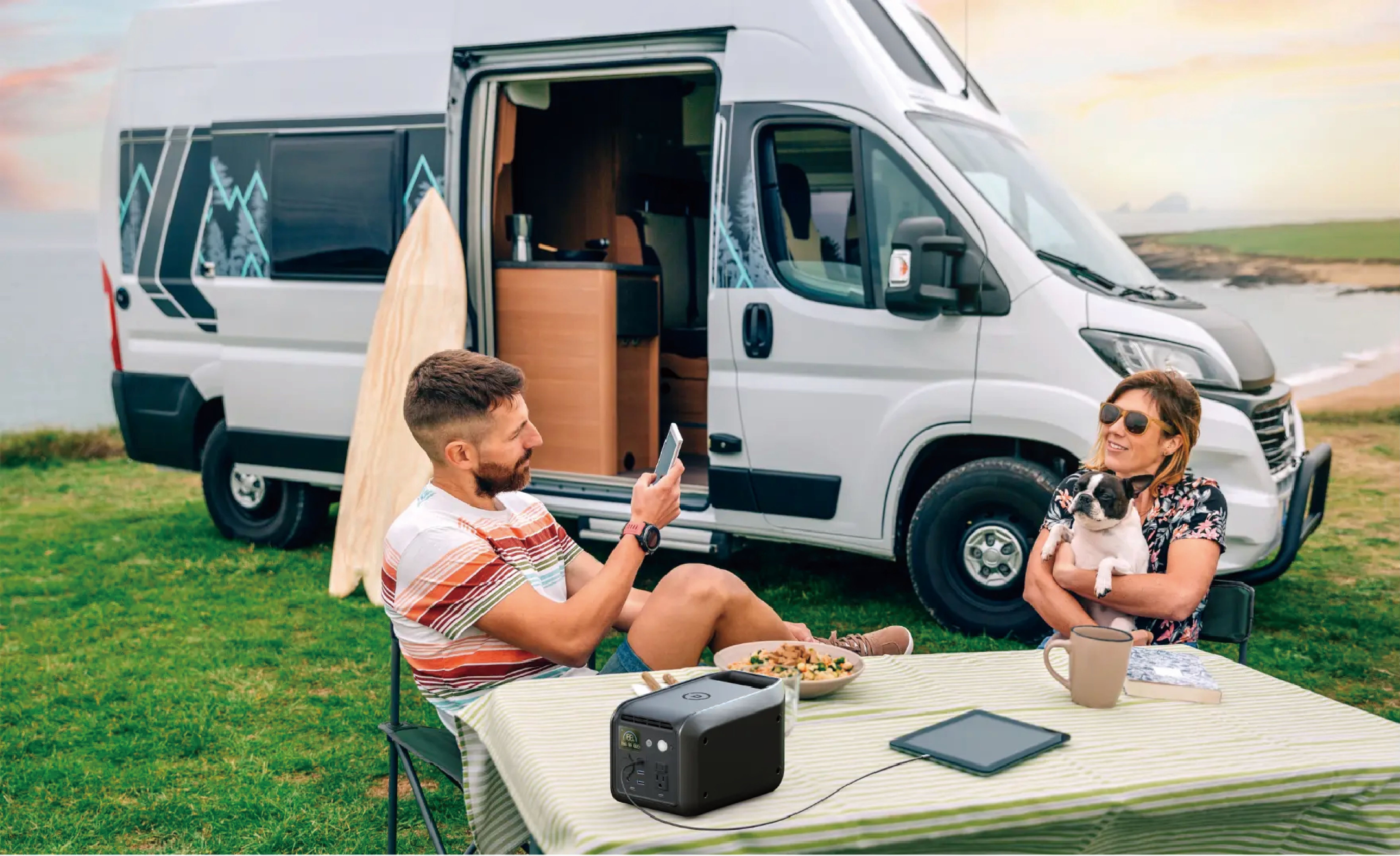
Integrated design concept for outdoor scenarios (Source/Enterprise)
How to "smartly" use electricity
Yingke: At present, which one do you focus more on, portable energy storage or household energy storage?
Cao Zhipeng: Our core is based on the household ecosystem. Household energy storage is the axis of our business. First, we promote portable power sources to users as an "outdoor extension" of the household power - consumption ecosystem to quickly let users get in touch with us and establish a brand perception of "safety and intelligence".
Yingke: From the overall corporate strategy perspective, what roles do these two business segments play respectively?
Cao Zhipeng: Energy storage is not just one or two products but a complete energy ecosystem. In our layout, household energy storage and portable energy storage are not two separate lines but promote each other.
Among them, portable energy storage is more like an "entry point" for energy experience, making electricity portable and tangible. In outdoor, travel, and emergency scenarios, users can gain autonomous control over energy. Household energy storage is the "center" of energy intelligence. It not only stores electricity but also knows how to manage it. Through the AI system, it can connect photovoltaic, energy storage, and household appliances, making the household a micro - energy network that can be autonomously adjusted.
Yingke: As a new growth point in the overall industry, what are the differences in the strategy for household energy storage?
Cao Zhipeng: The channel strategy is completely different. Portable products mainly reach users directly through online e - commerce, with a very direct path. However, household energy storage needs to build an ecosystem with professional partners such as photovoltaic installers and system integrators and implement it in the form of an overall solution. This is a more in - depth but also more profound model.
More importantly, it is customer service. Household energy storage is a long - chain business that requires "heavy service". From solution design, installation and commissioning to long - term operation and maintenance monitoring, we need to establish a complete service system. This is also completely different from the relatively standardized after - sales support for portable energy storage.
Generally speaking, portable energy storage follows the "product logic", while household energy storage follows the "system logic", and it will be an important strategic fulcrum in the future.
Yingke: Many energy - storage products on the market are talking about AI. How does it specifically help users plan their power consumption?
Cao Zhipeng: In fact, users' needs are very clear, which is to change from "having electricity available" to "using electricity smartly". People not only want to store electricity but also hope to save electricity costs, have simple operations, and use it with peace of mind. The AI functions on the market are all aimed at solving problems in these three directions.
AI is like a household energy butler. It mainly does two things for users; one is to "be economical", automatically scheduling charging and discharging according to real - time electricity prices to save electricity costs; the other is to "learn autonomously", automatically formulating the optimal plan after understanding users' power - consumption habits.
The realization of all this depends on the deep coupling of software and hardware. AI instructions will be sent to the inverter in milliseconds for execution, and at the same time, it will receive real - time data such as the battery's temperature and power to ensure that all operations are within a safe and healthy range. It can also serve as the central hub of the whole - house intelligence and be linked with household appliances such as air conditioners.
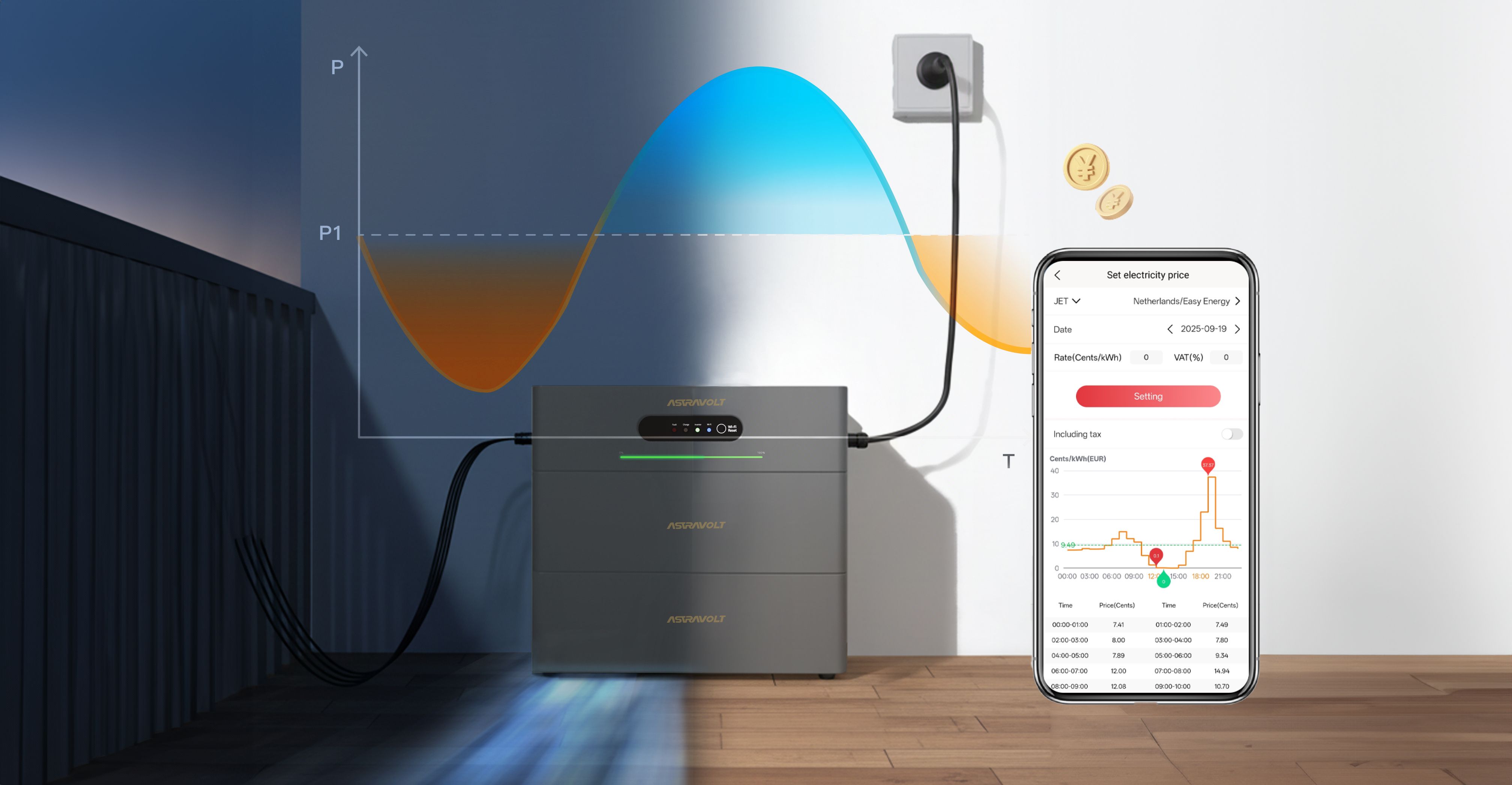
Helping users "use electricity smartly" (Source/Enterprise)
Yingke: Which countries and regions are your target markets?
Cao Zhipeng: Currently, we are focusing on North America, Japan, and Europe. We choose them because these markets not only have strong purchasing power but also have very real and urgent needs. They not only have a consumer base and environmental protection policies to support high - end clean energy products, but also the pain points of users in different markets are clear and intense enough.
North American users have strong consumption power and are more willing to pay for high - quality and good - experience products. Due to frequent natural disasters such as earthquakes in Japan, users have a strong sense of emergency preparedness. In Europe, affected by geopolitical conflicts, energy - security anxiety and electricity - price fluctuations are the core pain points. Currently, energy security and electricity - price fluctuations are the core concerns of families. Therefore, users have an urgent desire to achieve energy independence and save electricity costs. Coupled with the long - standing outdoor tradition, it provides diverse usage scenarios for the products.
Yingke: What are the differences in the demand for product characteristics in different markets?
Cao Zhipeng: In the European and American markets, especially in North America, users' needs are very direct, emphasizing "large capacity and high power". This corresponds to two typical scenarios. One is for families to deal with long - term power outages caused by extreme weather, which requires continuous power supply for refrigerators and medical equipment. The second is due to its profound outdoor culture. When camping, users even need to power high - power appliances such as electric grills and coffee machines. So users especially value the "power - supply capacity" and "what it can power" of the products.
The Japanese market focuses entirely on "safety and refinement". Because of frequent earthquakes and compact living spaces, users' requirements for safety and reliability are almost the highest in the world, reaching a strict level. At the same time, they hope that the product design is delicate and can blend quietly into the home environment. In Japan, winning trust is more important than simply emphasizing parameters.
In contrast, emerging markets such as Australia and Southeast Asia are more inclined to "practicality and cost - effectiveness". Users mainly use the products for outdoor activities or basic power backup. They are most concerned about whether the products are durable, adaptable, and reasonably priced, which meets the most core power - supply guarantee needs.
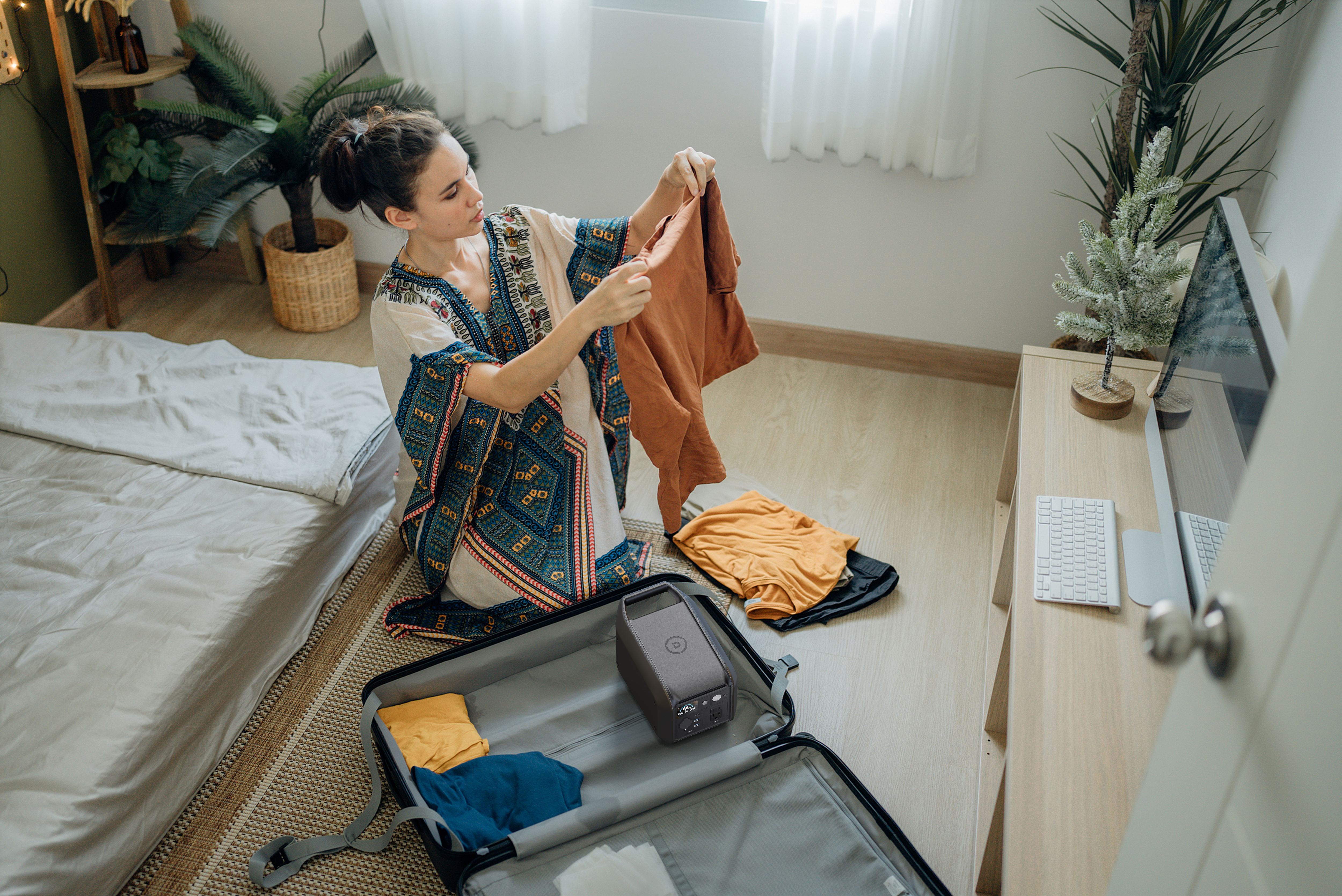
Portable energy storage provides an energy entry point, making electricity portable and tangible