Borrow 7,000 yuan to buy a phone, end up with a debt of 16,000 yuan: Who is using the iPhone to set up a scheme?
Is it really possible to end up with a sky - high bill of 16,000 yuan when buying an iPhone 16 Pro Max on an installment - plan?
Recently, China News Service exposed a loan trap scheme using mobile phone installment - plans. The report said that a man originally just wanted to get a few thousand yuan in cash flow. Guided by an intermediary, he placed an order for an iPhone 16 Pro Max (512GB) priced at 16,318 yuan on a mini - program of an e - commerce platform. The intermediary promised to return 7,000 yuan as a loan after receiving the goods.
According to this calculation, the actual transaction price of this iPhone 16 Pro Max should be around 7,000 yuan. However, just 10 days later, the man received the first - installment bill, which was 5,000 yuan. According to the platform's repayment cycle of 12 installments over 120 days, the total actual repayment amount reached 16,318 yuan, with an equivalent annual interest rate of about 400%.
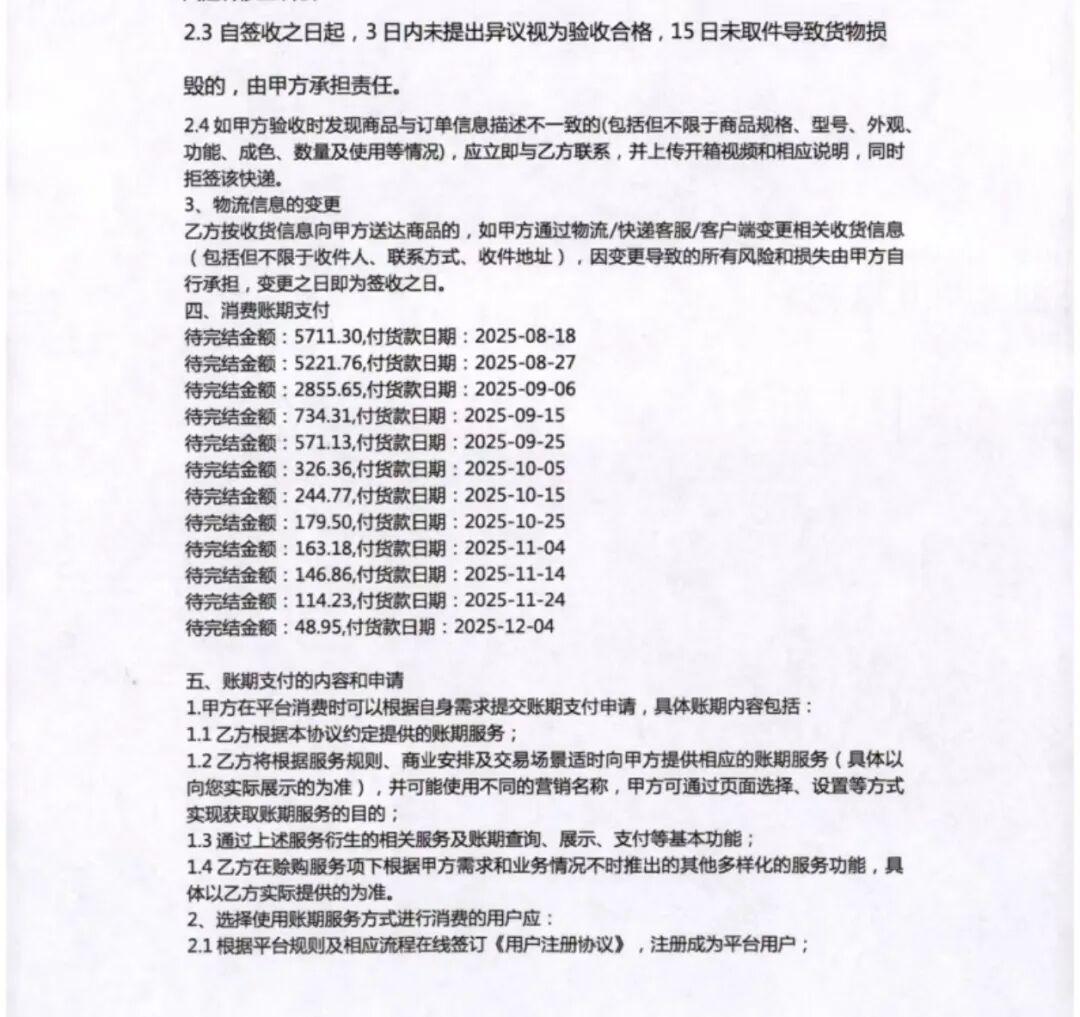
(Source: China News Service)
The key point is that the products ordered on these platforms will not end up in the hands of the consumers themselves. That is to say, the man only got about 7,000 yuan in actual “loans” but took on a debt of 16,000 yuan, and the interest rate has touched the legal bottom line. But why mobile phones? Why does a need for borrowing money always end up involving buying a mobile phone? What kind of trap is there?
How did the “mobile - phone purchase” scam come about from placing an order to taking on debt?
This “mobile - phone installment - plan” trap was not actually a dispute caused by buying a mobile phone from the beginning.
The man mentioned in the report didn't actually want to buy a mobile phone at the beginning. His real need was to get a few thousand yuan in urgent cash flow. The intermediary didn't recommend a suitable product to him but taught him how to disguise the act of borrowing money as a shopping experience on a “buy now, pay later” platform.
The whole process of placing an order is also full of doubts. First, under the guidance of the intermediary, he scanned a QR code to get a so - called “virtual credit limit”. Then he placed an order for an iPhone 16 Pro Max at a price of 16,318 yuan and signed the “Commodity Purchase Agreement” and the “Commodity Buy - Now - Pay - Later Service Agreement”. At the same time, he paid the signing fee and handled the signing notarization. If it was a normal shopping, why would he need to sign these agreements? In addition, only after the whole process was completed did the intermediary transfer 7,000 yuan to him. That is to say, on the surface, the platform completed a commodity transaction, but what he actually got was cash, not the iPhone 16 Pro Max.
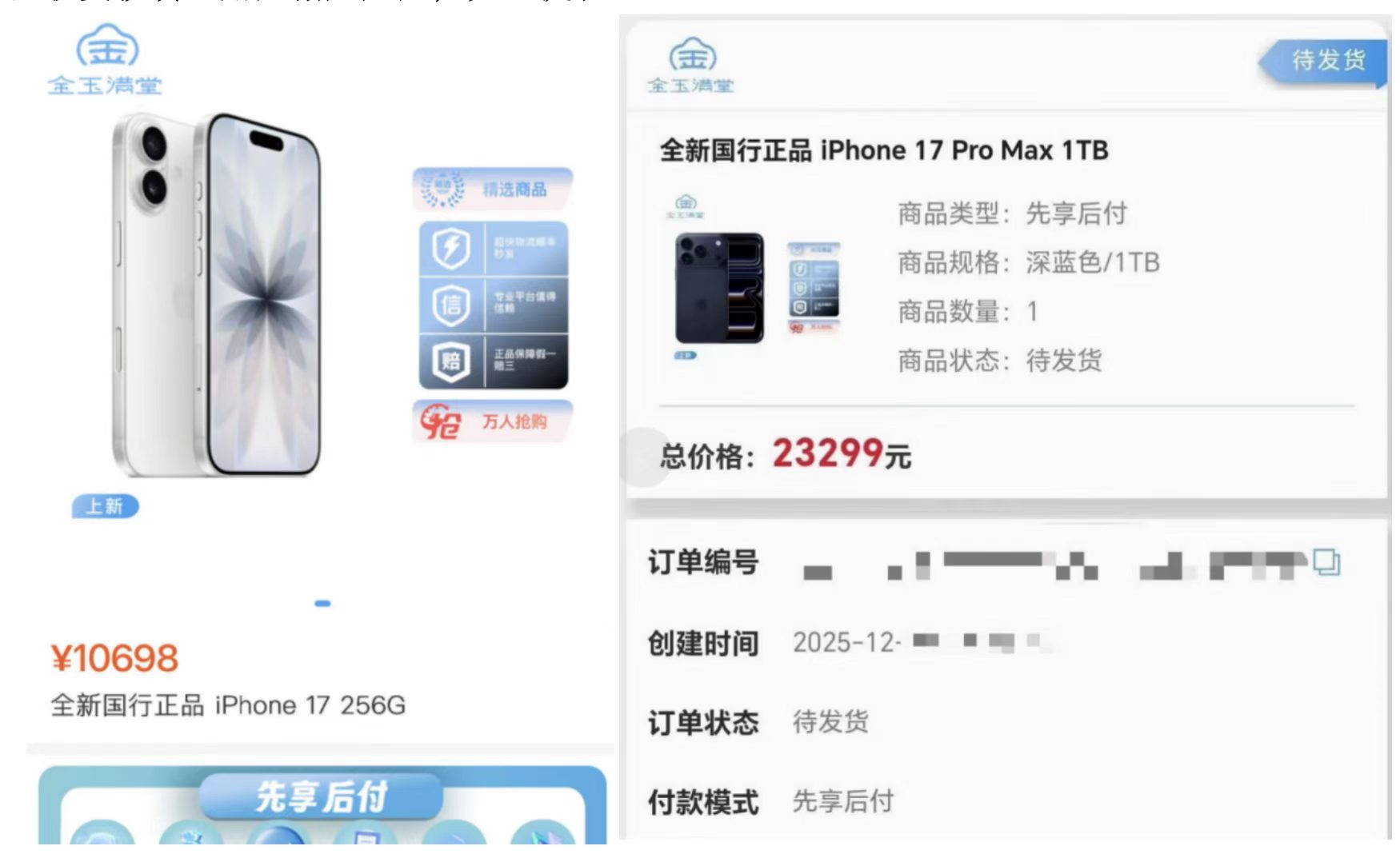
(Source: Consumer Investigation Daily)
The report shows that the contact phone number filled in after placing the order was the intermediary's number. The mobile phone was intercepted and redirected by the intermediary during the delivery process and was recycled. The consumer never really received, inspected the goods, let alone used the phone normally. For a real consumption, the user's core demand should be to obtain the product itself. But in reality, the product just went through a process, and what really flowed were the platform credit limit, contract liability, and the 7,000 - yuan cash at the end. More directly, this mobile phone was not sold to the user but was borrowed to complete a “cash - out performance”.
More importantly, when you realize the seriousness of the problem, you are unable to repay the first installment. You have to, under the inducement of the intermediary, repeat these steps, place an order for another mobile phone on other platforms, get some money, and take on a loan that exceeds the market price.
But many people may wonder why a mobile phone is chosen as the protagonist in this scam when there are so many other products available.
First of all, mobile phones are one of the few consumer goods that have high unit prices, strong standardization, and high liquidity. If it's daily commodities like clothes and shoes, there may be disputes over size, style, and condition, and their unit prices are relatively low. Even if the price is raised several times higher than the market price, it's difficult to meet the demand for “small - scale loans”. Home appliances are even less suitable. Although these platforms don't actually send the products to the borrowers, there is indeed a “logistics” process. Home appliances are large in size, have high transportation costs, and are not easy to intercept.
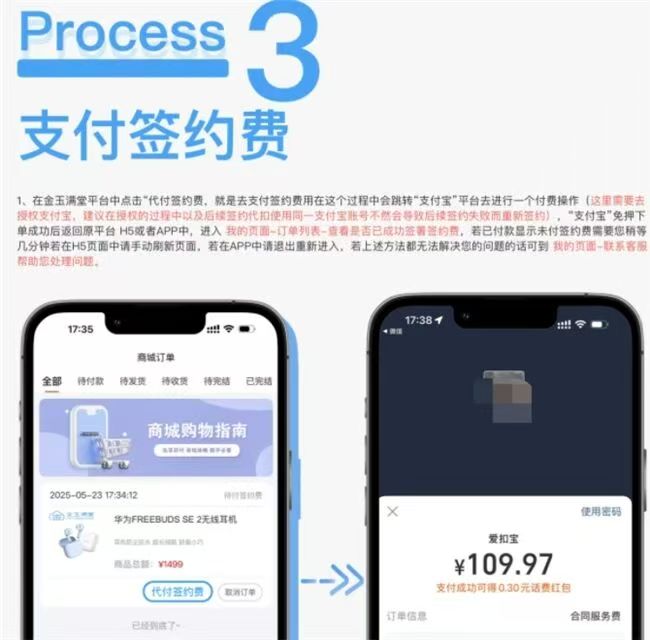
(Source: Consumer Investigation Daily)
In addition, mobile phones already have a very mature and large recycling market system, which makes them more suitable than many high - priced products to be used as a substitute for loans. The National Development and Reform Commission mentioned in the article “On the Recycling and Utilization of Used Mobile Phones in 2025” that the total number of idle mobile phones in China is expected to reach 6 billion during the “14th Five - Year Plan” period, and the potential value of second - hand mobile phones exceeds 600 billion yuan. IDC also previously disclosed that China is the world's largest second - hand mobile phone market, with a market volume of 18.7 million units in the second quarter of 2024, accounting for 38% of the global market.
Mobile phones, especially flagship models of iPhone, Huawei, and high - end Android models, have high popularity and market recognition and are regarded as highly liquid assets. When they play the leading role in this scam, consumers are often less vigilant and don't easily realize that there may be a trap behind it.
Similarly, if a person is guided to sign a loan agreement, they will naturally look more closely at the interest rate, term, and liability for breach of contract. But if the other party says “place an order to buy a mobile phone”, “go through a platform process”, “you can cash out the credit limit with buy now, pay later”, many people will only think it's a bit strange at first but won't think too much. After all, buy now, pay later and mobile - phone installment - plans are the most common consumption models for digital products.
In this carefully - planned trap, there is definitely nothing wrong with the mobile phone itself. It just happens to fall between the two attributes of consumer goods and finance, and it is most suitable to appear on some unknown e - commerce platforms as the protagonist of the scam.
Renting a phone, installment - plans, buy now, pay later, and finally turning into an unpayable debt
The core reason why this kind of scam can still deceive people today is that for many people in urgent need of cash flow, the promise of “getting money today” is extremely tempting.
For example, the Specialized Office for Preventing and Cracking Down on Illegal Financial Activities in Shenzhen released a risk warning in 2025, which disclosed a relevant case. Ms. Li, in urgent need of money, downloaded a phone - rental app through an intermediary and signed a “phone - rental installment - plan agreement” to rent a new mobile phone with an official price of 9,999 yuan. After deducting the first - installment rent, intermediary fee, and so - called depreciation fee, she only got about 5,000 yuan in cash but took on a debt of about 13,000 yuan.
Not only intermediaries but also some people have learned to “cash out” using this gray industry chain. Beijing Business Today mentioned in an investigation in March this year that a consumer was impersonated by a platform staff member and was guided to do “phone - rental cash - out” on Qiao Zu Ji. After forwarding the phone to the other party, she received a transfer of 6,500 yuan. But later she found that in addition to the 6,540 - yuan platform rent in the early stage, she also had to pay a high - value buy - out fee of more than 6,000 yuan at the end.
Whether it's called phone - renting, installment - plans, or buy now, pay later, it's actually the same routine, taking advantage of the psychology of consumers in urgent need of cash flow. From beginning to end, these borrowers thought they were just “borrowing a product to go through a process”, but what they actually took on was a high - interest debt that was well - camouflaged.
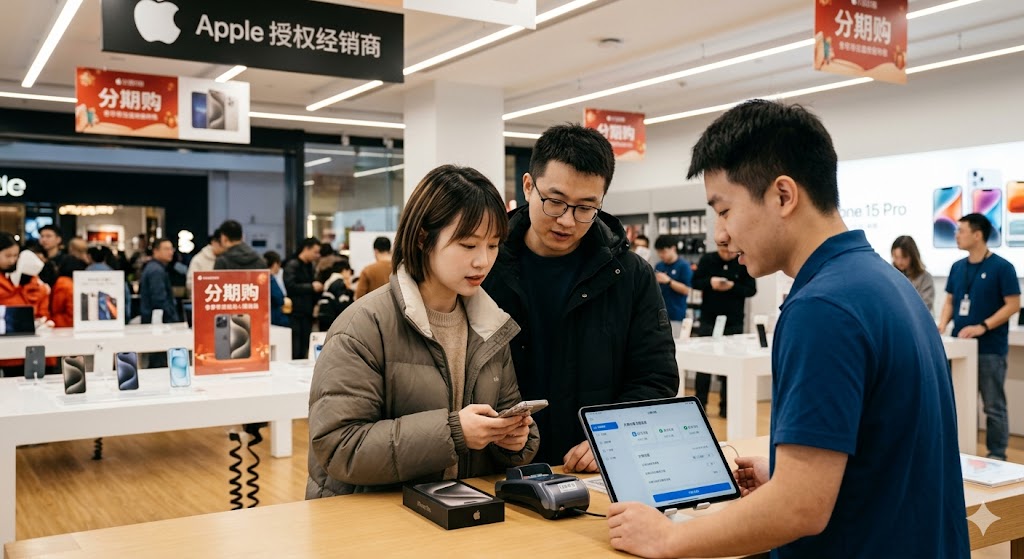
(Source: Generated by Gemini)
Therefore, what consumers should guard against is not just the name of a certain platform, but all statements that package “wanting cash” as “placing an order for a mobile phone first”. However, it's not difficult to tell if there's something fishy. The logic of normal consumer installment - plans is that you take a fancy to a product, accept the installment - plan cost, and buy the product home for your own use. But the logic of this kind of routine is just the opposite. The mobile phone is just a prop, and the real goal is always cash. As soon as the other party starts teaching you how to forward the phone to a designated merchant, how to recycle it quickly, and how to “cash out” the credit limit, you should immediately realize that this is no longer a normal consumption.
Of course, realistically speaking, not everyone can easily get the cheapest loan from a bank. When many people are short of money, the first products they encounter are not low - interest ones. The reason why this kind of scam has been prevalent for so many years is that there is a large group of people in urgent need of cash flow. But no matter how urgent you are, you should first look for compliant borrowing channels on banks, licensed consumer finance companies, and regular Internet platforms, instead of pinning your hopes on an intermediary who teaches you to “rent a phone to cash out”. This kind of practice is already on the legal red line. Even if there is no interest - rate trick, the disputes it causes are not protected by law.
Where will the lending in the guise of buying a mobile phone end up?
The Supreme People's Court's judicial interpretation on private lending clearly states that if a party uses a sales contract as a guarantee for a private lending contract, and the lender requests to perform the sales contract after the loan is due, the people's court shall hear the case in accordance with the legal relationship of private lending. In other words, just because a platform and an intermediary deliberately package a loan as “buying a mobile phone” or “renting a mobile phone” doesn't mean it becomes a normal consumption. Once the judicial authorities intervene and understand the problems behind these consumptions, many of the fees packaged as rent, service fees, and buy - out fees will directly cross the legal red line.
These platforms and intermediaries may even be held criminally liable. According to the “Opinions on Several Issues Concerning the Handling of Criminal Cases of Illegal Lending”, if a person, without approval from the regulatory authorities or beyond the scope of business, for the purpose of making a profit, frequently lends money to unspecified objects in society, disrupts the financial market order, and the circumstances are serious, they can be investigated for criminal liability for the crime of illegal business operation. Among them, if a person conducts illegal lending at an actual annual interest rate of more than 36% and meets certain standards in terms of amount, illegal income, or the number of objects, they may fall into the category of “serious circumstances”.

(Source: Generated by Gemini)
It's also difficult for intermediaries to shirk their responsibility by saying “I'm just introducing business”. After all, in many cases, intermediaries are not just match - makers. They are deeply involved from soliciting customers, using persuasive language to induce, guiding the order - placing process, arranging phone recycling, to assisting in cash - out. If they know that the other party is engaged in illegal lending and still provide continuous assistance such as customer referral, phone collection, and reselling, they may be identified as co - participants.
In the currently exposed cases, the annual interest rate has reached as high as 400%, which means they have actually touched the scope of “serious circumstances”. Once their responsibilities are investigated, both the platforms and intermediaries will hardly escape legal sanctions.
After all, what we should be most vigilant about in this scam is not just how 7,000 yuan turns into 16,000 yuan, but how ordinary people can prevent themselves when digital products are packaged as the protagonists of illegal lending. More directly, if the ultimate goal of buying any product is not to get the product itself, then the motivation behind it is worth seriously considering its legality. Don't be an accomplice to the gray and black industries.
This article is from “Lei Technology” and is published by 36Kr with authorization.