SUPEREV Super Electric x LeDao Auto x Sesame Credit jointly create the iPhone moment of China's car subscription.
A definite signal for a new way of automobile consumption.
At 10:00 on March 26th, the LeDao Automobile Super Subscription product was launched on the Alipay Sesame Credit channel. The first - batch spots for some models were sold out as soon as they went online.
This subscription product, jointly launched by Sesame Credit under Ant Group, LeDao Automobile under NIO, and SUPEREV Super Electric under CheMai Group, is promoting the automobile subscription model to enter the "commercial closed - loop" verification stage from the "concept verification" stage with the combination of "credit - free deposit + monthly payment". However, the significance of this hot sale goes far beyond the success of a single product. What it truly verifies is a business architecture that is completely different from the European automobile subscription brand FINN. It doesn't rely on huge financing and heavy - asset ownership of a single entity. Instead, it explores an ecological path more suitable for the Chinese automobile consumption market through the tri - party collaboration of "a mature commercial credit system + an operational platform + the product strength of automobile manufacturers".

If FINN has proven the commercial feasibility of automobile subscription in Europe by operating nearly 40,000 active subscribed vehicles, then this tri - party cooperation verifies a bolder proposition: the Chinese market can achieve a commercial closed - loop for automobile subscription with a lighter asset structure, a more open platform ecosystem, and a faster scaling - up speed.
From "mental seeding" to "commercial closed - loop": the progressive logic of two verifications
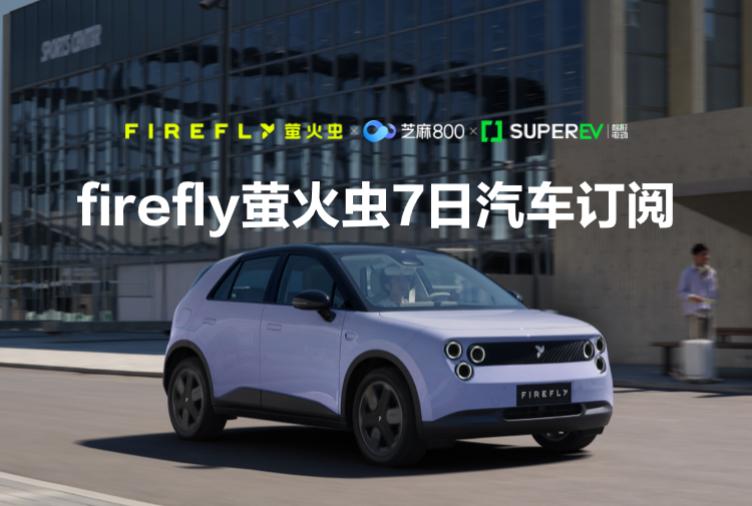
This is not the first time for the three parties to cooperate. In November 2025, SUPEREV Super Electric was the first to launch the industry's first "7 - day credit subscription" service. In cooperation with firefly and Sesame Credit, it verified the market acceptance of "credit - free deposit" in a lightweight way.
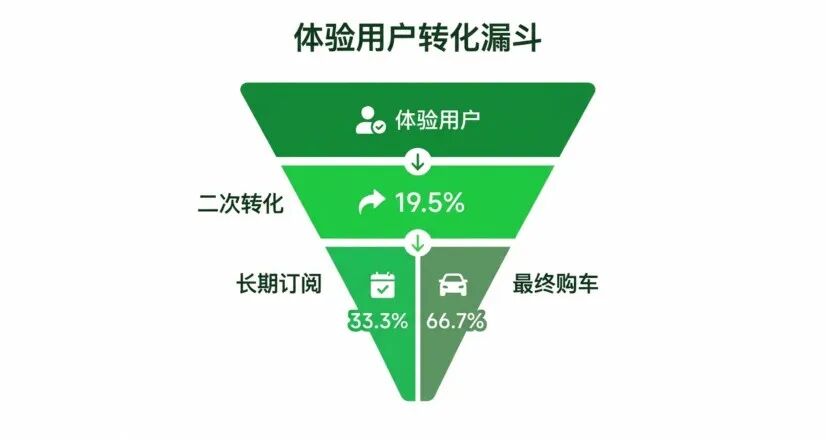
The data gives a clear signal: 19.5% of the experience users made a second - time conversion, 33.3% switched to long - term subscriptions, and 66.7% ultimately purchased a car. The short - cycle subscription not only verified the feasibility of the model but also proved a key assumption - there is a strong positive correlation between automobile subscription and car purchase. Subscription is an incremental entry point, not a substitute. However, there is an essential difference between a 7 - day experience and a 12 - 24 - month long - cycle subscription. The latter means that the vehicle needs to enter the user's daily life as an "alternative asset", which tests the model's ability to continuously support major consumption decisions.
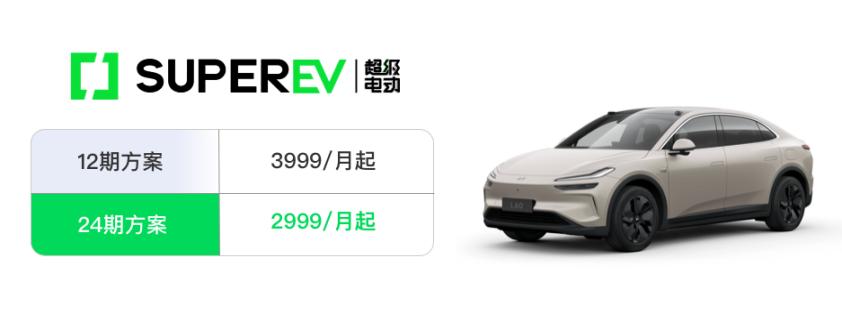
The launch of LeDao Automobile on the Sesame Credit channel this time is precisely this "stress test". Taking the LeDao L60 as an example, the subscription period is extended from 7 days to 12 - 24 months, with a monthly payment of 2,999 yuan per month (24 - period) or 3,999 yuan per month (12 - period). The product also provides a one - stop worry - free solution with zero down payment, zero deposit, and free insurance. The enthusiastic response from the market at the first launch also marks that the three parties have jointly completed a phased leap in the automobile subscription model from short - term experience to long - term subscription.
The divergence of two paths: FINN's "self - operated closed - loop" and SUPEREV's "operational platform"
FINN has verified the demand, but China needs a different solution.
To understand the uniqueness of the Chinese market, we need to first understand the path taken by the European pioneer FINN.
FINN was founded in 2019. Currently, it operates nearly 40,000 active subscribed vehicles, with an annual recurring revenue of over 200 million euros. It has cumulatively obtained about 250 million euros in equity financing and a cumulative debt financing capacity of over 2 billion euros. FINN has proven several core values of automobile subscription: for automobile manufacturers, subscription provides predictable delivery volume and an incremental customer base; for consumers, subscription provides a third option that is more flexible than buying a car and more free than leasing.
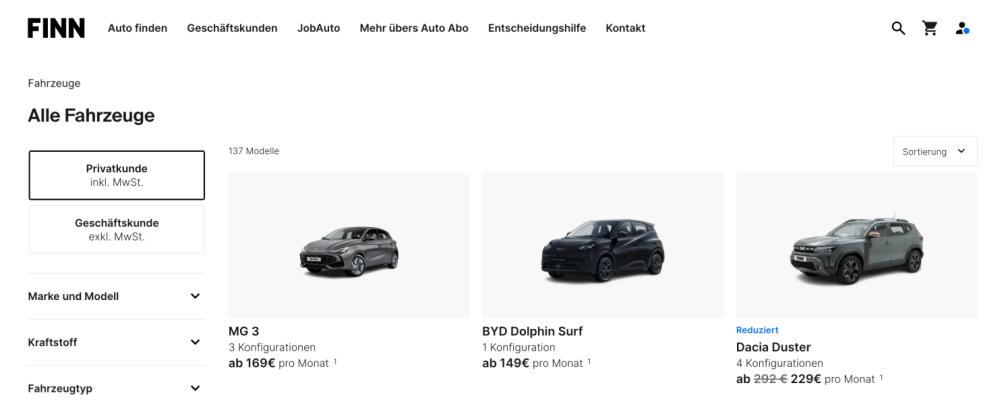
However, FINN's business architecture is a typical "self - operated closed - loop" - it purchases vehicles from OEMs by itself, holds assets by itself, operates the entire subscription process by itself, and disposes of the residual value by itself. Its expansion logic is clear: raise more debt → buy more cars → spread the cost per vehicle → increase the profit margin. In essence, this is a competition of capital density, where a single entity bears all asset risks and uses economies of scale to counter uncertainties.
This path is feasible in the European capital market because FINN can obtain ABS financing with a 100% loan - to - value ratio, and equity capital is completely used for business growth rather than vehicle procurement. However, in the Chinese market, this model faces structural constraints: the domestic ABS market has a longer acceptance cycle for new categories, and start - up companies have difficulty quickly obtaining debt financing of the same scale; at the same time, the price volatility of the Chinese automobile market is greater, and the model where a single entity bears all residual value risks lacks a sufficient safety cushion.
More importantly, the ecological environment in the Chinese market provides a realistic basis for a lighter and more open subscription path.

The local ecological advantages of the Chinese market give rise to a differentiated path
In China, the penetration rate of mobile payment and the application scenarios of credit services are extensive. The credit system is deeply integrated into daily consumption such as leasing, travel, and local life, becoming a mature commercial trust link connecting merchants and users. At the same time, the automobile circulation field has a diverse ecosystem and rich stock assets, and various asset holders have the basic conditions for large - scale participation in operations. These unique market structures allow automobile subscription to take a different development path from the European market.
This tri - party cooperation among SUPEREV Super Electric, LeDao Automobile, and Sesame Credit is precisely a model innovation and practical exploration based on this market foundation.
SUPEREV's choice: an operational platform
Sun Zefeng, the founder of SUPEREV Super Electric, has a clear judgment on this:
FINN has proven that subscription is feasible in Europe with 40,000 active subscribed vehicles, but in essence, it is a path of "self - operation + leverage" - one company bears all asset risks. Our thinking is completely different. If FINN is the "Avis" in the automobile subscription field, what SUPEREV wants to be is the "Beike" - not holding all vehicle assets alone, but building an ecosystem where automobile manufacturers, asset holders, and credit infrastructure can operate in synergy under the same operational standards. Our core ability is not to hold vehicles, but to enable more participants to participate in the value chain of automobile subscription with lower risks and higher efficiency.
Why these three parties? The "ability jigsaw" of the operational platform
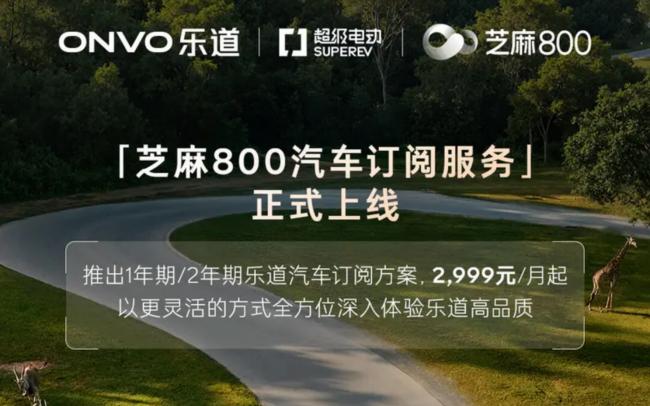
Sesame Credit: providing mature commercial credit service capabilities
As a mature third - party commercial credit service system in China, Sesame Credit has served over 700 million users and has formed a wide and stable application foundation in scenarios such as deposit - free leasing and pay - after - use. This is highly consistent with the core requirements of automobile subscription, which are "deposit - free access and long - term performance".
For the characteristics of the automobile subscription scenario, Sesame Credit relies on its credit evaluation model and risk - control capabilities accumulated over the years to accurately identify the user's performance level. It uses credit to replace the high - amount deposit required for traditional automobile subscription, simplifies the user access review process, reduces the user's participation threshold, and also avoids the performance risks in long - term subscriptions for the platform and asset parties.
This automobile subscription exploration is mainly targeted at the high - credit user group of "Sesame 800". This group generally shows consumption characteristics such as keeping promises, paying attention to quality, and being willing to explore new things. They are the leaders of the credit - based lifestyle. At the same time, they have consumption demands such as paying attention to the flexibility of cash flow and pursuing an efficient and convenient travel experience, which are relatively consistent with the service positioning of automobile subscription. It also lays a solid trust foundation for the safe and early verification of the long - cycle subscription model and the subsequent exploration of large - scale services. When the open capabilities of Sesame Credit become the standard access layer of the automobile subscription ecosystem, all new asset holders joining the platform can immediately obtain high - quality users screened by risk - control without having to build their own risk - control systems, providing a unified trust base for the automobile subscription ecosystem.
LeDao Automobile: dual support for product strength and asset safety
As one of the first strategic product cooperation partners, the L60 model of LeDao Automobile has become an important source of attraction for the subscription model with its large space, low energy consumption, and the ability to be charged, swapped, and upgraded. As of now, LeDao L60 has reached the milestone of delivering 90,000 vehicles.

Shen Fei, the senior vice - president of NIO and the president of LeDao Automobile, said:
The delivery of LeDao L60 has just exceeded 90,000 vehicles recently. Its large space, low energy consumption, and high second - hand value retention are all well - recognized by users. For users, LeDao L60 allows them to experience NIO's most advanced pure - electric technology and energy - replenishment experience. Three - minute battery swapping is more convenient than refueling. For operators, large - scale procurement of LeDao L60 doesn't require worrying about the residual value of the vehicle. The separation of the vehicle and the battery solves the biggest anxiety about battery health for electric vehicles. The battery has almost no loss, the vehicle can be used for a longer time, and the second - hand value retention rate is also higher.
LeDao L60 realizes "vehicle - battery separation" based on NIO's fourth - generation battery - swapping station network - the battery health is maintained uniformly by the battery - swapping station, and users can replace the battery at any time during the subscription period. The vehicle's residual value is no longer bound to the battery's attenuation curve. This technical architecture can theoretically increase the three - year value retention rate to over 60% (close to the level of fuel - powered vehicles), providing high - residual - value protection for all asset holders of LeDao vehicles on the platform.
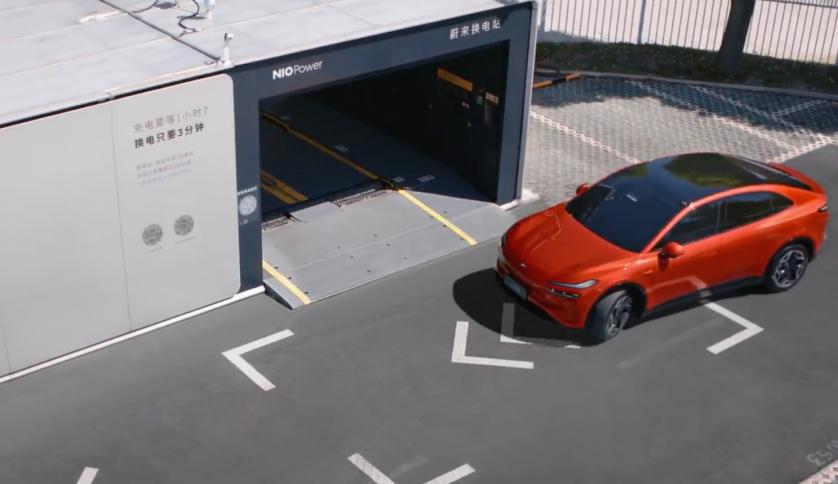
Under the logic of the operational platform, the value of LeDao lies not only in its good products but also in making asset holders dare to participate. When the risks at the asset end are systematically reduced by the battery - swapping technology, more participants are willing to put their vehicles into the subscription ecosystem, and the supply side of the platform can achieve large - scale expansion.
SUPEREV Super Electric: the operational center and rule - definer of the ecosystem
If Sesame Credit is the trust base and LeDao is the product benchmark, then SUPEREV Super Electric is the operational center that makes the entire ecosystem run.
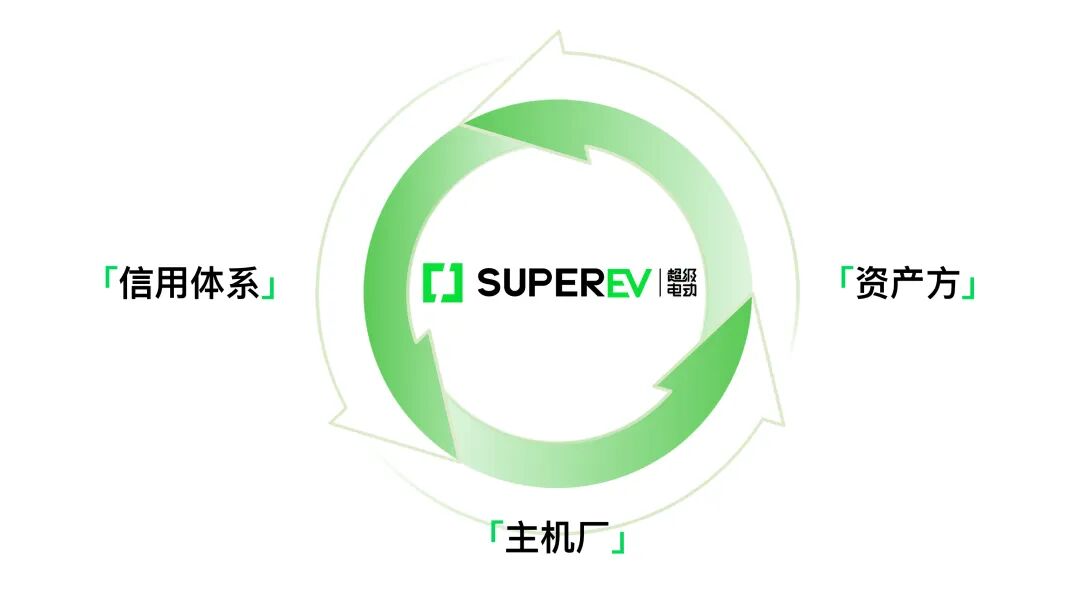
As the pioneer of the Chinese automobile subscription model, SUPEREV Super Electric has accumulated the earliest database of electric - vehicle subscription user behavior in the industry, covering the performance of users in different credit segments, the real residual - value curves of various models, and the analysis of user subscription preferences and conversion paths. The value of these data assets lies not only in serving its own operations but also in providing an "anchor for pricing" for the entire platform ecosystem - helping asset holders accurately evaluate the expected subscription revenue of different models in different periods and helping automobile manufacturers identify the "high - intention but hesitant" customer groups that are difficult to reach through traditional channels.
