Xiaomi's European test vehicles are exposed, and the overseas market is undergoing reshuffle. New players must focus on three major markets.
The new energy battlefield in China is no longer the ultimate goal for new - force automakers. The overseas market is the next battleground.
Xiaomi Auto, which has been selling like hotcakes in the domestic market, has recently been reported that its test vehicles, Xiaomi SU7 and YU7, were spotted on the streets of Europe and Southeast Asia, and it is about to join the new - force automakers going global.
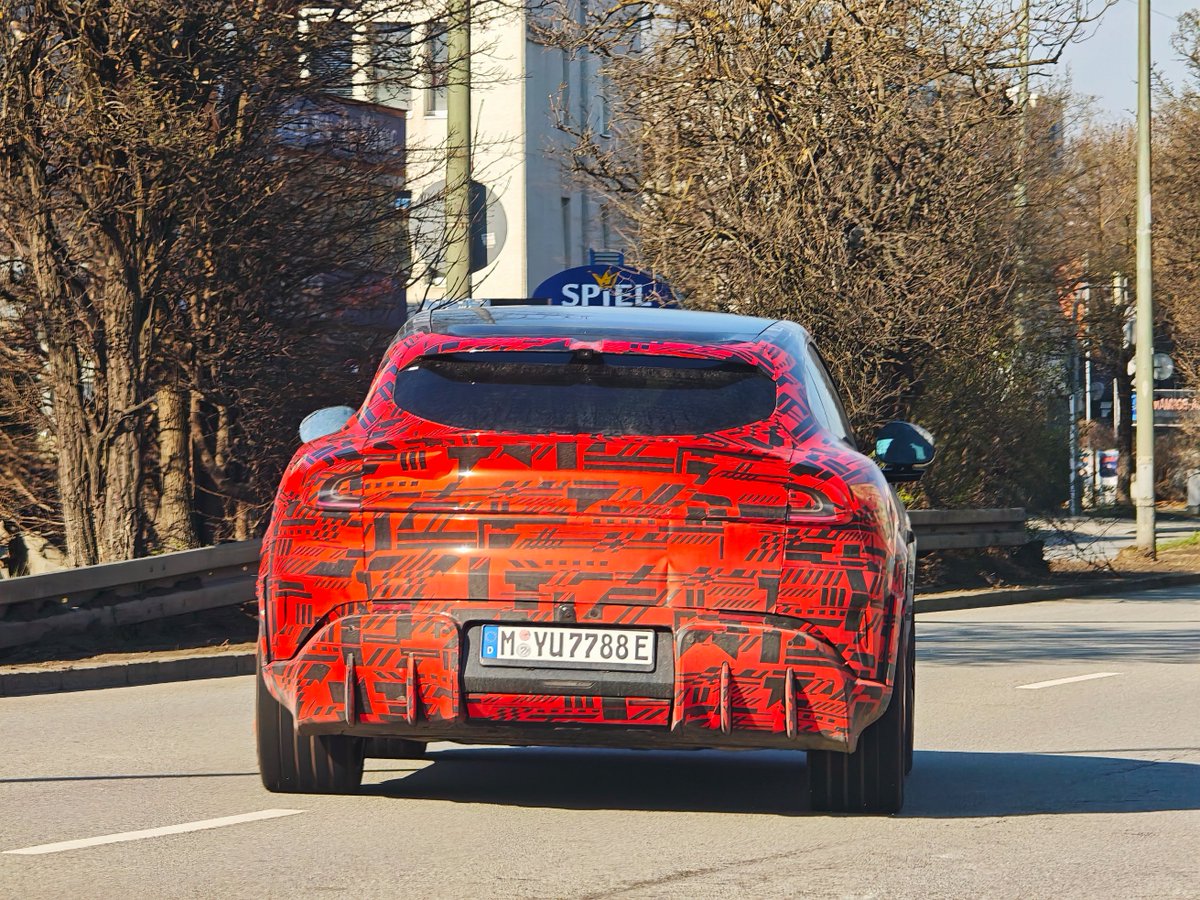
Image source: X
In fact, the overseas expansion of new - force automakers has already begun. NIO's global layout is particularly aggressive. In 2024, it extended its territory to the Middle East and North Africa. Leapmotor and XPeng, which had earlier laid out overseas, showed substantial results in 2025. Leapmotor's overseas sales in 2025 were about 32,000 units, a 23 - fold increase year - on - year. XPeng reached 45,000 units, almost doubling year - on - year.
However, in the past two years, other new - force automakers have also started to enter the overseas market. In addition to Xiaomi, Li Auto opened its first overseas store in the Middle East. AITO signed a strategic cooperation agreement with Abu Dhabi Motors, a top - tier luxury car dealer in the UAE, to explore the overseas high - end market.
The leading new - force automakers have basically established their brand influence in the domestic market. However, the current problem is that the domestic new energy market is shifting from high - speed expansion to stable growth, and the incremental space is continuously narrowing. Automakers often have to pay several times the operating costs and efforts to achieve the same sales volume as before.
According to the data released by the China Association of Automobile Manufacturers, the growth rate of domestic new energy passenger vehicle sales dropped significantly in 2025, from an average annual growth rate of over 70% in previous years to 16.17%. It is predicted that the sales volume of new energy vehicles this year will reach 19 million units, a 15.2% increase year - on - year, and the growth rate will further slow down.
With the intensification of stock competition, new - force automakers must find new growth curves in the global market to maintain their positions. Currently, three new - force brands have revealed their overseas sales targets for 2026. You can see the details in the following table.
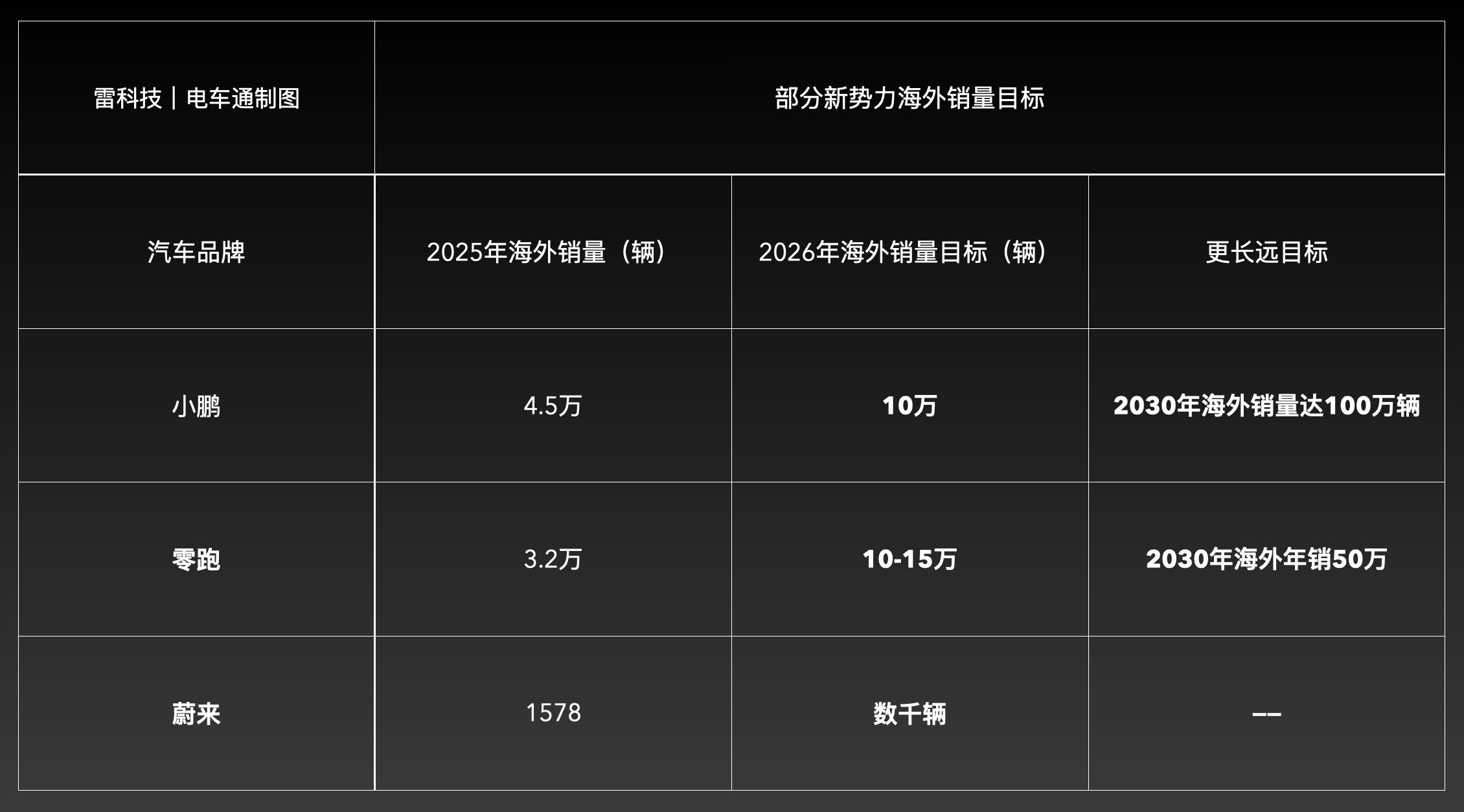
Table made by: Lei Technology/Evtong
So, how are the new - force automakers performing in the overseas market? Which regions have they chosen, and what strategies have they adopted?
The different states of new - force automakers going global: some are making money quietly, while others are still paying tuition fees
The leading new - force automakers in China have all started their overseas layouts. Europe, Southeast Asia & the Middle East, and Latin America have gradually become the core areas for these automakers to layout the global market. However, each brand has its own product advantages and resource characteristics, and their strategies in each region are different.
Europe: There is a big gap among new - force automakers. Xiaomi, AITO, and Li Auto are still just getting started
The European market is the core market for new energy vehicles globally. Its market penetration rate is second only to that of the Chinese mainland market, and the regulations are mature. Leading new - force brands have all laid out in this market, but their development rhythms are not in sync for the time being.
Let's first look at these three automakers that are still gearing up. They are currently mainly in the planning and trial - running stages and still have a long way to go before actual implementation.
Xiaomi Auto included its plan to enter the European market in 2027 in its long - term plan. Recently, the test vehicles of the new SU7 and YU7 have successively appeared in many places in Europe, indicating that Xiaomi's overseas preparation work has been put into practice, which is in line with its previously announced schedule.
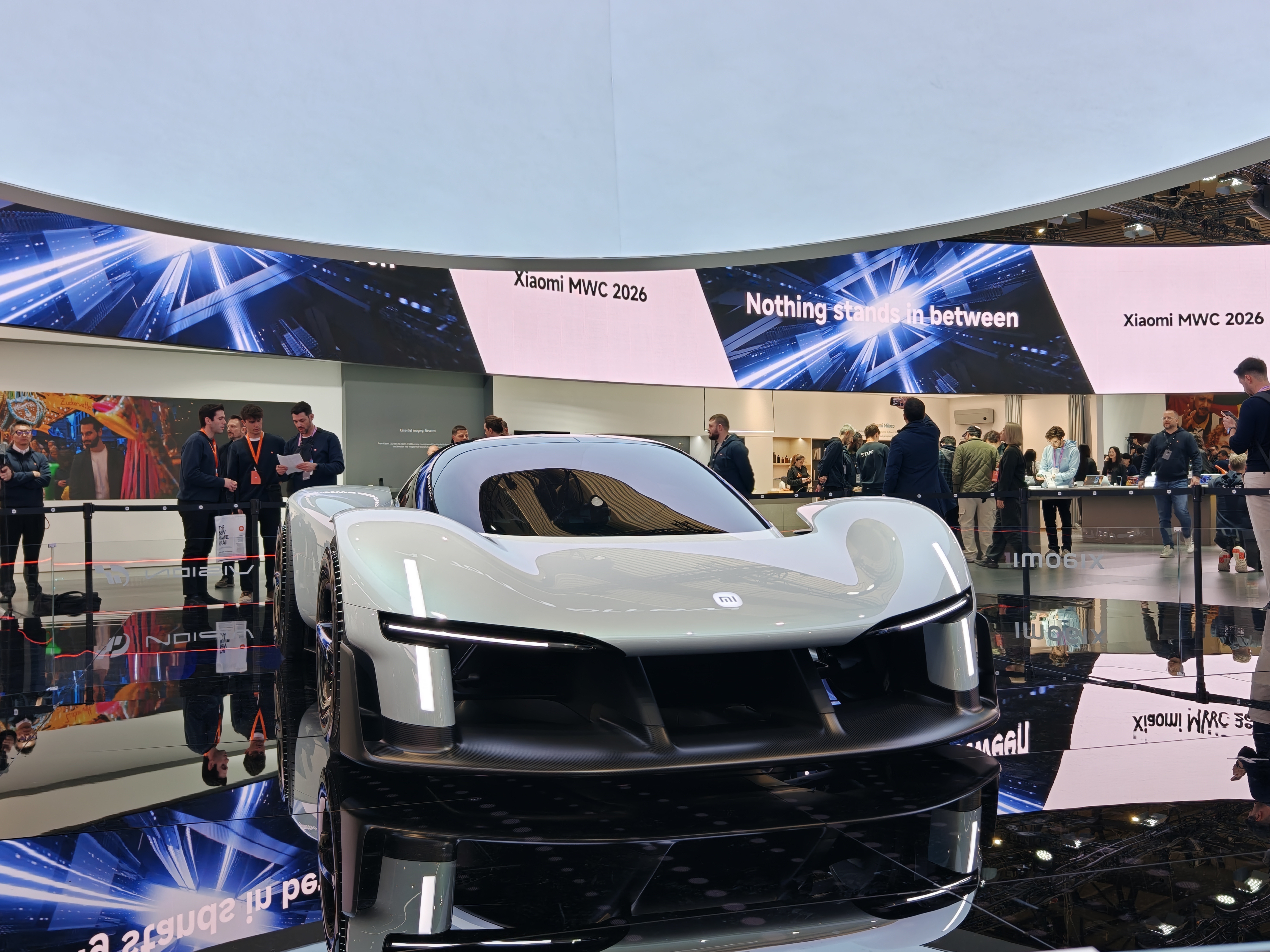
Image source: Lei Technology/Evtong, filmed at the 2026 MWC site
On February 24 this year, Li Auto joined the EU - China Chamber of Commerce and became a member of the automotive working group. Compared with NIO and XPeng, Li Auto started its overseas expansion much later. Its founder, Li Xiang, also admitted that "this was a strategic mistake."
AITO has introduced models such as AITO M9 and M7 into the European market and is looking for local senior dealers to build a sales network, which is a relatively steady approach.
At the Munich Auto Show last year, AITO showcased its entire range of models. He Liyang, the president of SERES Auto, once said that European users prefer to drive by themselves and are not very interested in high - level intelligent driving. At present, the models are mainly targeted at the Middle East market. Entering the European market is more for communication, learning, and understanding local needs.
In other words, AITO's current core market is not Europe or the United States. However, early layout and continuous research are also paving the way for its official entry in the future. After all, the consumption demand in any market is not static.
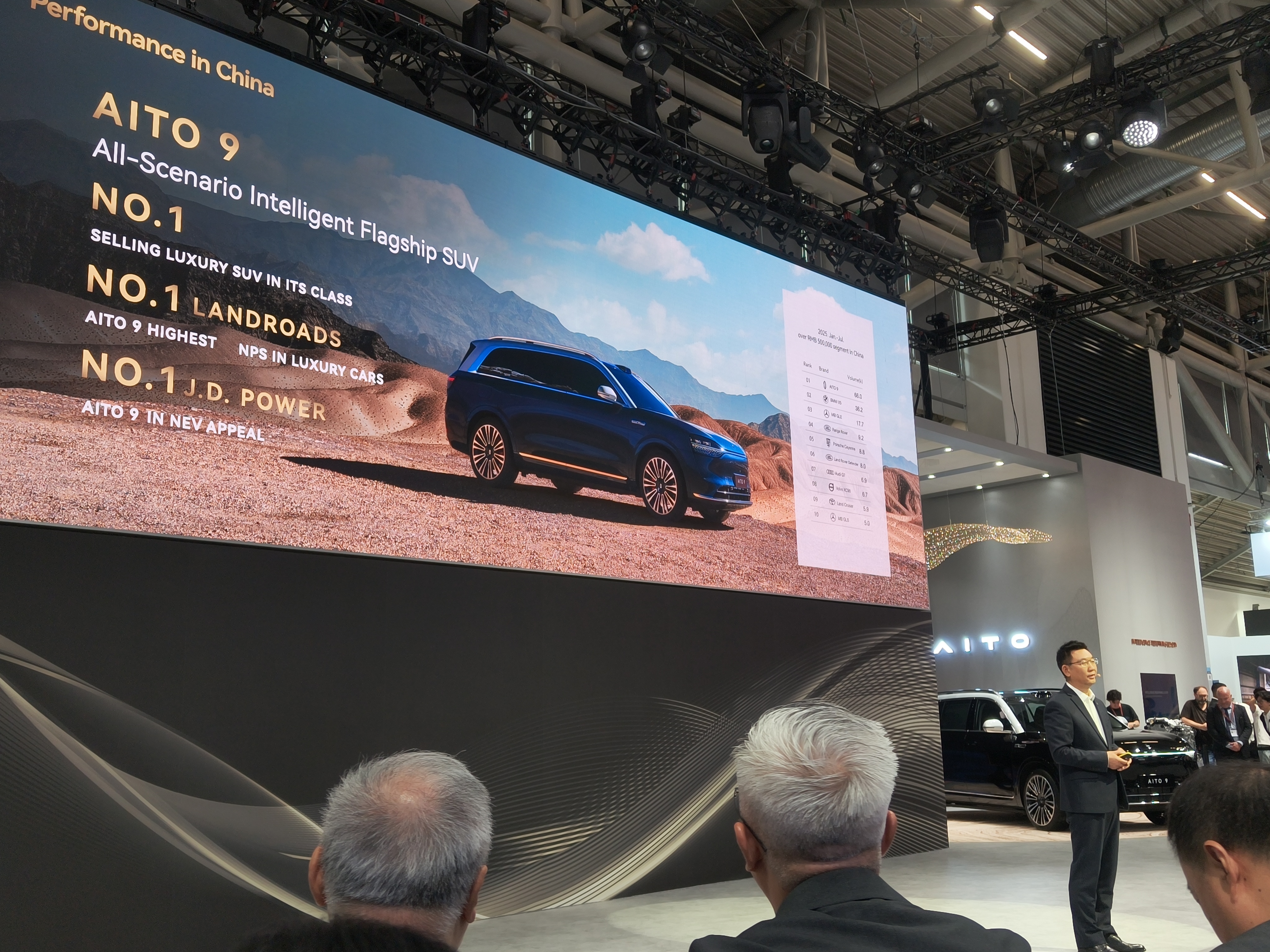
Image source: Lei Technology/Evtong, filmed at the 2025 Munich Auto Show site
It is not difficult to see that Xiaomi, Li Auto, and AITO are currently still in the planning and trial - running stages in Europe, while NIO, XPeng, and Leapmotor, which entered earlier, have already achieved actual sales results.
However, although these three new - force automakers are in the European market, their development rhythms, market performances, and strategic ideas are significantly different.
NIO is one of the first new - force automakers to layout in Europe. In 2021, it started in Norway and then gradually expanded to more than a dozen European countries such as Germany, the Netherlands, and Sweden. It even built an energy factory in Hungary, which is specifically responsible for the manufacturing and maintenance of battery - swapping stations, trying to introduce the entire battery - swapping network, direct - sales system, and service model to Europe.
However, in terms of sales volume, NIO's performance in the European market is relatively average. Its overseas sales in 2025 were only 1,578 units, and the sales volume in countries such as Norway, Germany, Sweden, and the Netherlands was in the hundreds.
Evtong believes that NIO's mediocre overseas performance is due to two reasons. First, NIO focuses on the high - end pure - electric niche market, and the user group is relatively small, with limited market capacity. Second, the heavy - asset battery - swapping system is much more difficult to promote in Europe than in the domestic market. It often takes ten months or even a year to build a battery - swapping station, with high investment and a long cycle.
However, NIO is also actively adjusting its strategy. On the one hand, it is promoting the Firefly, an entry - level volume - selling model, to break its single - dependence on high - end models. On the other hand, it is adjusting the channel model to a combination of direct sales and agency, effectively reducing the expansion cost.
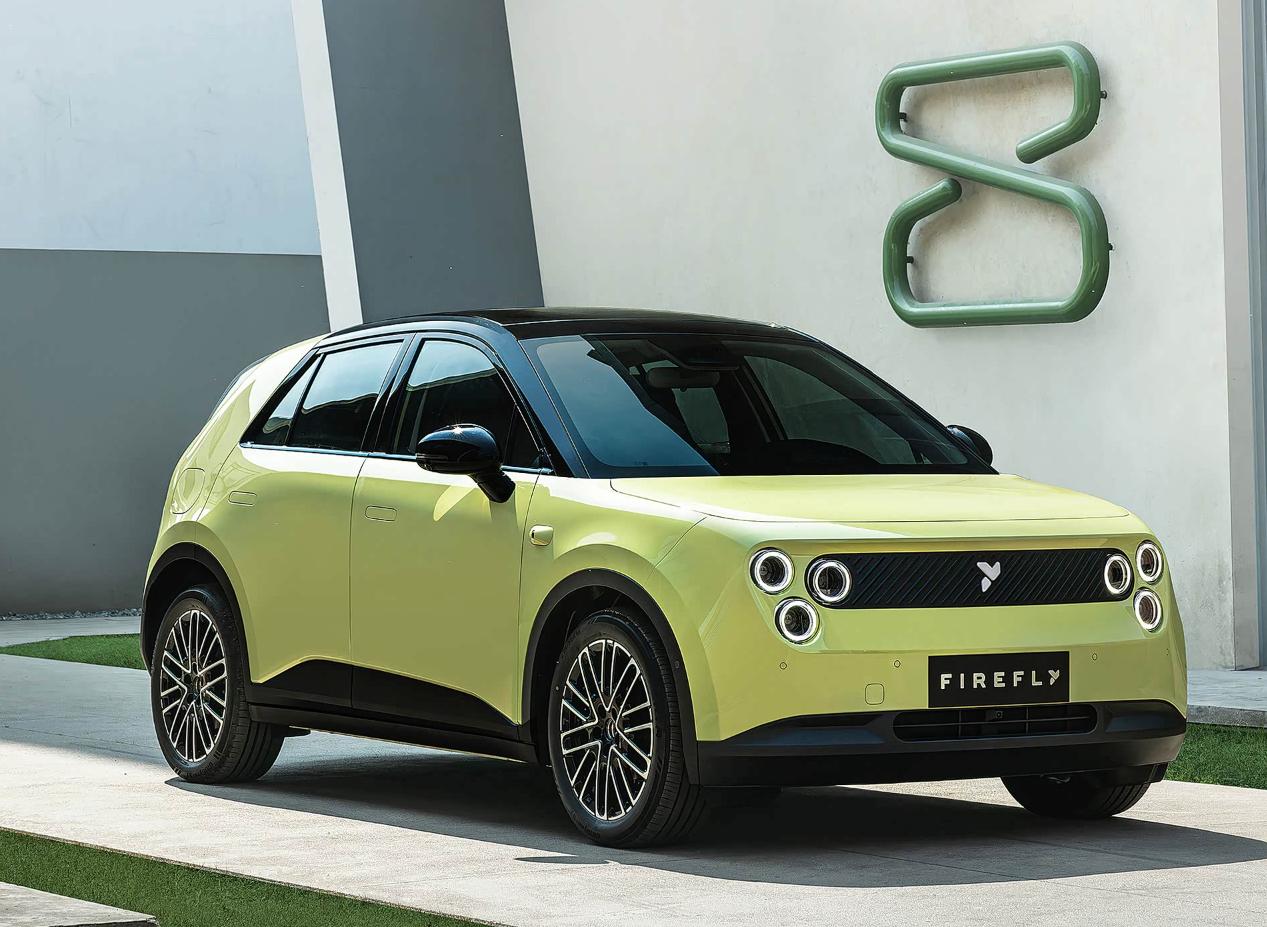
Image source: Firefly official website
XPeng entered the European market in the same year as NIO, also starting from Norway. In XPeng's overseas sales last year, the European market contributed nearly half. Its two models, G6 and G9, performed particularly well. The G6 ranked first among Chinese brands in the European mid - size pure - electric SUV market with a sales volume of 5,844 units, more than three times ahead of the second - place brand. The G9 became the only Chinese model to rank among the top ten in the European large - and mid - size pure - electric SUV sales, topping the list in the segmented markets of nine countries such as Norway and Germany.
The big sales gap between NIO and XPeng is mainly due to different product strategies.
NIO focuses on the high - end market, with a relatively narrow audience, and the promotion of the battery - swapping system is not as easy as in the domestic market.
XPeng has chosen a lighter and more flexible strategy. The G6 and G9 cover the mainstream price range of 35,000 - 60,000 euros. Naturally, a lower price means a larger audience. In terms of channels, it uses a mixed model of direct sales and authorization, not insisting on high - cost self - built stores, and mainly relies on the local public charging network for charging facilities.
In comparison, Leapmotor's performance is the most impressive among the three. With the joint - venture cooperation with Stellantis, Leapmotor quickly uses the latter's mature channel resources without having to build stores from scratch, saving a lot of time and money.
By the end of 2025, Leapmotor had more than 800 stores in Europe. Its pure - electric vehicle sales in 29 European countries ranked among the top three among Chinese brands, with an annual export volume of 39,000 units in Europe. It also achieved profitability through the joint - venture company, which is quite rare among new - force automakers going global.
In February 2026, Leapmotor's monthly vehicle registrations in Italy reached 5,006 units, topping the local pure - electric vehicle sales list with a market share of up to 39.3%.
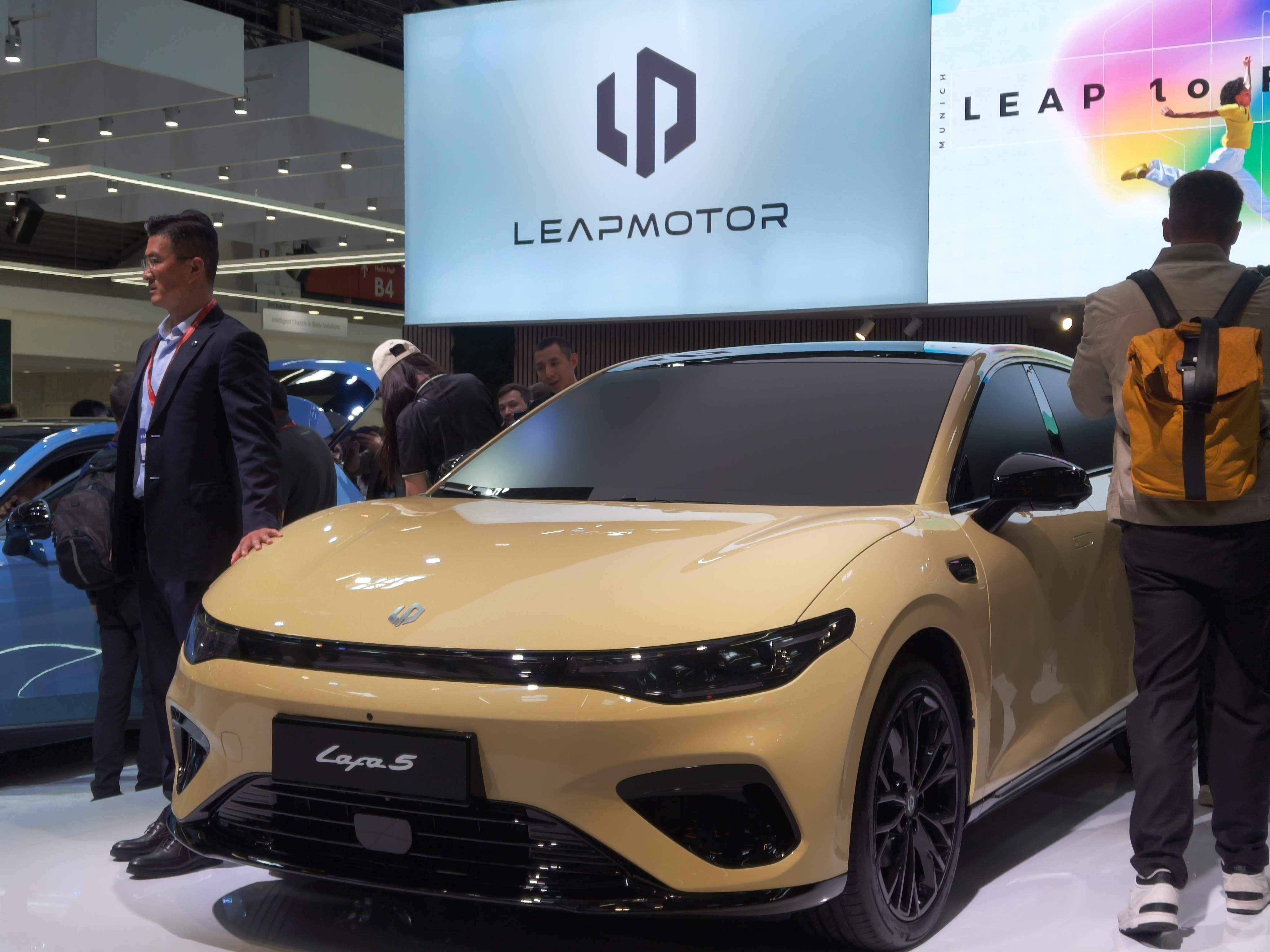
Image source: Lei Technology/Evtong, filmed at the 2025 Munich Auto Show site
Overall, the gap among new - force automakers in Europe is widening. Xiaomi, Li Auto, and AITO are still in the gearing - up stage, relying more on planning and research. NIO, XPeng, and Leapmotor have obtained the entry tickets through actual deliveries and sales data.
However, it should be noted that in the overseas market, "the first to enter does not necessarily win." Except for Xiaomi, which has some recognition in Europe due to its reputation in the technology field, the other domestic new - force automakers have similar levels of popularity in Europe. The one who can build a solid channel and quickly adapt to the local market will be able to maintain its advantage.
Southeast Asia, the Middle East, and Latin America: Different strategies to seize the incremental market
The European market is very competitive, but the new - force automakers' vision extends far beyond that.
Southeast Asia and the Middle East are geographically close to the Chinese market, and there are relevant policy supports locally. They are also two incremental markets for new - force automakers going global. However, the Southeast Asian market is highly price - sensitive and has a large demand for right - hand - drive vehicles, while the Middle East market focuses on the high - end market. Therefore, each brand's strategy is different.
Leapmotor and XPeng have made obvious investments in the Southeast Asian market. Leapmotor itself focuses on cost - effectiveness. With the sales channels and factories of Stellantis, it can launch its products in Malaysia and Myanmar and quickly expand the market to countries such as Thailand and Indonesia.
For the vehicle - using environment in the Southeast Asian market, which has a lot of motorcycles on the road, unpaved roads, high temperature, and high humidity, XPeng has specifically optimized its XNGP system and battery thermal management system and achieved full - scenario voice interaction in multiple languages such as Indonesian and Thai, showing strong localization capabilities.
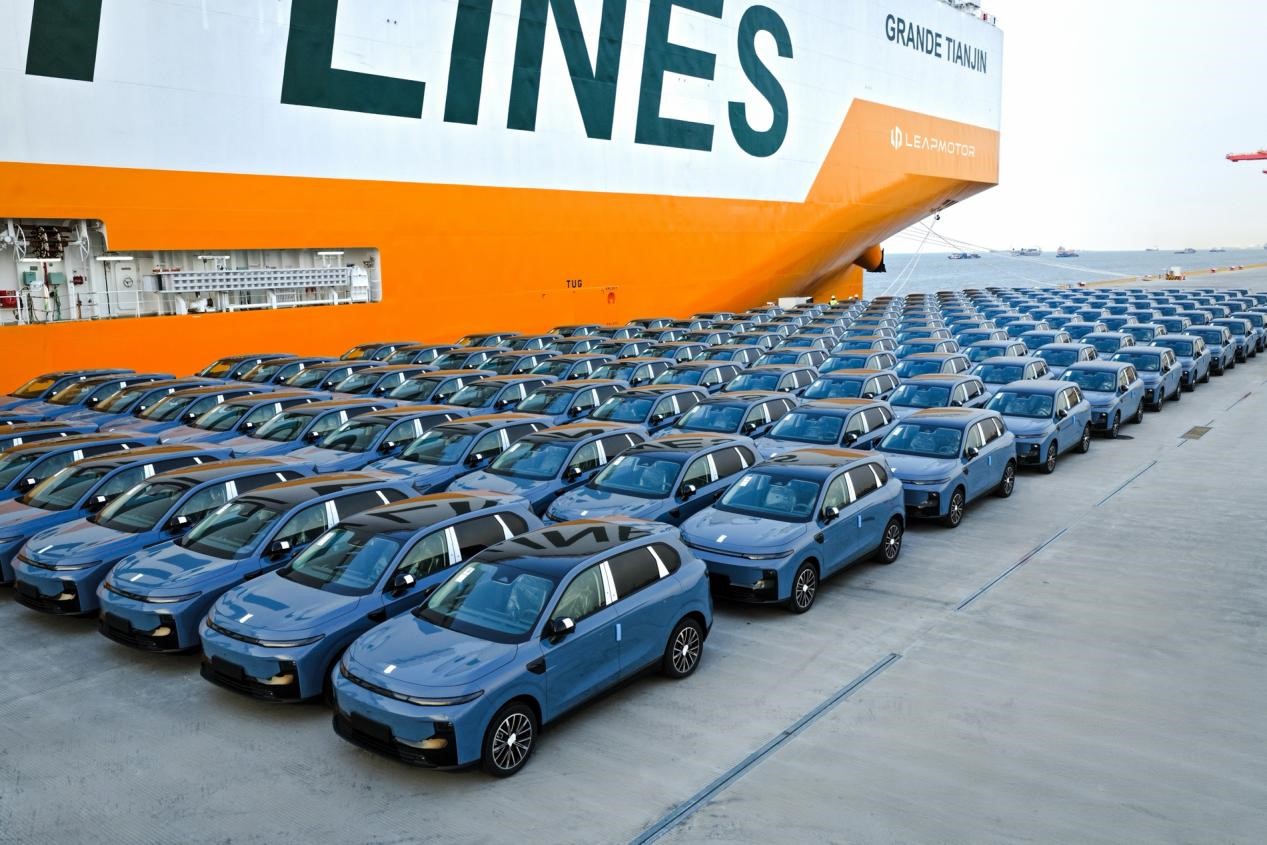
Image source: Leapmotor official website
The Middle East has a higher demand for high - end products, attracting XPeng, Li Auto, and AITO, which have high - end products, to enter the market.
XPeng has cooperated with the Israeli car dealer Freesbe to expand the local market. Li Auto established an overseas expansion department in 2024, targeting the Middle East and Latin American markets. AITO has cooperated with the ADM Group, covering the core cities in the Middle East. Relying on Huawei's Qiankun intelligent driving and luxury quality, it caters to the preferences of local high - income users.
Latin America is another "emerging blue ocean." It has great market potential, but the infrastructure such as charging and voltage is weak. Currently, most brands are still in the trial - running stage.
At present, only Leapmotor, a new - force brand, has made substantial progress. Relying on Stellantis' mature channels, Leapmotor focuses on the entry - level and essential - demand market. It has entered Brazil and Mexico, with more than 30 offline sales outlets, and has taken a firm foothold in the basic market.
It is worth noting that on March 25, XPeng launched the "Three - year Strategy for Intelligent Driving in Latin America." It joined hands with three local leading dealers to build a sales and service network in the three core cities of Mexico City, Guadalajara, and Monterrey. The first batch of stores will open on April 6 local time, aiming to fully cover the Latin American market by 2028.
Li Auto, AITO, and Xiaomi have not entered the market on a large scale and are only in the market research stage.
Behind the seemingly glorious overseas expansion, how many "pitfalls" are there?
Regardless of how well they sell overseas, the new - force automakers are still under a lot of pressure.
The regulatory barriers in the overseas market, the shortcomings in their own capabilities, and the incompatibility of product highlights with the local market. Any of these problems could