Have new energy vehicles collectively fled, and has the mission of shopping malls been accomplished?
Mr. Li (alias) from Beijing recently plans to replace his car with a new energy vehicle.
Originally, he planned to take a look at cars when he went to Changying Tiantian Street near his home on the weekend. In his memory, last year, there were many brand stores such as Avita and XPeng on the B1 floor. At that time, it was bustling there, and there were a continuous stream of people looking at cars.
However, during this visit, he found that the exhibition stands of brands such as Avita and Tesla in the atrium were no longer there, replaced by a sticker market. The stores of brands such as Li Auto and XPeng, which were originally located on both sides of the passage, also quietly disappeared.
Mr. Li's intuitive feeling is not an isolated case. Ms. Wang (alias), who often goes shopping at Mengzhilong Mall in Shanghai, found that the once bustling new energy vehicle block is no longer as prosperous as before. "The stores of brands such as Audi, smart, and Denza, which were originally located here, have been closed for renovation for some time."
The car brands that once rushed to enter shopping malls are now leaving in batches. From Tesla bringing cars into shopping malls in 2013 to the collective "ebb tide" of car companies today, what exactly has happened behind this? Has the mission of shopping malls for new energy vehicles really been completed?
1. From "Following Tesla" to "Finding One's Own Way"
Looking back to 2013, Tesla opened its first direct - sales store in a domestic shopping mall at Parkview Green Fangcao Di in Beijing. Since then, the sales model of online ordering and offline experience has rapidly spread in China, and car brands such as NIO, XPeng, and Li Auto have followed suit.
By August 2023, there were more than 5,000 new energy vehicle stores in shopping malls across the country, distributed in more than 2,200 shopping malls in 247 cities. There were 300 shopping malls that had five or more new energy vehicle brands.
However, this wave is now receding.
For example, the first "NIO House" in Jinan, which opened in August 2022, is now covered by a fence with the pattern of Miniso painted on it; several "NIO Houses" in the core business districts of Guangzhou were also closed or adjusted in the second half of 2025.
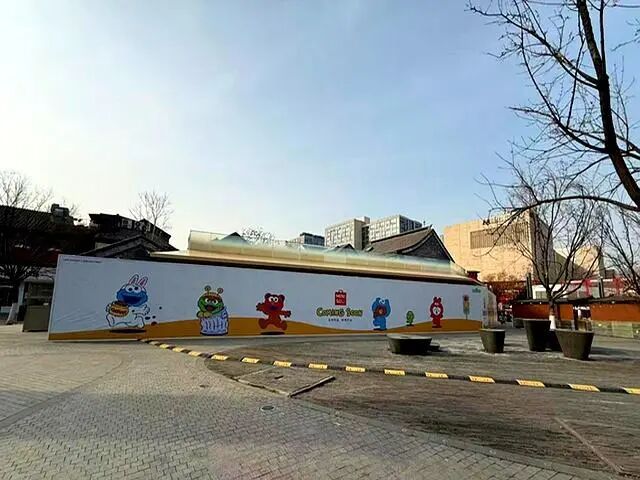
Picture/Original site of the first NIO House in Jinan Source/Screenshot from Internet, New Energy View
Another example is Li Auto. At the beginning of this year, according to reports from multiple media platforms, it will close some stores with low efficiency that were opened during the expansion period in the first half of this year.
Why are new energy vehicles leaving shopping malls collectively?
It has to start with the background of Tesla entering shopping mall stores. In 2013, Tesla was the only electric vehicle brand in China at that time, with a certain market scarcity. Choosing to open a store in a mall was mainly to increase brand exposure in the shortest time, establish brand awareness, and attract targeted customers. At that time, consumers entered the store not to compare prices, but to "see something new" and "see new technologies".
Nowadays, it is normal to have eight or ten new energy brands in a mall. Consumers have changed from being curious to comparing prices and configurations, and the conversion rate of customers entering the store has naturally declined.
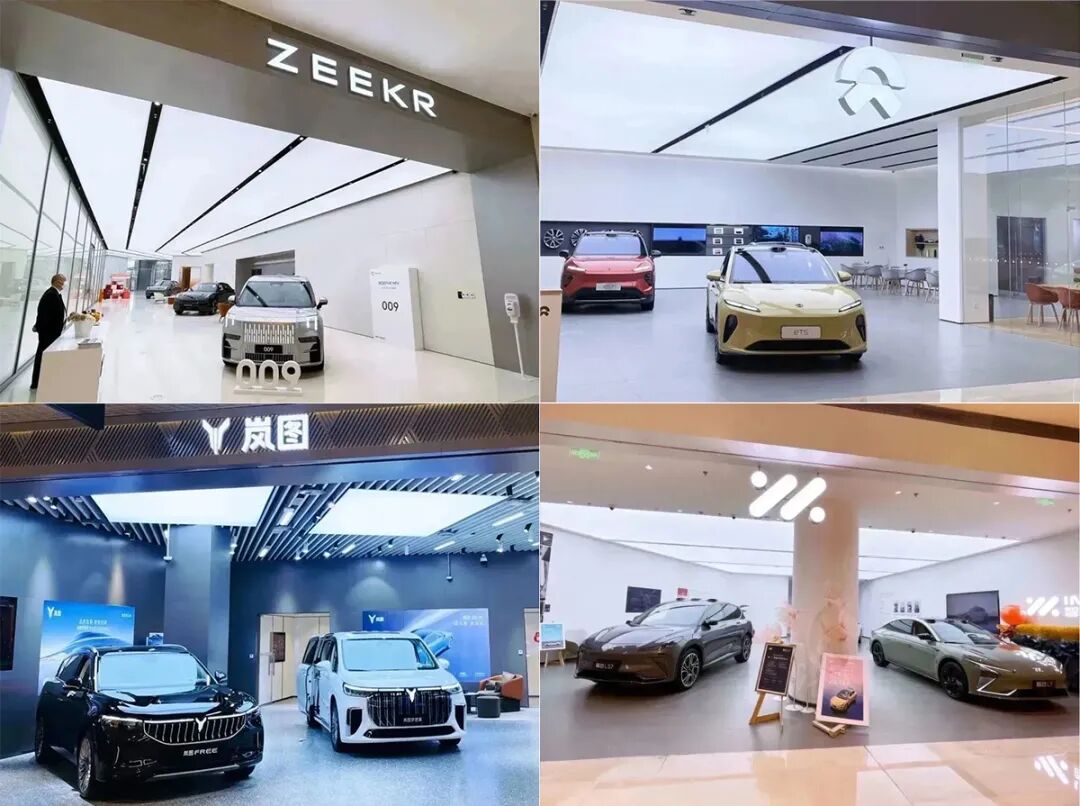
Picture/New energy vehicle stores in shopping malls Source/Screenshot from Internet, New Energy View
More importantly, shopping mall stores have functional deficiencies. They can bring in traffic, but they cannot build an integrated service chain for delivery, maintenance, and after - sales service.
Many new energy vehicle owners said that compared with intelligence and vehicle appearance design, they actually care more about the after - sales service network. "Although the iteration of cars is faster than in the era of fuel vehicles, a car is still a big - ticket item. A car with an imperfect after - sales service network will be a headache after purchase."
"The reason I chose the AITO M7 is mainly because of its convenient after - sales service. The HarmonyOS Smart Mobility user center is only 7 kilometers away from my home. Now, for many car brands, it is very convenient to buy a car in the mall, but you have to go elsewhere for maintenance, which leads to a serious gap in the experience."
As the number of consumers entering the store to buy cars decreases, the cost pressure on car companies has doubled.
A store manager of a new energy brand revealed that in the early stage, in order to seize the market, car companies would support the operation of stores even with subsidies. However, long - term losses have put increasing pressure on car companies, and they can only gradually close some stores where the sales revenue cannot cover the expenses. "The rent cost in the core business districts of first - tier cities often reaches dozens of yuan per square meter per day, and the annual rent starts at millions of yuan."
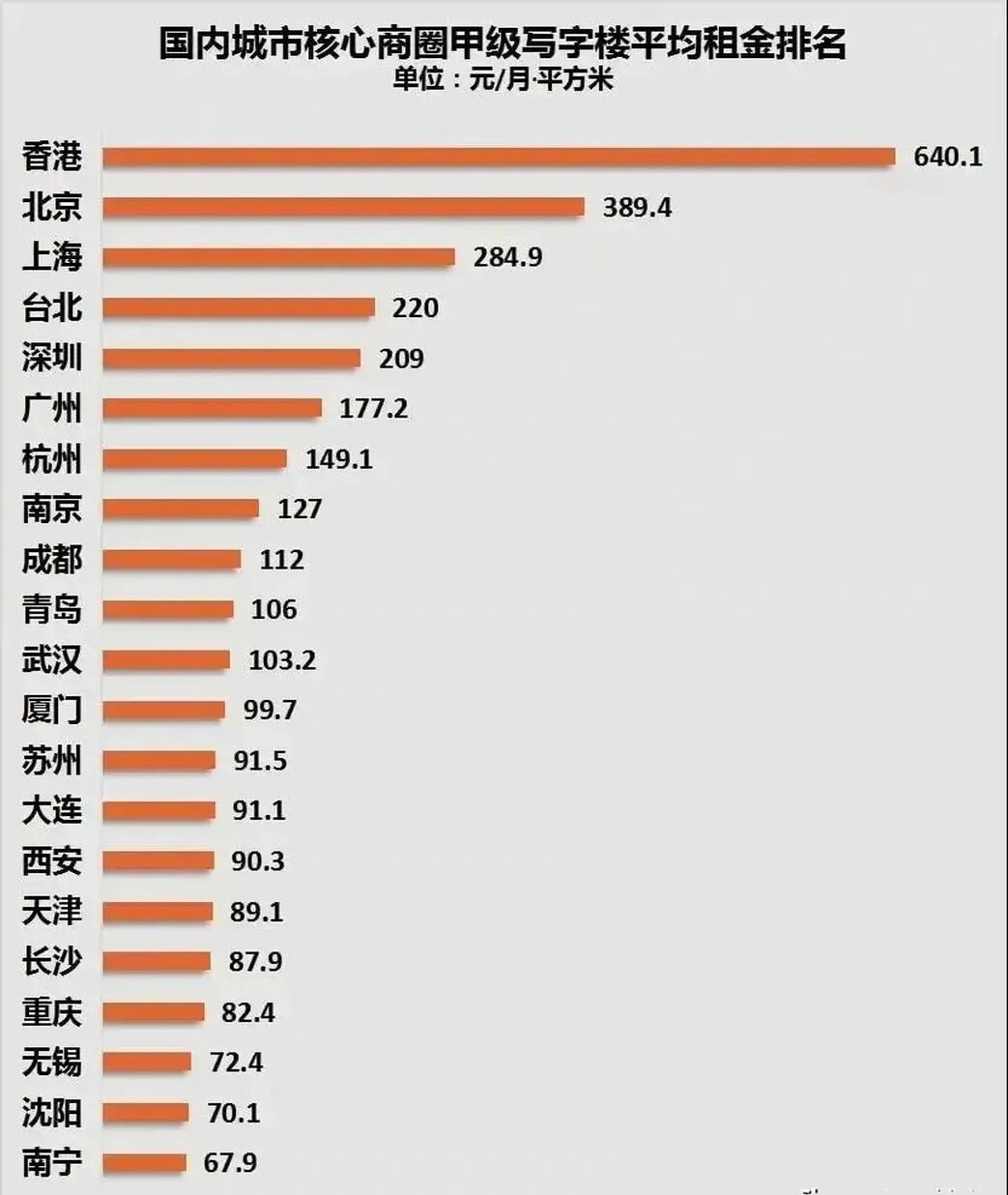
Picture/Ranking of average rent of office buildings in the core business districts of domestic cities Source/Screenshot from Internet, New Energy View
Industry insiders believe that new car - making forces have shifted from competing for scale in the past few years to competing for efficiency now. Closing some stores opened during the expansion period is essentially a channel strategy, shifting from rapid expansion to optimizing the structure and increasing the output of single stores.
2. The Logic of How to Sell Cars is Changing
In the early days, as a new category, new energy vehicles really needed to increase their visibility in places with dense traffic to complete market popularization.
A Tesla owner in Beijing recalled that when he first saw a Tesla in a mall in 2013, he thought it was very new. "At that time, I went there to experience new technologies. It was really convenient to learn about cars while shopping in the mall."
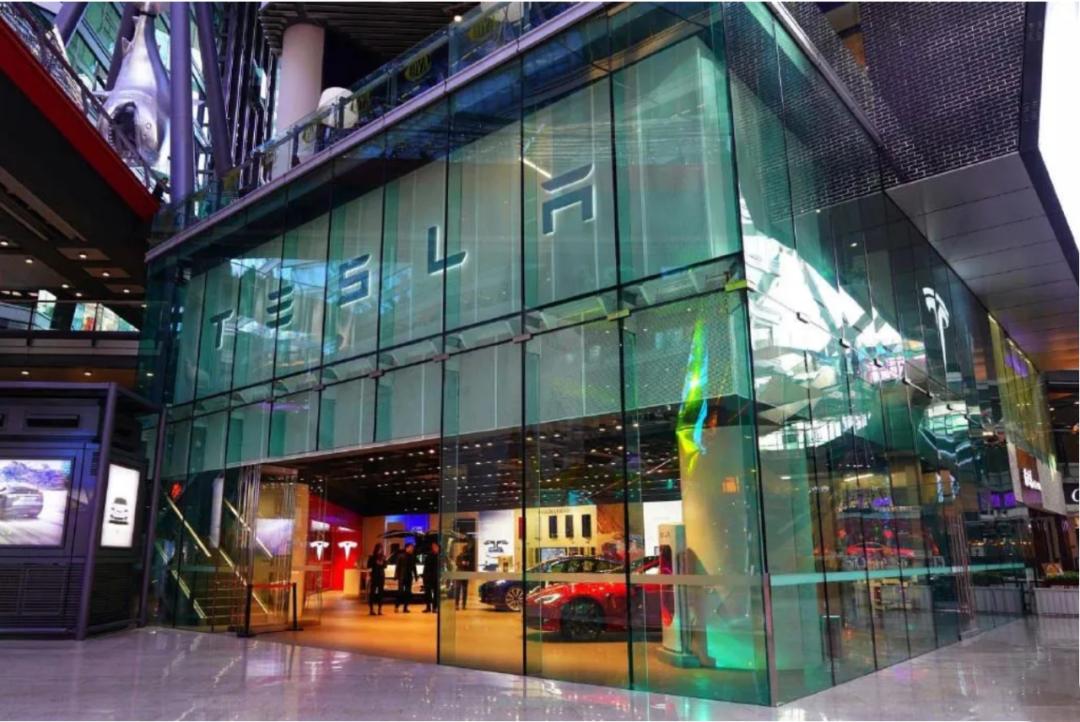
Picture/The first Tesla store in China Source/Screenshot from Internet, New Energy View
However, the logic of impressing consumers with car displays in malls is no longer effective.
"For me, the showroom in the mall is more like a window for brand image display. What really matters is the real experience of daily car use."
"In fact, I don't go to the NIO House very often. So the reason I chose NIO at the beginning was mainly because of the convenience of its battery - swapping service and the high - efficiency response of its after - sales service." Many new energy vehicle owners said directly.
Meanwhile, with the development of online e - commerce and digital marketing, it has become more and more convenient for consumers to obtain vehicle information and place orders to buy cars.
Zhong Yue (alias), a post - 95s, is a typical example. Before buying a car, he watched more than a dozen evaluation videos on Bilibili and collected more than twenty posts shared by car owners on Xiaohongshu. Then he went to the store for a test drive.
"What can you tell from a static car display? Whether the seats are soft or not and whether the screen is big or not can all be found online. What really made me place an order was the long - term feedback from many real car owners."
There are many consumers who share the same view as Zhong Yue. Through contact with many consumers, we gradually found that more and more users are used to browsing vehicle configurations, comparing prices on their mobile phones, and even placing orders directly online. Especially the younger generation of consumers, they trust Internet information more than sales consultants, and physical stores mainly undertake the functions of delivery and service.
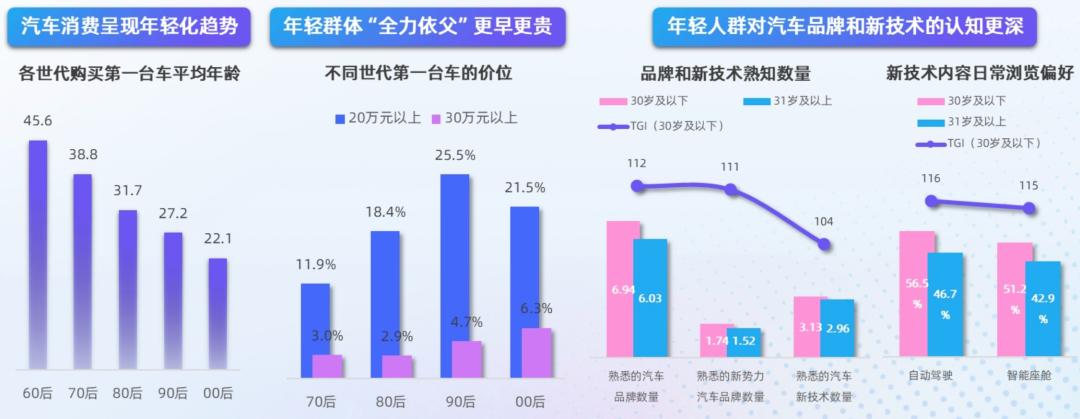
Picture/The trend of younger generation in automobile consumption Source/Screenshot from Internet, New Energy View
The logic of car companies selling cars is also changing.
In the past, placing cars in malls and waiting for people to come and see was the main way to attract traffic. Now, car companies can reach millions of users through live - streaming new car press conferences. Big V evaluations on third - party media platforms interpret the advantages and disadvantages of products from a professional perspective. Car owner sharing on platforms such as Xiaohongshu and Douyin forms word - of - mouth communication, and consumers' test drives become the last step before making a decision.
These links together form a new marketing chain, and the static display in the mall is just one link, and not the most important one.
An insider of a new - force brand revealed that now when a new car is launched, the budget allocation has changed significantly. The proportion of online advertising, KOL cooperation, and user operation has been increasing year by year, and offline stores mainly undertake the functions of experience and delivery.
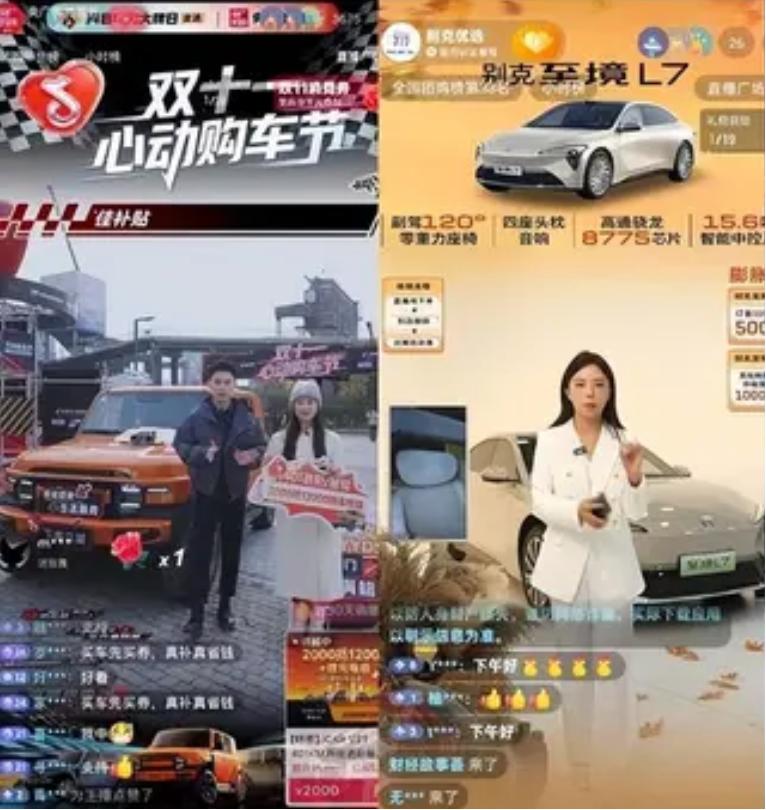
Picture/Live - streaming of new energy vehicle companies Source/Screenshot from Internet, New Energy View
"In the past, the store waited for customers. Now, customers look for the store. Users complete the understanding and comparison online, and they come to the store just to confirm."
The senior management of Li Auto said that it will cover the market through online tools and user word - of - mouth, not pursue the maximum sales volume of a single store, but improve the overall market share. When the core goal changes, there is no need to keep those redundant stores.
Meanwhile, new service models such as home test drives and home delivery of cars have also replaced the need to go to the mall to look at cars to a certain extent.
In summary, the role of shopping malls is decreasing, while the role of stores that cover the entire service ecosystem and service centers is becoming more prominent, which can better show the brand service value from the pre - sale to the entire life cycle to potential consumers.
3. The Service War of Car Companies Begins: Shopping Mall Stores Will Not Disappear, but Will "Live in a Different Way"
However, the withdrawal of shopping mall stores does not mean that car companies are giving up offline channels.
Car companies have gradually realized that Tesla's approach back then is not applicable everywhere. When Tesla entered shopping malls, it was the only electric vehicle brand and had its own traffic appeal. When the market enters a stage of full competition, simple brand exposure is no longer enough to support the high rent cost. Therefore, the adjustment of the channel model has become inevitable.
In 2023, XPeng launched the "Jupiter Plan" to adjust the proportion of direct - sales and authorized franchise stores, and gradually replaced some direct - sales stores with the dealer model. That year, XPeng closed about 46 shopping mall stores across the country; Avita also adjusted its channel strategy, and more than 90% of its direct - sales stores were taken over by dealers.
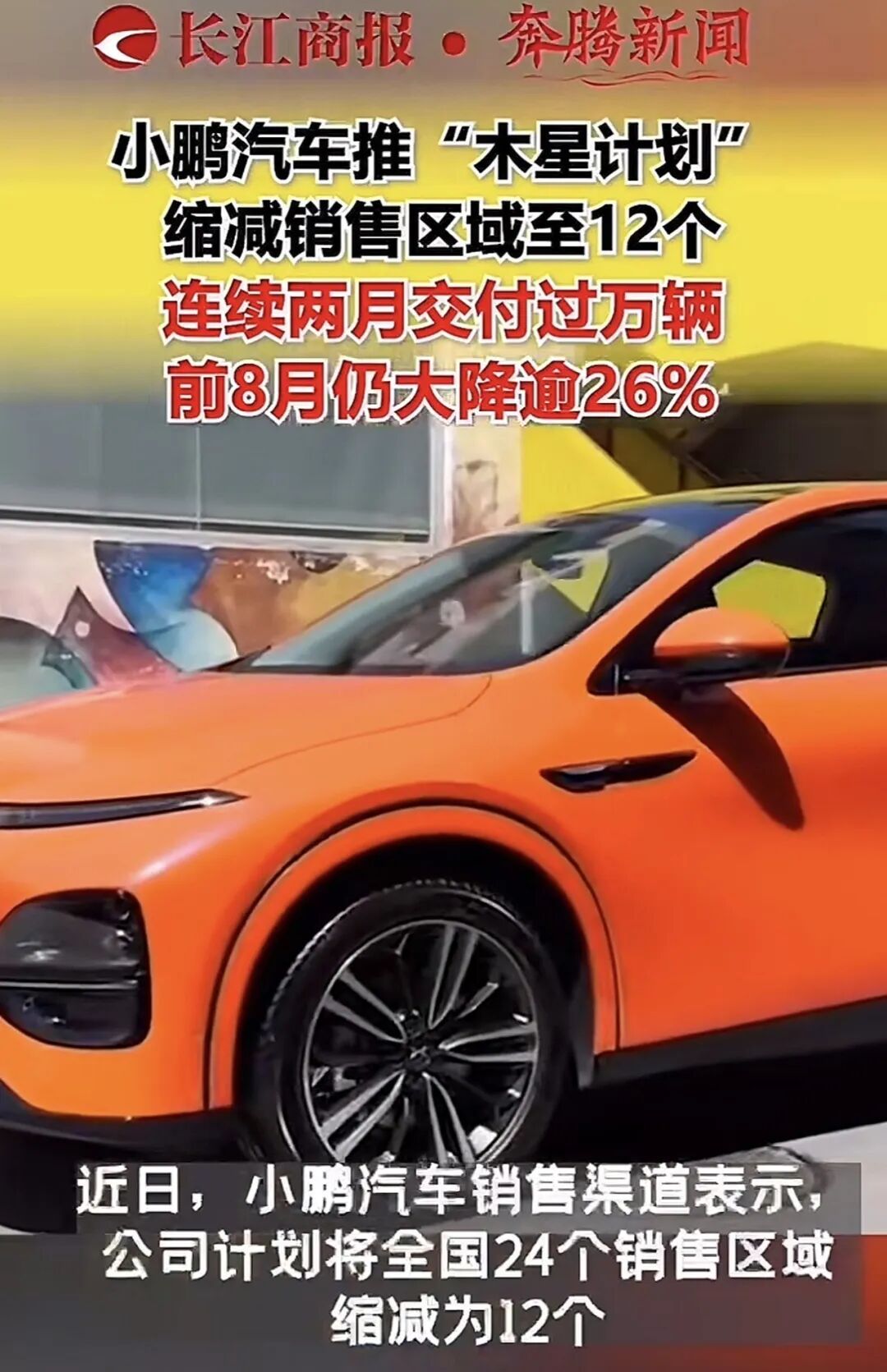
Picture/XPeng's "Jupiter Plan" Source/Screenshot from Changjiang Business Daily, New Energy View
In fact, after the state took action to combat involution last year, the smoke of the price war gradually dissipated. After all, sales volume obtained through price cuts has no loyalty. What can really retain users is the product itself and the service experience.
Many car companies have begun to focus on building comprehensive service centers that integrate sales, experience, and after - sales service.
In September 2025, the first HarmonyOS Smart Mobility ZHijie user center in the country opened in Wuhan, undertaking the entire service chain from pre - sales to after - sales. By the end of the year, there were 858 HarmonyOS Smart Mobility user center stores, and its service was jokingly called the "Harmony Big Hotel" by many consumers. This also shows users' recognition of the service system from the side.
In February this year, XPeng's largest sales and service center in the country was newly opened in Guangzhou, and its service functions were upgraded from the original "sales + delivery" to full - process coverage of "sales + delivery + after - sales". According to the plan, XPeng will also start the renovation and upgrade of service centers in core cities across the country such as Beijing, Shanghai, Shenzhen, and Nanjing this year to improve the delivery and service system construction.
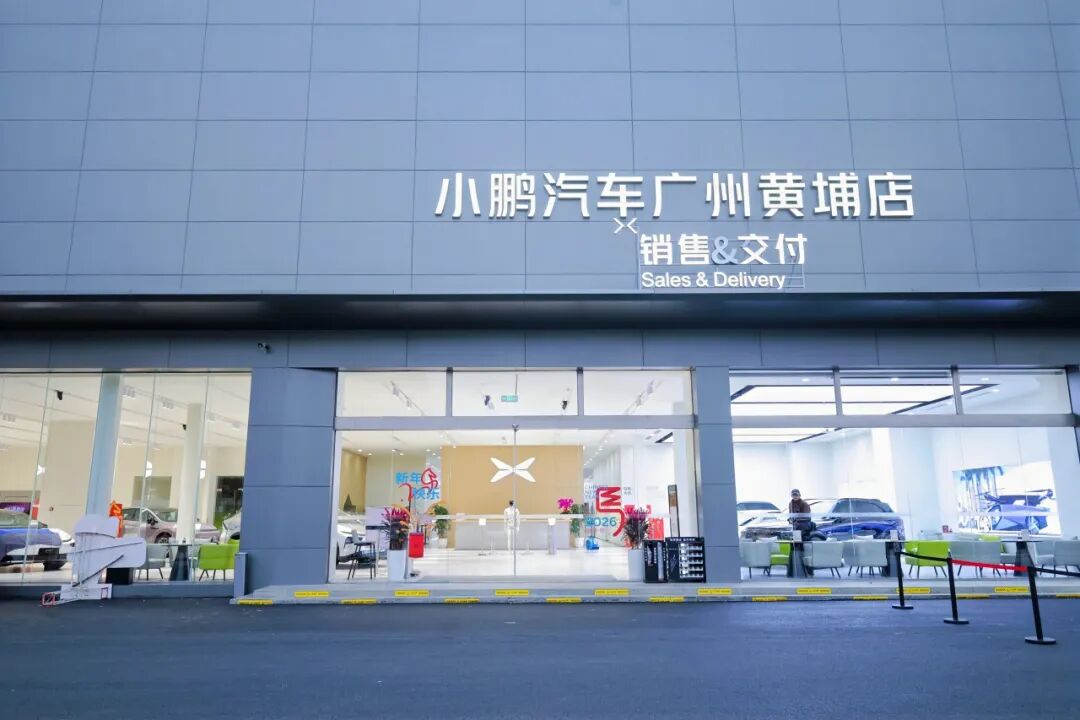
Picture/XPeng Automobile Huangpu Store in Guangzhou Source/Screenshot from Internet, New Energy View
Meanwhile, car companies are also accelerating the layout in the sinking market.
Li Auto's "Hundred - City Starry Sky Plan" launched in 2025 targeted cities below the third - tier. By the end of that year, Li Auto added more than 300 light - asset cooperative stores; NIO plans to build "SKY comprehensive stores" in more than 210 prefecture - level cities this year, that is, the three brands of NIO, LeDao, and Firefly are sold together.
