Multi-temporal sequence prediction for chart brushing, with 0% performance fluctuation, breaking the binary opposition of CI/CD
A new study at ICLR '26, CPiRi, breaks the deadlock in time series prediction: It uses a frozen base to extract time series features, and a lightweight module focuses on learning the real relationships between channels, without relying on positional encoding to "memorize answers". In tests, the performance shows zero fluctuation when channels are shuffled. It can generalize to the entire network using only 25% of the data, truly achieving a win - win situation of robustness and accuracy.
In the field of Multivariate Time Series Forecasting (MTSF), there has long been a debate in the academic community between the routes of Channel Dependence (CD) and Channel Independence (CI).
Channel Dependence (CD) school (e.g., Crossformer, iTransformer) advocates explicitly modeling the complex associations between channels through methods such as Spatio - Temporal Graph Neural Networks (STGNNs) and channel attention mechanisms. It has a high theoretical upper limit but is extremely prone to overfitting.
Channel Independence (CI) school (e.g., PatchTST, DLinear) advocates treating each channel as an independent sequence. Although it is simple and crude, it often tops the leaderboards due to its strong robustness.
This gives rise to a counter - intuitive paradox: Why do CD models that explicitly model more information have worse generalization ability than CI models that "fight independently"?
If we look beneath the surface, we'll find that this is essentially a compromise under architectural choices.
Most current mainstream CI models are based on non - autoregressive (NAR) or direct mapping architectures. To avoid noise accumulation, they are forced to abandon the modeling of the joint distribution across channels.
Is there an architecture that can have both the robustness of CI (not afraid of noise and heterogeneity) and the ability to capture physical associations of CD (understanding the causality between channels)?
To resolve this paradigm contradiction and the "shortcut" problem of position memory, a research team from Zhejiang University of Finance and Economics proposed a brand - new multivariate spatio - temporal decoupling framework, CPiRi. It extracts robust time series dynamic features through a frozen pre - trained time encoder and uses a lightweight spatial module to focus on learning "content - driven" cross - channel interactions.
Paper link: https://openreview.net/pdf?id=tgnXCCjKE3
Code link: https://github.com/JasonStraka/CPiRi
Combined with an innovative permutation - invariant regularization (channel shuffling) training strategy, it forces the model to learn generalizable cross - channel relationships and completely get rid of its dependence on absolute position indices.
Experiments show that CPiRi not only refreshes multiple state - of - the - art (SOTA) records but also demonstrates amazing zero - shot inductive generalization ability under the extreme few - shot condition of "only having seen 25% of the sensors".
This research provides a new, implementable, transferable, and maintainable technical path for real - world business scenarios such as intelligent transportation and energy power grids, which are prone to "structural distribution drift".
Hidden Challenges in the Real World: Co - drift of Structure and Distribution
Before delving into the CPiRi framework, we must first understand the real physical environment constraints faced by modern MTS forecasting tasks. In complex industrial systems, the data generation process is often accompanied by continuous changes in the underlying physical or logical topology.
Multivariate time series data in the real world in an open and dynamic environment will inevitably face two types of complex evolutionary phenomena:
- Distributional Drift: That is, the statistical characteristics of time series, such as mean, variance, and autocorrelation, change dynamically over time (e.g., seasonal changes, holiday effects, equipment state changes), resulting in inconsistent data distributions between the training set and the test set. This constitutes the main bottleneck for the accuracy of forecasting tasks.
- Structural Drift: That is, the physical or logical topology of the sensor network supporting data generation changes over time. For example, in a smart city, road construction may cause some traffic sensors to fail, or the expansion of the power grid may add new monitoring nodes.
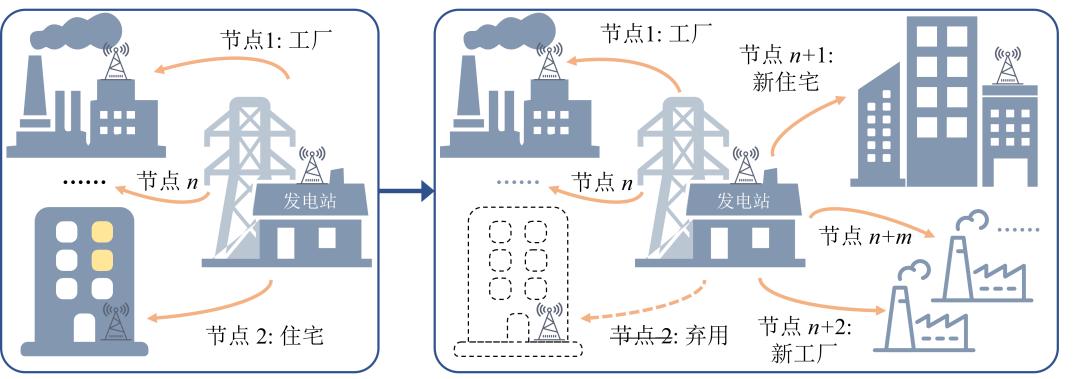
These two types of drifts often do not exist in isolation but are closely coupled, forming Structural - Distributional Co - drift. Disturbances at the structural level (e.g., adding a new traffic flow monitoring node on a main road) will directly break the original spatial dependence relationship and induce a synchronous drift of the marginal distribution. This requires deep - learning models not only to capture temporal dynamics but also to have strong topological dynamic adaptability, robustness, and generalization ability.
When the system undergoes cross - regional migration, large - scale network reorganization, or faces the cold - start challenge of completely unseen channels, traditional models are prone to a cliff - like decline in performance due to the strong "position memory effect". In this scenario, computing cost becomes secondary, and the model's "global generalization ability" and "cross - domain portability" for unseen scenarios become the core propositions for solving the problem.
The CPiRi framework is precisely designed to completely solve this high - intensity structural distribution drift problem. Its core design concept is to break the model's dependence on specific channel configurations. By constructing a general architecture with channel permutation invariance, the model can obtain the "meta - skill" of cross - channel relationship reasoning, so that it can remain stable when facing drastic channel rearrangements, additions, deletions, or cross - domain deployments.
Trade - offs in Classic Forecasting Paradigms
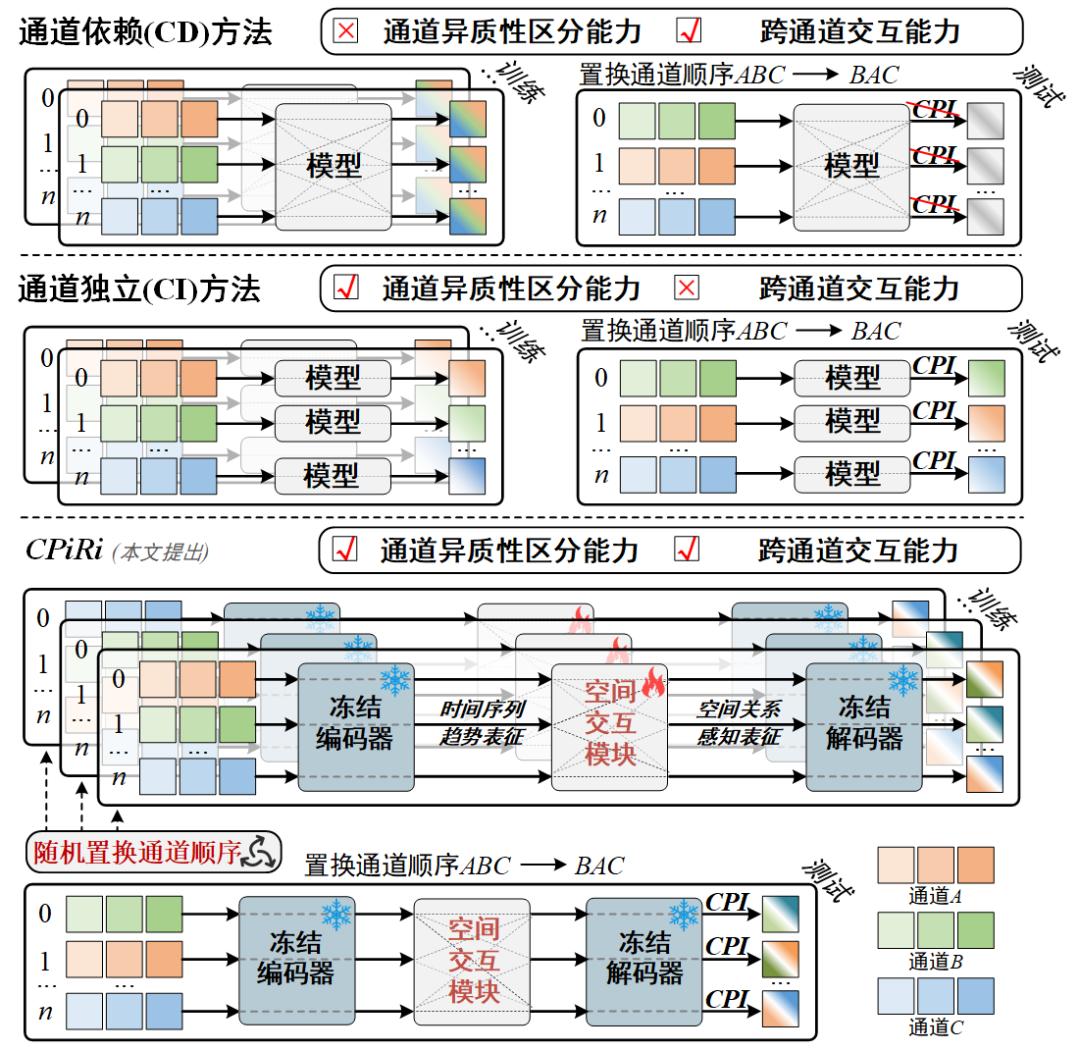
In recent years, MTS forecasting technology based on deep learning has developed rapidly. However, in the face of high - intensity structural distribution drift, existing models have fallen into a profound "paradigm contradiction" when dealing with multi - channel relationships. Modern deep - learning MTS forecasting models are mainly divided into two opposing camps: the Channel - Independent (CI) paradigm and the Channel - Dependent (CD) paradigm.
Channel - Independent (CI) Paradigm: The Cost of Robustness is the Blind Spot of Relationships
The basic idea of channel - independent models is to decompose the multivariate time series forecasting task into multiple independent single - channel time series forecasting tasks. For example, the DLinear model only uses a simple fully - connected layer to independently model the decomposed time series; PatchTST applies the Transformer architecture to the independent channel block (Patch) sequences. Recently, base models (e.g., Chronos - Bolt, Sundial) pre - trained on massive single - channel time series data by borrowing the experience of large language models (LLMs) have pushed the CI paradigm to a new height.
- Absolute Advantage: CI methods naturally have excellent robustness and essentially satisfy "channel permutation invariance" (because each channel is calculated independently without interference). They perform well in resisting noise interference, dealing with channel heterogeneity, and cross - domain generalization.
- Fatal Flaw: This paradigm sacrifices the explicit modeling of cross - channel interaction relationships (e.g., the traffic flow linkage between adjacent traffic intersections, the load co - variation between adjacent nodes in the power grid). Ignoring the spatial linkage mechanism within the system greatly limits the model's ability to depict the global spatio - temporal dynamic structure of complex systems, thus locking the upper limit of forecasting accuracy.
Channel - Dependent (CD) Paradigm: The "Pseudo - Correlation" Trap of Position Memory
To capture the complex interactions across channels, channel - dependent models emerged, attempting to explicitly mine spatial features through joint modeling. Early spatio - temporal graph neural networks (STGNNs) relied on predefined or adaptive graph structures; subsequent Transformer - based models (e.g., Informer, Crossformer, STID) captured the spatio - temporal dependencies between channels through various attention mechanisms or cross - dimensional embeddings.
- Absolute Advantage: On static, closed, and channel - structure - fixed test benchmarks, CD models can usually achieve extremely excellent forecasting accuracy by mining the complex deep - level interactions between channels.
- Fatal Flaw: Existing CD models show a high degree of pathological sensitivity to the specific channel configuration during the training phase (e.g., the number of channels, the absolute input order, the prior topological structure). Studies have shown that these models often tend to find a "positional memory shortcut" during training - they don't really learn to reason relationships based on the semantic content of time series signals but simply remember the absolute position indices of channels (e.g., rote - learning that "the 3rd channel in the input tensor is always strongly correlated with the 5th channel").
To expose this hidden flaw, researchers introduced a key Channel Permutation Invariance (CPI) diagnostic test. The logic is simple: if a model truly understands the semantic dependencies between channels, then even if the order of input channels is randomly shuffled during the test phase, its forecasting performance should remain stable.
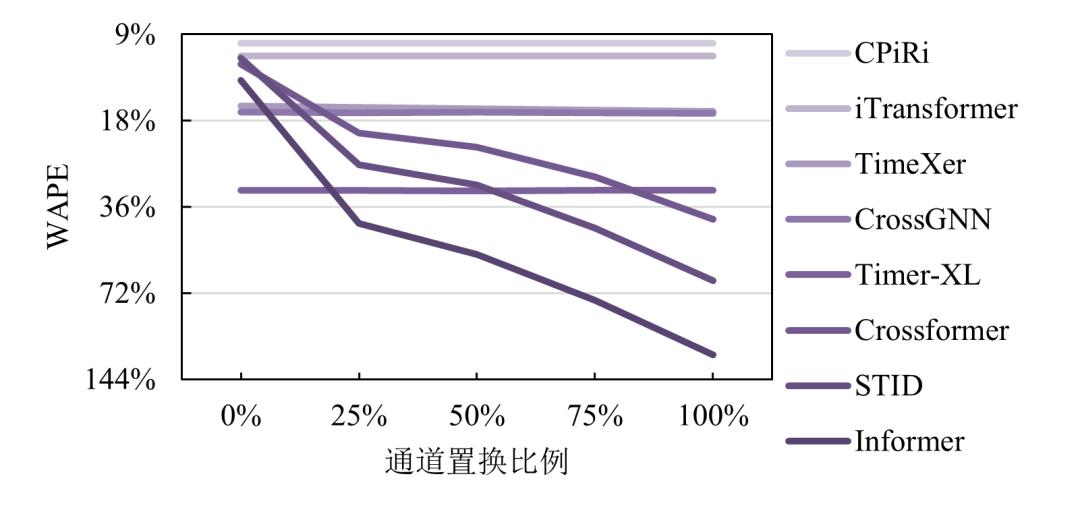
However, the results of the diagnostic test are alarming: on the PEMS - 08 traffic flow dataset, SOTA - level CD models showed shocking vulnerability when facing channel order shuffling. For example, the forecasting error of Informer increased by more than 400%, and the error of STID increased by more than 235%. This serious rigidity at the architectural level makes them almost unusable in real - world deployment environments where the sensor network structure changes.
Only a very small number of innovative CD models (e.g., iTransformer) attempt to achieve insensitivity to channel order by transposing the attention mechanism of the Transformer - treating time steps as feature dimensions and channels as sequence tokens. However, this dimension - transposing method requires coupling the calculation of extremely high - dimensional spatio - temporal features inside each attention layer, resulting in a computational cost approximately reaching
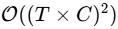
, which is prone to cause memory overflow when dealing with a large number of channels, and there is still room for compromise in its basic forecasting accuracy.
It can be seen that how to achieve a perfect system - level balance between "multivariate relationship modeling ability" and "dynamic generalization robustness" is a huge gap that the time series forecasting field urgently needs to cross.
The Way Out: The Decoupling Architecture and Regularization Strategy of CPiRi
To completely resolve the paradigm contradiction between CI and CD methods, the research team innovatively proposed the CPiRi (Channel Permutation - Invariant Relational Interaction) framework. This framework abandons the traditional end - to - end unified design and successfully endows the model with the meta - ability of content - driven cross - channel relationship reasoning through two core innovative mechanisms: a radical spatio - temporal decoupling model architecture and a permutation - invariant regularization training strategy.
Innovation 1: A Radical Spatio - Temporal Decoupling Model Architecture
CPiRi adopts a modular three - stage design, strategically separating the learning of time patterns and the reasoning of spatial interactions in the physical architecture, and skillfully integrating the dual advantages of CI and CD.
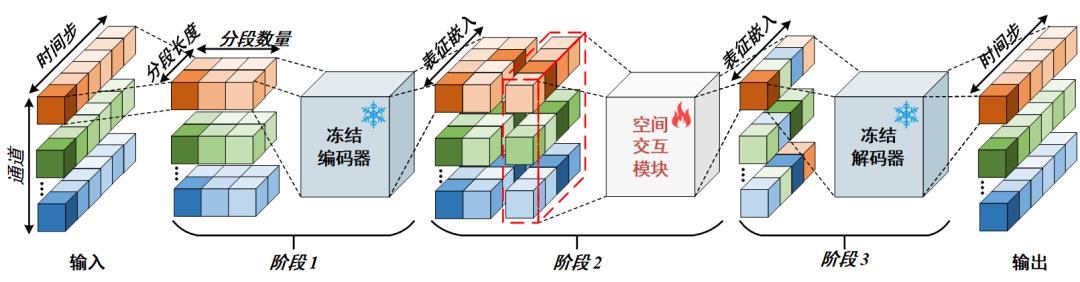
Stage 1: Time Series Feature Extraction
Given the input multivariate historical sequence data

(where L is the look - back window size and C is the number of channels), CPiRi first decouples it into C independent univariate sequences. These sequences are fed in parallel into the encoder of a completely frozen pre - trained time series base model (Sundial). The encoder processes each channel's sequence independently in an isolated state and extracts its final Patch representation, thus obtaining a set of high - quality, channel - specific time feature vector sets
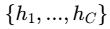
, where each

is a high - dimensional feature vector.
Ingenious Design: Using a large - scale pre - trained model (e.g., Sundial) as the feature extractor not only perfectly inherits the strong robustness of CI models in few - shot and anti - noise scenarios but, more importantly, by "freezing" the encoder, it fundamentally blocks the possibility of the model coupling specific time patterns with specific channel positions during training, completely avoiding "structural entanglement".
Stage 2: Permutation - Equivariant Spatial Interaction
This is the only core component in the CPiRi architecture that participates in back - propagation training. The time feature set {h1,...,hC} extracted in the previous stage is strictly regarded as an unordered set and fed into a lightweight spatial interaction module. This spatial module consists of a standard Transformer Encoder Block.
The multi - head self - attention mechanism plays a decisive role here. Since any form of absolute