Did the emerging body care brand sell for 3.4 billion? The boss of the "Hermès of the hair and body care industry" takes over.
Is the estimated transaction price over 3.4 billion yuan? Is body care a good business?
Body care seems to be a promising track. Half Mu Huatian, which started from body care, has been listed on the Hong Kong Stock Exchange. Yujian, a leading domestic body care brand, has received investment from Betaine. LVMH previously acquired the body care brand Stenders...
Recently (March 24th), foreign media such as BOF and WWD reported that the emerging high - end body care brand Salt & Stone has been acquired by private equity firm Advent International for a majority stake, and a final agreement has been signed. However, as of now, the specific amount and transaction terms have not been disclosed.
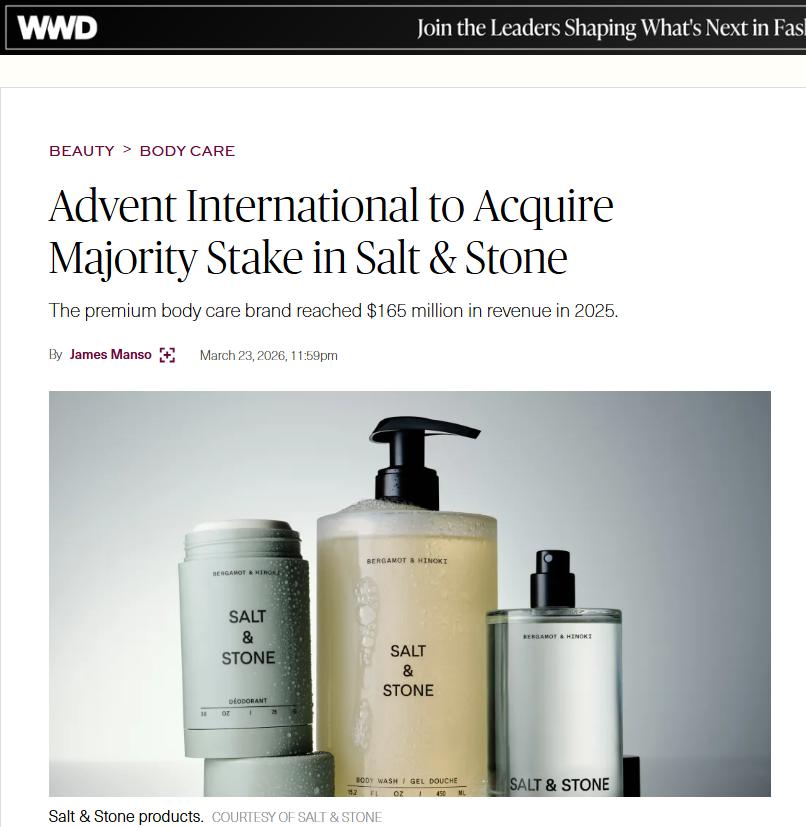
Screenshot from WWD
This also means that Advent International has a new development in its investment and acquisition in the beauty field. It is worth noting that this company is the largest shareholder of Olaplex, known as the "Hermès of the hair and skin care industry", holding 75% of its shares.
So, why did it take a fancy to this emerging high - end body care brand?
The transaction price exceeds 3.4 billion yuan!
This transaction is expected to be completed in April.
According to a related report from foreign media beautyindependent, Drew Fallon, the co - founder and CEO of the financial planning platform Iris Finance, estimated based on comparable transactions that the transaction price this time exceeds $500 million (about 3.448 billion yuan).
In terms of the purpose of cooperation, according to a related report from WWD, Dave Paresky, a director of Advent International, said that this transaction is not only to enable Advent International to enter a new track, but the more core goal is to help Salt & Stone further amplify its existing advantages, rather than simply supplementing the group's existing investment portfolio.
After the acquisition is completed, Nima Jalali, the founder of the Salt & Stone brand, will continue to hold a part of the brand's shares and will remain in his original position together with the Chief Marketing Officer Abby Tellam and the President Meagan Rosson. Chris Elshaw, who once led Medik8, will serve as the brand's chairman.
Meanwhile, Humble Growth, which invested in a minority stake in the brand in 2024, will withdraw.
Focusing on the acquirer, as shown in the following chart sorted out by Jumeili, Advent International's investment and acquisition in the beauty field have covered multiple categories and development areas such as hair and skin care, high - end makeup, perfume, hair care, and body care.
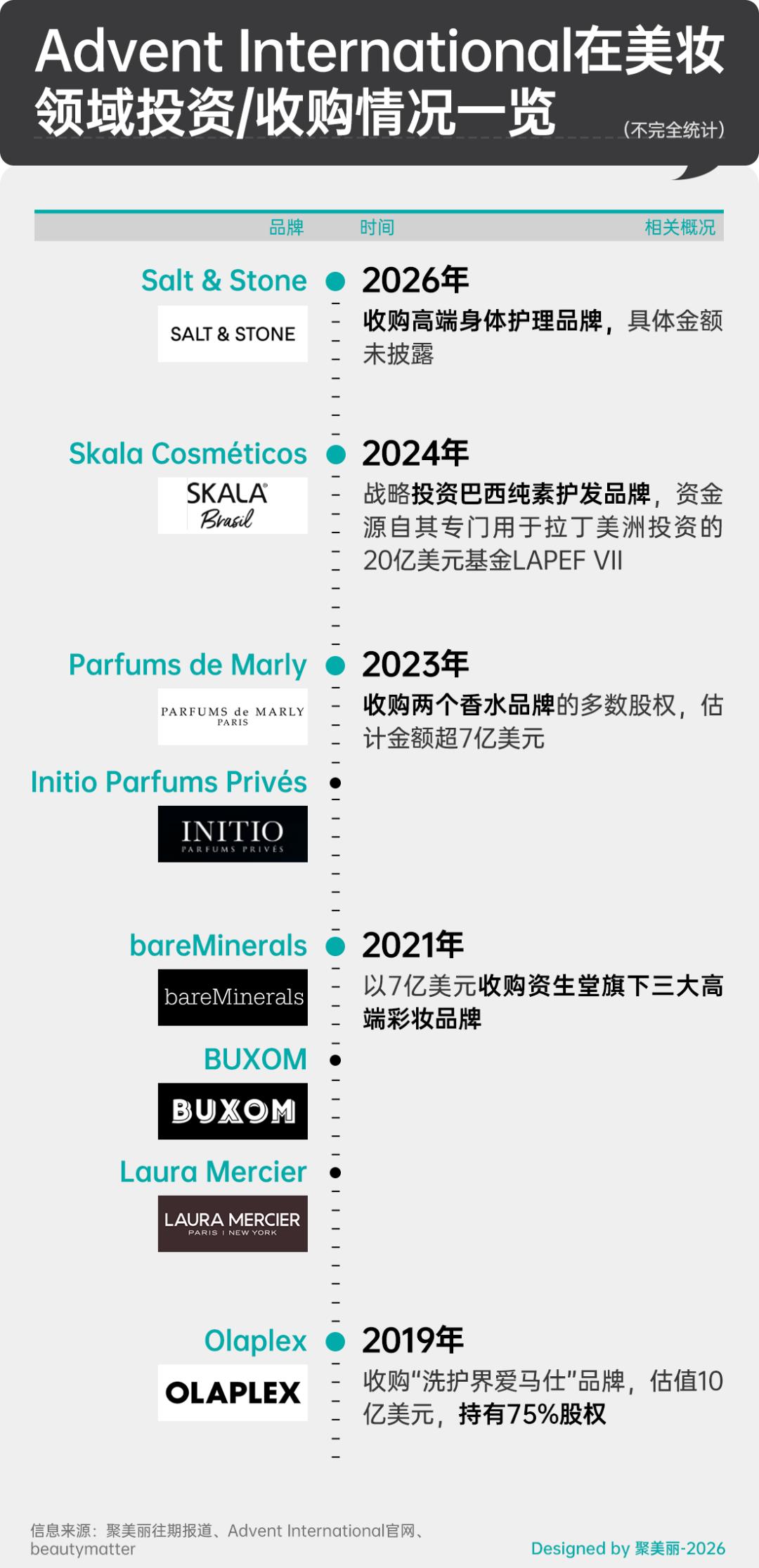
Among them, the acquisition of Salt & Stone is the latest move of this private equity firm in the beauty field after a two - year interval.
So, in an era when investment and financing in emerging beauty brands are cooling down, why can it attract the favor of capital?
The DTC sales growth rate exceeds that of Aesop
Dave Paresky revealed the reason in a foreign media report: "We tend to invest in brands that have a clear understanding of their own development potential and look for brands that perform well in their core categories."
On the other hand, we can also get a glimpse from aspects such as Salt & Stone's development situation, channel operation model, and the background of its founder.
According to the official website and foreign media reports, Salt & Stone, a high - end body care brand, was founded in 2017 by Nima Jalali, a former professional snowboarder. In terms of sales performance, the brand's revenue in 2025 was $165 million (about 1.138 billion yuan), and there was double - digit growth across all channels during the same period. The sales channels include Amazon, Sephora, and the brand's official website (accounting for 40% of the revenue).
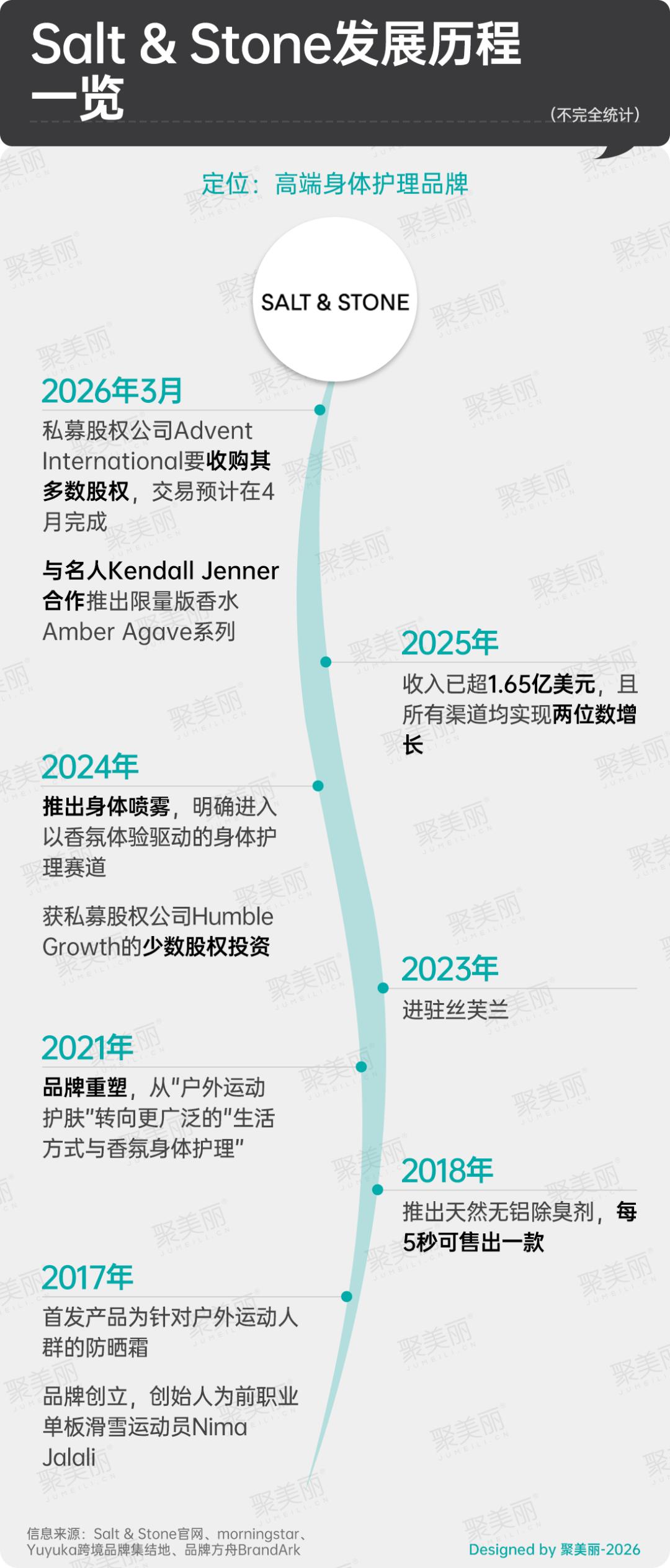
It is worth noting that 40% of Salt & Stone's sales come from DTC (according to a related report from the official account of Yuyuka Cross - border Brand Gathering Place, within six months as of October 2025, the sales of DTC brands increased by 50%, with a growth rate exceeding that of Aesop). Among them, deodorants account for about 40%, and one product is sold every five seconds. Shower gels and body sprays each contribute about 20% of the sales. By checking the official website, most of the brand's products are shown as "sold out".
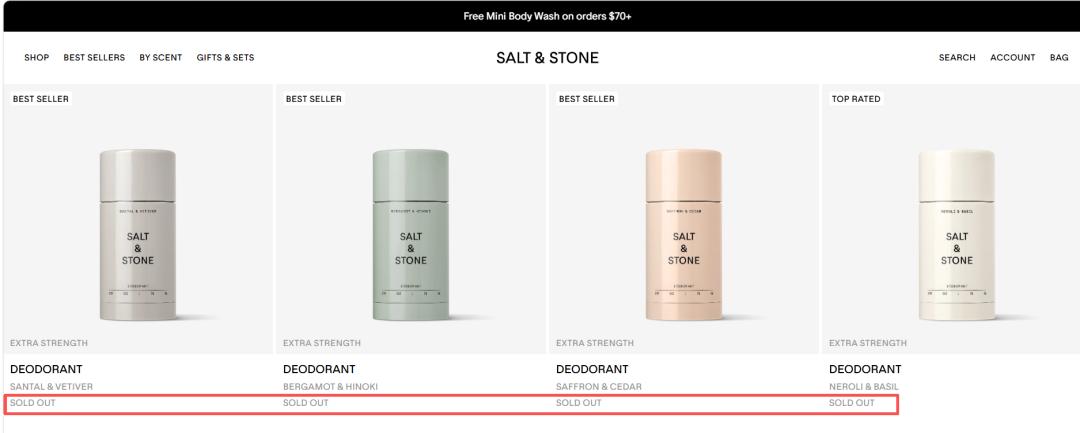
Screenshot from the official website of Salt & Stone
In addition, Dave Paresky revealed: "The deodorants created by Salt & Stone are very popular among consumers, and the shower gels also have a good reputation. At the same time, it has also opened up a new category with body sprays, which is expected to become the brand's third - largest growth pillar."
According to statistics from Navigo Marketing, Salt & Stone has ranked among the top deodorant and antiperspirant brands on Amazon, occupying a 6.3% market share, competing with established brands such as Old Spice and Dove Men + Care.
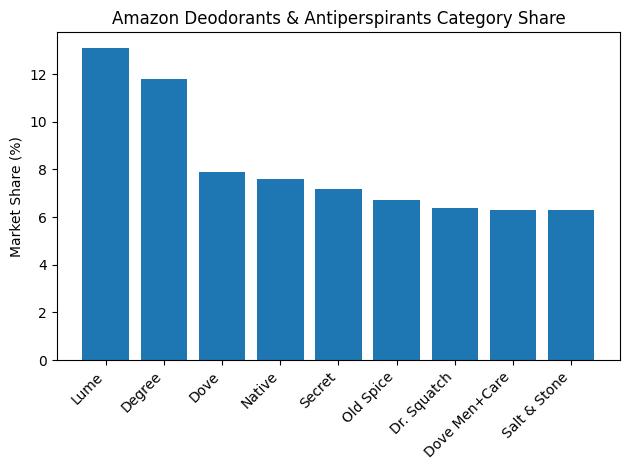
Screenshot from Beauty Independent
In terms of pricing, Salt & Stone's deodorants and shower gels are priced at $20 (about 137.93 yuan) and $36 (about 248.27 yuan) respectively, with prices between the mass and luxury markets, occupying a certain share advantage.
A related report from the official account of Yuyuka Cross - border Brand Gathering Place pointed out when analyzing this brand that "while maintaining a high - end tone, the brand also has the ability to achieve scale through high - frequency repurchases on Sephora and Amazon."
In terms of channels, Salt & Stone entered Sephora in 2023. Recently, it has entered Sephora in Europe and Space NK in the UK for international expansion and customer group expansion.
The official website page of Salt & Stone is not only classified by product category but also by scent, such as bergamot and saffron. Nima Jalali, the brand's founder, believes that "Salt & Stone is not only a body care brand but also a fragrance brand, which is also one of the important reasons why it attracts Advent International."
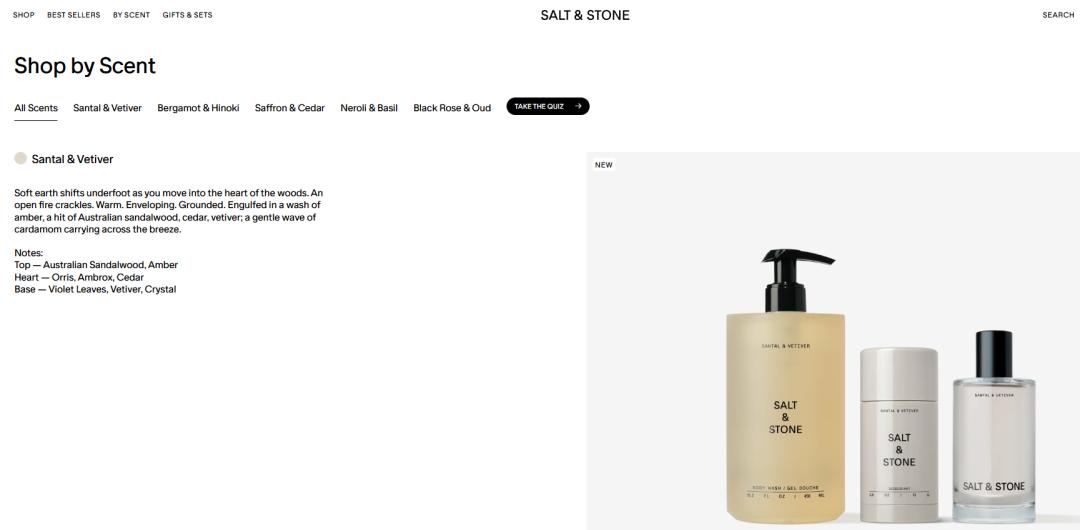
Screenshot from the official website of Salt & Stone
In addition, Salt & Stone has also undergone brand transformation and reshaping, shifting from single "outdoor sports skin care" to "lifestyle and fragrance body care" to attract the young core customer group. Judging from the current performance and the acquisition of a majority stake this time, this body care brand has promising growth potential in the future.
Why is body care booming?
Through this acquisition event itself, we may also be able to see the current focus of the capital market on the beauty market. As mentioned at the beginning of the article, in the past two years, the attention to the body care track has been increasing in both domestic and international markets.
In the international market, L Catterton, a private equity fund under LVMH, acquired a majority stake in Stenders. Carisa Janes, the founder of Hourglass, a high - end makeup brand under Unilever, acquired the body care brand Nature of Things, making her first foray into this track.
In 2025, the body care track also became "lively" in the domestic market: Half Mu Huatian, which started from body care, was successfully listed. Yujian received angel - round investment from Hainan Betaine Investment Co., Ltd., a wholly - owned subsidiary of Betaine Group. Yuze officially announced that Chinese table tennis player Fan Zhendong is its first brand ambassador for body care. Fuerjia filed for a white pool flower seed moisturizing body oil...
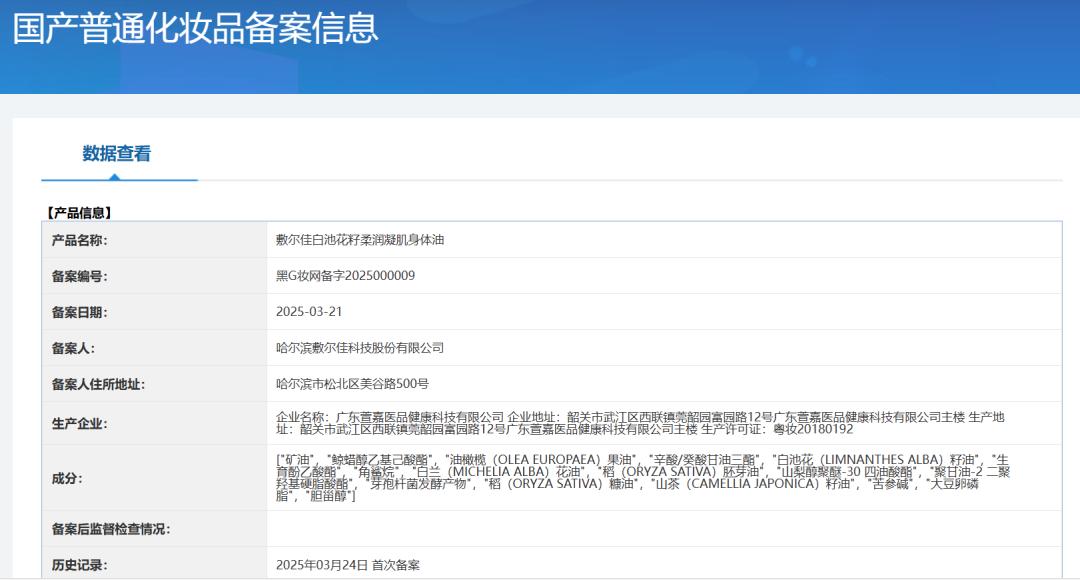
Screenshot from Fuerjia
From the analysis of the development prospects of this track, we can also see the reasons why leading beauty companies are betting on this body care segment. According to Mintel's forecast data, from 2024 to 2028, the average annual compound growth rate of the Chinese body care market is about 6.4%, and it is expected that the market size of body care will exceed 37.8 billion yuan in 2028.
Back to the current market competition, the development of the body care track is closely related to the emerging "self - indulgence" economy and the emotional value of categories such as fragrance.
In terms of emotional narrative, body care brands can connect with consumers through emotional value. For example, Aesop, a brand mainly focusing on body care, creates a healing atmosphere through space and text. Yujian conveys the aesthetics of life through text narrative in its offline stores. With emotional narrative, the functional category of body care is integrated into multiple composite satisfactions such as spiritual comfort and emotional healing.
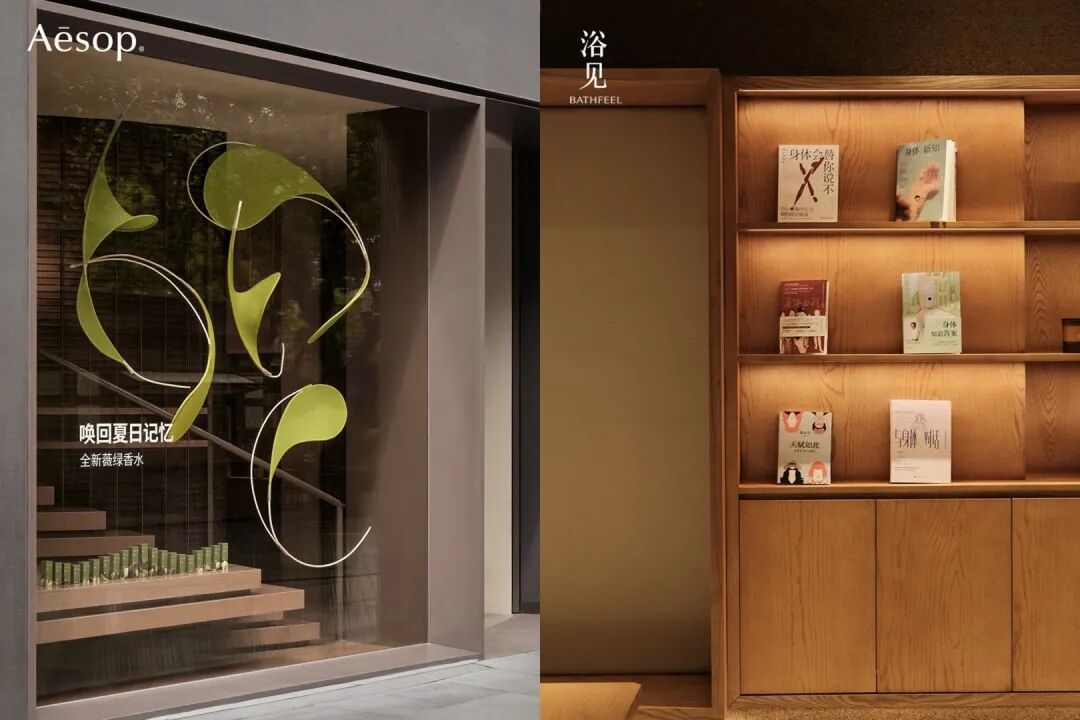
Screenshots from Aesop and Yujian
Li Li, the founder of Yujian, shared in an interview with the official account of Brand Data Reading: "I am very optimistic about the body care track. In an economic downturn, the public's willingness to make high - end and large - scale consumption will decline, but people are willing to pay a premium for products that can bring a good feeling. If a brand creates emotional and cultural value, it will form uniqueness and reduce direct competition."
It can be seen that emotional narrative is a strategy for brands to capture consumers' minds at present, but it should be noted that it is not the only guarantee for a brand to stand firm in the long run.
After all, in the cosmetics market, there is never a shortage of brands that can tell stories and capture emotions. What is lacking are brands that can truly integrate emotional value and scientific research technology into assets. This is also the key to the competition in the body care track.
Note: The exchange rate in this article is based on 1 US dollar ≈ 6.8965 RMB
Information sources: BOF, WWD, Beauty Independent, Yuyuka Cross - border Brand Gathering Place, Mintel, Brand Data Reading
This article is from the WeChat official account "Jumeili" (ID: jumeili - cn), author: Apple, editor - in - chief: Lucky. It is published by 36Kr with authorization.