The secret behind Unitree's 60% gross profit margin
Text | Qiu Xiaofen
Editor | Su Jianxun
On March 20th, Unitree released its prospectus before the IPO. A piece of data in it caught our attention - in the first three quarters of 2025, Unitree's overall gross profit margin reached 59.5%.
Unitree's business can be simply divided into three parts: quadrupedal dogs, humanoid robots, and robot components (such as dexterous hands, collaborative robotic arms, lidars, etc.).
Among them, the gross profit margins of these businesses reached 55.5%, 62.9%, and 60.4% respectively. Except for the humanoid robots in the early stage, the gross profit margins of other businesses have been steadily increasing in the past four years.
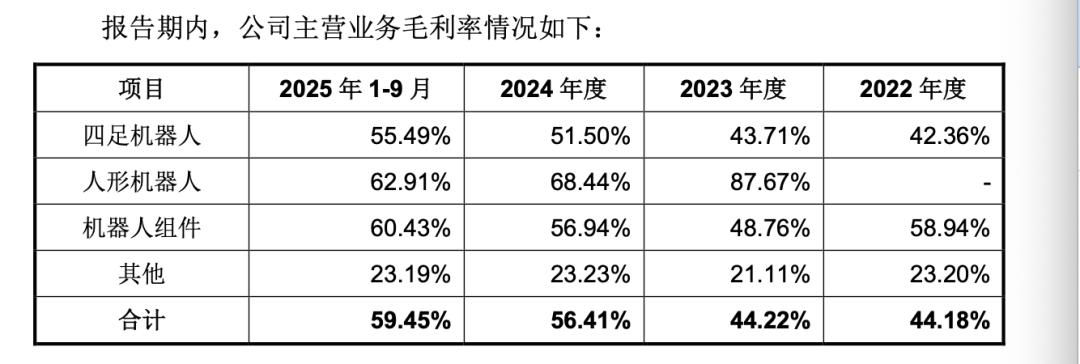
△ Unitree's gross profit margins of different businesses in the past four years. Source: Unitree's prospectus
What does a 60% gross profit margin mean for a robotics company?
In the robotics industry, the only two listed companies, Ubtech and Dobot, have gross profit margins of 30% and 43% respectively, and the average level in the past three years is 37%. Unitree's gross profit margin is 1.5 times the average.
If compared with the consumer electronics industry, Unitree's gross profit margin is higher than that of Apple - Apple's gross profit margin in the first quarter of fiscal year 2026 was 48.2%, and this was a "record high" figure.
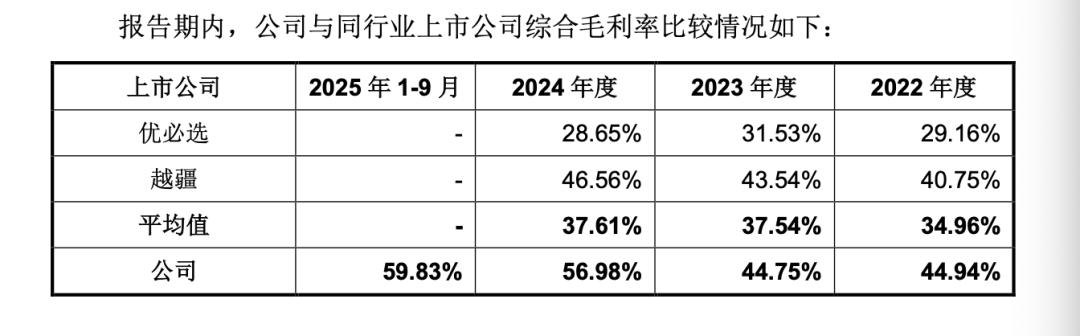
△ Unitree's gross profit margin in the past four years vs. listed companies in the robotics field (Ubtech, Dobot)
The formula for calculating the gross profit margin is gross profit margin = (operating income - operating cost) / operating income × 100%. This figure is directly related to the company's operating efficiency.
In today's robotics industry full of non - consensus, why can Unitree achieve such a "terrifying" gross profit?
Wang Xingxing's management philosophy: extreme cost control and extreme simplicity
The 60% gross profit margin is first related to the strong cost control ability of Unitree's founder.
"Wang Xingxing is extremely stingy with costs," many Unitree employees expressed the same view to Intelligent Emergence.
An employee shared such a story with us - once, Wang Xingxing accidentally opened the battery of the meeting room remote control, and then @ everyone in the company's large group, saying, "Don't use the batteries of XX brand, which have low cost - performance."
Another employee who is familiar with Wang Xingxing told Intelligent Emergence that Wang Xingxing's personal style is also very simple. It is rumored within the company that he "has no house and no car", lives in an apartment near the company, and walks to work every day.
The founder's style has also affected the company's style.
Intelligent Emergence once visited Unitree Technology's office building in Hangzhou. The furnishings in the entire office building are extremely simple. People familiar with the matter said that this office building used to be the office building of a certain state - owned enterprise.
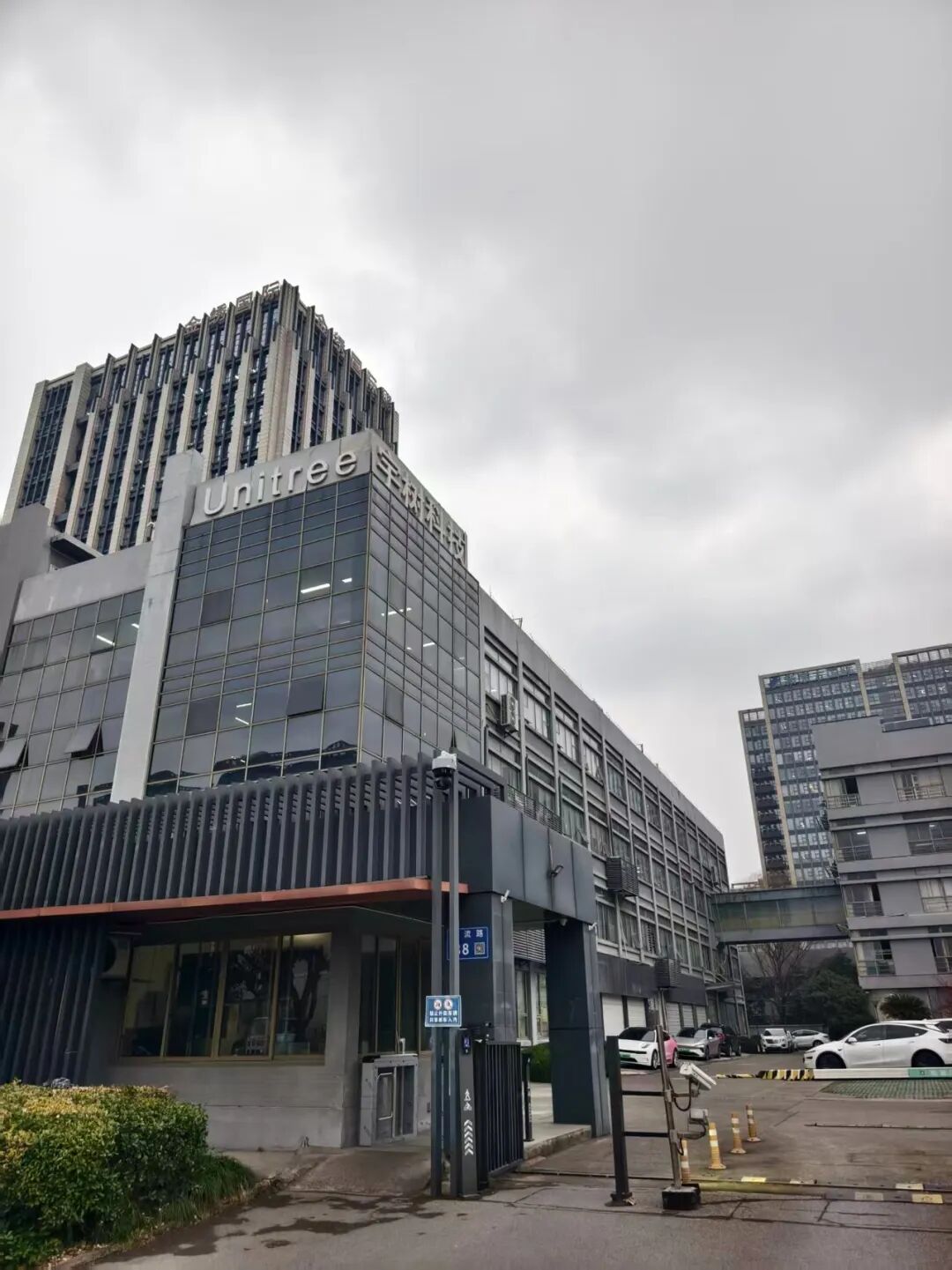
△ Unitree Company. Source: Photo taken by Intelligent Emergence
Besides integrating the awareness of frugality into the company's DNA, the more crucial measure to truly reduce costs is that Unitree has always adhered to the full - stack self - research of core components of general robots.
The prospectus shows that Unitree's self - developed technologies can be divided into the following parts:
① Core algorithms such as embodied intelligence, reinforcement learning, and motion control; ② Intelligent systems including heat dissipation management, energy management, and motor drive; ③ Core components such as motors, reducers, dexterous hands, and lidars.
The advantage of self - research on core components is that in different product lines such as humanoid robots and quadrupedal dogs, Unitree has a large number of reusable technology modules (such as joint drives, mechanical structures, battery management, and software algorithms).
This strategy not only significantly reduces repetitive R & D investment but also accelerates the process from prototype development to mass delivery of products.
The sensitivity to costs is also integrated into Unitree's production and manufacturing processes.
While many embodied intelligent robot manufacturers adopt the "outsourced production" method of cooperation with ODMs to catch up with the commercialization node, Unitree adopts self - built production lines combined with external cooperation.
Specifically, in the production of some core components and the assembly of complete machines, Unitree uses self - built production lines. For non - core components and processes with sufficient standardization and market supply (such as PCBA soldering, injection molding, etc.), Unitree uses external processing.
The significance of this method is to help Unitree balance new technology iteration and cost optimization.
In the robotics field, due to the unpredictability of market demand and the high unit price of robots, inventory is often a pain point, threatening the health of cash flow.
Unitree's prospectus shows that in 2025, the production - sales ratio of Unitree's quadrupedal products reached 86%, and that of humanoid robots reached 96%. For example, out of the 3,700 robots produced by Unitree's factory, 3,551 were sold, and only a small amount was converted into inventory.
Behind this phenomenon is that Unitree adopts the strategy of "production based on sales + safety inventory". That is to say, Unitree drives production according to the sales plan to avoid inventory backlog and capital occupation. In addition, Unitree also sets up a certain inventory pool to deal with sudden orders and smooth production fluctuations.
In order to align information among various departments, Unitree also proposed a dynamic coordination mechanism - holding a production - sales - procurement meeting every month to synchronize information among the three major links of sales, production, and procurement, and make coordinated decisions, so that the production plan is linked to the market front - end.
Under the influence of various measures, the selling price, to some extent, also sufficiently reflects the decline in costs.
From January to September 2025, the average selling price of Unitree's quadrupedal dogs was 27,200 yuan, with an average decrease of 15.8%; the average selling price of its humanoid robots was 167,600 yuan, with an average decrease of 35.7%.
A person in the robotics field told Intelligent Emergence that the cost of Unitree's quadrupedal dogs is even lower than the selling price of similar products of some robot manufacturers. "Compared with other new players, Unitree's competitiveness lies in the R & D and production experience accumulated in the past."
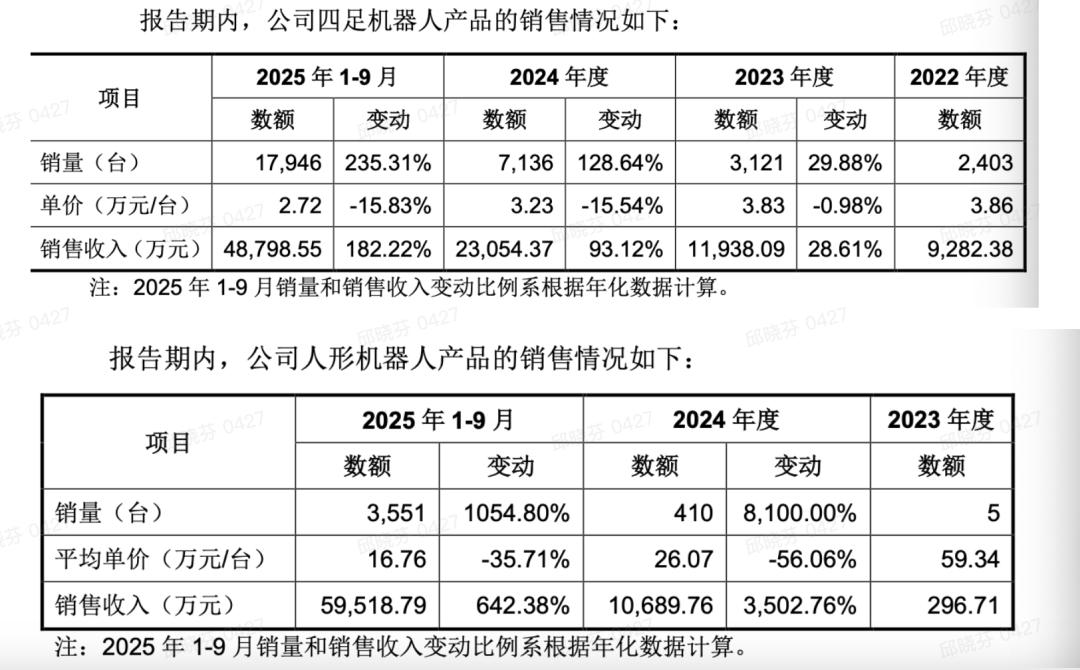
△ The sales volume and unit price trends of Unitree's quadrupedal dogs and humanoid robots
In the prospectus, Intelligent Emergence also found two indicators worthy of attention.
In the first three quarters of 2025, Unitree's sales expense ratio was as low as 6.5%, only half of that of Ubtech and Dobot. In contrast, Xiaomi's sales expense ratio is about 7.3%, Apple's is 6.6%, and the average in the fast - moving consumer goods industry is 20% - 30%.
The sales expense ratio refers to how much a company needs to spend on sales activities for every 100 yuan of sales revenue it obtains. It is the "fuel consumption meter" of the company's "market development engine". The lower the value, the higher the company's sales efficiency.
In terms of the management expense ratio, Unitree's is only 4.2%, one - sixth of the industry average.
Unitree explained that on the one hand, it is because Unitree's management structure is streamlined. On the other hand, Unitree said in the prospectus that "neither the company nor its subsidiaries own any real estate." Leased real estate also reduces depreciation and amortization.
When the founder integrates the cost - awareness into all aspects of operating the robot business, from company management, to R & D, and then to production and manufacturing, it also lays the foundation for Unitree's extremely high gross profit margin.
The leap at the Spring Festival Gala
However, to increase the gross profit margin, the more crucial thing is to continuously expand revenue.
If we were to divide Unitree's development stages, the 2025 Spring Festival Gala could be regarded as an important node.
Reflected in the revenue figures, according to the prospectus, Unitree's revenue did not increase steadily, but rose sharply in 2025. In the previous three years (2022, 2023, 2024), Unitree's revenue basically hovered at a small base of 100 - 300 million yuan, and was once only one - tenth of Ubtech's and one - half of Dobot's.
But in the first nine months of 2025, Unitree's overall revenue soared to 1.15 billion yuan. A person familiar with the matter told Intelligent Emergence that including the data from the peak sales season of robots in the fourth quarter, Unitree's actual annual revenue in 2025 was close to 2 billion yuan.
In terms of actual products, Unitree sold more than 18,000 quadrupedal dogs and 5,500 humanoid robots (H1, G1) in 2025.
The sharp increase in sales volume and turning losses into profits in 2025 are mainly due to seizing the opportunity of the Spring Festival Gala. A senior person in the robotics industry analyzed to Intelligent Emergence that there are two growth engines for Unitree's revenue in 2025 -
One is to convert the huge traffic from the Spring Festival Gala into sales of humanoid robots and quadrupedal dogs; the other is that Unitree's humanoid robots have opened up incremental ToC scenarios for the industry, including commercial performances and exhibition tours.
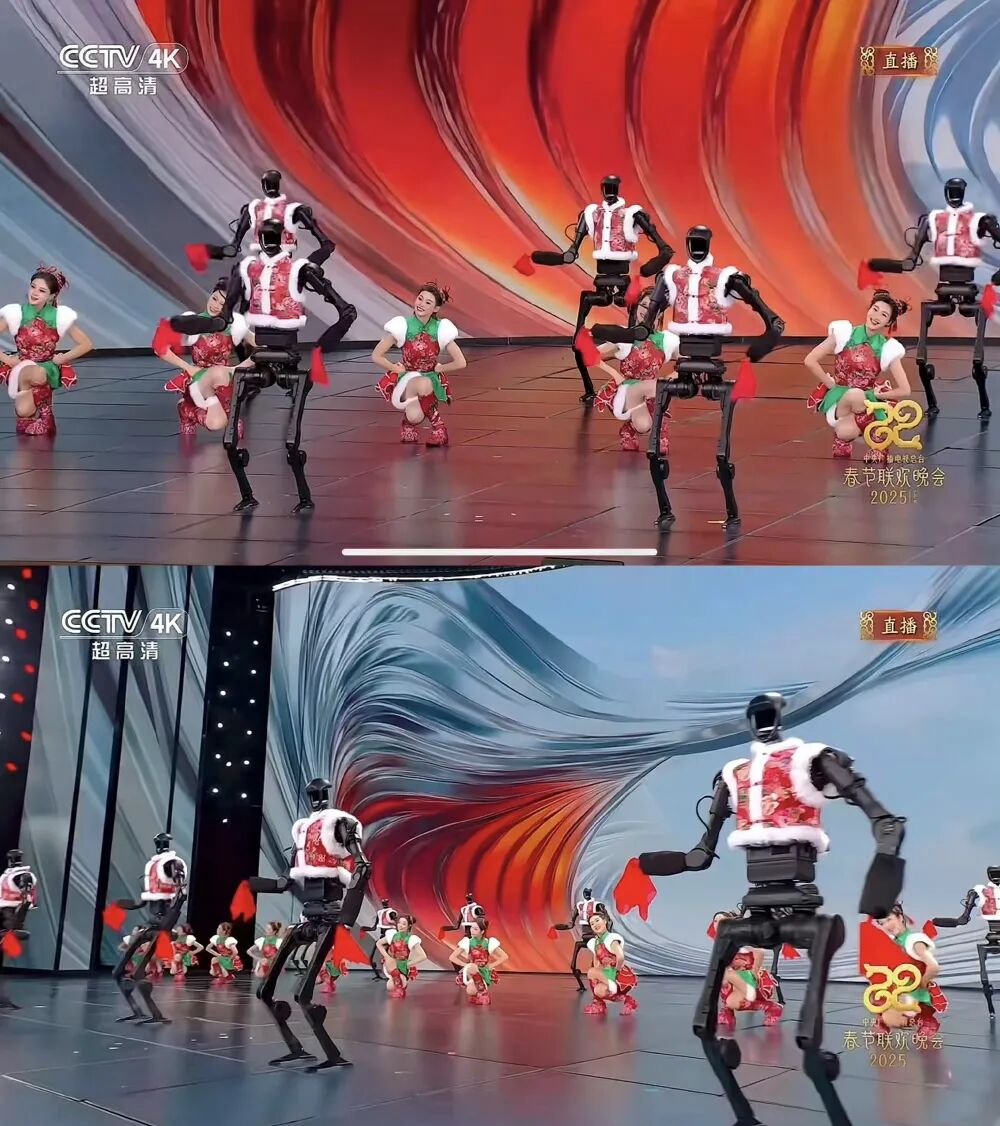
△ Yangs BOT
Of course, in addition to these two parts of the incremental consumer - grade market, Unitree had also established a stable basic sales volume before.
As stated in the prospectus, Unitree's robots are mainly used in two major areas: in the industrial - grade market, mainly in inspection and survey, fire rescue, and public services (such as smart cities); in the consumer - grade market, mainly in scientific research and education.
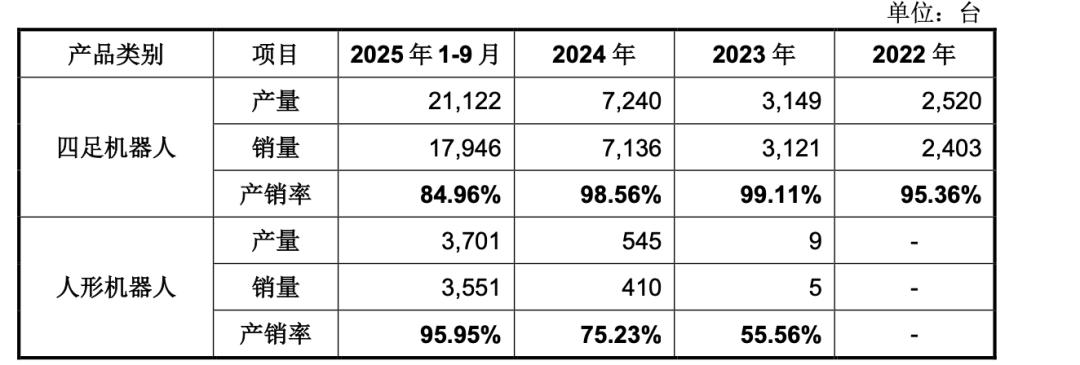
△ The sales volume, production volume, and production - sales ratio of Unitree's humanoid robots and quadrupedal dogs
It is worth noting that the prospectus also reveals an easily overlooked fact - in addition to robots, Unitree's self - developed robot components have also become an important part contributing to revenue.
In the first three quarters of 2025, Unitree's core components (dexterous hands, collaborative robotic arms, lidars) contributed more than 60 million yuan in revenue. In 2022, this part of the revenue even accounted for 18% of the overall revenue at one time.
In summary, the most crucial secret behind Unitree's 60% gross profit margin is to focus on increasing revenue.
Further analysis shows that it is because they did three things right in 2025: seize the traffic amplifier of the Spring Festival Gala to sell robots vigorously, stabilize the original basic market, and open up new revenue from core components in addition to robots.
Perhaps, in the shows Yangs BOT and Wu BOT, while Unitree's robots demonstrated their technological capabilities, another little - known competitiveness of this company is actually its operating efficiency.
And the essence of operating efficiency largely comes from the founder Wang Xingxing's extreme control of costs and revenues.

end

end