Xiaomi Auto is involved in a patent dispute. Why is a 20-person "low-speed electric vehicle factory" going after a "giant"?
On the evening of March 19th, Xiaomi (Stock abbreviation: Xiaomi Group-W, Code: 1810.HK) held a spring new product launch event with the theme of "Full implementation of the full ecosystem of vehicles, homes, and people". In terms of the automotive business, it launched the new-generation SU7. Xiaomi's cars, which were jokingly referred to as "Porsche-Mi" since their debut, quickly opened up the market with a design language that pays homage to Porsche. Now, they are trying to gain a foothold in the high-end market.
However, after the appearance of the "SU7-like low-speed electric vehicle", the roles of the "tributary" and the "tributee" were reversed. Just as the high-profile launch event was taking place, an announcement from the National Intellectual Property Administration dragged Xiaomi's Xiaomi Auto Technology Co., Ltd. (abbreviated as: Xiaomi Auto) into a patent dispute - the challenger is a small Shandong-based company with only 20 employees, mainly engaged in the production of low-speed electric vehicles.
This company, Shandong Yanlu New Energy Vehicle Industry Co., Ltd. (abbreviated as: Yanlu New Energy), filed a request for invalidation of three design patents of Xiaomi Auto, involving the rear bumper, front bumper, and front headlights. These designs may be the key features of Xiaomi's SU7 and YU7 models. This is considered to be the first public patent dispute involving Xiaomi Auto.
Some analysts believe that generally, small companies are often in a passive position in intellectual property battles. This small company's active challenge to a leading automaker may be a coping strategy after being sued for patent infringement.
As of the close on March 19th, Xiaomi's stock price rose 3.36% to HK$36.32 per share, with a total market value of HK$949.6 billion.
Xiaomi Auto's patents challenged by a "small low-speed electric vehicle factory"
Recently, the information on the oral hearing for patent invalidation published on the official website of the National Intellectual Property Administration shows that three design patents of Xiaomi Auto have been challenged for invalidation, and an on-site hearing will be held on the morning of March 26th.
The three patents of Xiaomi Auto that have been applied for invalidation are - the rear bumper (Application No./Patent No. 2023300280286), the front bumper (Application No./Patent No. 2023300278040), and the front headlights (Application No./Patent No. 2023300276401).
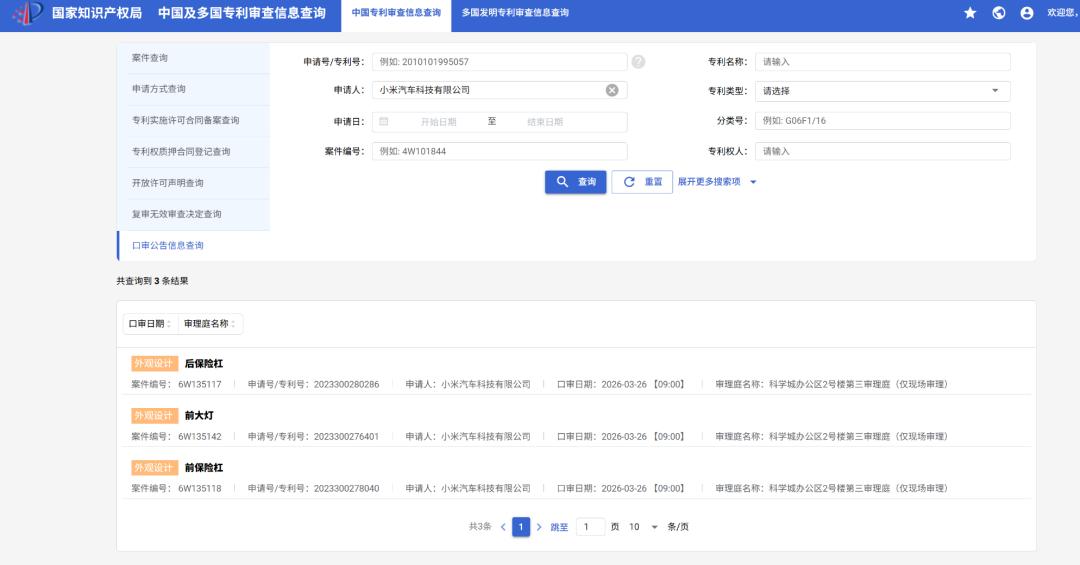
Source: Official website of the National Intellectual Property Administration
After comparing the patent drawings with the product pictures of Xiaomi Auto, it is possible that the design solutions of the three involved patents have all been used in Xiaomi's main models, the SU7 and YU7.
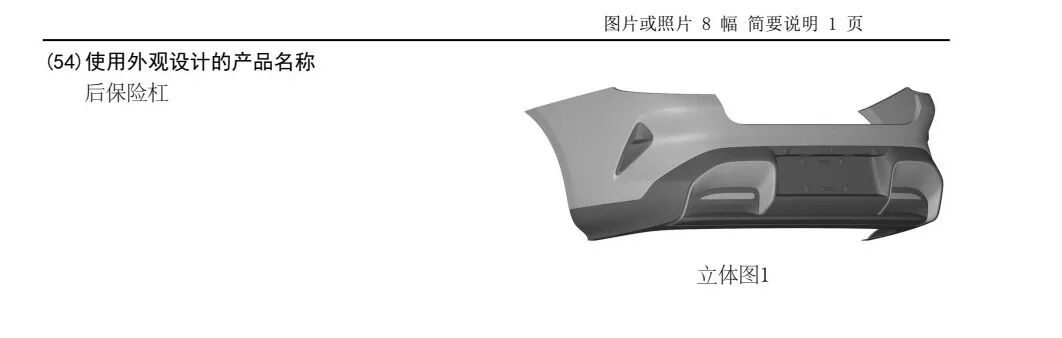
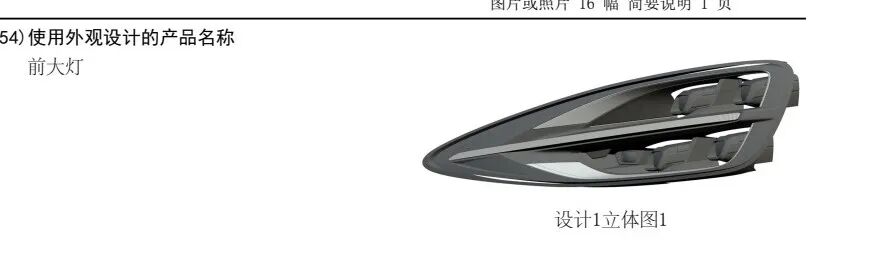
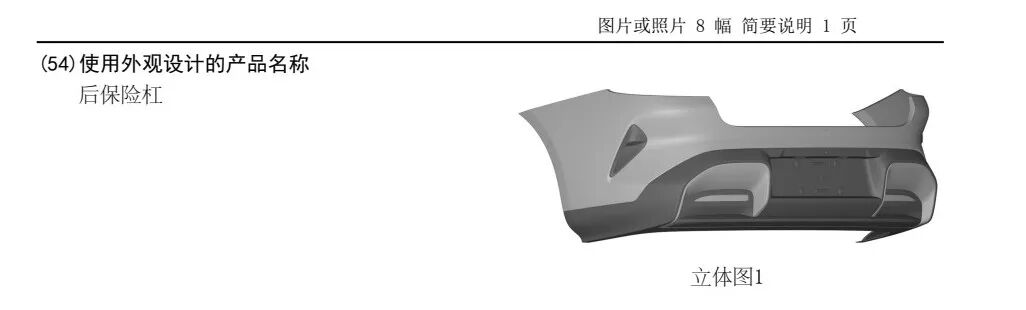
The so-called "application for patent invalidation" means that according to Article 45 of China's "Patent Law", any unit or individual who believes that the grant of a patent does not comply with the law can request the National Intellectual Property Administration to declare the patent right invalid. This is like setting up a "correction mechanism" for the granted patent right to prevent it from being wrongly granted. The "oral hearing" is a public hearing or debate held by the National Intellectual Property Administration to review the request for patent invalidation.
According to the patent vertical media "Enterprise Patent Observation (PRIP Research)", based on the publicly available information, Xiaomi Auto has not been involved in any patent disputes before.
Who is publicly challenging Xiaomi Auto's patents?
According to the information on the official website of the National Intellectual Property Administration, the applicant for the patent invalidation this time is Yanlu New Energy.
According to the products displayed on Yanlu New Energy's official website, they are all "Yunlei" brand electric three-wheeled motorcycles, which are commonly known as low-speed electric vehicles. According to Tianyancha, the company is registered in Gaotang County, Liaocheng City, Shandong Province, with a registered capital of 10 million yuan. It has 20 employees and is a small enterprise. The company's equity structure is simple, with natural person Lou Biao holding 100% of the shares, and this is the only enterprise under Lou Biao's name.
Bai Wenxi, the deputy director of the China Enterprise Capital Alliance, said that usually, there are costs involved in initiating a patent invalidation request, including administrative fees and lawyer fees. Moreover, a 20-person enterprise like the one in this case is generally in a relatively passive position in the field of intellectual property. This is because such enterprises often lack a full-time legal team and have a weak patent layout. When facing lawsuits from big brands, they usually end up reaching a settlement or stopping production. The motivation of this enterprise to apply for the invalidation of Xiaomi Auto's patents is worthy of attention.
Xiaomi Auto's patent layout is systematic
It is worth noting that the application dates of the three design patents involved in this case are all January 19, 2023, and they were not authorized until 2025. According to the general review process for design patents, authorization is usually obtained within six months to a maximum of eight months after the application is submitted.
Sun Yi, a partner in the intellectual property department of Beijing Jincheng Tongda Law Firm, said that usually, applicants can use measures such as "delayed review" to keep the patent in a pending state for a long time. After the competitor's product is launched and forms a certain market scale, they can then obtain authorization in a concentrated manner and "launch a sudden rights protection campaign" to achieve a precise strike against the competitor. This strategy is more common in the pharmaceutical field. However, in this case, the delay in the patent review of Xiaomi Auto is likely to be in line with its own product launch rhythm, to avoid the premature disclosure of the design before the official debut of the product.
It should also be noted that after the three patents were officially authorized in 2025, Xiaomi Auto quickly submitted an application for a design patent evaluation report. This report is an important document for design and utility model patents to prove the stability of the patent rights in court during rights protection - since these two types of patents are not subject to substantive review, the court usually decides whether to accept the case based on this report.
Sun Yi said that Xiaomi Auto's quick application for the evaluation report after the patent authorization shows that it has plans for rights protection. Moreover, the results of the three reports are quite favorable for Xiaomi Auto, and it is very likely to conduct business negotiations or send a lawyer's letter based on these reports. This action itself also reflects Xiaomi's hope to minimize the risk of the design being misused, which indirectly confirms the systematic level of its intellectual property planning.

Let's return to the matter of Yanlu New Energy's application for the invalidation of Xiaomi Auto's patents.
Sun Yi said that the original intention of the "patent invalidation declaration" system is to allow the public to supervise the authorized patents. In business practice, there are usually two situations for filing an invalidation declaration: one is to use it as a defense means after being sued by the patentee; the other is to conduct a patent infringement investigation before the launch of one's own product to proactively eliminate possible infringement risks.
Sun Yi said that once a patent is declared invalid, the right is considered to have never existed, and others can freely implement the relevant technology. For the three design patents of Xiaomi Auto, the evaluation report shows that they are highly stable, so it will be quite difficult for Yanlu New Energy to invalidate them.
Over the years, Xiaomi has also gained a lot of experience in patent matters. Especially in recent years, it has achieved remarkable results in cases involving Philips, Panasonic, etc. In addition, it won a patent lawsuit against Nera in the European Unified Patent Court, achieving three consecutive victories in European patent battles. Its experience in patents and the evolved defensive and offensive capabilities are also evident.
Debuted by paying homage to Porsche, Xiaomi Auto focuses on high-end market
Currently, Yanlu New Energy has stated that it is not convenient to discuss this matter at present, and Xiaomi has also not publicly responded to this matter.
There is no conclusion yet about the motivation of Yanlu New Energy to file an invalidation request for Xiaomi's patents. Judging from the models published on Yanlu New Energy's official website, they are very different from Xiaomi Auto. However, Xiaomi Auto and low-speed electric vehicles had an intersection before this case.
In May 2025, when Lei Jun announced the release and launch time of the YU7 at Xiaomi's 15th anniversary new product launch event, a blogger posted a candid photo a few days later, showing a low-speed electric vehicle that "replicated" the Xiaomi YU7 at a pixel level.
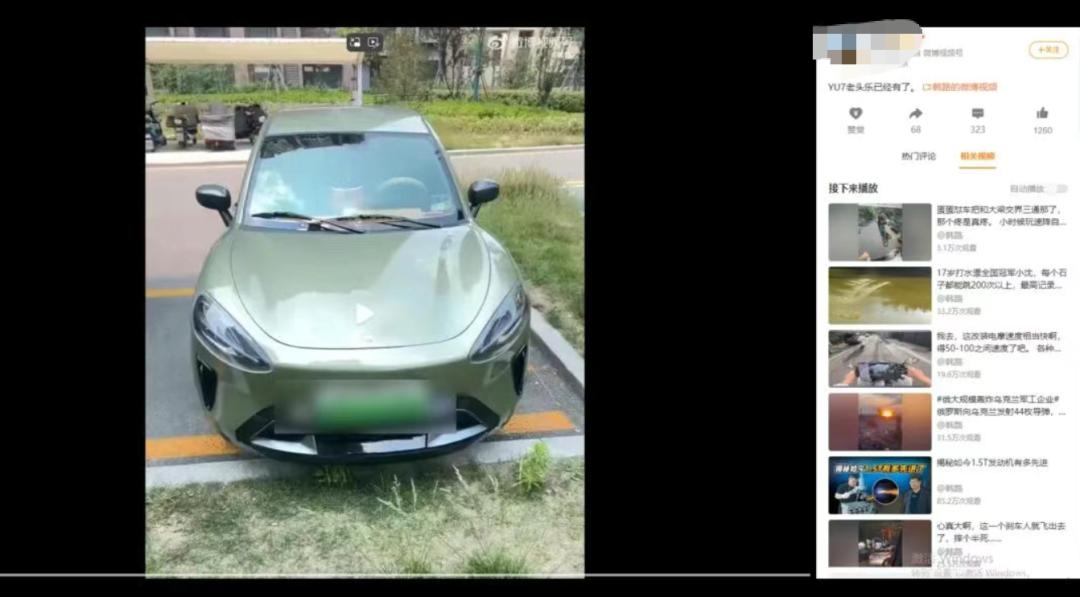
Although the rough traces of the stamping process are obvious, the vehicle does resemble the Xiaomi SU7 in outline - the front end contour is exactly the same as that of the Xiaomi SU7, and the smooth arc and the iconic front face are easily mistaken for the Xiaomi SU7 from a distance. Moreover, it seems to imitate the front part of the Xiaomi YU7 and the rear part of the Xiaomi SU7 - the front of a sedan and the rear part grafted with an SUV contour, and the taillight group directly copies the through-type design of the SU7. The "M7" logo on the engine hood is a slightly deformed inverted Xiaomi logo.
Regarding this kind of imitation, some netizens even imagined that the in-vehicle voice system would respond with "Old Aitongxue", and some netizens joked that "this is the real alternative to Ferrari", after all, even the car logo gives a sense of an international brand; more netizens summarized: "A car company that has not been 'homaged' by a low-speed electric vehicle is not qualified to call itself a top brand."

Although Xiaomi initially opened up the market with the "1,999 yuan flagship" and the Redmi budget smartphones, after development and growth, Xiaomi is now focusing on the high-end market. Xiaomi Auto has been positioned in the high-end market, even the ultra-high-end market from the very beginning. Xiaomi has chosen to avoid the most intense price war in the mid - and low - end segments of the domestic new energy vehicle market, and strives to establish an advantage in performance, design, and a sense of technology. Looking back at previous Xiaomi Auto launch events, Lei Jun has mentioned several times that Xiaomi Auto is benchmarking against Porsche and Tesla. Lei Jun has also officially responded several times that there are no plans for a Redmi car at present.
Yuan Shuai, the co - founder of the New Intelligence and New Productivity Salon, said that for Xiaomi Auto, which adheres to the high - end route, being imitated by low - speed electric vehicles will first have a negative impact on the dilution of brand value and the impairment of premium ability. The target audience of Xiaomi Auto is urban elites who pursue a sense of technology and a refined lifestyle. These people not only pay for the product performance but also for the sense of identity brought by the design. When a highly similar design appears on a cheap, low - quality, and even potentially dangerous low - speed electric vehicle, this visual "alternative" will undermine the scarcity of Xiaomi Auto and even lead to the marginalization and low - end positioning of the brand image.
However, looking back, Xiaomi Auto's path to high - end development also involves "homage" and "reference".
The Xiaomi SU7 once caused a stir because its appearance was very similar to that of the Porsche Taycan, and it was jokingly called "Porsche - Mi" by netizens. Lei Jun himself also admitted that the first model of Xiaomi Auto, the SU7, referred to the Porsche Taycan in various indicators, aiming to create a "Dream Car" comparable to Porsche and Tesla.
Regarding the appearance issue of Xiaomi's models, Porsche publicly responded that "perhaps good designs always have a telepathic connection regarding the similarities between the two." Some netizens said that this was a "high - EQ answer".
Many netizens are also very curious as to why Porsche didn't sue Xiaomi.
In response, Yuan Shuai said that the criteria for determining design patent infringement in the international legal system are extremely strict, usually requiring the degree of "misrecognition by ordinary consumers". Xiaomi has made a lot of design adjustments in specific curves, the internal structure of the headlights, and the body proportions, ensuring a "substantial difference" in the legal sense through fine - tuning, which makes the outcome of a cross - border lawsuit uncertain.
Sun Yi said that Porsche also has legal support for rights protection. From the perspective of intellectual property, if the packaging and decoration of a well - known product have formed a certain influence, and others "ride on its popularity" to enhance the recognition of their own products, it may constitute unfair competition, and the right - holder has the basis for rights protection. However, whether it specifically constitutes infringement needs to be determined by the court based on the facts of each case. However, Porsche's strategy of not taking a tough stance may also involve commercial considerations. The core of the problem is not only about intellectual property itself but also about the business positioning and comprehensive influence of both parties - for example, if a product launched by one party is in the same price range as Porsche's, the competitive relationship brought about by this market strategy will also affect the judgment and direction of rights protection.