AI glasses, another foldable screen?
If you buy a pair of AI glasses, how long will you wear them?
The answer from the market is one to two weeks.
According to Wellsenn XR, in 2024, the monthly active user retention rate of domestic smart glasses was less than 20%. Most users put the glasses aside after 1 - 2 weeks of purchase. The situation in 2025 is still severe: According to the monitoring data of XR Vision, the average return rate on JD and Tmall platforms is 30%, and it is as high as 40% - 50% on the Douyin channel. For every two pairs sold, almost one pair is returned.
This business is still young, but in a limited time, it has shown some embarrassments similar to those of foldable screens: a large cost is incurred, but only a small problem is solved.
01 The Same Embarrassment as Foldable Screens
Since its birth, the foldable screen has carried a burden: high cost.
This cost is not only reflected in the high selling price but also in the usage costs such as battery life and weight.
The average price of mainstream foldable screens starts at 8,999 yuan, and the expensive ones can reach 20,000 yuan. The latest foldable screen products of Honor and OPPO are both priced over 8,000 yuan.
After spending the money, you still can't have peace of mind: it is heavier and thicker. You also have to worry about whether the screen has creases and whether dust will get in. You also need to be prepared to pay thousands of yuan for screen replacement in case it is dropped.
The price of AI glasses is also not cheap. The mainstream price range is from 1,997 yuan to 3,000 yuan, which belongs to high - end products in the glasses category.
Similarly, it also has the problem of foldable screens: heavy. Today's AI glasses generally weigh between 40 grams and 50 grams, while ordinary myopia glasses only weigh about 20 grams. The extra 20 grams is equivalent to the weight of a quail egg - having a quail egg on the nose bridge and wearing it all day is the daily life of AI glasses users.
For people with myopia, they have no choice. As long as they go out, they have to bear the weight of these 20 grams. If they carry a pair of comfortable myopia glasses for portability, then there is no reason to buy AI glasses that are promoted as "making life more convenient".
"Adding an extra quail egg" on the eyes is just the beginning. Battery life is an even greater burden.
Although some AI glasses currently claim to have a battery life of 6 - 12 hours, some users have found that after turning on voice wake - up and AI functions, the battery level often drops from 100% to 20% in just over two hours. A salesperson of a certain brand told Larger Reference that if functions such as meetings or voice assistants are turned on, the battery life of most AI glasses on the market is less than two hours.
Now, when going out, not only do you have to bring your phone, earphones, and power bank, but you also have one more electronic device to take care of. You intended to free your hands, but instead, you've added an electronic pet to your life.
What makes users reluctant to wear AI glasses is not only the weight but also the high cost of repair. From finding a repair shop to paying the repair fee, each step is more difficult than the last.
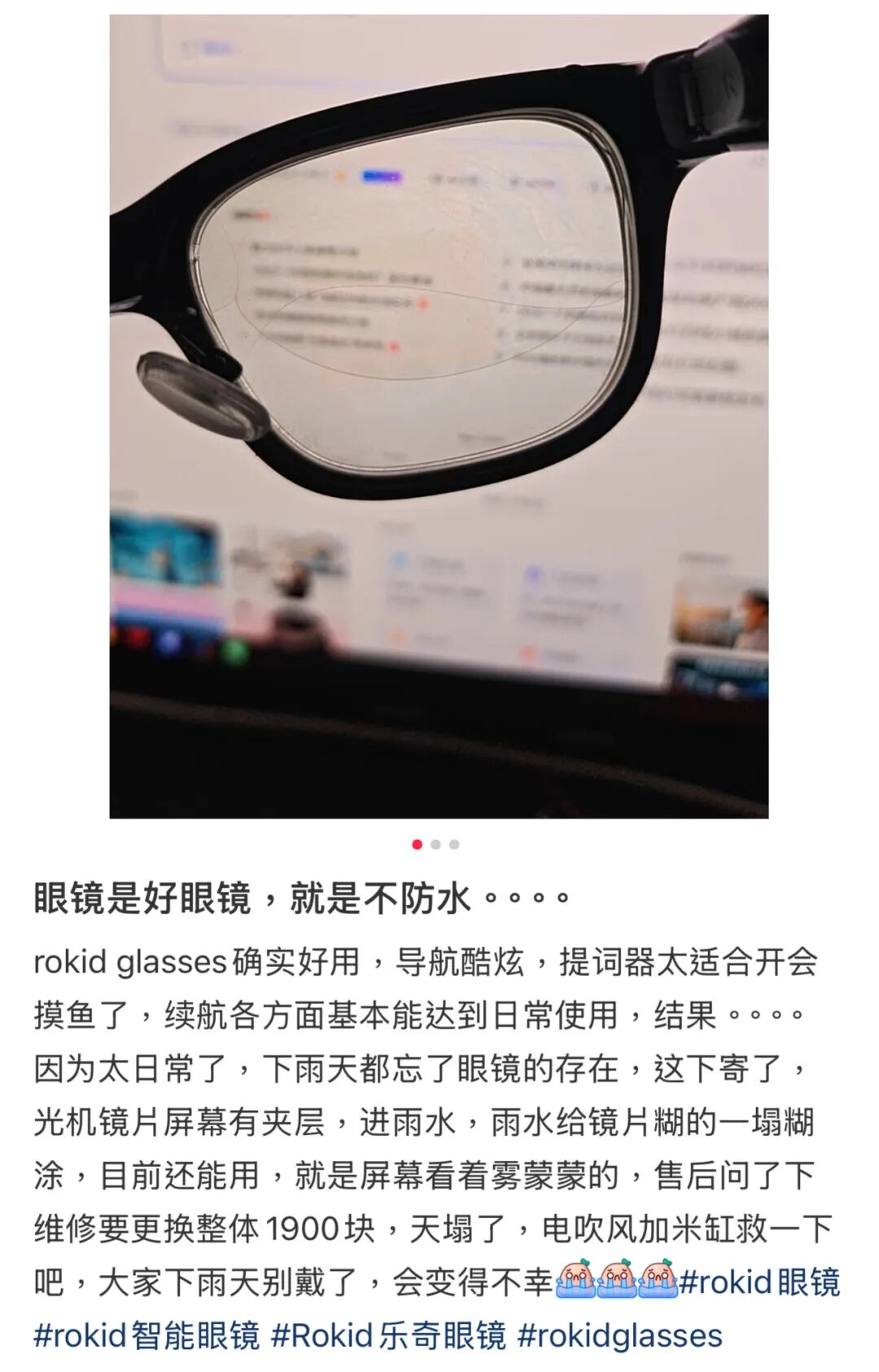
One consumer's glasses were damaged due to water ingress on a rainy day, and the official quoted a repair price of 1,900 yuan. Another consumer's glasses' temple glue cracked during normal wear. When sending them back for repair, the brand said that the temple glue problem could be repaired, but the damaged lens was considered "human - made damage", and the repair fee was about 2,000 yuan. This is not much cheaper than buying a new pair.
The repair process is even more torturous. Taking the Beijing area as an example, after Larger Reference's on - the - spot visits, most brands have almost no offline repair outlets. If you want to repair your glasses, you have to send them back. You have to wait for the brand to conduct inspections, quote prices, repair, and send them back. It can take as short as one week or as long as half a month. If you are in a small city, there may not even be an experience store, and you won't even have someone to ask when your glasses have problems.
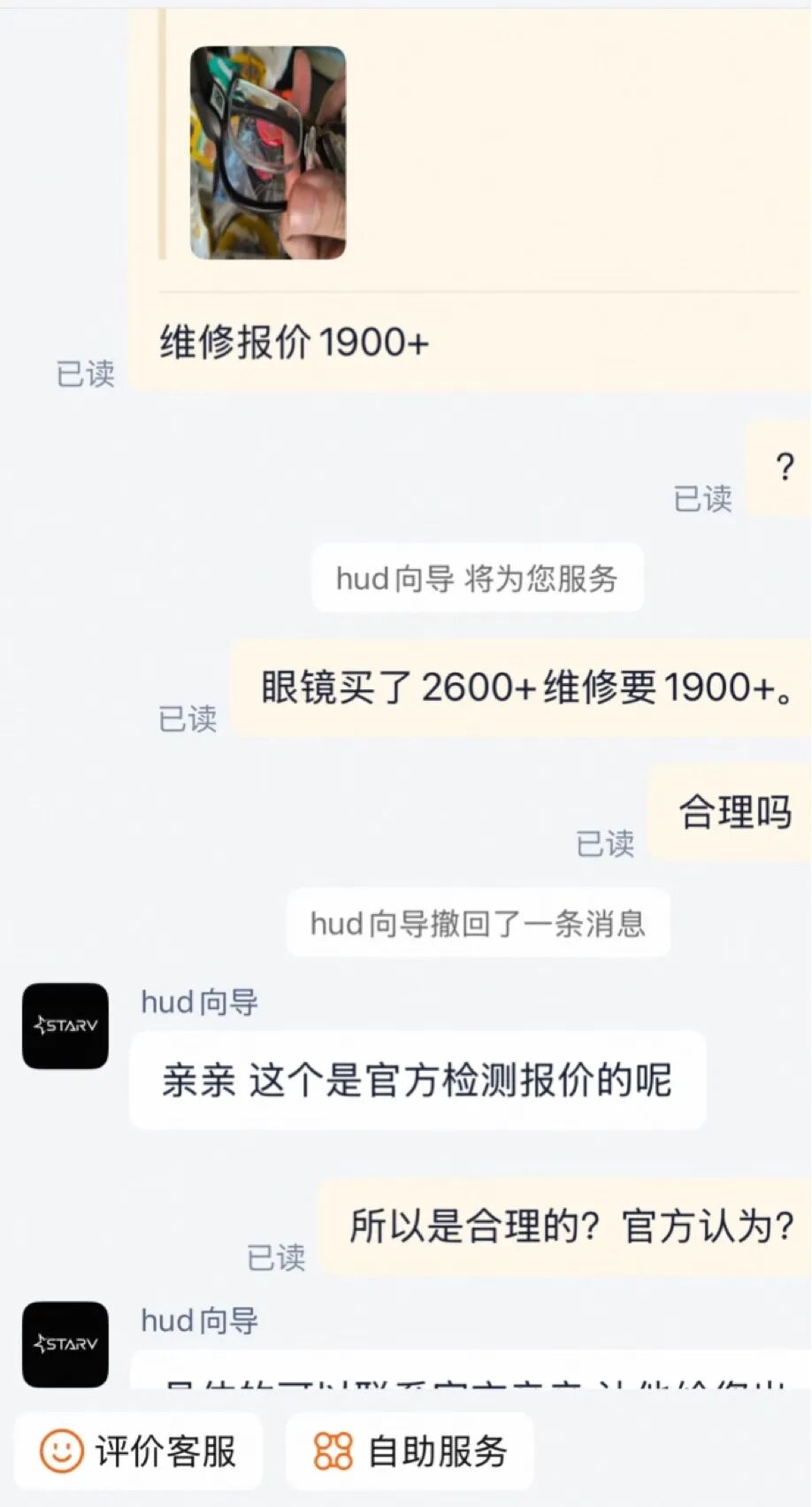
Users pay a high price for the functions of AI glasses, but they also have to bear additional costs for a pair of glasses that are "uncomfortable to wear", "run out of power in half a day", and "too expensive to repair".
Of course, cost is not the problem. The weight and battery life of smartphones are also not as good as those of Nokia feature phones. But the question is: what value is obtained at the cost of an extra 20 grams?
As more and more people have worn AI glasses, the answer may not be so optimistic: it's nothing more than basic functions such as photography, navigation, simple voice commands, and translation. Smartphones can do these things, and maybe even better.
Smartphones bring "a new world that feature phones and computers can't offer". What AI glasses bring for now is just one less time of taking out the phone. But to achieve this, one has to pay the price of wearing an uncomfortable pair of glasses, worrying about battery life, light leakage, and damage from rain, etc.
This exchange seems to make people hesitate, and even some people who were optimistic about AI glasses are wavering.
In 2024, Li Nan, a former senior executive of Meizu, still believed that AI glasses were a new track with a 100 - fold growth potential in three years. Just one year later, Li Nan's attitude had a major reversal: "All applications with displays are false demands. Navigation is a false demand, payment is a false demand, and GUI control via muscle - current wristbands is even more of a false demand."
The value currently shown by AI glasses is still far from the mass demand. After many years, foldable screens have not become a mass - consumer product. They have only found a small - scale demand among business people and barely managed to stay in the market.
For AI glasses, finding a niche market segment may already be a relatively good outcome.
02 AI Glasses, but the Glasses Themselves Are Not Well - Made
In the early years when foldable screens first emerged, mobile phone technology was already very mature, and functions such as computing power and photography were very powerful. However, they couldn't handle the "small matter" of folding well: the quality and reliability of hinges and flexible screens have long been the bottlenecks restricting them.
Currently, AI glasses also have a similar embarrassment: they are eager to incorporate AI before getting the basic aspects of glasses right.
AI glasses are a very special product. They simultaneously meet the two visual needs of presenting information as a digital device and "seeing things" as glasses.
As long as it wants to be a device for long - term wear and tries to replace some functions of the mobile phone, information must enter the field of vision. Once it enters the field of vision, the problem inevitably shifts from AI technology back to AR/XR technology.
However, until today, AR has still not broken through the technological bottleneck. In the past decade, from Meta to Microsoft and then to Magic Leap, the industry has made huge investments, but it has always been stuck in the same place: the display, computing power, and battery life cannot be optimized simultaneously.
Currently, the mainstream AR solution relies on optical waveguides, which essentially "guide" the image into the eyes. However, this process is extremely inefficient - only about 1%. To compensate for the low efficiency, more power is needed, but there is a price to pay: to make the image visible, the brightness has to be continuously increased. As the brightness goes up, the power consumption and heat generation increase, the battery volume has to be increased, and the weight of the device also goes up.
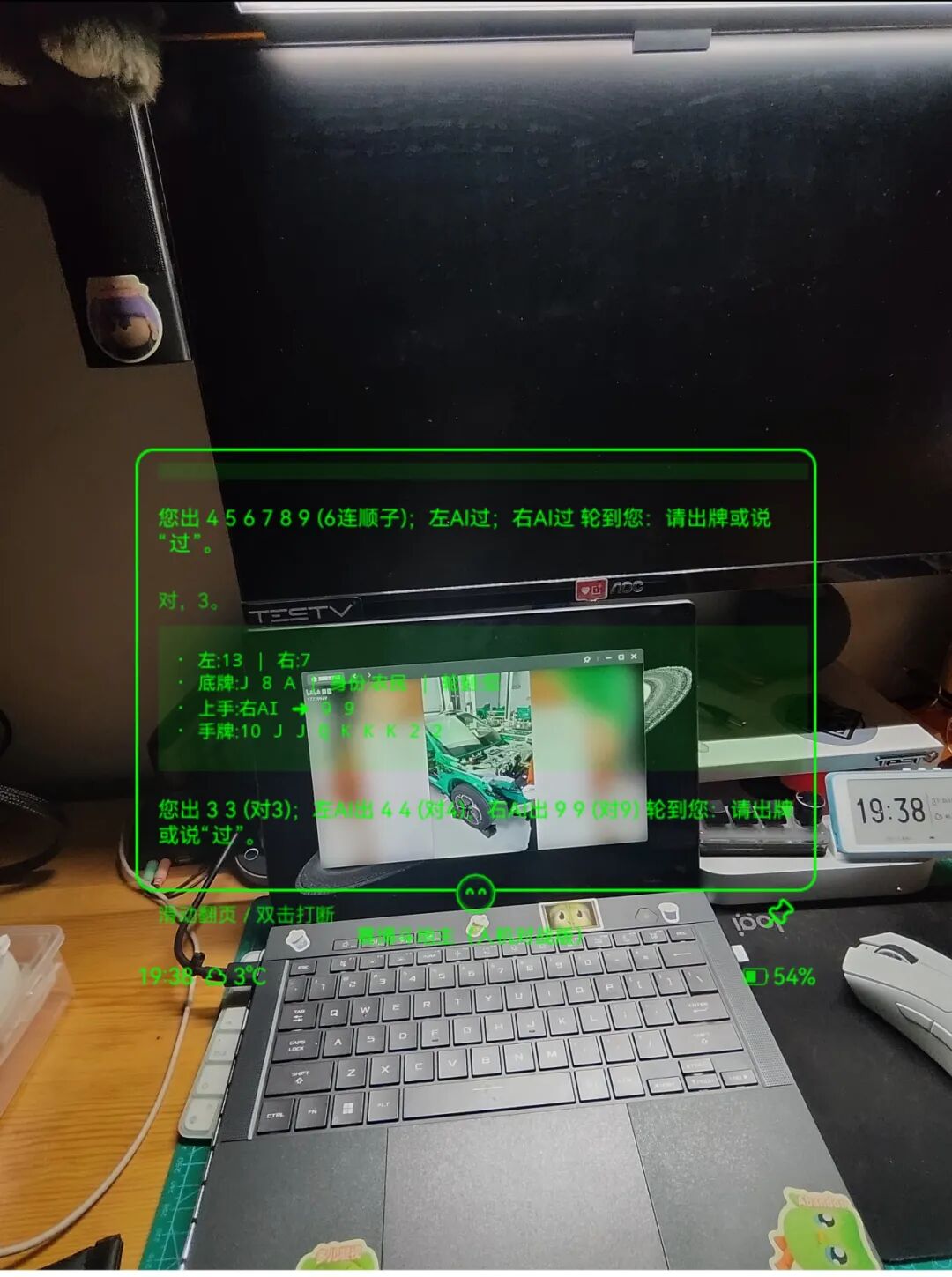
The result is that either the image is unclear or the glasses are uncomfortable to wear.
There are new solutions, but like solid - state batteries, they are currently just beautiful visions.
Under such circumstances, the industry has made a choice: don't worry about XR for now, and just incorporate AI first.
So, most of the AI glasses we see come in two forms. One is a combination of a camera and voice, with a voice assistant integrated. The other is to add limited display, but the information - presenting ability is extremely restricted.
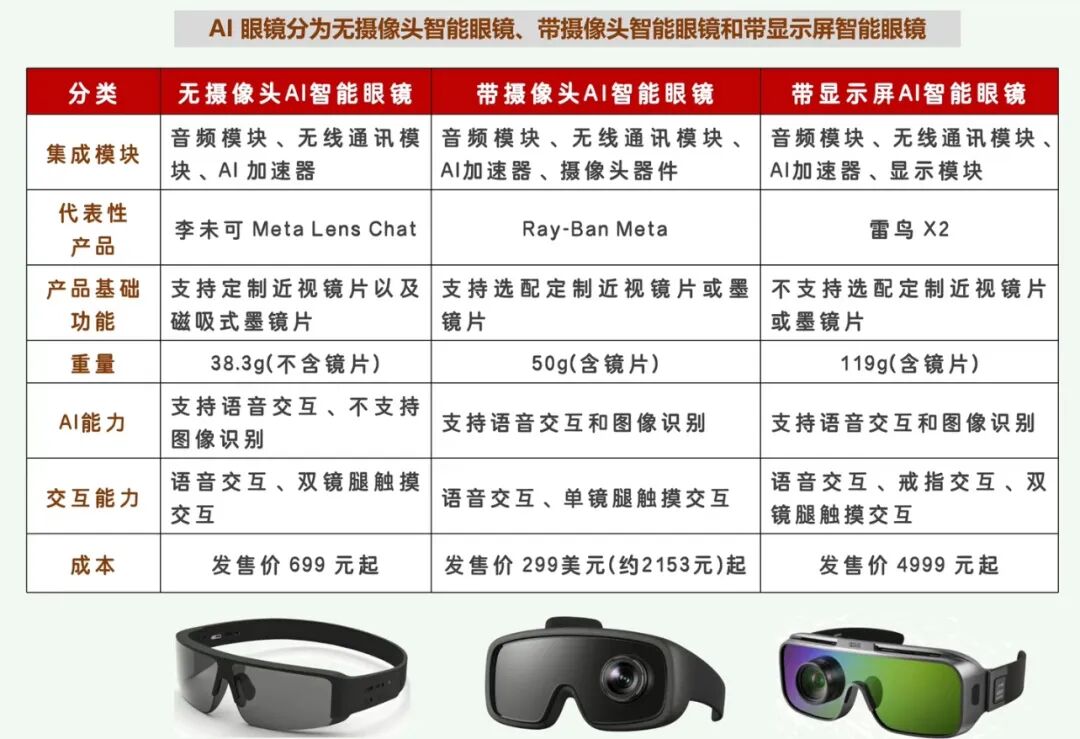
Although the paths are different, they have one thing in common: they all avoid the core problems of XR.
So, a rather delicate situation has emerged in the industry: on one hand, there is competition in terms of thinness, appearance, and AI capabilities, but the display function that a smart glass should have still hasn't been solved.
03 A Mirror of Big Companies' Anxiety
Why are such immature products being promoted so vigorously?
The answer may lie in the anxiety of big companies. For example, one background for the emergence of foldable screens is that the growth of smartphones has long stagnated, and manufacturers need new possibilities, especially breakthroughs in the ultra - high - end field.
The background of AI glasses is similar:
During the Spring Festival in 2026, Alibaba's Qianwen spent 3 billion yuan on promotions, Tencent's Yuanbao gave out 1 billion yuan in cash red envelopes, and Baidu's Wenxin invested 500 million yuan. The effect of this large - scale investment was immediate - the monthly active users of Qianwen soared from 31 million to 203 million, Doubao reached 315 million, and Yuanbao also entered the 100 - million - user club.
However, after the excitement, the money was spent, but the users didn't stay. The daily active users of Yuanbao dropped from the peak of 40.54 million to 7.68 million, a decline of over 80%, almost back to the starting point. The traffic came and went, leaving only a huge marketing bill.
Under the anxiety about traffic, no matter how expensive the promotions are, big companies will keep paying the bill. People are anxious about missing out on this new form of AI hardware and are eager to find a "physical form" for their AI.
Take Alibaba as an example.
Tencent has WeChat. It is a super - entry with 1 billion users. With functions such as chatting, mini - programs, and search, one app serves as an operating system. Google has Android, and its interface is the first thing you see when the phone is turned on. Apple has iOS, with a fully - closed loop of hardware and software.
Although Taobao, Alipay, and Gaode are all kings in the application layer, Alibaba is silent at the system level. It has many powerful entry points, but no "system - level" entry point.
The value of Qianwen AI glasses lies in "creating an entry point". This entry point can integrate various AI functions of Alibaba, from information acquisition to office communication, from hailing a taxi to ordering takeout, all of which can be done through one entry point.
As a daily - use product, AI glasses may have various shortcomings. However, as a canvas for the AI blueprint, AI glasses are extremely attractive, and many big companies can't resist the temptation.
More importantly, the threshold for this is not high, giving everyone a chance to try.
The new - generation smart hardware sounds cool, but if you don't delve into XR technology, there is actually not much of a technological threshold. The hardware itself is not scarce. The motherboard and SoC account for 40% - 50% of the cost. The rest of the structural components, cameras, batteries, and audio modules all come from mature supply chains. It is normal for products to be sampled in three days and launched in seven days in the Pearl River Delta region. Since the production line is mature, the threshold is naturally low. Once the threshold is low, anyone can get involved.
No one knows if it has a real - world business scenario, but it can at least relieve some short - term anxiety. Moreover, it may really bring about a technological revolution. After all, in many cases, it is the anxiety of big companies that brings the future into reality.
References
1. Xu H, Han Z, Jiang Y, et al. Research Progress in Large Field - of - View Augmented Reality Optical Waveguides[J]. Laser & Optoelectronics Progress, 2026, 63(6): 0600001.
2. Yuanpeng Wu, Zetian Mi, et al. High efficiency, high color purity red micro - light - emitting diodes[J]. Light: Science & Applications, 2026, 15: 133.
3. Mast F W, et al. Depth Perception in Virtual Reality: Effects of Vergence Accommodation Conflict (VAC) on Learning Transfer[C]//Springer Nature Switzerland, 2026.
4. "Why Does Li Nan No Longer Optimistic about AI Glasses after One Year?" Super Focus. December 12, 2025.
This article is from the WeChat official account "Larger Reference" (ID: hyzibenlun), written by Liu Ran and edited by Yang Zhichao. It is published by 36Kr with authorization.