Vocational school students with a monthly salary of 3,000 are "taking down" directors from the Beijing Film Academy.
Text by | Lan Jie
Edited by | Qiao Qian
"If you don't have a Rolls-Royce when you're born, chances are you'll never have one in your lifetime." This is a saying that Huang Haonan, the founder of Jiangyou Animation, has memorized.
He graduated from secondary vocational school and had no support from his parents. He only believed in one thing: it's impossible to get rich by working for others. One must seize the emerging opportunities. So, he was involved in the once - booming sectors of online novels and short dramas. After venturing into short dramas, he finally achieved social class leap. However, Jiangyou Animation remained unknown until he dived into the wave of animated dramas.
In November last year, Jiangyou Animation's monthly revenue exceeded 50 million yuan, firmly establishing itself as a leading player in the industry. As the company's founder, Huang Haonan has been constantly attending events on various platforms and dinners with investors, sharing his success experiences and business insights. The official introduction of Jiangyou Animation states: "Our goal is to become the largest AI imaging group in the country!"
It's not just the animated drama production companies that are booming. Hongguo Animated Drama, a platform under ByteDance, is also witnessing astonishing growth. 36Kr has exclusively learned that the DAU of this app has exceeded 10 million in just over three months.
The emergence of AI - powered animated dramas is driven by technological advancements. In the past year, multi - modal large models have been fully implemented. Although the future of AGI remains unclear, "emoji - like animations" have started to move at a low cost, creating a content trend worth over 20 billion yuan.
In February, ByteDance dropped a "bombshell" with Seedance 2.0. It scared traditional filmmakers but excited those in the animated drama industry. The need for expensive storyboard directors has diminished, the complex post - production process can be significantly streamlined, and generating images according to prompts is no longer a labor - intensive task.
A company producing animated dramas decided to lay off its storyboard directors on the day of the announcement to cut costs and improve efficiency. During the Spring Festival, a practitioner wanted to test the capabilities of Seedance 2.0 during his free time but found himself in a queue with more than 20,000 people. Even with the highest - level membership, he still had to wait for three hours. Although the price of Seedance 2.0 is 2 - 3 times that of its competitors, enterprises are flocking to pay for it because the high efficiency can offset the high cost.
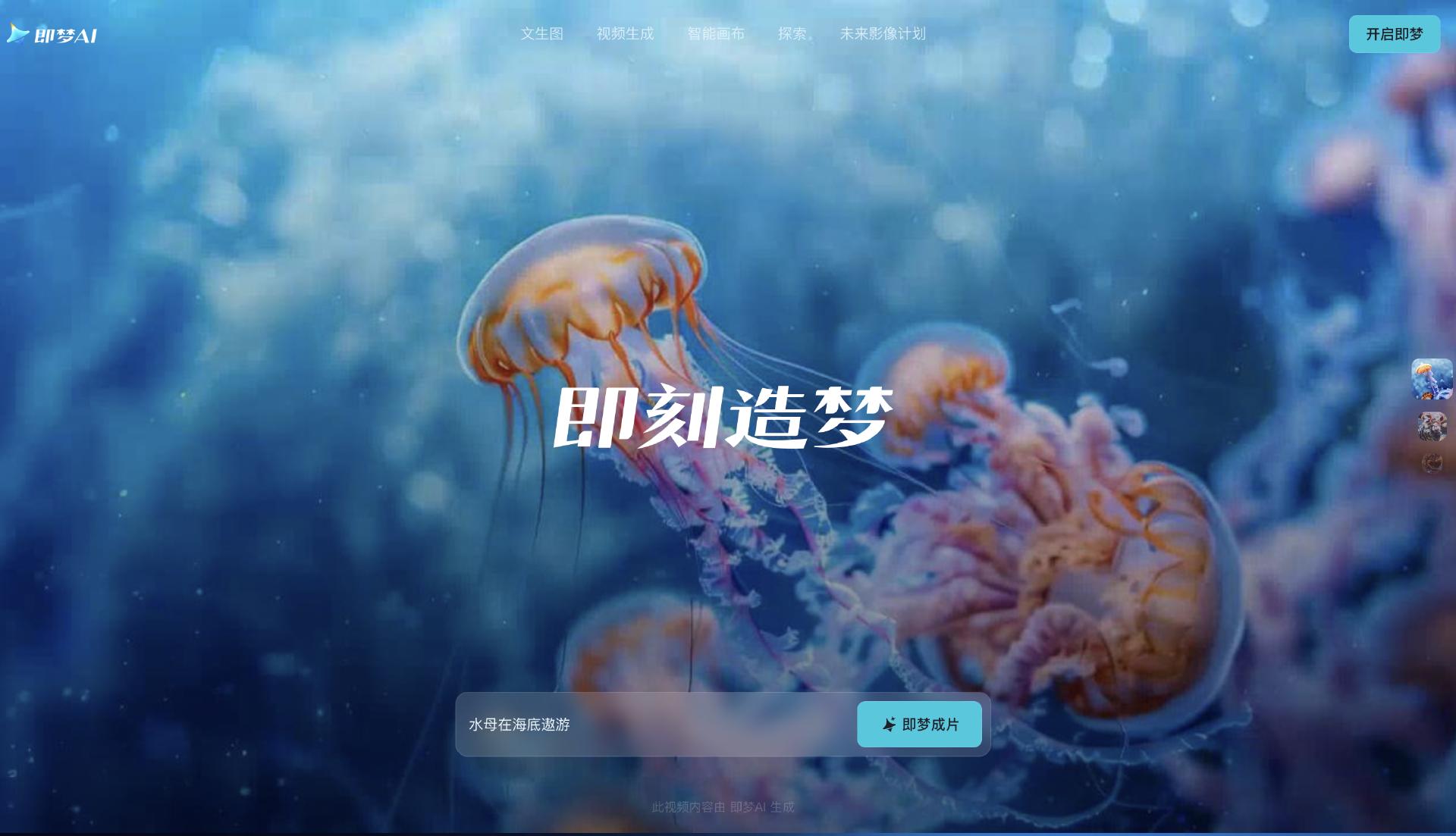
Screenshot of the official website of Jimeng Web version
The pace of change is so rapid that people fear being left behind. Can technology not only accelerate the birth of a new industry but also its demise? What can truly stand the test of time?
New Money and Old Players
By the second half of 2025, it was an open secret that AI - powered animated dramas were profitable.
A practitioner told 36Kr that he knew a local rich second - generation in Changsha who rented an entire building, recruited more than 200 people, and produced low - cost AI animated dramas at 600 yuan per minute to sell to various platforms. The reason was simple: there were too many orders.
Bai Ze, who used to be a small - game developer, single - handedly produced nearly 30 AI dynamic animations in half a year and sold them to distributors at dozens of yuan per minute. "They don't have high requirements for quality; as long as it can be launched, it's okay," Bai Ze said. In the end, he earned hundreds of thousands of yuan with a cost of less than 1000 yuan.
There was also a talent - poaching war.
In January this year, Huang Haonan angrily posted an article saying that "Baidu was poaching employees from Jiangyou Animation for Qimao under the pretext of a visit." Qimao (Shanghai Qimao Culture Media Co., Ltd.) is a subsidiary controlled by Baidu. At that time, Baidu employees added the WeChat accounts of many employees of Jiangyou Animation, including senior executives, during the visit. Then they privately contacted and poached them, even promising ten - fold salaries. Huang Haonan didn't notice this until several employees left one after another.
He complained to the media, "Poaching with ten - fold salaries is not because Jiangyou is incompetent; no one can resist such an offer." He also claimed to terminate all cooperation with Baidu and Qimao.
The situation turned around quickly. Almost on the same day he posted the article, the issue was resolved. Huang Haonan said that the relevant behavior was the personal act of Baidu employees, and "I was a bit emotional and used excessive language."
From being unknown to being flocked to, such a farce is just a small part of the emerging trend.
In fact, the fact that "more than 90% of companies in the traditional short - drama industry are facing losses," which hit the hot search in early March this year, had already been an un - publicized reality in the first half of 2025.
At that time, the popularity of live - action short dramas was still high, but the industry structure was already set. Tinghuadao became a leading short - drama production company with hit dramas like "What a Goody - Two - Shoes"; Hongguo, the free short - drama platform under ByteDance, had a DAU of over 100 million, far ahead of Heima Theater in second place.
Many short - drama companies that rushed into the industry but failed to form core competitiveness were facing thin profits or even losses. They began to downsize and exit the market. Short - drama investment managers, who were once highly sought - after with salaries comparable to those of senior executives in large companies, were the first to be affected.
"In the first half of last year, except for the top - tier companies, well - known short - drama companies all laid off employees," said Liu Wei, the founder of Minglu Animation, which now mainly focuses on high - quality AI animated dramas, to 36Kr.
At that time, Minglu Animation was recruiting. Liu Wei unexpectedly found that the number of resumes was increasing. Especially for positions related to advertising placement, the number was almost twice that of other positions. "Sometimes, an investment manager from a company would come for an interview in the morning, and his team leader would come in the afternoon." Finally, Liu Wei hired these talents at a salary lower than the budget for the positions.
At the same time, dynamic animations, a form of content between comics and animations, emerged on Douyin. It proved that there was a large number of pan - two - dimensional audiences on the platform with unmet needs. The platform quickly noticed this phenomenon and started to acquire relevant content.
The person in charge of a production company that had contact with Douyin said that at that time, the Douyin business development staff told him that "this content form will explode in about a year." The requirement for partners was "either provide a large quantity or high quality."
However, the production of traditional dynamic animations was costly and time - consuming, and there was a long - term shortage of supply. Xiaochuan, the former person in charge of the short - drama business of a leading Internet company, told 36Kr that "at that time, there were no more than a hundred teams in China that could produce dynamic animations, and the cost remained at 8000 - 10000 yuan per minute."
Struggling short - drama companies were the first to discover that they could use AI to mass - produce content similar to traditional dynamic animations, reducing the cost to a few hundred yuan per minute.
The CEO of a company that was almost on the verge of exiting the short - drama industry regarded AI animated dramas as a lifesaver. He warmly welcomed all communication opportunities: "I'll tell everything I know as long as more people can be attracted to the industry." He even lied about the profits for this purpose.
AI animated dramas have a business model similar to that of short dramas, with 80% or more of the revenue used for advertising placement. Therefore, most of the leading companies in the AI - animated - drama industry are transformed from live - action short - drama companies that didn't make it to the first - tier.
Soon, a scenario very similar to the early days of the live - action short - drama boom reappeared.
First, there were stories of getting rich quickly in the industry. In February 2025, an AIGC work called "Mysterious Events in Xing'anling" had over 50 million views on Douyin, and there were rumors everywhere in the industry that it had revenues of tens of millions.
In July of the same year, with the traffic support of Douyin, the daily consumption of AI animated dramas exceeded 10 million yuan.
The Most Advanced Technology and the Cheapest Labor
Dramatically, animated - drama companies have turned this AI - born business into a labor - intensive industry.
Huang Haonan launched an almost radical expansion. In the second half of 2025, in less than half a year, the number of employees at Jiangyou Animation increased from dozens to more than 1200, with an average of 200 new hires per month.
First, he lowered the employment threshold as much as possible. In Huang Haonan's words, anyone over 18 years old without intellectual disabilities can apply. He said without hesitation that the highest - educated person in the company is only an undergraduate. "We've developed our own tools, and new employees can start working directly after two or three days of training."
Corresponding to such recruitment criteria, the average salary offered by Jiangyou Animation is only about three or four thousand yuan.
The production of AI animated dramas is not complicated: write a script, generate storyboards from text - to - image, make the images into videos to bring the pictures to life, and finally edit, dub, and synthesize. The entire process can be completed by directly using existing large models.
Thus, a magical scene emerged: a group of people who have just graduated from vocational schools or left factories are sitting in bright and spacious office buildings, inputting exciting novel content into AI large models representing the most advanced productive forces, and producing content that is viewed hundreds of millions of times.
On the other hand, the company is willing to pay a high price to acquire core resources and talents: it acquires scripts for 100,000 yuan each and offers a million - yuan annual salary to recruit chief editors. Huang Haonan is confident, saying, "No one in the industry dares to offer such high salaries."
With the expansion of the workforce, the monthly production volume of Jiangyou Animation has increased from more than 10 to 60, and in January, it exceeded 100. Huang Haonan said, "By the end of this year, I hope the monthly production volume can reach 1000," which is equivalent to one - third of the current monthly production volume of the entire live - action short - drama industry.
Heya Animated Drama also had an expansion. In just one month, Yang Hao and the HR department successfully recruited more than 50 people. His secret lies in the location of the company in Changsha, which is the headquarters of Hunan TV and Mango TV.
From 2010 to 2020, when variety shows and long - form dramas were popular, there were more than 200 production companies in the office buildings and residential buildings around Hunan TV and Mango TV. No matter how specific the demand was, you could find a professional team. With just one phone call, someone would come to discuss cooperation within half an hour. At that time, the smallest editing contract for a post - production company was 3 million yuan, and the largest was tens of millions.
However, the golden age of long - form videos has passed, and a large number of professional talents have nowhere to go. AI animated dramas have become their new haven.
At Heya Animated Drama, employees start work at noon and finish around 1 am. This reversed work schedule is to reduce costs and improve efficiency because computing power is cheaper and the waiting time is shorter during off - peak hours. However, recently, after the launch of Seedance 2.0, the working time has been adjusted to 3 am because there are still tens of thousands of people in the queue at 1 am.
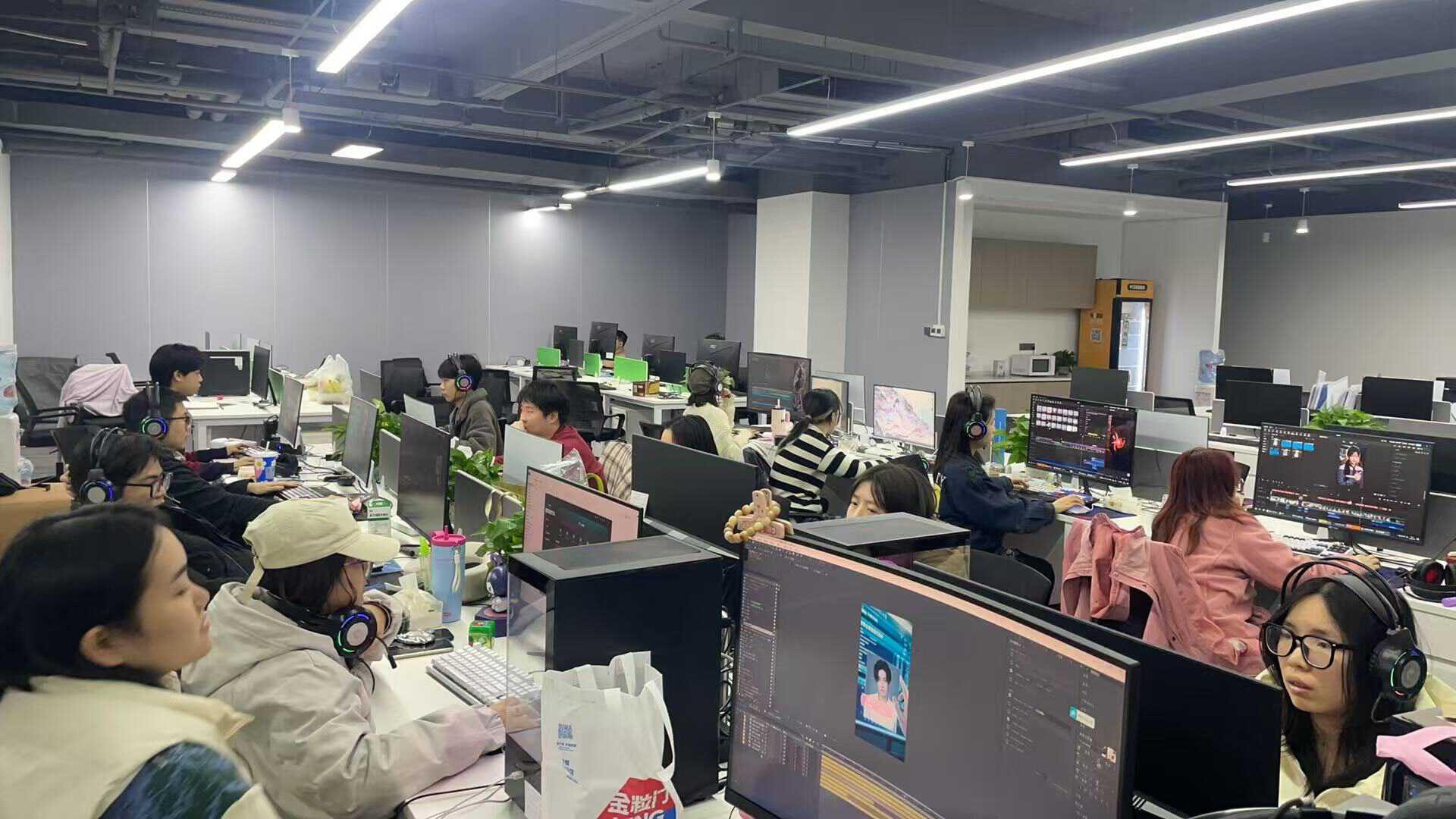
Heya Animated Drama at 6 am, provided by the interviewee
In the AI - animated - drama industry, the first one to increase production capacity can enjoy the traffic dividend first, get high - quality orders, and gain experience through quantity to master the secret of creating hit dramas.
"In the current AI - animated - drama industry, when you can't access the underlying models, core competitiveness may lie in production capacity and cost," said Jiang Yiqi, the former AI expert at Alibaba DAMO Academy and the current CEO of Sansheng Qingying.
AI technology is also amplifying human efficiency.
2025 was the year when large video - generation models were fully implemented. At the beginning of this year, Veo3 and Veo3.0 based on Google DeepMind were released; the 1.0 version of Seedance, which became a sensation in 2026, was launched in the middle of the year; Keling 2.0 and 2.6 were launched successively...
Jiang Yiqi told 36Kr that with the implementation of these large video - generation models, functions such as audio - video synchronization, generation of long - form videos of 5 seconds or even 10 seconds, and consistency of pictures and characters have been achieved.
Meanwhile, the competition among large models has further reduced the cost of computing power procurement for companies. Take Keling as an example; its price has dropped from one yuan per second in the first half of last year to fifty cents per second now.
All these factors have accelerated the expansion of the emerging trend. According to the DataEye - ADX industry - version data, in September and October 2025, AI animated dramas experienced a major explosion, with the monthly launch volume exceeding 13,000, approaching the total production volume of live - action short dramas in the past year.
"Changing Every Three Days": From Dynamic Animations to AI - Simulated Live - Action Dramas
All dividends have an expiration date, and AI animated dramas are no exception. What practitioners didn't expect was the rapid pace of change.
In just half a year, Bai Ze, who had sold nearly 30 AI animated dramas, started to transform into the tool - making business. With the increase in supply and the platform's demand for high - quality content, low - quality animated dramas relying on organic traffic can no longer survive, and the individual opportunities are coming to an end.
Huang Haonan described the organic traffic on the platform after October last year as "completely dried up." "Previously, when we randomly released a drama, we could get more than 100,000 yuan in organic - traffic revenue with 20 million views. But now, we can't even get 1000 yuan."
A coal boss, reluctant to see his assets shrink, invested millions of yuan in "silly - style animated dramas" but ended up losing all his money. Silly - style animated dramas were the earliest and crudely - made AI animated dramas, and their popularity only lasted for less than three months. The coal boss was just a bit late.
Relatively rough content forms such as dynamic animations and silly - style animated dramas are being phased out, and new types are emerging. Currently, AI - simulated live - action dramas are in vogue, representing the current technological limit and the high - quality direction of AI animated dramas, which is also what the platform desires.

AI - simulated live - action dramas on Hongguo Animated Drama platform
A person close to ByteDance said that this type of animated dramas can help Hongguo capture a share of the long - form video market and is more in line