In 2026, has the automotive industry finally started to compete in technology?
Under the mandatory intervention of policies and the enthusiastic appeals within the industry, China's automotive industry finally shows signs of changing course and is preparing to shift to the healthy track of technological competition.
At the beginning of this spring, there has been an explosive development of automotive technology press conferences. According to incomplete statistics from Auto Commune, in March alone, more than a dozen automakers, including XPeng, Lotus, Hongmeng Zhixing, BYD, Galaxy, SAIC Volkswagen, Zeekr, Changan, Voyah, and Chery, held technology press conferences intensively.
Different from previous new car press conferences that focused on models, configurations, and prices, technology press conferences focus more on showcasing cutting - edge R & D achievements, core technology layouts, and underlying innovation capabilities. The shift from product involution to technological breakthrough reflects the profound transformation of the Chinese auto market from price wars to technological competitions.
On the one hand, the continuous and fierce price war has seriously disrupted the normal development rhythm of the industry, putting continuous pressure on automakers' profit margins and making the upstream and downstream of the industrial chain suffer. On the other hand, the continuously falling prices have broken consumers' psychological expectations. The low - level homogeneous competition has exhausted both buyers and sellers, and the price war has come to an end.
Although the price war has lost its momentum, at this important juncture of the electrification and intelligent transformation of the automotive industry, competition in the automotive field is inevitable. After rounds of inefficient internal strife and competition for the existing market share, technological innovation has undoubtedly become the core means for automakers to break through the predicament and achieve high - quality development.
01
This year, it's popular to talk about technology in the automotive circle.
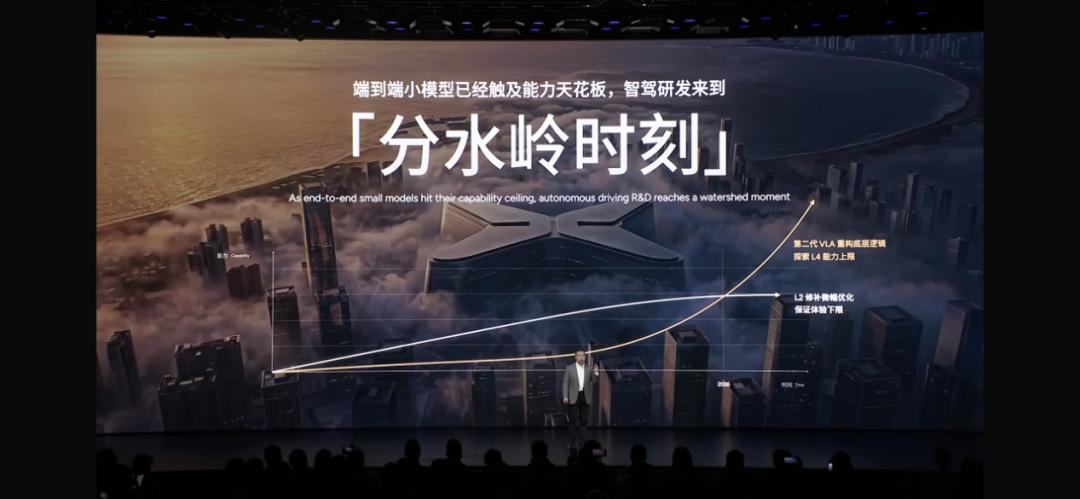
On the evening of the 2nd, XPeng Motors officially kicked off the technology release season in March with its second - generation VLA intelligent driving press conference.
Although it claims to be "nearly five times ahead of the best in the industry" and "possibly the most advanced intelligent driving system in China at present", which may seem like an "arms race", XPeng's second - generation VLA press conference was relatively pragmatic. Whether it's dealing with all - scenario road conditions, roaming in cities without navigation, or comparing the intelligent driving experience to an elevator where you can reach your destination safely just by pressing a button, even middle - aged people who are not familiar with complex operations can drive with confidence. All these make the technology closer to users and more practical.
Unexpectedly, Lotus followed closely. On March 4th, the Global Lotus For Me Global Technology Press Conference was held, officially releasing the LTS "Lotus Engineering Exclusive Tuning" and bringing a new model, For Me, built based on the LTS standard. In the words of Lotus official: "This is not a press conference full of parameter stacking, but a declaration of the return of driving sovereignty."
Just like the strong performance gene inherent in Lotus sports cars, this technology press conference was also full of personality.
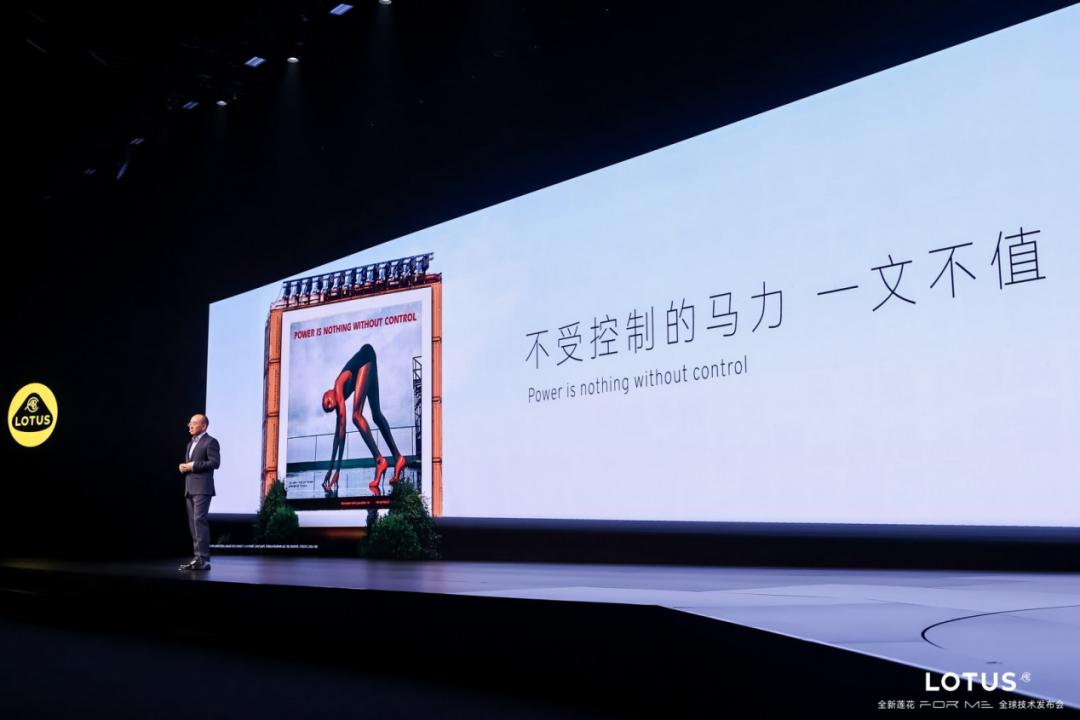
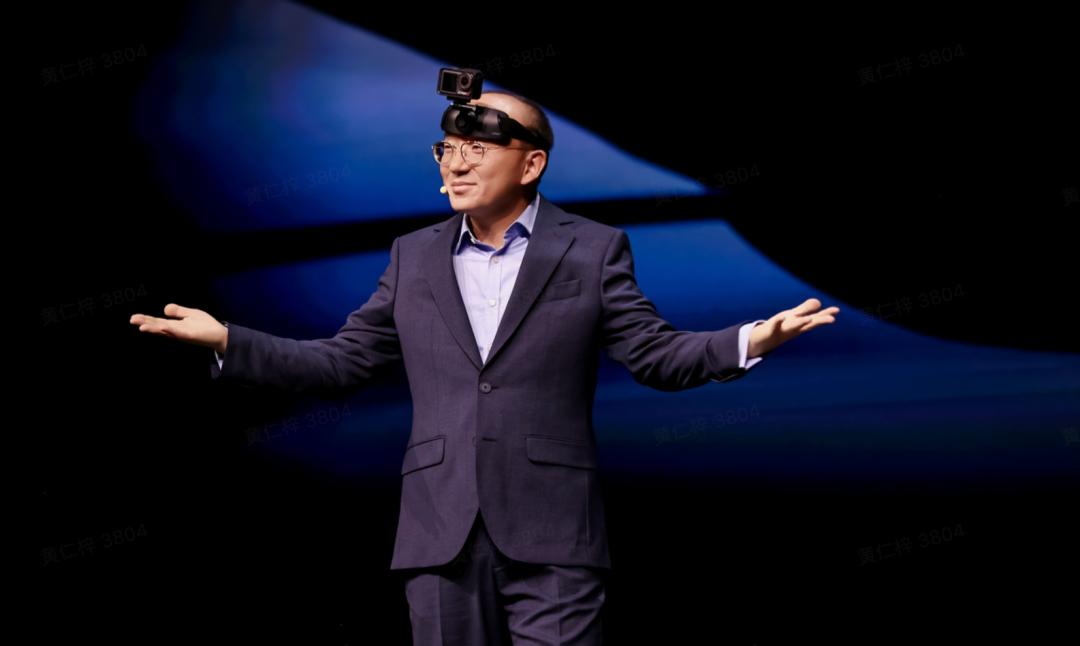
When explaining the power and handling of the super - hybrid architecture, Feng Qingfeng, the CEO of Lotus Group, showed an old poster that is still eye - catching today and quoted a famous saying from the poster: "Uncontrolled horsepower is worthless." After presenting the view that "true intelligence should not sacrifice beauty", Feng Qingfeng put on a head - mounted camera, satirizing that the laser on the roof seriously damaged the overall aesthetics of the vehicle. When demonstrating aerodynamics, he pointed directly at the industry's pain points: "Don't do 'air decoration', real air ducts, no fake eyelashes."
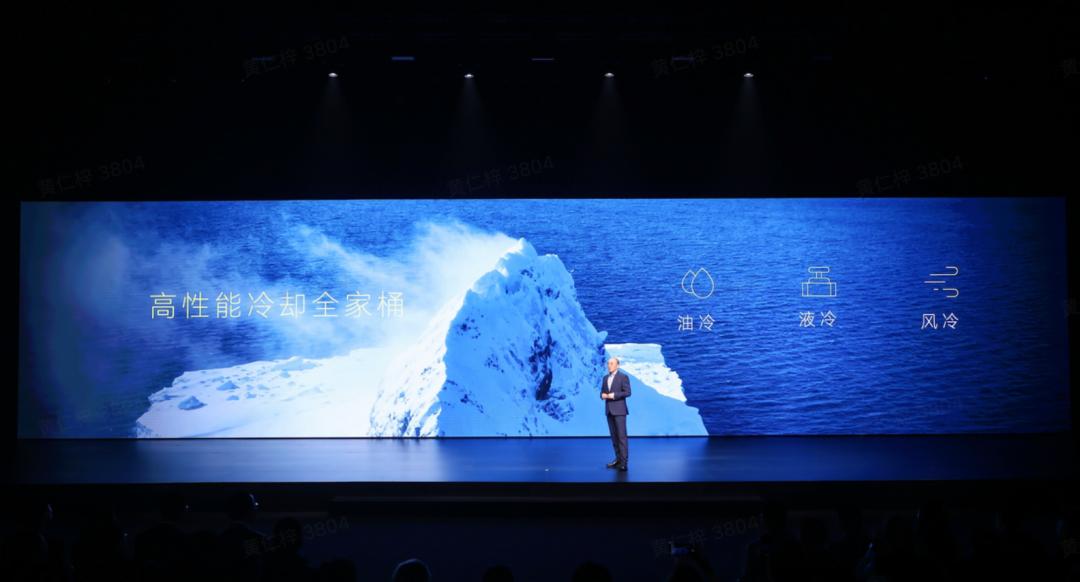
Although the views are quite controversial, they are expressed in a straightforward and down - to - earth way. Technologies such as power, cooling, driving control, and aerodynamics are a bit obscure for ordinary consumers and have a certain threshold for understanding. However, Lotus has translated them into language that ordinary consumers can understand, reducing the cost of technological cognition.
Today's technology press conferences are no longer "closed - door meetings" just for the industry. Instead, they are increasingly inclined to communicate with ordinary consumers.
Early new car press conferences were more targeted at industry insiders and focused on technology iteration itself. However, with the penetration of the Internet communication logic, combined with the rapid iteration of the industry and the intensification of homogeneous involution, some content full of professional terms and exaggerated marketing slogans is more likely to go viral. In order to achieve better publicity effects, some press conferences over - package technologies, using beautified data and obscure terms to make ordinary technologies seem "high - end", which actually creates a gap with ordinary consumers.
For ordinary consumers, it is also very important to perceive the qualitative changes in the experience brought about by technological progress. Especially when intelligence has become an important factor in car - buying decisions, understanding the underlying technology architecture and cutting - edge technological changes can enable consumers to have a deeper understanding and control of models, brands, and even the market. They can not only choose the models they like more but also gain more security and a sense of predictability.
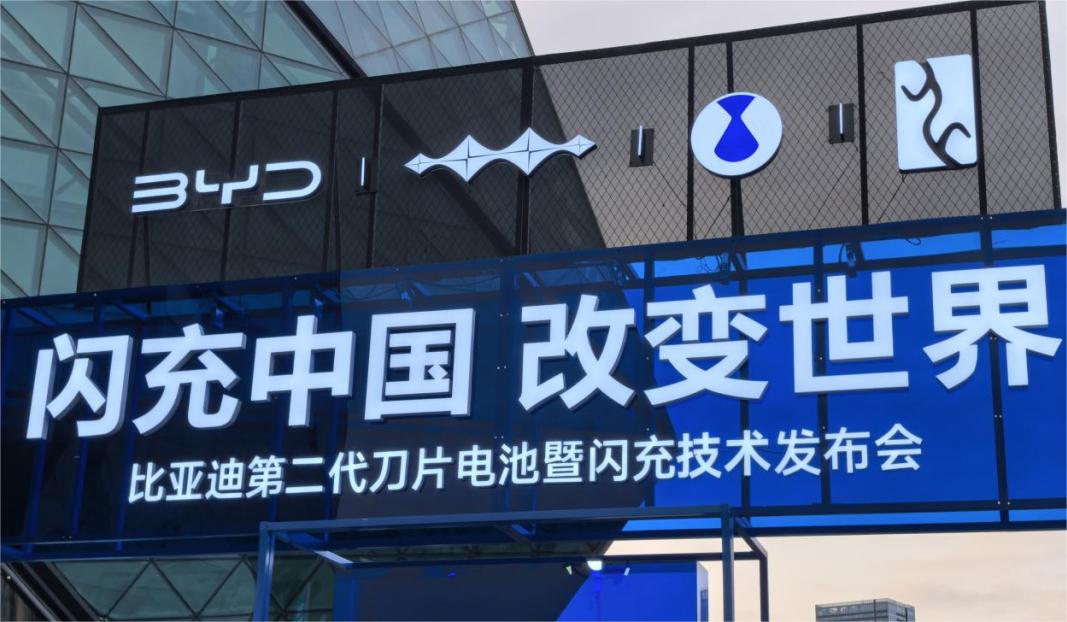
Among the many technology press conferences targeting consumers, BYD's press conference with the theme of "Flash - charging China, Changing the World" is undoubtedly a representative of the most hardcore technological innovation and the strongest user perception.
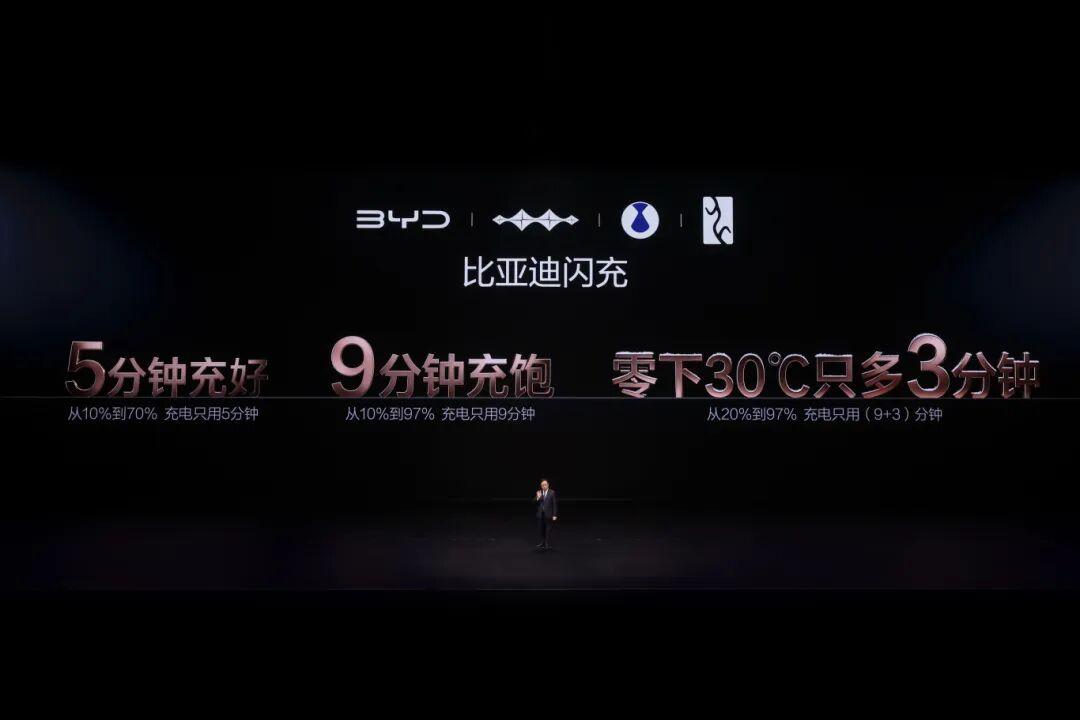
BYD's second - generation blade battery speaks directly with the most straightforward actual test data: it only takes 5 minutes to charge from 10% to 70%, and 9 minutes to charge from 10% to 97%. The catchphrase "Charge well in 5 minutes, charge fully in 9 minutes, only 3 more minutes at minus 30℃" is not only easy to understand but also deeply ingrained in people's minds.
More importantly, the second - generation blade battery is not only compatible with BYD's flash - charging piles but also with the existing 4.8 million public charging piles across the country. Its charging speed has been further improved compared to the previous generation. To address the problem of power reduction when multiple cars are charging simultaneously, BYD also protects the power grid through an energy storage system to ensure the efficiency in high - power charging scenarios.
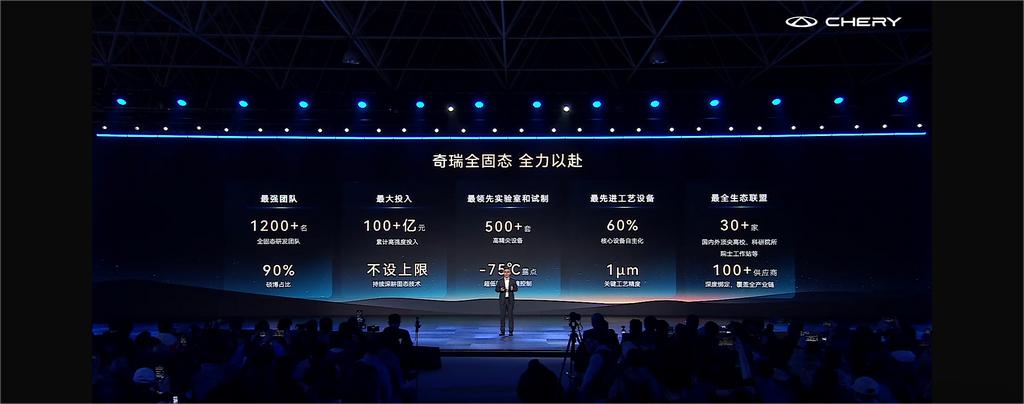
Also focusing on batteries, Chery also presented its solution at the subsequent "Battery Night". Its newly released Rhino battery can add 500 kilometers of range after 8 minutes of charging. In the highly - concerned field of solid - state batteries, Chery has also released new signals. It has developed battery cells with different energy density levels and is currently in the experimental verification stage.
Compared with the electrification mainlines of BYD and Chery, Changan's technology press conference was a bit "alternative". At a time when pure - electric vehicles are booming, Changan entered the HEV hybrid market. At the conference, Yang Dayong, the executive vice - president of Changan Automobile, announced that they will empower traditional fuel - powered vehicles with electric technology and launch HEV models with a city fuel consumption as low as 2.98L.
At this fuel - consumption level, the fuel cost is almost on a par with the electricity cost. For consumers who are always calculating fuel costs, this achievement is undoubtedly quite subversive.
At the just - concluded Xiaomi Spring Press Conference for the new - generation SU7, Xiaomi spent a lot of time introducing core technologies such as Xiaomi MiMo - V2 - Pro and the XLA cognitive large - model. Since 2026, the process of automotive intelligence has significantly accelerated. The embodied large - model that integrates cognition and decision - making is becoming the strategic focus of more and more automakers. Whether it's the concentrated appearance at the CES exhibition at the beginning of the year or the annual targets raised by major manufacturers, all these indicate that this trend is accelerating its implementation.
02
Is it really about technology, or just a guise for product promotion?
However, not all press conferences under the banner of "technology" can offer as much hardcore content as BYD and Changan. Under this seemingly bustling technological wave, there are still many press conferences that use the name of technology but actually promote products. Even if they are titled "technology press conferences", whether it's the agenda setting or the focus of communication, they ultimately return to the promotion of new cars, and technology has become a supporting role for the products.
The first product - technology showcase of Geely Galaxy M7 combined a product press conference and a technology demonstration. It included both the product introduction of the Galaxy M7 and the technical introduction of the Aegis Gold Brick Battery.
In contrast, although SAIC Volkswagen's technology press conference systematically expounded on the nine core technologies of the D.ERA series, the overall content seemed more like a warm - up for the upcoming ID.ERA 9X. In essence, it was still a product press conference for the launch of a model.
The same is true for the Zeekr 8X technology press conference. Although it nominally focused on technology, the focus of communication was still on the model. "Today, let's talk about what kind of car the 8X is." The first sentence when the speaker took the stage set the product - oriented tone. In the subsequent communication, the vehicle price, pre - sale benefits, and order data were still the focus of promotion, and technology was just a supporting role for sales.
In contrast, XPeng's technology press conference focused tightly on technology. Even the launch of the 2026 pure - electric version of the XPeng X9, a high - profile model, took a back seat to technology and did not take up much time.
What's more noteworthy is a rather strange phenomenon: when searching for content related to "technology press conferences", what often floods the screen are viral catchphrases, new models, design aesthetics, and even criticisms of the industry's "bad habits". The core technology, which should be in the "C - position", has been quietly marginalized.
Take Lotus' technology press conference as an example. Even the official communication mainly focused on suppliers and catchphrases, and the core technology was placed in a secondary position, presented in a folded sliding - screen form with extremely low weight. After reading the promotional copy, it's difficult for users to form a clear and deep memory of its technological core. And during the press conference, excessive promotion of views and deliberate creation of catchphrases also greatly diverted the audience's attention from automotive technology.
In addition, some technology press conferences held by brands, even if they focus on technology, generally lack surprises: either they are repetitive interpretations of existing technologies, which seems like "reheating old food"; or they are just minor optimizations and iterations, lacking truly eye - catching and subversive breakthroughs.
For example, at the Zeekr 8X technology press conference, apart from the first - time installation of the super - intelligent system and some small - scale upgrades and applications in new models, most of the technologies introduced, such as the Haohan - s super - electric hybrid architecture, the Haohan AI digital chassis, and the Haohan safety armor, were existing technologies that had already been installed in models like the Zeekr 9X and were just applied to the new model.
At Hongmeng Zhixing's technology upgrade press conference, the protagonist was Huawei's new - generation Kunlun dual - optical - path image - level lidar, with improvements in detection range, accuracy, and imaging ability. However, compared with Huawei's previous technology press conferences with high information density, the content of this time was a bit thin, and the overall impact was limited.
The reason why many automakers are keen to title their product press conferences or optimization - iteration press conferences as "technology press conferences" is not hard to understand: the price war has reached its end, and they must shift the competition battlefield to technology. At the same time, policies and the industry are constantly calling for increased R & D and high - quality development.
However, the problem is that many automakers do not have core technologies as subversive as BYD's second - generation blade battery. They have to respond to the trend and keep up with the pace, so they can only choose "nominal technology releases". Nominally, they are shifting to technology, but in fact, they still stay at the product marketing level.
This also echoes the judgment at the beginning of the article: the Chinese auto market is indeed starting to shift to technological competition. However, this shift is more of a passive response and a superficial follow - up, far from a thorough and active transformation.
What the automotive brands really need is to calm down and do underlying R & D, and come up with truly competitive core technologies. Only by shifting from "passive following" to "active breakthrough" and from "marketing - oriented technology" to "hardcore innovation" can they stand out from the fierce competition and embark on a long - term, healthy, and high - quality development track.
Responsible editor: Cui Liwen Editor: Wang Yue
This article is from the WeChat official account “Auto Commune” (ID: iAUTO2010), written by Sai Jiatong, and is published by 36Kr with authorization.