Is Rabbit back in the game? A prominent YouTube influencer has changed their tune, and Rabbit is set to launch its second AI hardware product.
“I think it’s improved a lot. It’s a totally different product now.”
This statement appeared in a long interview with well - known tech blogger MKBHD (Marques Brownlee).
In this 90 - minute interview program, most of the content focused on mobile phones, ecosystems, and some general AI topics. For about a dozen seconds, he suddenly mentioned the Rabbit R1.
If he hadn't brought it up, many people might have forgotten that this is the first - generation AI hardware, the Rabbit R1, which was extremely popular two years ago.
The R1 made its debut at the CES in January 2024. Priced at $199, it quickly sold 100,000 units. Along with the AI Pin at that time, it was regarded as a representative of the first wave of AI hardware.

However, if you had seen MKBHD's review of the Rabbit R1 two years ago, his attitude was "Barely reviewable". At that time, many people thought that it would disappear from the market as quickly as the Humane AI Pin.
Until yesterday, when I heard the statement "I think it’s improved a lot.", my first thought was, "Why has it come back again?"
Apparently, the judgment of this top blogger with 20 million subscribers on this product has changed significantly over the past two years.
Two years ago, the Rabbit R1 was quickly labeled as a relatively simple and even a bit cruel product: an over - estimated product that was "not as good as a mobile phone" in actual use.
But time clearly didn't stop at that moment.
In the next two years, Rabbit didn't launch new hardware products, nor did it try to make a comeback through a "key version update". Instead, it repeatedly did something that didn't seem very "conspicuous": continuous OTA (Over - the - Air software upgrade).
From Magic Camera, LAM Playground, Intern, to Rabbit OS2 and DLAM + OpenClaw on R1 in the past year, the software update rhythm of the R1 has been very frequent, basically maintaining an update every one or two weeks.
By looking through the update records of founder Lü Cheng on X, we can see the updates the company has made to the R1 in the past two years.
Especially after the emergence of DLAM, the capabilities of the R1 began to shift.
It no longer just "answers questions", but starts to try to "complete operations": it can directly perform tasks on a computer or mobile phone, such as opening applications, sending messages, writing code, operating software, and even completing an entire process across windows. Such capabilities were mostly demonstrated in the early stage, but now they can be repeated in some scenarios.
Since the day the R1 was born, the industry has been accustomed to measuring it by the standards of "AI hardware" and constantly comparing it with mature devices like mobile phones.
Lü Cheng once said in an interview with The Verge that Rabbit's early investors included well - known institutions such as Khosla Ventures, Sound Ventures, Amazon Alexa Fund, and Synergist.
Some relevant industry news shows that Rabbit recently received a round of support from BAI Capital.
If we look at the changes over the past two years, we will find that the focus of Rabbit's repeated adjustments is not entirely on the hardware level.
That small orange box is more like an entrance that is constantly being rewritten, trying to prove something in the Agent era.
The goal of AI hardware is to replace the "App - driven operating system"
If we regard the changes of Rabbit over the past two years as the "upgrade history" of a device, when the R1 was first released in 2024, it was a product idea that was quickly "proven to be a failure".
The idea of "getting things done with a single sentence" through an independent device seemed very new at that time. However, some specific functional paths, such as searching for information and playing music on Spotify, essentially still used the existing application system, just in a different way to help you complete tasks.
At that time, a common view in the industry was that this small orange cube, which sold over 100,000 units, "might be in the right direction, but its form was not yet established".
More importantly, after the discussions in 2024, this judgment was almost taken for granted.
The R1 didn't have a "comeback moment" that year, nor did it have new hardware to restart the narrative. On the contrary, this device almost disappeared from the public eye for some time.
However, if we look through the updates of the official account and Lü Cheng on social media, we will find a completely different timeline.
After MKBHD's review was released two years ago, the public pressure reached its peak in the summer of 2024. Lü Cheng admitted that there was a gap between the product experience and user expectations and promised to fix the problems raised by the media and users one by one.
Since then, Rabbit has been continuously pushing OTA updates at an average rate of once every one or two weeks. The official claims that there have been more than 35 updates in total so far. Issues such as battery life, functional stability, and interaction logic have been fixed bit by bit.
The first small turning point occurred in September 2025.
Rabbit OS2 reorganized the capabilities originally scattered in voice. Tasks were presented as cards, so users didn't need to remember commands. A new Vibe coding function called Creations was added. Users could directly talk to the R1 to generate tools, games, and custom interfaces, which could be used immediately after creation.
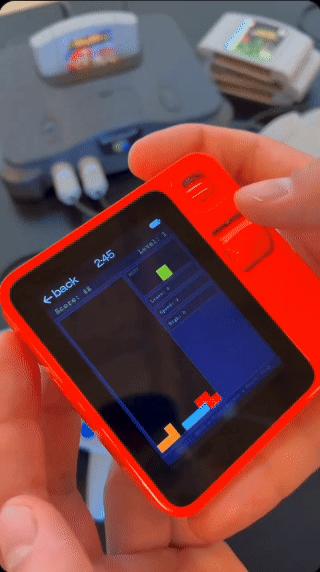
In other words, users can generate a tool with a single sentence and then run it directly.
Many people understand it as AI Coding, but if we consider the product form at that time, the more crucial change is that tools no longer pre - exist.
This means that the system can start to generate capabilities on demand. This is also a significant feature of the Agent era, which allows users to shift from "using tools" to "creating tools".
Before the release of Rabbit OS2, Lü Cheng posted a symbolic video on X - he pressed a detonation button and "blew up" an R1, then said he would redo the whole thing.
This was a very clear signal.
One year after the release, Rabbit itself admitted that there was an "obvious gap" between the initial software experience and user expectations, so it chose to "rewrite the entire system" instead of continuing to patch the original version.
Looking back, this behavior is more like a kind of persistence, but in the context of such market feedback, it also carried a bit of an un - understood meaning.
The media The Verge, which had severely criticized the product before, wrote after the release of OS2: "Everyone hated the Rabbit R1. They were right, but now they’re wrong."
Geek players began to create various games and software with the R1 and share them on social media. The word - of - mouth seems to have started to reverse.
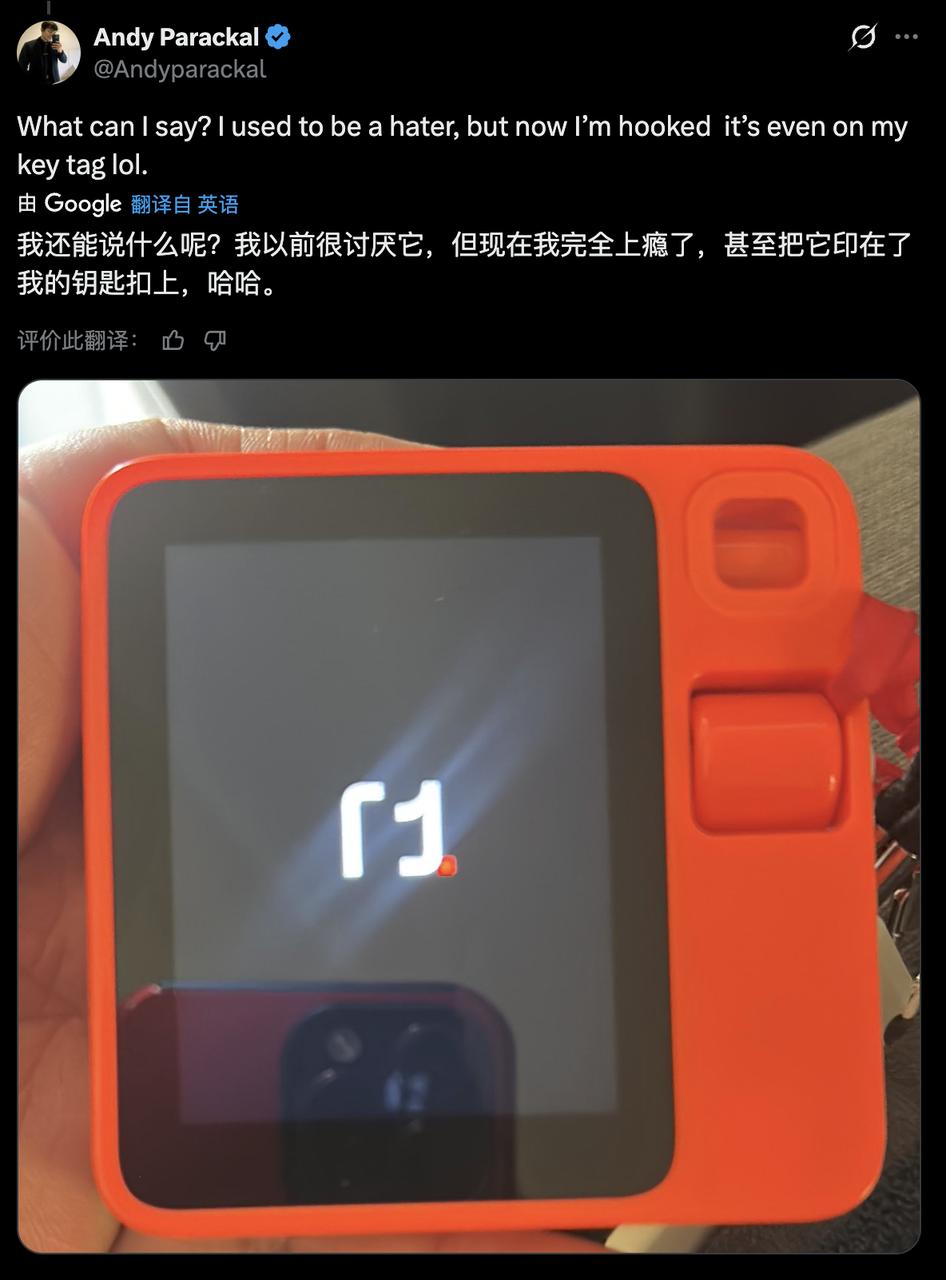
The real change began with the launch of DLAM (Device - Level Action Model) in January this year. From the update chain, it can be seen that this part of the capabilities gradually took shape at the end of 2025.
Before that, the capability upgrades of the R1 were mostly limited to the hardware device with limited configuration. However, DLAM is different. It turns the R1 into a control terminal for the computer.
Without any configuration, you can plug it in and use it. You can use voice to drive the mouse and keyboard, control desktop applications, and perform complex cross - software tasks. This is what Rabbit wanted to do when it shouted "Kill the App" two years ago, and it finally took on a real - world form at this moment.
If we take a broader view, we will find that the problems Rabbit faces are not isolated. In the past few years, the entire industry has been trying to solve the same problem: making AI not only able to talk but also truly operate software.
API calls are stable but limited. RPA is flexible but fragile. Browser Agents can handle web pages but are limited in scenarios. Multi - Agent frameworks can break down tasks, but the complexity increases rapidly.
These paths are all approaching the same direction, but none of them is completely established. DLAM is Rabbit's solution in the edge - side Agent scenario.
Looking back at the changes of the R1 after following this path, we can see that it is gradually in sync with the evolution path of the Agent in the past two years.
The review media Android Police was quite straightforward in its early evaluation of the R1, believing that it was difficult to find a clear use value.
However, in subsequent re - evaluations, they mentioned that this device had changed significantly compared to when it was first released.
Recently, after OpenClaw became popular, raising lobsters with the R1 has become a new way of playing among users on X.
Some people have found that the latest version of the R1 can be directly plugged into a computer to serve as a control terminal. It can use voice to drive the operating system, schedule applications, and run complex programs such as Claude Code. This is almost the same logic as the AI Agent of the lobster machine controlling the computer, but it doesn't require a complex installation and configuration process.
The improvement of word - of - mouth often doesn't rely on product launches but on users' surprise sharing of product experiences. This is probably why MKBHD gave a completely opposite evaluation of this small orange box after two years.
If we look at these changes together, the most tangled part of Rabbit doesn't seem to be the hardware itself. It has always been trying to do something more fundamental -
In the AI era, break the traditional operating system carried by Apps.
GUI or CLI
Looking back at the ups and downs of the R1 in the past two years, it's easier to understand why Rabbit has never given up the CLI (Command - Line Interface) route.
Another route in the industry parallel to CLI is GUI (Graphical User Interface). In simple terms, GUI means clicking icons, finding functions, and proceeding step by step; CLI means directly stating what you want to do.
The Doubao mobile phone assistant, which was very popular last year, was based on GUI Agent technology. On the CLI route, Rabbit has been sticking to its judgment since two years ago.
From the very beginning, the R1 didn't try to be another mobile phone. It doesn't have a complete App system, nor does it emphasize rich graphical entrances. Instead, it has been compressing the interaction path, allowing users to directly aim at the result.
Android Police mentioned a very direct experience problem in its review at that time:
Users "find it difficult to predict what it will do next", and once the execution is unstable, this "direct - speaking" method is actually less reliable than traditional operations.
This logic was indeed not easy to understand in the early stage. Because users are used to finding an entrance first and then performing operations. A device that doesn't follow this order is naturally regarded as "immature" and even difficult to use.
However, in the past year, the entire AI industry ecosystem has undergone tremendous changes.
Some truly high - frequency productivity tools have begun to move towards the CLI route. For example, Claude Code puts the entire process into the terminal: reading code, modifying files, and running tasks are all completed in one entrance.
Similar changes have also occurred in other places. Codex CLI, various CLI Agents, and cloud automation tools, these Agent products are all doing one thing: compressing the multi - step operation process into a single description, and then letting the system break it down and execute.
Users don't need to think too much about interface interaction but directly give their requirements to the Agent.
When this way of use starts to become established, it's not difficult to understand the underlying logic of the R1's word - of - mouth reversal.
Since the day it was born, the R1 has actually always wanted to be a productivity entrance in the Agent era, but it lacked mature enough capabilities to support this kind of interaction at that time.
Now, there are already tens of thousands of users generating applications on Creations, and a group of users have started to truly use it to do things and apply it to real - world scenarios.
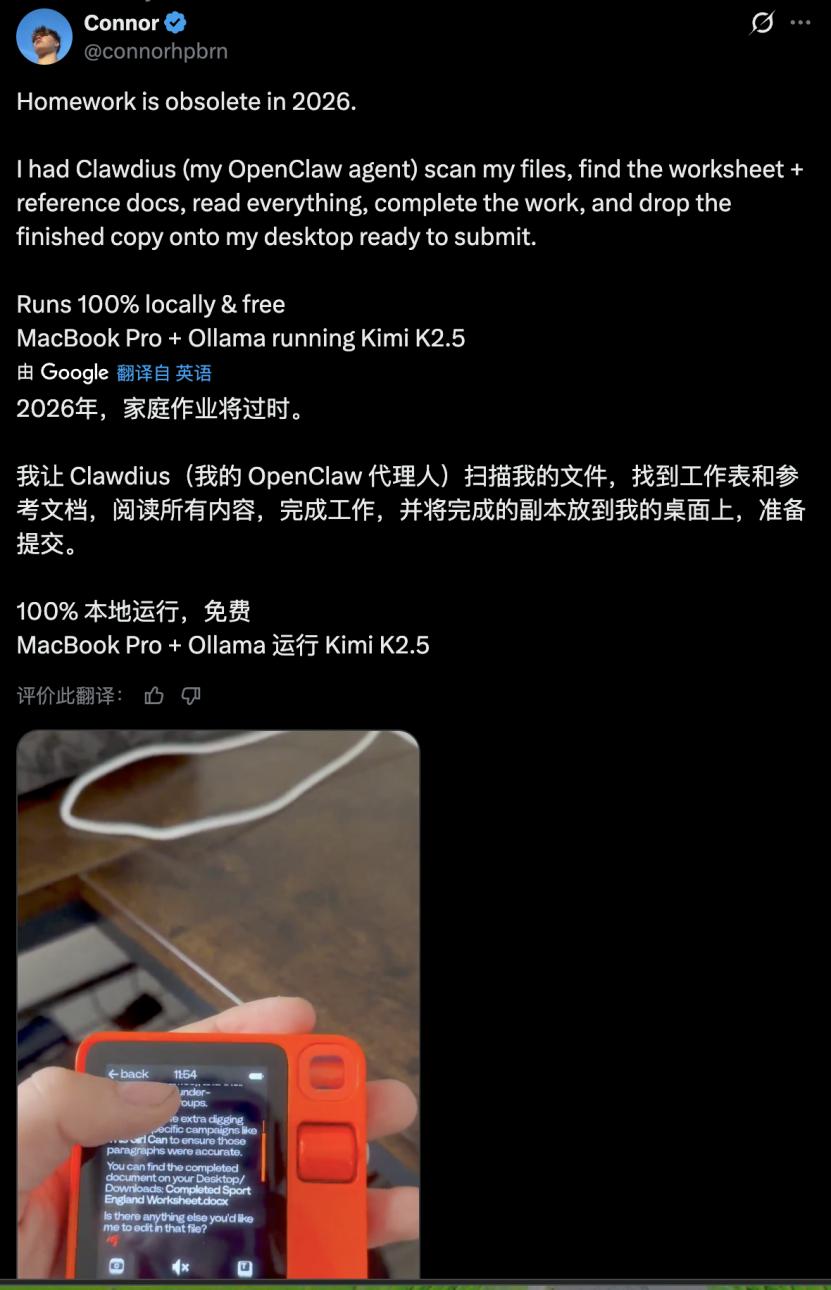
Android Police mentioned in its re - review, "I prefer to talk directly to the R1 rather than use Gemini on my phone."
What this evaluation reflects is not a capability gap but a path gap - in some scenarios, directly stating requirements is inherently a shorter path than opening an application and then operating.
From another perspective, Rabbit is actually a bit of a stubborn company.
While many manufacturers are still adding features around the GUI, it chooses to make the entrance more fundamental.
In other words, the R1 was never intended to be a product for everyone but is more suitable for those who are willing to change their way of use.
This geeky route is doomed to be highly controversial, but Rabbit's crazy experiments continue.
Your next AI hardware might be an Agent terminal
Rabbit's official account recently updated the changes in their product line: it's not the R2, but a device with a completely different logic.
According to the known public information, this is a product called Cyberdeck - the device has a screen of about 8 - 9 inches, which is significantly smaller than mainstream laptops; the keyboard uses a 40% low - profile full - mechanical keyboard, supporting hot - swappable scroll wheels and custom keys.
Apparently, this is closer to the input logic of Planck and HHKB, which are common in the geek circle, rather than traditional PCs.
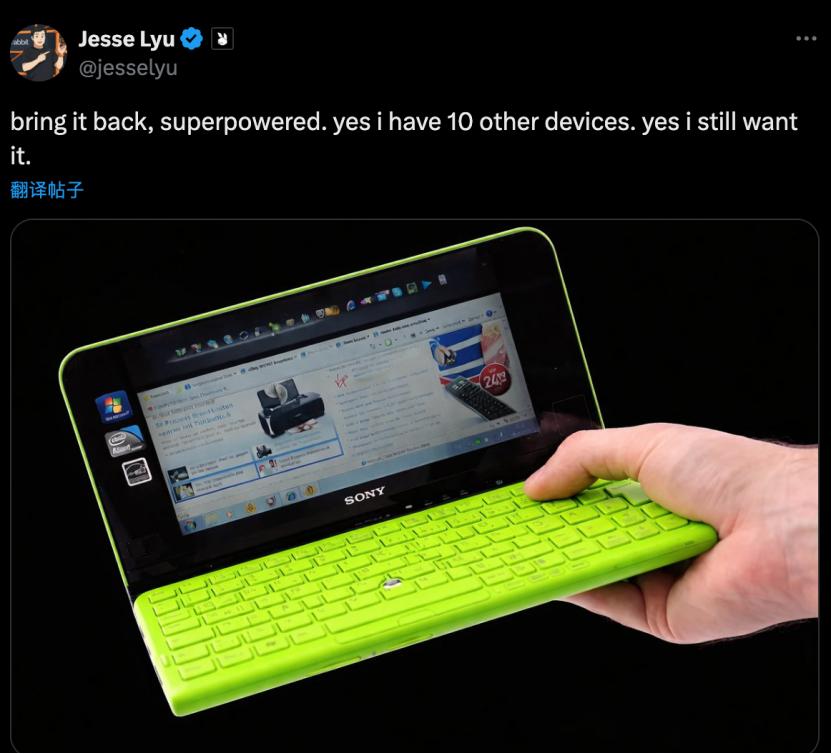
Lü Cheng once posted the prototype of the Cyberdeck on social media - the 2009 Sony Vaio P, an ultra - small netbook with an 8 - inch screen.