RENOGY RUGUO New Energy: How to Build a Global Native Company in 16 Years | Pioneers in Going Global
Portable energy storage products can be found all over the world, whether it's for outdoor camping by European families, emergency backup in North American garages, or disaster prevention storage in Japanese apartments.
Portable energy storage is particularly popular in Europe and the United States. On the one hand, this stems from the long - standing strong outdoor camping culture in these regions. A report released by The Dyrt states that in 2024, approximately 81.1 million Americans went camping (including traditional tent camping, RV camping, etc.), among which about 5.8 million were first - time campers. On the other hand, the popularity of camping places higher requirements for stable outdoor power supply, which has long been a pain point that camping enthusiasts have struggled to solve. The aging power grid problem is prominent in some parts of the United States, and preventive power outages are often carried out in areas like California during the wildfire season.
As is well - known, the portable energy storage sector has long been the "home court" for Chinese brands. Thanks to the mature supply chain system, Chinese brands have accounted for over 90% of the global market share. In the face of the growing and diverse energy demands, RENOGY doesn't follow most brands in the highly competitive standardized lightweight and portable mobile power supply market. Instead, it focuses on professional power - using scenarios in high - power - demand environments such as RVs, yachts, and special vehicles.
Currently, the products sold by RENOGY include solar panels, controllers, energy storage batteries, inverters, and intelligent energy management systems, which form a complete off - grid power system (Off - Grid Power Solutions). Users can independently design and assemble a personalized off - grid power supply plan according to their own electrical equipment, usage habits, and travel routes, precisely meeting the power demands in complex scenarios. This model not only solves the power - using pain points of portable energy storage in special scenarios but also accurately attracts overseas in - depth users who pursue personalization and enjoy hands - on work.
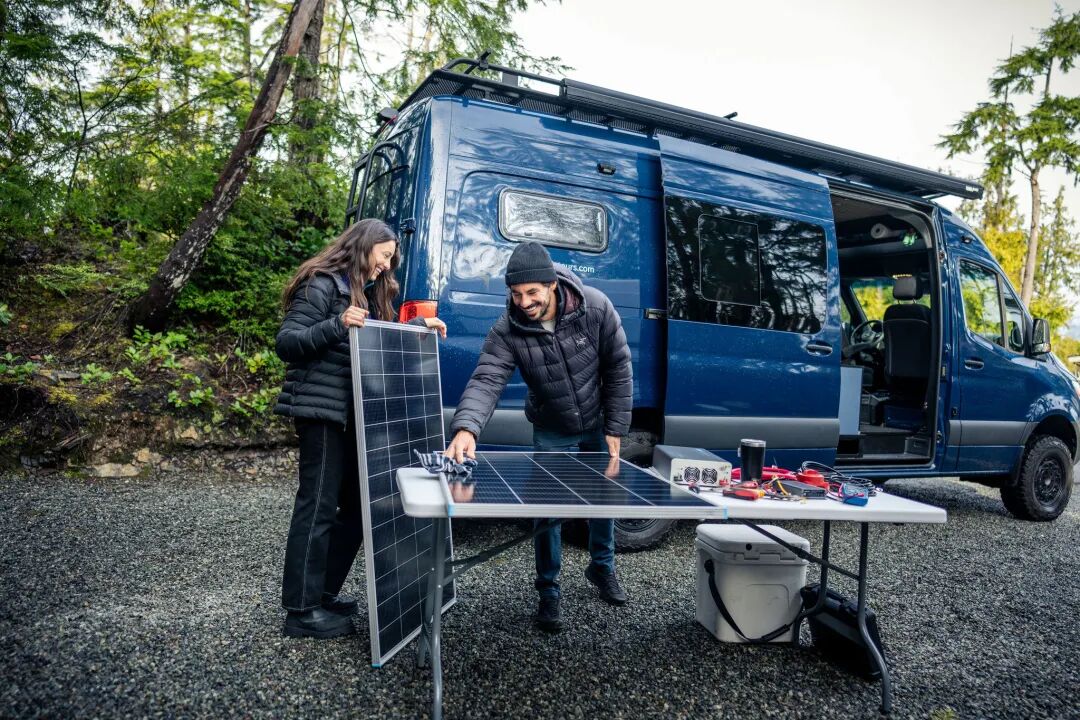
Product image
RENOGY was founded in the United States in 2010 and established its Chinese subsidiary in 2016. It has completed 5 rounds of financing so far. In 2023, the company's valuation reached $1 billion, making it a unicorn in the new energy field. Previous investors include Sirius Capital, Jiayu Capital, Chengyi Fund, Qianhai Mother Fund and other institutions.
1. Create a decentralized power - using solution with full - channel coverage to ensure user experience
When Li Yi founded RENOGY in 2010, she was pursuing a Ph.D. in condensed matter physics at Louisiana State University in the United States, researching the application of superconducting materials in the energy field. She believes that although superconducting technology represents the cutting - edge direction of energy transmission efficiency, large - scale commercial implementation is still a long way off. If people can achieve self - power supply in different scenarios without relying on a highly centralized power grid for transmission, the losses in the transmission process will be significantly reduced. This not only means an improvement in energy utilization efficiency but also hides huge business opportunities.
In March of that year, Li Yi officially registered and established RENOGY, which means the integration of renewable energy (Renewable) and innovation (Innovation). In 2016, it established a branch in China, named RENOGY in Chinese, hoping to inspire people's infinite imagination and exploration of new energy.
Currently, RENOGY's business has achieved stable growth for 16 consecutive years. It focuses on five core aspects: power generation, charging, energy storage, power control, and energy - using strategy analysis, integrating energy hardware and AI technology for coordinated development to achieve all - around energy management and optimization. Its business covers more than 50 countries and regions around the world, and it has set up offices in countries such as China (Suzhou, Shenzhen, Wuxi, Chengdu), the United States, Japan, the Philippines, Germany, the United Kingdom, France, Brazil, and South Africa.
"Some portable energy storage products integrate batteries, inverters, and controllers, similar to large - scale power banks. However, RENOGY's starting point is to establish a decentralized energy structure, enabling every household, every RV, and every off - grid space to generate, store, and use electricity on their own." In Li Yi's view, the advantage of this split - type design is that users can assemble the off - grid power supply system according to their RV size, power - using habits, and travel routes. For example, the battery can be hidden under the bed, the solar panels can be attached to the curved roof, leaving space for the air - conditioner; the inverter and controller can be stuffed into a narrow cabinet. Through the split layout of components, the limited space can be utilized to the maximum extent.
RENOGY's off - grid power - using solutions are also more suitable for some extreme conditions. For example, electrical equipment needs to have extremely high high - temperature tolerance under the scorching sun in Arizona; and it should be able to start normally in extremely cold weather of minus 40 degrees near the Arctic Circle. "These requirements are difficult to meet with standardized products, but they are what RENOGY is good at," Li Yi said.
Based on this product positioning, RENOGY established a DTC (Direct - to - Consumer) online channel strategy early on. Bain Bei, the person in charge of RENOGY's global online business, introduced: "In the early stage of development, RENOGY's DTC users were mainly a group of DIY enthusiasts who were keen on hands - on work. They had certain professional knowledge and were enthusiastic about self - assembling off - grid systems." As the business continued to expand, RENOGY gradually expanded to a wider range of general users. These users also have off - grid power - using needs but lack professional experience in system configuration and installation. Therefore, they often need a large amount of consultation before purchase, including how to choose suitable components, how to match the system, and the installation method. They also rely on continuous technical support and service guarantees in the after - sales stage. For such high - involvement and highly customized needs, e - commerce platforms and standardized products are difficult to support in - depth communication and service delivery, which puts forward higher requirements for the brand's professional service ability and channel system.
Offline, RENOGY has also entered mainstream retail channels such as Walmart, Home Depot, and BESTBUY in North America, as well as FRANKANA, an outdoor camping supplies chain supermarket in Europe, and has jointly built an installation and maintenance service system with local partners.
2. A globalization talent strategy driven by local advantages
LinkedIn, which focuses on the construction of the global enterprise talent system, has conducted long - term research on global small and medium - sized enterprises and found that the greater challenges enterprises face in overseas development are often not whether they can sell their products, but whether they can find suitable people, whether they have cross - cultural organizational capabilities, and whether the team can maintain sustainable operation during expansion. In fact, nearly half of the small and medium - sized enterprises going global have not established a systematic employer brand building plan, with unclear brand positioning, low recognition from local employees, and weak brand awareness.
For technology - driven industries such as new energy, these shortcomings further magnify the challenges of talent attraction. RENOGY's success in the overseas market is largely due to its exploration and adherence to the principle of "localizing talent". Li Yi said, "When I first founded the company in the United States, I understood that the people who know the local market best must be the locals. Our team includes both Chinese with overseas study backgrounds and local members from various countries. Working in a collaborative environment with different cultures, work styles, and communication habits has allowed us to adapt to cross - regional and cross - cultural team operations early on."
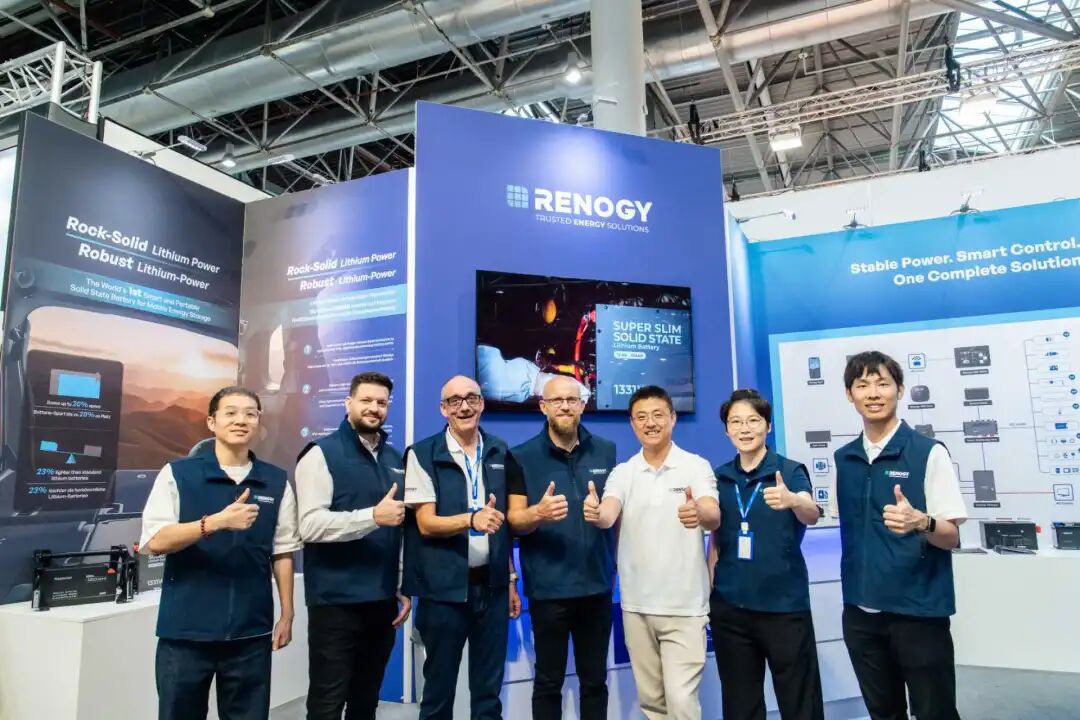
RENOGY participating in an exhibition
Currently, RENOGY adheres to the management principle of "driven by local advantages" in each market region, building a more flexible and adaptable global operation system. Li Yi said: "Compared with the model of most enterprises going global that mainly rely on domestic expatriates, RENOGY emphasizes adapting to local conditions and giving full play to the collaborative advantages of 'people + location + affairs' - let the people who know the local market best do the most suitable things in the most appropriate regions."
Wang Qian, the general manager of LinkedIn China, said, "In our past service cases of enterprises going global, those led by local people in business expansion often go deeper and further in user insight and channel construction." She believes that the value of local talent lies not only in language and culture but also in their ability to help enterprises establish real trust relationships in unfamiliar markets. The implementation of this global talent strategy requires a more systematic understanding of external trends. In particular, the globalization path of new energy enterprises usually features technology - intensive, delivery - intensive, and compliance - intensive characteristics, and the needs for talent and brand will be magnified simultaneously at several key nodes.
Li Yi also admitted that building a highly localized team is not easy, and RENOGY's global team has gone through a long running - in period. For example, in the early stage of product development and market expansion, different regions had different understandings of "efficiency" and "progress": some teams emphasized rapid progress and result - orientation, while others valued full discussion, clear processes, and well - defined division of labor. "As the team continued to run in, we gradually realized that this is not a matter of right or wrong, but a difference in advantages formed under different cultural backgrounds."
Wang Qian said that users and professionals in different markets have very different concerns about new energy brands: Europe and the United States attach more importance to ESG values and corporate social responsibility, while emerging markets focus more on technical reliability and local partnerships. A one - size - fits - all approach in content expression makes it difficult to truly gain the trust of the target audience. Small and medium - sized enterprises have generally realized this: 76% of business owners have listed brand and reputation building as their core goal for the next three to five years, but most have not formed a systematic plan.
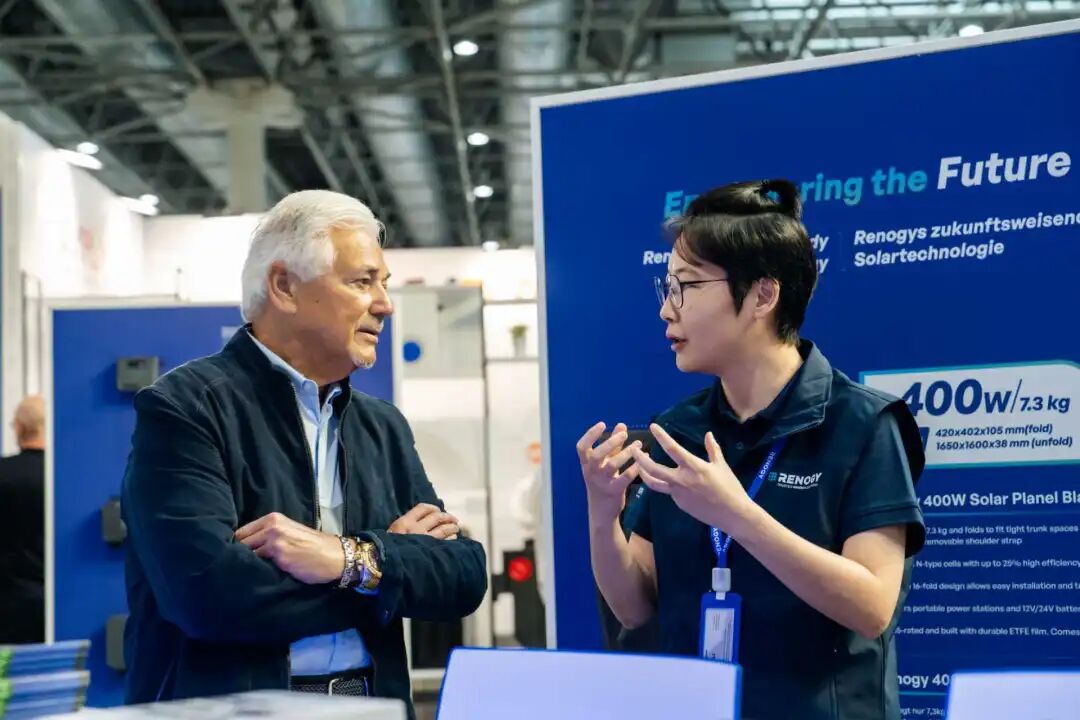
RENOGY participating in an exhibition
Based on this understanding, RENOGY did not choose to adopt a single management model globally. Instead, it has gradually established a management system of 'global collaboration + limited local authorization + front - line participation': globally, it clarifies common goals, product standards, and key rhythms; at the regional level, it fully authorizes local teams, allowing those who know the local market best to participate in decision - making.
For the development of new markets, RENOGY will first send employees with a pioneering spirit, who can take responsibility in a highly uncertain environment and have overseas study or work experience, to form an expatriate team known as the "Hunt for Success Plan" within the company. The task of the Hunt for Success team is to go to the front - line to understand the market, work with customers and partners, build a local team and basic operation system, and lay a foundation for long - term development. To strengthen the global collaboration of teams in different markets, RENOGY also organizes offline activities such as OGC (Off - Grid Conference) every year, allowing teams from different markets to communicate face - to - face and align their understanding and the company's development direction.
"In the long run, this multi - cultural, multi - role, and in - depth front - line collaborative approach has become an important advantage for our globalization development. That is, by combining a global perspective, local insights, and real front - line experience, our products and solutions are more mature when implemented in different markets and closer to the real needs of users." In Li Yi's view, scenario - based new energy solutions represent a new way of life: enabling people to have stable and free energy choices in any environment.
Authors (Yang Yuexin, Feng Yaling)