Shocking! Chery suddenly announced that solid-state batteries will be installed in vehicles: The cruising range exceeds 1,500 km, and controlled nuclear fusion is also on the agenda.
The eldest and second eldest brothers didn't say a word, but an "inferior" from Wuhu, Anhui, was impolite:
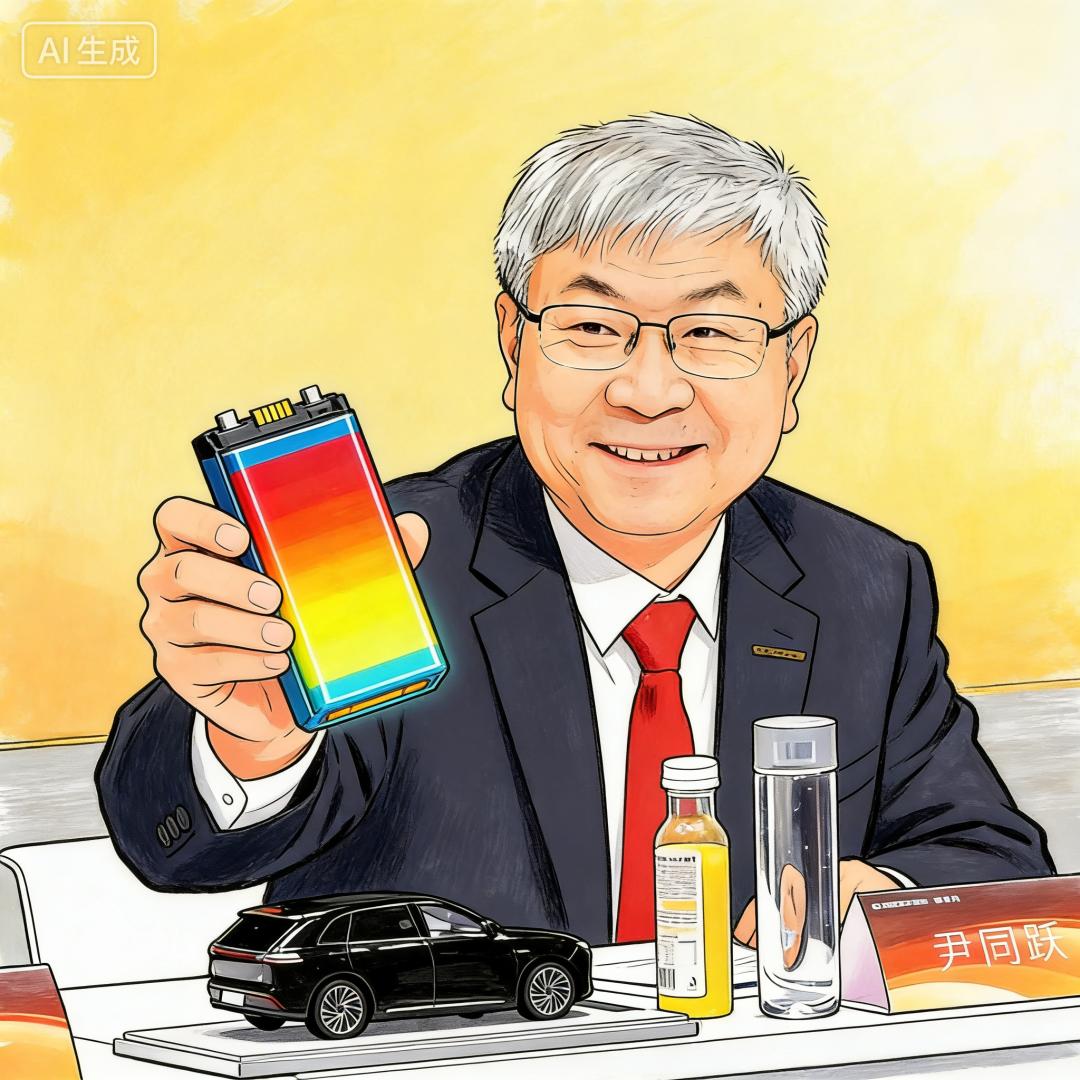
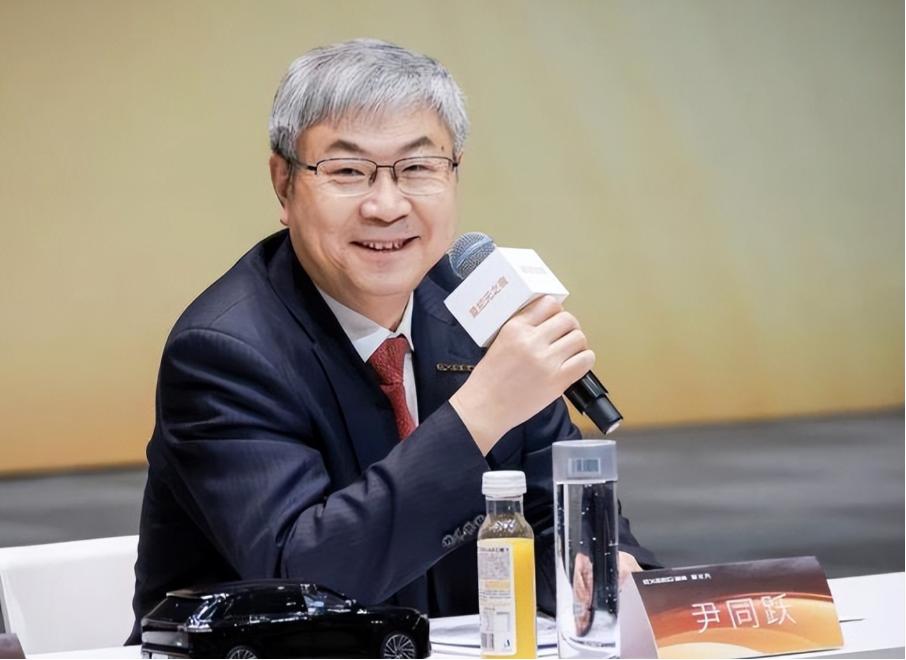
This arrogant car enthusiast from Wuhu, Anhui, can only be Yin Tongyue of Chery.
All-solid-state batteries are still being intensively researched day and night by CATL and BYD, but Chery Automobile suddenly announced: I'm going to install them in cars:

From the perspective of early 2026, the solution provided by Chery can at least be regarded as an extremely explosive the strongest future product in the automotive circle in terms of numerical values.
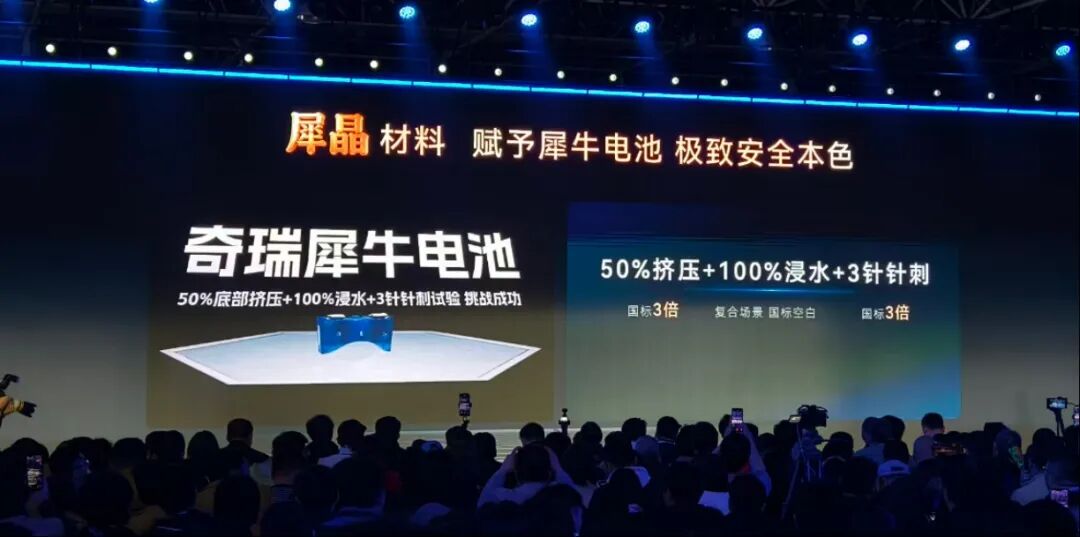
Chery's "Rhino" all-solid-state battery has truly explosive performance
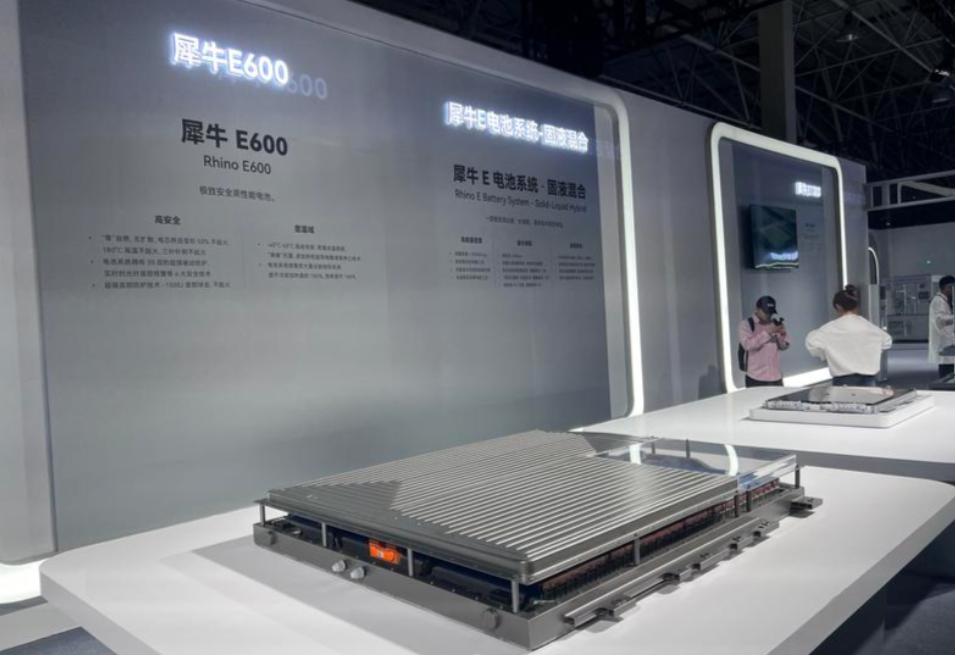
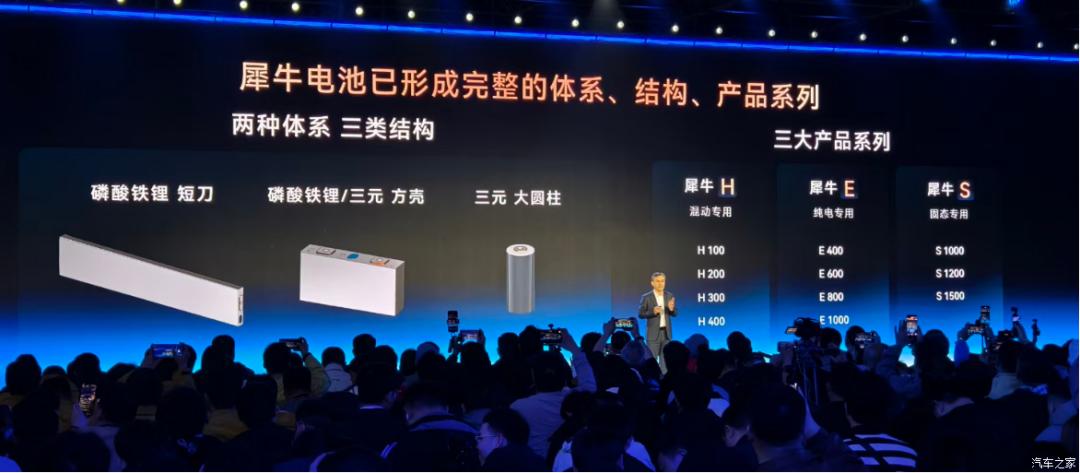
At the recently held Battery Night event of Chery Automobile, the most core new solution is called Rhino Battery, which is the full name of Chery's self-developed power battery technology system.
This includes mature liquid electrolyte batteries, solid-liquid hybrid batteries in the transition stage, and all-solid-state batteries representing the future.
Of course, what the outside world is most concerned about and what Chery has been promoting most vigorously is the all-solid-state battery Rhino S.
The official has provided the following data:
300,000 kilometers of cycle life;
The energy density is more than twice that of the current highest ternary lithium battery, and more than three times at most;
6C ultra-fast charging, replenishing 500 kilometers of energy in 5 minutes;
The range attenuation is controlled within 15% in an environment of -30°C;
And there is also incredible safety performance:
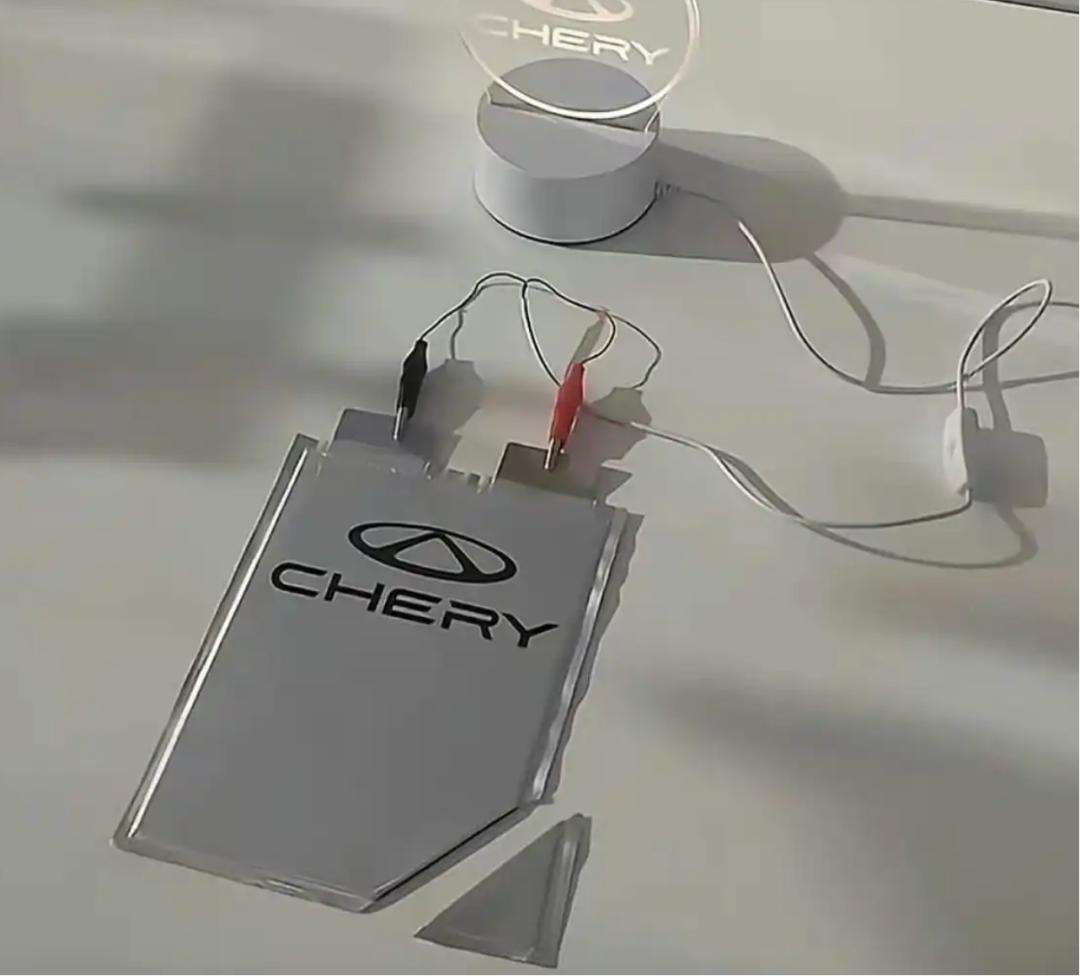
The all-solid-state battery cell can still discharge normally even if a corner is directly cut off, not to mention minor collisions and nail penetration tests.
What do these parameters mean?
First of all, in terms of battery life, the current mainstream lithium iron phosphate batteries, such as BYD's blade batteries, can achieve a cycle life of 3,000 to 6,000 times, while ternary lithium batteries generally have a cycle life of 2,000 to 2,500 times.
Chery's all-solid-state battery has a cycle life of more than 6,000 times, which means that the entire vehicle's battery does not need to be replaced for at least 300,000 kilometers throughout its life cycle.
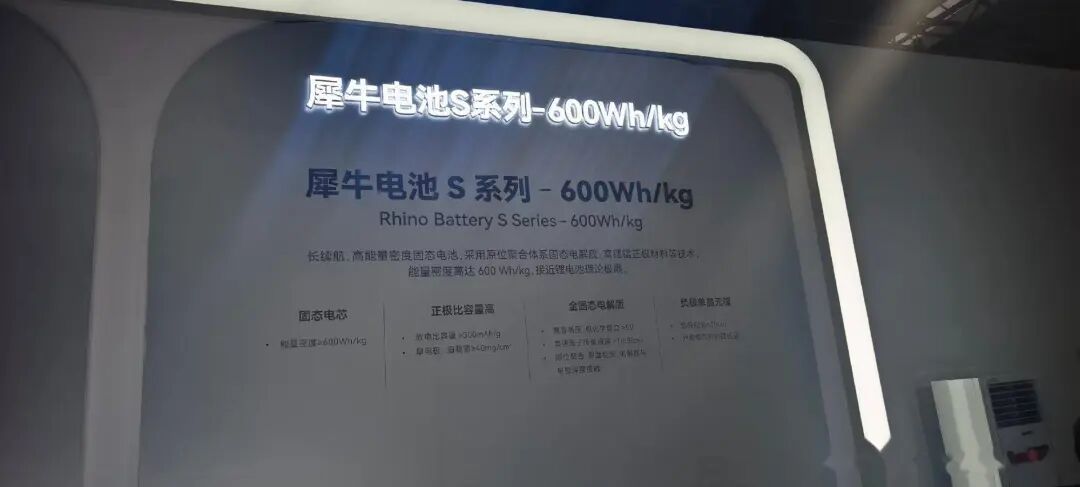
In terms of energy density, the current mainstream high-nickel ternary batteries on the market have an energy density of about 180Wh/kg, and lithium iron phosphate batteries have a lower energy density. Chery's Rhino all-solid-state battery currently offers two solutions, one with an energy density of 450Wh/kg and the other with 600Wh/kg.
If the installation in the vehicle is successful, what value will it bring to you and me?
Well, first of all, it's about the convenience of daily use.
With an energy density that is at least 2.5 times and more than 3 times higher, it means that for a battery pack of the same size, the vehicle's range will be significantly improved. For example, Chery said that the shooting brake Xingtu ES8, which is the first to be equipped with the all-solid-state Rhino S battery, "is expected to exceed 1,500 km" in range.
From the perspective of cycle life, if the performance is fully realized without any discount, it means that new energy vehicles will return to the category of "durable consumer goods" from "electronic consumer goods".
The dismal resale value of second-hand cars finally has a solution.
Finally, in terms of safety, the risk of leakage and thermal runaway of all-solid-state batteries after being impacted is significantly reduced compared with liquid electrolyte products. Correspondingly, the insurance premiums will not be treated differently from those of fuel vehicles.
Although Chery's commitment to mass-produce in 2027 still seems to be a "future product" for now, this time point is much earlier than the generally estimated 3 - 5 years of development maturity in the industry.
How did Chery achieve the "strongest future all-solid-state battery"?
In simple terms, an all-solid-state battery uses a solid electrolyte to replace the liquid electrolyte in current lithium batteries. Without the separator, the volume of the entire battery is greatly reduced, and the energy density of the battery is significantly increased. At the same time, the solid electrolyte has higher stability and is less likely to explode or lose control when subjected to external impacts.
When applied to electric vehicles, it means that it can easily exceed a range of 1,000 km. Therefore, when the relevant concept was first proposed, it was regarded as the next revolutionary trend in power batteries and electric vehicles.
However, the actual implementation faces great challenges and difficulties, mainly in three aspects.
The ionic conductivity problem of solid electrolytes, the growth of lithium dendrites along the grain boundaries of the electrolyte, the unstable solid-solid interface problem.
In plain language, all-solid-state batteries have slow charging and discharging speeds and short lifespans.
There are several research and development routes for solid electrolytes in the industry to address these pain points, but it is difficult to balance different indicators, and there are trade-offs.
As of now, there are three relatively clear and definite industrialization routes:
The single polymer route is not promising because it must be heated to increase the conductivity.
The sulfide route has the best performance, but it is active in nature and easily reacts with electrodes and moisture in the air, so it is a technically challenging route.
The oxide route, which currently has the most promising prospects for mass production, has good thermal stability, a large voltage window, and stable chemical properties. However, it has the disadvantage of high internal impedance and poor performance due to interface isolation.
Chery has chosen a hybrid route and a two-pronged strategy.
The first solution is the 450Wh/kg energy density mentioned earlier, using a sulfide solid electrolyte + a high-nickel ternary cathode. According to Chery's patent application CN121282329A, the problem is solved by doping different elements into the electrolyte.
For example, introducing active iodine elements to the grain surface of the matrix sulfide electrolyte. During the battery cycle, it reacts with lithium metal to form a stable and highly ion-conductive interface layer LiI, which inhibits interfacial side reactions and the growth of lithium dendrites, and balances interface stability and ionic conductivity.
The other solution, the 600Wh/kg all-solid-state battery, follows the route of in-situ polymerized solid electrolyte + lithium-rich manganese cathode.
The term "composite" means not relying on a single route, but choosing a composite solid electrolyte of "oxide + polymer", and then achieving the same level of ionic conductivity as the liquid electrolyte (10⁻³ S/cm) through nanoscale ceramic doping.
This shows that Chery is not blindly chasing the championship but first seeking stability, which is more practical for a battery to be mass-produced and installed in vehicles.
Regarding the two routes, Chery revealed that the sulfide route has reached the pilot production line stage, with a production capacity of 0.5GWh.
The pilot production line is short for "intermediate test production line". Its task is not to mass-produce batteries for delivery, but to verify and improve the feasibility of large-scale production.
As for the in-situ polymerized solid electrolyte solution, Chery said that the battery cell "has made a breakthrough".
So, in summary, the progress of Chery's all-solid-state battery is more appropriately described as being in a pre-mass production state. It has applied for more than 217 patents in total, including those related to the electrochemical system, as well as patents for battery packs, cell processes, and production lines.
It is said that the yield rate has reached 92%, which has met the conditions for closing the mass production cost loop.
However, pre-mass production does not mean that the later large-scale production will be smooth sailing. There are many uncertainties and difficulties to be solved between small-scale trial production and large-scale mass production.
Here is an observation angle:
Some observant viewers may have noticed that Chery officially claims that the Xingtu EX8, which is planned to be mass-produced in 2027, is expected to exceed a range of 1,500 km.
However, compared with the current range champion, the Denza Z9GT (a shooting brake with a 3m wheelbase in the same class as the Xingtu EX8), which uses BYD's lithium iron phosphate battery with a battery pack of about 120 kWh and a cell density of only about 140Wh/kg, and has a range of 1,063 km.
Chery's all-solid-state battery, with a cell energy density at least three times higher than that of BYD, does not linearly increase the range by three times, but only by about 50%.
Moreover, it is only "expected" and not guaranteed.
This at least shows that Chery still has a lot to learn in terms of battery pack structure, production process, electronic control module, thermal management, etc., in addition to the electrochemical system.
Comparing last year's statements about all-solid-state batteries by Chery, including the mass production schedule and energy density data, etc., with the recent statements at the Battery Night, they are almost exactly the same. The overall progress has not been updated, only the name has been changed from "Kunpeng" to "Rhino".
There must have been some breakthroughs in single-point technologies during this period, but it may not have reached the moment of qualitative change or inflection point.
This just shows the great challenges and difficulties in mass-producing all-solid-state batteries.
However, for Chery, it must rely on itself in the development of all-solid-state batteries.
Yin Tongyue refuses to work for battery giants
Yesterday, Chery released its first annual report since going public.
First of all, its revenue exceeded 300 billion yuan, a year-on-year increase of 11.3%, which proves that this established automaker has not been overwhelmed by new forces in the new wave but has become even more competitive.
In terms of revenue, the income from fuel vehicles was 174.329 billion yuan, accounting for 58.1%, and the income from new energy vehicles was 98.023 billion yuan, accounting for 32.6%.
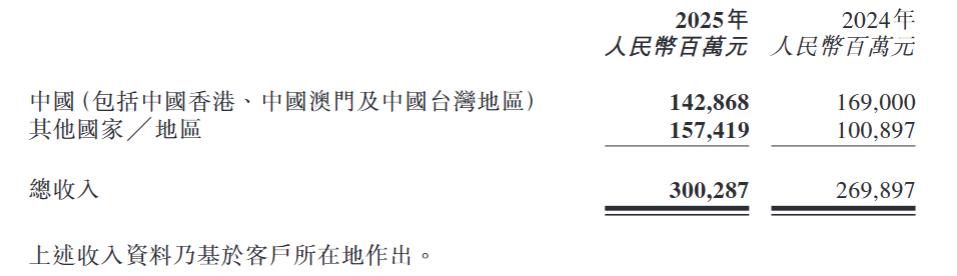
In terms of profit, Chery Automobile's annual profit in 2025 was 19.507 billion yuan, a year-on-year increase of 36.1%, and the net profit margin increased from 5.3% to 6.5%.
The overall gross profit margin increased slightly by 0.3 percentage points to 13.8%.
However, the gross profit margin of Chery's passenger car business decreased from 13.2% in 2024 to 12.8% in 2025.
Why?
The sales volume of Chery's new energy passenger cars was 826,500 units, a year-on-year increase of 72.5%, but the gross profit of this business was 8.639 billion yuan, with a gross profit margin of only about 8.8%.