A "small business" rakes in over 100 million in two years. A prodigy from Peking University born in 1997 sets his sights on space next.
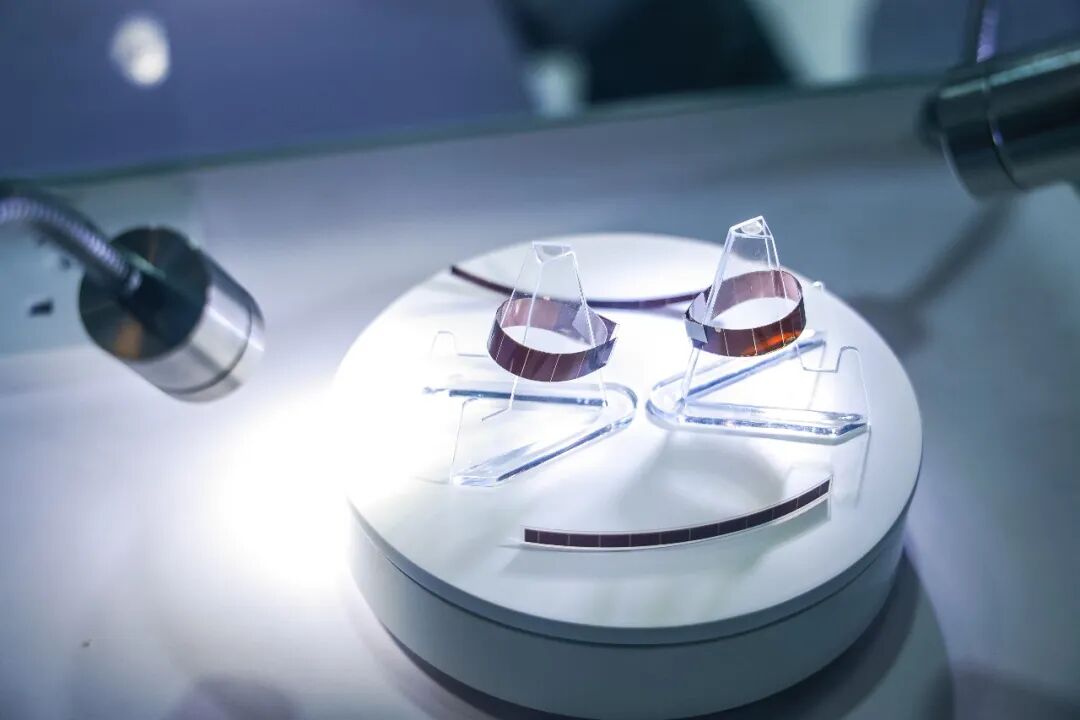
Dressed in sporty casual wear with a Labubu hanging on his backpack, sitting across from China Entrepreneur is Feng Fan, a "top student from Peking University" born in 1997. He skillfully took out a bunch of perovskite samples of various specifications from his backpack and talked eloquently at a very fast pace.
The Yanhe Technology he founded became a leading enterprise in the domestic consumer - grade photovoltaic industry in just two years, with an annual revenue of over 100 million yuan. This emerging track stems from the upgrade of domestic photovoltaic technology. Entrepreneurs including Feng Fan all take "eliminating" batteries as their ultimate vision - directly installing thin and light perovskite photovoltaic panels on remote controls, keyboards and mice, and smart door locks.
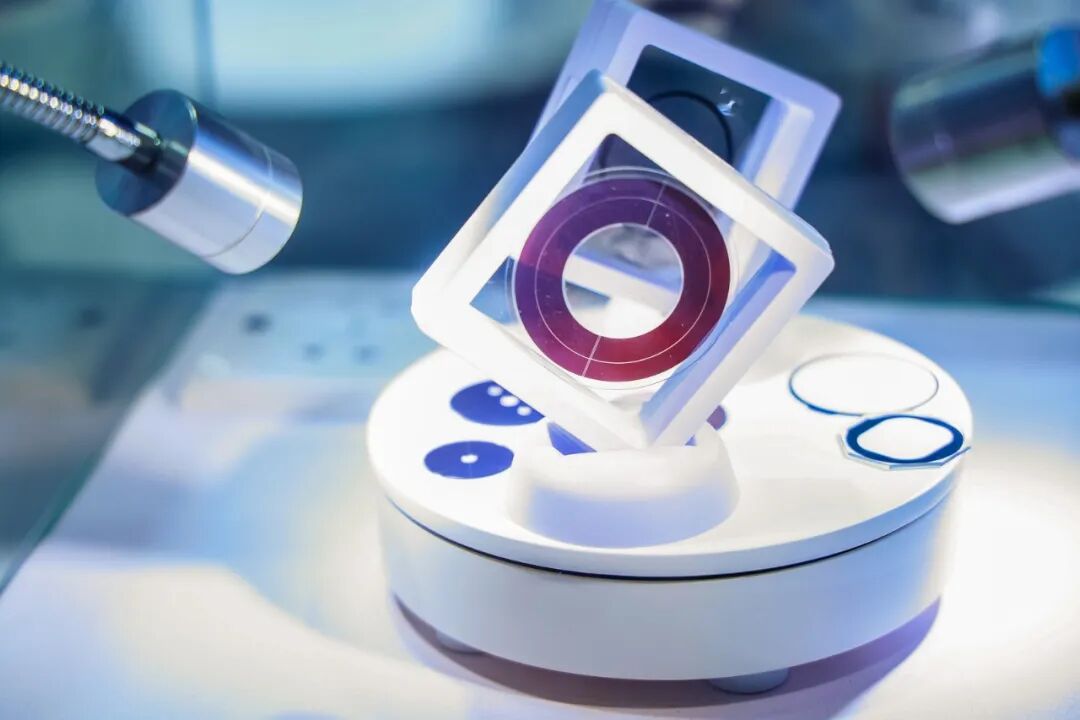
In the eyes of outsiders, this is not a very "decent" business. Feng Fan is an outstanding graduate of Peking University and an early employee of the AI star company, DeepTech. In the past two years, his daily routine has been to bargain with the bosses of ODM factories and small household appliance enterprises, repeatedly debug and polish a "small item" that only costs a few cents, and even start over for minor parameter differences.
He also joked that he earns hard - earned money from the fragmented market. In his words, others think he should plunge into more "high - end" projects.
What is not well - known to the outside world is that his ultimate dream is actually to make "batteries" for space equipment, including satellites, space computing power, deep - space exploration, and future space - based energy systems and extraterrestrial base construction. In those scenarios, sunlight may be the only sustainable energy source.
It wasn't until early 2026 that Elon Musk, the founder of Tesla, completely detonated the "space photovoltaic" track. He said that SpaceX and Tesla are jointly building a photovoltaic base with an annual production capacity of 200GW (gigawatts), mainly providing photovoltaic components for space AI satellites and ground data centers. Since then, Feng Fan's dream of making photovoltaics enter the universe has gradually been known and understood by the outside world.
Yanhe Technology quickly secured nearly 100 million yuan in Series A1 financing due to its involvement in space photovoltaics. Compared with a number of perovskite enterprises that have been established for more than a decade, it stands out.
But only Feng Fan himself knows that since the day the company was founded, space photovoltaics and consumer - grade photovoltaics have been two parallel business lines. He always describes to others that Yanhe Technology is going to grow into a company worth one trillion yuan, and consumer - grade and space photovoltaics are two important battlefields. This is of course considered "inconsistent" by many, so much so that those who know him well think he is being "too idealistic" again - a startup company can't succeed in two things at the same time.
He is a technological fundamentalist and almost got a "feel - good drama" script from the start. He entered the AI field on the verge of explosion right after graduation and chose the still - emerging commercial spaceflight track when deciding to start his own business independently. He is confident in his judgment and business deconstruction ability and is lucky to gather a group of like - minded people. In the early days, Yanhe Technology had the flavor of a "brotherhood" - style organization. Everyone trusted each other completely and had similar interests.
But the actual situation is far more complicated than he imagined. When the thinking of the elite team collides with that of hundreds of blue - collar workers on the production line, the result is predictable. The consumer - grade photovoltaic sector has many links and is difficult to deconstruct with technology alone.
Feng Fan's transformation in this process is very obvious. When the huge opportunity of space photovoltaics came, the calmness and realism he showed were completely absent in the past, but he still made a "high - end" plan.
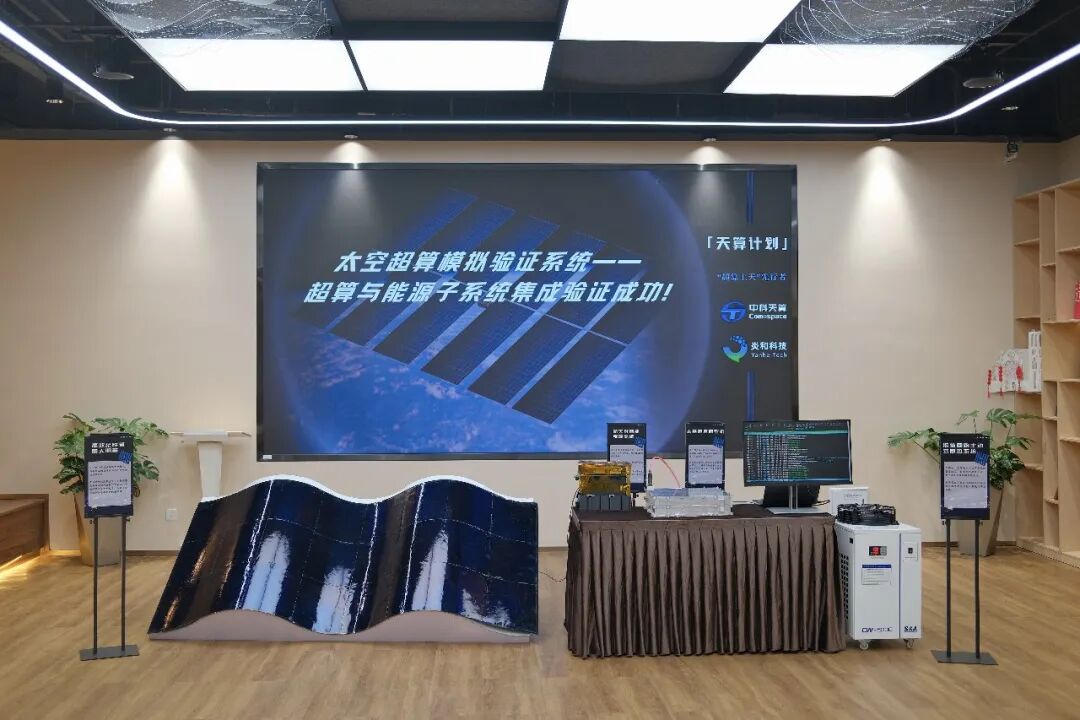
"We aim to achieve satellite applications in the scale of more than a hundred by 2028 and strive to become the leading enterprise in the industry by 2030." According to him, multiple satellites carrying Yanhe Technology's batteries will be launched into space this year.
"A startup company can't burn money on R & D like a large company. It must ensure that the products can be sold, and can't wait for products to be launched in five or ten years." Feng Fan said, "We hope to first become a successful commercial company and then gradually become a shining pearl on the crown."
01
Complementary
Feng Fan is among the earliest group of people to engage in consumer - grade perovskite batteries.
Before 2022, his academic and career trajectory was closer to the typical path of a "top - student" scientific research talent. After graduating from Peking University's Material Chemistry major, he went abroad for further studies and later returned to China to join the AI unicorn company, DeepTech.
In 2020, the AI industry was still in its early stage of development. DeepTech quickly became well - known with its business model of "AI for Science" (artificial intelligence - driven scientific research). The company's scale and valuation both expanded dozens of times.
But Feng Fan still decided to start his own business after working there for one year. At that time, this decision seemed rather impulsive.
In his opinion, when a cutting - edge business model is implemented, there are always many contradictions in the commercialization process. The game between technology and commercialization made Feng Fan start to frequently think about what really "excites" him.
"I later realized that I really like things that can be implemented. How to implement a good concept and how to make money are completely two different dimensions." And in his previous academic and work life, Feng Fan was in a research system more oriented towards technology. "Many professors think that technology is the most important, but in the business process, technology is just a part."
During this period, he often shared his work experiences with his current partner, Peng Zongyang, which also laid the groundwork for their business venture. The two are undergraduate alumni of Peking University. They often meet to play basketball and games, and their personalities have been continuously adjusted in the process of getting along. Feng Fan describes the two of them as "completely complementary."
"I have a quick temper. When I get too involved in a game, I might even quit the group. But Zongyang is very calm. He will comfort me and tolerate my temper." Feng Fan joked about himself. This kind of tacit understanding also continued into their subsequent business venture. According to Peng Zongyang's recollection, the two have hardly had any disagreements over strategies. Even when they encounter contradictions, they can just talk it out. "I'll wait for him to finish losing his temper and then analyze right and wrong. He can listen to my rational suggestions at that time."
Peng Zongyang is more like a "scientist." After graduating from undergraduate, he chose to continue in - depth study in the field of chemical materials and later pursued a doctorate at Peking University, researching in the perovskite field. "He understands technology, and I understand business and the market. Our roles just fit all the links from product to implementation." In Feng Fan's view, the basic framework of the company was already in place at that time.
In September 2023, the two hit it off and decided to start a business, but they had no idea where to start.
His style is not to be afraid of making mistakes. As long as the market direction is feasible through research, he will try every possible way and choose the most suitable technical path to follow up continuously without getting entangled in any technical problems encountered in the process.
In the early stage, they focused on commercial spaceflight materials and AI software and hardware because these were the fields that Feng Fan was interested in and were also the hot spots in the capital market at that time. Meanwhile, the application scenarios of perovskite products were still in the exploration stage.
In order to verify the feasibility of these two directions, Feng Fan began to frantically study professional knowledge in high - tech fields such as 3D printing, additive manufacturing, and even satellite bands. But soon he realized his limitations. From concept to actual product, a large number of experimental verifications were needed. For him, who was not from a relevant major, it would take a great deal of energy and time, and the input - output ratio was not high.
This made Feng Fan calm down. He recalibrated his cognition and judgment, shifting from focusing on market hot spots to focusing on what he really understood. Naturally, the first choice fell on the field they were most familiar with - perovskite.
This time, the two were very cautious. In order to verify the feasibility, they continuously consulted industry insiders and teachers and studied all the existing products on the market. It took them three months to sort out two core directions - perovskite photovoltaic power stations and the perovskite consumer - grade market.
02
Do Some "Small Business"
At that time, the photovoltaic power station business was obviously a clearer business model, but Feng Fan's previous work experience made him particularly concerned about the commercialization process.
In his opinion, the competition in the photovoltaic power station industry has entered an "arms race" stage, which requires a large amount of capital and talent. If one enters the market at this time without obvious advantages and differences, they can only follow behind large companies all their lives and may even go bankrupt soon.
"I repeatedly asked myself whether this route is long - term and sustainable. The core question is what kind of company I want to build?" The consumer - grade photovoltaic market seems to be the only opportunity to gain a first - mover advantage. At that stage, there wasn't even a hit product in this track.
For some time after that, the two got together to demonstrate the product. There was a point that excited them more and more - the AI - enabled hardware is definitely a major trend, which corresponds to greater power consumption. Peng Zongyang said that the battery life is almost the bottleneck of all AI hardware products, and the product feature of perovskite's weak - light power generation can just meet this demand.
At that time, the indoor consumer scenarios of perovskite overseas were relatively mature and were applied to many products that originally needed batteries, while the domestic market was almost blank. But Feng Fan believes that AI will accelerate the development process of perovskite in China. A new revolutionary product often emerges in an area that no one pays attention to.
In December 2023, they officially decided on the company's direction - the consumer - grade perovskite market. The first product was an electronic table sign that has no power source and can be powered by indoor light.
This seemingly rational path choice was a huge "sacrifice" for Feng Fan, which means that his main business in the future will be "small business" with a product profit of only a few cents.
"I wasn't without hesitation. After all, both the aerospace and photovoltaic power station tracks have been favored by capital for a long time." But Feng Fan's top priority was to make the company "survive."
In January 2024, Yanhe Technology was officially established, and the team's pace significantly accelerated. He focused on financing. In May 2024, the company completed an angel - round financing of tens of millions of yuan; Peng Zongyang was in charge of R & D and the production line internally. In July 2024, the pilot production line was completed.
This process also made their division of labor clearer and has continued ever since: Feng Fan is more involved in the external market, responsible for commercialization and financing; Peng Zongyang is responsible for internal promotion, specializing in technology and product iteration.
As soon as the first - round financing was in place, Feng Fan led the team to meet a wide range of customers and got clear market demands - cameras and remote controls. He especially cared about the response speed. For example, for the remote - control product, they made a product prototype in three months and showed the first - generation product to customers five months later.
But the real market gave him a lesson - the first - generation product was thick and unattractive in appearance, and the first batch of samples failed even before entering the market. "We always thought that as long as the efficiency was high, we could open up the market. Unexpectedly, what customers really need is something good - looking, lightweight, and cost - effective." Recalling that stage, Feng Fan said bluntly that he was too idealistic.
Internally, they were promoting multiple product types in a "spreading - out" way. In addition to the obtained demands, as long as Feng Fan sensed potential demands, he would feedback them to the production line for sampling.
"We are still young and not afraid of trying. I think whether a product can be implemented is to keep promoting the experiment until it reaches a dead end." Feng Fan roughly estimated that hundreds of products have been tested on the product side.
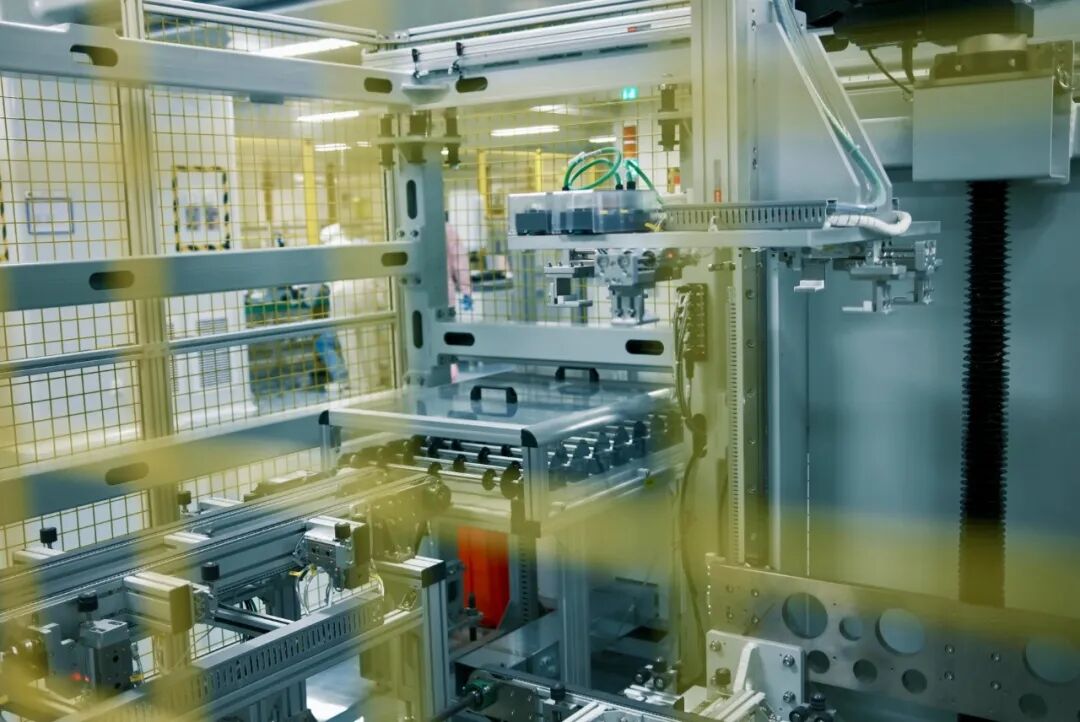
To some extent, a large variety of products is a "big taboo" in the manufacturing industry. Usually, the process from the laboratory stage to the pilot - production stage is completely different. The production process strictly tests the coupling process between equipment. Some very small problems will be magnified on the pilot - production line. This is just the first hurdle. It often takes another two to three weeks from customer trial, feedback, to adjustment.
The team couldn't find a focus for a while. In the second half of 2024, Yanhe Technology had to enter a "combat - ready" state.
Feng Fan was looking for money while promoting product implementation. The production line operated in three shifts around the clock. "The workers worked in batches, and we also stayed on the production line. Sometimes, just to test the influence of the light - source distance on efficiency, we had to conduct repeated experiments until midnight."
That year, Feng Fan was racing against time. He went to Shenzhen more than 70 times. The process was extremely painful. "Sometimes, the product that took two weeks to improve was reported as unqualified by customers right after they tried it."
It wasn't until the end of 2024 that Yanhe Technology got on the right track - the first batch of products were finally finalized, put into the production line, and began to be stably delivered. In February 2025, Yanhe Technology reached an important turning point. It promoted the construction of a 100MW (megawatt) mass - production line in Hunan and officially put it into production in August. At the same time, the company completed a Series A investment of over 100 million yuan.
03
Finding Balance
In Feng Fan's entrepreneurial history, he has always been making choices between ideal and reality. Soon, production - line management and personnel management made him hit another "barrier."
By the end of 2024, the team had expanded to more than 30 people, and after the factory was put into production, the number soared to more than a hundred. Although Feng Fan and Peng Zongyang participated in the recruitment process as much as possible, there were still contradictions between the thinking mode of the original "top - student team" and the actual needs.
The founding team of Yanhe Technology mainly consisted of R & D personnel with high enthusiasm and professionalism. Feng Fan's management style is an "aggressive" offensive approach - wanting everything. He cares about the coverage and also pursues results and speed. But previously, the whole team was in sync, and the atmosphere was great. Everyone trusted each other based on their abilities, cooperated with each other, and the efficiency was extremely high.
"At