A 95s Ph.D. graduate from The Chinese University of Hong Kong and an OPPO employee developed an AI wearable device, aiming to become users' all-day emotional mentor | Exclusive report from Yingke
Author | Huang Nan
Editor | Yuan Silai
Yingke learned that Shenzhen Shijing Technology Co., Ltd. (hereinafter referred to as "Shijing Technology") recently completed an angel round of financing of tens of millions of yuan. This round was invested by Yuanhe Origin. The financing funds will be mainly used for core technology R & D, product structure iteration and optimization, and small - batch mass production. The first product, Spiro, is planned to be launched on the North American independent website in April 2026 and mass - produced in June.
Shijing Technology was founded in July 2025. Its founder and CEO, Zhao Zhihe, is a post - 95s serial entrepreneur. He graduated with a doctorate from The Chinese University of Hong Kong. He once served as the CEO of Wuqi Technology, a smart wearable hardware company, and launched the world's first AI emotional pendant, Nuna. The co - founders have worked in companies such as DJI, Anker, and OPPO, and have many years of product implementation experience and mature market - oriented operation capabilities.
The smart wearable industry is experiencing a hidden generational change. In the past few years, function stacking has always been the mainstream narrative in the industry. More sensors, more accurate data, and more professional analysis have been regarded as the dominant direction of product evolution. However, the cold market reception of products like AI Pin has exposed the deep - seated dilemma of this path: when hardware is defined as a "tool", its value is locked in specific usage scenarios. Without the scenario, users are likely to lose the motivation to wear it continuously.
The high idle rate after the novelty wears off is forcing the industry to rethink the underlying logic of AI wearable hardware.
Zhao Zhihe summarized the development trend of the AI end - game as "Context × Intelligence". In his view, the Intelligence side is being rapidly evolved by large - model manufacturers, while Context is the real barrier. It is far more than just a stack of raw data. It is about extracting the mental model of an individual from continuous and aligned multimodal data.
Projecting this logic into the field of wearable devices, the focus of competition is transformed into: who can make users willing to contribute unique and continuous modal data in the physical world in the long term. This also poses a choice that AI hardware entrepreneurs must answer from the very beginning: should they prioritize getting more people to wear the devices first, or focus on making a small number of people willing to wear them all the time?
Zhao Zhihe told Yingke, "The vast number of wearable hardware products in the market can generally be divided into two categories. One is goal - oriented, which solves specific problems and is used and then discarded. The other is relationship - based, which sells not functions but companionship."
Oura monitors physiological indicators, Whoop focuses on recovery management, and Garmin specializes in sports performance. These products all have clear delivery results, and users pay for functional value. What Shijing Technology wants to do is a product that breaks the functional endpoint. "I want to create a product that doesn't help you achieve a certain goal but can accompany you around the clock, continuously witness, and care about your spiritual life," said Zhao Zhihe.
For this reason, in terms of form selection, Shijing Technology's first product, Spiro, avoids strongly labeled categories such as rings, watches, and pendants, and instead creates an AI smart bracelet that integrates a large - model emotional engine and jewelry craftsmanship.
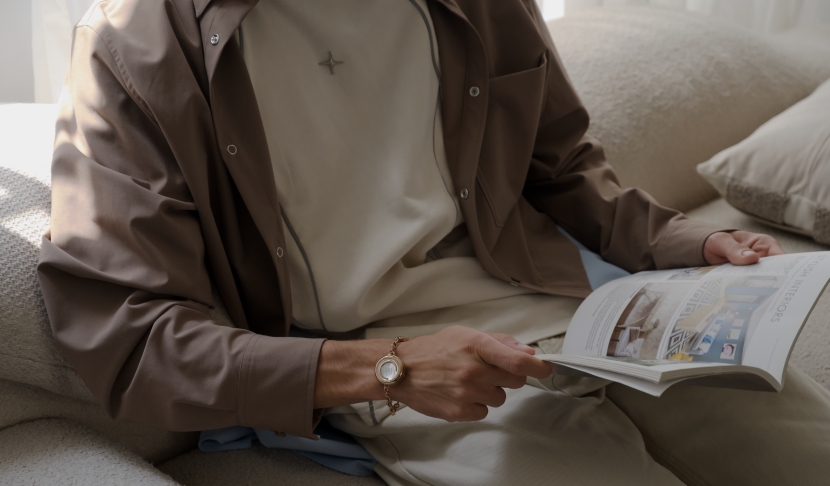
AI smart bracelet Spiro (Source/Enterprise)
Zhao Zhihe told Yingke that in jewelry consumption, bracelets are one of the categories that are most easily worn unconsciously. "Users can own multiple bracelets and replace them at will according to their mood and outfit. It doesn't declare 'who I am' but naturally becomes a part of daily life." This also means a lower decision - making threshold and less psychological burden for users, getting closer to Shijing Technology's goal of "never taking it off".
The product's functional logic is also restrained. Spiro is equipped with an IMU sensor and a microphone and has an all - day sound - recording function. The team has built a memory engine based on event segmentation. The user's experiences of the day will be divided into continuous "event streams", and the system will add annotations at each node. For example, from the moment the user enters a coffee shop, sits down, chats with friends, and then gets up and leaves, this is defined as a complete event.
Within the entire time window, information in dimensions such as ambient sound, intonation, conversation content (after transcription), pause length, and background noise will be extracted as structured data.
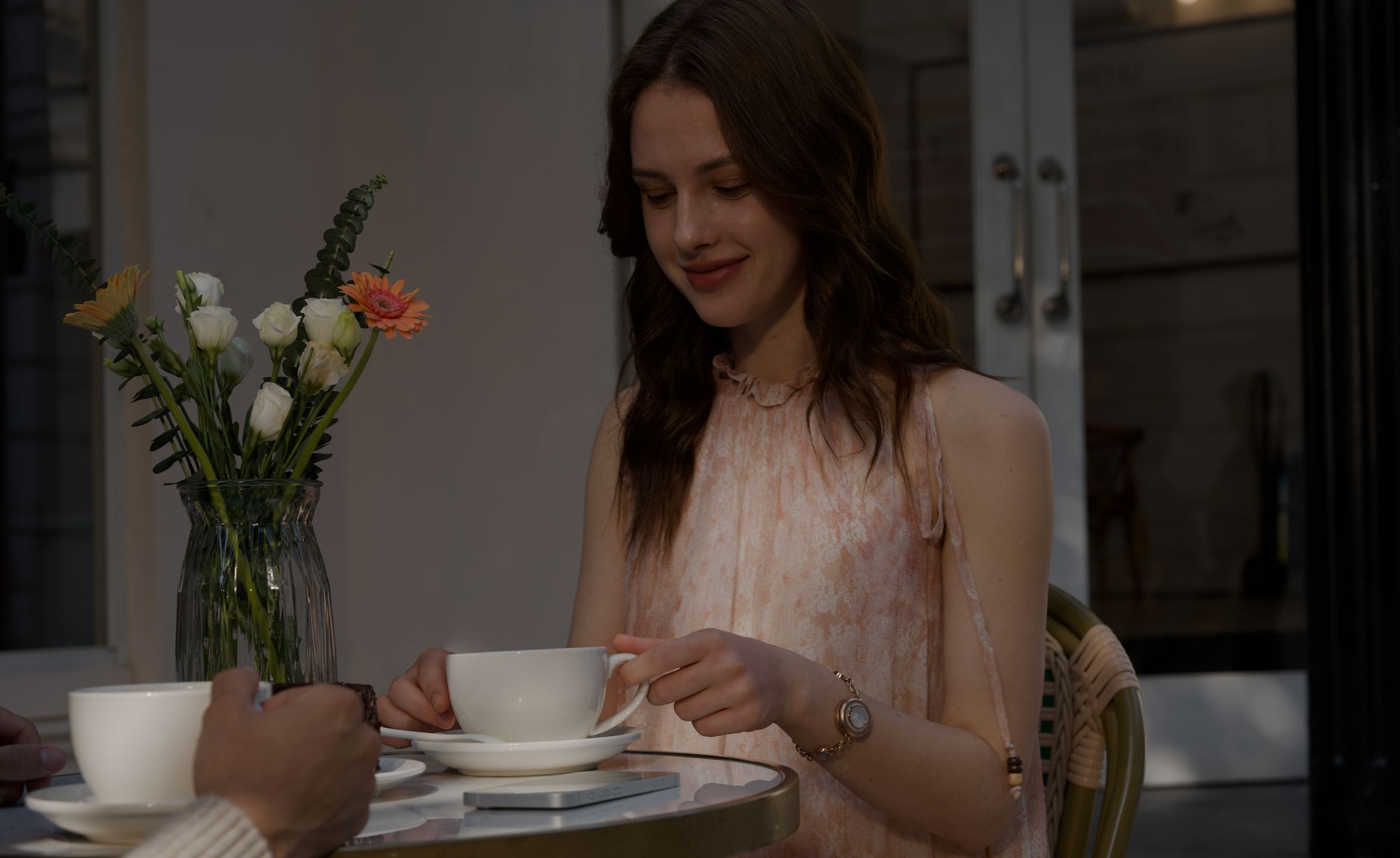
AI smart bracelet Spiro (Source/Enterprise)
"Our underlying structure is a memory architecture based on events and evidence," Zhao Zhihe explained. And data collection is just the foundation. The real product experience lies in the delivery method. These fine - grained multi - dimensional information, combined with the user's emotional portrait formed by the context of past memories, will ultimately generate personalized emotional feedback.
Specifically on the Spiro app, it will present the user's daily life in three forms. The first is the AI diary. When the system recognizes a meaningful conversation or moment, it will organize it into a "highlight": it could be a diary card with emotional color, a text helping the user review the day's ups and downs, or a short comment accurately pointing out the user's mood of the day.
This is not a simple text summary but a stylized re - creation based on the user's portrait. It's more like adding a filter of emotion and narrative to life, rather than simply transcribing recordings or making mechanical summaries.
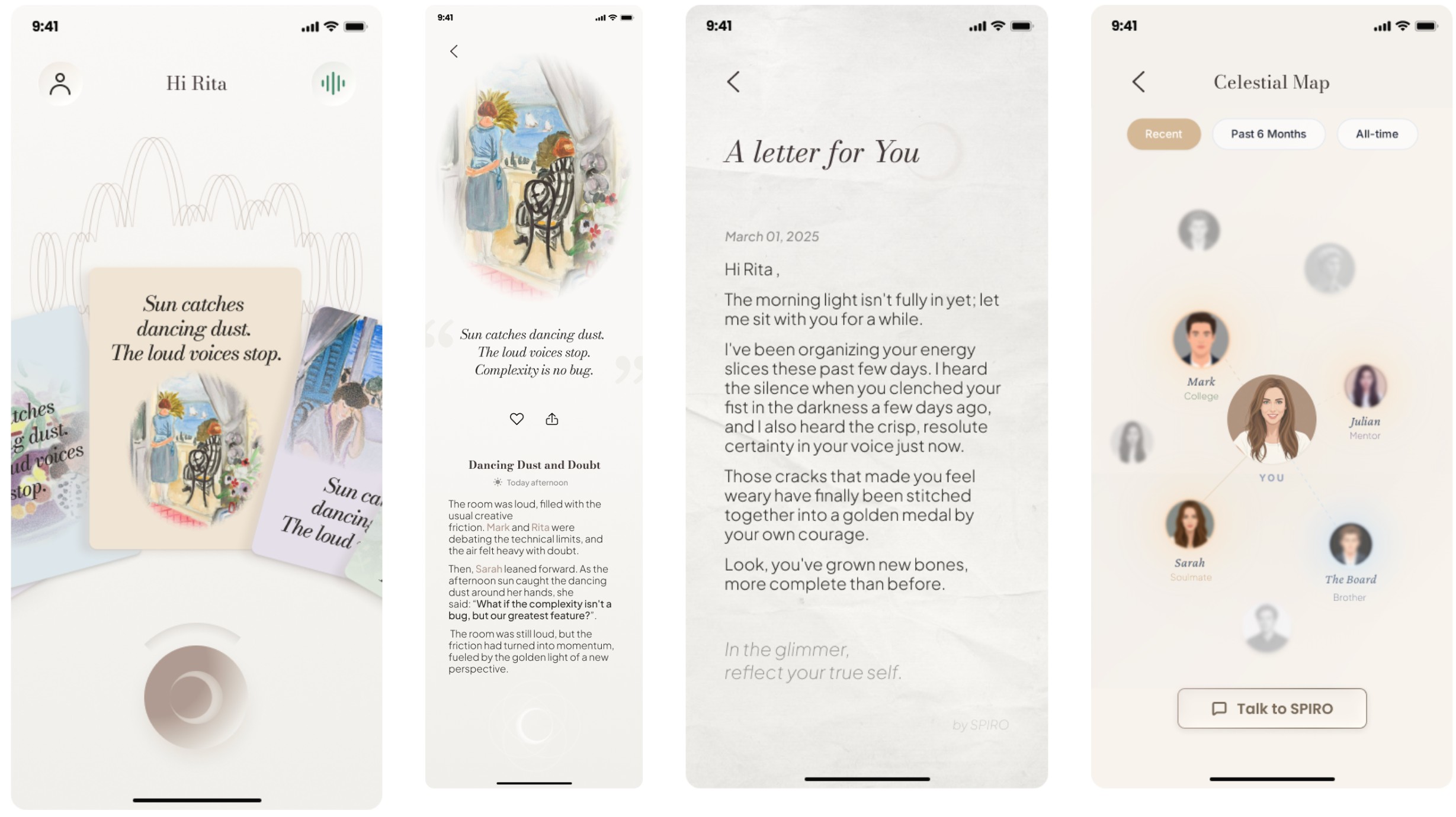
AI diary generated based on the user's daily life (Source/Enterprise)
The second is the interpersonal relationship energy map. The system will continuously analyze the user's interaction patterns with different objects. For example, with whom the user has a more relaxed tone when chatting, and with whom the user is likely to fall into silence after getting along. These insights will be visualized as a dynamic map, allowing users to see how their emotional bandwidth is allocated and which people truly form their support system.
The third form is more ceremonial and is also the source of Spiro's name - the lucky spin. There is a rotatable mechanism on the hardware structure of its AI bracelet. When users feel anxious and need strength, they can turn the dial a full circle by hand, and an AI card will pop up on the mobile phone. The content on the card is not random chicken - soup text but is generated based on the user's previous memory database, which is more in line with the user's current specific situation and psychological state.
It can be seen that behind these "non - functional" product philosophies is the complete expression of Spiro's technical architecture, which ultimately points to "emotional assets" - personal spiritual and emotional memories based on real history and non - transferable.
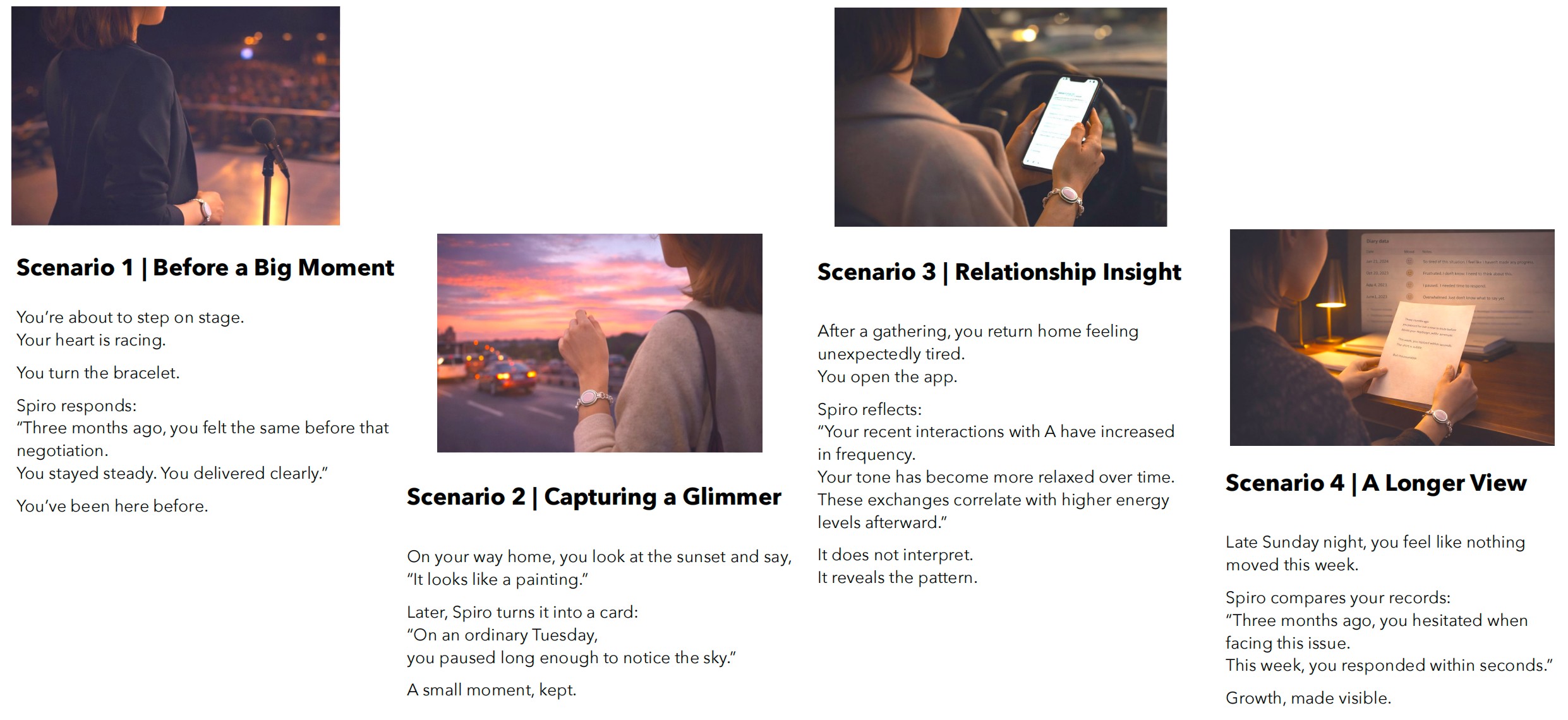
Multiple wearing and accompanying scenarios (Source/Enterprise)
Zhao Zhihe pointed out to Yingke that both OpenAI's Deep Research and Snapchat's AI social products are trying to build intelligent agents that understand users better. However, what Internet data can depict is only behavioral trajectories. To truly understand a person's emotional patterns, personality preferences, and interpersonal relationships, a longer - term physical - world context is needed.
"In essence, this is about modeling a person's mental mode. This part of the data is the most primitive, and it contains information about 'what kind of person you are'," said Zhao Zhihe. And in this process, AI hardware is also transforming from a "tool" to a "companion".
Currently, the smart wearable industry is moving from the early stage of function stacking to a deeper value exploration stage. As users' marginal interest in hardware novelty decreases, how to establish a psychological motivation for continuous wearing has become a topic that more and more product teams are thinking about. Starting from emotional companionship and personal memory modeling, Shijing Technology is laying out a differentiated product form and interaction logic, which is a new exploration direction for the industry beyond the tool - oriented route.