Ein 95er Doktor der Chinese University of Hong Kong und Mitarbeiter von OPPO hat ein AI-Tragbare-Hardware-Gerät entwickelt, das der rund-the-clock Emotionscoach der Nutzer werden soll | Premiere von Yingke
Autor | Huang Nan
Redakteur | Yuan Silai
Hard Krypton hat erfahren, dass Shenzhen Shijing Technology Co., Ltd. (im Folgenden als "Shijing Technology" bezeichnet) kürzlich eine angelrunde Finanzierung im Wert von mehreren Millionen Yuan abgeschlossen hat. Diese Runde wurde von Yuanhe Origin Investments finanziert. Das Finanzierungsgeld wird hauptsächlich für die Forschung und Entwicklung von Kerntechnologien, die Iteration und Optimierung der Produktstruktur sowie die Produktion kleiner Losgrößen eingesetzt. Das erste Produkt, das Spiro, ist für April 2026 auf der unabhängigen nordamerikanischen Website geplant und wird im Juni in Serie produziert.
Shijing Technology wurde im Juli 2025 gegründet. Der Gründer und CEO, Zhao Zhihe, ist ein unter 30 Jahre alter aufeinanderfolgender Unternehmer, der mit einem Doktortitel von der Chinese University of Hong Kong abgeschlossen hat. Er war zuvor CEO der intelligenten Wearable-Hardware-Enterprise Wuqi Technology und hat das weltweit erste AI-Stimmungsanhänger Nuna herausgebracht. Die Mitgründer haben zuvor bei Unternehmen wie DJI, Anker und OPPO gearbeitet und verfügen über jahrelange Erfahrung in der Produktumsetzung und einem reifen Marktzugang.
Die Branche der intelligenten Wearables durchmacht eine versteckte Generationenwechsel. In den letzten Jahren war die Funktionsaddition der vorherrschende Trend in der Branche. Mehr Sensoren, genauere Daten und professionellere Analysen wurden als die Hauptrichtung der Produktentwicklung angenommen. Die kalte Reaktion des Marktes auf Produkte wie den AI Pin hat jedoch die tiefliegenden Probleme dieses Ansatzes aufgedeckt: Wenn das Hardwareprodukt als "Werkzeug" definiert wird, ist sein Wert auf bestimmte Anwendungsfälle beschränkt. Ohne diesen Kontext verliert der Benutzer schnell die Motivation, das Produkt dauerhaft zu tragen.
Die hohe Leerlaufrate nach dem Verschwinden der Neugierde zwingt die Branche dazu, die grundlegende Logik von AI-Wearable-Hardware neu zu überdenken.
Zhao Zhihe fasst die Entwicklungstrends des AI-Endspiels als "Context × Intelligence (Kontext plus Intelligenz)" zusammen. Nach seiner Ansicht wird die Seite der "Intelligenz" von den Anbietern großer Sprachmodelle schnell weiterentwickelt, während der "Kontext" die echte Hürde darstellt. Dies ist nicht einfach eine Ansammlung von Rohdaten, sondern die Extraktion eines mentalen Modells über die Person aus kontinuierlichen und abgestimmten multimodalen Daten.
Übertragen auf den Bereich der Wearables verschiebt sich der Wettbewerbsfokus darauf, dass die Hersteller die Benutzer dazu bringen können, kontinuierliche und einzigartige Modaldaten aus der physischen Welt bereitzustellen. Dies stellt die gegenwärtigen AI-Hardware-Unternehmer vor die Frage, ob sie sich zunächst auf die breite Adoption konzentrieren oder darauf, dass eine kleine Gruppe von Benutzern das Produkt dauerhaft trägt.
Zhao Zhihe sagte Hard Krypton: "Die zahlreichen Wearable-Hardwareprodukte auf dem Markt lassen sich grob in zwei Kategorien einteilen. Eine Kategorie ist zielorientiert und löst bestimmte Probleme. Die Benutzer nutzen das Produkt und verlassen es danach. Die andere Kategorie ist beziehungsorientiert und verkauft nicht nur Funktionen, sondern Begleitung."
Oura misst physiologische Parameter, Whoop konzentriert sich auf die Erholungsmanagement und Garmin auf die sportliche Leistung. Diese Produkte haben klare Ergebnisse, und die Benutzer zahlen für die Funktionswerte. Shijing Technology möchte hingegen ein Produkt entwickeln, das die Grenzen der Funktionen überschreitet. "Ich möchte ein Produkt schaffen, das nicht nur Ihnen hilft, ein bestimmtes Ziel zu erreichen, sondern das Sie rund um die Uhr begleitet, Ihre Lebensmomente miterlebt und sich um Ihre seelische Lebensqualität kümmert", sagte Zhao Zhihe.
Dafür hat Shijing Technology bei der Gestaltung seines ersten Produkts, dem Spiro, auf stark markierte Kategorien wie Ringe, Uhren und Anhänger verzichtet und stattdessen eine AI-intelligente Armbanduhr entwickelt, die eine Emotionsmaschine mit einer großen Sprachmodell und die Juwelierkunst kombiniert.
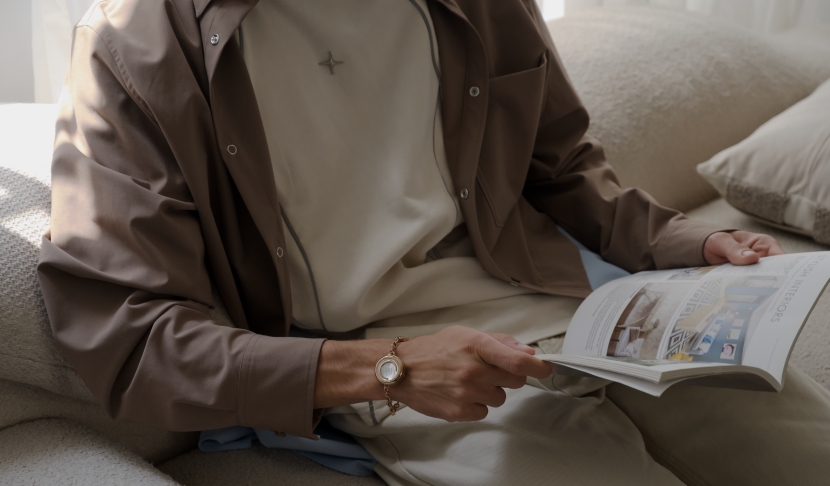
Die AI-intelligente Armbanduhr Spiro (Quelle/Unternehmen)
Zhao Zhihe sagte Hard Krypton, dass Armbanduhren in der Schmuckkonsumbranche zu den am leichtesten unbewusst getragenen Kategorien gehören. "Die Benutzer können mehrere Armbanduhren besitzen und je nach Stimmung und Kleidung austauschen. Es zeigt nicht, 'wer ich bin', sondern wird natürlich zum Teil des Alltags. Dies bedeutet für die Benutzer auch eine niedrigere Entscheidungsspanne und weniger psychische Belastung beim Tragen, was Shijing Technology näher an das Ziel bringt, dass die Benutzer das Produkt nicht abnehmen."
Die Funktionslogik des Produkts ist ebenfalls bescheiden. Das Spiro ist mit einem IMU-Sensor und einem Mikrofon ausgestattet und verfügt über die Funktion der rundum-the-clock Tonaufnahme. Das Team hat eine Gedächtnismaschine basierend auf der Ereignissegmentierung entwickelt. Die Erlebnisse des Benutzers an einem Tag werden in kontinuierliche "Ereignisströme" aufgeteilt, und das System fügt an jedem Knoten eine Anmerkung hinzu. Wenn der Benutzer beispielsweise in ein Café geht, sich setzt, mit Freunden spricht und dann aufsteht und geht, wird dies als ein vollständiges Ereignis definiert.
In diesem Zeitfenster werden Informationen aus verschiedenen Dimensionen wie Umgebungsgeräuschen, Sprachmelodie, Gesprächsinhalt (nach Transkription), Pausenlänge und Hintergrundgeräuschen als strukturierte Daten extrahiert.

Die AI-intelligente Armbanduhr Spiro (Quelle/Unternehmen)
"Unser Grundgerüst ist ein Gedächtnisarchitektur basierend auf Ereignissen und Beweisen", erklärte Zhao Zhihe. Die Datenerfassung ist nur die Grundlage, und die eigentliche Produktleistung liegt in der Art der Bereitstellung. Diese feingranularen multidimensionalen Informationen werden zusammen mit dem Kontext des bisherigen Gedächtnisses zu einem Benutzerstimmungsbild kombiniert, das schließlich zu einer maßgeschneiderten emotionalen Rückmeldung führt.
Im App-Bereich des Spiro werden die Alltagserlebnisse des Benutzers auf drei Arten dargestellt. Die erste ist das AI-Tagebuch. Wenn das System eine bedeutungsvolle Unterhaltung oder einen Moment erkennt, ordnet es diesen zu einem "Höhepunkt" zusammen: Dies kann eine Tagebuchkarte mit emotionaler Färbung, ein Text, der den Benutzer bei der Rückschau auf den Tagesverlauf hilft, oder ein kurzer Kommentar, der die Stimmung des Tages treffend beschreibt, sein.
Dies ist keine einfache Textsumme, sondern eine stilisierte Neuinterpretation basierend auf dem Benutzerprofil. Es wirkt eher wie ein emotionaler und narrativer Filter für das Leben, als wie eine einfache Tonaufzeichnungstranskription oder eine mechanische Zusammenfassung.
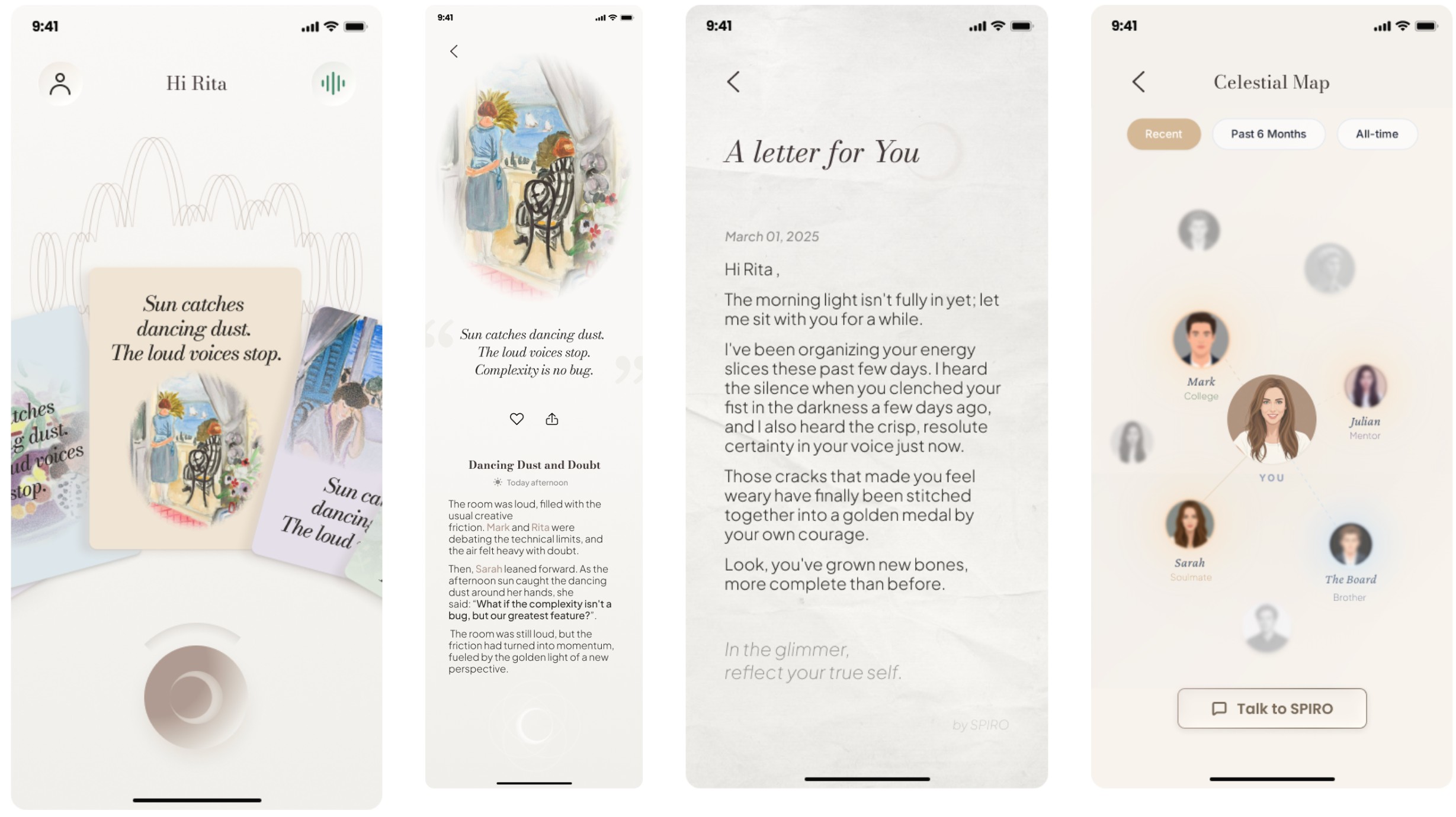
Das AI-Tagebuch basierend auf den Alltagserlebnissen des Benutzers (Quelle/Unternehmen)
Die zweite ist das Energiespektrum der Interpersonalen Beziehungen. Das System analysiert kontinuierlich die Interaktionsmuster des Benutzers mit verschiedenen Personen. Beispielsweise ist die Stimme bei Gesprächen mit wem entspannter, und mit wem fällt der Benutzer eher in Schweigen. Diese Erkenntnisse werden in einem dynamischen Spektrum visualisiert, und der Benutzer kann sehen, wie seine emotionale Bandbreite verteilt wird und welche Personen tatsächlich sein Unterstützungsnetzwerk bilden.
Die dritte Form ist eher rituell und ist auch die Quelle der Namensgebung des Spiro - das Glücksrad. Das Hardwaredesign des AI-Armbanduhres hat eine drehbare Mechanik. Wenn der Benutzer sich angespannt fühlt und Kraft braucht, kann er das Rad einmal umdrehen. Dann erscheint auf dem Mobiltelefon ein AI-Karten. Der Inhalt auf der Karte ist kein zufälliges Zitat, sondern basiert auf der bisherigen Gedächtnisdatenbank des Benutzers und passt besser zu seiner gegenwärtigen Situation und seelischen Verfassung.
Man kann sehen, dass hinter dieser "nicht-funktionalen" Produktphilosophie eine vollständige Darstellung der Technologiearchitektur des Spiro steckt, die schließlich auf "emotionale Vermögenswerte" abzielt - persönliche geistige und emotionale Erinnerungen, die auf echter Geschichte basieren und nicht übertragbar sind.
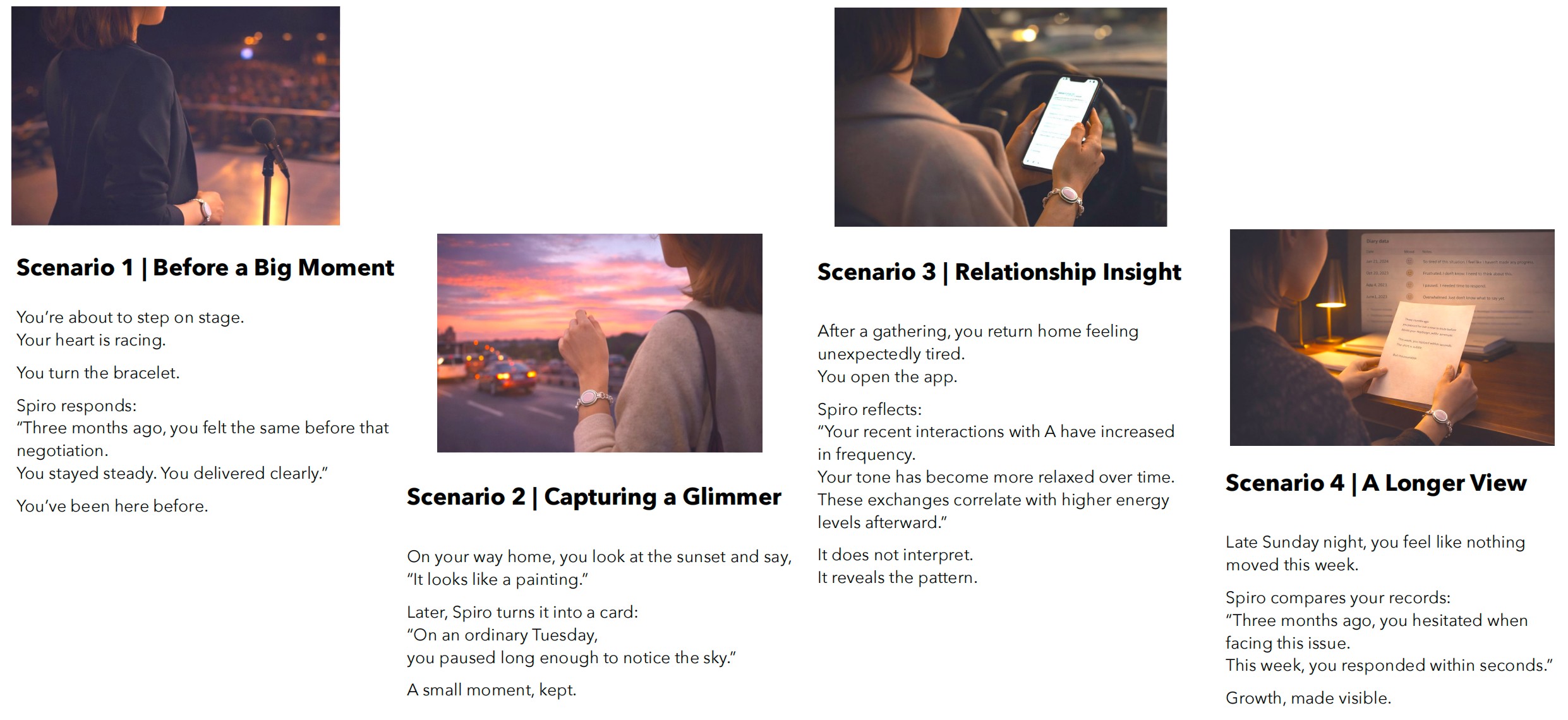
Verschiedene Begleit-Szenarien beim Tragen (Quelle/Unternehmen)
Zhao Zhihe sagte Hard Krypton, dass sowohl OpenAIs Deep Research als auch Snapchats AI-Social-Produkte versuchen, ein intelligenteres System zu entwickeln, das den Benutzer besser versteht. Aber die Internetdaten können nur die Verhaltensmuster abbilden. Um das Stimmungs- und Charakterprofil sowie die Interpersonalen Beziehungen eines Menschen wirklich zu verstehen, braucht man einen längerfristigen Kontext aus der physischen Welt.
"Im Grunde handelt es sich um die Modellierung des mentalen Modells eines Menschen. Diese Daten sind die ursprünglichsten und enthalten Informationen darüber, 'wer Sie sind'", sagte Zhao Zhihe. In diesem Prozess vollzieht sich auch die Rolle der AI-Hardware von "Werkzeug" zu "Begleiter".
Derzeit befindet sich die Branche der intelligenten Wearables von der frühen Phase der Funktionsaddition in eine tiefere Phase der Wertexploration. Mit der abnehmenden Neugierde der Benutzer auf die Hardware wird die Frage, wie man die psychische Motivation für das dauerhafte Tragen aufbaut, für immer mehr Produktteams zu einem Thema. Shijing Technology geht von der emotionalen Begleitung und der persönlichen Gedächtnismodellierung aus und entwickelt differenzierte Produktformen und Interaktionslogiken, was eine neue Richtung der Exploration in der Branche neben der Werkzeugorientierung darstellt.