The Era of Super Entrepreneurs: How to Enable Individuals to Have Organizational-Level Abilities
Prologue | One Person, One Company: The Fourth Wave of Individual Economy is Surging
Throughout history, every reconstruction of production relations has emerged from the collision between the bottlenecks of old organizational forms and the power of new technologies. From street vendors in the 1980s, to the legal entity established by the "Law on Sole Proprietorship Enterprises" in 1999, and then to the mobile - Internet wave of "Mass Entrepreneurship and Innovation" in 2014 - every leap in China's individual economy policy is a collective response of the era.
Today, with the popularization of infrastructures such as Agent and OpenClaw, it provides a natural opportunity for super entrepreneurs to drive innovation and transformation based on AI technology. Innovative models such as OPC (One Person Company) and SE (Super Entrepreneur) are propelling the arrival of the fourth wave.
Data is already telling this story: According to the "2025 White Paper on Digital Economy Entrepreneurship in China", over 12 million entrepreneurs across the country have chosen the OPC model. The number of newly registered OPCs has increased by 47% year - on - year, and the economic value they create accounts for 23% of the total new economy. Super individuals are becoming the smallest and most efficient units of the innovation economy.
SE super entrepreneurs are neither "self - employed individuals" in the traditional sense nor digital replicas of freelancers. It is a brand - new organizational paradigm of "Individual + AI = Company" — an individual with keen insight and core professional abilities can independently complete the entire closed - loop process from product R & D, market promotion to customer service with the help of AI tool chains such as large models, agents, and low - code platforms, truly achieving the goal of a single person being an army.
Technological Equalization and Policy Relaxation:
The Historical Window Period for OPC
The OPC model has five core characteristics, which define its essential boundaries from all past business forms: extreme streamlining (the decision - making chain is close to zero), AI empowerment (agents undertake repetitive interdisciplinary tasks), full - link closed - loop (an individual can independently complete the entire process of operation), high flexibility (low trial - and - error cost and fast direction adjustment), and niche positioning (focusing on niche markets that large enterprises have no time to cover).
What makes all this possible is the historical collapse of technological thresholds. The capabilities of large models are undergoing a "popularization" revolution: the inference cost continues to decline, and open - source models are on the rise. The top open - source models are approaching the level of GPT - 4 in some public evaluations. Agents have evolved from auxiliary tools to "digital employees" with the abilities of autonomous planning, tool invocation, memory, and reflection. Low - code/no - code platforms enable entrepreneurs without a technical background to quickly build deliverable products. Computing power and data infrastructure are becoming as accessible and pay - as - you - go as water and electricity.
Simultaneous with the technological revolution is the active layout at the policy level. In 2024, the new "Company Law" was implemented, removing the restriction that "a natural person can only establish one one - person company", clearing the legal obstacles for the large - scale development of OPC. Cities such as Shanghai, Suzhou, and Shenzhen have intensively introduced special OPC policies. The competition between cities has shifted from "investing in things" (industrial parks and hardware subsidies) to "investing in people" (attracting super individuals).
In this competition, Xuhui District in Shanghai, with its unique industrial density, policy strength, and ecological integrity, has become the most representative sample of OPC practice in China.
Technological Foundation: How Large Models and Agents Constitute "Individual Organizational Capabilities"
The Popularization of Large Models: Individuals Own an "Organizational - Level Brain" for the First Time
Step 3.5 Flash of Jieyue Xingchen, MiniMax M2.5, SenseNova V6.5 of Shangtang... These flagship models born in Shanghai are constantly pushing the boundaries of AI capabilities. Take MiniMax M1 as an example. As the world's first open - source large - scale MoE inference model, it supports context processing of up to 1 million tokens, enabling individual entrepreneurs to digest tens of thousands of pages of technical documents in seconds. Its reinforcement learning stage only costs $530,000, far lower than the industry's investment of tens of millions of dollars. The decrease in model cost directly reduces the operating cost of every OPC founder.
Multimodal capabilities endow individuals with "cross - professional" superpowers: An independent creator can complete video scriptwriting, advertising visual generation, code debugging, and market analysis report writing in one day with the help of AI. Three years ago, this could only be achieved by a complete cross - functional team.
Agents: Making "One Person as a Team" a Reality, and Systematically Replicating Individual Organizational Capabilities
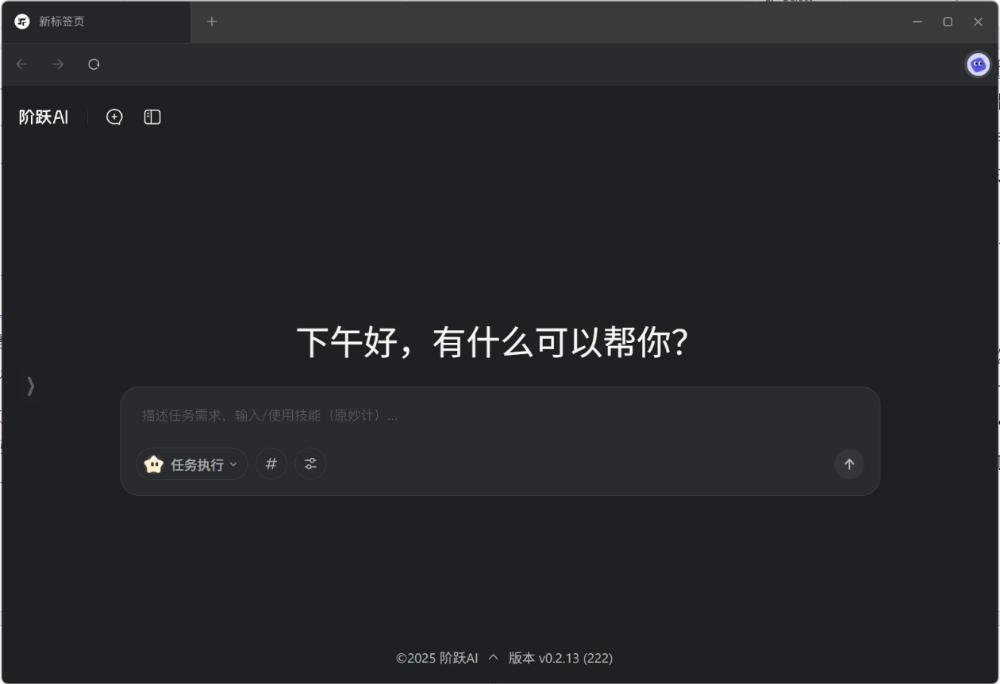
Different from traditional tool - type AI, agents have the abilities of autonomous planning, memory, tool invocation, and reflection, and can independently undertake tasks and continuously optimize delivery like "digital employees". Platforms such as Jieyue AI Desktop Partner "Xiaoyue", MiniMax Agent, and Anthropic Claude are providing multi - agent collaboration systems for OPCs — front - end design, algorithm R & D, and engineering deployment.
With the wave of OpenClaw sweeping across, MaxClaw developed by MiniMax entered the "crayfish" market with a highly competitive price of $39, becoming the first crayfish for many developers. Each link can be undertaken by different agents, and individual founders only need to focus on the most core judgments and creative decisions.
AI Coding: The Complete Democratization of R & D Capabilities, from "Not Knowing How to Write Code" to "Being Able to Create Products"
In 2026, developers are already using AI programming tools in their daily work. Entrepreneurs without a technical background can also complete the entire process of product development from prototype to launch with the help of natural language. A 2025 developer survey by Stack Overflow shows that 84% of developers are using or planning to use AI tools. The latest data from the Pragmatic Summit participated by 500 top engineers is even more astonishing: 93% of developers are using AI tools, saving an average of 4 hours per week. AI - native IDEs such as Cursor, GitHub Copilot, Tongyi Lingma, and Tencent CodeBuddy make it possible for a single person to develop and maintain large - scale systems.
Key Tracks: Breakthroughs and Typical Cases of OPC in Multiple Fields
AI + Video: The Industrialization of a One - Person Film Crew, and Advertisers Rewriting the Film and Television Industrial Process with AI
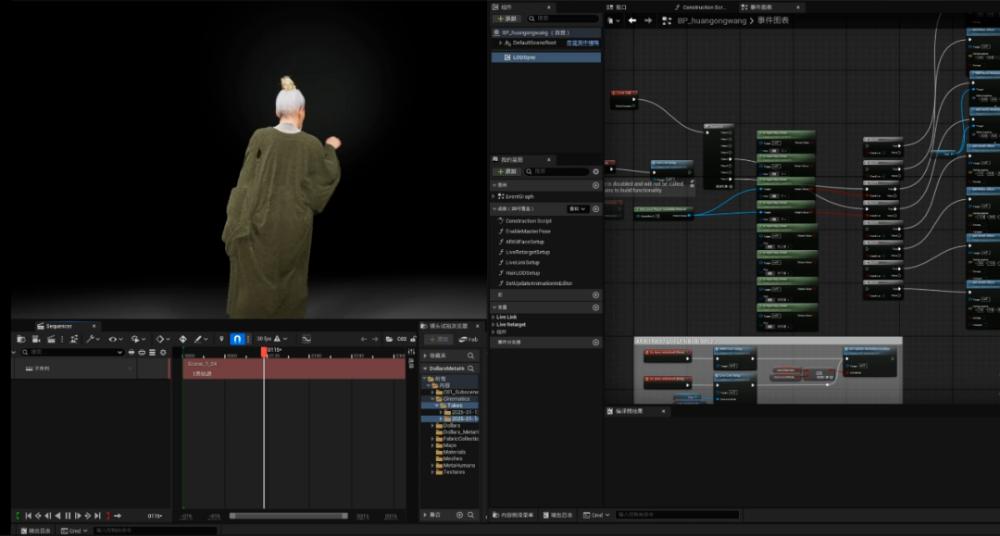
Aimwise Network Technology Co., Ltd. was founded in April 2023 in Nanxiang, Jiading, Shanghai. Its founder, Huang Chujie, is a senior advertiser. Adopting a lightweight team model of "centered in Shanghai and collaborating with multiple cities", it features a hybrid workflow of "AI generation + manual refinement" and has become an AI content provider for top - tier institutions such as CCTV, Tencent, and Yili. In 2025, the company served as the exclusive AI technology support for the CCTV Online Spring Festival Gala and undertook the AI production of multiple programs. The production cycle of a traditional gala promotional video is at least 2 months, but Aimwise used GPT - 4 to generate storyboards, Stable Diffusion to produce concept maps in batches, and Runway to generate dynamic pre - rehearsals, reducing the traditional 2 - month pre - creative cycle to 3 days. The national cultural and tourism promotional video "AI My China" — in cooperation with CCTV.com, it generated more than 200 landmark pictures, more than 200 video clips, and processed more than 2,000 files for 34 provincial - level administrative regions, finally producing a video of less than 3 minutes that went viral on WeChat Moments.
AI + Advertising: The OPC - ization of the Creative Industry, and One Person Completing an Entire Advertising Industry Chain
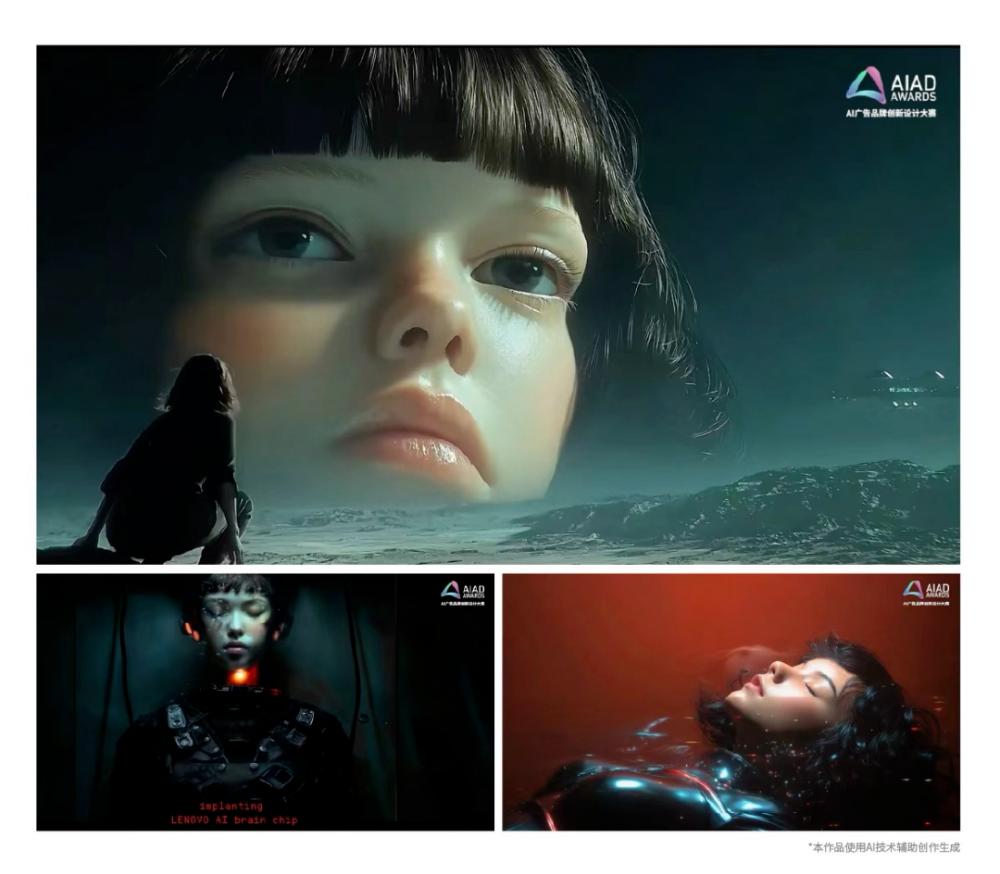
Ye Xianxian is the first OPC practitioner in AI advertising in Shanghai. By integrating AI technology and artistic perception, her work "AI Heartbeat, Super AI" won the silver award in the case category of the 2025 AI Advertising Brand Innovation Design Competition. After settling in the expansion area of "Model Speed Space" - Shanghai Chuangzhi Symbiotic Community (Beiyang Artificial Intelligence Town), she completed the entire process from creative planning, visual generation to customer delivery single - handedly, truly realizing "one industry chain, one business closed - loop".
AI4S: The "One - Person Laboratory" in Scientific Research, and the Fifth Paradigm of Scientific Research is Taking Shape
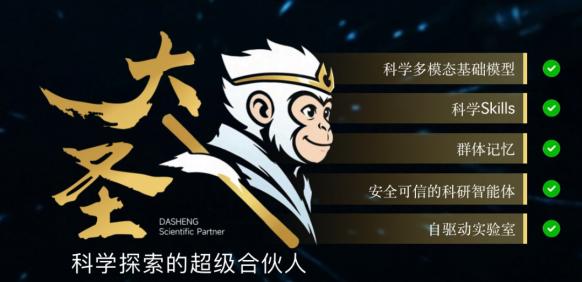
Zhuang Kai, a biomedical doctor, used AI to reconstruct the enzyme screening process, enabling AI to mine and design the required proteins and significantly reduce the experimental scope. In the initial stage, only one founder and three AI "employees" were needed. The Fuxi meteorological large model of Fudan University and the super scientific research agent "Dasheng" jointly released by the Shanghai Institute of Science and Intelligence and Fudan University also demonstrated how AI enables individuals or extremely small teams to drive full - process scientific research breakthroughs. With more than 300 skill packages and a self - driven laboratory, "Dasheng" realizes a complete closed - loop of "hypothesis - experiment - verification - iteration". AI4S is creating the "fifth paradigm" of scientific research driven by agents.
Regional Practice: How Xuhui District Builds an "Algorithm Rainforest" for OPC
If we were to mark a coordinate for the OPC model on the Chinese map, it would definitely be Shanghai. The five major public service platforms of "Modeling Shanghai" — intelligent computing power, corpus popularization, large - model evaluation and verification, the Young Scientists Program, and financing services — combined with policy tools such as a computing power subsidy of up to 20 million yuan, a "pay - after - use" computing power package, and computing power vouchers, model vouchers, and corpus vouchers of up to 1 million yuan each, provide platform - based solutions for every bottleneck of individual entrepreneurs.
The industrial layout of Xuhui with "one core leading, three circles radiating, and multiple points supporting" has built a complete ecosystem for the survival and expansion of OPC: Model Speed Space is the infrastructure layer of OPC, Beiyang Artificial Intelligence Town is the living laboratory of OPC, Xuhui Riverside gathers AI + video and creative industries, and Caohejing provides the engineering and industrialization foundation.
Model Speed Space, the first large - model incubation ecological community in the country, had attracted more than 200 large - model enterprises by the end of 2025, driving the agglomeration of more than 1,500 AI enterprises in Xuhui District, of which about 800 are large - model enterprises, and the number of large - model filings accounts for 60% of the city. "Upstairs and downstairs are upstream and downstream" is not just a slogan here. The expansion area of "Model Speed Space" - Shanghai Chuangzhi Symbiotic Community (Beiyang Artificial Intelligence Innovation Town) provides systematic policy support for super entrepreneurs: free workstation fees and professional comprehensive services in the first year and continued exemption after evaluation in the second year, a startup fund of up to 100,000 yuan, a monthly talent housing subsidy of up to 2,000 yuan (for a maximum of 3 years), and a 2 - billion - yuan artificial intelligence youth entrepreneurship fund (Sequoia China serves as a special investment advisor, emphasizing "investing in early - stage and small - scale projects"). The closed - loop design of "Chuangzhi College + large enterprises + capital + incubation + universities + small and medium - sized enterprises" enables super individuals to find fertile ground, partners, and capital here. The policy system of Xuhui District has become the most complete OPC support framework in the country — from computing power vouchers, model vouchers, and corpus vouchers to technical research subsidies, support of up to 3 million yuan for scenario projects, and talent housing subsidies, covering the entire life cycle of OPC entrepreneurship.
Business Model and Ecological Collaboration
Turning Capabilities into Income: Four Sustainable Growth Paths for OPC
The mature OPC business model has formed four clear paths: project - based professional services (AI + advertising, AI + video, AI consulting), productization and solution - ization (AI tools, SaaS, industry - specific agent applications), platform integration and resource matching (API aggregation, agent supermarkets), and diversified income structures (subscription - based, pay - as - you - go, and transaction - sharing combinations).
OPC4OPC: The Emergence of Distributed Organizations, and the "Loosely - Coupled Innovation Network" Among Super Individuals
Super individuals are not alone. In Shanghai, an ecological collaboration network of OPC4OPC has spontaneously formed: OPCs in different professional fields are dynamically combined through tasks as a link, and complete the collaboration from creativity to technology to delivery in the same building. This "loosely - coupled innovation network" is essentially a new type of distributed organization — without a hierarchical structure and fixed establishment, but with greater flexibility and innovation density than traditional teams.
The talent structure is also being reshaped simultaneously. "AI art directors" and "AI product managers" have become new occupations. Cross - disciplinary abilities, aesthetic insight, and problem - definition abilities, rather than single - minded technical execution, are becoming the most core competitive barriers for super individuals.
Epilogue | The Da Vinci of the AI Era: Super Individuals are Rewriting Production Relations
The greatest polymath in history was Leonardo da Vinci in the Renaissance era: painter, sculptor, architect, musician, mathematician, engineer, inventor... One person carried the intellectual breadth of an era. The emergence of AI is enabling each era to have the opportunity to produce its own Da Vinci.
From the self - employed individuals "fighting for survival" in the 1980s, to the legalization of one - person companies in 1999, to the national mobilization of "Mass Entrepreneurship and Innovation" in 2014, and to the in - depth integration of OPC and AI today — the four - act drama of China's individual economy policy has always followed the same logic: Each round of policies is to break through the constraints of production relations in a specific historical period by releasing individual vitality.
Today, the difference is that super individuals are no longer the "shock absorbers" under macro - economic pressure, but the active creators of new - quality productivity. "One person + AI = Company" is not just a slogan, but a reality that is happening every day in Shanghai.
OPC is not just a business model, but a reconstruction of production relations.