Why has Apple failed to capture the "home" market despite the departure of key executives and the encirclement by Midea and HarmonyOS?
Apple's smart home business may have to hit the pause button again.
According to media reports, Brian Lynch, who was in charge of Apple's home hardware engineering, has left Apple and joined the smart ring company Oura. Although he is not the first senior executive to leave Apple recently, considering Apple's performance in the smart home field in recent years, Brian Lynch's departure is far from simple as imagined.
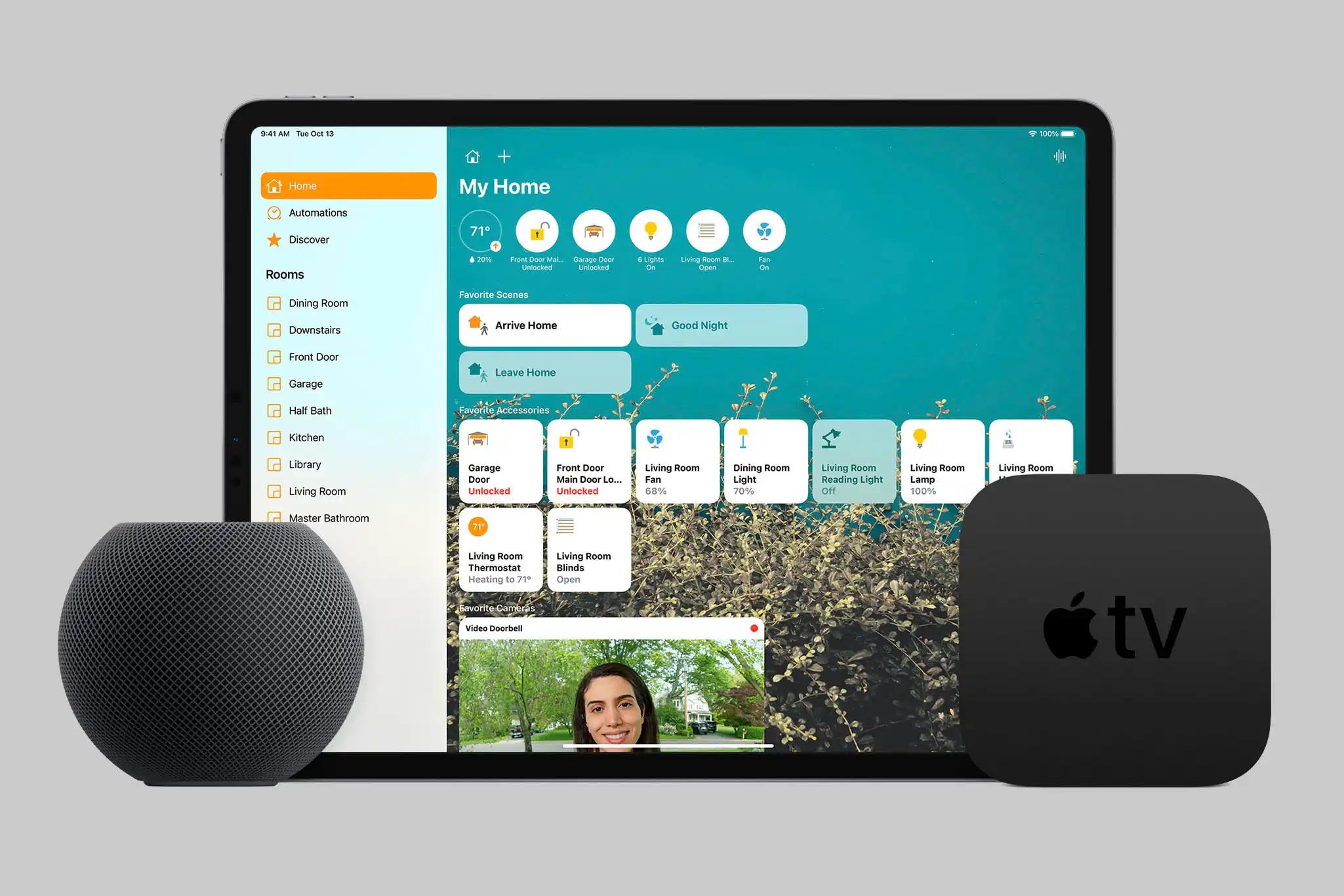
Apple is one of the early tech giants to notice the smart home market. From HomePod, Apple TV to HomeKit, it has been testing the waters in this market, but has never been able to come up with decent products. Previously, Bloomberg also revealed that the first smart hub product originally scheduled to be released in the spring of 2026 has been postponed by Apple to the autumn.
(Image source: Apple)
More importantly, Brian Lynch, who left this time, has been in charge of Apple's home device hardware engineering since 2022. His sudden departure at this juncture inevitably makes people wonder why Apple, which has been so successful in making mobile phones, computers, and headphones, is always hesitant in the smart home track?
How to do smart home? Apple still can't find the answer
As early as 2014, Apple launched HomeKit, hoping to turn the iPhone into a control entrance for home devices. Later, it successively included HomePod and Apple TV into the Home system, making speakers and TV boxes part of the home smart hub.
Even today, Apple still regards HomePod and Apple TV as the home hub of Home. That is to say, Apple has not never thought about building a center at home. The problem is that after so many years, Apple's presence in the smart home has never been as strong as that of iPhone, Apple Watch, and AirPods, becoming a clear and strong independent category.
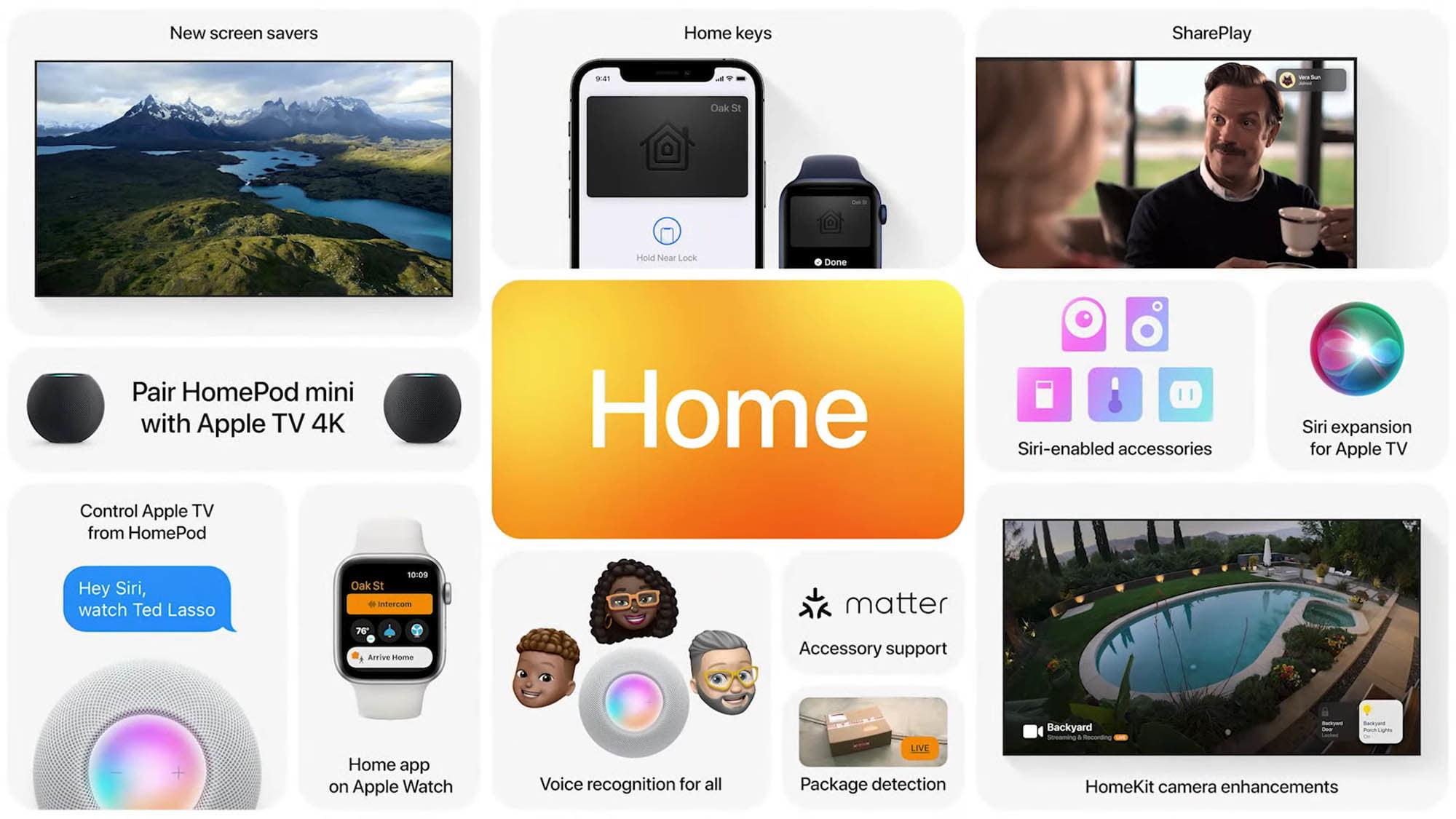
In essence, HomeKit is just a connection framework. Its core value is to connect smart devices of different brands to the Apple ecosystem. Any home appliance product of any brand, as long as it supports HomeKit and obtains Apple's certification, can join the ecosystem. As for HomePod and Apple TV, the former is a speaker and the latter is a TV. They are both built based on entertainment attributes. Even though they are part of Apple's smart home ecosystem, few people would consider them as the home smart hub.
(Image source: Apple)
That's why, although Apple entered the market early, it has never made smart home its main line. Most of the time, it just lets existing products join the ecosystem by the way. In fact, this logic is easy to understand. HomePod and Apple TV are supported by consumers because first they are audio - visual devices, and then they can control the devices supporting the HomeKit protocol at home. Even if consumers are not interested in smart home, they will still buy them for their entertainment attributes.
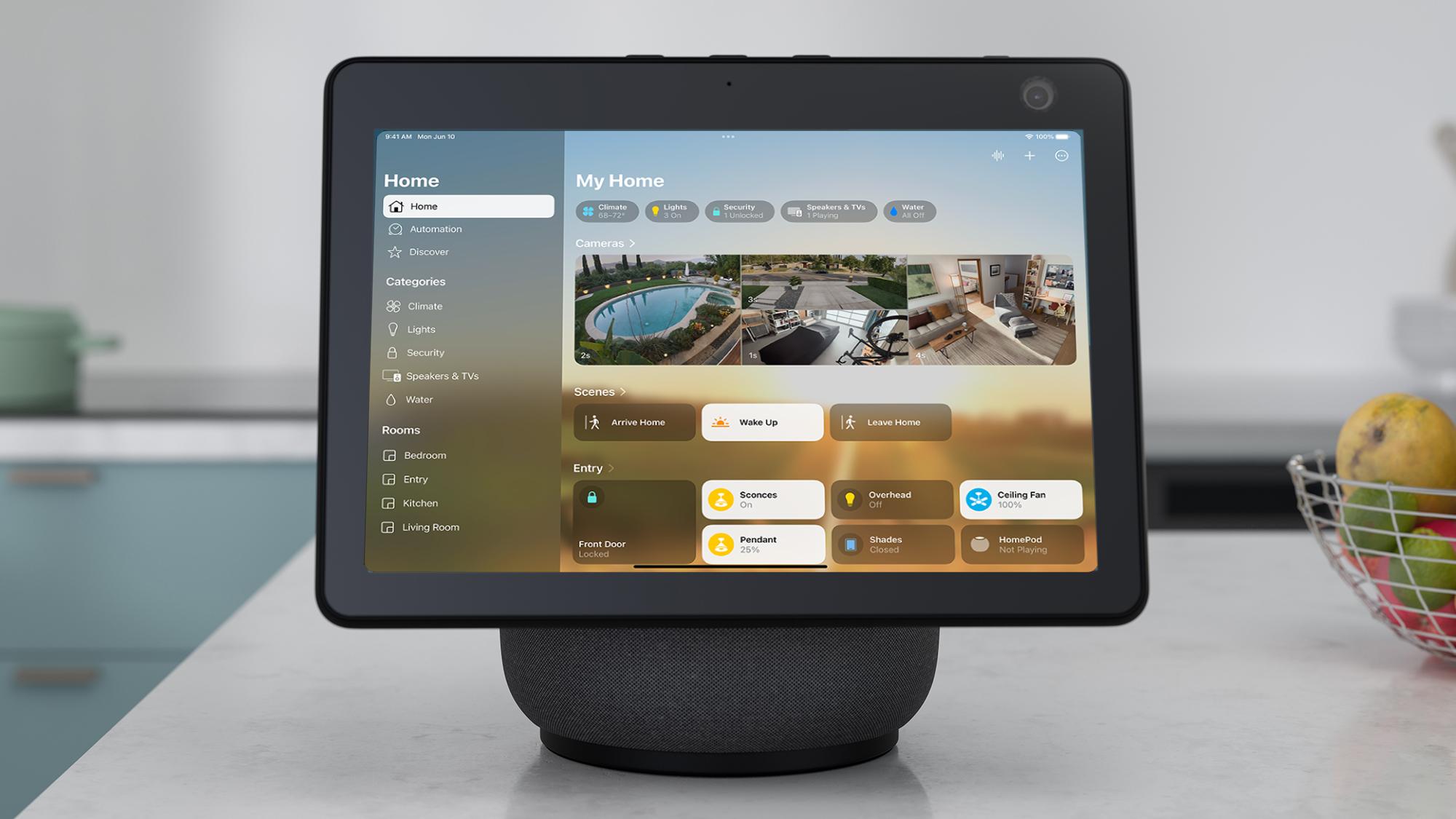
In the past few years, the market has repeatedly reported that Apple is developing new products such as smart home hubs with screens and desktop robots, trying to truly integrate the scattered Home system. But until 2026, these things still haven't been officially launched. The latest news from Bloomberg mentioned that the new smart home display device that Apple was originally preparing has been postponed again because the progress of Siri and related AI capabilities is not as expected.
(Image source: TechRadar)
That is to say, Apple has been planning the smart home product line, but has never figured out what form it should take. Coupled with the not - so - smooth R & D of underlying capabilities, it has been delayed again and again, until it lags far behind its competitors. Now that even the relevant person - in - charge has chosen to leave, the future of Apple's smart home business is far from smooth.
Huawei provides solutions, Xiaomi builds ecosystems, while Apple is still making speakers
Compared with Apple's tentative approach, Chinese manufacturers have been more aggressive and direct in the past two years. Whether it is brands like Huawei and Xiaomi that first established their reputation through mobile phones, or traditional home appliance giants like Midea, Haier, and Hisense that are deeply rooted in the home scene, they are all trying to turn the "home" from scattered single products into a complete system.
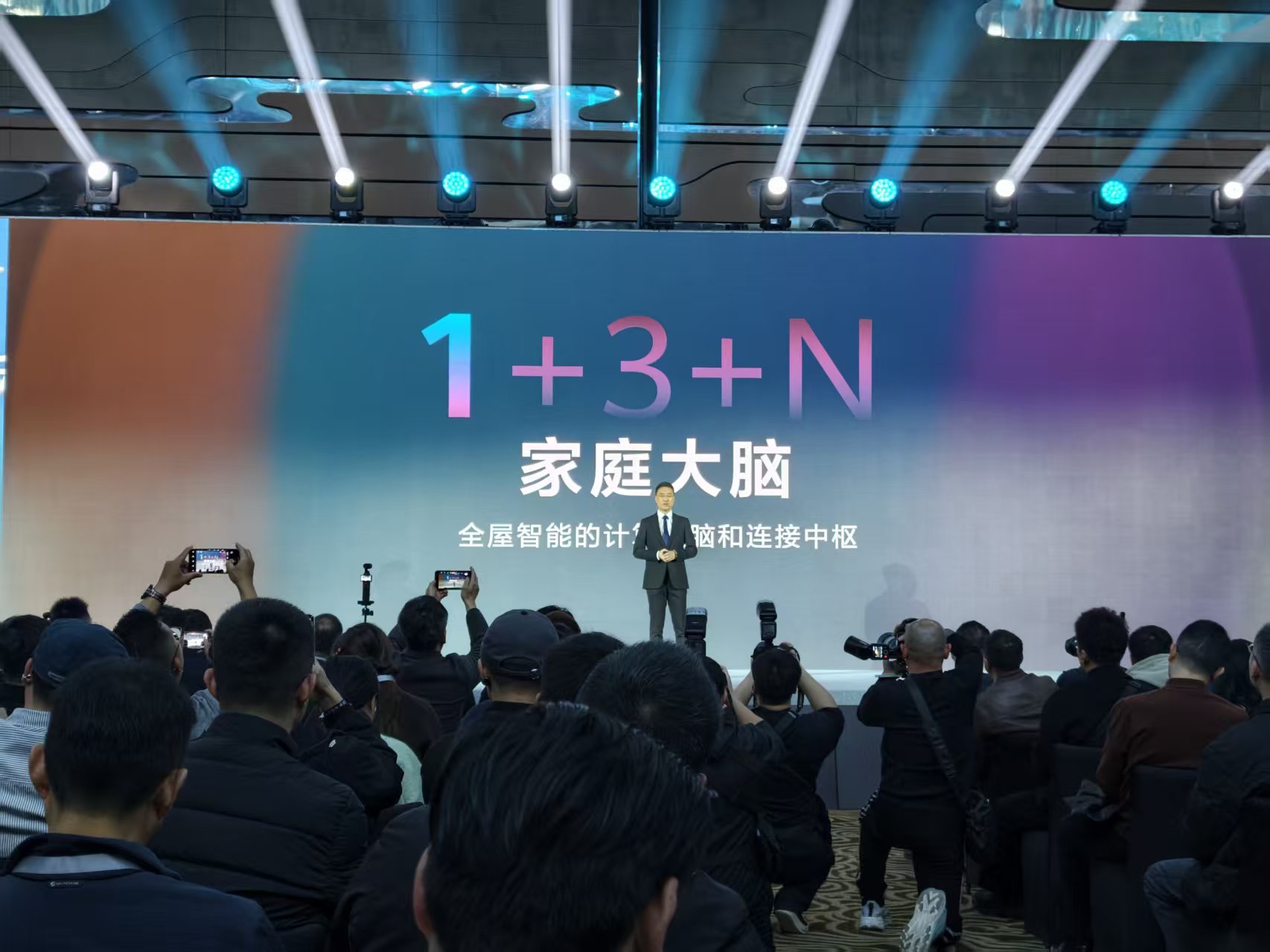
On the eve of AWE 2026, Huawei upgraded its 1 + 3+N solution for HarmonyOS Smart Home. The "1" refers to the home brain, that is, the connection and computing power hub; the "3" refers to three interaction methods: touch, voice, and non - sense; the "N" refers to multiple subsystems. Under this solution, the whole home has evolved from passive response to actively providing services for users, such as turning on the lights when people come, avoiding people when the wind blows, health monitoring, accident warning, etc.
(Image source: Photo taken on - site by Lei Technology)
Xiaomi is betting on the "whole ecosystem of cars, phones, and homes". What it wants is not how smart a single home appliance is, but to make mobile phones, cars, and various home devices in the same system. The mobile phone is Xiaomi's most mature entrance, the car is a new and powerful scenario in the past two years, and home appliances and IoT devices are responsible for keeping users in this ecosystem. Therefore, when Xiaomi does smart home, it is actually closing the whole link of cars, phones, and homes through the "home".
Obviously, as a mature tech brand, Apple may have a slight advantage over Huawei and Xiaomi in terms of the explosive power of single products and market coverage in the global market. But in terms of ecosystem building and how to lock the home entrance in its own products, Apple's pace is obviously slower. Similarly, not only tech brands are trying to seize this entrance, but home appliance manufacturers are also embracing this trend.
In 2026, Midea directly launched the "three - one" strategy for whole - house smart home, using a home power grid, a home AI brain, and an open platform to rebuild the home ecosystem. At the same time, it provided data such as AI layout for more than 150 categories, more than 140 million connected smart home appliances globally, and more than 150 million connected users; at the AWE 2026 site, Haier demonstrated a whole set of capabilities such as "AI Eye 2.0", an upgraded smart home brain, and home robots, enabling home appliances to start working actively for users; Hisense connected its self - developed Xinghai large - scale model to DeepSeek and launched a home appliance - specific intelligent agent to build a full - scenario AI home appliance solution.
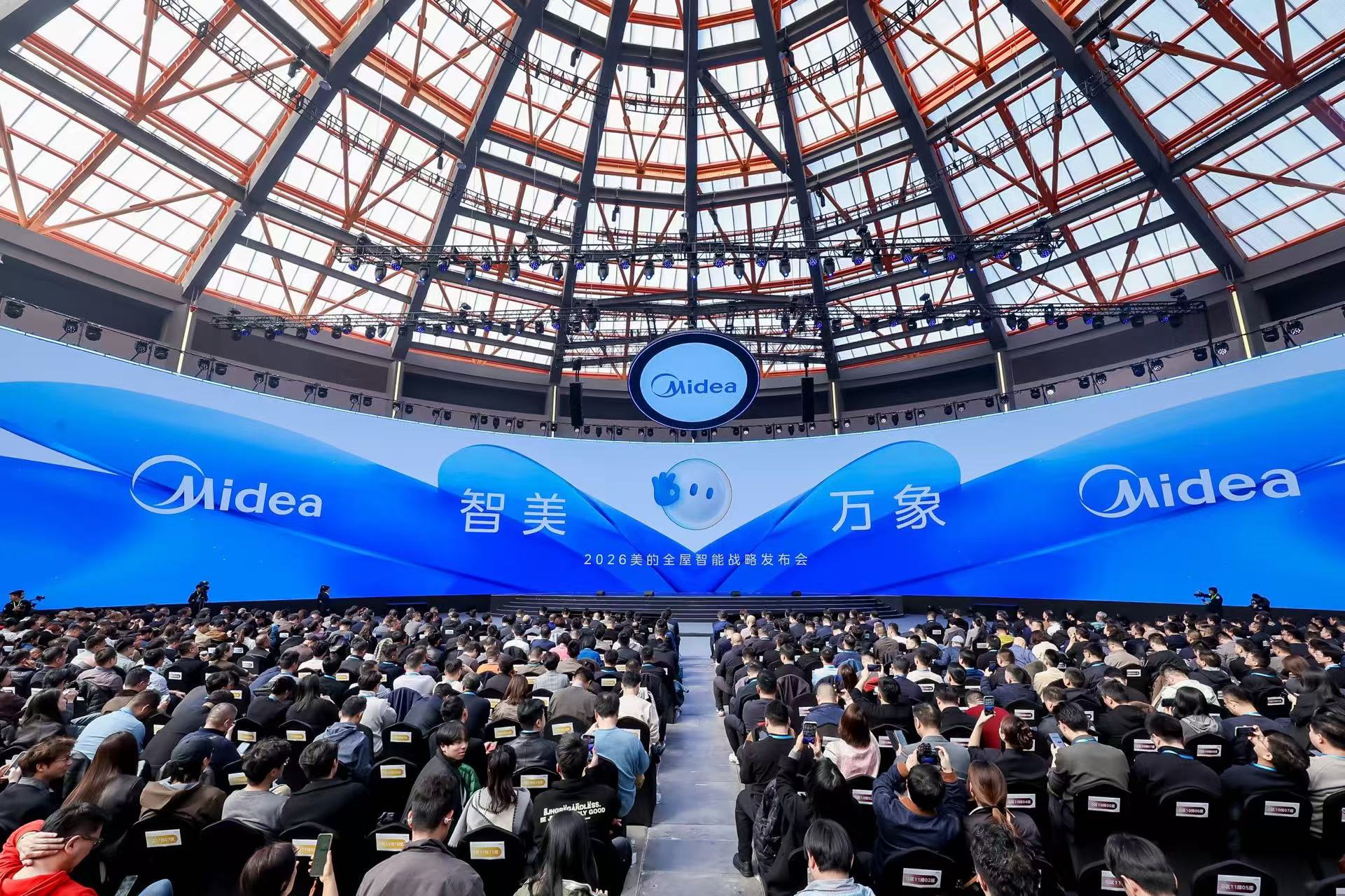
(Image source: Midea)
To put it simply, home appliance manufacturers actively embrace this trend mainly because the price war in the traditional home appliance industry is too cruel. To avoid competing on price, they must find a new direction. Selling one more refrigerator or one more air - conditioner will be difficult to support the growth that a brand needs in the future. Finding a way to hold the entire "home" of users in hand can stabilize their position in the market.
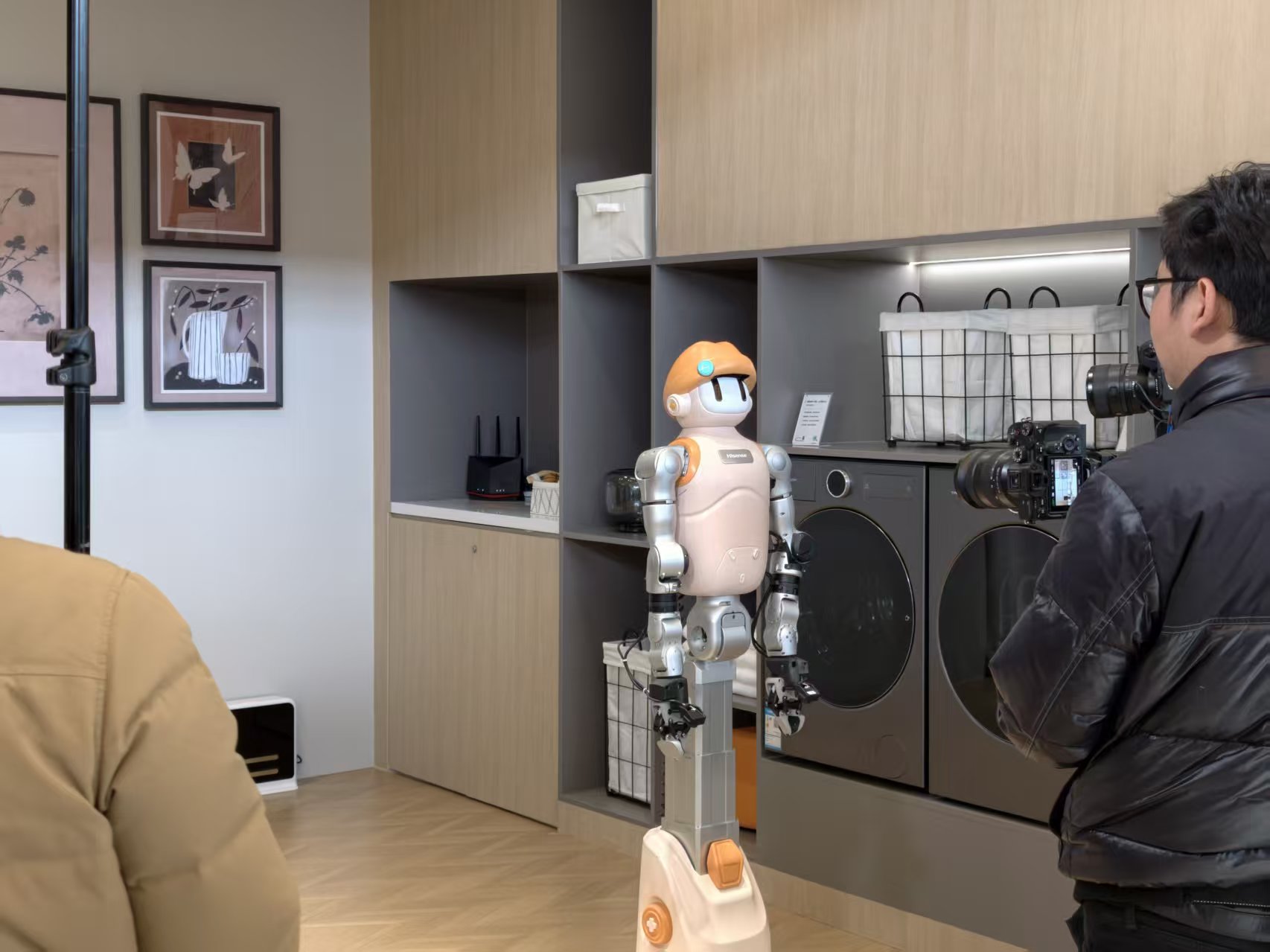
(Image source: Photo taken on - site by Lei Technology/Hisense Savvy robot butler)
Ultimately, in the face of an extremely competitive market, these Chinese brands are constantly stimulating new market demands. Mobile phones, traditional home appliances, and cars are all highly competitive industries. In contrast, the iPhone 17 series is still selling well, the sales of the Macbook product line have rebounded in 2025, and Airpods is still the most popular wireless earphone product in the world. Apple has not encountered "big troubles" in these fields and does not feel much competitive pressure. Therefore, it has always taken a conservative attitude towards the smart home. But we all know that the smart home is not an ecosystem that can be established overnight. Apple has already fallen behind at the starting line, and it seems that it needs to spend some effort to catch up.
Starting to catch up this year, Apple still has a long way to go
Apple, which has been slow and procrastinating, is losing a huge and promising market.
Data from market research firm IDC shows that the shipment volume of China's smart home market in 2025 was about 279 million units; another firm, Grand View Research, predicts that China's smart home market is expected to reach about $70.6 billion by 2030. That is to say, what Apple is losing is not just an opportunity for a single product, but an entire large market that is still developing and increasingly values ecosystem binding.
More importantly, the most valuable part of the smart home has never been just selling a speaker, a screen, or a sensor, but establishing a long - running system in users' daily lives. Once users' lights, door locks, air - conditioners, audio - visual equipment, cleaning equipment, and kitchen equipment all run smoothly in a certain ecosystem, it will be much more costly for later - comers to pull them away. Apple has successfully used the iPhone to bind this ecosystem, but it doesn't seem to be as successful in the smart home.
Even if Apple really launches the HomePod with a screen as the home smart hub in the autumn of 2026, there are still many problems to be solved. For example, Apple is good at polishing hardware, systems, and services to a relatively complete state before letting users experience them. But the home space is not as simple as a mobile phone or an iPad. It is more fragmented and covers a variety of home appliance categories. It also takes longer to perfect the entire ecosystem. There are problems with protocol compatibility, as well as issues with coordination between different brands, different network environments, and different device roles.
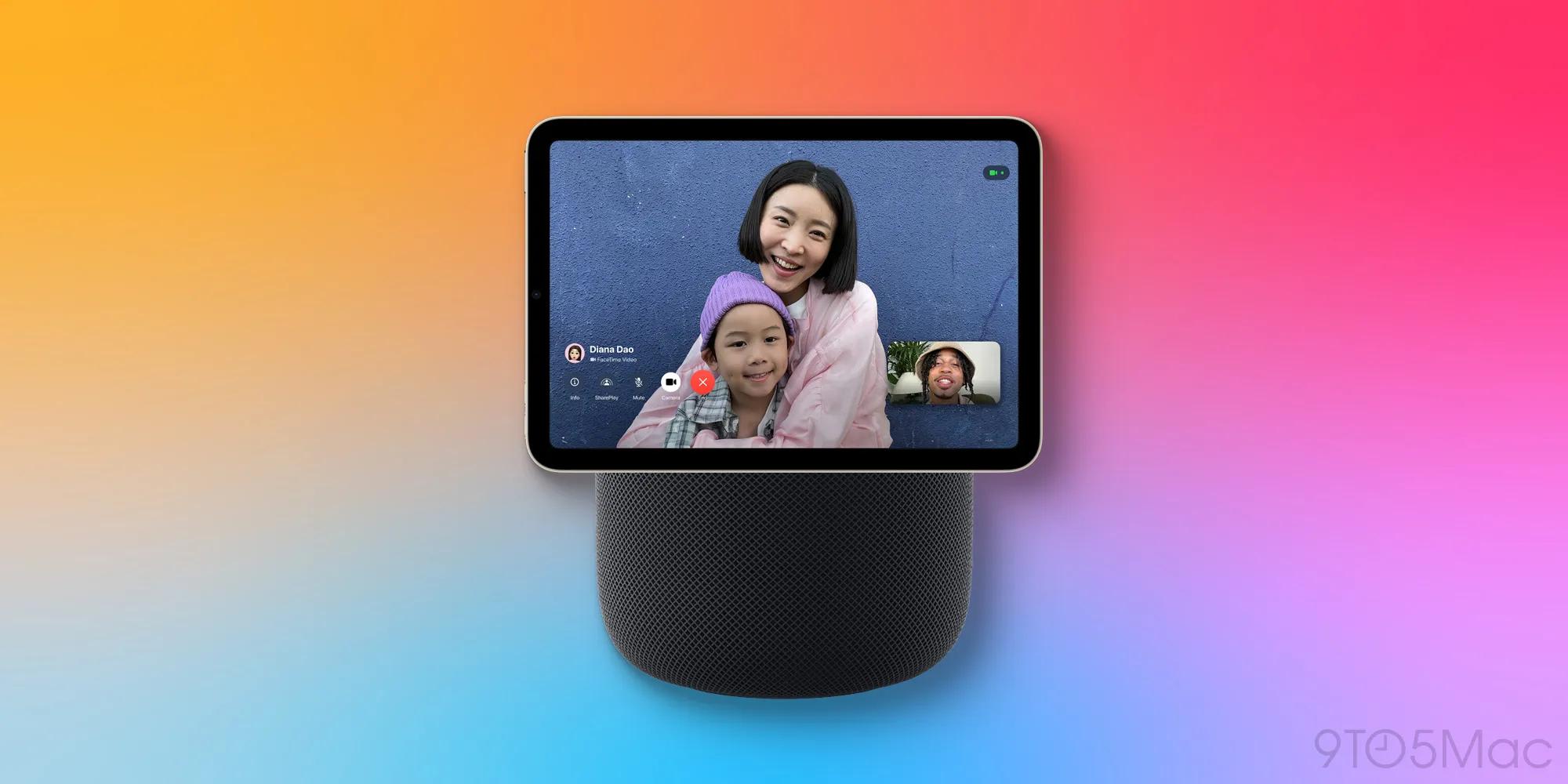
(Image source: 9to5Mac)
The Matter protocol was originally highly anticipated by Apple because the industry hoped to use it to reduce the complexity caused by ecosystem fragmentation. But in fact, even popular brands like IKEA still encounter instability problems in connection, network configuration, and platform coordination in this system, not to mention other brands.
Of course, the market will not wait for Apple to improve. Lei Technology has felt the overall trend of the smart home at this year's AWE. On the one hand, the home appliance industry is moving towards active service and spatial intelligence; on the other hand, more radical things like home robots and embodied intelligence are starting to enter the core home scenarios. For example, Hisense even put forward the concept of a "household - chore - free home" at the exhibition, directly linking butler robots, companion robots, and whole - house smart home. The most embarrassing thing for Apple is that when the industry has used AI to take over the whole - house home appliances, used large - scale models as the core hub to mobilize the whole - house smart home, and let robots do housework for users, it is still perfecting its most basic parts.
This is not to say that Apple's smart home business is doomed. Apple's advantage is its strong market appeal. For example, iPhone Air and vision Pro, even if they are not "successful products" in the traditional sense, can still attract high - level global attention. So as long as Apple finds the right direction, its progress speed is still worth looking forward to. However, it is difficult for us to figure out Apple's current attitude towards the smart home. From the perspective of industry competition, of course, we still hope that Apple can soon present a more decent answer than it has now.
This article is from "Lei Technology" and is published by 36Kr with authorization.