Why does China's automobile industry start with shipbuilding when going global?
On January 15, 2024, at Xiaomo Port in Shenzhen.
Accompanied by a deep - toned whistle, the ro - ro ship "Pioneer 1", fully loaded with 5,000 BYD new energy vehicles, slowly sailed towards the open sea. This ship marks that Chinese automakers have bid farewell to the passive situation of "chartering ships to go overseas" and officially entered a new stage of "transporting domestic cars by themselves".
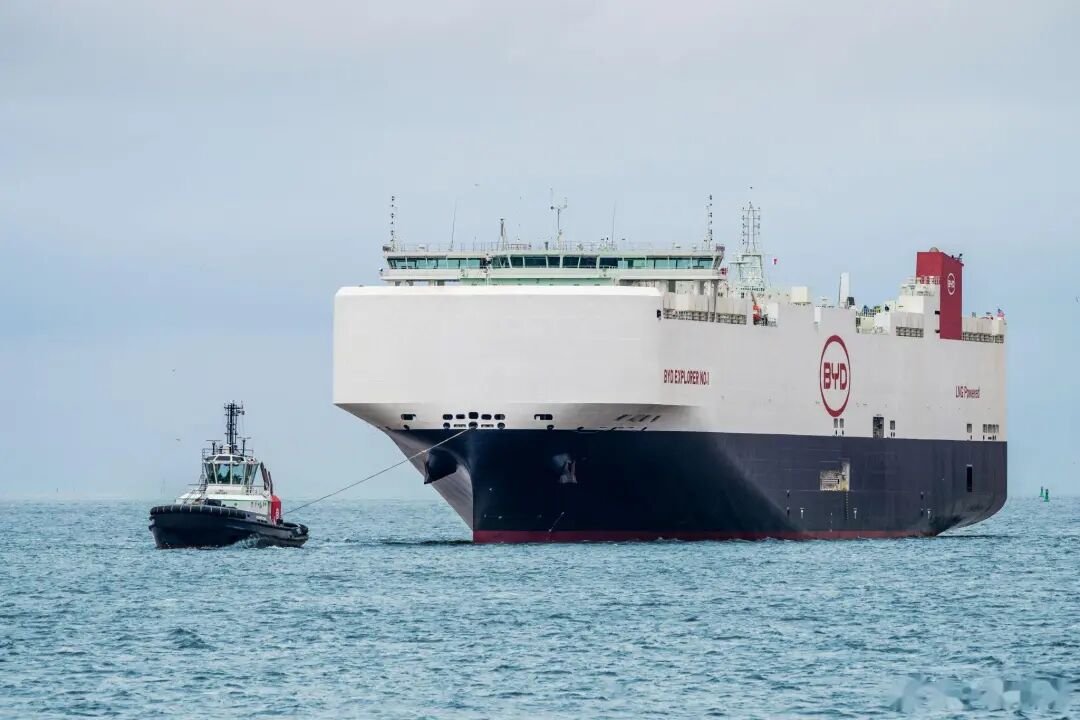
In the past, Chinese automakers mainly focused on vehicle manufacturing. However, as more and more domestic cars went abroad, a long - neglected shortcoming suddenly emerged: maritime transportation.
Why are Chinese automakers investing heavily in cross - border shipbuilding? This invisible war hidden beneath the waves is determining the second half of the globalization of the Chinese automotive industry.
01
Chinese Automakers Are Constrained by Maritime Transportation
The speed of Chinese cars going overseas has set a new record in the industry.
Data from the China Association of Automobile Manufacturers shows that from 2020 to 2023, China's automobile export volume soared from 1.08 million to 5.22 million, almost quintupling in just three years. In 2025, China's automobile export volume reached 7.095 million, firmly ranking first in the world.
Although the scale of automobile exports has skyrocketed, the transportation capacity has not increased synchronously. The maritime transportation link has gradually become a bottleneck in the chain of cars going overseas.
What troubles automakers the most is the sky - high freight rates.
In the past three years, the freight rates of international automobile transport ships have soared. According to data from VesselsValue and Clarksons Research, the daily rent of a 6,500 - car - capacity ro - ro ship was only about $10,000 in August 2020, but by the end of November 2023, the price had risen to $115,000, an 11 - fold increase.
At the peak of freight rates, it cost an average of about $1,400 to transport a car to Europe by sea. Automakers worked hard to build cars, but the money they earned ended up in the pockets of shipowners.
What's more troublesome is that even if automakers are willing to pay high prices, they may not be able to charter a ship immediately.
The Financial Times once reported that at the busiest Antwerp - Bruges Port in Europe, it was common for Chinese cars to be queued and stranded at the port for up to one or two weeks because they couldn't wait for transport ships. Local operators complained that the port had become a parking lot for Chinese automakers.
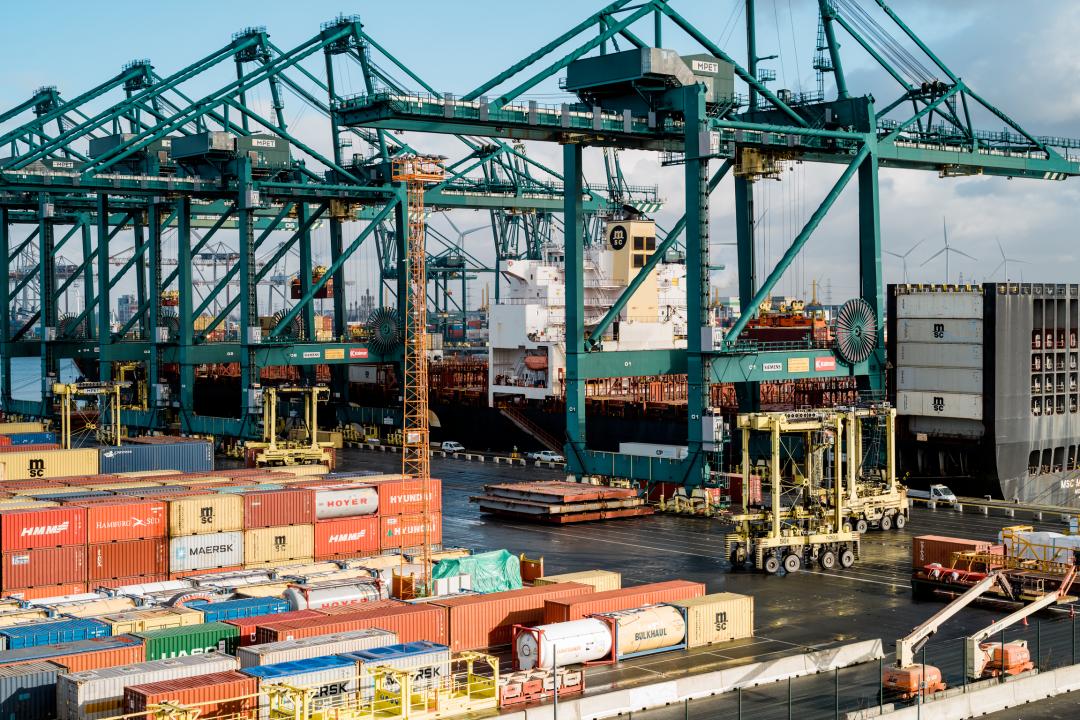
So, why is there a situation of "hard to find a ship"? Can't more automobile transport ships be built?
It sounds easy, but it's really not that simple.
Currently, the average cost of building a mainstream 7,000 - car - capacity dual - fuel ro - ro ship is as high as $90 million to $105 million. If it is a super - large ship, the cost will exceed $110 million. For shipping companies, this is a heavy - asset investment of hundreds of millions of RMB.
Secondly, the delivery cycle is extremely long.
During the COVID - 19 pandemic in 2020, the global automotive industry came to a halt. Many shipping companies scrapped a batch of old transport ships in advance and suspended new ship orders. No one expected that after 2021, China's automobile exports would suddenly experience explosive growth.
Currently, the order queues of global mainstream shipyards are very crowded. It takes an average of 2 to 4 years for a new ship to be delivered after the order is placed. For the urgent shortage of shipping capacity, it is really too late to help.
When "hard to find a ship" became the norm in the industry, automakers of course tried to deal with it.
Some converted ro - ro ships originally operating on domestic routes into ocean - going ships. Some tried to export cars in containers at a higher cost. Some companies chose to transport cars in shared cabins at off - peak times.
However, these methods are essentially just stopgap measures. No matter how strong the production capacity is, if the transportation link cannot keep up, it will affect delivery and market reputation.
As the scale of automobile exports continuously crossed the thresholds of 5 million and 7 million, the shortage of shipping capacity has become the most urgent problem for Chinese automakers to solve.
02
Who Holds the Global Shipping Capacity?
If we look further, we will find a deeper - seated problem. China has long been the world's largest shipbuilding country, but in the niche market of automobile transport ships, it has long lacked the right to speak.
In 2023, there were only about 700 professional automobile transport ships in the world, and most of the shipping capacity was firmly in the hands of shipowners from Japan, South Korea, and Norway.
Thanks to their first - mover advantage, shipping giants have built a moat that spans almost the entire global automobile shipping market. In contrast, at that time, China only had 39 automobile ships for ocean - going transportation, with a total shipping capacity of about 115,000 car - spaces, accounting for less than 3% of the global total. For a long time, the key channels for Chinese automakers to go overseas were in the hands of others.
Why has such a situation come about? It all starts with the development of global automobile transportation.
The application of automobile transport ships gradually developed as the scale of automobile exports expanded. In the 1970s and 1980s, Japanese cars began to enter the European and American markets on a large scale, and the export orders of Toyota and Honda increased rapidly. To improve transportation efficiency, Japanese shipping companies began to deploy specialized ro - ro fleets and established long - term cooperative relationships with automakers.
To put it simply, automakers are responsible for production, and shipping companies are responsible for transportation. The two have gradually formed a stable division of labor and cooperation.
Later, when the South Korean automotive industry rose, Hyundai and Kia also imitated Japanese companies. While expanding the export of complete vehicles, they also built up their transportation capacity to give priority to serving domestic automakers.
Over the decades, a highly stable interest network has been formed in the global automobile shipping market.
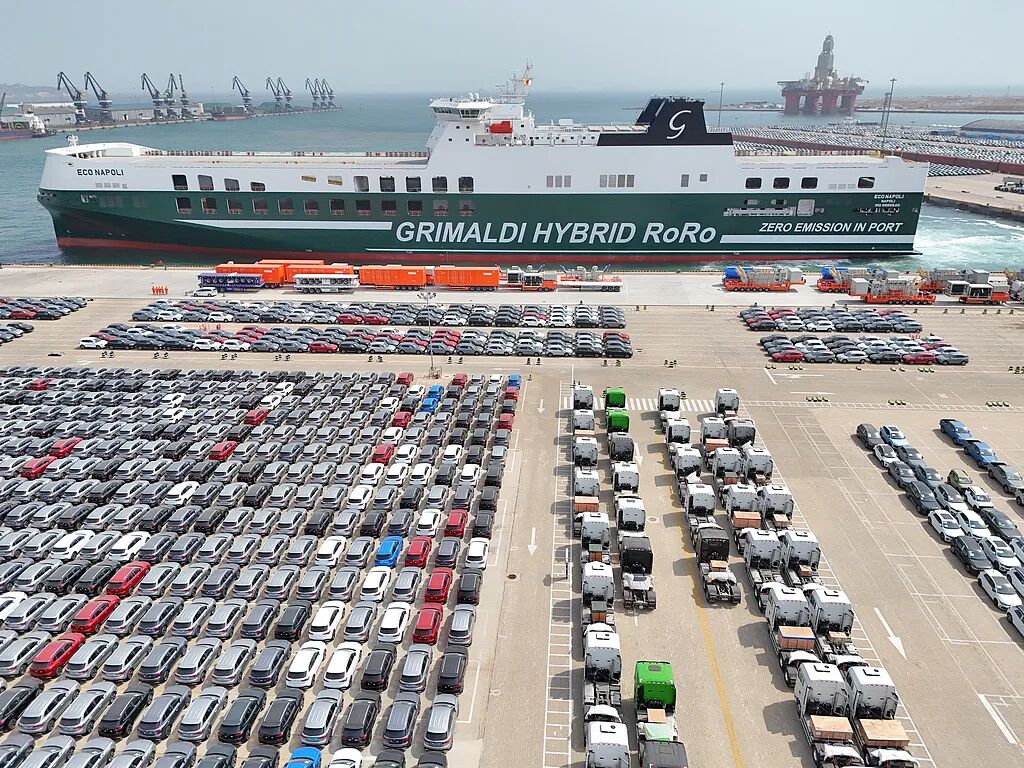
In this system, ships often give priority to serving specific old customers or domestic enterprises, and the core shipping routes and port resources have already been divided up.
As a latecomer, China, which has emerged in the automotive industry, can only find a very limited amount of remaining shipping capacity.
Moreover, the automobile transportation industry has a strong customization attribute. Ro - ro ships rely on vehicles driving directly into the cabin for loading, which requires ports to be equipped with specialized ro - ro terminals, ramps, and storage yards, as well as a complex vehicle scheduling system.
That is to say, the automobile transportation industry has already formed a highly customized logistics system, and this system has mostly been gradually established around the standards of Japanese and South Korean automakers in the past few decades.
Thus, a structural contradiction gradually emerged. On one hand, the scale of China's automobile exports is constantly expanding, and the new demand is increasing. On the other hand, there is a shipping market with a stable structure and highly concentrated shipping capacity that has remained unchanged for decades.
Chinese automakers have gradually realized that if they continue to rely entirely on the existing shipping system, it will be difficult to control the rhythm of going overseas. Instead of waiting for ships passively, it is better to build their own ships.
03
From Buying and Chartering Ships to Building Ships: Automakers Step in to Make Up for the Shortcomings
From buying and chartering ships to building their own fleets, the strategic layout of automakers has begun to change quietly. BYD is one of the earliest automakers to take action.
In 2022, when the freight rates of global ro - ro ships began to soar, BYD cooperated with Chinese shipbuilding enterprises and invested about 5 billion RMB to build 8 ro - ro ships. The first ship, "Pioneer 1", made its maiden voyage to Europe in 2024.
As the self - built fleets are gradually delivered, BYD has become more proactive in the overseas market.
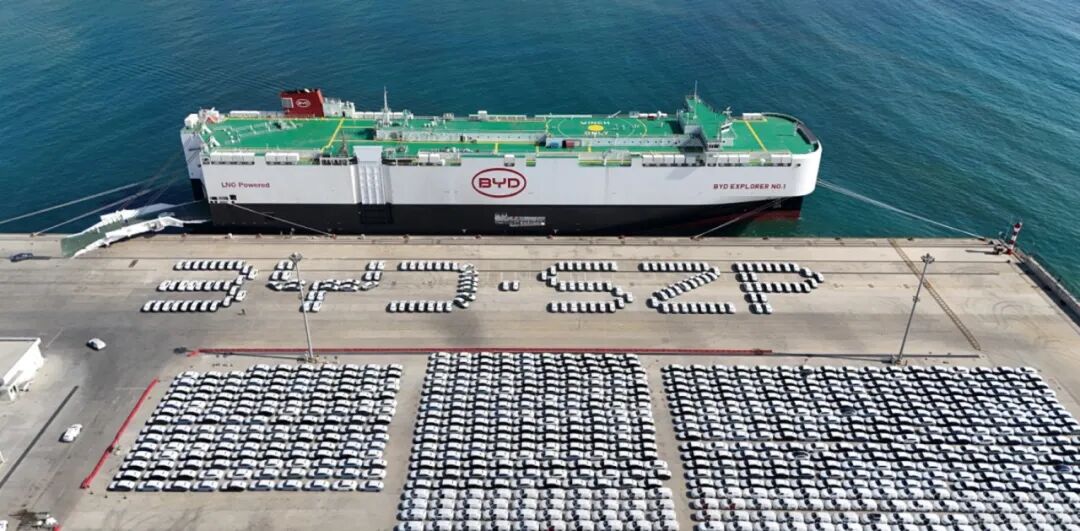
Data shows that by 2025, BYD's overseas sales are expected to exceed 1 million, a year - on - year increase of 145%. In markets such as the UK, Germany, and Brazil, the prices of some models are significantly higher than those in the domestic market, and the profit margins of overseas business are also more considerable.
If BYD is a new shipowner who entered the game with "financial strength", SAIC Motor is an experienced shipping veteran who has been in the industry for many years.
As one of the earliest Chinese automakers to go overseas on a large scale, SAIC realized the importance of logistics early on. Its subsidiary, Anji Logistics, has continuously expanded its ocean - going ro - ro fleet in recent years, with a cumulative investment of more than 10 billion RMB.
Now, SAIC has 14 ocean - going automobile transport ships. Among them, the "Anji Shencheng" has 13 decks and 7,600 car - spaces, and uses an LNG dual - fuel system, ranking among the top in the industry in terms of environmental protection standards and sailing efficiency.
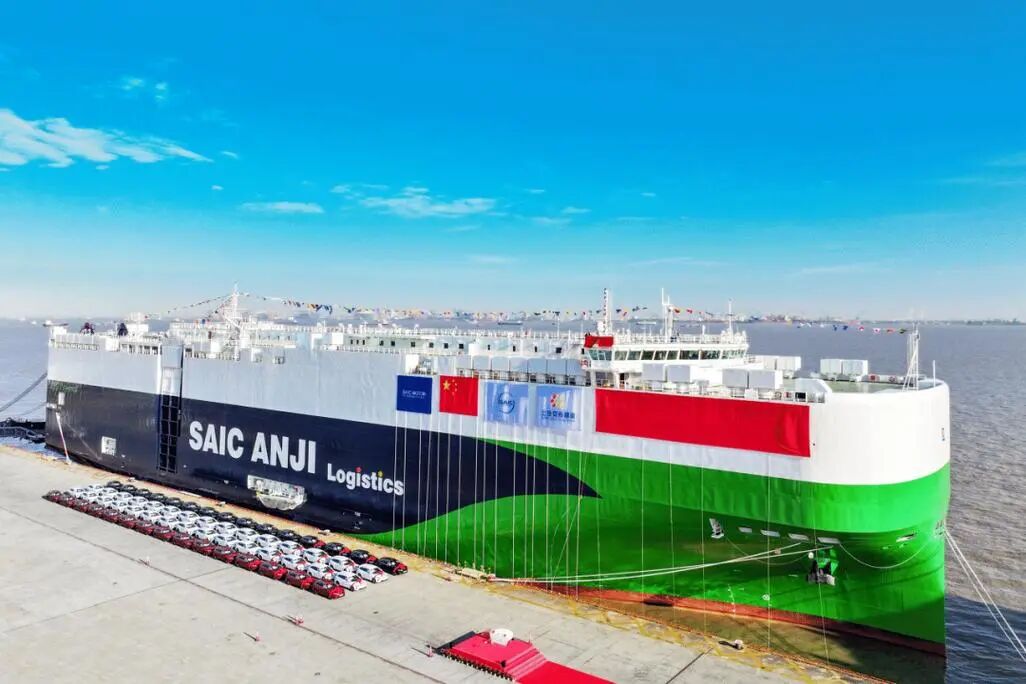
In 2023, SAIC's overseas sales exceeded 1.2 million, accounting for about a quarter of China's total automobile exports, which is largely due to its mature transportation system.
In the past, Chinese automakers often had to arrange their shipping plans according to the routes and schedules of shipowners. Now, the transportation rhythm can be flexibly adjusted according to order situations. Not only has the transportation cost per vehicle decreased, but they can also undertake external transportation business, which has become a new source of income.
From a certain perspective, these ro - ro ships are no longer just transportation tools, but more like part of the overseas supply chain of automakers.
As automakers have announced their plans to build ships independently, China's shipbuilding industry has been pushed to a new height.
Shipyards such as Guangzhou Shipyard International, Waigaoqiao Shipbuilding, and China Merchants Jinling have become important forces in global automobile transport ship construction. Data shows that Guangzhou Shipyard International's current orders are scheduled until 2028, and its technology and experience in ro - ro ship construction are also continuously accumulating.
According to a research report by Clarksons, between 2023 and 2024, about 80% of the world's new - built automobile ship orders were delivered to Chinese shipyards. As the peak period of ship delivery in history arrived from 2024 to 2025, the scale of the global automobile transport fleet expanded rapidly from 760 to about 950 ships in two years.
The concentrated release of shipping capacity has also caused the freight rates, which used to be more than $100,000 per day in the previous two years, to decline. As of the end of 2025, the rental level in the maritime transportation market has been reduced by 30% to 50% compared with the peak period. Even automakers that do not build ships can enjoy lower transportation costs during this ship - building wave.
So far, a benign industrial closed - loop has been formed. Automakers ensure shipping channels by placing ship orders, shipyards improve their technology by building ships, and the more advanced and large - scale self - built shipping capacity provides the most solid support for the global layout of domestic cars.
In just two years, the number of ocean - going automobile ships operated by China has doubled from 39 to more than 80. The global shipping capacity share of Chinese shipowners has also rapidly risen from the initial negligible 3% to about 8% - 10%, firmly ranking as the world's fourth - largest automobile shipowner country.
04
The Next Step of "Transporting Domestic Cars by Ourselves"
However, having their own fleets is just one step for Chinese automakers to go overseas.
Ships can solve the transportation problem, but automobile going overseas is a complete chain, and transportation is just one link in it. After the cars are sold overseas, automakers also have to face a series of problems such as tariffs, policies, local services, and supply chains. To truly take root in the local market, a more complete system is needed.
This is why more and more Chinese automakers are accelerating the layout of overseas production and service networks while building ships.
BYD is a very representative example. While building its fleet, it is also intensively preparing for a complete vehicle factory in Hungary. The reason is that local production in Europe can not only save high trans - ocean freight but also help the company more flexibly avoid the unpredictable tariff risks.
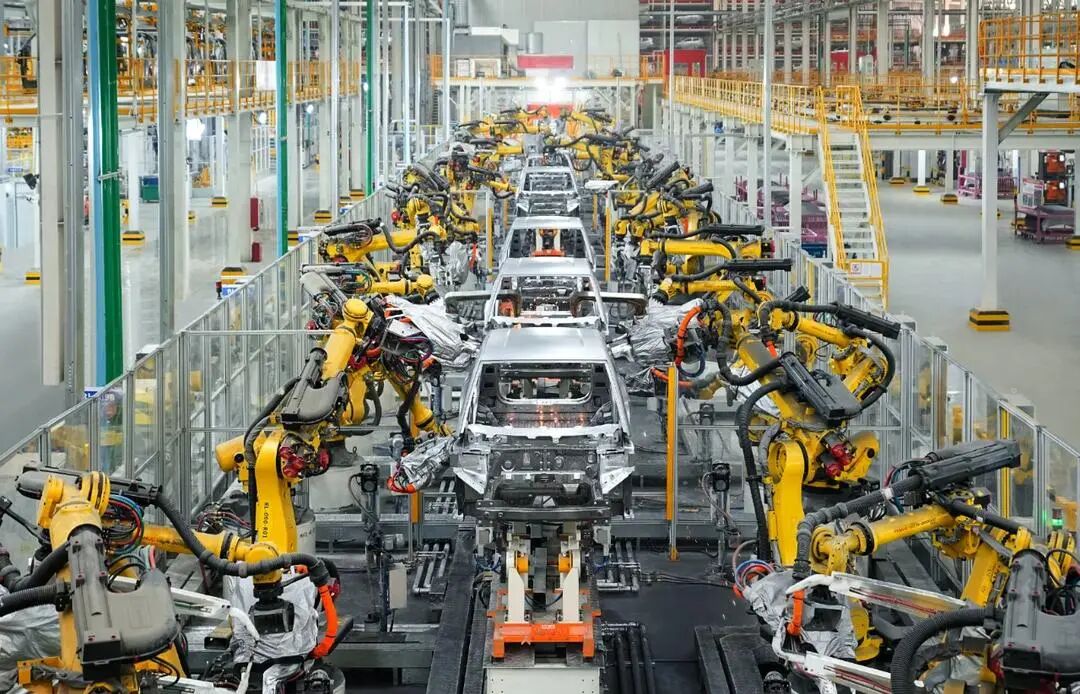
SAIC is also planning to establish production bases in markets such as Germany and the UK. It hopes to continue to expand its export scale while achieving local production of some products. According to the plan, by 2025, SAIC's overseas sales target will reach 1.5 million, and the proportion of local production will gradually increase.
This is not only a change in production layout but also an upgrade of the overseas - going strategy.
In the past, Chinese automakers mainly relied on the "domestic production - complete vehicle export" model, transporting cars from Chinese ports to all over the world. As overseas sales continued to grow, the limitations of this model gradually became apparent. Not only was the transportation distance long and the logistics cost high, but it was also easily affected by changes in trade policies.
Once a factory is established locally, the situation is completely different.
This means reducing transportation costs, relieving tariff pressure, and faster delivery. Automakers can also gradually establish a local supply chain, turning the overseas market from a sales destination