Part 4 of the Charging Pile Series - The Price War Chapter: The era of renting a plot of land, buying a batch of charging piles, and effortlessly earning service fees is long gone.
Wang Chen (a pseudonym) still remembers the decision he made last spring. Seeing the bustling new new - energy vehicle showroom at the entrance of the community, he took out all his savings and took out a loan. He rented a piece of land near the suburban logistics park not far away and installed eight 120kW fast - charging piles. In his eyes, it was the "trend" - the country said there was a huge shortage of charging piles, and there were more and more green - license - plate cars on the street. This business was surely profitable.
After the Spring Festival, a new charging station claiming to have ultra - fast charging emerged next to the community. All of its charging piles were 480kW. The service fee at its opening was directly reduced to 0.2 yuan per kilowatt - hour.
Subsequently, the daily average charging volume of Wang Chen's charging station dropped from 3,000 kilowatt - hours to less than 800 kilowatt - hours. After accounting for electricity costs, land rent, and equipment depreciation, he suffered a net loss of tens of thousands of yuan per month. He squatted at the entrance of the community, smoking, and looking at the cars queuing next door. He just couldn't figure it out: clearly, the shortage still existed, so why was no one using his charging piles?
This is not just Wang Chen's confusion. At the beginning of 2026, the total number of public charging piles nationwide had exceeded 4.7 million, supporting the world's largest new - energy vehicle market. However, beneath the prosperous appearance, a "hunt" for small and medium - sized players was underway. Only by understanding the truth of this price war can you truly understand what is meant by a "gentle but deadly blow".
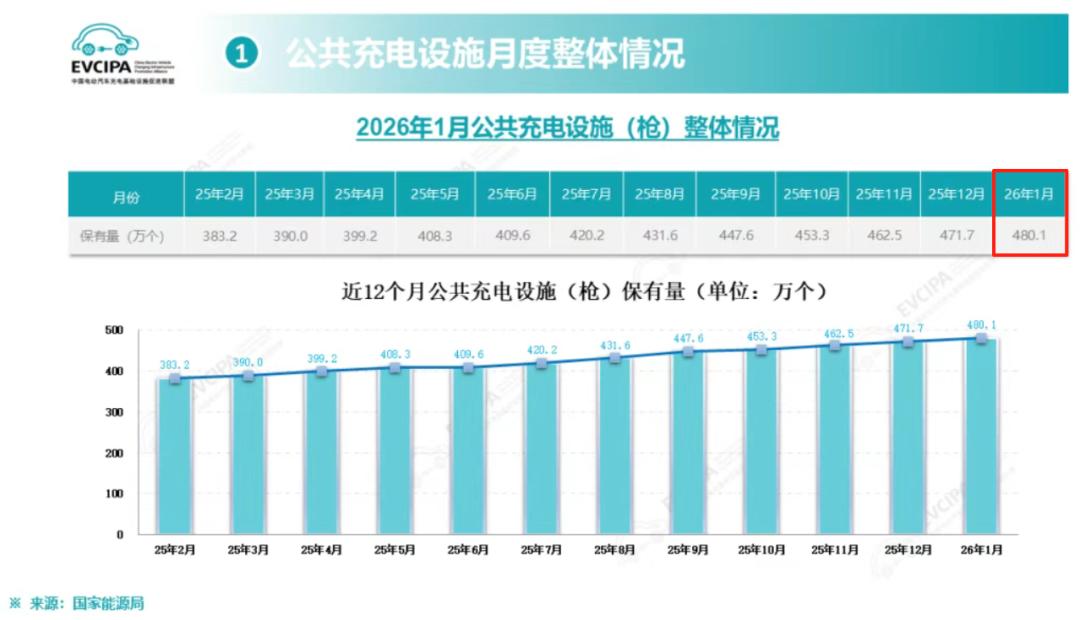
Picture/Overall situation of public charging facilities in January 2026 Source/Screenshot from Internet's New Energy Outlook
1. The truth of the price war: What you think is "involution" is actually "dimensionality reduction strike"
On the surface, this is a typical case of oversupply. Cui Dongshu, the secretary - general of the Passenger Car Association, said bluntly that the current ratio of vehicles to charging piles has reached a relatively comfortable level of 1:1, and the situation of "more charging piles than vehicles" has become the norm in some areas. The average utilization rate of public charging piles nationwide hovers around 30%, and many charging stations have less than 10 charging sessions per day.
What's even more troublesome is that users have no "loyalty". The difference between peak and off - peak electricity prices has widened to 2 - 4 times. Online car - hailing drivers have three or four apps on their phones and will go wherever it is cheaper. "A difference of two cents per kilowatt - hour means a difference of more than ten yuan for a full charge, and you can save hundreds of yuan a month." Master Li, a Didi driver, is very good at calculating.
So, the service fee has been drastically reduced. Zhang Fan (a pseudonym), who operates several charging stations in Guangdong, has experienced the price war in the charging business. He has watched the service fee drop from three or four cents to one or two cents. Some stations even offer a "suicidal price" of five cents per kilowatt - hour for the service fee. After deducting the 3 - 4 cents of power loss in daily operations, they can only earn two cents per kilowatt - hour.
But is it just involution that has defeated people like "Wang Chen"?
Peeling off the surface, you will find that this is a "new species" with technological and business - model gaps, using price as a weapon to eliminate the old players who only have "physical charging piles".
The first killing move is the technological gap. The "turnover rate" of 480kW ultra - fast charging piles is 3 - 4 times that of the old 120kW charging piles. While others can finish charging and leave in half an hour, you have to wait for an hour and a half. The charging turnover rate directly reduces the cost per kilowatt - hour. New charging piles naturally dare to lower the price, while for old charging piles, following suit means bleeding.
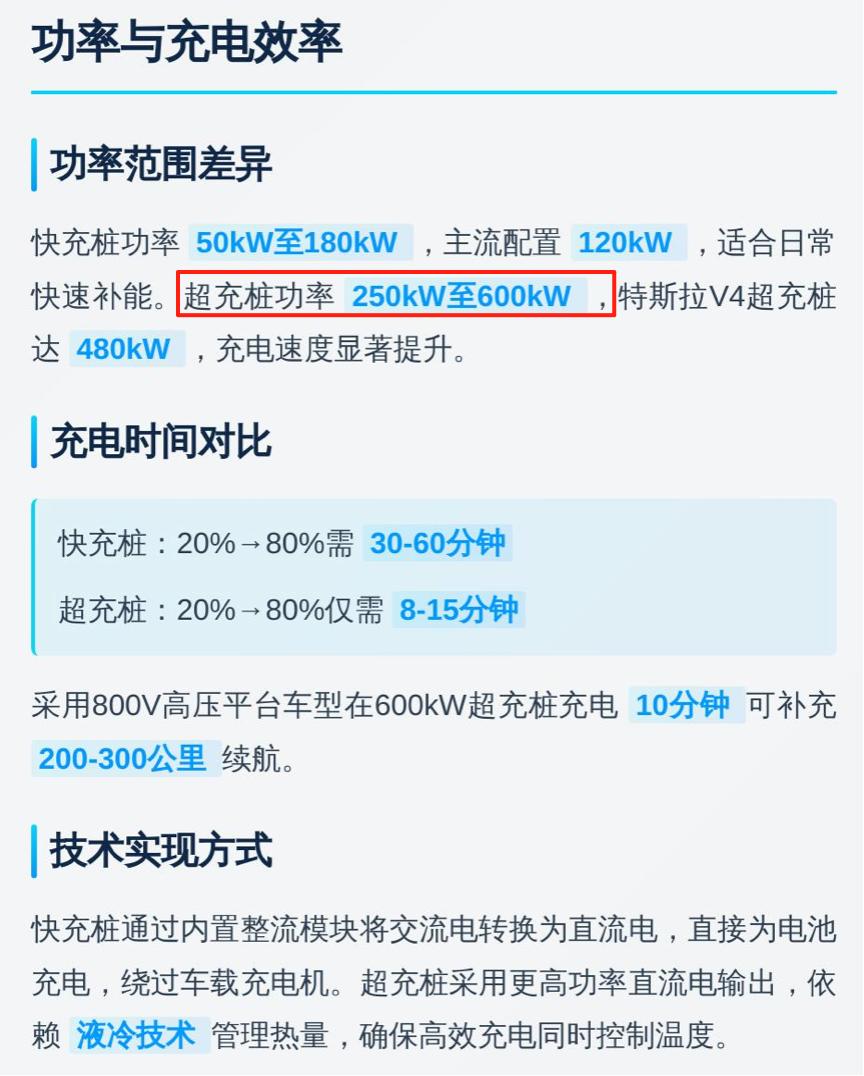
Picture/Differences between fast - charging piles and ultra - fast charging piles Source/Screenshot from Internet's New Energy Outlook
At BYD's press conference on March 5th, Wang Chuanfu said that the second - generation blade battery can be charged from 10% to 70% in just 5 minutes and from 10% to 97% in just 9 minutes. It is said that it can achieve charging as fast as refueling. From the perspective of existing battery technology, such a charging rate requires more than 10C, which exceeds the limit of current battery materials. Fast - charging after 80% also seems to violate the laws of lithium - battery electrochemistry, and it may be difficult to achieve thermal management under extreme power. The data seems more like ideal laboratory conditions.

Picture/Second - generation blade battery fast - charging Source/Screenshot from Internet's New Energy Outlook
However, it cannot be denied that the speed of technological iteration far exceeds our imagination, and the dimensionality reduction strike brought about by the technological gap has gone beyond the scope of the same - dimensional "involution".
The second killing move is the business - model dimensionality reduction. The "photovoltaic - energy storage - charging" integration is becoming the standard for leading players. The energy storage system stores electricity during off - peak hours and discharges it during peak hours. This not only avoids the "cost black hole" of grid capacity fees but also earns the price difference between peak and off - peak hours. While ordinary operators directly purchase electricity, these players enjoy the "benefits of stored electricity".
The third and most deadly killing move is that the "ecological players" have other motives. Leading platforms such as Teclai have long participated in the grid's "demand response". The subsidy for a single peak - shaving dispatch can reach 0.8 - 2 yuan per kilowatt - hour. In the first half of 2025, Teclai's participation in the energy business reached about 18 million kilowatt - hours, generating more than 10 million yuan in benefits.
While your income solely depends on the service fee from users, their profit statements already have several other sources of income. This is not involution; it's like using a "tank" to fight a "cavalry".
2. Under the price war, who is bleeding and who is celebrating?
Small and medium - sized investors like Wang Chen have become the first "casualties" in this war.
The cost black hole is being ruthlessly exposed. The construction cost of a single - gun DC fast - charging pile has risen to about 80,000 yuan, and the annual increase in land rent in first - tier cities exceeds 15%. Mr. Liu, who was investigating investment opportunities in Handan, Hebei, found that for a better location, the intermediary fee for a parking space could reach 8,000 to 10,000 yuan. While the income has been halved, the rigid costs remain unchanged.
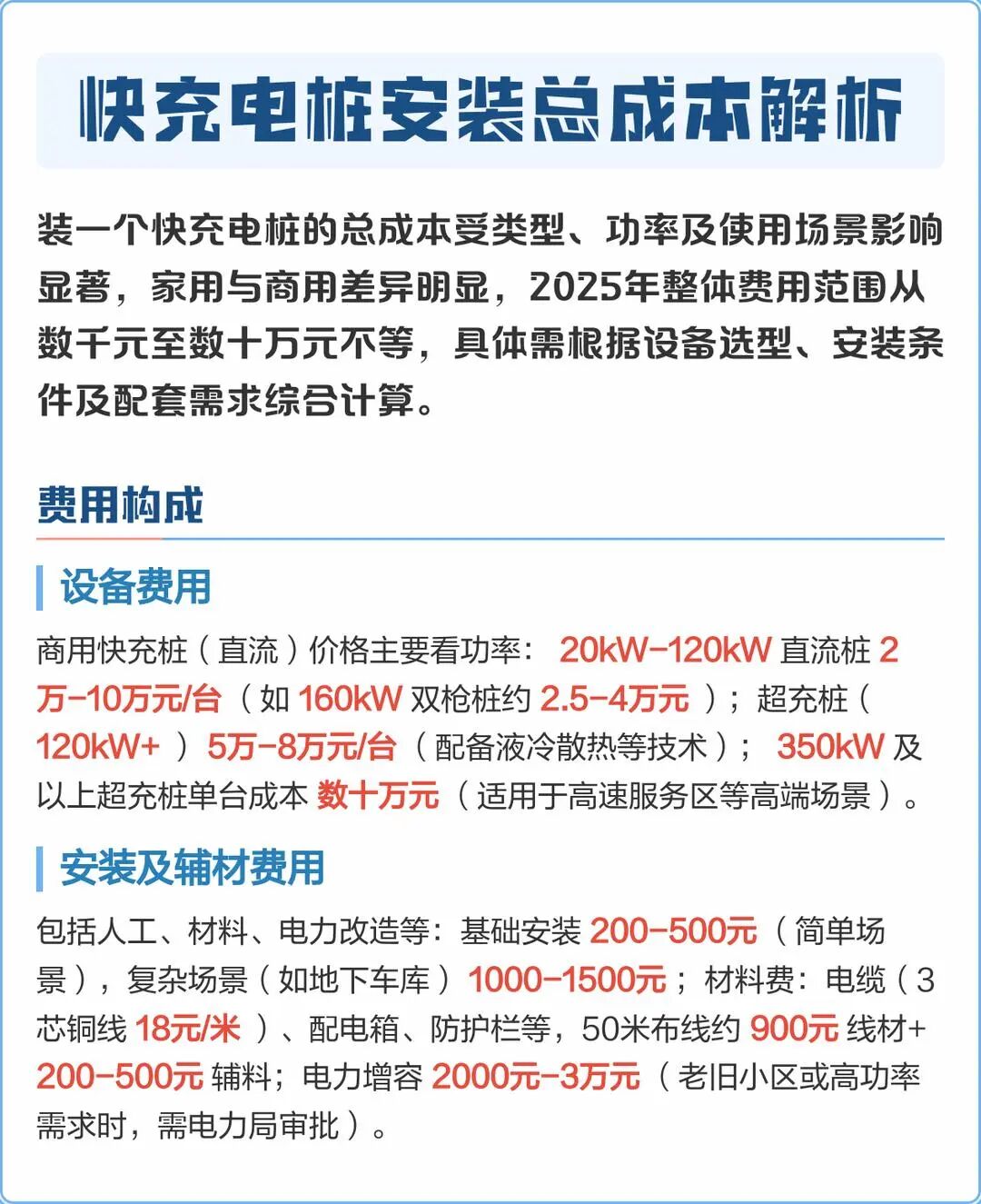
Picture/Total installation cost of fast - charging piles Source/Screenshot from Internet's New Energy Outlook
What's even more deadly is the "technological depreciation". The group of 120kW charging piles built last year has overnight become "backward production capacity" in the face of 480kW ultra - fast charging piles. The residual value rate of second - hand equipment has plummeted from 70% to 35%. Want to cut your losses and leave? The equipment has become "scrap iron".
In order to reduce costs, about 70% of the newly built charging stations this year have chosen to use aluminum - core cables instead of copper cables, and the transformers have also been replaced with aluminum transformers. Although they have disadvantages in terms of lifespan and current - carrying capacity, in the face of survival pressure, who still cares about the long - term?
Policy arbitrageurs are being bitten back. With the reduction of subsidies (for example, Shenzhen has cancelled construction subsidies) and the bloodbath of the price war, the risk of cash - flow rupture for more than 40% of private operators has increased sharply. In Shanghai, unless the site cost is extremely low, the pay - back period for newly built charging stations may be extended to three or four years, or even seven or eight years, which is a far cry from the "golden age" of "paying back in one or two years".

Picture/Reduction of new - energy subsidies in 2026 Source/Screenshot from Internet's New Energy Outlook
Amid this bloody reshuffle, some "predators" are taking an unusual path and making money quietly.
The first type is the leading platforms of the "energy router" type. Teclai, Wanbang Digital Energy, etc. are shifting from "selling electricity" to "selling dispatching services". The proportion of non - electricity - fee income is increasing from 7% to 25%. The money from grid dispatching is much more attractive than the charging service fee.
The second type is the "miners" of the "data gold mine". The charging data - vehicle model distribution, charging time period, battery health - is valued at 3 - 5 times the hardware investment. Selling this data to car manufacturers for product planning and to insurance companies for premium determination incurs almost zero marginal cost.
The third type is the integrators of the "photovoltaic - energy storage - charging" micro - grid. The internal rate of return can reach more than 20%, far exceeding that of traditional charging stations. They earn money from their self - contained energy systems and carbon trading.
The fourth type is the monopolists of the "scenario entry". Sinopec gas stations install charging piles, and fast - charging piles are installed in the underground garages of core business districts. They don't rely on charging for profit at all. They rely on the half - hour when you are charging - promoting a car insurance policy with an attractive price, giving you a coupon to sell you a cup of coffee, and waiting for you to browse the supermarket and buy groceries during that time.
You see, in order to earn our money, charging piles here play the role of a traffic - attracting tool.
3. Bid farewell to the "charging - pile" business and embrace the value of the "network"
People like "Wang Chen" need to accept a cruel reality: The "golden age" of individuals directly building charging piles has ended. The past business model of "finding a piece of land, buying a batch of charging piles, and earning service fees" no longer works. The 120kW charging piles you invested in last year are like a saber in the face of a tank when compared with 480kW or even 1MW ultra - fast charging piles.
For ordinary investors, there is a soul - searching question: Can you keep up with this iteration speed? Will the charging piles you gritted your teeth and invested in last year become "e - waste" next year? However, bidding farewell to the "charging - pile" business does not mean leaving this industry. The real opportunity lies in embracing the value of the "network".
Strategy 1: Shift from "owning assets" to "participating in the network". Join leading platforms such as Xiaoju and KuaiDian to take advantage of their traffic empowerment, or simply entrust your site to a professional operator to get a stable rent and transfer the operating risk. A businessperson from Teclai once told potential franchise customers that it's very difficult to operate on your own unless the site cost is extremely low.

Picture/Xiaoju - KuaiDian Source/Screenshot from Internet's New Energy Outlook
Strategy 2: Occupy niche scenarios with high barriers. Stop focusing on fast - charging for small cars. Battery swapping for heavy - duty trucks in mining areas, ports, and logistics parks is the real blue ocean. In the next 2 - 3 years, heavy - duty truck charging stations will be the main trend. In 2025, the electrification rate of heavy - duty trucks was only a little over 20%, leaving huge room for development. A single gun of a heavy - duty truck charging pile has a power of 320 kilowatts, and charging with two guns together can charge more than 600 kilowatt - hours in an hour.
Chongqing has issued a plan to build more than 100 high - power charging stations for electric ultra - fast charging heavy - duty trucks from 2026 to 2028. Although the investment in such scenarios is large, the demand is rigid. Signing an exclusive order can bring a quite impressive internal rate of return.

Picture/Chongqing's development plan for electric heavy - duty trucks Source/Screenshot from Internet's New Energy Outlook
Strategy 3: Become a service provider for "energy nodes". Instead of being a charging - pile owner, be a service provider for charging piles. Provide professional operation and maintenance, energy - storage support, or even aggregate surrounding charging piles to form a "virtual power plant" to participate in grid dispatching. Many car owners have already started to earn money by discharging electricity to the grid through V2G. They charge their cars with low - price electricity of less than 0.3 yuan per kilowatt - hour at night or noon and sell it to the grid at a high price of more than 2 yuan per kilowatt - hour during peak hours