Can Li Auto regain its "ideal" by aiming for annual sales of over 480,000 vehicles?
Ideal, once hailed as the most profitable new - force in the industry, presented a less "ideal" financial report in 2025.
The financial report shows that Li Auto achieved an annual revenue of 112.312 billion yuan, a year - on - year decrease of 22.3%; the net profit was 1.139 billion yuan, a year - on - year decrease of 85.8%; the annual delivery volume was 406,300 vehicles, a year - on - year decline of 18.81%. The three core indicators of revenue, profit, and sales volume all declined simultaneously. In the fourth quarter, the net profit was only 20.2 million yuan, almost approaching the break - even point. Ideal, once regarded as the "most stable", clearly showed fluctuations in its growth rhythm for the first time.
However, among the new - force camp, Ideal is still one of the few car companies that maintained annual profitability. Now, Ideal has entered a new stage - the dividend of extended - range technology is waning, the pure - electric business has entered the investment period, and the organizational system is being adjusted synchronously. It is moving from the growth stage driven by a single blockbuster product in the past to a more complex systematic competition.
The financial report is under pressure, but Ideal is still the most profitable new - force
If we only look at the financial performance in 2025, Ideal is obviously not in an easy situation.
The simultaneous decline of revenue, profit, and delivery volume means that this new - force, which was the first to establish a profitable model in the past few years, is experiencing an unusual slowdown in growth. Especially in the fourth quarter of 2025, the single - quarter revenue was 28.775 billion yuan, a year - on - year decrease of 35.0%, and the net profit was only 20.2 million yuan, a year - on - year decline of up to 99.4%. It is not difficult to see that the previous state of maintaining high - efficiency growth relying on the L series is hard to simply continue. However, the other side of this financial report is also worthy of attention.
Against the backdrop of continuous price wars and generally pressured industry profits, Ideal has maintained the bottom line of "three consecutive years of profitability" and achieved revenue of over 100 billion yuan for the third consecutive year. For a new - force car company still in the cycle of product expansion, channel investment, and technological transformation, such business performance is still quite scarce. Especially when most new - forces are still hovering on the edge of profitability or even have not yet crossed the stage of large - scale losses, Ideal is still one of the few leading players that have been proven to "make money stably".
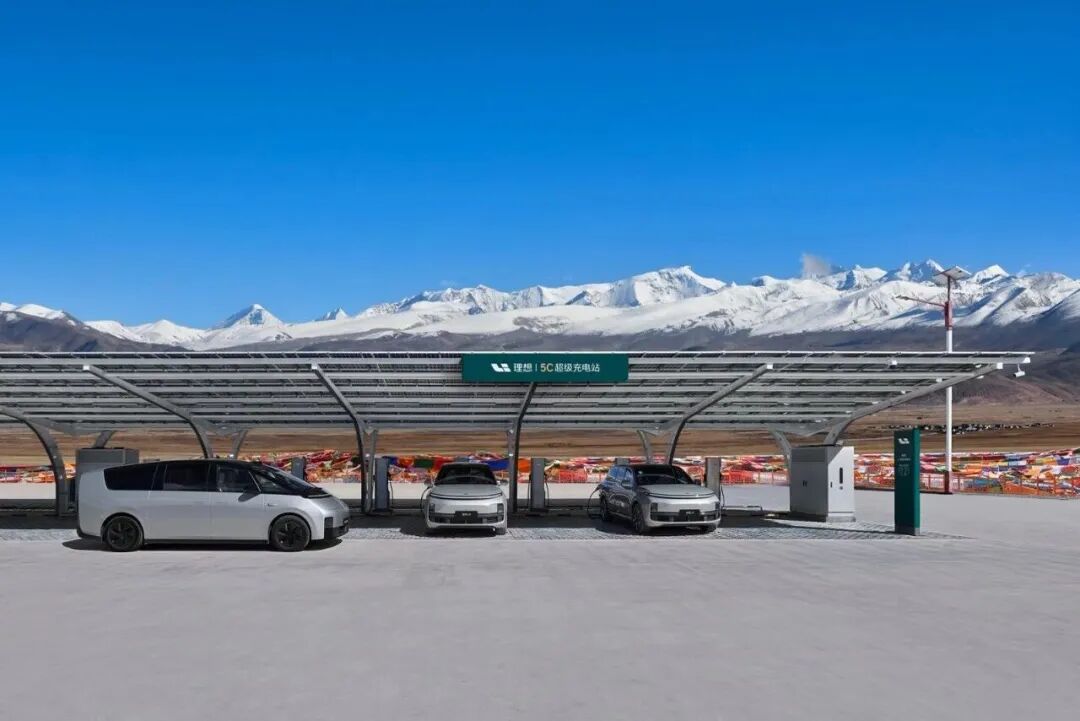
▲ Ideal 5C Super - charging Station. Photo / Brand official
In the past few years, Ideal was able to establish profitability ahead of others largely due to a relatively mature business model: First, it created a clear product positioning around family users, and the L7, L8, and L9 formed a stable mid - to - high - end extended - range SUV matrix; second, it maintained a strong transaction ability in the price range above 300,000 yuan; third, the sales, supply chain, and delivery rhythm were relatively balanced, preventing it from falling into the trap of "the more it sells, the more it loses" prematurely during the scale - expansion process.
In 2025, Ideal delivered 406,300 vehicles throughout the year, a year - on - year decline of 18.81%. In contrast, NIO had a 40.7% annual growth, XPeng's growth rate reached 125.94%, and Leapmotor even achieved a doubling - style growth. Ideal became one of the few leading new - force companies with a decline in sales last year.
The decline in sales first hit the basic income. The financial report shows that in 2025, Ideal's vehicle sales revenue was 106.7 billion yuan, a 23% decrease compared with 138.5 billion yuan in 2024; the vehicle gross profit margin was 17.9%, while it was 19.8% in the same period of 2024; other sales and service revenues were 5.6 billion yuan, a year - on - year decrease of 4.9%. For car companies, once the delivery volume declines, it is difficult for revenue and profit to support independently. Moreover, Ideal did not enter a contraction cycle in 2025. On the contrary, it continued to invest in channels, R & D, and the pure - electric business, and the cost side did not narrow synchronously, so the profit margin was naturally further compressed.
Therefore, Ideal in 2025 was not simply "losing speed", but the marginal changes began to appear in the old profit model. It is difficult for it to rely on the past mature extended - range logic to easily maintain the state of high growth and high profit simultaneously.
The extended - range dividend is ebbing, and Ideal has entered a systematic adjustment period
If the financial report data presents the result, then what really changed for Ideal in 2025 is its competitive environment.
In the past few years, Ideal was able to establish stable growth and profitability ahead of other new - forces largely due to a relatively clear market window: the demand for family SUVs above 300,000 yuan was rapidly released, the extended - range technology still had obvious differential advantages, and the supply density in the mid - to - high - end new - energy market was not as crowded as it is today. At that stage, Ideal almost occupied the minds of family users first with a relatively clear product logic.
However, by 2025, this environment had changed significantly.
On the one hand, the number of competitors in the extended - range track increased significantly, and Ideal's leading position in the high - end family SUV market was continuously diluted; on the other hand, the L series itself also entered a relatively mature stage, and it was difficult to simply continue the previous state of continuous sales growth relying on a single product matrix.
This also forces Ideal to speed up the improvement of its pure - electric product line.
In 2025, products such as MEGA, i6, and i8 were successively launched into the market, covering the mainstream pure - electric range of 250,000 - 400,000 yuan, and new models will continue to be promoted in the second half of the year. For Ideal, it has moved from the relatively familiar extended - range comfort zone to the pure - electric main battlefield with the most intense competition, the fastest technological iteration, and the most fierce price competition.
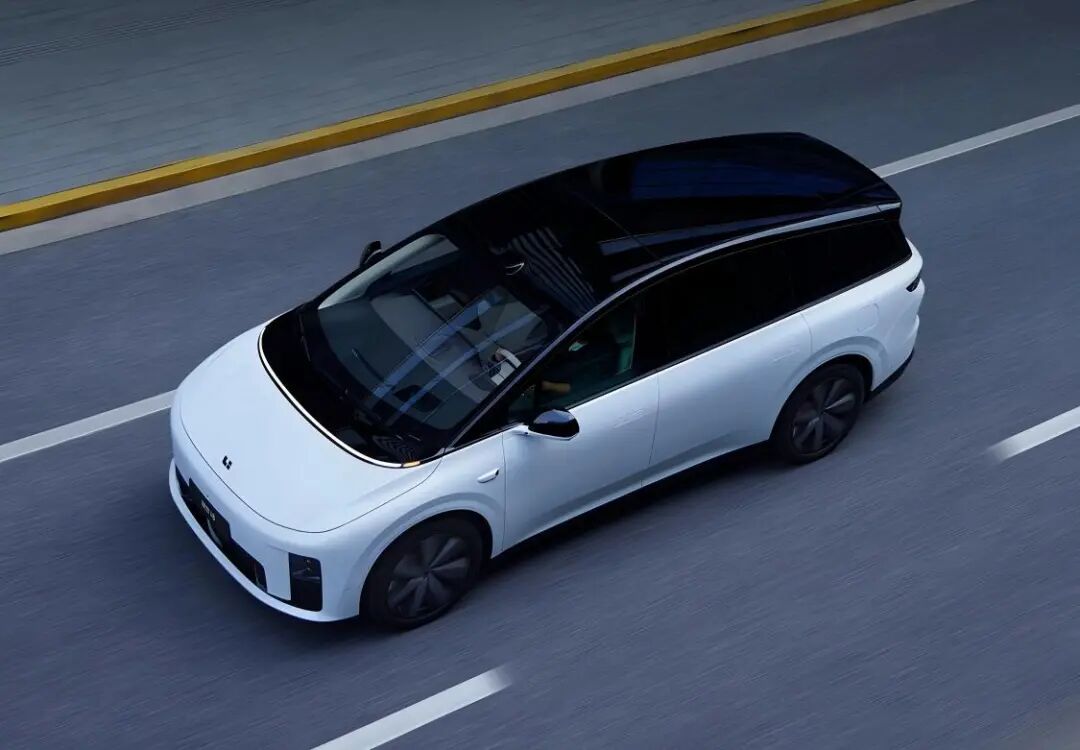
▲ Ideal i8. Photo / Brand official
The problem is that the competition logic in the pure - electric market is not exactly the same as that in the extended - range market that Ideal is good at. The charging system, user expectations, price strategy, and even brand awareness all belong to another set of rules. More realistically, Ideal has long been deeply associated with "family extended - range SUVs" in users' minds. It takes time to complete the cognitive shift from "Ideal = extended - range" to "Ideal can do well in both extended - range and pure - electric". And in 2025, the time window for Ideal is not abundant.
While the external competition intensifies and the product structure changes, Ideal is also undergoing a significant organizational and R & D restructuring internally.
In the past year, Ideal has undergone a large - scale and repeated adjustment of its sales system. The company once integrated the original 26 sales war zones into five major war zones: East, West, South, North, and Central, trying to improve the response efficiency in different markets by reducing management levels and strengthening regional autonomy. However, less than half a year after the implementation of this structure, Ideal adjusted the sales system again in August 2025, abolishing the five major war zones and returning to the model of direct management of 23 regions across the country by the headquarters.
What this reflects is Ideal's re - exploration of the management method of the direct - sales system after its scale expansion. In the past few years, direct - sales has always been an important advantage of Ideal. However, as the number of stores and the organizational scale continue to expand, the originally efficient direct - sales system is also facing more complex management challenges.
Compared with the repeated trial - and - error in the sales system, the changes at the R & D end are more drastic.
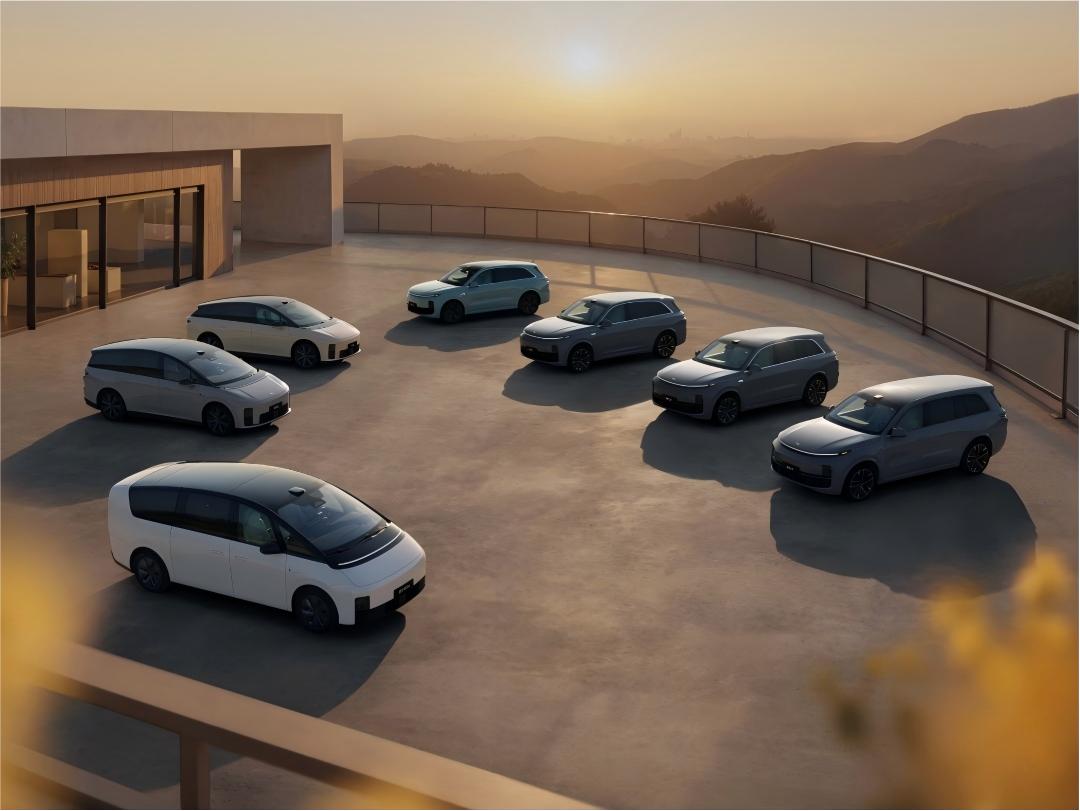
▲ All models of the Ideal family. Photo / Brand official
Since 2025, several key executives in intelligent driving at Ideal have left one after another. In May, July, and August last year, Xia Zhongpu, the person - in - charge of the end - to - end model of intelligent driving, Jia Peng, the person - in - charge of technology R & D, and Wang Jiajia, the person - in - charge of mass - production R & D, left the company successively. At the same time, the power structure of the management is also being reorganized. Li Xiang has regained the authority of product R & D and supply - chain management; the autonomous - driving team has been split up, the original person - in - charge, Lang Xianpeng, has turned to robot R & D, and the R & D system has been reorganized into a base - model team, a software - ontology team, and a hardware - ontology team.
Behind these changes, it is obviously not just a routine personnel adjustment. Ideal is re - centralizing the R & D leadership and reshaping the organizational logic of the intelligent business. In Li Xiang's review, one of the problems of Ideal in the past period was that the decision - making chain was lengthened under the professional - manager model, and the product and technology iteration rhythm began to slow down. Ideal's current emphasis on efficiency, rhythm, and founder leadership is essentially pulling the organization, which has become "mature" in the past few years, back to a more flexible and market - oriented direction.
From this perspective, in 2025, on the one hand, the L series still needs to maintain its basic market share, and on the other hand, the pure - electric products are still in the climbing period; on the one hand, the market competition intensity continues to increase, and on the other hand, the internal organization and R & D system are still being adjusted.
What Ideal experienced in the past year was a dynamic adjustment of "adjusting while fighting". This is why Ideal in 2025 neither seems as stable as before nor can be simply defined as "losing speed".
In 2026, Ideal needs to rebuild a new growth order
After the fluctuations in 2025, Ideal's judgment on 2026 is obviously more cautious and realistic.
Li Xiang mentioned at the earnings conference that 2026 is the year when Ideal's third - generation platform will be delivered to the market. The company is confident in its product and technology competitiveness, but the market competition is also intensifying. In the mid - to - high - end market above 200,000 yuan, the number of new cars this year is more than the total of the past few years, and the overall market growth is limited.
Ideal did not avoid the reality of intensified competition and did not continue the previous more radical growth expectations.
In terms of the sales target, Ideal's statement is also significantly more conservative. The goal for 2026 is to achieve a year - on - year growth of more than 20%, corresponding to an annual sales volume of more than 480,000 vehicles. Compared with the target of a 40% year - on - year growth proposed at the beginning of 2025, such a setting is obviously much more conservative.
To achieve this goal, Li Xiang proposed the "3 + 2" strategy.
The so - called "3" first means to repair the sales system.
Li Xiang admitted that a core problem of Ideal in the sales channel in the past was using the management method of dealers to manage the direct - sales system. In the past few months, Ideal has made a large number of adjustments in high - quality store opening, refined operation, store - manager incentives, front - line training, and mechanism construction, with the goal of bringing the direct - sales system back to a high - efficiency state. As the scale expands, the previous advantages of the direct - sales system are turning into higher management difficulties. Whether Ideal can restore its terminal conversion ability in 2026 largely depends on the effect of this round of repair.
Second, it is the replacement of the L series, especially the renewal of the L9.
According to the plan, Ideal will officially launch the new L9 series in the second quarter. Li Xiang has high hopes for this car, believing that it will achieve a comprehensive upgrade in the power system, intelligent driving, and chassis capabilities, and re - widen the experience gap with competitors. The new car will be standard - equipped with 800V and 5C super - charging technology, be equipped with a new - generation extended - range 3.0 system, and further strengthen its intelligent capabilities.
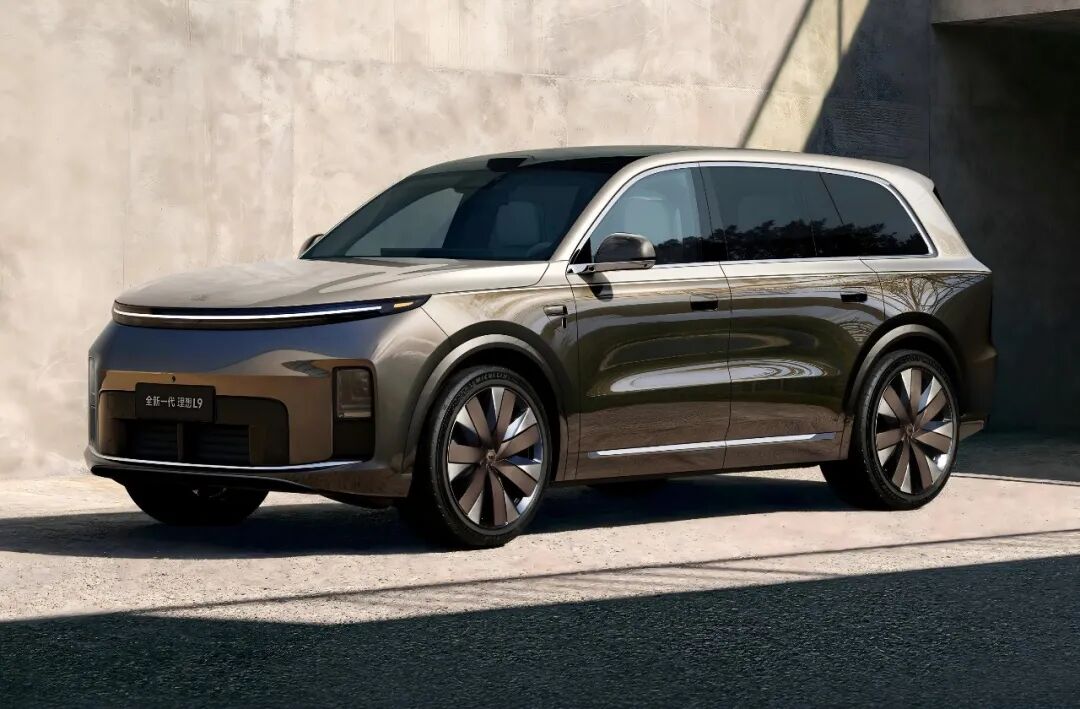
▲ The all - new Ideal L9 Livis. Photo / Brand official
For Ideal, the L9 is not only the brand anchor of the L series but also the value fulcrum of Ideal in the high - end family SUV market. If the replacement of the L9 can generate a strong feedback, the overall ceiling of the L series will be reopened.
Third, it is to promote the stable increase in the sales volume of pure - electric products.
In 2026, Ideal's pure - electric task is very clear: the i6, i8, MEGA, and the i9 to be launched in the second half of the year all need to gradually establish stable sales. After the trial in 2025, Ideal's expectations for pure - electric are also more practical.
"2" refers to two long - term supports: AI capabilities and the overseas market.
In 2025, Ideal's annual R & D investment reached 11.3 billion yuan, of which the investment related to AI accounted for 50%. Ideal said that in the past three years, the company's cumulative R & D investment has reached 33 billion yuan, with an average investment of about 100 million yuan every three days, continuously betting on the breakthrough of core technologies in embodied intelligence. Li Xiang said at the conference call that Ideal will continue this investment strategy in 2026 and continue to strengthen the core capabilities of an embodied - intelligence enterprise. He also mentioned that in 2026, Ideal will bring a more differentiated product experience, and this experience will be active, high - frequency, and able to integrate into users' daily use scenarios.
From an industry perspective, this is also something that Ideal must do. Because after the