Numb from the decline. Is the GTC event not meeting expectations?
At this year's NVIDIA GTC conference, apart from the new AI chips and the ongoing debate between optical and copper technologies in the market, the most eye - catching development is the space computing power track. NVIDIA's newly released Vera Rubin space module, designed for space data centers, offers orbital AI inference computing power 25 times that of the H100. Currently, six companies are using it, and Kepler has deployed Jetson Orin on satellites.
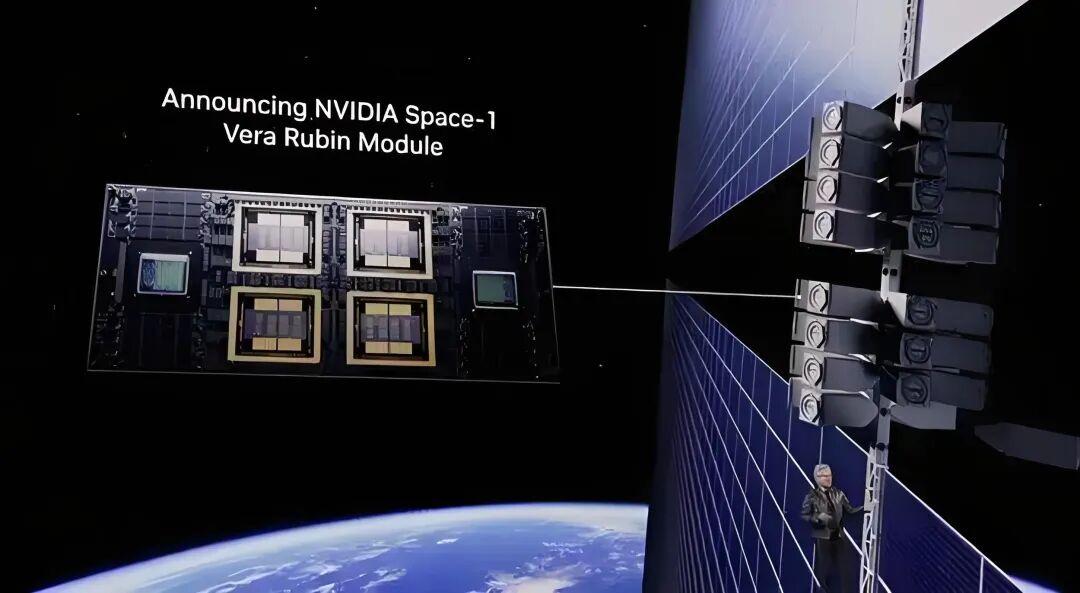
Currently, the world is facing two core contradictions: on one hand, energy security, represented by oil and gas, is receiving increasing attention, and the traditional power supply cannot keep up with the development needs; on the other hand, the training of large AI models and the operation of data centers consume a huge amount of electricity, and many ground - based data centers are constrained by power shortages.
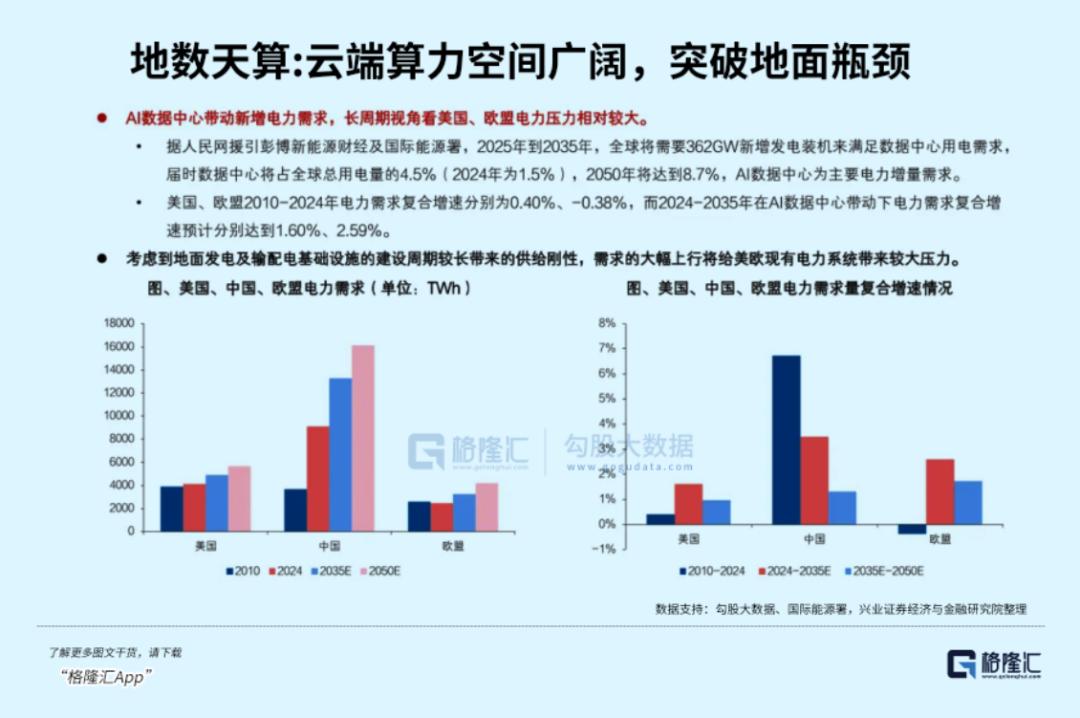
When these two problems are combined with the potential security concerns of data centers in the Middle East, the ultimate solution naturally emerges - moving computing power to space, where space photovoltaics can provide a continuous supply of clean energy. Thus, space computing power becomes an inevitable choice.
01 Ground - based computing power is constrained, and space becomes a new solution
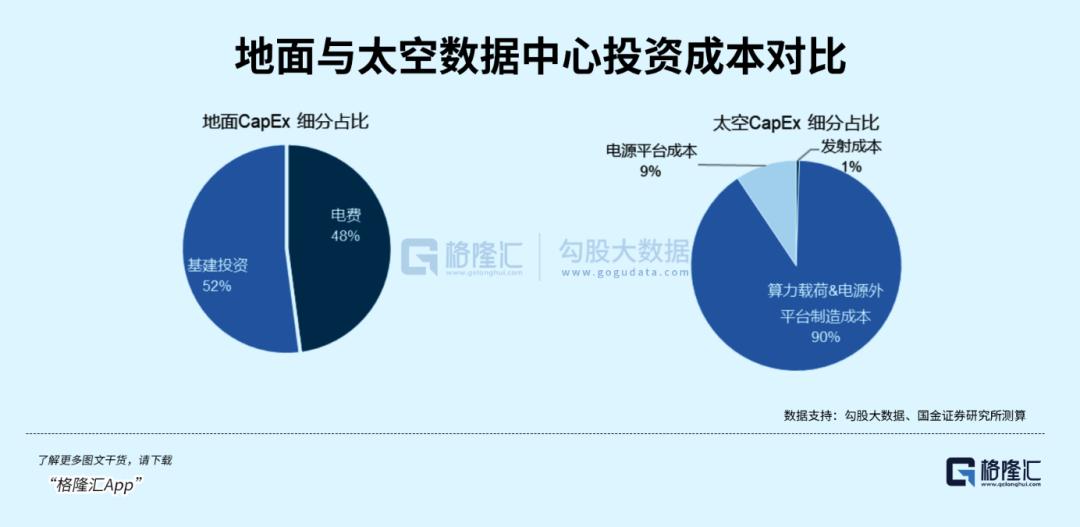
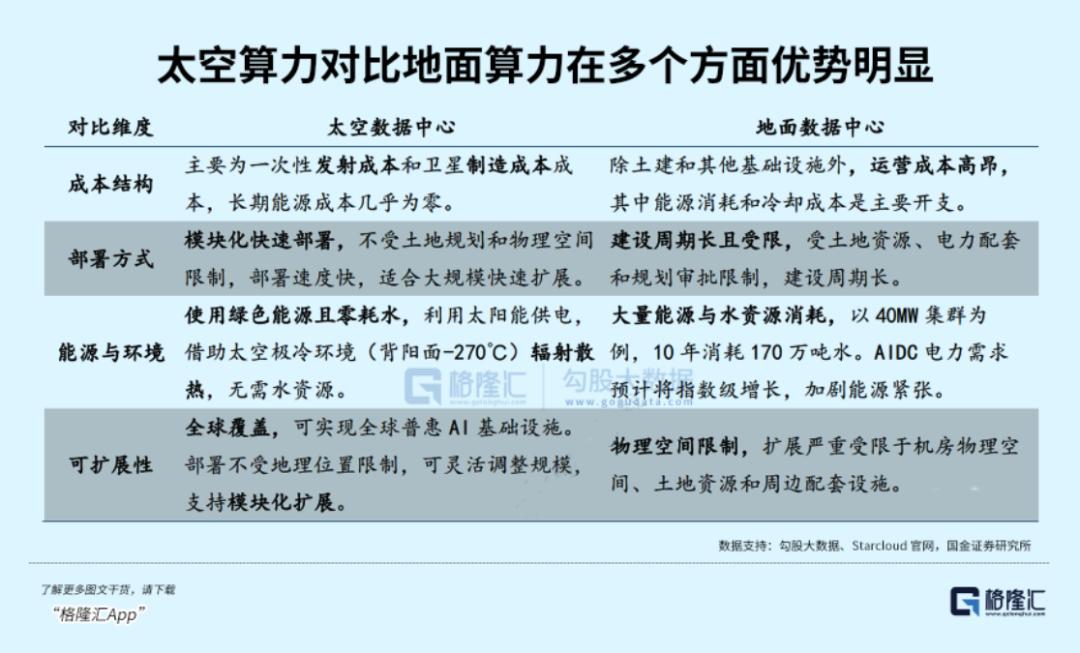
Those involved in AI know that data centers are "power - guzzlers." For a 1GW - scale data center, the electricity cost over seven years can exceed tens of billions of dollars, accounting for approximately 48% of the total investment.
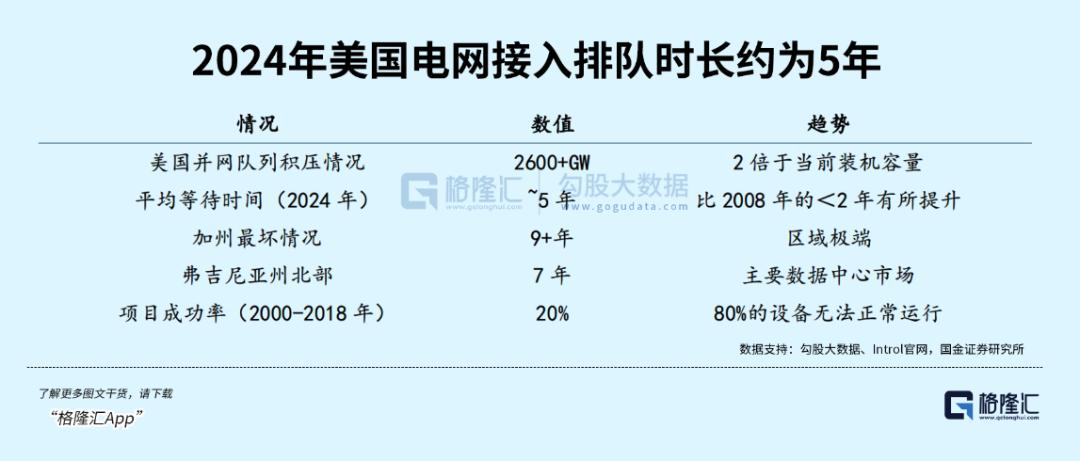
What's more troublesome is that it's not easy to build a large - scale data center. In the United States, the waiting time for grid connection can be up to five years, and for some projects in California, it can even be nine years. Even if the factory building is completed, without power supply, it's just a useless structure.
Moreover, ground - based data centers take up a lot of space and consume a lot of resources. A 40MW cluster can consume 1.7 million tons of water over ten years. As the demand for AI computing power grows exponentially, the bottlenecks of power, land, and heat dissipation are becoming more and more obvious.
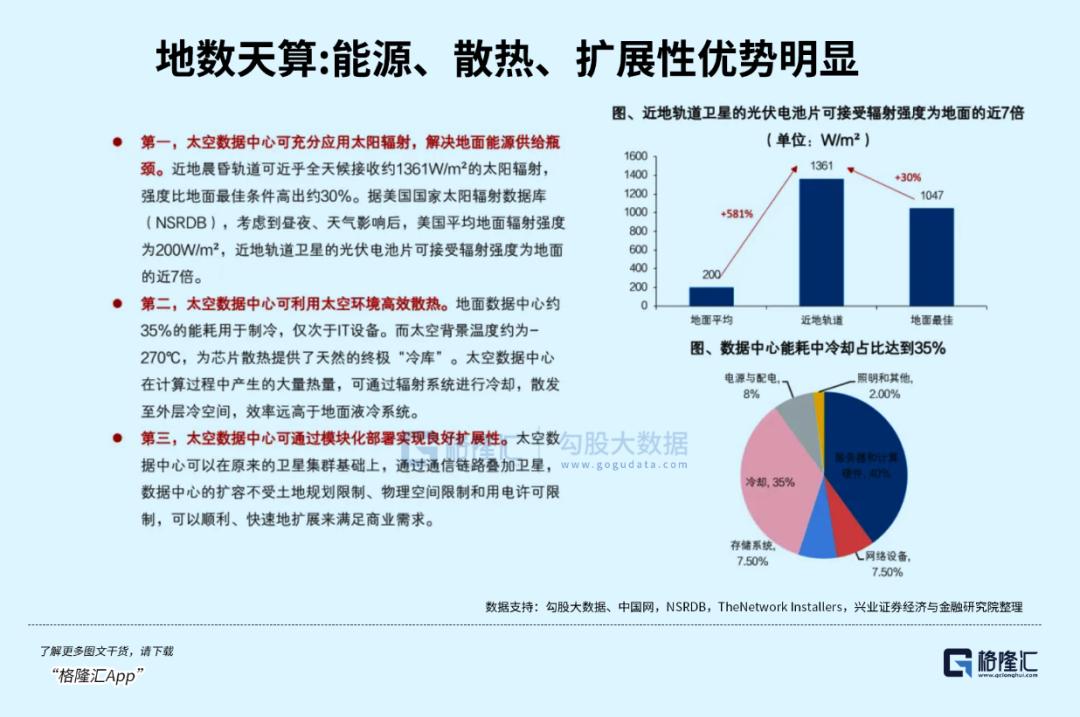
In contrast, space is a natural computing power paradise. There is no day - night cycle or weather influence. The solar irradiance is five times that of the ground, enabling stable power supply for nearly 24 hours a day. Additionally, with the near - absolute - zero environment in space, heat dissipation is not a problem, and there is no need to consume extra energy for cooling.
More importantly, space is not restricted by physical space. You can build computing power clusters of any scale. Modular deployment is fast and flexible, without being restricted by land planning and approval processes.
02 Space computing power is not a new concept and is economically feasible
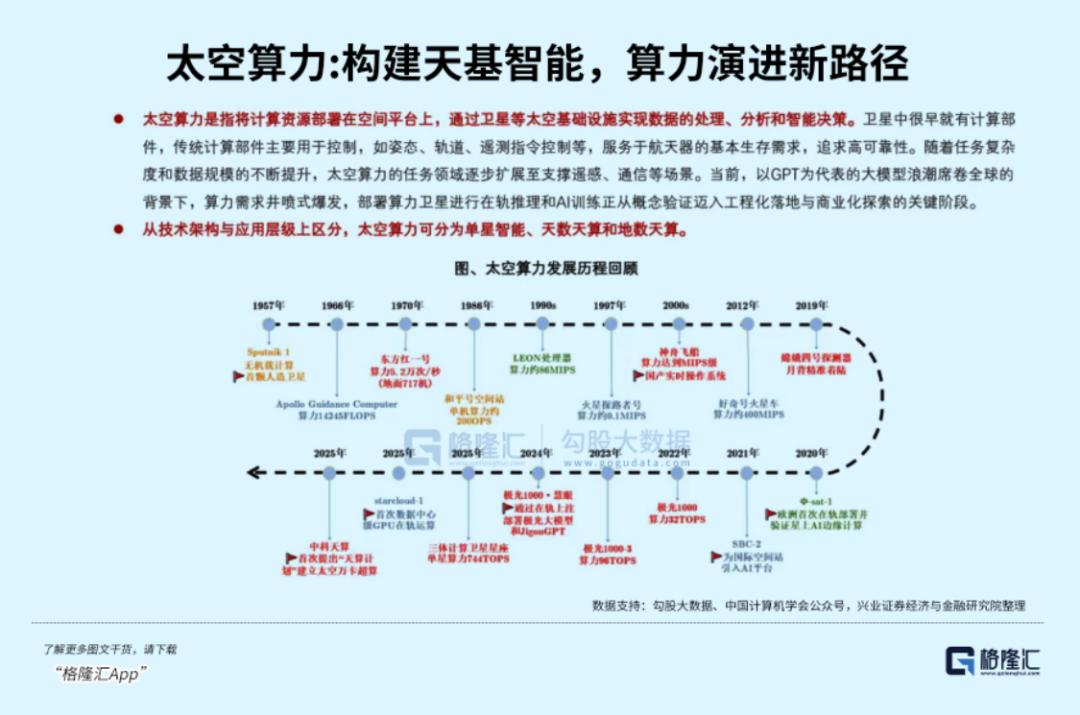
Actually, space computing power has been in use since the last century. Many people may think that sending equipment to space is extremely expensive, but that's not the case now. After calculation, as long as the power supply cost, launch cost of computing power satellites, and the manufacturing premium of space cabinets do not exceed the electricity cost of ground - based data centers, space computing power is cost - effective.
Currently, the launch cost is dropping rapidly. Elon Musk predicts that the unit - weight launch cost can be reduced to $10/kg in the future. Based on this goal, the price of photovoltaic modules required to achieve "space computing power parity" is about $1.3/W. Although it is still ten times that of ground - based modules, considering the high reliability and exclusivity of space photovoltaics, this cost is completely controllable.
Moreover, space computing power transforms the long - term "high electricity cost + maintenance" cost into a one - time manufacturing and launch cost, which is more cost - effective in the long run. Over a seven - year lifecycle, the total investment of a 1GW - scale space data center is similar to that of a ground - based one, but there is almost no energy expenditure later.
This change in the cost structure makes space computing power go from "unreachable" to "attainable," laying the foundation for the industry's explosion.
03 The market scale exceeds expectations, and the demand for hundreds of GW is on the way
The market demand for space computing power is much larger than many people think, and it is being implemented rapidly.
In the short term, communication satellites are the main driving force. In 2025, the global satellite launch volume exceeded 4,000, with a growth rate of nearly 60%. SpaceX alone accounted for 77% of the share, and China is also accelerating its layout, with the planned total number of communication satellites exceeding 260,000.
The power of single satellites is also increasing rapidly. The power of SpaceX's new - generation Starlink satellites can reach over 50kW, and China is also promoting power systems in the 50 - 100kW range. According to this trend, the global space photovoltaic installed capacity will approach 500MW in 2026 and reach 4,277MW in 2028.
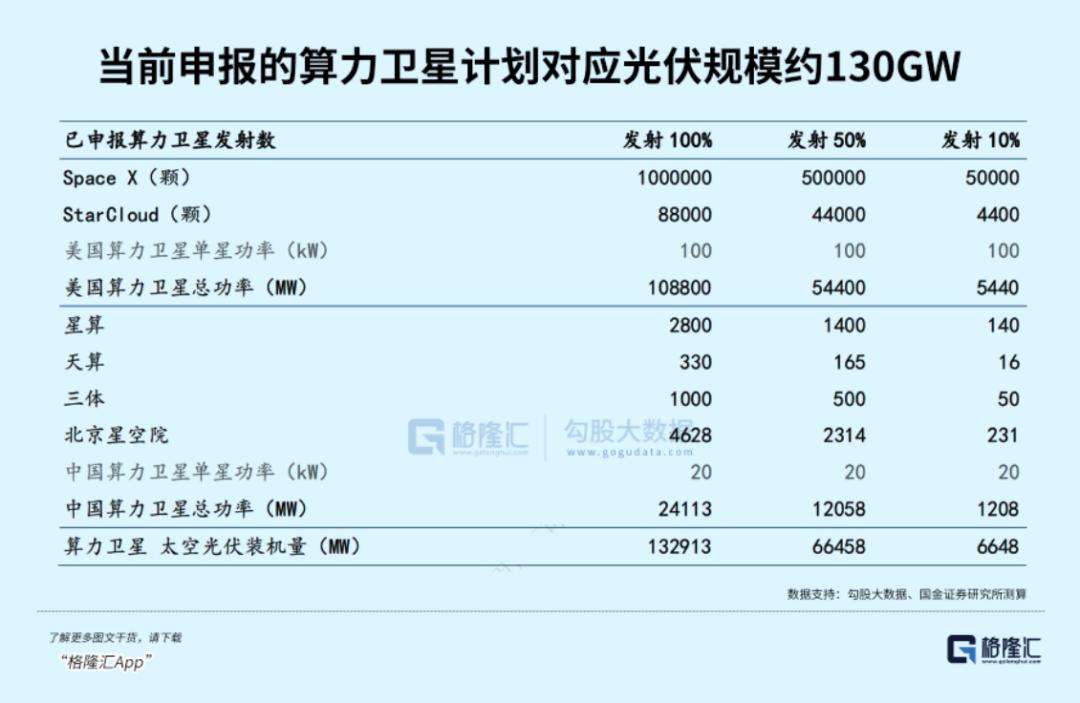
In the medium term, computing power satellites will become the core growth point. Both China and the United States are accelerating their layouts. SpaceX plans to launch one million computing power satellites, and Starcloud has also planned 88,000. China's computing power constellations such as "XingSuan," "TianSuan," and "SanTi" have also entered the networking stage.
According to the current application plans, as long as the launch volume reaches 100%, the corresponding demand for space photovoltaics will exceed 130GW, which is a huge trillion - level market. Moreover, this demand is not just talk. In 2025, a computing power satellite equipped with NVIDIA's H100 chip was successfully launched.
In the long term, the construction of lunar and Martian bases will bring new demands. Elon Musk plans to build a lunar city within ten years and a Martian city within 20 years. Countries around the world are also promoting lunar exploration plans. The energy supply for these extraterrestrial bases can only rely on space photovoltaics, which opens up more long - term growth space for the industry.
04 Three investment mainlines to seize core opportunities
Space computing power is a systematic project involving multiple links such as satellite manufacturing, photovoltaic modules, and special materials. The core investment opportunities are concentrated in three mainlines.
(Note: The comments on relevant stocks in this article are for learning and communication purposes only and do not constitute any investment advice or reference.)
The first is the overall satellite manufacturing link. This field has high technical barriers and is scarce. For example, Junda Co., Ltd. obtained the satellite overall design and manufacturing capabilities by acquiring Xuntian Qianhe, a satellite - building enterprise, and also deployed technologies related to space photovoltaics, forming a closed - loop advantage.
There is also Dianke Lantian. As the core domestic supplier of aerospace power supplies, it has a market share of over 50%. It has participated in the power supply of more than 700 satellites, from "Dongfanghong - 1" to the Tiangong Space Station, with a very solid foundation.
The second is the suppliers of space photovoltaic equipment and solar cells. Space photovoltaics have extremely high technical requirements, requiring products with radiation resistance, high efficiency, and flexibility. Maiwei Co., Ltd., as a leading enterprise in HJT whole - line equipment, has launched HJT4.0 equipment that can significantly reduce costs and increase efficiency. It has also deployed perovskite tandem solar cell equipment and has received commercial orders.
The HJT modules of Orient Rising have the third - highest efficiency globally. Its p - type ultra - thin heterojunction products have obvious advantages in terms of flexibility and radiation resistance and have achieved small - batch delivery. Mingyang Smart Energy has been deploying in the space energy field for over ten years. The efficiency of its perovskite - heterojunction tandem solar cells has exceeded 34%, and it is expected to quickly enter on - orbit verification.
The third is the suppliers of special encapsulation materials for the space environment. The space environment is extreme, and the requirements for materials are unique. The aerospace - grade UTG glass of Lens Technology has a thickness of only 30 - 60μm and a bending radius as low as 1.5mm, enabling the solar wings to be folded like a tape measure, significantly reducing the launch cost. Its light transmittance can also be stably maintained above 93%.
The perovskite solar cells of Shanghai Harbor have passed multiple on - orbit verifications. They have been operating stably for over nine months with almost no voltage decline, and the technical reliability has been verified in practice.
05 Risk warnings and investment logic
Of course, as an emerging track, space computing power also has certain risks. For example, if the development of the commercial space industry fails to meet expectations or the long - term reliability verification of battery technology in the space environment fails, it may affect the industry's progress.
From a macro - trend perspective, both energy security and the demand for AI computing power are irreversible trends. The combination of the two will inevitably promote the development of the space computing power industry. The core of investing in this track is to grasp the "technical barriers + first - mover advantage."
At the same time, the entry threshold for the space computing power industry is much higher than that of ground - based photovoltaics. Whether it is satellite manufacturing, special materials, or photovoltaic modules, long - term technical accumulation and on - orbit verification are required. Once an advantage is formed, it is difficult to be surpassed. As more computing power satellites are launched and more technologies are verified, the industry will enter an acceleration period, and investors who lay out at low prices in advance are expected to share the industry's dividends.
Of course, the market changes rapidly. Macro - disturbances, policy catalysts, and industrial progress need to be continuously tracked. If you want to capture signals, identify risks, and seize opportunities in a timely manner, welcome to scan the QR code below to obtain more timely and detailed professional investment strategies:
Disclaimer:
This article is copyrighted by the research team of Beijing Gelonghui Investment Consulting Co., Ltd. (Zeng Run: A0160623020001). This report is prepared based on the principles of independence, objectivity, fairness, and prudence. All information is sourced from public materials and is legally, reasonably, and appropriately collected, summarized, and edited.
The stock market is risky, and you need to be cautious when entering. Any investment advice in this article is not a basis for your investment decisions. You must make independent investment decisions and bear the risks yourself. Any unauthorized release, reproduction, dissemination, online publication, or re - posting by any unit or individual without the permission of our company is considered an infringement, and our company will pursue legal liability for the infringement in accordance with the law.
This article is from the WeChat official account “Gelonghui Financial Hotspots” (ID: glh_finance), written by the editor of Gelonghui, and re - published by 36Kr with authorization.